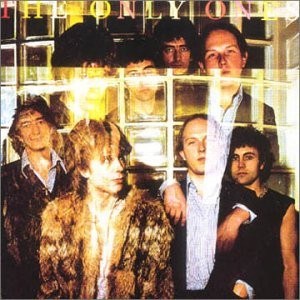
The Only Ones – The Only Ones: Round 50 – Tom’s Selection

onlyDuring my first year at university I became infatuated by what I knew at the time as (but now am not so sure) the debut album by The House of Love…the one with Christine on it rather than the one with Shine On on it. Whatever, for a while (until the disappointing 2nd/3rd album was released) I, perhaps unwisely in some respects, hung on every word Guy Chadwick offered and I couldn’t help but notice his obsession with Peter Perrett and his band The Only Ones. It seemed that pretty much every issue of Melody Maker had some reference to The Only Ones by Chadwick and before long my record store browsing priorities had shifted from ‘H’ to ‘O’. Eventually I found myself a copy of The Only Ones’ final album, Baby’s Got A Gun and, although I need to remind myself of it in light of my recent full conversion to the first two albums, my initial impression was that it wasn’t very good…at all. So I stopped looking for Only Ones albums and moved onto something else – to be honest, I had probably given up on The House of Love by then as well.

But, as is so often the case, I chanced upon The Only Ones first two albums when they weren’t on my radar, bought them (thinking that at the very least I would now have a copy of Another Girl, Another Planet) and then played them for while, enjoying them well enough but still not really falling under their spell. I dug out the debut a few months back thinking it could be interesting DRC fodder, gave it a cursory listen and dismissed it as not good enough. However, a second (crucially?) LOUD listen brought it to life and since then I have listened to little else, alternating between The Only Ones and Even Serpents Shine both in terms of what’s on the turntable and in terms of which one I prefer.

Having given it much more thought than is necessary (or healthy) I have come to the conclusion (in contrast to most internet blogs I have seen) that there is nothing to choose between these two fine, scuzzy, exciting and spontaneous sounding records. After all, internet preferences seem to split the vote between those who favour the punkier immediacy of the debut or the more consistent uniformity of the sophomore offering. For me, they’re both great records and, the deeper I delve, the closer I get to seeing what Chadwick was on about all those years ago. Fabulous song-writing, excellent musicianship, messy production and over all, Perrett’s whiny, note imperfect and definitely acquired taste of a voice. I love Perrett’s guts to have a go with such limited vocal chords (although, after all, many of the biggest names in rock’s pantheon – Dylan, Reed, Young, Cohen – could hardly hold a tune) but I have a feeling there are those (I include Nick in this list) for whom his voice will prove too difficult to see past. It really is their loss as, by (proper and loud) listen three or four, you will not even notice those flat and warbled tones as you anticipate the complexities of what is coming next, reveling in the fine melodies on offer and wonderful interactions of the band.

The Only Ones kicks off with a red herring. The Whole of The Law is as gentle a song as Perrett ever wrote and, sweet and melodious as it is in its own right, it doubles up as the ideal appetite whetter for what comes next – only the best intro in modern music bar none! Another Girl, Another Planet is a true classic but to my mind the intro is so good that the rest of the song doesn’t quite compete and I enjoy the other punk rockers on the album (City of Fun, Language Problem, The Immortal Story) just as much. Interspersed between these energy fueled anthems to doomed youth are longer, brooding exercises such as Breaking Down and The Beast, in which Perrett’s voice is really put through its paces. He just about holds onto those long notes as if heroically highlighting his own shortcomings and laying himself bare just as much through his singing as through his lyrics. Either Perrett had very little self-awareness, supreme and mis-placed self-confidence or (most likely) wanted to really challenge himself and play to his weaknesses as his voice on these tracks is far less conventionally effective than on the faster numbers, if no less affecting.

So whilst The Only Ones may well be an acquired taste (and Even Serpents Shine perhaps even more so – the songs twist and turn more unpredictably even though the singing is stronger), with the benefit of volume, openness of mind and an acceptance of that voice, you will be able to welcome another couple of classics into your home, classics that will keep on smouldering away, giving pleasure long after the latest flavour of the month has burnt itself out.

Nick listened: Tom’s right, of course, that PP’s voice is… rubbish. To be frank. But, I reckon I could get used to it, because musically this record was great – intricate, tuneful, exciting, varied, and great fun. I was aware of the name The Only Ones, and Another Girl, Another Planet, but knew nothing of the context at all. A really good choice.

Rob listened: The Fall are my favourite band. Perrett sounded like Pavarotti as far as i’m concerned, so no problems there. No real problems at all, in fact. Having only known ‘Another Girl…’ previously, this was a real surprise, rich and deep where I had expected scratchy surface. For a band who could, and in the minds of millions may well, have stopped after just one track, The Only Ones certainly seem to have taken their chance to make something much more substantial then your average one hit wonders.

Dusty Springfield – Dusty In Memphis: Round 50, Nick’s choice

dustyinmemphisSupposedly, the first song Mary O’Brien ever recorded, age 12, was “When The Midnight Choo Choo Leaves For Alabam’”, an old Irving Berlin composition. She sang it in one of those booths where you could record yourself, and took it home to West Hampstead for her mum and dad, where they listened to her sing with an affectation of a southern drawl.

Which is to say that, by the time Mary was in her late 20s, a successful, if wracked with conflictions pop singer known as Dusty, and undertook an experiment to transplant herself to Memphis and see what would happen if her breathy, sensual, impassioned vocals were backed by the muscle of the Atlantic Records house band, produced by Jerry Wexler and Arif Mardin and Tom Dowd, she’d already been fascinated by, if not obsessed with, the American South for well over half her lifetime.

Warren Zanes’ excellent 33 & 1/3 book (the first in the series) on this album is less about the music or the singer than it is the mythology – cultural, social, anthropological – that compels a certain type of person to look for authenticity – that most intangible, vague, and magnetic quality (I have some pairs of pants from Marks & Spencer which are adorned with the word ‘authentic’ across the waistband, as if some other, lesser pants exist which are ‘inauthentic’) – and specifically those people, like Dusty, or Alan Lomax, the musical anthropologist who collated a songbook of American ‘primitive’ music, who go looking for the ‘authentic’ determinedly in the American South.

Either Mary O’Brien was a fantastic actress of the method school, or the idea of Dusty Springfield was as virulent as a consumptive disease, because ‘Dusty’, invented as… more than a pseudonym or a mask… more even than a persona… as an alternative way for the former, a shy girl from the west of London, to manage to live in the accelerating modern and post-modern world that she was born into, eventually obliterated Mary, leaving barely a trace of the girl that was beneath a never-removed disguise of mascara.

Riddled with insecurities and taboo desires, Mary-as-Dusty / Dusty-as-Mary was a perfectionist in search of the ultimate performance every time she stepped into the recording booth to cut a vocal track. She was, apparently, the only person involved in the experiment that was Dusty In Memphis (and those involved do all refer to it as an experiment if you read up on it) who doubted that it could work, despite dismissing 80 out of 80 songs offered to her by Wexler at the start of the process. (Later she asked to be given more songs to choose from, and he offered her 20 of those original 80 once again, and she loved them all instantly.)

Wexler, Mardin, and Dowd had an outstanding pedigree selecting and arranging songs and producing albums for artists. For Dusty In Memphis they collected tunes by the greatest American writers of popular song – Bacharach and David, Goffin and King, Randy Newman – and created something which, at the time, seemed like a radical hybridisation of ‘white’ pop music and ‘black’ rhythm and blues. We’re so used to cross-pollination amongst genres now that the idea seems quaint. You’ll recognise “Son Of A Preacher Man” no doubt, a cover of “The Windmills Of Your Mind”, and “No Easy Way Down”, and perhaps “Breakfast In Bed”, but, despite enormous critical affection, Dusty In Memphis was seen as something of a commercial failure, only registering one bona fide hit single and not selling anywhere near as many copies as was hoped.

Used to performing over meticulously completed arrangements, working in Memphis with Wexler, Mardin, and Dowd cast Dusty into the role of co-creator as well as interpreter, as arrangements were created from the song upwards with her involved at every stage; she was effectively a fourth producer of the record, as well as its singer, helping to match the songs’ DNA to her vision, rather than paint her emotions over the top. Ironically, but perhaps not surprisingly given her fastidious perfectionism and near-crippling self-doubt, her vocals were recorded separately, in New York.

Dusty In Memphis gave poor Mary-as-Dusty chance to finally inhabit, however briefly and falsely, the mythological American South, its traditions preserved in aspic and its sexuality unfettered and free, the polar opposite of Mary-as-Dusty’s own self, a perpetual act of transformation and deception. It gave the rest of us an amazing record of outstanding songs, loaded with emotion, with stories and situations to project ourselves into and bask in the reflected glow of their illusory authenticity.

Like so many records I’ve played at our club, I bought this while I was a student. I bought it because I wanted the hit, and had a vague inclination that the album itself was held in high esteem by the kind of people who use words like ‘esteem’ in relation to pop records. They’re not wrong. I can’t claim to feel the same connection to the mythology of the American South as Dusty, or Jerry Wexler, or Alan Lomax, or Warren Zanes, to feel its sense of otherness and integrity and sensuality as an oasis from the speed and falsity of what Jamerson might call “later-period consumer capitalism”. But I do feel a stomach-punch and head-rush of emotion when I listen to it.

(Interestingly, one of my favourite songs on Dusty In Memphis isn’t on Dusty In Memphis; the version I have is the 1995 CD release, with appends 3 additional tunes recorded at the sessions, the last of which is “What Do You Do When Love Dies?”, which remained unreleased until it emerged as a b-side some years later. An observation on walking city streets alone that you used to walk hand-in-hand, at one point Dusty wails “somebody help me / I’m losing my mind” and you can hear her soul break into pieces.)

Tom Listened: An acknowledged classic and a record that more than lived up to its billing – Dusty makes it all sound so effortless (although, from the sound of Nick’s account, this couldn’t be further from the truth) and, crucially, gives the listener a glimpse into her soul in a way that so many ‘accomplished’ female vocalists – Mariah, Whitney, Celine to name but three – do not (at least as far as I am concerned).

Mark Eitzel’s version of No Easy Way Down has long been one of my favourite songs and the fact that Dusty’s version sounded quite different yet similarly awesome is testament to the quality of this album – it’s rare for me to hear a song I love in an alternative form to the one I am used to and not react negatively…in this case I got goose bumps but in a good way!

Rob listened: Yep, terrific. As I grew up, Dusty Springfield was, somehow, attached in my mind to the light entertainment roster, before her cameo appearance with the Pet Shop Boys (‘What Have I Done To Deserve This?’ was Dusty’s biggest US hit). I knew she was revered, but only after her death did I realise the hinterland. Clearly Springfield was no cabaret belter. Still, this was a first listen for me, and quite wonderful, combining the sweep and majesty of Bacharach and Barry with the Southern grit and heat I’ve loved since Lee Hazlewood reached me via Tindersticks. Wonderful stuff, and now up at the top of my ‘must have’ list.

Graham Parker and the Rumour – Howlin’ Wind – Round 49 – Graham’s Choice


41ST0KTBKGL
Up until recently this album has been harmlessly gathering dust in a forgotten pile (the almost prefect cue for fellow members to suggest it should go back there!). I still have no recollection of where it came from, but apart from the last few weeks, it hasn’t seen a turntable in around 30 years.

For most people, I guess Graham Parker has been resting in the equivalent of the “where are they now and who were they in the first place category”, for around 30 years now. However last few months has seen him receiving a sudden flood (in Parker terms) of coverage  via an appearance in the movie, ‘This is Forty’, along with a BBC4 documentary,  featuring a reunion with ‘the Rumour’ after 30 years apart.

In the ‘Don’t ask me questions’ (last and best track from this album) film, people like Springsteen and Black Francis queue up to sing his praises and bemoan the wider public for not recognising his talent. Moreover, Parker comes over as a genuinely nice guy, quite happy with his lot. If you can imagine Derek Smalls (the Lord of the Bass) filming a documentary of his post ‘Spinal Tap’ career, you get fairly close. Bad career moves, timing and record deals seemed to have all conspired against Parker.

Watching early footage of his performances, the tracks from this album come over as edgy, acerbic and positively dangerous for a 1976 ‘pub rocker’. Finally inspired, I dusted off the album and tried it again.

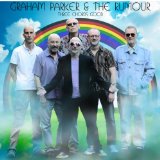
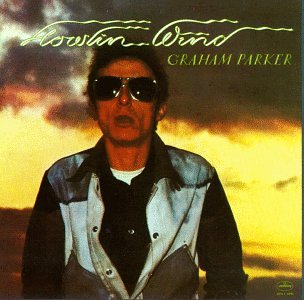
The album itself feels much mellower than his live performances and it seems the cover could be of a completely different artist than the image he seemed to project on his early ‘Old Grey Whistle Test’ performances. To take an angry young man in his mid-20s and make the album cover look like the final album by washed up 50 year old country music star, takes quite a skill. To be honest, cover art seems to have been a weakness through Parker’s career, including such low points as ‘Carp fishing on Valium’, along with his recent reunion with ‘the Rumour’, on ‘Three Chords Good’ (I think Bungle and Zippy should consult a lawyer).

51p-wC2B1AL._AA160_51gDVEsLx+L._AA160_

As for the album itself  listening properly was a bit of a revelation. Simply 12 good songs lumped together and trying to do nothing more than achieve that. He benefited from having an experienced band assembled for him and giving him an energetic but pretty loose, bar room sound from the off.  Some of side one borders on the thin line between joyful and twee, but side 2 signals the type of Parker sound I had been expecting from his live footage. Sounding like Costello before he had arrived on the scene, there are touches of Van Morrison along the way. In addition to ‘….Questions’, the title track and‚ ‘You got to be kidding’ stand out for me.

I’m now on to  his second album and still enjoying it after a few listens. I’ll not sure if I’ll go any further, but I’m glad I gave him a chance after all these years.

Tom Listened: Once again sacrificing his record for the dreaded ‘take away slot’, Grahams Parker and Pollock suffered a little from dinner chatter and monosodium glutamate blues. It was also about two years ago that we listened to it! Dredging the memory banks, I seem to recall an album of two halves – the angrier Elvis Costello type compositions sounding much better (punchy and vibrant) to the more workmanlike filler (?) that populated the centre of the album. I too had caught some footage of Graham Parker on one of those BBC retrospectives recently and thought he sounded worth checking out…and I guess I have now, and liking about half of what I heard I think that’s probably enough for the time being.

Mind you, if the album had a reasonable cover, one that made you think that the people releasing it cared at all about the product, I would probably be feeling differently about it – which is stupid but (sadly) true.

Nick listened: I’m gonna have to be honest and say that I can’t remember a thing about this apart from the… ahem… artwork. It was on during takeaway, and it was months ago. It did sound a bit like Elvis Costello, I suppose. I seem to remember saying on the night that if this guy had been around 15 years before he’d probably have been a behind-the-scenes dude rather than an on-the-sleeve dude.

Violent Femmes – ‘Violent Femmes’: Round 49 – Rob’s choice

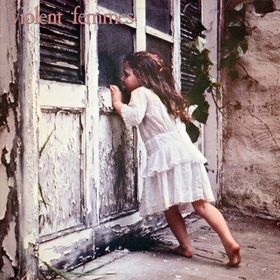
Violent FemmesI always thought that, for music nerds, clubbing presented a number of challenges. Principle among these was how on earth to retain the air of authority and composure which surely set you out as a mastermind among dunces when literally any track could be coming up next, bearing in mind that constantly trekking over to the booth to ask “what’s this?” wasn’t an option. With the invention of acid house things got simpler – no-one cared – and nowadays, one imagines, the invention of the portable telephone and the applications therein has rendered anyone able to surreptitiously fire up SoundHound or Shazam a total know-it-all.

My heyday (and what a day of heys it was) was from 1987 to 1992 and for that period, by and large, I had the Student Indie Disco Canon pretty much nailed. Nonetheless there would always be one or two tracks I couldn’t quite place, or hadn’t heard before. And sometimes these felt gripping, even life-changing. So it was with ‘Add It Up’ by Violent Femmes, which was in irregular rotation through the Saturday Night crates at DeVille’s in Manchester. It’s hard to imagine a song which would make more of an impact on an unfamiliar crowd, with it’s plaintive accapela intro, brusque, irresistible ignition and point blank lyrics. It came and went like a mysterious superhero, there and gone some weeks then absent for months, leaving half the dancefloor wondering what it was (and presumably the other half wondering why they couldn’t get just one screw).

When we found out, the album it came from was also both a mystery and a revelation. ‘Violent Femmes’ is the work of three teenagers from Milwaukee, with most of the songs apparently written whilst singer Gordon Gano was in high school. It’s almost all acoustic, including the bass guitar and brushed snare drum, but it’s played with the pace and spirit of heads-down punk rock. It’s completely distinctive, one of those records that sounds like nothing else you’ve ever heard, but also, from the moment you hear it, entirely archetypal, like it had to happen.

Musically, it’s undeniable. The songs rattle and tumble and jerk along with such momentum and gusto that there’s nothing to do but give in. The sheer energy and brio of the playing communicates itself directly to the listener. It takes real magic to use these three instruments over and over again and turn in such a delirious, captivating set.

Add to this Gano’s lyrics and vocal performance and the album deserves every little bit of its late-bestowed classic status. He is the bratty loner with a spiteful comeback for every girl who ever ignored him, every jock who ever got there before him. If there’s a better encapsulation of teenage angst and self-loathing then I haven’t heard it. Which is not to say that this is just a hormonal splatterfest. Take ‘The Promise’ for example, its lyrics following Gano’s half of an imagined dialogue (“Could you ever want me to love you?/Could you ever want me to care?”) and spiraling in on themselves as he tortuously talks himself into and out of the reckoning (“You know that I want your loving/But Mr logic tells me ain’t never gonna happen/But then my defences say I didn’t want it anyway/But you know, sometimes I’m a liar”). There is simply no better evocation of what it is to be a lovelorn teenage boy.

‘Violent Femmes’ achieved what is claimed to be a unique feat by going gold in the States four years after its release, without ever making an appearance on Billboard’s Top 200 album chart. It’s one of the records that, when I play it, make me feel glad, giddy even, that I love music. Treasures like this are out there. They can give you a charge like nothing else on earth, and ultimately be life-changing. I still cling to ‘Violent Femmes’ 25 years after I first heard Gano snarling “Why can’t I get just one kiss?” across a packed Manchester basement. I don’t wonder that anymore, but I do wonder what I’d do without this record.

Nick listened: Being that bit younger than Rob, I was at youth clubs playing board games and pool or playing round at friends houses when he was hearing this in nightclubs, and so my first exposure to Violent Femmes came when I saw Grosse Point Blank (still a great film) several year later in the mid-to-late 90s. Blister In The Sun featured prominently in the soundtrack, and I loved it; I seem to recall that the album was either hard to get or else expensive at the time though, so I never picked it up. Plus, there was something so bizarre, so snotty and compelling and hooky and weird and alternative, about Blister In The Sun that I think my brain decided it must be some kind of freaky one-off. Hearing the whole album for the first time, it clearly wasn’t; there are hooks and energy and great moments all over the place. Brilliant.

Tom Listened: My oldest mate, Alex Phillips, went to Camp America and brought back, amongst other things, this weird record by some band with a weird name that featured weird little songs and a VERY weird singer. I couldn’t stand it!

Of course, I was wrong and the record was The Violent Femmes and I went on to really like it; for me it is one of those records that I could do quite happily without but that I always enjoy whenever I hear it (usually by chance as I rarely seek it out). There’s a great energy to the songs and a playfulness and lack of pretentiousness that lifts the material into something unique and delightful.

That said, I definitely get something different from the record to Rob. We discussed this on the night but, for me, when I listen to The Violent Femmes I have always pictured snotty frat boys who are a little too clever for their own good (part of the problem I have always had with the musically very dissimilar Vampire Weekend). I’m not sure where this image has come from as Rob has assured me that the truth couldn’t be more different (and he is usually right in such matters) but it seems to remain unshakably in my mind and it always slightly mars my enjoyment of this excellent record a touch.

Graham listened: Despite being older than Rob, four years in work before I went back to being a student means my days of hey were fairly similar. It was a joy to hear this again. Somewhere lurking in a box is a TDK C90 (those were the days) with this on. I’m not sure they featured so much on the student nightclub scene “daan sarf”, but were certainly on my radar at the time.

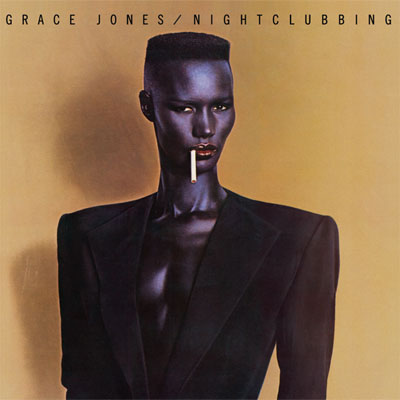
Grace Jones – Nightclubbing: Round 49 – Tom’s Selection

nightclubbing-As I recall, my first exposure to the phenomenon that is Grace Jones was the car crash TV experience of her infamous appearance on the Russell Harty chat show in the mid 80s. I guess that at the time she was out promoting Island Life (her Best Of compilation) and Slave to the Rhythm was vamping its way up the charts. Settling down to an undemanding 30 minutes of light celebrity chat I was confronted by the sight of Jones pummeling Harty (in hilarious flappy hands fashion) on live TV because he had the gall to slightly turn his back on her as he tried to interview one of his other guests. It was all way too much for my sensitive teenage self and I ran away, cowering, to hide behind the sofa. And that was that….

…until, that is, I was given a copy of the wonderful compilation Funky Nassau: The Compass Point Story. Amongst its sunny grooves and extended funk work outs is My Jamaican Guy (or My Usain Bolt Guy as my 8 year old son likes to sing) an infectious number that, although far from Jones’ finest song, was enough to pique my interest in her back catalogue and, following some internet research, it wasn’t long before Nightclubbing had risen to the top of my ‘most wanted’ list.

Nightclubbing is no way near as scary as my 14 year old self would have feared – listening to it, it seems as though Jones had yet to develop that terrifying yet cartoonish (if you’re reading this Grace, please don’t be angry) diva thing – on Nightclubbing she comes across as ominous and otherworldly but, crucially, genuine and real; more ‘Alien’ than ‘Godzilla’ if you see what I mean. Consistently excellent throughout and surprisingly accessible, I suppose Nightclubbing’s most well known track is Pull Up to The Bumper; a song so crammed full of innuendo that it is incredible that Mike Read (or any of his virtuous, upstanding chums at Radio 1 at the time) didn’t choke on their (hairy) cornflakes and immediately ban it from the airwaves, hence saving our delicate sensibilities from its possibly prurient content whilst they could carry on….doing all that fine work for charity!

But Pull Up To The Bumper is by no means the standout in the set, just one of the many highs. It is preceded by Walking in the Rain, a song that sounds like it could have been written for a James Bond film and a hell of a lot better than A View to a Kill it is too (not hard admittedly). Following it is Jones’ radical reinterpretation of Bill Withers’ Use Me which is transformed from a soulful strumalong into a gargantuan slab of reggae/funk that crawls along like some slithery, hungry jungle-based animal for its riveting five minutes or so – listen to it and tell me you don’t think of a crocodile or python or something.

One thing that speaks volumes about the quality of Nightclubbing are the cover versions – as well as the ones already mentioned, Jones also has a stab at Iggy’s Nightclubbing (unsurprisingly, given the album’s title) and somehow makes it her own, whilst sounding unmistakably Iggyish in the process. Jones also covers Sting’s Demolition Man (from Ghost in the Machine) and, whilst it’s easy to forget that Sting used to write good songs every now and again, next to this The Police sound decidedly safe (I like both versions and, to me, neither sound like filler – still not sure about what constitutes ‘filler’, despite Nick and Rob’s best efforts to educate me – but Jones’ version is surely less fillery than The Police’s).

And there we have it – Nightclubbing: exciting, vital, as fresh as it ever was and no where near as scary as one might expect.

Rating: PG

Rob listened: I had the same introduction to Tom, and the same reaction. Growing up I had no idea what Grace Jones was. Singer? Model? Robot? Insurrectionist? Mental case? A prim 10-year old, I rejected her. Way too scary. Despite the fact that less than 5 tears later I’d be dragging Public Image Limited and The Fall into the house, I retained a subconcious view of Jones as a dangerously transgressive figure best avoided, a Ballardian anti-hero.

Of course, throughout that time her music was seeping in via the radio and TV, but really it was only seeing her astonishing performance at last year’s Diamond Jubilee concert that the penny dropped and I began to think of her as an International Treasure.

‘Nightclubbing’ was great, although credit to Graham for observing that ‘having Sly and Robbie as your rhythm section helps’. I’ve since bought ‘Warm Leatherette’ which on early inspection sounds equally alluring and distinctive. I like Grace.

Nick listened: I know this pretty well, having got acquainted with it a decade or or so ago when I worked in the library – we had a copy on 12″ and there was a period when it got a battering on Friday afternoons. As intimated by Tom and Rob, Grace is an amazing, ageless, alien presence in our culture; I think my first encounter with her was in the film Vamp, which was… influential… to my pre-adolescent self. As I said on the night, I hope the new Daft Punk album sounds like, and is almost as good, as this. A brilliant record. I should probably buy my own copy now.

Graham listened: For all the reasons the others have mentioned, I never understood, or liked, Grace Jones. She seemed to emerge from a gratuitous New York nightclub/fashion/modelling scene which I completely despised in the late 70’s/early 80’s. I was convinced she only got the breaks because of her physical attributes and that there were others more deserving of the support from record companies. Her image and diva-like behaviour left me cold. This album felt cold and detached with her image being as important as the sound. Annoyingly, it is very good.

Wild Beasts – Two Dancers: Round 49, Nick’s choice

twodancersA quickly-arranged meeting with an agreement to play short records because one of us has had a baby or something; I had three records in mind, all under 40 minutes, two of them American, one of them British. When I realised it was St George’s day, the choice became obvious: old George, English hero, spend a big chunk of time rampaging round Europe like a drunken idiot, abusing women and starting fights. Wild Beasts are English, and Two Dancers casts an unflinching eye over the baser instincts of gangs of young men. It seemed fitting.

In some ways Wild Beasts are a classic four-piece rock band, but there’s a lot more going on with them than that reductive description suggests. The songs on Two Dancers unfurl and evolve in ways which aren’t obvious and which seem capricious at first, but which start to feel refined with familiarity. Rhythms lock together and interplay in understated, compelling ways for extended periods. The band’s two (extraordinarily gifted) singers occasionally indulge in whooping, sensual cacophony, and there are explosions of almost-brutal guitar noise amidst the sensuous grooves. The tension between rhythmic and structural control and the emotional releases that puncture proceedings is exhilarating, but it seems much more controlled now than it did before.

I’m not normally one for dissecting lyrics, but the words on Two Dancers are fascinating. They could easily be taken as saucy, salacious even, if they weren’t also laced with disturbing, menacing imagery. You could see the album as presenting a narrative arc, beginning with songs which unflinchingly reveal the baser instincts of groups of young men out on the town, offering only description and leaving critique to the listener, ruthlessly depicting drunken one-night-stands (“trousers and blouses make excellent sheets / down dimly-lit streets”) and murderous sexual possessiveness; “Hooting And Howling” openly threatens to murder “any rival who goes for our girls”, the protagonist refusing to excuse himself, acknowledging the brutality in his nature.

Things climax unpleasantly with “Two Dancers (I)”, which seems to describe a sexual assault from the point of view of the victim; sung in a throaty, masculine boom, it acquires a disquieting air of disconnected sympathy. Is this the inevitable end-point of the untethered (unfettered) and unchecked and irresponsible masculinity already depicted? “They dragged me by the ankles through the street / they passed me round them like a piece of meat / his hairy hands / his falling fists / his dancing cock / down by his knees / I feel as if I’ve been where you have been”: the picture painted is stark and shocking and unflinching, but the context is vague, the narrative voice not explicit, the melody forces you to sing along and thus insert yourself into the trauma, the singer seemingly separating himself from the narrator, forcing you to identify with the victim. The final two songs seem to portray first guilt on behalf of the protagonist and then condemnation on behalf of his culture.

Two Dancers is a hell of a journey to undertake as a listener, as emotionally draining as it is exhilarating. And it takes less than 38 minutes to do it. It’s an incredible record, one of my very favourites. Hell, I even own a Wild Beasts t-shirt, like a fanboy.

Rob listened: Wild Beasts are a band to be cherished, not least for the way they have explored and understood their own sound and aesthetic, focusing relentlessly on the pulsing core of what they do/want/need and getting to it. In some senses their greatest achievement is their progression across three albums, meticulously stripping away the extraneous to get to ‘Smother’, perfect distillation yet still one which depends on its two predecessors to evidence what has been excised and thus illuminate its full splendour.

Going back to ‘Two Dancers’ after listening so much to ‘Smother’ I was surprised at how close the two actually felt. For me ‘Two Dancers’ was always unavoidably, and arguably unfortunately, dominated by ‘All The Kings Men’, a perfect intelligent pop single. Reflected against the album which followed it, the rest of this collection really shines. Unlike Nick I never found ‘Two Dancers’ a disturbing listen, to the extent that I never really worked out which was the gang rape song all the critics were referring to. I just loved the sounds, and now I think I love them even more.

Tom Listened: I bought the first Wild Beasts album, Limbo Panto, having been seduced by hearing the singles from it being played on 6Music. It was hard to ignore them, they sounded way off kilter but were hook laden and relatively accessible at the same time. They certainly stood out on the (lamentable) Steve Lamacq show when they were often surrounded by hours of the indie by numbers drivel he is so fond of playing. But the album itself was too much for me, voices strain way beyond their comfort zone, lyrics are smutty and too clever by half, songs are unrealised and underdeveloped. The singles were (by far) the best thing about Limbo Panto. So I kind of decided to part ways with Wild Beasts at that point.

Then, a couple of years later, Rob lent me a copy of Two Dancers. What a revelation! There can be few examples of bands raising their game so much between their debut and sophomore recordings. Two Dancers is not perfect and is still, to my ears, inconsistent, but the highs are many and very high indeed. The band sound confident and have begun to understand how to use their (amazing) voices to best effect. So I like Two Dancers a great deal but not unequivocally. However, one thing is for sure: with the song All The Kings Men, Wild Beasts surely have one of the best singles from the last ten years.

Graham listened: I must be a sensitive soul as I found this highly disturbing. Given the imagery and lyrical content, I felt I needed to go back to Smother, to see if I had missed something when I listened to that. Wary of the lyrics of Two Dancers, I needed to find child free time to do so and finally managed it tonight while making a risotto (its a great risotto album, nicely paced, could be on to a future theme here!). Whereas Smother seemed instantly accessible and the vocal styles seemed to fit, Two Dancers was far more of a challenge for me on all those fronts. Not saying I won’t get it in the end, but I would need to give it time to grow, or more appropriately, subvert.

The Smiths – The Smiths – Round 48 – Graham’s Choice

Had illness not prevented my attendanceMI0001878519 at the previous round, this would have been my selection for that week. However, the motivation on that occasion would have been more around, “get one in by this lot, before anyone else does”.

When Nick set his ‘turning point’ theme, I looked around for records which marked a moment of  personal or listening significance and found a few turning points that led to equivalent of “no through roads”, as far as DRC is concerned. For example, the moment when you realise that it is probably a good idea to dispense with listening to prog rock, would mean all sorts of horrors could have been inflicted on fellow members.

But as turning points go, this revelation was more  like the slow turning circle of a ocean going super tanker, as it took me well over a year from release until I began to embrace the Smiths and their music. As some of the offerings detailed on this site show, at 18, I considered myself fairly eclectic in my choices and hadn’t yet tired of U2, enjoyed the acerbic prettiness of the Bunnymen, felt I was being ‘edgy’ by listening to R.E.M., and still managed to sneak along to see Marillion.

I wasn’t prepared to submit to the cultish observance to the Smiths which I saw around me. Neither was I prepared to listen to a music press touting them as the most important thing to have happened that decade. I constructed arguments  around why it was important to ignore them because of references (very misunderstood) to the Moors murders and a lead singer who seemed both too weird and cannot sing (‘…..but you should hear him play piano!’. Apologies, but could not resist).

Time is a great healer and by the end of 1985 a string of fantastic singles by the band had worn me down and I finally reached for my polo neck jumper and knelt at the temple of Mozza and Marr. The introspective and insecure subject matter of the lyrics began to fascinate me and I quickly discovered that the Smiths had some of the catchiest and most beautiful guitar based indie/pop rock that I had ever heard. My delay in submission simply allowed me to gorge on the subsequent compilations and singles I had ignored for over a year.

As for the album itself, I am so familiar with it, a judgement on how it sounds today is difficult to arrive at. ‘Reel Around the Fountain’, ‘The Hand that Rocks the Cradle’ and ‘Suffer Little Children’ still haunt with the combination of subversive lyrics and fantastic melodies. Quirkiness and energy still pours from ‘You’ve Got Everything Now’ and ‘Miserable Lie’. If you can’t sing along to all the words of ‘Hand in Glove’ or ‘What Difference Does it Make’, then you haven’t explored the treasures the ‘The Smiths’ has to offer and certainly never went to a student disco in the 1980’s.

Tom Listened: I have a theory, of which I am ever more certain with each passing meeting of the Record Club, that a predisposition (or not) towards a certain type of music or band is almost wholly contextual. Sure there is some music that is just plain awful (Black Lace, Pink Floyd) but for most bands that have released an album or two that have come to be considered as ‘classics’ it’s rare, if the volume is turned up and prejudices are put to one side, that the true quality of the work doesn’t begin to shine on through.

I have to thank Graham for enlightening me to The Smiths in general and their first album in particular. As a teenager desperate to avoid the cliques in the sixth form common room, I dismissed The Smiths as mopey and dull and way too affected – just like my ‘friends’ who listened to them. When my tastes in music began to broaden at university I listened to the eponymous first album a couple of times but I didn’t really want to like it and was almost relieved to find it mopey, dull and too affected. Although only removed by a few years, the ‘thin trebly jangle pop’ of The Smiths seemed a million miles away from the thrillingly visceral music I was exploring at the time – MBV, Pixies, Sonic Youth, Dino Jr etc and I was happy to hand back the cassette I had borrowed and say ‘thanks, but no thanks’.

But, as is so often the case, fast forward 20 years, let much water pass under the bridge and listen again, carefully and with an open mind and, sure it is still as trebly, jangly and affected as ever but there is also so much to enjoy here – Morrisey’s singing and lyrics are quite astonishing, Marr’s guitar work accomplished and innovative and the rhythm section is surely one of the most underappreciated bass and drum pairings in popular music.

I have subsequently dug out my CD of the Queen is Dead that has barely been listened to since I picked it up in a sale 10 years ago and it’s just great…as it’s supposed to be…and now I’ve allowed myself to like it, it’s as though my music collection has just gained another album! Silly me.

Nick listened: The Smiths aren’t my band, the way that some other bands are. I feel no sense of ownership or kinship or belonging to their cult, particularly. I’m too young to have caught them in their (brief, prolific) heyday, and by the time I was a teenager exploring music they were a relic, something my older brother had listened to and that, thus, I would ignore, because who wants to follow the path already trodden? So I consigned them to a mental dustbin, labelled “miserablist parody”, and carried on with other music.

I eventually bought The Queen Is Dead when I was at university, treated it almost like a coursework assignment, and, like Adorno or Debord or Barthes, admired it and absorbed its ideas and structures, but never considered that I could fall in love with it. I only explored Meat Is Murder beyond that, because the old CD version had “How Soon Is Now?” on it, which I really liked, but I didn’t really bother absorbing the rest of the record.

Until about 18 months ago when the remastered box set, which collects all four studio albums and the four early compilations together, was ludicrously cheap – like £25. So other than the big singles and such, I only really heard The Smiths outside of The Queen Is Dead very recently. My feelings for them haven’t changed much, though; I still admire them more than care for them, as much as I may enjoy the way Morrissey writes lyrics and twists melodies and song structures over Marr & co’s instrumental backing as if he’d never heard a song by another rock band before. I think, from “This Charming Man” and all the daffodil-waving and fey-ness, that I’d expected their debut album to be limp, brief, and easily blown away in a gust of wind, but actually, like The Queen Is Dead, it’s surprisingly muscular and powerful beneath the surface. Thoroughly enjoyable.

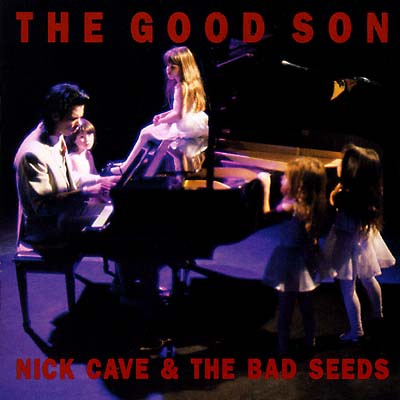
Nick Cave & the Bad Seeds – ‘The Good Son’: Round 48 – Rob’s choice

Nick Cave & the Bad Seeds - The Good SonI like to make my choices early. It’s rare that I haven’t decided which record i’ll be taking to the next Devon Record Club within a couple of hours of the end of the preceding meeting. When Nick imposed ‘Turning Points’ as a theme I immediately flashed on records like ‘It Takes a Nation of Millions to Hold Us Back’ and ‘Nevermind’ as records which saw their artists becoming everything they could be. But these aren’t really turning points, more progressions, realisations. I knew I needed to find an artist who had clearly changed direction, and to do so they must have established one trajectory before and another after.

Once I started looking for favourite acts with a dozen or so albums, the list started to format itself. Bonnie ‘Prince’ Billy? Well, i’m not sure direction of travel is a property one can ascribe to Will Oldham. The Fall? Plotting their career path would likely sketch out a three dimensional pentagram. Nick Cave occurred next and ‘The Good Son’ was my immediate and natural choice. Cave and his band are a desert island artist for me. I firmly believe they are one of most accomplished and significant acts in the history of rock and roll. I’ve thought bringing them to Record Club many times, but never with ‘The Good Son’ in mind. Nonetheless, their sixth album, released in 1990, was, for me, a triple turning point.

Personally, I’ve loved every album the band made after ‘The Good Son’. All the ones before I like and admire and listen to, but I would line them up behind this one and those which followed.

In the context of the band’s career, ‘The Good Son’ seems constitute a taking of breath. The songs, and their playing, is calm. Even when the pace picks up and the heft increases, see ‘The Hammer Song’ and ‘The Witness Song’, there is very little sense of the frenzy, the possession, that charged the earlier records. On ‘The Good Son’ Nick Cave is no longer the deranged swamp church preacher. Now he is in control.

Legend has it that fans of the band, perhaps those who had stayed with them since The Birthday Party were at their savage peak, were confused or dismayed at this turn, at the sound of tender piano ballads where they had become accustomed to hollering, slashing blues. But since ‘The Good Son’ Cave and his compadres have released four records which I would consider masterpieces. The frothing Wild West opera ‘Henry’s Dream’, the state-of-the-21st-Century opus ‘Abattoir Blues’, ‘The Boatman’s Call’ – a prayer to love and ‘And No More Shall We Part’ – a recapitulation and perfection of cave’s milleu and the Bad Seed’s brilliance.  It seems to me that none of these would have been possible without ‘The Good Son’, which reset the meter for the band and opened up a whole new set of possibilities.

Finally, for me, i had a turning point with this album itself. this was The third album i bought by the band, if you include ‘Tender Prey’, which I took back to Piccadilly Records, convinced I had a bad pressing. Thereafter ‘Straight To You’, one of the all time great love songs, was the flame that drew me to Cave, and I loved the album it came from, ‘Henry’s Dream’. ‘The Good Son’, released before ‘Henry’ but purchased after, made little sense to me at all, until suddenly it did. I think Shane MacGowan’s stumbling, winning version of ‘Lucy’, released in 1992 as a B-side to the pair duetting sort of pointlessly on ‘What A Wonderful World’, may have broken me in, or maybe the pure, dripping beauty of ‘The Ship Song’ finally penetrated my stern heart. I don’t think I’d ever clicked with such a slow record, a collection of such apparently plodding songs, but when ‘The Good Son’ came into focus for me it also opened up a world of possibilities which would take me from Tindersticks to Tom Waits, Palace Brothers, Low, Lambchop, Scott Walker and on and on to much of my favourite music today.

So, not the Nick Cave & the Bad Seeds record I would have chosen, but the right one for this evening. I firmly believe that the band and their singer songwriter took a big step here and have grown better and better as they have matured in the near 25 years since. In that time they’ve produced albums as rich, complex, self-contained, witty, engaged, moving, poetic, playful and rewarding as anything from Dylan’s back catalogue, but with a tiny fraction of the acclaim. If ‘The Good Son’ was the breath which made that possible, i’m sure glad they took it.

Tom Listened: Little do I want to pop Rob’s bubble of bliss since becoming a father less than a week ago, but I have to say that in the case of Mr Cave he’s just plain wrong. Having gone back and listened to 1986’s album of cover versions, Kicking Against the Pricks and then, immediately afterwards, the post Good Son Henry’s Dream…and fully expecting a DRC epiphany, I regret to say that things panned out exactly as I remembered them. The former is, for me, so wonderful, in a teasing, vaguely cheeky, yet wholly reverential way to the originals and it easily surpasses any of the latter works of Mr Cave’s I own (coincidently they comprise solely of the four ‘masterworks’ that Rob has mentioned in his write up). I found Henry’s Dream as patchy as ever – some fantastic songs sure (When I First Came to Town is my favourite) but it doesn’t hold up as a complete work as far as I am concerned.

So I guess it makes sense that The Good Son worked for me much more than I expected it would. I knew some of the tunes already (The Ship Song and The Weeping Song) but, on first listen they in no way eclipsed the rest of the material and all the songs seemed to neatly sidestep Cave’s occasional over-earnestness that at times muddies my enjoyment of his later work.  So I am very grateful to Rob for highlighting the transition point in Nick Cave’s career but, unlike Rob, I expect I will be exploring the pre Good Son material before delving further into the latter half of his chronology.

Nick listened: Like The Smiths, I bought my first Nick Cave record whilst at university; The Boatman’s Call. I loved it dearly at the time, though I’ve come to understand that it’s pretty atypical of his oeuvre. I’ve not really explored beyond that, though; I bought No More Shall We Part when it came out but found it very dry, despite the obvious care and craft that had gone into its construction. The fact that I’m using words like ‘craft’ ad ‘construction’ is telling; I like Cave’s assertion that he works on music in an office, like it’s a day-job, in theory, but something about the outcome didn’t do it for me. I’ve listened to Murder Ballads a couple of times, and the first Grinderman album (which I really quite liked), but nothing more.

This was really good though (as was the track from Abattoir Blues that Rob also played), and makes me want to investigate Cave’s ominously large catalogue a bit more. Without contextual knowledge of what came before, or much of what came after, I have no idea if it’s a turning point or not – it sounded like I expected Nick Cave and The Bad Seeds to sound, although perhaps more supple?

Graham Listened: It was great to finally find time to listen to a whole album of the man’s work. I have been dipping in and listening since the days of the Birthday Party, but strangely, never felt the need to buy an album for myself. Every time I catch him on the TV performing live I find his work fascinating and engaging.  It’s almost as if since he struck out on his own, nearly 30 years later, the size of his back catalogue has become too intimidating to know where to begin. This was great and sounded like something I should own, but reading other members comments, I still don’t know where to start.

Buffalo Tom – Let Me Come Over: Round 48 – Tom’s Selection

10805Buffalo Tom were the grunge era’s nearly men; seemingly always on the verge of breaking through into the big time but destined to be forever looking on from the sidelines (like the everymen they so blatantly were) whilst the demi-gods – Cobain, Vedder, Dando, Corgan – strutted their charismatic stuff through the pages of NME, Melody Maker, Rolling Stone and Spin and on to the day glow X-factor hit machine of its time that was MTV. I love the band photo of Buffalo Tom on the back of Let Me Come Over – Bill, Chris and the eponymous Tom sat around an anonymous table in some anonymous diner, looking slightly apprehensive yet vaguely excited like three young Dads about to go and see their children in their first Xmas panto. It’s a brilliantly mundane photo of a brilliantly ordinary band (that’s not meant to sound pejorative at all) and it wholeheartedly captures the reason why I like them so much…and why they could never mix it with the big boys – they were just three great blokes singing great songs without an iota of pretense or showmanship.

And that’s why, of all the records I immersed myself in the Spring of 1992 (one of the key turning points in my life) this is the one with the greatest power to evoke personal (rather than scene based) nostalgia. You see, when I listen to Nevermind or Blue Lines or Slanted & Enchanted all records that, in their own way, broke a mould and set a new agenda, and all records that I love or have loved, I do get a sense of nostalgia but they don’t take me back to myself, sat in my bedroom in my parents’ house counting the days before I would leave to go on my trip of a lifetime to Australia. No. I am reminded of Grunge and Trip-Hop and Lo-Fi and the music scene in general at the start of the 90s. These records are so connected to what came next, so steeped in the scene they spawned that, for me, the memories they evoke are forever blurred, tarnished even, so that I can’t even tell whether those memories are true or illusionary. But seeing as it was one of the most exciting times of my life, full to overflowing with the thrill of anticipation, it’s great to head back to those feelings every now and again…and that’s where Let Me Come Over comes in.

Buffalo Tom existed in a vacuum really. They had no angle, no ‘USP’ as Nick puts it. They just wrote really good songs…well, I liked them anyway! Admittedly some of their work was patchy and, for me, their five albums go: good, not so good, great, not so good, good. But I may be wrong as I haven’t listened to albums 1, 2 or 4 for some time now (and there are a few other albums but I don’t know them). But I am pretty sure that album number 3, Let Me Come Over, is the one where the stars aligned and there can be but a few albums of straight ahead US alterna-rock with a hint of grunginess that set the bar so consistently high through 12 tracks. There are no weak links here, no filler, no mis-steps and revisiting Let Me Come Over is like spending time with a long-lost, very dear and completely trustworthy friend. There’s no danger, no unpredictable mood swings or ghosts in the closet, just warmth, pathos and 12 sweet melodies – from the noisy opener of Staple to the noisier closer Saving Grace, through moments of calm (Frozen Lake), poignancy (Mineral, Porchlight) to anthemic sing-alongs like Taillights Fade and the unimpeachable Larry – that make me feel good about life. And what’s wrong with that?

Rob listened: I loved Buffalo Tom and I fully endorse Tom’s assessment of their place just below and to the right of the pantheon. Although a couple of their songs, ‘Sunflower Suit’ and ‘Crawl’, had as much impact one me and held the same addictive pull on me as anything Nirvana or Pixies ever released, it seems broadly fine for them to stand as workmen. The work they did was great and they made me very happy by doing it. ‘Birdbrain’ probably has more resonance for me, soundtracking the Summer between my first and second year at university, but it was great to hear ‘Let Me Come Over’ again after so many years. It may be off in the distance now, but its taillights have yet to completely fade.

Nick listened: My brother, who’s about the same age as Rob and Tom, professes to only like 3-minute-power-punk-pop. I have noticed that he has a Buffalo Tom album or albums on his shelves. Which is not surprising. Despite being aware of them for ever, seemingly, I’ve never actually listened to them knowingly. As such, I’ve got none of the attachment to them that Rob, Tom, and presumably my brother might do. This was very pleasantly workmanlike, as it were, but I definitely got the sense that it lacked that certain je ne sais quoi or creativity or charisma or insanity that the likes of Nirvana or Smashing Pumpkins had which made them explode out of the scenes from which they emerged. But Buffalo Tom don’t seem to be all that bothered about not exploding, which is fair enough.

Graham listened: Another band I always knew were there and deserved investigation, but never got around to it. I thought this was really great and after borrowing the album and listening to some others, I would agree it sounds their best. Strangely it sounds as if the ‘…Tom’s did it for Tom, in the same ways the Screaming Trees, did it for me around the same time. As no-one is  still reading this far down a review, its probably safe to reveal I currently don’t, and have never have owned, Nevermind. Phew, think I got away with it!

Marvin Gaye – What’s Going On: Round 48, Nick’s choice

Marvin Gaye "What's Going On" high res cover artWhen I set us the theme of ‘turning points’ a fortnight or so ago I didn’t have a specific record in mind; or, indeed, a specific interpretation. A ‘turning point’ record could be a fulcrum of an artist’s career, a dramatic change in your personal relationship with music, a shift in the way an entire genre works, or anything else we could gerrymander an explanation for. It seemed like the kind of vague idea that could make for an interesting evening’s listening…

But when I actually started thinking about it I wasn’t feeling inspired. So I threw the idea out on Twitter to see what bounced back; someone mentioned this and a lightbulb went on in my head. It’s the most obvious turning point album there is, on several levels: Marvin’s seizing of creative control from Berry Gordy was an entirely new thing for Motown and for him (though not, quite, for soul music as a whole; Isaac Hayes’ Hot Buttered Soul pre-dates it by about 18 months); it set the scene for Stevie Wonder’s amazing string of 70s solo albums (as well as quite a few other people); it established the idea that a soul album by a big-name player could be something other than a collection of singles and cover versions; and, for me, it was a seismic marker in my teenage musical development – the first soul album I bought, and a gateway into entire worlds of r&b and jazz that I’d barely been aware of outside of oldies radio beforehand.

As a 16-year-old I was a bit baffled by What’s Going On at first; I’d read a huge amount about it, about how it was legendary and amazing and significant, Ian Brown from The Stone Roses claiming it was the greatest album ever made, how it was soulful and serious, dealing with the Vietnam war and ecological catastrophe and economic meltdown. So I was expecting big things, as you would. Given what I knew about soul music back then, which wasn’t much beyond recognising all those classic Stax and Motown singles, I expected What’s Going On to be a string of undeniably great soul bangers, hit after hit after hit.

But actually, it’s something else entirely; the entire 35 minutes is a single piece, almost, the first side flowing through six songs which are more like segues or sections than discrete units, the second side a sandwich of two amazing grooves and a piece of subtly devout gospel. The opening two numbers, for instance, are essentially the same; the title track and its near-twin are separated by little but their lyrics. “Save The Children” and “God Is Love” are hymn-like calls to God, enough to make an atheist teenager feel hypocritical and uncomfortable just by listening in. “Mercy Mercy Me (The Ecology)” and the title track were about the only two I recognised; the rest seemed formless, almost, strings and rhythm section and brass weaving through what seemed like improvisations (and which, I learned over the years, often were).

It took me some time to adjust my expectations and come to understand this record, but it wasn’t a difficult thing to do; not with music this amazing. Nearly 20 years on, I’d definitely claim What’s Going On as one of the greatest records ever made.

Tom Listened: Of course What’s Going On has been on ‘The List Of Albums I really Should Own But Don’t’ for years now and hearing it in full for the first time at Nick’s house has moved it way on up said list. I wouldn’t say I came close to working it out in a solitary listen and just as Nick has suggested in his write-up, it confounded my expectations (much more so than Innervisions which sounded more-or-less exactly as I had imagined it would beforehand) but I have been listening to records for long enough now to be able to tell the difference between discombobulatingly (is that a word?) good and discombobulatingly bad and this most definitely was the former.

A joy to listen to…as are most offerings at Record Club!

Interestingly (well I found it interesting anyway) I just noticed for the first time the lack of question mark in the album’s title.  Always assumed it was there. That changes things!

Rob listened: I too was baffled by ‘What’s Going On’ when I bought it in the mid-90s. It’s still a swirling, beguiling record, never quite what i’m expecting, always hiding something, always giving something different away. It still sounds like an amazing achievement. 40 years after its release I struggle to think of any other albums so compact yet fully-realised, so self-justifying as ‘What’s Going On’.

Graham listened:  Never heard this before and what a far cry from what I expected. Nick doesn’t credit himself enough for simply being a “bit baffled” by this as a 16year old. At my age it had me completely baffled by side 2. Having recently watched Platoon, I was happily groovin’ in the R&R bunker scene vibe as soon as the album began, but was not expecting the complete mixture of social and political commentary/religion/spirituality/jamming/gospel  that followed. Far too much to take in on a single listen.