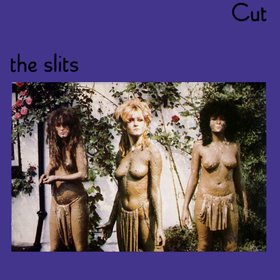
The Slits – Cut – Round 13: Tom’s Selection

Of all the myriad genres into which popular music has been categorized, for me punk has been one of the most difficult to embrace. I blame The Sex Pistols and The Clash, in particular two of the least representative songs in their respective oeuvres. Thinking these songs (have you guessed what they are yet?) as indicative of the entire movement, much of the real quality on offer passed me by for many, many years. And as a result I wasted precious time listening to chart drivel (Brothers in Arms – ouch!, Invisible Touch – the shame!, August by Eric Clapton – almost too embarrassing to admit to!) when I could have been immersing myself in truly astonishing music like Cut by The Slits.

The back story (please feel free to skip). At the tender (and impressionable) age of 15 I got a job working in the Ilminster (of bypass infamy…and not much else) Co-Op, stacking shelves for a pittance whilst marveling at the tightness of the correlation between ill fitting hairpieces and the odour of stale urine. Hours passed by ridiculously slowly and the prospect of venturing to the local video game ‘arcade’ – it was a stinky room with a couple of out-of-date games with broken joysticks, a jukebox and a sticky carpet – at lunch was scant reward for such a mind-numbing morning. The two staples on the jukebox were…wait for it…Frigging in the Rigging and Should I Stay or Should I Go. Two songs that, to this day, are so unremittingly awful, and are connected to such awful times, that I still get a shudder down my spine when I recollect them. In fact, writing this has been something of an ordeal as I now have them both firmly lodged in my brain. Of course, both bands released work of great quality and huge cultural significance and I have grown to quite like The Clash. I have, however, never quite seen past the posturing and rhetoric of The Pistols and I still have problems when I hear that sneary Lydonesque warble that was so prevalent throughout the early days of punk and, to the 15 year old me, symbolized what punk was all about.

So I came late to the party and it has only been in the last fifteen years or so that I have realised that floating around the fringes of punk are some fantastic, innovative and honest-to-the-core records that are pretty much unique within popular music. And Cut is right at the top of the tree. It is, crucially for me, much closer in sound and attitude to reggae than The Ramones and is a very distant relative to Never Mind The Bollocks. Hugely sophisticated yet childishly simple (and they say the band members couldn’t play their instruments!?!), dangerous and threatening whilst being welcoming and accessible, rhythmic, melodic and hilarious…it’s a cracking record and one of the most important of the era.  Cut has paved the way for so much that has come since, the Riot Grrrl stuff from the 90s, Sleater-Kinney, Bjork’s yelps, PJ Harvey’s independence and, more recently, the chants and playground feel of tUnE-yArDs. But whilst Merrill Garbus conjures up an inclusive, celebratory, Sesame Street style playground, The Slits playtime is full of menace; back-stabbing cliques from an inner city comprehensive out to get you. Having a laff, but at your expense. As they say…’Typical girls feel like hell. Typical girls worry about spots, fat, natural smells’. But in the same (awesome) song they also manage to rail against the system: ‘Here’s another marketing ploy. Typical girl gets the typical boy’. The listener is left in no doubt that The Slits are definitely not typical girls and that is starkly evident not just from  the words they use throughout Cut but from the way they use them.

If you like punk, you already own this record. If you think you don’t like punk, Cut may be the record that makes you think again. It did me.

Rob listened: I was passingly familiar with The Slits but had never listened properly to ‘Cut’. It’s on the very long mental list of post-punk canon I have to investigate at some point of infinite idleness in the distant mythical future (hey Minutemen, Bad Brains, This Heat, Television Personalities, The Pop Group… i’ll get to you guys too). So pleased to hear it this evening. What a stark reminder of the wild, fearless creativity that flowed from punk’s second wave and, amidst the clattering reggae fusion, what a strong voice for young women. Ari Up R.I.P.

Final note: We’ll get a chance to discuss Tom’s view of one of the great rock albums (Never Mind The Bollocks) and one of the great rock vocalists (John Lydon) when I bring ‘The Flowers of Romance’ to a meeting in the near future…

Nick listened: I liked this, a lot; enough to buy it the following morning. Well, order it online. Sadly the rainforest shop shipped it via the notoriously poor Home Delivery Network, and it still hasn’t arrived, a week and a half since I placed the order, meaning I’ve not had chance to reassess and see if it left me as impressed second time around as first.

I liked Cut so much because it wasn’t what I was expecting; I was expecting something punky, amateurish, spiky, confrontational, and what I actually got was a really awesome, characterful dub-pop, shot through with the energy and freedom of punk but not the safety pins, perhaps. I had no idea it was produced by Dennis Bovell, that it was so minimal, so smooth, so sinuous, so… dubby. I goes I should have cottoned on that it wasn’t going to be a spiky, guitar-noisey first-wave punk album simply from the fact that it came out in 1979 and not 1976, but I was four months old when it was released, so you’ll have to forgive me. Like Rob, it’s one of those records that’s been on my mental checklist to investigate for some time. I’m glad Tom gave me the opportunity.
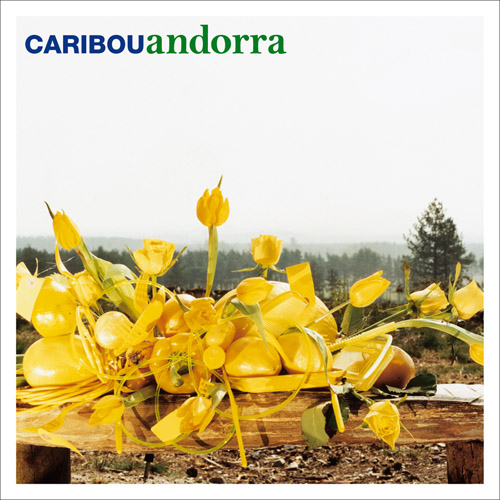
Caribou – Andorra – Round 13: Nick’s selection


I don’t know how one is meant to go about quantifying how much one likes a record. I have always, often vehemently and profanely, objected to giving them marks out of ten, for instance (especially if decimal points are involved), and words are often inadequate, as anyone who’s tried their arm at writing about music knows. Maybe we should fall back to the list, another familiar tool that I dislike; but even if we do that, how do we determine what goes in first place, and what goes in second? It’s very rarely, in my experience, a clear-cut thing, and the dissonance between the arbitrariness of the choice and the potential authority of the reading of the choice is troublesome.

Perhaps the best way, although it seems a little utilitarian as I type, is simply to judge it by how often you’ve listened to a record through choice? Not the “I want to get to know / get to grips with this” kind of choice, but the “I want to listen to something I really enjoy” kind of choice. If we do use that as a metric, then Caribou’s fourth album, 2007’s Andorra, is maybe my favourite album of the last five years, because I honestly can’t think of another record I’ve played this much simply because of the pure pleasure of listening to it.

I still think of and describe Caribou as a “laptop guy”, after the gentle glitches, burrs, and electronic jazz tones of his debut album, but Andorra, for the first seven tracks at least, sounds for all the world, at first impression, like it was recorded in 1967 rather than 2007. Influenced by The Beatles, The Beach Boys, and especially The Zombies (well, sounding like, if not necessarily influenced by – although I suspect so strongly!), and touched with the familiar jazzy drum rolls and occasional brass touches that have characterised everything Caribou has released, it seems as if Dan Snaith has made an album of propulsive, groovy, gently psychedelic love songs rather than experimental laptronica. And he has, pretty much. But Andorra is an album of experimental laptronica, too.

Because the final two tracks, and subsequent listens to the previous seven, reveal this to be very definitely a modern record, clearly indebted to electronic music and made almost certainly by one man (with the occasional guest vocalist) on his own, with a roomful of instruments and a computer full of software. There are various clues to the album’s electronic heritage and gestation; something in the impossible drum fills, the intricate layering of sound, the subtle noises that simply couldn’t emanate from a traditional “rock” instrument, and the complexity of the arrangements betrays that this isn’t mere 60s pastiche or homage. And then there’s the clattering, disintegrating, exhilarating, beatific electronica of the final track, Niobe, quite unlike anything else on the album, or anything that Snaith had released previously. It points towards where Caribou would go with Swim – deeper into electronic dance music, taking it right to the edge of chaos.

I love Andorra, and listen to it, and Caribou in general, with an addict’s frequency. I love the songs; the opening lyric and riff of Sandy, the euphoric surges of Melody Day, the gentle soul of She’s The One. But I suppose, if I’m honest, I love the sound just as much, if not more; the way Eli descends into trippy, psychedelic bass and brass at the halfway mark, the tumbling discord and prettiness of Niobe, the delicious drum patterns of Sundialing. For me it’s both a warming emotional thrill and a delicious, aesthetic, sensual kick to listen to.

Tom Listened: Caribou have always fallen into the ‘I should really check this out’ category of my music wishlist. I have seen their albums for sale on many occasions but have always opted to get something else instead, nearly making that purchase but never quite committing. I think the main reason for this is that I have owned Manitoba’s ‘Up in Flames’ for many years now and, whilst I liked it a whole lot to begin with, rarely go back to it these days. For me UIF is easy to admire but hard to love. the songs are spectacular, but I don’t really feel an emotional connection to the music.

Obviously Dan Snaith has moved things on in terms of his sound since then and Andorra sounded amazing. Lush, rich and beautifully put together this is busy but uncluttered music that sounded wonderful on first acquaintance but will clearly reward repeat listens. I am keen to purchase it…time will tell whether it endures or goes the way of Up In Flames but I have a suspicion that the former outcome is the more likely in this case.

Rob listened: I let Caribou’s ‘Swim’ burble by in the background a couple of times last year but found it hard to give full attention to. I know how highly Nick prizes these records and now I can hear why. Complex but without being oblique, there’s a whole world packed in here. It struck me as a minor wonder that Dan Snaith has used his laptop to create the sound of a real band so fiendishly layered and constructed that no real band could reproduce it, until Nick told us that on stage that’s exactly what him and his buddies do. Shows how much I knew about Caribou.

Jim O’Rourke – Eureka: Round 12 – Tom’s Selection

There are many reasons why I love Devon Record Club. Amongst these is the fact that it has saved me a not inconsiderable sum of money this year – instead of rushing out and obtaining the latest flash-in-the-pan, I have gone back to my record collection and rediscovered/reappraised so many treasures I have either neglected, forgotten or failed to fully appreciate in the first place. I have gained so much enjoyment through doing this that I am beginning to wonder if I need any new music at all, which is surely in direct opposition to the point of being in a record club in the first place. Oh well…whatever.

Insignificance, Eureka’s immediate successor in the Jim O’Rourke discography definitely fell into the ‘wrongly neglected’ category; an album I have always greatly enjoyed but have rarely turned to in recent years. Eureka itself has always been, at least until the last few months, one of those records that I knew I was supposed to like but never ‘got’. Insignificance is a sparkly beast, crammed to bursting with hooks, riffs, dynamism and, to my mind, some of the most interesting, hilarious, devastating lyrics in modern music. The fact that Eureka and Insignificance look like two sides of the same coin (both bearing somewhat disturbing images by Japanese artist Mimiyo Tomozawa) underline O’Rourke’s desire to subvert and discombobulate. The records sound completely different and, with the benefit of hindsight, I reckon that it was the fact that Eureka wasn’t Insignificance Part II (I know this doesn’t make sense in chronological terms but I obtained Insignificance first) that had been blinding me to its magnificence for all these years. But in recent times and with fresh ears, Eureka has begun to occupy an increasingly prominent place on my turntable, and in my heart, so that when Nick announced that our next offering had to be from 1999, I found myself favouring Eureka over another of my most treasured albums, Gorky’s Zygotic Myncci’s ‘Spanish Dance Troupe’.

What makes Eureka so great? It’s hard to distill into words but, over and above the beautiful musicianship, skillful arrangements and glittering songcraft, is an overwhelming feeling that, to O’Rourke, the listener is there to be challenged and confused.  Take the final, seemingly throwaway track, Happy Holidays. On the face of it, this is just an afterthought tagged on the end of the album, acting as a coda. But on closer listening this is surely a paean to some of O’Rourke’s influences. In under two minutes the song shifts through four phases starting out as a Jeff Buckley strumalong, transitioning through some Robert Wyatt wailing into a bar or two of Todd Rungren before signing off with something resembling Craig Wedren from Shudder to Think. Blimey!

So, is he poking fun at the genres he is inhabiting so adeptly on Eureka or is this a work of reverence? Is his gorgeous cover of Bacharach’s Something Big asking us to laugh at the original or buy the back catalogue? Is his tongue firmly in his cheek…or not? I don’t think it’s possible to work out the answers to these questions by listening the album, but I love the fact that I am being made to think about it. It’s a difficult act to pull off (interestingly tonight’s offering from Nick, The Make-Up, elicited a similar discussion) but I personally feel that in Eureka O’Rourke has made exactly the album he wanted to make before he went into the studio and that part of his intention was to create a soundscape that would force these questions to be considered by the listener. Oh…and to make some bloody great music into the bargain!

Nick Listened: Tom’s back to bringing along records that I already own to DRC, which is very nice of him, except this one I have actually listened to, and quite a bit too. I’m quite a fan of O’Rourke’s work, whether’s it’s this era of his solo career or his contributions to Sonic Youth, Wilco, and Loose Fur, especially his attention to and care for sound and mixing. Eureeka was actually one of the first albums I thought of choosing for the 1999 theme, but I decided against it. Partly I decided against it because I much prefer its slightly more energised follow-up, 2001’s Insignificance, which I’ve listened too far more often in the last few years.

Hearing this again, for the first time in a long time, was great though. I’ve always loved the beatifically repeating and surreptitiously swelling opening track, but often found that after that my mind drifts off and I lose sense of the rest of the album; I’m aware of its loveliness but not its substance or content. The record club chatter wasn’t much help at making me absorb the rest of the LP, but talkig about and engaging with the record directly definitely helped, and Eureeka struck me, 12 years on from its release, as sounding like a really influential record – the likes of Sufjan Stevens feel like they might owe a debt to its textures, balance, and atmosphere.

Graham Listened: A hat-trick of albums that I had never heard was the reward for my failing to find anything from 1999 that I wanted to bring along for a listen (though not played, there  was nearly judge’s warning issued when my copy of the Chemical Brothers 1999’s Surrender was found in the cd case of  1997’s Dig Your Own Hole!). Anyway Tom’s choice vexed me a little. I really enjoyed the variety/songwriting/arrangements etc, but on the night felt that I needed to know where Mr O’rouke was coming from. I was struggling to get whether he was being coy/amusing/ironic/playful/serious with the style and variety of the album. Clearly my problem as perhaps I should have not worried and just listened, but there seemed to be something about the album that had me questioning the artist. Should have just sat back and enjoyed I suppose?

Rob listened: Jim O’Rourke sits somewhere in the middle of my list of artists I should know something about but don’t. He flits and floats about around some of my favourite bands and records but I’ve never bothered to investigate him properly. In discussion I was surprised to find that so many people (inside and outside DRC) are so realtively heavily invested in him. I loved the record as it played (I have heard it before i the background) and ‘Women of the World’ stuck around as head music for about a week afterwards. Picking out the references and pastiches was good fun too. Most of the records the DRC have been animated by have been those where the artist’s intent is far from clear, and this worked well in that regard.

MAKE-UP – Save Yourself – Round 12: Nick’s selection

I picked 1999 as a theme because it feels, to me, like it’s perceived as a fallow year. 1997 felt like a marquee year for big modernist rock releases, Radiohead, The Verve, Spiritualized, Blur’s step towards American experimentalism, Oasis’ grand folly, plus the big-beat monopoly of The Chemical Brothers, Fatboy Slim, Prodigy’s US breakout. 1998 was a transition year, the moment Britney landed, the last year when something definably 90s happened. 2000, with XTRMNTR, The Marshall Mathers LP, At The Drive-In, Kid A, Queens Of The Stone Age, PJ Harvey, Supreme Clientele, Coldplay’s debut, and Stankonia, feels like the beginning of a new decade. But 1999 feels like The Flaming Lips and piss-all else.

I first heard MAKE-UP in 1999, and while I really love it, and have subsequently bought a handful more albums by them (although I’ve never investigated Nation of Ulysses, the group they evolved out of), I’d never claim it as a classic nor expect all that many other people to love it. I do think it’s great fun, though, for pretty much every second of its 35-minute length.

I understand Nation of Ulysses as a shouting, testifying, politically-charged, DC post-hardcore band who ran their course and then, in the mid 90s, under the leadership of singer Ian Svenonious, adjusted line-up slightly and transformed into a late 1960s underground gospel-garage dirty psychedelic band. Whether they’re pastiche merchants, parodists, or loving adherents of a certain aesthetic is not clear – there’s such care in the way this album, and all their others, is recorded, in the way the band present themselves from record sleeves to matching yellow jumpsuits, such passion in the onstage testimonials to the power of rock and roll, of soul, of jazz, of gospel, that if this is pastiche or performativity then it’s of the type that is so committed as to overwhelm any initial motivations. MAKE-UP blow notions of authenticity out of the window; there is no inclination of where the line between the real people end and the “band” (as gang, as performance, as philosophy, as presentation) begins – at least one other album by them claims to have been recorded live in front of an audience despite (apparently) not having been.

Save Yourself itself is murky, funky, sexually-charged (comically so – despite Svenonious claiming in an interview around the time that advertisers only used sex as a selling tool in order to encourage people to procreate and thus ensure the existence of future markets to buy products, and not because sex itself is an intrinsically pleasurable activity – again, where does performance end?), driven by blacker-than-black, echoing, reverberant, subterranean basslines and decorated with lashes and storms of properly dirty electric guitar plus squalls and swoons of excitable brass. There’s a two-minute song built around an irresistible organ riff and entitled “White Belts”; a lascivious paean to the angles and edges of shapes with multiple sides (“I’ll be your tetrahedron” indeed); a song called “C’Mon Let’s Spawn” with brass which can only be described as erotic and which, joy of joys, fades out and then back in again. The album climaxes with an eight-minute cover of “Hey Joe” which turns the song into a duet between Joe and his maltreated lady, which devolves into accelerating guitars and a bizarre telephone conversation. It’s brilliant, but it’s the sound of 1969, not 1999.

Boredoms – “◯” (circle) from Vision Creation Newsun

As Save Yourself is only 35 minutes long, I picked a big track to go with it – the storming, psychedelic, tribal rave-up that is the opening track from Boredoms’ masterpiece. I think of VCN as being an album from 2000, which is about when I first heard of it, but it was actually released in autumn 1999 in the group’s native Japan. Boredoms are another group who evolved out of a punk band, only this time the punk band wasn’t another unit with a different name; it was Boredoms themselves. Over 15 years they moved from shouty, near-incoherent, cyberpunk beginnings into a relentlessly experimental, rhythm-worshipping collective who bridge the gaps between dance music, The Wire-friendly avant-garde noise, experimental indierock, prog, and blissful ambient. Over it’s near 14-minute length, “◯” sums up the entirety of its parent album – repeated guitar riffs and raucous multiple-drummer rhythms disintegrating and rebuilding into and out of calmer, disorienting lulls of sound. I find it exhilarating and irresistible.

Tom Listened: I really liked the first track on this album. It felt not unlike Kill The Moonlight era Spoon and set the album up beautifully; tight, taught and spare it really whetted my appetite for more. Unfortunately, for me, the rest of the album failed to come close to those initial heights and I found the rest of the songs to be a bit of a cliched mess to be honest. It seemed as though the album’s production was deliberately muddied to give it that late 60s Nuggets garage rock sound so that, whereas Jim O’Rourke is updating the sounds of the 60s within a modern context and, to my mind, creating an homage in the process, Make-Up on Save Yourself came across as pastiche. It wasn’t awful, but after the excellent first track (Save Yourself) I was expecting the unexpected.

Graham Listened:

A band I had never heard of, but that’s why I enjoy DRC. This was great stuff. Once I was updated on the band’s philosphy and mission, I could really appreciate their sound was for themselves and their followers only. Commercialism was not going to cause them to stray from their path. In fact it sounded to me like a couple of tracks could have easily been transformed in to bright/catchy/poppy hits, but that is clearly not where Make-Up wanted to go. Still their militant funkamentalism (I hereby copyright that expression!) was really enjoyable.

Low – ‘Secret Name’ – Round 12: Rob’s choice

This was one of my Christmas albums in 2000 (I assume). I certainly remember sitting down at my parents house to listen to this alongside my other choice, A Silver Mount Zion’s ‘He Has Left Us Alone but Shafts of Light Sometimes Grace the Corner of Our Rooms’ – which makes me wonder just how much more downbeat festive listening could possibly get. I listened on headphones and vividly recall waiting for something to happen. When, over the course of the album, nothing did, I remember thinking ‘well, that was a waste’. Turns out I wasn’t listening closely enough. Everything was happening.

Perhaps listening to A Silver Mount Zion next made ‘Secret Name’ sound like the Supremes, but one way or another Low felt like a band worth sticking with. I liked ‘Things We Lost in the Fire’ a deal more – although now I prefer this – and we’ve been together ever since. Only a few years later did I go back to ‘Secret Name’, now attuned, and discover the real treasure.

Low get some lazy stick for being just a slow band, but think for a moment about just how much more difficult it is to make low-tempo music hang together. Surely most idiots can paw and bang away frantically at guitars and drums and create some energy. It takes incredible craft, genius almost, to create such power from space, from restraint, from a gentle two-step.

Listen to Alan Sparhawk’s singing. Every word has to be perfectly phrased and delivered or else the entire song would be punctured. He can’t just roar his way through his performance and as a result each vocal line is a string of pearls slowly, carefully, magically being pulled from his mouth.

And then there’s the other voice. The sequencing may be accidental or very deliberate, but holding back Mimi Parker until part way through the third track ‘Two Step’ is a killer move. When she finally fills her lungs and starts to sing, not only is it a gorgeous moment, it lifts the whole record onto another level and it never looks back.

The sound of ‘Secret Name’ is not distant or removed, it’s warm, intimate, close. But beneath the surface there are strange sounds scratching, on ‘Don’t Understand’ and ‘I Remember’. This initially seems like exceptional care for a record-maker like Steve Albini to take but his stated aim is capture a band’s aesthetic, and here he does so perfectly. With hindsight this seems like their first step away from their stripped down roots towards a (marginally) more dynamic sound. I think it’s Low at their beautiful, devotional, heartbreaking best.

I talked a lot about this record whilst playing it for the Club. Too much, but talking’s pretty much what we do. Only latterly did I explain that Low are a trio from Duluth, Minnesota who play guitar, bass and drum (usually singular). Whether you know them or not, you should be spending time with them.

Tom Listened: I am really grateful to Rob for bringing this album to the record club, not just because I thought it was majestic, beautiful, delicate, quietly stunning etc,etc but also because I have since gone back to Things We Lost In The Fire, yet another great album that has wrongly been gathering dust on my shelves for quite a while.

Secret Name sounded less accessible than TWLITF and listening to it has helped me appreciate the slower, denser songs on the latter album. I find it difficult to predict the effect of listening to a new album by an already cherished band on the albums I already own by them. Sometimes the new album comes to overshadow the previous work to such an extent that I rarely go back to the older albums (for example, since getting Noble Beast by Andrew Bird, I rarely go back to The Mysterious Production of Eggs, even though it was one of my favourite albums of the last decade). Sometimes new work sits alongside the older albums to form part of an equal whole (I would count the American Music Club albums in this category, all are pretty much equally brilliant and equally flawed). And occasionally, as has been the case with Secret Name, a new album makes me appreciate what I already had more than I ever did.  To my mind, the fact that Secret Name was so slow, so measured has helped me look beyond the ‘pop classics’ of Dinosaur Act, Sunflowers, Like a Forest and In Metal (you know, the ones that actually have a beat!), to see the true beauty in all those ‘dirges’ that I had always dismissed in less enlightened times.

Nick Listened: Low are a band that, for some reason, I’ve always shied away from. It’s perhaps too easy to dismiss them as “slow and miserable” and decide not to investigate, and, frankly, sometimes one needs a reason not to investigate a band / artist because if one investigated every one you had a soupçon of interest in, you’d be skint and overloaded and bored of music in no time at all. My dismissal of Low in particular has infuriated my wife, who likes them a lot; I think in part her affection for them also fueld my dismissal, not because I don’t like my wife’s taste in music (we have huge crossovers), but because I’ve already stolen enough of her interests and tastes and feel I should leave some things alone so they can be hers. Also, I heard bad things regarding the use of dynamic range compression on Drums and Guns…

Over the last couple of years I have listened to Low’s Christmas album quite a lot (when seasonably appropriate), and I’ve grown to appreciate, and, well, really quite like it. I also really quite liked Secret Name; I’m a fan of Albini’s engineering, especially when it’s partnered with less aggressive music (Electrelane and Nina Nastasia, for example) where the juxtaposition of his stark, live-in-a-room approach (and awesome drum sound) juxtaposes intriguingly with songs, melodies, and playing that you wouldn’t expect. It suits Low’s delicate, measured, geological tempos beautifully.

I shall be getting out my wife’s Low CDs and giving them a spin. They may be slow, but they’re not miserable.

Graham Listened:

Well then, so far nothing has caught my attention at DRC in the way this album has. I had some preconceptions about what Low were all about, but one listen blew them all away. The space/drama/intensity all made a huge impact and I will be in search of more. I was surprised that Low don’t seem to have featured in any film soundtracks and can only assume they must have declined offers in the past.

Melt Banana – ‘Cell-scape’: Round 11 – Rob’s choice

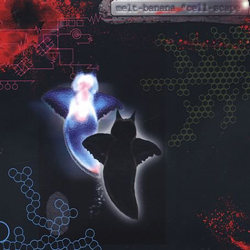
Melt Banana - Cell-scapeMelt Banana are one of those bands. I find myself frequently invoking false archetypes when introducing records at our meetings. It’s lazy and reductive, but sometimes it helps. Melt Banana are one of those bands who sound like a joke the first time you hear them. They’re also one of those bands it would be easy to bracket with poorly considered national stereotypes. Once more, these can be illustrative in some instances, so i’ll trot a couple out. They sound like hyper-accellerated electro-death-thrash from the year 2050. They’re from Tokyo.

The joke bit comes when you first get to hear them in full flight. Their songs often last no more than 30 seconds, and in that space of time pack in four shifts in signature, half and dozen stop-starts and enough tinitus-replicating vocals to send you to check either your turntable or your inner ears. Much as Ichirou Agata’s guitar playing is both exhilarating and blistering, it’s Yasuko Onuki’s vocals which get me every time. She sounds like a pixie being squeezed to death and fighting hard to get free. She sounds like a particularly deranged DJ scratching a Pinky and Perky record. She sounds amazing. The whole band sounds amazing. It’s… sort of hard to explain.

I came across them when their third album ‘Scratch or Stitch’ came to me as a reviewer. I had no idea what to make of them so I filed them away until a couple of years later when, inevitably, I heard John Peel playing them. They’re one of those bands too. The ones Peel would throw on just because they sounded nothing like anything he’d ever heard before. The trouble with those bands, the ones John Peel used to play, the ones that sound like the soundtrack to a particularly bent Chris Morris sketch, the ones for whom you have no frame of reference, is that they often turn out to be doing something genuinely original, something that worms (or blasts) its way into your body and refuses to leave. Melt Banana are one of those bands.

I had no idea what the Club would make of them, but it was important to bring this record along. It’s their most accessible, if not their most typical, and sooner or later, I had to play it. There’s little point me trying to describe it any further, but you really ought to try to hear it if you can. Suffice to say that as the first track proper, ‘Shield For Your Eyes A Beast In The Well On Your Hand’ kicked into it’s full fury, Nick started to laugh uncontrollably. Like I said, laughter is a frequent reaction, but then it’s the giddy rush that gets you. One of those bands.

Tom Listened: Hmmmmmmmm………like sticking your head in a food mixer full of bees. Beguiling yet painful. Cell-scape certainly conjured up the ghost of John Peel, and you can definitely imagine Him giggling away to himself off air as he inflicted Melt Banana on his loyal listeners waiting eagerly for the next Wedding Present re-issue or something. And whilst it was a tough listen I sort of liked it, a bit like I like pulling off scabs or watching England lose at cricket or cycling up a 25% gradient Devonian lane. Much like Cell-scape, those other (dubious) pleasures are not something I actively seek out but if I happen upon them I am kind of glad they were there. Another intriguing offering from the Monstershark.

Nick listened: This was great fun; bonkers, head-shredding millenial cyberpunk tempos and juxtapositions (those guitars! those drums! that tiny squeaking girl’s voice atop the maelstrom!) made either no sense, or else perfect sense, after the really rather beatific, minimal electro opening that could almost, sans the squals, have been something from Kompakt. The Japanese music that people like I come across, for the most part (stuff mediated by Pitchfork essentially), is stuff like this, and Boredoms, and Acid Mothers Temple, and less crazy stuff like Cornelius and Susumu Yokota, and it paints a very strange picture of what contemporary Japanese culture must be like. Especially when you consider other cultural objects from Akira to Audition to Battle Royale to Tetsuo: The Iron Man. I’ve never given J-Pop any listening time, but things I’ve read suggest that it’s just as mental compared to our pop music as this kidn of stuff is when compared to our… alternative? experimental? I have no idea of when or where I would ever listen to this again, but I’m glad I have.

Graham Listened: Yikes !!! I can’t recall ever describing an album in such a way, but this was certainly out there. Saying that, I was getting in to the complexity/mania/tightness of the playing but the vocals just kept getting in the way for me. Good listen to know what Japanese counter-culture can produce, but can’t say I would try it again. Should I find myself in a neighbourly noise dispute, it’s good to have this as an option to deploy.

Manic Street Preachers – The Holy Bible: Round 11 – Graham’s Choice

The  choices were limited in my collection with the countries remaining, however an impromptu rendition of Catatonia’s Road Rage by a fellow member at the weekend inspired me to reconsider Wales.

I began my introduction to the album with a query over whether I would be playing this to, or inflicting it upon, fellow members. The album cover and track titles indicate that it may not be a “lightweight”, but is it empty pomposity?

Anyway, I admit to being confused about the Manic’s at their beginning, not knowing whether they were glam/punk/post-punk/hard rock. Certainly their apparent self-importance irritated many in the press and kept me from taking them too seriously. However the singles from the first 2 albums and the more favourable reviews of this album caught my attention and I invested.

Leaving aside a couple of the more radio friendly tracks (Yes, Faster – and even they remain interesting) this is a dark experience, with styles being explored which I never expected from a band who while political, seemed to me to be on the road to “rockin-out”.

It takes a good few listens to fully set aside some of the preconceptions expected from the first 2 albums but it’s a worthwhile experience. The chaos of Richey Edward’s life and health are well documented and the lyrics he contributes reflect this. There are delicate moments where you might least expect (listen to 4st 7lbs).

What makes this album more interesting to me is the leap from here to the more educated anthemic sound of Everything Must Go. There are some hints on this record with some guitar riffs and solos that briefly begin to head in that direction. In fact if some of the tracks would be enhanced by less solo twiddling and more development of the sound-scapes (is that a word?) that were created. Dark, moody, gritty and aggressive are the best words I can find to describe the feel of the album and anything more sophisticated in descriptive terms would seem superfluous. I can only point to influences (maybe darker moments of the Skids/Clash/Joy Division from my collection) and can’t really identify a “this sounds like”, from the same time period.

I’m not sure how much “welshness” is communicated by this album as anorexia, fascism, Marxism, class war, ethnic cleansing etc., etc….. seemed to transcend national borders the last time I checked. A quick check on the wiki page http://en.wikipedia.org/wiki/The_Holy_Bible_(album), does confirm my suspicions that the performance of Faster on TOTP (Top of the Pops for young-uns) did lead to a record number of viewer complaints as a result of Bradfield’s black balaclava. http://www.youtube.com/watch?v=3hMqpR9AogI . Surely that alone deserves the album being given an open minded listen?

Rob listened: I’m afraid an open-minded listen wasn’t possible for me. I spent much of the length of this record trying, and largely failing, to express my once lurid but now fading disdain for the Manic Street Preachers. I won’t try to crystallise it here as I couldn’t manage it in 50 minutes on the night. Suffice to say I hated their empty spray-paint posturing when they started out, I never liked any of their records, progressing from bland punk-u-like to bland anthem-rock, and I could never understand why so many people seemed to think they were worth spending time on, although as it happens, it seems like Nicky Wire is probably a nice chap to spend an evening down the pub with. But that’s the point of this Club. I know this is a well-regarded record and I would never have heard it had Graham not brought it along and had the good grace to explain why he liked it whilst I whined without focus. I’m glad he did. I still didn’t like it. I’ve been mentally boycotting them since the early 90s and my mind has been determinedly closed to them ever since.

Tom Listened: Unlike Rob I am pretty ambivalent about The Manics; having really disliked their early posturing and empty rhetoric, I slowly came round to them and on a trip to the French Alps with some of my students in 1996 I warmed enough to the powerful, if somewhat unsubtle, sloganeering of Everything Must Go that I purchased it on my return, listened to it a lot that Summer and have barely played it since. Interestingly for me, the bits of The Holy Bible I liked least were the bits that sounded most like A Design For Life…the straightforwardness of EMG may have contributed to its (relatively) huge success, but makes for a much less interesting record than The Holy Bible and it felt a shame that some of the songs on THB often seemed to lead into a disappointingly predictable chorus or middle eight just as they were developing into something really interesting. At times the album sounded not unlike some of Rob’s more ‘out there’ offerings, I just wish the Manics had had the bottle to produce the consistently radical record that The Holy Bible so frequently suggests was there for the taking.

Nick listened: I’m also pretty ambivalent regarding the Manics; many of my friends adored them when I was 14/15/16, which is around the time of this album’s release and Richey’s subsequent vanishing, so I heard The Holy Bible, and was eulogised to about its intensity, trauma, and really deep and meaningful lyrics, man, at great length. And I quite liked it; not enough to ever buy it or invest in the philosophy and aesthetic offered up by its creators, but enough to think of Yes and Faster as great songs (if not quite as good, perhaps, as the sublime Motorcycle Emptiness and La Tristessa Durerra from their previous records), and the album as being a worthy whole. Their subsequent career has held little or no interest for me, and, as I said on the night, I think this is largely down to James Dean Bradfield’s identikit rock guitarist style and rock vocalist voice – songs on THB threaten to go down fascinating, dark alleys only to suddenly u-turn into brief foot-on-the-monitor moments of stadium rock celebration. It’s a really interesting trick, but not one that holds all that much appeal for me – it’s almost like the opposite manoeuvre to that pulled by The Boo Radleys or Super Furry Animals, who threaten cheesey pop gratification only to go weird on you at the last minute. Still, I’ve not heard this in probably 15 years, and it was a worthwhile revisit.

Harmonia – Deluxe – Round 11: Nick’s choice

Once again Tom set a fiendish theme; we weren’t allowed to pick a record originating from any country that had already been represented at Devon Record Club. Given that we’ve covered Canada, Sweden, Brazil, Australia, Scotland, Ireland, England, and the USA in previous sessions, this meant that a big chunk of the stuff we’d normally bring along was outlawed to us. And Australia. (I’m just joking, Australians. We know you produce loads of great music. Like Men At Work. And You Am I.)

Two countries that I have plenty of music from have been conspicuous by their absence though; Germany and Japan. Once again, I’d been pondering bringing some krautrock along ever since we began (Rob was pretty convinced I’d bring some Cluster to our first meeting, as I’d been tweeting about them a lot at the time), CAN get mentioned every week (yet seem to escape our list of proscribed artists that we are not to speak of ever again), and so it seemed obvious to pick Germany. Also, I knew Rob would pretty much be stuck with Japan, and didn’t want to be mean…

Harmonia are a krautrock supergroup of sorts, featuring the two members of Cluster plus Michael Rother of Neu!. You can read all about how they came together on their wiki page; I’ll just say that Deluxe is their second album, that Brian Eno described them as “the world’s most important rock band” (and then worked with them in 1976), and that, in many ways, Deluxe is the Holy Grail of the krautrock sound…

That’s a big claim: what makes it so good? Sonically, Deluxe manages to combine the kosmische musik electronic textures and synth experiments that make up one side of krautrock with the motorik rhythm and long-hair guitar abuse that makes up the other. No one else that I’ve heard quite managed to fuse these two approaches, but here it’s seamless. The debut album had been much closer to Cluster’s warm electronic ambience, but Deluxe saw Rother, and Guru Guru drummer Mani Neumeier, cut loose and rip it up a little over the textures produced by Hans-Joachim Roedelius and Dieter Möbius (Cluster), not least on Monza, which David Bowie didn’t so much rip-off as just use as a backing track for the song Red Sails from Lodger.

The first three tracks are long – between seven and eleven minutes each – while the last three are shorter – four to six minutes – but Deluxe isn’t a record with an experimental side and a pop side; the whole thing is more immediate and song-based than a lot of other kosmische krautrock, and there are even vocals on some tracks, albeit mysterious, non-musical group chants rather than sing-a-long lyrics, but it’s even, though undulating, in tone and pace. There’s a real sense of warmth and playfulness to the record too, qualities often overlooked when talking about and listening to German music, but which actually shoot through a lot it.

Rob listened: I confess I was wandering around a little while the first couple of track from ‘Deluxe’ played. I’m very sorry. I’m no krautrock  aficionado. It goes as far as Neu! and ‘Ege Bamyasi’ for me, even though so much of the music I love was so heavily influenced by the scene (The Fall, PiL, Animal Collective). So it was good to hear this, although I was surprised by how unstructured it sounded. That’s me thinking ‘I’m So Green’ and ‘Hallogallo’. Sorry. Tom and Nick have enjoyed jousting with their CAN views over recent months, a conversation i’m blissfully excluded from. Tonight I was happy just to sit back and listen to some synths so old and great sounding, you could almost feel the valves squeaking. Nice stuff, would have preferred more grooves, but I know nothing.

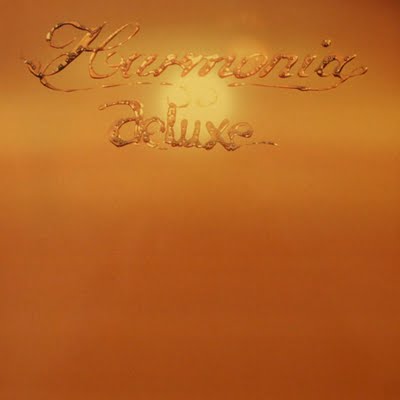
Tom Listened: Rob has this theory about the colour of album covers. I know what he means. Spiderland and Closer could never be anything other than black and white, whilst the music on Sgt Pepper’s, Bummed and Forever Changes could never warrant a monochrome cover. But what comes first, the colour of the music, or the artwork? Does the album cover make you see that colour in the music or merely reflect it? The power of suggestion. I can’t help thinking it’s the former…after all, why is it that I see the sounds of Blue Bell Knoll by the Cocteau Twins as grey blue, whilst Heaven and Las Vegas is most definitely vibrant pinks, reds and oranges? Surely the music (and Liz Fraser’s warblings) are not THAT different between the two consecutive releases!

Which brings me to Deluxe by Harmonia. I couldn’t disassociate the music from that mid 70s Some Mother’s Do ‘Ave ‘Em orangey brown no matter how hard I tried. The odd thing was that I found myself really enjoying the music one second and then placing it, in all its beigeness, within its historical context smack bang in the middle of an Open University programme on particle physics, the next. I’m not really sure if the album cover influenced this thought process but there’s no denying its browny orangey colour. I love Can (not unequivocally but on the whole), admire Faust, like Amon Duul, but have always found Neu’s rather inhuman motorik hard to get into and I guess Michael Rother’s contribution to this album, along with the colour of the music made it another album that I would need to spend time with to fully appreciate.

Graham Listened: I admitted early on that this was a style way out of my comfort zone. However I really enjoyed this. I was expecting mucho minimalist, but found this really engaging, to the point that I can imagine getting too carried away while listening on the motorway or on a long train journey. I would have to be in the mood and in the right enviroment to give this a full listen, but I’m sure it would be rewarding.

The Chills – Brave Words: Round 11 – Tom’s Selection

Music is a particularly emotive art form. One only has to have a quick glance at (pretty much) any internet music forum to witness the degeneration of perfectly reasonable, considered discussions into personal attacks, name calling and one-upmanship. For a fragile soul these forums can be intimidating places to inhabit – I tend to read (‘lurk’ I  believe it is somewhat pejoratively referred to) relatively frequently, write very occasionally and despair at some point or other in almost every thread I follow! And the one thing that annoys me most of all is the categorical nature of many of the responses; the apparent lack of awareness that one’s appreciation of music is COMPLETELY subjective in nature (hmmm…a categorical statement that!), that there are no bad or good records, just ones you either like or don’t like. Maybe pussy-footing around with opinion makes for boring reading, but the most objective and balanced I’ve found so far (thanks to Nick) – I Love Music – does a pretty good job of keeping the chat amicable and relevant and, for my money, it’s all the better for it.

The reason for the above rant – The Chills 1987 album Brave Words. I almost wrote ‘masterpiece’ instead of ‘album’, but, to be honest, it’s not a masterpiece, at least not in the conventional sense. The music on Brave Words is not particularly innovative, the singing, at times, is pretty ropey, Mayo Thompson’s (of Red Krayola (in)fame) production is murky at best and the quality of the songs is uneven. To make matters even worse, my vinyl copy of Brave Words is just about as warped as a playable record can be, having on one occasion (many years ago) been left in the roasting July sun on my brother’s bedroom windowsill! So objectively, Brave Words is a pretty poor offering for DRC (I think Nick may well be agreeing with this statement in his response). Yet I love it so. More than any of my other offerings thus far…way more in fact – we’re talking top ten in my collection love here. And it’s a love that deepens with each new chapter of our relationship (ironically, The Chills have a song called Familiarity Breeds Contempt on Brave Word’s successor, the also excellent Submarine Bells).

I can clearly recall listening to Brave Words for the first time and being distinctly unimpressed. I can’t quite remember the sequence of events but I believe it was around the time I first discovered the wonders of Antipodean indie through the delights of The Go-Betweens’ Liberty Belle… and 16 Lover’s Lane albums. I was looking for more of the same, but found Brave Words to be ham-fisted, amateurish and, in places, unmelodic in comparison (this was before the lo-fi scene of the early 90s came along and made that sort of thing commonplace, if not revered). But, by the law of the opposite of diminishing returns, I found myself enjoying each subsequent listen that little bit more; almost as if ticking off each freshly conquered song, to the extent that eventually (and it took a fair while) I came to see all the various facets of the album as essential components of a magnificent whole. And once this point had been reached, other attributes began to reveal themselves – the warmth of the sound, the sense of place (we talked about this at the meeting) that the record evokes, the ebb and flow of the songs as they meander from jangle pop (Push, the unimpeachable Rain, the deeply confessional Wet Blanket) , to spiky Buzzcockian (?) power punk (Look for the Good in Others and They’ll See the Good in You), to swaggering indie groove funk (16 Heart-throbs), to eerie and graceful (The Night of Chill Blue). Like so many bands on the Flying Nun label, The Chills main protagonist, Martin Phillips, spent some time playing with The Clean and whilst their myriad offspring have gone on to produce a wealth of first class music, it is Phillips’ vision and talent that, for me, are the zenith of New Zealand indie’s embarrassment of riches.

Rob listened: I clearly recall the brief period on the late 80s when the UK music press went NZ crazy. I remember reading about The Chills, and ‘Submarine Bells’ in particular, and thinking that when I heard it it would blow my mind into tiny pieces which I would find imposible to fit back together. I heard ‘Heavenly Pop Hit’. It didn’t. It was interesting to hear Tom’s description of his dive towards the antipodean at that time, just about the time I was swerving towards the USA. Like much of the music we’ve discussed this year, The Chills and, presumably, their compadres, don’t sound like much on first listen, but give up their riches the more you get to know them. I can’t help but wonder if those riches were deliberately buried, or whether Martin Phillips and co just happened to build their little pop shack on a spot that concealed a seam of diamonds? By which I mean this sounds great to me.

Nick listened: I hate to be predictable, but I didn’t get much from this, to be honest; certainly not Tom’s strong sense of location (although I’ve never been to New Zealand, which may be why). I could hear why Martin Phillips would be unhappy with the production, but from one listen I couldn’t hear past the production, particularly, nor did I much want to try again. To be fair, the second half of the album did open up into something darker and more interesting, intriguing, which was a relief because the opening couple of songs left me baffled as to why Tom was enthusing about it so much. The good thing, though, is that previously I knew nothing about the New Zealand scene at all – not even that it existed – and now I do have a slightly peaked curiosity to investigate at some stage. Possibly the only thing holding me back is the language barrier, or lack of – there’s not quite the frisson of “otherness” here as there is for me with Germany or Brazil.

Graham Listened: Although I knew of the Chills and some of the NZ bands of the time I would have struggled to name a track of theirs. However, this took me right back to the days of 80’s jangle pop/rock in the UK and I really enjoyed it. Can’t say I picked up on any clear NZ references, aside from the general style of music that was evolving there and in the UK at the time. They’ll stay a secret, but I was inspired to go back and find some guilty pleasures from the period (now where are those Aztec Camera cassettes?), D’oh !

The Fall – ‘Bend Sinister’ – Round 10: Rob’s choice

the fall - bend sinisterThere are two reasons why I think ‘Bend Sinister’, the Fall’s tenth album, is their best.

Firstly, it finds them at a rare, almost unique point of balance. By the time of its release in 1986 they had already reached more career peaks than most bands manage. The satanic Lovecraftian skiffle of ‘Dragnet’, the sheer clattering energy, confidence and scale of ‘Hex Enduction Hour’ and the bombed out garage rock of ‘This Nation’s Saving Grace’ took British post-punk to places where no-one could follow, carving out a place in the nation’s alternative canon that would forever be theirs, guarded by the snaggletooth attack dog himself.

On ‘Bend Sinister’ The Fall were exploring ways out of this territory. It’s a much more understated record than almost anything they recorded before or since, with a subtle sound where, for once, Mark E. Smith does not dominate proceedings. This is the first record with Simon Woolstencroft behind the drums, the infamous double-drummers Paul Hanley and Karl Burns having finally both departed. However its rare sense of balance between the five band members must surely be largely due to Brix Smith’s ongoing presence as a leavening agent for her husband’s bile and bombast. For me Brix is the person who teased The Fall out of what could have become a musical cul-de-sac in the early 80s and, arguably, showed them how to introduce the wider influences which ultimately they (or at least MES) would work into a career which has lasted 30 years.

So, it’s a more restrained, more intriguing, cleaner, at times poppier record in which Mark’s vocals and lyrics form just a part of a beguiling sound. Plus, y’know, ‘Dktr Faustus’, ‘U.S. 80’s-90’s’, ‘Terry Waite Sez’, ‘Bournemouth Runner’… I could go on.

Anyway, the second good reason why ‘Bend Sinister’ is the best Fall album is that it’s the first I ever heard. I have a lad called Gareth Evans to thank for that. In a 4th year English lesson in 1986 he asked me if i’d heard “the Fall album” after i’d bored my classmates with tales of my first ever live concert, Public Image Limited at the Manchester Apollo. Unwilling to be unseated as the class hipster, a role I had only gained five minutes earlier and which I would would not hold on to for much longer, I said “yes” and told him how much I liked it. So then I had to go out and buy it. It sounded nothing like I expected, I had no idea what to make of it, it was mysterious and opaque. Within 12 months I had all their albums and they were ensconced as my favourite band. Despite our relationship cooling over the last decade or so, no-one has yet been able to usurp their place in my heart, and at the centre of that most special place, is the sound of ‘Bend Sinister’.

Tom Listened: Another revelation. So much easier than I was expecting and, despite having the indie disco standard ‘Mr Pharmacist’ getting in the way (as far as I’m concerned), the rest of the album sounded wonderful.

My experience of The Fall before this meeting was limited to the singles – none of which I have really liked – and Hex Enduction Hour, which I borrowed from a mate a long time ago and had a half-hearted attempt at getting to know. I dare say that if I had actually bought HEH, I would have put in the necessary hours and no doubt grown to love it…it’s illogical but owning the record (as opposed to borrowing it) really does make a difference to me. I do remember HEH being an awkward customer, perhaps too tangential and monotone for my young ears that were, at the time, immersed in the psychedelic sounds of the 60s, the poppy side of 70s alternative and the Madchester/US Indie scenes of the late 80s. I think Bend Sinister would have been a better record for a first date with ME Smith as I found it hook laden, bright and relatively conventional in terms of song structures. My guess would be that these days I would probably like the more challenging offerings from The Fall’s back catalogue just as much, if not more, but I would also be keen to spend considerably more time with Bend Sinister.

Nick listened: About seven years ago either my girlfriend (now wife) or I bought 50,000 Fall fans can’t be wrong – 39 Golden Greats, the double-CD, career-spanning Fall ‘best of’ that co-opted an Elvis Presley compilation’s title and cover artwork, and subverted it to the will of Mark E Smith. It remains the only Fall CD in our collection, which must contain somewhere in the region of 1,800 albums, not because neither of us liked it (we’ve liked it enough to not get rid of it in any of the periodic mini purges we make via eBay or Amazon Marketplace), but because, well, where the hell does one start with The Fall? And, f one does start with The Fall, where the hell does one stop? With over 30 albums and little or no consensus over which period is their best (although there does seem to be some consensus on which period is their worst – recent years – even if the last decade contains a number of albums seemingly received as the dreaded “returns to form” [as if that meant anything]), one needs a way in, and if one gets hooked it’s going to be an expensive catching-up session. I suspect this is part of the reason behind my reticence – I like what Mark E Smith makes his band do, the aesthetic, the sound, but I don’t want to have to spend £100 on (just) a third of their discography and be left missing out on the no doubt essential songs strewn across the other 2/3s.

So Bend Sinister is where the hell I started, when it was thrust upon one. It’s not one of the album titles I recognised (not that I recognise many) and Rob suggested it was sonically and aesthetically atypical; this may be so, but it’s the politics of small differences, I suspect – it sounded like The Fall, as I understand them to sound, to me. It didn’t sound like Beyonce or Dave Brubeck or The Orb, is what I mean. I enjoyed Bend Sinister, and I borrowed a copy on CD; Hex Enduction Hour (which is one of the album titles I do recognise) too. But I’ve not got round to listening to either of them yet (partly because I’ve been busy); it feels like, even diced up into chunks and spoon-fed to me, I still don’t know where to start with The Fall.