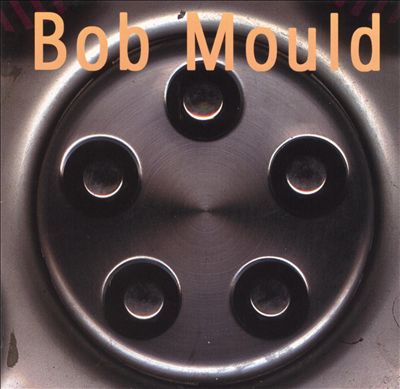
Bob Mould – Bob Mould – Round 81 – Graham’s Choice

“How the hell did that get MI0001886192 into my record collection”, was always going to be a tricky one for me as I’d come upon the idea by bringing the Ozric’s to the last round. I had a lot of options which I’d like to pretend that I had no idea how they got there, but sadly I knew (or at least thought I did) what I was doing each time I purchased or swapped them with someone. I do in fact recall once swapping a ‘Men at Work’ album, for a Genesis LP. There were no winners in that transaction.

So other than pretend I had no idea how my choice came to be in my possession, I had to go with one I picked up in a impulse purchase in a charity shop last year. Along with ‘Everything but the Girl’, ‘Glasvegas’ and ‘Athelete’, ‘Bob’ came in to my possession for a mere £1.

But what’s peculiar about ‘Bob’ is he has been around me for many years, but taken till now for me to buy in to some ‘product’, even though it was just a £1. I saw Husker Du a couple of times in the mid 80’s, had their albums on C90’s. Always like the sound of Sugar (and will be seeking to reacquaint myself with those again), but never added them to my collection. So a chance meeting in a charity shop in Buckingham, finally got us together.

His third solo album and first post Sugar. Although he plays everything on the album and does the whole thing single-handedly, it doesn’t sound at all overly introspective. The songs are fresh and immediate. Riffs and hooks pulling you in from the beginning, while darker and bitter lyrics keep your attention as to what he is trying to say.

There was never going to be a great story to this choice, just a cracking little album I came upon by chance.

Rob listened: Ah, Bob. How do we love thee? Let us count the ways… Actually, let’s not as they probably amount to ‘amazing, distinctive melodies played on amazing, buzzsaw guitars by an amazing, distinctive vocalist’. Let’s instead reflect on the irony that Husker Du are one of the long-running sub-plots of DRC. There’s barely a meeting goes by without Tom and I retiring to a metaphorical ante-chamber to discuss which of their albums we would bring if we could only stop playing ‘After you Claude!’ and pussyfooting around who’s musical birthright it is to introduce them to the club. And yet Mould makes his album-length entrance heralded by the words ‘WTF? I got this in a charity shop!’

‘Bob Mould’ is a solid, occasionally great post Sugar record, as in it’s a step back to what most people think Mould does best (see earlier). I love ‘Workbook’ and ‘Black Sheets of Rain’ but they are outliers of their own in the context of his body of work. It’s no accident that this is the record he put his name to and since it came out he’s been building once again on the foundation, towards the recent ‘Silver Age’ and ‘Beauty and Ruin’, two late-period belters.

So, should it be ‘Candy Apple Grey’ or ‘Flip Your Wig’?

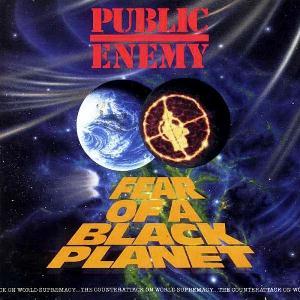
Public Enemy – Fear Of A Black Planet: Round 81 – Tom’s Selection

Fear_of_a_Black_PlanetSurely a ridiculous choice for the ‘How the hell did that get into my record collection’ round, Fear of a Black Planet is widely (and rightly) regarded as one of the finest hip-hop albums of all time…if not one of the finest albums of all-time per se. So it should be of no surprise to find it in my regular rotation. However, I have only owned it (and its sister album, the equally fine It Takes A Nation Of Millions To Hold Us Back) for a couple of years having been stung into action by Rob and Nick’s response to my less than enthusiastic reaction to our first hip-hop album at record club – it was round 6, and Rob brought the album Niggamortis by Gravediggaz.

At the time I had precious little hip-hop in my record collection and what there was tended to stem from the more trip-hoppy end of the genre…or be the Beastie Boys! My reluctance to embrace hip-hop stemmed from my assumption that the vast majority of it was either misogynistic, unpleasantly aggressive, racist or a combination of all three. Sure, De La Soul existed but they, in my mind, were the exception that proved the rule! I had heard Straight Outta Compton and reacted really badly to it. I had heard a Public Enemy album in really bad circumstances (I think, in retrospect, that it must have been the debut Yo, Bum Rush The Show) but I hadn’t really listened to either. Convinced that hip-hop had nothing to offer me and that I had no way of connecting with it, I was happy to close the door and dismiss it as ‘one of those’ genres that I just didn’t need.

But a strange thing happened to me in Round 6. Whilst I can’t say my tastes aligned particularly with the music of Niggamortis, it did sow a few seeds of possibility and that, coupled with Rob and Nick evangelising on the subject of Public Enemy’s finest albums (and, if I’m being totally honest, their reputation amongst the cognoscenti)  led to me quickly enquiring as to whether my vinyl ditching chum, Steve, would care to part with his Public Enemy records in exchange for some beer money.

Well, of course, the rest is history, at least in as much as I now completely see what the fuss was all about – these two records are monumental in every sense. Lyrically outstanding, I love the fact that none of the cheap shots I used to associate with hip-hop are here at all. Sure, Public Enemy are pretty pissed off but this is the stuff of righteous indignation, political disgruntlement, genuine frustration at the inequalities of life. I also love the clever way they are highlighting the stupidity of their critics (that would have been me, guys!). By playing clips from interviews and reviews they are letting their critics words speak for themselves, throwing a spotlight on the narrow-minded ignorance of some of their more negative commentators. Furthermore, the title of the album is simply genius and the irony is palpable – ‘we know you feel threatened so, just to underline the fact, we thought we would remind you with the title of our new record’.

Just as eye-opening to me was the sound of the record. My previous PE experience, during a VERY long drive with a (soon to be ex) girlfriend, left the impression that Public Enemy records were rants over squeals, monochromatic and abrasive and hard work. If Rebel Without A Pause is in any way representative of their early work I can still see why I would have struggled – this is powerful music with very little light.  An album of this would have been hard enough to take at the best of times! But, two albums down the line, the music is nothing like that. Funky, fun even, but always impressive, it’s easy with Fear of a Black Planet to get lost in the grooves and find yourself wallowing in the words as if they are just another instrument; the white water atop the torrent of momentum that these incredible compositions create, it really does sound like nothing else in my collection and, whilst far from being ‘easy’ it is also far from being inaccessible.

Choosing between the two Public Enemy records I own was pretty much a toss of a coin – they are both great. I went with Fear Of A Black Planet mainly due to the fact that I have listened to it less and therefore had more to discover but also because it is, perhaps, a little warmer and more groovy (in much the same way I slightly favour Check Your Head to Paul’s Boutique). Whatever, there is no doubt that both records are outstanding and, together, they stand as a colossal reminder to me to keep an open mind – I should never have been in a position where either record would have been eligible to bring to this round!

Rob listened: I got into a fight with my Brother over ‘Fear of a Black Planet’. He was the hip-hop head in our house and by the time Public Enemy’s third was released, he had practically worn out the first two. Although I hadn’t been obsessing like he had, I had certainly been falling for them alongside him. We shared a record player at that time, precariously and, on one or two occasions, fatally, located beneath the dartboard. So we would alternate, which meant that he was learning about Public Image Limited whilst I was absorbing Run DMC. He got the grips with The Smiths whilst I became a discerning KRS-One listener. When Public Enemy arrived on the old phonograph (I bought him ‘Yo! Bum Rush the Show’ for christmas) we found our first and perhaps still our most heartfelt musical overlap. In the urgency and abrasiveness I heard echoes of Sex Pistols. In the dizzying lyrics I found resonances with The Fall, another insane musical compendium I was trying to get to grips with. In the alien otherness of those first two records I found the challenge and urge to reject that would characterise many of my very favourite records over the next years.

So it was that when ‘Fear of a Black Planet’ came out, I was the one old enough to get the bus to Manchester and buy a copy. One copy. For me. When I brought it home and Stu cottoned on that I was planning to keep it, things turned tricky. Silly really, we had to listen together anyway, but I guess I could see where he was coming from. As I recall, I tactically left it in his collection after a little while, such that I had to buy myself a second copy years later. But, by that time, we’d worn out the first one together and my oh my, what an album. My favourite of theirs, I think, the balance being tipped by the sheer bustling richness of sound on tracks like ‘Revolutionary Generation’, ‘Welcome to the Terrordome’ and ‘911 Is A Joke’. In the end, I’m glad we shared the listening experience even if ownership of the vinyl was disputed, and to be fair, I think I too would lose my shit if someone tried to deny me this incredible record.

Graham listened: Almost came to this as a completely fresh listen. Off my radar when it was released and not really ever engaged with PE. Expected to be challenged/intimidated by the album, but found the complex layers of sounds fascinating. Who knew, huh?

Nick listened: A guy I was at university with once asked me to manage his rap band based purely on the fact that I owned a copy of this album. Nothing came of that conversation. But this record, wow. Maybe Nation of Millions slightly edges it for the brutally enticing juxtaposition of noise and groove, whereas this is slightly richer and more ‘lush’ (if that’s not a crazy word to use about PE). I doubt I know it as well as Rob does, but this has been a part of my life for the best part of 20 years, and it’s still fabulous.

Buddy Holly – ‘Legend’: Round 81 – Rob’s choice

'Legend' by Buddy HollyFor our last round Graham brought a record that he claimed stood out like the proverbial sore thumb in his collection. Furthermore he then attempted to give the rather self-serving impression that he didn’t quite know how it had got there. And so the theme for this next round was set as ‘Outliers’: records that don’t fit the mould, that sit uncomfortably on your shelves.

I was pretty stumped. Half the records I own are one-offs, but none of these quite seemed to fit the bill. I started at the beginning of the alphabet and tried to pull out things that I might be able to squeeze into the theme. I only got as far as the early Cs before confirming my sense that whilst my collection is significantly comprised of one-offs of some sort or another, and whilst the reasons I took them in might be odd, illogical or hard to justify, I still made a conscious choice to give them a home, and now none of them are outliers. They’re all mine.

I have hundreds of records by bands for whom only one album made it in, and subsequently I never looked to them again, either because the first one never clicked or because it really clicked hard and that was enough to fill some specific gap for me. Some of these would be good candidates for re-examination and presentation to the DRC jury (‘Beach House’ by Beach House, ’The Noise Made By People’ by Broadcast…).

I have records by bands that stand as wonderful one-offs in my collection (say hello to ‘L’Etat Est Moi’ by German Pavement stylists Blumfeld). I have records I got because the band was supposed to mean something, or because their name gave me an echo of some possibly-real, possibly-imagined connection to someone I really did like (I have two Band of Susans records which I’m pretty sure I haven’t heard right through, and which I think were taken in because of some imagined link to Sonic Youth or Big Black). I have loads of records I bought because some aspect of them – the cover, the name, the label, the hometown – led me to assume that they would sound like someone I already loved (step forward Arcwelder).

I have genre one-offs, or things close to. Nothing in my collection sounds exactly like the sweet country folk of Laura Cantrell’s ‘Humming By The Flowered Vine’. Equally, there’s nothing in my collection, and perhaps little in the world, that sounds like Chris Morris’s stupefied late-night horror ‘Blue Jam’, (erroneously filed under ‘C’).

I have always made musical choices and connections based on half-heard recommendations, imagined family trees and ill-informed hunches, and I have no desire to change that. Nothing is a genuine outlier in my record room.

So, in the end I went for something I didn’t put into my own collection.

A couple of years ago, after a number of failed forays through my parent’s house looking for it, I asked my Mum what had happened to their record collection. I can’t recall her exact words but, to cut to the chase, she’d binned it. Whilst I would have loved to get my hands on the singles (“Oh, it was just a load of old rubbish like the Crystals…”), I knew the albums pretty well from a decade of idly thumbing through them and I knew there wasn’t anything in there I was likely to want to go back to. My time with the Houghton Weavers was definitely a primary school thing, and my time with Don Williams and Roger Whittaker is hopefully many, many years away in the opposite direction. I’d previously rescued their only Beatles and Beach Boys records (that’s one compliation by each, by the way) so this left just two albums for which I immediately felt sharp pangs. I went out and bought them both. They were gaps I needed to fill, for reasons I didn’t quite understand.

The first was The Carpenters ‘The Singles: 1969-73’. Much as I looked down on them as soon as I had a few of my own preferences to climb up onto for a vantage point, the songs of the Carpenters suffused my childhood as much as any group. They were ubiquitous on national and local radio and it seemed every house that had a record player had this album. We can happily list the reasons not to like them, but there are great songs, beautifully sung on this record.

The second was ‘Legend,’ an early-seventies compilation of key tracks by Buddy Holly and the Crickets. This sounded around our house more than it did over the airwaves, but I liked it at the time. The music seemed elemental, which is not to say primitive. The songs are simple enough in outline, but their spinning together and outwards of country and western, rhythm and blues and rockabilly into the still emerging forms of rock and roll and pop music is beguiling and bewitching. Tied to a period when the teenager was beginning to exert primacy over culture, but before Elvis and the Beatles had truly ripped the lid off and released the sexual energy that was powering these new phenomena, Buddy Holly’s songs are still sweet and pretty rather than brazen and challenging. Despite that, on close listening the detail of their constructions are often remarkable. Without galloping advances in technology to fuel infinite experimentation, this band used their minimal resources to create music with deft space, unusual rhythmic underpinnings and perfectly minimal instrumentation.

To some they may now sound like distant relics, and Holly as an artist who can be dismissed, but this is a body of work full of fine, foundational, sweet and inventive music. This may not be the record you would take to a desert island, but if you had a guitar and you could play and sing these songs, then I wager you’d be pretty happy.

Holly himself was an alluring figure. Both a straight-up kid next door and a heart-throb, he was, I have always assumed, the Elvis that your parents might have allowed you to sit with unchaperoned. Although his lasting image may be slightly gawky (thanks spectacles!) he was actually knock-out handsome. In my childhood mind all of these opposing forces were coalesced in the conflagration of his death. In fact, come to think of it, his may have been the first famous death I was aware of. I remember staring at a picture in the gatefold of him laughing astride a motorbike and thinking “Wow! He looks a bit more dangerous than that other guy in the thick-rimmed specs” and then wondering how someone like that, someone that young, could be dead. It’s interesting to reflect that the cover of ‘Legend’ appears to depict a man immortalised in his mid-late forties, the age of the audience being marketed to when this compilation was released, whereas the few photos inside show a vital, living, breathing teenager. Buddy Holly died aged 22.

This was definitely the first record I remember my Dad buying and bringing home and evangelising for. All the music here was recorded in the late fifties (1956-59) and so this was my father gleefully going back to the music that was making waves when he was young, a feeling I know myself and cherish all too well. This is a record that connects me to my father as a music fan and a young man in ways I cannot quite articulate.

Tom listened: Simply one of the most genuinely enjoyable listens I can remember having at record club – the simplicity of the compositions are breathtaking, songs that are barely there and yet are totally captivating. I loved every second, even if he seemed to lose a little umph once he moved to New York and stuck a load of instruments over the top of the songs – sometimes people don’t recognise that they are on to a good thing! Would have loved the have heard side three – hopefully I will as I fully intend to get me a copy at some point in the near future.

Graham listened: Well as well as winning the “WTF is this doing…” theme prize, Rob also wins the “shatter all preconceptions round”. I expected this to sound twee and lightweight like I remember it sounded coming out of a MW (that’s Medium Wave, for the ‘Kidz’ out there) Radio during the 70’s. It sounded just as the others describe. Just lucky for the others I threw out my ‘Bill Haley and the Comets’ album some years ago, not in same league as Buddy.

Nick listened: Very little to add given all the affusive praise above – the quality of this music and fascination of its creation really can’t be denied – but what was really fascinating to me was how many of these songs I recognised but, especially with the later ones, didn’t recognise as Buddy Holly, because they were just so different sonically to the early twangy guitar stuff. Also the insanity of referring to ‘early’ and ‘late’ material when there was only really months in between them.

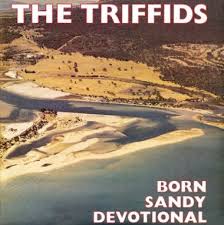
The Triffids – Born Sandy Devotional: Round 80 – Tom’s Selection

download (1)I introduced Born Sandy Devotional to Rob and Graham via Courtney Barnett’s History Eraser – a song by an artist that is definitely, and suddenly, having her time in the spotlight. I love that song and Avant Gardener even though the rest of her debut ‘album’ (it’s actually a couple of EPs stitched together) I can take or leave. In History Eraser there is a point towards the end of the song where the music kind of melts away and Barnett coos the immortal line, as seductively as you like:

And in the taxi home I’ll sing you a Triffids song

It sounds like the most enticing and exciting gift ever uttered on record and I remember hearing this song on the radio for the first time and a shiver running down my spine upon clocking this line – it just seemed so cool that a band that never really got their dues in their time were being name-checked by a young singer-songwriter 30 years on. If I were a betting man, I reckon the song in question would have come from Born Sandy Devotional and would more than likely be a song that has become, in some circles anyway, the Australian national anthem that never was. That song is Wide Open Road – as majestic an Antipodean anthem as I have come across and synonymous with the wide open spaces and the spellbinding monotony of the Australian outback. It’s a brilliant highlight of a brilliant album but, despite its notoriety and status, the other nine tracks on Born Sandy Devotional more than hold their own against it and, together they coalesce to form a unified and cohesive whole.

I guess it’s fair to say that I have become Mr Antipedes in the eyes of my fellow record clubbers – sure they have all dabbled but, in their eyes, I am the addict (Rob even asked me the impossible question whilst listening to BSD: Australian or NZ albums – which would I ditch first?). It got me thinking as to why this should be. Why have I been particularly drawn to a music from 12,000 miles away to an extent that is, perhaps, ‘beyond normal’?

Well, it has struck me that in the music of The Triffids lies the answer…Born Sandy Devotional (and the other two Triffids albums I own) are almost impossible to pigeon hole. Sure, they are eclectic, but that’s not it -they are far from a sprawling mess of styles like, say, the White Album. Born Sandy Devotional feels like a singular statement, a yearning for the motherland, a set of ten perfect little short stories set to music, the sort of stuff Raymond Carver might have come up with if he had ever bothered to do all the other stuff as well as just writing the words down. They tell tales of the outback, the parched white beaches of the Australian west and the bit between the two, and were written by yet another Aussie band holed up in mean old London town missing the sky, sun and surf of home. But what I particularly love about the music of The Triffids is that what at first sounds so familiar when taken on face value is actually so unusual. If I worked in a record shop and the owner asked me to stick it in a rack defined by genre, I would struggle. Jangle-pop? Not really. Post-punk? Definitely not, but at times there are echoes. New wave? Possibly…it’s a tricky one! Pop? You must be joking. Yet The Triffids on Born Sandy Devotional are hardly innovating, just writing and playing well crafted, articulate and intelligent songs that really speak to me. I’m not sure there are all that many bands that do that. And I wonder whether the remoteness of the starting point (they were from Perth after all) helps.

Whilst listening to Born Sandy Devotional on the night, I became aware for the first time of the circumstances of David McComb’s untimely death. A combination of a tragic set of medical issues that appeared to have stemmed from his heroin addiction, the revealing of this fact seemed to envelope the music with yet another layer of poignancy and sadness as far as I was concerned. It’s great that these days Australian artists like Courtney Barnett don’t feel the need to relocate to the other side of the world in order to make it in the music industry, but I do wonder whether the music of The Triffids, and The Go-Betweens and The Bad Seeds would have sounded the same if the bands hadn’t been wrenched from the comforts of home and been made to endure the trials and tribulations of life on the other side of the globe! And, to my mind anyway, as a love-letter to the motherland, Born Sandy Devotional is hard to beat.

Rob listened: There’s an important clue missing from Tom’s write-up. We’re all, whether we realise it or not, irreversibly bound to the music that suffused our formative experiences. Tom’s trip to Australia was one of the forges on which his adult self was formed. And so, there are two key reasons why he is Mr Antipodes in our little musical United Nations. Firstly, functional: He must, consciously or otherwise, have heard lots of this stuff, or stuff derived from it, or stuff about to inspire it, that the rest of us just weren’t hearing. Secondly, he really dug the place, came back a different person, and the music that surrounded became bound up in his DNA, and now, presumably, acts as a trigger for his memories of an important time.

For me, the Triffids, the Chills, the Go-Betweens, were all names that flowed through the inner pages of the music press I was discovering in the late 80s, but I never had the opportunity to get my hooks into them, or vice versa. Now when I hear them I hear sounds I like, patterns I recognise, signifiers I respond to, but I just don’t have the history, the personal and musical connections, the dust of the road engrained in the folds of my skin, to really get them completely. I like them a lot though, and long may they rock up at Record Club, whoever chooses to bring them (Tom).

Tom responded: Nice ideas Rob, but you’re way off on both counts I’m afraid. Whilst I was in Australia I never even caught a whiff of anything remotely like The Triffids or Go-Betweens – I was spending time with (usually) visiting climbers and the Aussies I met were predominantly into Red Hot Chillis or NWA or Pixies or Violent Femmes…or Midnight Oil! Your second point is also, bizarrely, incorrect. I really disliked my year in Australia, counted the days to come home and only my incomparable stubbornness and need to avoid loss of face prevented me jettisoning the trip within the first month.

I have fond memories of the trip now that time has dulled the experience but I really don’t think either of these factors are the cause of my fondness for this music, it’s much more to do with the artists’ ability to operate as outsiders; artists who operate away from an identifiable scene have always appealed to me and I feel these bands provide that (in much the same way as American Music Club).

Rob re-responded: Okay Tom, fair enough, you know best. However I wonder whether my first para would still stand if I simply replaced the word ‘dug’ with ‘went to’? Whether you liked it or not, it does seem to have been a formative time. And whether you heard the music at the time or not, surely there has to be some connection or resonance between the two?

Graham listened: 2nd round running I was lazily expecting a bit of jangle pop (albeit Oceanic) based on reading something 30 years ago in Melody Maker. Despite my immaculate research there was certainly a lot more depth to this. The second part of my review is now redundant as I too thought that the heat, dust in your mouth, “sheila” in one hand and Fosters in other would contribute better to understanding of the sound and cultural references. Moving to a conclusion, it was rewarding listen and probably the best Australian album I ever heard (but can’t say my research has been too deep!).

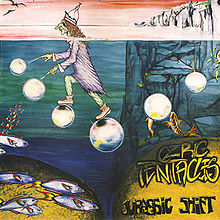
Ozric Tentacles – ‘Jurassic Shift’: Round 70 – Graham’s Choice

Hastily arranged meeting means no time 220px-Jurassic_Shift_(album)to ponder and felt I had to go with something that had recently been playing at home. Unfortunately for colleagues that meant an album that had been fished out the previous night to accompany a sit on the decking with a beer as the sun went down. Wasn’t really trying to create a Glastonbury vibe, but the Ozric’s did the trick on Easter Monday evening.

Presenting this did give rise to the coming theme of “WTF is this doing in my collection?”. I’ve honestly no idea how it got there. I had an ever so brief fling with the New Age/ New Forest rave scene in the early 90’s, but mainly found the experience a bit damp and cold, so don’t think I picked it up there.

The Ozric’s are unsurprisingly a Somerset collective. More surprisingly our own resident ‘Wurzel’ didn’t seem too familiar with their output. Don’t own anything else by them, but if I ever feel the need to reach for some trippy, rave, space rock, its always a comfort to know they are there to fit the mood. Nice bit of flute action, and unless you’re into Jethro Tull and James Galway, its something you don’t hear enough of.

Various rhythms, beats and reggae style grooves to lose yourself in, along with some mentalist heavy guitar noodling to turn up if mood takes you. They have been around since the 80’s and are still going today with 20 odd albums to date. This is from 1993 and there 4th studio offering following an unsurprising cassette only distribution period at the end of the 80’s.

Music for the masses, doubtful. Music to fit the right mood, probably!

Rob listened: My reaction was more, “WTF is this doing in my house?” I was serious young music devotee in the late 80s and early 90s. The world according to Fugazi, Joy Division, Public Enemy and Dead Kennedy’s certainly had no place whatsoever for a bunch of ne’er-do-well hippies larking about as if Punk hadn’t put the sword to Prog. I knew nothing of their music, but I knew their loose-limbed, tie-dyed accolytes and I wanted no part of them, their drugs, their inner=space exploration, their back-of-an-exercise-book artwork and certainly not their records.

As a result of which I think I had never heard them properly before tonight. Distressingly, at least half of this album, heard with the benefit of considerable hindsight, sounded like it was well ahead of its time, taking electronics to space-rock and rave. It was s surprisingly pleasant listen. I’m glad I finally got it out of the way. Music snobbery is brilliant, ain’t it? Without it, we’d be lost.

Tom listened: I’d first of all like to thank Graham for giving me the sense of satisfaction of sorting out his formatting nightmare. It appears going into HTML and randomly deleting stuff actually works.

Talking of random…Ozric Tentacles were I band I too had preconceived ideas about, not all of them positive. I always lumped them in with Gorky’s Zygotic Myncci but, for some reason, when I actually heard Gorky’s and realised how wonderful they were, I never went back to The Ozrics to check out whether I had been wide of the mark with regard to my prejudices of them. It turns out, at least if Jurassic Shift is in any way representative of their oeuvre, that they are almost exactly as I imagined them to be. I guess this particular wurzel is more of a cider drinker than a crystal-centric glasto goblin.

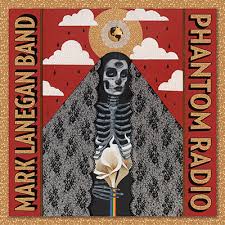
Mark Lanegan – Phantom Radio – Round 79 – Graham’s Choice

Marginally tardy write up from Round 79 downloadfinally here. Not having time to think what to take that week, I opted for my familiar tactic of “if in doubt, Lanegan it”.

This would have been a shout for my album of 2014, hadn’t the Hookworms pipped Mr L to the post. Following my recent immersion in to the world of music streaming apps, I have been positively “gorging” myself on Screaming Trees and the Lanegan back catalogue. I’m trying to ween myself off but finding cold turkey tough at present.

I think I may have mentioned that I regard Lanegan as the “Ronseal” of rock. You buy a new CD and know (more or less) exactly what’s in the tin. This is fine if you like what you are bound to be getting, but sense other members may be boring of Mr L by know.

Similar to 2012’s Blues Funeral (see Round 42, https://devonrecordclub.com/2012/12/28/mark-lanegan-blues-funeral-round-42-grahams-choice/) but takes the laid back electro/dance feel on a little bit further. Real fans should check out the “Thousand Miles of Midnight” remix album. Maybe what really appeals to me about his latest work was the hints of Joy Division, Cure and possibly early New Order it left on the palate? Moreover, its just Mr L doing what he does, and very well in my opinion.

Tom listened: Well…actually I really liked this, I think (it feels about three years ago that we actually listened to it and all I can remember are some gravelly vocals, some well crafted songs and, perhaps a bit more variety and a few more ideas than Blues Funeral – although I could well be being unfair to Blues Funeral as I recall very little of that album too). I do know that when Graham chose three songs from this album to enter into the kids and parents impromptu singles world cup recently they shone like diamonds (rough ones admittedly) in a sea of Sheeranesque shite.

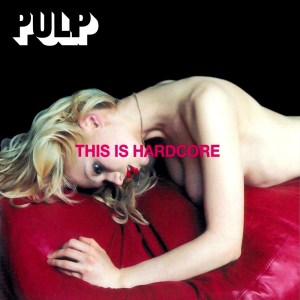
Pulp – ‘This Is Hardcore’: Round 80 – Rob’s choice

Pulp - This Is HardcoreOr, What Happened After We Fought the Class War.

I’m going to make no bones here: ‘This is Hardcore’, the difficult follow-up album that was greeted with confusion and consternation on its release, is Pulp’s masterpiece.

I’m going to assume that you’re familiar with at least the final three albums released by arguably the only truly great band to ride the Bullshit Britpop train all the way to Success City. If not then, seriously, stop reading this, go and listen to them all several dozen times and when you’re done, why not take a long hard look at yourself? Seriously! What on earth do you think you’re doing with your life? Time is running out. You need to address your priorities.

‘Different Class’ is a great, great album, and its highlights stand right at the top of the heap of the very best songs of the 1990s. But it has longeurs. It has some skippable tracks. It feels, after all these years, a little worn out. Relatively speaking, ‘This Is Hardcore’ has youth on its side, having been released three years later. However, in content it’s a much, much older record.

‘Different Class’ was a vicious, scabrous, righteously spiteful, uproarious record, and ultimately one with concern for people and society at its heart. ‘This Is Hardcore’ is a stunned, desperate record, reeling in the realisation that there may be very little that can be done for those same people and that there may, ultimately, be no one who can help us. It’s the sound of the party being over, even if it’s still going on, and you no longer know why you came. The queasy feeling when you’ve been out too long for the good of your health and you realise you are stuck, unable to get yourself home. It’s the sound of coming to terms with life, rather than kicking out at life. It’s arguably a hangover record, but more accurately a record for a mid-life crisis: the ultimate hangover that never goes away. It’s a grown up record, and by the time is was released in 1998, we were all grown up.

‘A Different Class’ used sex and cool as weapons in an insurgent class warfare, as Cocker’s avatars seduced theirs ways into the hearts of men and women, lodging there like a destructive shard of ice and destroying those who were economically and politically inaccessible to him. Now, as the follow-up record begins, with ‘The Fear’, even these options, these forms of agency, are closed down. After an eerie guitar line pumps green, backlit fog onto the stage, the album opens with these words:

“This is our music from a bachelor’s den/ the sound of loneliness turned up to ten/ a horror soundtrack from a stagnant water bed/ and it sounds just like this…

This is the sound of someone losing the plot/Making out that they’re okay when they’re not/ You’re gonna like it/But not a lot…

Incidentally, this bracing opening was used for one of the most exhilarating concert openings I’ve ever seen, in the Manchester Apollo, November 1998. Through the aforementioned green fog, Cocker appears in silhouette, the familiar wiry mantis, loveable but to be watched. He sings the first four lines and then, as the next verse begins, out jerks an exact replica. For the first half of the song there are two identical Jarvises gyrating about the stage. More than just a neat trick, this device perfectly portrayed the paranoia and fracturing uncertainty of this piece of work. I can’t find any footage online, which is a shame. I can’t remember many other specific moves pulled by live bands, despite having seen thousands, but this one has stayed with me for the best part of two decades.

Across the rest of the album we meet protagonists trying to come to terms with domesticity, with now failing and depressing sexual exploits, with growing older and, hanging like a spectre across the back of every frame, mortality. The title track, that leering, pre-stunned, descent into red velvet hell, can be read in a number of ways. For me, it has always been life itself that Cocker is describing, through the warped lens of the mechanics of sleazy pornography.

You can’t be a spectator, oh no…/This is hardcore/ There is no way back for you

Then there’s a song like ‘Sylvia’, which reads as a skyscraping plea for forgiveness to someone poorly-done-to by her culture, but also an apology from Cocker as self-appointed narrator for her and her ilk:

Who’s this man you’re talking to? Can’t you see what he wants to do?…
He don’t care about your problems. He just wants to show his friends.
I guess I’m just the same as him – I just didn’t know it then.
I never understood you really & I know it’s too late now.
You didn’t ask to be that way. Oh, I’m sorry Sylvia.

Or there’s ‘A Little Soul’, a sputtering torch song from one generation to the one coming up behind it:

You look like me/Please don’t turn out like me…

If that’s not enough, the closing track, ‘The Day After The Revolution’, more or less brings down the shutters on the whole enterprise. Check the lyrics out at PulpWiki http://www.pulpwiki.net/Pulp/TheDayAfterTheRevolution.

All this would be so much solipsistic mooning about if not for the quality of the songs. Track for track, ‘This Is Hardcore’ is the most inventive, the richest, most rewarding set of songs the band ever produced. With veteran producer Chris Thomas remaining in the control booth, the sound feels simultaneously warmer and more forceful. It’s a confident sound, providing dark irony for a record about the loss of confidence.

Ultimately, this is an accessible, welcoming but still challenging album. It’s life-affirming, even if it’s main achievement it to delineate some of those things life simply cannot hope to overcome. Although it, perhaps mildly, confounded expectations on its release, with hindsight it was exactly what this most pleasing of bands should have done at this point in their long career. It still stands as their crowning work.

Graham listened: Simply an incredibly powerful record and one deserving far more attention than the couple of listens I gave it on release. Not what I was expecting when it came out, but sensed it needed more listening, but it felt like a challenge at the time. It killed on this particular Tuesday night!

Tom listened: Right. Tricky one this! As I wrote up my Triffids blogpost I couldn’t help but compare it to This is Hardcore – a record that sounds, on first acquaintances, mired in the execrable (to me) self-congratulatory sounds of Britpop. That first song is a dead ringer for Suede. Every other song sounds like Ziggy era Bowie or Transformer era Lou – uninteresting starting points for a musical movement if you ask me but intractably connected to the melodies and soundscapes of Britpop. I have even gone back to my beloved Radiator and C’Mon Kids albums since to see if they sound awful and…well, let’s just say that time hasn’t been kind (especially with the latter). So This is Hardcore caused me problems – on that first listen I just couldn’t see past that bloody scene.

Luckily, Rob had a spare copy. He was keen for someone else to have it. I put my hand up first. Partly because when Rob says something is great…well, he is usually right (but don’t tell him this). Partly because I have always had this suspicion that a lot of fantastic music played at record club has passed me by because of our format. In many cases, one listen just isn’t enough for me. So I have listened to This is Hardcore a few more times now and, you know what? It really is magnificent. Bloody hell, looks like he’s right again (even though some of it still sounds perilously close to Suede).
The dB’s – Stands For Decibels: Round 79 – Tom’s Selection

5099969595455_600I don’t know whether I mentioned this when writing my response to Nick’s post on Abbey Road but my relationship with it has charted a meandering and, at times, surprising path. My first experience of a Beatles album was Sgt Peppers but the one I fell hardest for and the first album to teach me the lesson that what at first sounds awful often turns out to be great was Abbey Road. I was ten or eleven at the time and instantly fell in love with Boney M’s Greatest Hits – who wouldn’t! -but, before long, that side of the TDK C90 (or was it Memorex?) was being rewound in favour of the fab four’s final opus – Ra Ra Rasputin well and truly lost out to Polythene Pam! Before long, the tape got stretched, but still I carried on listening avidly (obsessively) until I knew ever wonky nuance of its 45 or so minutes (I knew its length was close to 45 minutes because there wasn’t enough room for Her Majesty (no great loss) and I assumed my Dad had just cut off the end of I Want You (She’s So Heavy) because it went on a bit and he was conscious of the possibility of running out of tape. Imagine my surprise when I later bought the album on vinyl and found the Beatles themselves had done exactly the same).

But then a strange thing happened. As my Beatles collection grew and my Rolling Stones one began, I stopped listening to Abbey Road. And it sat parked (more or less) for the next dozen or so years, occasionally being played but never repeatedly. I can’t remember the chain of events of what happened next but somehow the tape (a different one by now) found its way into my car and I started to obsess over the album once again. This time it sounded different. Not just the sounds of the album, but the melodies, those melodies I knew so well that I had heard countless times before, were transformed when I listened through my twenty four year old ears! I guess I knew what to listen out for, could contextualise the album in a way I couldn’t when I was younger. To use a modern cliche, I now knew the ‘tropes and signifiers’! George Harrison’s masterpiece, Something, in particular, blew me away, a little more with each new listen, the fact that I had become aware that Sinatra rated it the most beautiful love song ever written perhaps affecting the way I listened to it.

In an admittedly very roundabout way, I am now getting to the point….exactly the same thing has happened during the last couple of months between me and the dB’s debut album, Stands For Decibels. Having listened to it a lot when I first acquired it I had ‘parked’ it for a similar length of time as Abbey Road, revisiting it occasionally but never for a sustained enough period of time to re-click with it. The prospect of a themeless Record Club and an urge to play something that the others would be unlikely to know already persuaded me to give it another chance. And, sure enough, I now feel this album is a very different beast to the one I originally spent time with.

I had thought that Stands For Decibels was a collection of eleven of the purest pop songs – like a early indie version of Help! or Turn Turn Turn or some such. Finely crafted songs, jangly guitars, harmonies and middle eighths and tunes about love and seasons and stuff like that. However, second time around, the ever-so-slightly off kilter nature of the songwriting, singing and lyrics (and the absolutely breathtaking drumming throughout) has made me completely re-evaluate the record. Somewhat appropriately, considering how this is a record that draws heavily from Big Star, my conversion can be summed up thus: whereas I thought this record was the eighties equivalent to #1 Record, it is actually much closer in spirit and adventure to Radio City. And that, in my book, is no bad thing.

In fact, the only problem I have with the album now, is one that I have always had with it. Opener, Black and White, is just too good. Anything that follows has to appear anticlimactic and, as a result, I have always struggled with the inevitable drop off. However, this time around I have rationalized the situation and have come to enjoy Dynamite’s weird (unique) vocals – the way they draw the word out in what can only be described as a sneer – and She’s Not Worried’s bubblegum harmonics. In fact the entire album has a depth perhaps not evident on initial listens and it sounds increasingly magnificent with each passing listen. Maybe in ten year’s time, having been kept off the turntable by more current pretenders, I will discover yet another facet to Stands For Decibels and be reminded, yet again, that the old guys had the best tunes all along!

Rob listened: Let’s be honest, we’re at something of a disadvantage when it comes to ‘Stands For Decibels’. I hadn’t heard it before, or indeed heard of it before. In fact, when Tom pulled it off the shelf I, reasonably, assumed it was another of the cache of vinyl he seems to have smuggled in from 1980s New Zealand, perhaps imagining he was going to kick start a new rock and roll revolution like those Liverpool dockers unloading shipments of blues in the 50s and 60s. But it wasn’t.

Meanwhile, Tom and the dB’s (that apostrophe is annoying, by the way) have had sufficient time together to fall in love, get comfy with each other and then become enraptured all over again. This unveiling at Record Club now seems more like a renewal of vows between the pair.

Anyway, at first listen I got more of Tom’s second wave vibe. The second-cousin-to-REM dream rock sound was familiar, but it seemed shot through with dogged and really quite disarming call-backs, not only to 60s pop and psychedelia, but to doo-wop, folk and soul. Nothing like the straightforward scratchy proto-college rock I was expecting, I can see just why this record has been giving Tom pleasure after unknown pleasure for so very long.

Graham listened: Far too quickly I classified this as the jangle type pop I was sort of  expecting it to sound like. The it went and got a lot more interesting and complicated from a musical point of view. Some bits reminded me of the less familiar tunes produced by the Monkees, some of the Beachboys and some of early REMish qualities. Throw in what Rob found as well and you have an interesting album, which by the end, I can see why Tom cherishes it so much.

Dan Deacon – ‘Spiderman of the Rings’: Round 79 – Rob’s choice

Dan Deacon - Spiderman of the RingsDan Deacon sets his stall out early on ‘Spiderman of the Rings’, his first widely distributed album, released in 2007. ‘Wooody Woodpecker’ takes the (near) titular cartoon cackle-bird and turns his laugh, processed into high and low versions, and layers it into total cacophony. It’s hilarious, then overwhelming, then a little scary, as when something that seems good feels like it might actually be really, really bad. This fun house could actually be run by an escaped madman. It’s impossible to know whether to classify this as bubblegum pop or total noise war, and there aren’t that many opening tracks that straddle that particular dichotomy.

His deranged approach to music making is what makes this a wild and intoxicating world in which to spend time. Deacon, as evidenced here, is a maximalist by gleeful instinct, always piling stuff atop more stuff and pushing it all to the point where the heap starts to break down and collapse in on itself.

Reference the synth line in the middle section of ‘Wham City’. It starts like a simple-enough high-pitch oscilloscope tone and runs this way for a few bars. For the second pass Deacon adds more variation, the peaks are higher, the troughs lower, the oscillations more varied. By the third and final run through these ups and downs have been whipped into a crazy sonar jack-knife switching back and folding in half upon themselves. This sequence repeats for a number of minutes, a clear testament to an artist who will push from statement to over-statement to sheer lunacy in three easy steps. Note that this passage is but one in the middle of a 12 minute epic which is more notable for the schoolyard chant that runs throughout it and which I reproduce here as it epitomises and encapsulates the qualities of Deacon’s music better than I ever could.

There is a mountain of snow, up past the big glen
We have a castle enclosed, there is a fountain
Out of the fountain flows gold, into a huge hand
That hand is held by a bear who had a sick band

Of ghosts and cats
And pigs and bats
With brooms and bats
And wigs and rats
And play big dogs like queens and kings
And everyone plays drums and sings

About big sharks
Sharp swords
Beast bees
Bead lords
Sweet cakes
Mace lakes

O ma ma ma ma ma ma ma ma

Deacon is a kid in a candy store who has quickly scoffed all the most additive-laced sweets and is now smashing his way into the toy store next door to grab the cheapest musical instruments he can find to make havoc with. Dance music is his milieu (although he has also worked significantly in contemporary classical) but glee is his mode.

His live shows are legendary. He regularly sets up his Heath Robinson collection of gear on a low table and floor level in the middle of the audience and just goes from there. It’s this simplicity of approach that drives Deacon’s music like a pounding little heart. That he uses these simple starting materials: joy, enthusiasm, a grab-bag of music-making equipment and a willingness to put the pedal to the floor and builds such insanely overwhelming music from them is very impressive. That he manages, in the midst of all this, to make music so deliriously convincing is a near miracle.

Tom listened: It has struck me, whilst reflecting on Spiderman Of The Rings, that what Dan Deacon manages to achieve is really quite remarkable. The playfulness, chaos and (seeming) naivety of the music on offer immediately brought to mind Animal Collective at their loosest and least structured. But Animal Collective have always sounded to me like adults trying to be children – Dan Deacon doesn’t sound like he is having to try at all. And I think the reason why is the fact that, unlike AC, Spiderman of the Rings is shot through with a sense of humour; a charming silliness that a five…or fifty…year old would appreciate (give or take five years here or there that describes me and my son, Kit – we both connected with the album straight away). Other words that spring to mind are bonkers and gleeful and neither are a bad thing as far as I’m concerned.

In short, the boy Mitchell produces another cracker from his treasure trove of alternative sounds and noises.

Graham listened: Basically what Tom said. Started off thinking this is a bit all over the place, but it charmed me fairly quickly after that. Uplifting and playful at the same time, is quite a trick.

Hookworms – The Hum – Round 78 – Graham’s Choice

Not been able to get along to DRC for a while. download (2)But Tom’s fiendish theme (though hosted at my house as a result of those pesky ladies of book club), meant I could sneak in one of my possible albums of the year, having missed the annual DRC awards ceremony.

When Rob brought the band’s debut, ‘Pearl Mystic’, to Round 57 in 2013, it sounded like the most exciting new album I had heard in years. Rushed out to get it and been spinning it regularly ever since.

I picked up ‘The Hum’ on release and playing it every week since. The massive psychedelic/riffy/fuzzy/driven blow you up, over and down of the debut is still there but marginally improved by a bit more control and/or maturity? Anyway, like ‘Pearl Mystic’ the opening 2 tracks are killers but the rest of the album seems to hang together just a bit better and the way most tracks link in to each other, tips the balance on me preferring this to their debut.

Also by playing this album I found a way to sneak in/inflict some proper 1971 ‘space rock’ by Pink Floyd on fellow members as my track for the night. https://www.youtube.com/watch?v=D1kZ6M2aMvw I’d be surprised in the ‘worms haven’t heard it, but if not, they should.

As an extra DRC bonus, playing ‘The Hum’  on a different CD player than normal, meant I discovered that track 9 actually exists, as up until that night my other CD player had never found anything past track 8! Whoopee, a good night’s work all round, though I’m easily pleased these days.

Rob listened: I’m not sure why, but having loved ‘Pearl Mystic’ and having been excited to hear what they did next, I never got around to picking up ‘The Hum’. So, I was particularly pleased to hear it this evening, and not only because up to the point he pulled it out of his bag we all thought Graham was going to adhere to the theme by choosing a Pink Floyd record which, he would presumably try to persuade us, was better than the other two he has already treated us to.

There was some discussion between Tom and I, hoary old lovers of late 80s Velvets-loving drone rock, as to whether Hookworms sounded great because they are great, or because they channeled bands we had very previously decided were great, and furthermore, we tried to put ourselves in the shoes of a youngster who had never heard Loop or Spacemen 3 or CAN or MC5 or the sainted Velvets and wondered what this referential music would feel like first time out? Between us we decided it would feel like having your face melted off by a jet engine. And I think we wished we could go back and feel that way again.

Tom listened: In many ways Hookworms are about as far away from Shudder to Think as it would be possible for two guitar based bands to be. Whereas the latter band are skewed and tangential and deliberately awkward, Hookworms songs are warm and inclusive and draw you in through their groove and repetition.

I liked both Pearl Mystic and The Hum but I definitely preferred the sophomore outing – it seemed a bit more concise than the debut and the songs seemed to me to have greater definition and a bit more character. I particularly liked the ‘bonus’ track that Graham discovered he had!

I find it odd that a band that is so redolent of so many that Rob and I were drawn to when we were at university actually sounds so little like any of them. Don’t believe me? Well play The Hum next to Playing With Fire or Heaven’s End and you’ll hear a band that are taking themselves (for better or worse) far less seriously, sounding like they’re having more fun and producing a far less threatening/ominous sound. Hookworms sound is much more messy too. But there’s obviously enough of a similarity for Rob and I to drone on (get it?) for hours on end about the good old days when bands just got on with it and put their music out there, warts and all. Whilst I probably won’t be buying the album, I always enjoy hearing Hookworms on the radio and I imagine they would be fantastic live.