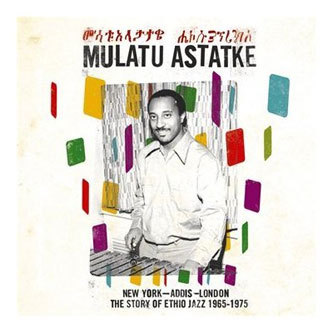
Mulatu Astatke – The Story of Ethio Jazz 1965-1975: Round 32 – Tom’s Selection

Having been an avid follower of music for all my adult (and most of my teenage) life, new discoveries of old music are rare. Old but unexplored bands crop up every now and again but I’ve almost always been aware of them before I’ve heard them and in most cases I’ve listened to a song or two beforehand. Surprises are rare, good surprises rarer. But every so often something comes along that is utterly thrilling in its unexpectedness. A couple of months ago I was on a relatively long (by UK standards) and tedious drive, with nothing but myself and my far too familiar car CD collection for company, so I reached for that African CD languishing in my glove compartment that I had been given by my record sleeve designer mate, Matt. Somehow I managed to unwrap the cellophane from the CD case without crashing the car and, lo and behold, on inserting the disc into my CD player a rather wonderful mix of vaguely Arabian sounding horns overlying a more conventional Western sounding jazz background emanated from my C1’s tinny speakers. Then, about three minutes into the track an electrifying electric guitar cuts in. From that point on I knew this was going to be no normal listen. And so it proved…since that time, Mulatu Astatke has been my constant travelling companion and, unlike a lot of music that sounds great the first time through, my enthusiasm for this music seems to grow with each new listen.

For me, jazz has always been a slippery fish, too often veering from willfully difficult to cheesily easy with seemingly little room in between. If I’m totally honest, more often than not I admire jazz rather than love it (Miles Davis’ late 60s/early 70s output being a significant exception). But Mulatu Astatke’s music occupies that middle ground – accessible yet occasionally jarring, unpredictable yet never tangential; rather like Nick’s Four Tet offering on the same evening this is music that’s hard to imagine anyone actively disliking…but at the same time it’s anything but bland.

Those listening to this lengthy compilation (76 minutes in all) expecting to be invigorated by African poly-rhythms and tribal chanting will be sorely disappointed. Unlike, say, The Bhundu Boys (our only other African record to date) this is a subtly African sound and the casual ear would probably find it hard to determine its continent of origin (in fact I tried this out on a couple of friends at the weekend and got back Cuba, Bolivia and Argentina!). The reason for this is hinted at by the compilation’s subheading – ‘New York, Addis, London’. Astatke actually learned his musical craft in the Welsh border town of Wrexham of all places but his subsequent time in the major cities of England and USA has obviously informed his music, to such an extent that many of the tracks on The Story of Ethio Jazz would not sound out of place on the Beastie Boys’ funkiest album – Check Your Head (Mark – if you’re reading this, was he an influence?). Perhaps even more remarkable is the timelessness of the recordings, only the occasionally muffled production hinting that this music is not a contemporary release.

On my initial run through the album I remember thinking that the quality of the songs had to tail off – the compilation started off so well that it must be front-loaded or surely I would have heard of Mulatu Astatke before. But no! All twenty tracks are special, offering a great variety of music, sometimes funky, sometimes dissonant, occasionally mellow but always captivating. Not all tracks are instrumentals but they work equally well with or without vocals.

If you have never heard any Ethio Jazz before (props to Nick who, somewhat inevitably, had) I urge you to give this music a try. It won’t be the same unexpected surprise for you as it was for me, but it could open up a whole world of unexplored music. For me, this has been a supremely rewarding and enjoyable musical journey into the heart of Africa via New York, London, Boston and…Wrexham!

Nick listened: Tom asked us to try and guess what this was and when and where it was from before he revealed who it was by; just asking the question set synapses firing in my brain and correctly sussed that it was late 60s / early 70s and African. I may even have said Ethiopian specifically, as I own a ‘Best of Ethiopiques’ compilation and am aware of the cache the scene / genre / movement / whatever has had in certain circles over the last decade. The compilation I have has a couple of tracks by Mulatu Astatke, and I’ve also seen Broken Flowers, the Jim Jarmusch film which features some of his music, so even though I couldn’t remember his name, I’d heard him before. The music itself is great; funky, hypnotic, with apparently traditional Ethiopian melodic patterns overlaid on much more Western rhythmic and instrumental templates. As Tom suggested, there’s almost literally nothing to dislike; it’s just beguiling and cool and enjoyable. A great choice.

Rob listened: I had no idea.

Graham listened: Nothing to dislike, very cool but doesn’t really inspire me to want to explore any further. Ideal to have on in background but not one I’m likely to say “ssshh, listen to this bit”. Purely down to my ignorance, but found some of the latin influences had a slightly comedic quality to them.
The Modern Lovers – The Modern Lovers: Round 31 – Tom’s Selection

Although I had been intending to treat the record club to the delights of the debut album by The Modern Lovers for some time now, a recent posting at the seminal sickymouthy blog site (if you don’t already follow this, you really should…it’s awesome stuff!) got me thinking that the club should be introduced to Jonathan Richman sooner rather than later.

As it happened, it complemented Nick’s album of choice (David Bowie’s Low) very well – on both albums it is possible to detect faint echoes of a Germanic sound within the songs (presumably, what with the chronology of The Modern Lovers – it was recorded some years before it was released –  this would be because the key Krautrock players were similarly influenced by the Velvet Underground), both albums were released at the point when punk rock was gathering its head of steam and both albums made us question whether punk was really as necessary, or as groundbreaking, as the ‘I was there’ crew make out. Low and The Modern Lovers both sound as (if not more) revolutionary today than the majority of punk rock records I know but they are revolutionary for very different reasons and whilst the two albums share some common ground they are VERY different beasts.

Whereas Low is beautifully constructed, wonderfully played and impassively glacial, The Modern Lovers is a scuzzy mess of irreverence, bad singing, corny wordplay and fuzzy production. And yet it works brilliantly- if Nick can listen to it in its entirety and not be moved to comment (or talk at length) on the production values, it must be doing something right! Jonathan Richman’s biggest trick is to take the sound of the Velvets and remove it from its pretentious arthouse origins to…somewhere much less self-reverential and MUCH more fun. This is not an album for chin-strokers and pipe smokers; this is an album that will get you tapping your feet, nodding your head…hell, you could even dance to it if you felt so inclined! And by popping the pomposity of the Velvets, he creates a new environment for a familiar sound which alters the way you listen to and hear his music. To me the Velvets always sound claustrophic, urban, paranoid…and often threatening. In contrast, The Modern Lovers is inclusive, expansive and vaguely pastoral heralding America’s wide open spaces as traversed by Roadrunner’s main character.

Although the album kicks off with The Modern Lovers most well known (and most loved?) song, there is no drop in quality over the course of the record’s nine tracks. Despite the inclusion of a couple of slower songs, the overriding musical theme is the pulsating chug of the rhythm section that provides the backdrop to Richman’s songs. It’s a great sound on which to hang some idiosyncratic lyrics, some simplistic but deft melodies and some wonderfully messy guitar lines. And as the head bobbingly magnificent Modern World draws to a close (in which you’re asked to ‘share the Modern World’ with Jonathan – inclusive or what!) you can reflect that sometimes the simple pleasures in life really are the best.

Nick listened: This was great, just what I was hoping for after listening to Roadrunner a few times in my quest for songs featuring the motorik beat. I’ve bought a copy. Not much more to say.

Rob listened: Great record. I only really knew ‘Roadrunner’ ahead of time and subconsciously had Richman filed under literate troubadour, somewhere West of Robyn Hitchcock. This was great, driving rock and roll with a sense of economy which concentrated the groove and an attractive East coast who-gives-a-fuck drawl. I’ve listened to it a couple of times since and it’s irresistible, bridging 20 years of music and reducing them down to a powerful essence. I don’t, however, think it says anything one way or another about punk. The music of 76-78 was always part of a continuum that included this, the Velvets, Nuggets, Stooges, Bowie, MC5, New York Dolls, Pub Rock, Black Sabbath, Beefheart and on and on and on.

Tom Responded: With regard to your final sentence Rob: I know this, you know this but there are plenty of people who would have you believe that music was rotten in the mid 70s and that punk represented some sort of year zero. To my mind, records like Low and The Modern Lovers blow this theory out of the water and suggest that punk was far less essential than is often made out.

Rob responded, even though he shouldn’t and we’re all seeing each other again on Wednesday anyway: Tom, I know you know, and I know you know I know. Anyone who thinks 76 was a total year zero is a total zero, but it did change some things. We talked a little about how the Velvet Underground seem to be afforded less influence these days, and that’s perhaps so. Influences change, and the Jesus and Mary Chain went off the boil in 1988. Perhaps the same is happening with punk. We have another 30 years’ worth of music history to pile on top of it now, so of course its overall influence has diminished, washed out by hip-hop, techno, rave, whatever. But at the time it changed some things and it was, in its own way, important. Things just happened the way they did. Clearly this is a fascinating debate which we can continue next week when I bring along my ‘Best of Sham 69’.

Graham listened: Now Rob and Tom seem to have finished I suppose I should commit my thoughts. There were a few moments on this record where I wondered if the looseness/messiness/corniness were steering it near to rubbishness. It just about gets away with it, but I sensed some laziness.

The Walkabouts – Satisfied Mind: Round 30 – Tom’s Selection

Until about 30 minutes before we met, I had little intention of playing Satisfied Mind to Rob and Nick. But while listening to my intended choice – Maxinquaye by Tricky – I decided that although it still stands as a monumental piece of work, it was just too well known by myself and my fellow members. Seventeen (!) years on from its release, Maxinquaye has not lost none of its power to astonish, but perhaps its ability to surprise has diminished – I felt on listening to it the other day prior to the meeting that I had pretty much worked it out already, that listening again would be unlikely to reveal anything new and therefore I switched at the last minute to an album that I know far less well but admire all the same. And although none of the album’s worth of covers on Satisfied Mind sound as radical or daring as Tricky’s amazing re-working of Black Steel in the Hour of Chaos, Satisfied Mind achieves something elegant and subtle in the way it unites old and new into a pretty much seamless whole.

Satisfied Mind is a lovely, blissful and predominantly calm(ing) hour’s worth of vaguely traditional American sounding music that is unlikely to change your life but is, for me, a rare treat – an easy listen that does not tire with familiarity. It sets its stall out early with the title track, a lilting, gentle waltz that is perhaps reminiscent of Tom Waits at his most tuneful or Nick Cave in his Boatman’s Call phase. It comes as no surprise then that Mr Cave himself gets the treatment on the second track (Loom of the Land from Henry’s Dream) and the comparison of these two covers serves to highlight the album’s rationale. By linking a well loved standard of the 50s to a song written by the man who gave us Junkyard, The First Born is Dead and The Mercy Seat, the Walkabouts manage to strip away the accoutrements of the original arrangements, suggesting in the process that music of different eras is much more closely connected than we sometimes realise.

The challenge for the evening was to bring two versions of the same song and on the night Free Money by Patti Smith was the cover of choice for no better reason than that I have always found Nick Cave’s Loom of the Land a bit of a snooze, I love John Cale’s Buffalo Ballet but we’ve already had an album by him and I don’t have the original of any of the other songs on the record. But, for me, it’s the lesser known tracks they cover (Robert Forster’s The River People, The Carter Family’s The Storms are on the Ocean and Will You Miss me When I’m Gone, Shelter for the Evening by Gary Heffern) that work the best. But the jewel in the crown has to be the unimpeachable Feel Like Going Home, an immense slab of American music that navigates a astonishing breadth of musical territory in its eight and a half minutes, starting off with a simple guitar motif, reminiscent of Dead Flowers from Sticky Fingers and ended in a gloriously electric slow-burn.

The Walkabouts on Satisfied Mind do a fantastic job of creating an affecting and affectionate homage to American folk, indie, rock and punk and, in so doing, serve to remind us that these genres are much closer relatives than they might at first appear. And whilst it might not change your life, it’s surely worth a listen?!

Nick listened: To be frank, I really wish Tom had stuck to his guns and played Maxinquaye and Public Enemy’s original version of Black Steel In The Hour Of Chaos, as I think it’d have inspired a lot of debate. Certainly more than The Walkabouts managed; there was nothing wrong with this album of covers, and, not knowing most of the songs, it hung together rather admirably, it just didn’t really do it for me. I know the alt.country aesthetic is catnip to some people, but beyond a bit of Lambchop and Wilco it’s not really a genre I’m interested in.

Rob listened: I was expecting to hear Maxinquaye at some point this evening. It was the first thing that sprang to my mind when Tom chose his ‘same song, two different records’ theme. I don’t think i’ve quite worn it out yet, but I understand where Tom is coming from. Ultimately I wavered away from choosing ‘Slanted and Enchanted’, despite really wanting to play the lovely Tindersticks version of ‘Here’, for similar reasons.

I think i’m mostly with Tom when it comes to the record he did finally choose. Despite only really knowing a handful of the songs, or perhaps for that very reason, ‘Satisfied Mind’ hung together pretty well as an album. As I recall the discussion was pretty good. I remember getting wound up at one point about whether the chap singing was deliberately choosing his vocal lines to avoid being shown up by his female companion, who was streets ahead of him. Sometimes records can just be pleasantly pleasant, and this seemed like one of those.

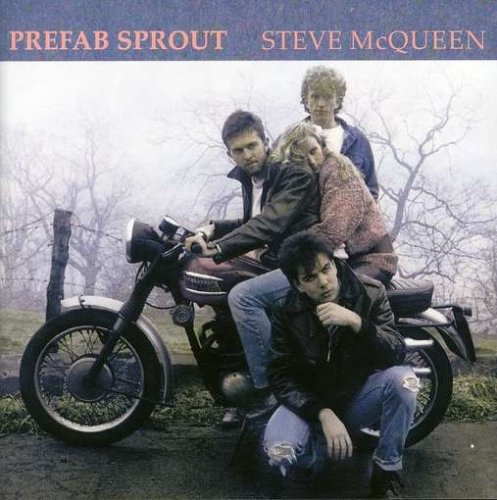
Prefab Sprout – Steve McQueen: Round 29 – Tom’s Selection

In most cases, my offerings at DRC meetings have been ‘on the list’ for many months beforehand. I don’t think my list is as organised as Nick’s or as considered as Rob’s. And I don’t think Graham really does lists. But I certainly have a mental roster of probables, possibles and definites – it’s just that, despite owning it for a couple of years now, until recently Steve McQueen didn’t feature on it at all.

I picked up Steve McQueen (not literally, that would be ridiculous, seeing as he’s dead and all) from the stall in Newton Abbot market  – a case of predetermined purchasing that I occasionally indulge in…as in, ‘I’m going to go to the stall and I’m not coming away without a record’. So I bought it because I knew it was something I should have in my collection. It was something I was supposed to like and there wasn’t anything else that was more (or, more probably, remotely) enticing! I somewhat halfheartedly played it a couple of times, out of a sense of obligation really, when I actually felt like playing something else, something new and vital (and probably nowhere near as good) but I always made sure it was when I was only half listening – probably whilst doing the hoovering or with the dishwasher whirring away – so I wouldn’t be wasting a ‘proper’ listen on something so unlikely. You see, I’ve always hated the band’s name and I’ve associated Prefab Sprout with hot dogs and jumping frogs and Albuquerque and being fey. Their sound to me was all cheesy 80s synths and cheesy 80s girlie backing vocals. The chances of me ‘getting’ Steve McQueen were minute before I even listened to a single note. To compound matters, this is not an album that rewards a casual listen. Its complex structures and melodic twists and turns can sound like a total mess with only half an ear and a tenth of a mind on the job. So it went back on the shelf to gather dust and disdain.

Until, that is, I sat down and had a proper listen. And boy, that first side just blew me away. So I played it over and over, only occasionally venturing into the more oblique, abstract musical landscape of side two. But that was fine because side one was all killer, no filler.  And then, as so often happens, side two starts to worm its way in so that eventually you can not even remotely understand what it was that was getting in the way in the first place. So now I love it all, from the opening romp of Faron Young which is so deft in the way it writhes from one passage to the next, through the plaintive soundscapes of Bonny, When Love Breaks Down and Desire As to the funk(ier) work outs such as Moving the River and Appetite and on to the final thrilling crescendo of When the Angles. And possibly the trickiest song of the lot, the bizarre and (at first listen) clunky Horsin’ Around. Well, that’s probably my current favourite. How that can be when it sounds so much like Matt Bianco is beyond me, but it charts some amazing musical territory in its four and half minutes and, like all the best songs, the realization of its brilliance is all the better for being so hard won.

On the night, Destroyer (in particular Kaputt, which is a bit of a DRC favourite) was mentioned on many occasions. The similarities are obvious and pretty much irrefutable but I have to say that whilst I think both albums are amazing, I (whisper it)  probably prefer this one…for the time being at least.

Rob listened: What a strange, smooth and slippery record this is. As a teenager in the mid 80s, already enamoured of The Smiths and following the dots to other acts, Prefab Sprout were one of the doors open to me. I never got them. Just couldn’t see the appeal at all. Thinking back, and listening now to ‘Steve McQueen’ for the first time proper, I can hear why. There’s so little for a hot-blooded young man to get hold of, and the record puts no hooks into you. How odd then to listen properly nearly 30 years later, years in which the sounds and styles of ‘Steve McQueen’ have seeped into the culture to the point where Dan Bejar can gain Album of the Year plaudits for fetishing them. Sounded great, start to finish. Still no hooks, but enough sparkle to draw me back to look at its shiny surface again.

Nick listened: I really enjoyed this, too. The opening track was like a strange, distracting curveball, an awesome groove that had nothing to do with the rest of the record, and then things settled comfortably into the smooth, jazzy-pop territory I’d expected – I read about Steve McQueen and the rest of Prefab Sprout’s oeuvre whilst ravenously devouring Kaputt last year, and they;d been on my mental list of things to investigate. So I’m very glad that Tom solved that for me, and I’ve added this to my list of things to buy, too.

As an aside, much mirth was caused by reading that The King Of Rock’n’Roll is about a musician being haunted by his one uncharacteristic jaunty novelty single becoming a massive albatross of a hit. Oh the irony.

Graham Listened: For many of the same reasons listed by Rob, I actively chose to ignore Prefab Sprout during the 80’s. They sounded too ‘ clever by half’ to me and the way that much of the music press fawned over them, added to my determination to avoid them. My resolve cannot of been that strong, as by 1988 I had bought the album which followed Steve McQueen (which has the ultimate 80’s fashion pic’ for a cover!). I still view them with some suspicion, but this is a great record and really good to hear it again.

Money Mark – Mark’s Keyboard Repair: Round 28 – Tom’s Selection

Although I have been considering bringing this record along to one of our meetings for quite some time now, Adam Yauch’s recent and tragically untimely death has brought the music of The Beastie Boys very much back to the forefront of minds. The internet forums have been packed with threads on the subject and it seems that the Beastie’s first five albums (in particular Paul’s Boutique and Check Your Head) are now confirmed as bona-fide ‘classic’ albums – the sort that are going to live on, as opposed to flash-in-the-pan classics such as K by Kula Shaker or Be Here Now by Oasis that were somewhat optimistically hailed as classics until people tired of them…on their second listen!

But listening to Paul’s Boutique and Check Your Head in rapid succession is an interesting experience. Incredibly (considering the fact that PB contains just about every genre of popular music ever considered), CYH offers up something fresh and new to The Beastie Boys’ sound – a loungy groove thang runs throughout the record and offers an intriguing contrast to the more traditional rapping found on the album. And that sound is due (in part at least) to Money Mark Ramos-Nishita and his keyboard.

On Mark’s Keyboard Repair (Money Mark’s first solo album), the sound that he contributed to the Beastie Boys early/mid 90s albums can be heard in all its (slightly cheesy at times) glory. It’s obvious from the off that this is the record of an artist who can’t believe his own luck and Mark’s gleeful, uninhibited experimentation can be heard throughout. As he says on Don’t Miss the Boat ‘You might not like this type of shit but somebody does’. And Mark sounds like he knows that there would be enough somebodies to ensure he doesn’t need to worry about it. Perhaps a bloke who got his break in music by having his carpentry skills called upon by a rap trio whose house needed repairing knows he’s on a lucky streak. Whatever, MKR sounds brimful of confidence and, whether by fluke or through careful planning, its mixture of keyboard sketches (many of the instrumentals on the album last for less than 2 minutes), samples (Insects Are All Around Us is hilarious – ‘that cricket was chirruping at 76 degrees Fahrenheit’) and fully fledged songs (the plaintive and affecting Cry, the vaguely Can-ish opener Pretty Pain, Got My Hand in Your Head, the Prince-like Sometimes You Got to Make it Alone) works brilliantly producing an organic and pretty seamless whole.

I also own Mark’s follow up album, Push the Button and whilst it contains some great stuff, to my mind it doesn’t quite have the same alchemy of MKR – the transitions between styles sound a little clunky and some of the instrumentals feel a little forced. In contrast, Mark’s Keyboard Repair flows from one wonderful moment to the next so that by the time the album’s climax (and possibly best moment), Pinto’s New Car, comes around your urge to remain in a state of blissed out chilledness will be countered by the fact that you’ll have to get up out of your armchair and turn the bloody thing over (unless you’re listening on an inferior format…Nick!).

Nick listened: Beastie Boys have also been at the forefront of my listening since hearing about Adam Yauch’s death, which has affected me more than any other ‘celebrity’ death I can recall. Beastie Boys were a big part of my musical life in my late teens and early twenties, and I still listen to them regularly; it’s not long since I chose Paul’s Boutique for DRC.

I got Push The Button when it was released – my brother worked for a record distribution company and Money Mark was one of the artists he had CDs by in the back of his car (others included DJ Shadow, Spiritualized, and Badly Drawn Boy, plus loads more) – so I nicked a copy from him, having loved the Hand In Your Head single which had been getting plenty of airplay on the radio. Many years later, I agree with Tom about PTB; it’s a nice little album with some decent tunes on it, but nothing amazing, and that’s probably why I didn’t investigate Mark’s Keyboard Repair, so it was the first time I’d heard it at record club the other night.

Was MKR better? It was different, though you could see the seed of this in PTB – and not just in the reworked Hand In Your Head – but there’s an inspiration and character in the looseness and ease of MKR that was watered down by PTB. Ultimately I’d rather listen to Mark play with Beastie Boys – I just picked up The Mix-Up, their instrumental album from 2007, which is great – but this was very cool and enjoyable in its own right.

Rob listened: I enjoyed MKR a lot as it played and then started to get myself wound up in an internal, and briefly external, dialogue about whether it was serious/authentic/silly/fake. Afterwards I started to feel stupid for even worrying about it. I spent the second half of the record worrying a lot about the motivations of people who create and enjoy music that sounds as if it was found in the back of a skip in 1970, which this does, whilst simultaneously just enjoying the music. Perhaps my new motto should be ‘Worry less, enjoy more’. If only I wasn’t so worried about how shallow it is to have a motto.

Graham listened: After the weather we have endured on the weekend of our ‘Glorious Leader’s Jubilee’, it seems somewhat weird that we listened to this on a warm and balmy early summer evening. Though I was dubious at the very beginning, I found this a perfect soundtrack for ‘chillin’ on such an evening then, and potentially, in the future. In fact I could do with it now as a chilled antidote to the hysteria of the last few days!

The Bhundu Boys – Shabini: Round 27 – Tom’s Selection

Shabini is yet another album rescued from the nether regions of my collection by the strange alchemy of Devon Record Club and its uncanny ability to push me to places I haven’t visited (or, indeed, felt like visiting) for literally decades. The Bhundu Boys’ debut album was a favourite of mine for a while back in the late 80s but for some reason, that seems all the more baffling to me now that I have become reacquainted with it,  I stopped selecting it. For me, albums that get left on the shelf are usually the ones that I either:

a) didn’t like in the first place (surprisingly rare as I tend to be quite careful in my purchases) or

b) by an artist who I have other albums I prefer or

c) one of those albums I’ve listened to too much and feel I have nothing left to unearth.

As the third option is the only one that could possibly apply to Shabini, it’s curious just how differently I hear it now in comparison to all those years ago – I obviously had never come close to working it out first time around. As a teenager, the vocals and those trademark chiming and ultra nimble guitar lines were pretty much the whole package as far as I was concerned. Coming back to the album 25 years on, the (frankly incredible) bass playing and wonderfully inventive and subtle drum work are what really stands out. It’s a breathtaking sound – warm and fun, exciting and enticing, its joyousness all the more poignant bearing in mind what has happened in Zimbabwe between the record’s release and now.

The Bhundu Boys were the African music supergroup of their time. Championed by the ultimate arbiters of musical taste on British radio, John Peel and Andy Kershaw (Kershaw even went on to be lead singer Biggie Tembo’s best man), they quickly gained a reputation for being a blistering live act and acquired a fan base that extended way beyond the norm for a group that sung songs in their native language and only used those frets that are located in the body of the guitar! But the Bhundu Boys were charming, energetic, committed and charismatic…and the music, known as jit, was instantly likeable and great to dance to.

The songs on Shabini are consistently brilliant – there’s no filler here – and, although on a first listen they may all sound a little similar what with all those chiming guitars, with familiarity individual songs begin to reveal themselves – Manhenga is dark and brooding (and is possibly my favourite track on the album), Pachedu and Shabini are both songs that segue (without a sniff of a key change, I might add) from a sedate initial section into a manic latter half, Hatisitose has a hypnotic staccato guitar line operating underneath and in tandem with the more recognisable guitar work and on Wenhamo Haaneti the Boys seem to have borrowed Roky Erikson’s electric jug. The playing throughout is breathtaking. There are no weak links here, seemingly no egos, just perfect teamwork and great compositions.

The Bhundu Boys went on to implode under the weight of their own popularity. They started to sing in English. They appropriated western production values and sounds into their songs. They opened for Madonna. They were dropped by WEA. Tragically, three of the original members of the band died of AIDs in the 90s and Biggie Tembo was found hanged in a psychiatric hospital in 1995. So now, perhaps, it is impossible to listen to Shabini in the same way as in its time of release and maybe that is partly why, these days, I am drawn as much to the darker rhythms of the record as to those playful melodies, sweet harmonies and skittish guitars.

Nick listened: I knew the name Bhundu Boys in a very distant way, but I don’t think I’d ever consciously heard them. I’ve got various little bits of African music – King Sunny Ade, Toumani Diabate, Ali Farka Toure, Fela Kuti, an Ethiopiques compilation, Tinariwen, Antibalas – but it’s a very tokenistic gesture if I’m honest. I’ve enjoyed it all when I’ve listened to it, but I seldom feel the urge to pull it off the shelves.

Likewise I really enjoyed Shabini, especially, as Tom notes, the bass playing and drumming. In fact, the bass playing in particular served to make me angry with contemporary Western bands for their general eschewing of decent bass playing; many bands seem content to let their least-musical mate play bass guitar, treat it as nothing but a dull, semi-rhythmic thrum, and then mix the resultant paucity of quality so low that you can’t hear or feel it anyway. More bassists should be raving egotists like Paul McCartney or the guy from Os Mutantes, driving the songwriting and production of the music to show off their chops.

I could totally see myself tracking down Shabini if I hadn’t just bought a new house and thus plunged myself once again into penury.

Rob listened: Strange to reflect on how The Bhundu Boys reached parts of the UK listening public that their compatriots before and after couldn’t get to. Cause then to reflect on the extraordinary influence that John Peel had on the music we listened to in the 1980s. ‘Shabini’ still sounds energetic, alive and sparkling with life and apparently effortless technique. Lacking the cultural context must surely affect the way we hear a record like this, but hearing it as abstract music, its extremely sweet.

Graham listened:  Another blast from the past for me as I’m sure I danced along to the The Bhundi Boys at a GLC concert on the South Bank, coutesy of good ol’ Red Ken. Interesting to catch up with the history (albeit tragic) of the band after all these years. I’ve never owned anything like this, purely because I haven’t really explored and listened enough. For all the reasons listed by others, I really enjoyed listening to this.

Kitchens of Distinction – Strange Free World: Round 26 – Tom’s Selection

Over the course of Devon Record Club’s brief life thus far I have grown to love the ‘themed evening’ as it has maneuvered me to various gloomy corners of my collection that have laid dormant for many years waiting to be re-discovered. I thought the idea of a ‘Year of Release Lucky Dip’ would be interesting precisely for this reason -I don’t know why, but every non-themed night seems to see me gravitating to 1981.

The concept was this: two dips, hence a year from which a track needed to selected and a year from which an album needed to be chosen. For bonus points, try to connect the two in some way.

When I pulled out 1979 and 1990 I thought I would be fine but as I scoured various internet lists and ran my beady eye over my vinyl I felt an ever increasing sense of dread that I would have to play either (a) something so bleeding obvious it would hardly be worth bothering with (in the case of 1979 – Fear of Music, London Calling, Armed Forces, Unknown Pleasures) or (b) rubbish (in the case of 1990). Or the not rubbish In a Priest Driven Ambulence by the Flaming Lips…but we’ve already had an album by them and Rob had suggested in the last meeting that bringing an album by an artist we’ve already had would be an act so unbelievably unimaginative as to lead to instant ex-communication from the club (I might possibly be exaggerating a teensy bit here). Which is ironic given Graham’s choice for this meeting!

Anyway, nestling on the bottom shelf of my unordered collection are my Kitchens of Distinction records. Hmmm, could give Strange Free World a go, but never really clicked with it at the time. In fact I had recently played their (still magnificent) debut a couple of times with a view to bringing it to record club and had mentally filed it away as a ‘probable’. But I was intrigued to hear Strange Free World again having only played it a handful of times in the last 15 years and always sensing that I had never really wrestled with it enough…..and it hasn’t left the turntable since. What a brilliant album! What a fantastic noise married to 10 lovely, brooding tunes, dark grooves and sweet, sweet melodies. What was I thinking all those years ago when I had dismissed this as a clunky retread of Love is Hell?

Listening to both records again, I suppose the tunes on Strange Free World are harder to find than on the debut, especially on the more ominous tracks such as Hypnogogic, Polaroids and Aspray. The bass lines pound away in the gloom and Patrick Fitzgerald’s vocal delivery is almost psychotically intense. But once you’ve lived with these tracks a while, they sound wonderful, especially with the volume cranked up high so that Julian Swales’ astonishing guitar work fills the room, as it’s meant to do. These are not songs for dinner parties (back in the day KoD were possibly my favourite live act – a literally unbelievable sound for a single guitar to emit)! Elsewhere on Strange Free World there are moments of pure pop heaven (Quick as Rainbows, Gorgeous Love, He Holds Her,He Needs Her) an incredible indie anthem (if that isn’t paradoxical) in Drive That Fast and, to cap it all, the blissful, almost meditative closer, Under the Sky, Inside the Sea. You can almost see the sun setting over a millpond sea as the final blasts of trumpet disappear from the song’s coda. A wonderfully calming end to a tempestuous album that is so so much better than I ever gave it credit for. Long live the themed evening and its ability to sniff out those under appreciated gems that have been neglected for far too long!

Post Script: For my track I did play a song from London Calling. For your own bonus points can you guess which one (it’s connected to SFW)?

Nick listened: Talk Talk > Long Fin Killie > Kitchens Of Distinction: that was the line of logic that I followed (via Allmusic) about 8 years ago when I first got into KOD; I liked Talk Talk, saw reference to LFK’s Houdini being influenced by Laughing Stock, loved LFK, and then saw reference to them also being influenced by KOD. Hey presto. Whether they were or not is pretty moot (there are certainly lyrical precedents for LFK in KOD’s music); I liked them both. Strange Free World is the only one of KOD’s four albums I don’t own; I don’t know why. Of the three I do own, I like The Death Of Cool most, I think, and Strange Free World, on first listen, was similar stuff; intriguing melodies, good songs, and huge swathes of awesome, intricate, beautiful/brutal guitar noise. It was great.

However, I’ve got to take issue with Tom choosing it – the year he pulled from the hat was 1990, and Wiki has Strange Free World down as being released in March 1991! Cheat! Cheat!

Tom Responded: Well…Rate Your Music (and my LP for that matter) state it was released in 1990. So there. And besides…1990 couldn’t have been THAT shit!

Rob listened: I adored Kitchens of Distinction and was delighted when Tom whipped this out of its hiding place. For me their sweet spot lies somewhere between their debut ‘Love Is Hell’ with its stripped restraint, and ‘Strange Free World’, where they cut loose and let the electricity course through their songs like hot blood. ‘Quick As Rainbows’, the post-Love, pre-Strange single nails it, and i’d been listening to it just a few days before the meeting. It’s absolutely perfect, dramatic, direct, simple, and spine-tinglingly addictive. Patrick’s voice, Julian’s guitar, whether on vinyl or in Taunton Community Centre, where my best friend and I saw them play in 1991, were a powerful combination. Of their time, if i’m being objective, but eternally wonderful if i’m being honest.

Todd Rundgren – A Wizard, A True Star: Round 25 – Tom’s Selection

Where to start?

I’ve been saving this one up since we started DRC – the joker in the pack – and have almost brought it to a number of previous meetings but the time has never seemed quite right. However, having inflicted some pretty dark, harrowing LPs on Nick, Graham and Rob recently, I felt Round 25 and its Spring infused optimism was the perfect time to unleash this kaleidoscopic maelstrom of sounds and styles. But would its breadth and ambition and pace be too much for the uninitiated? As Melody Maker’s Paul Lester stated in the wonderful Unknown Pleasures freebie that came with the magazine in March 1995, ‘A Wizard, A True Star was the first vinyl LP I ever bought and it may just as well have been the last’. But on first listening does it just sound like an incoherent mash up of pretty much all popular music from the late 60s and early 70s – the last album you would ever want to buy? Having owned the album for getting on for 20 years now, I can barely remember how it felt the first time the needle nestled in AWATS’s unhinged groove, so I am fascinated to know what the others thought and I am still unsure (just as they might well still be) of how it went down on the night.

Whilst AWATS was not even the first Todd Rundgren vinyl LP I bought, it is the one I have come to cherish the most, another one of those pivotal, turning point/tipping point albums where the planets align and the artist’s only urge is to make the album they need to make, irrespective of the consequences. And so it is on AWATS, right from the opening lines of the cosmic International Feel where our hero sings ‘Here we are again. The start of the end. But there’s more. I just want to see if you’ll give up on me’. Talk about setting your stall out early! Up to this point, Todd’s albums had developed from lovely if somewhat straightforward singer songwriter fare (Runt, Runt : The Ballad of Todd Rundgren), to 1972’s wide ranging but quite well behaved double album, Something/Anything. But, at some point in between S/A and AWATS Rundgren discovered LSD and the effects couldn’t have been more dramatic. Rundgren has described the experience as causing a ‘permanent destruction of his ego’ and so it is played out on AWATS – akin to that moment that happens every so often on the dancefloor when suddenly you are freed from inhibition and you don’t care whether you make a right tit of yourself or not…or is that just me? Whatever, AWATS is completely uninhibited but manages, somehow (as Rob pointed out on the night) to not sound too indulgent. How this can be is hard to pin down, but I think it may be due to the the playfulness that runs throughout the album (especially on the, frankly exhausting, first side), the lack of pretension and the obvious reverence that Rundgren reveals for those genres he is so skillfully appropriating.

It’s pointless referring to individual tunes – they really are as different as chalk and something even less like chalk than cheese. Suffice to say, the first side is the mad psychedelic side, the second side the slightly calmer, soulful side.  My favourite track changes with each listen, but my favourite sound is always the thwuuuunnnnggggggggg of the arrows hitting the trees in Zen Archer (even more than the sounds of animals having sex on the mercifully brief Dogfight Giggle). Very much of its time and place, AWATS is no Ege Bamyasi, but I love it just as much and know that if I ever feel the need for a whistle stop tour of pop music from that time, I just need to strap myself in, take a few deep breaths and enjoy the trip (pun very much intended).

Nick listened: While we listened to this I was tweeting about how nuts it is, and got into a conversation with Stephen Thomas Erlewine of All Music about it; Stephen commented that it had convinced him that he never needed to take acid or other hallucinogens, because just listening to it was psychedelic enough. I concurred (and explained that I felt the same way about Jane’s Addictions’s Ritual De Lo Habituel in relation to opiates). AWATS kind of sounds like the cover looks; a recognisable face, distorted and made weird and confusing echoing recognisable songs, distorted by nuts arrangements, performances, sequencing and decision-making, and made weird and confusing. Rundgren’s a name I’ve been aware of for ever, seemingly, but never listened to. I’m glad I have, though I’m not sure how representative this is!

Rob listened: I’ve been through the AWATS funhouse a few times before, clinging on by my fingertips. The only Todd Rundgren I own is a Best Of which… doesn’t really hint at the swivel-eyed kaleidoscope craziness he managed to conjure up here. I think I came to him via a sneaking love for piano rock, but on the evidence of AWATS Todd Rundgren is to Billy Joel what Captain Beefheart is to Jamie Cullum. Has to be heard to be believed and then has to be heard again, preferably after a few months’ recovery.

Graham listened: During the 80s I  always  somehow managed to confuse Jim Steinman and Todd Rundgren. It was always something about those American performers names that seem like they have been invented create a bigger impact (in fact I can still remember collapsing with laughter when watching a West coast TV news channel being hosted by Kent Shockneck and Flip Spiceland). Anyway, for that reason I spent many years thinking Todd Rundgren was responsible for Meatloaf’s and Bonnie Tyler’s success.

In fact that state of confusion could have been helpful in approaching listening to the first half of this album. I’m not sure being completely lucid/sober is that helpful. During the first half of this I laughed, cracked strange facial expressions and almost felt a few moments of pain! That’s my review of side 1. Side 2 felt like it should be available for GP’s to prescribe for those who have listened to side 1. Very strange.

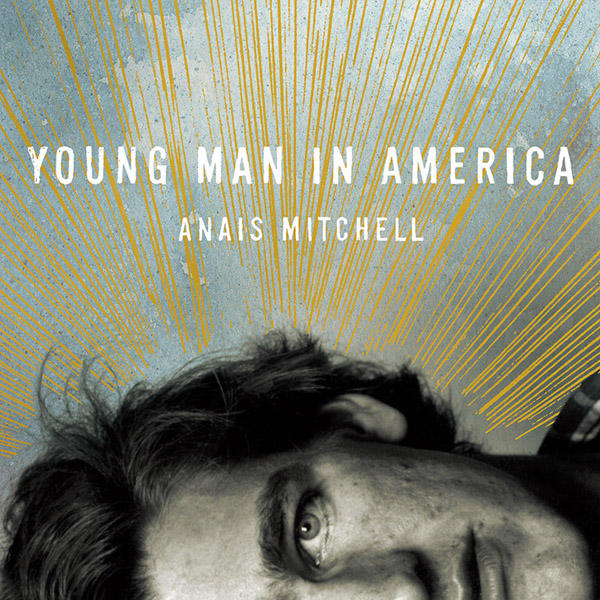
Anais Mitchell – Young Man in America: Round 24 – Tom’s Selection

You know how every once in a while an artist comes along that becomes your own little secret. Well, for the past two years (ever since I picked up Hadestown, Anais Mitchell’s compelling and original ‘folk opera’ based on the tale of Orpheus and Eurydice in the underworld yet set in depression era USA and featuring a host of guest vocalists) she has been mine. With the release of Young Man In America this Spring, I was expecting that situation to change. The British newspapers gave it glowing reviews and there has been some enthusiastic chat about it over on the Metacricket forum (which is where I first heard of her), but since that initial burst of interest there has been precious little coverage of what sounds to me like another bona-fide classic. Crucially, and somewhat bemusingly, Pitchfork seem to be avoiding her, which is great as far as I am concerned as she will be much more likely to remain ‘mine’ for a little longer whilst the behemoth of internet music reviewing remains dis-interested or unaware. Not so sure Anais herself will be so pleased with the situation as it is though.

Having said that, Young Man in America sounds like yet another record that has been made with scant consideration for the audience. This is a tough listen, confessional at times and full of thought provoking imagery and, particularly in the case of the ultra beautiful Shepard, harrowing tales that pull no punches (although you can avoid the tale completely by just listening to the snare drum…as Nick did). To compound matters, there is barely a chorus in sight – only the sprightly Venus offers anything approaching a major chord progression – and the instrumentation throughout does the last thing you would expect it to. In fact, the more I listen to penultimate track You Are Forgiven, the more I am astonished by the instrumentation in the last minute and a half of the song as horns and guitar interweave their magic by playing only the briefest of single notes and then disappearing from sight, only to resurface seconds later in an equally ephemeral form. The amazing thing is that each of these singles notes sound like they have been lifted out of a solo that has been discarded from the album, so that when the notes appear, you can almost hear the solo erupting in your own mind. I don’t think I’ve heard anyone do that before.

As it’s only early days, my view of Young Man In America is evolving with each listen and songs are constantly jockeying for places in my affection. At the moment, the title track (which is more-or-less an extended mirror of the opener Wilderland) holds me spellbound, especially when Mitchell pulls, out of nowhere, a melody line that is a ringer for Joanna Newsom, and then lets it go, never to be repeated. The restraint shown throughout this album is remarkable and there are wonderful flourishes all over the place – the dark minor chord that appears in the otherwise lilting and sweet Annmarie (the song would feel completely different without it); the second half of the devastating Tailor where the narrator loses their partner and then their identity and the song alters to match that erosion of confidence; the ebb and flow of the epic Ships as it builds from a simple beginning into something complex and astonishing. This is an album full of grace, made by an artist of rare talent, and if there was any justice in the world she would cease to be my own little secret pretty damn soon. And if that means there will be further Anais Mitchell albums to come, I’d be pretty happy to share her!

Update: Pitchfork has finally got around to reviewing YMiA. I was going to do a ‘Southall’ and rant on about how ludicrous it is to rate an album on a hundred point scale, especially when the review itself seems to contradict the rating…but to be honest, life’s too short, and Nick will probably do it for me at some point soon anyway.

Nick listened: As Tom suggested, I somehow managed, despite him making us promise to listen in silence to track nine before he even pressed play, to not take in any of the words of this. Partly this is because I don’t generally pay all that much attention to words anyway; partly it’s because listening in a group is an odd thing to do; and partly it’s because Anais Mitchell’s vocals are pitched at a level somewhere around that of Joanna Newsom, which is one I have difficulty ‘focussing’ on, as it were. But mostly, as intimated, it’s because I was caught up listening to the music, the ebb and flow, the instrumentation, and the enormous cavernous spaces inbetween. At points it reminded me of Gillian Welch, or Mark Hollis’ solo album (without the jazz thing, perhaps), a kind of sand-blasted outsider country, minimalist, considered, and affecting. I’d like to listen to it again, sans company.

Rob listened: ‘Metacricket’? *googles* Ah… Metacricket…
This was beautiful. Tom has been banging on about ‘Hadestown’ for a couple of years now but it sounds like rather a lot to get ones ears and head around. ‘Young Man In America’ meanwhile was entrancing. Intimate, complex without being impenetrable, it progressed like beautiful machine operating in a way you coud only understand one small movement at a time. One of the best things i’ve heard at the Club.

Graham listened: Magical, dramatic and absorbing, “simples!”. Reminded me of Stevie Nicks at times on some of the some of the dreamier late 70’s Fleetwood Mac.

Baby Bird – Fatherhood: Round 23 – Tom’s Selection

I would hazard a guess that to most people Baby Bird means You’re Gorgeous. And much like Rob’s recent choice for record club, Dexy’s Midnight Runners, the presence of a gargantuan hit single that towers over the rest of an artist’s work has not only been misleading for those whose only exposure to the band is that one song, but has almost certainly been damaging to that artist’s critical and (possibly) commercial prospects. Baby Bird’s first four albums are nothing like Ugly Beautiful (the album that housed You’re Gorgeous) and shorn of the glossy, unsubtle production values and the somewhat overt bid for radio play, Baby Bird’s songs reveal themselves as twisted little oddities that very much reflect the (presumably) twisted mind of Stephen Jones, the man who created them.

Fatherhood is the third of four home produced albums that proceeded Ugly Beautiful and is generally recognised as being the most cohesive and consistent of the four. It’s a slow burn of an album, very dark and brooding in the main, with pared down arrangements and a vast array of vocal styles (check out the falsetto in the Spacemen 3 a-like I Don’t Want To Wake You Up). In a similar way to my last choice for record club, it may sound on first listening as though there isn’t much going on. But closer inspection reveals a wealth of variation and subtlety – melodic alterations within a song, shifts in vocal intensity and delivery, lyrics that sound throwaway but are actually unusual and unsettling (examples:  ‘And the rain comes down and it makes a fool of us. No-one sees it coming except the animals. We rely on the TV, so what does that say about us?’ or ‘Little girl that swings, watch me through your fingers. Holding on like murder to this failed old singer’ or ‘I hope all little girls will be safe when he starts to dream about fatherhood’). It’s all a far cry from ‘remember that tank top you bought me, you wrote ‘you’re gorgeous’ on it’.

Whilst introducing the record, I tried to articulate that even though I really like this record, I’m still not sure it’s a particularly ‘good’ record. And, having ruminated on my fellow members’ confusion at this statement over the past 24 hours I suppose what I meant was that the one thing I like most about Fatherhood is that, 16 years on from first obtaining it, I still haven’t come close to understanding it – I have no idea what Stephen Jones’ motivations are! Is he laughing at us, or being sincere? Facetious or heartfelt? For me it’s a conundrum. And therefore, in much the same way as Lick My Decals Off Baby, Fear of Music (the least favourite but most listened to Talking Heads album I own) or the Guardian Xmas Crossword (the actual thing, not an album title), it keeps drawing me back, challenging me to unlock its mysteries and untangle its twenty strange little songs.

Nick listened: A strange listen. I know Babybird from You’re Gorgeous, of course, but I’m also very much aware that before this he’d released a (very rapid) string of albums made up entirely of home-recorded ‘demos’ (I hesitate to use the word lest it seem like a pejorative; it isn’t), and that this was the most renowned of those records. Many of these songs felt like they would lose something – intimacy, spontaneity, diversity perhaps – if they were recorded ‘properly’ (although I was intrigued to notice that one of them was an antecedent of You’re Gorgeous; an earlier, rickety version with different lyrics, which almost prompted me to say “he’s always had a great way with a pop melody, this sounds instantly familiar” until I clocked what it actually was), but, at 20 songs and an hour long, it’s a difficult thing to take in all at once. Is it even an “album” qua album, as it were? Or is it, as I mooted, just a musical way of Babybird “showing all his workings”, like you’re asked to do in a GCSE Maths exam? I can certainly see it being fascinating.

Rob listened: I saw Baby Bird play an early set as part of the first In The City festival in Manchester. There was a buzz about him back then and I remember thinking I didn’t quite get why. I suspect, looking back, that this was exactly the effect he was after and with that one memorable slip-up, he managed to dodge expectations and attention like a slippery eel. There was much to entice in ‘Fatherhood’ and I found myself comparing it to the Big Star records we listened to a few weeks ago (much to the dismay of Tom and Nick, our Big Star correspondents). To me, both sounded like records made without expectation of an audience, like the true expressions of a singular artist who didn’t carry a care for what others might think. This also brought to mind those early Sebadoh albums, similarly crammed with songs. Although totally different in nature, those records were made by two friends in correspondence, again without thought for an audience, and there’s something pure and privileged in being able, eventually, to listen in.

Rob read: I can’t believe Nick said ‘qua’ back there.

Rob corrected: Actually, I can.

Graham listened: Sometimes you come across an tracks and less often, whole albums that seem so personal to the artist, it can almost feel intrusive to listen. The way this is put together seems to me to be more important for the artist to document his work, rather than present it to his audience. One I would  need to work my way into.