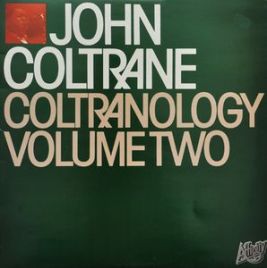
John Coltrane – Coltranology Volume 2: Round 82 – Tom’s Selection

R-1141194-1254766188.jpegIn the end my decision to bring Coltranology Volume 2 to Record Club was sealed by my reflections on Rob’s offering at the previous round. I was so taken by Buddy Holly’s greatest hits that I more-or-less immediately acquired a copy of his second album; an album which is spectacular in its raw, unfettered simplicity. I have listened to it a lot since I bought it, becoming dangerously addicted in the process. But, as our themed night grew ever nearer, I had to go looking through my collection for an instrumental album (we had to find some way of stopping Mitchell singing along) and I thought the fact that John Coltrane was making music so complex and demanding at roughly the same point in time that Buddy Holly was releasing his music would make for a neat comparison. So I chose the second volume of Coltrane’s little known 1962 live album, Coltranology. Coincidentally, I also really like it!

In comparison to today, music must have seemed to offer so little choice back then – looking back it seems as though the options were rock’n’roll, easy listening or jazz. And whilst I can now appreciate the skill and innovation of Holly’s simple tunes, I am sure I would have gravitated towards jazz if I had been consuming music at the turn of the 60s, drawn to its outsider attitude and thrilling  unpredictability, whilst simultaneously sneering at the ridiculous sappy pap on offer elsewhere. But, funnily enough, my 2015 self and jazz have a far less easy relationship than I imagine I would have had had there been so little to choose from and I have numerous jazz albums in my collection that I have no desire to go near again, with or without barge pole.

I recall Graham writing, in his response to Fiona Apple’s The Idler Wheel…, that he either likes an artist to stick to the rules or completely break them, suggesting that Ms Apple did neither. I guess I’m the opposite, preferring those who tinker, bend and shape their music away from the familiar, whilst still providing a safety net of familiarity. That’s probably why I am drawn to this live album from 1962 rather than Coltrane’s slightly safer earlier output or the cacophony he whipped up on his later, perhaps more heralded, albums. The four tracks on Coltranology Volume 2 constantly teeter on the brink of collapse but, crucially for me, Coltrane reins in his instincts to go entirely stratospheric just enough to provide sufficient structure to give the listener something to hang on to, to look forwards to, to recognise! Maybe it’s not as groundbreaking as what was to come next, but I know what I would rather be listening to! Coltranology Volume 2 was the first John Coltrane album I acquired and, whilst I have gone on to add Meditations, Giant Steps and A Love Supreme to my collection, it is the runt of the litter that I find so hard to resist, offering, as it does, just enough light and shade to make it captivating, thrilling and, to my mind at least, accessible enough.

Rob listened: I know where Tom is coming from. Much as my own musical devotions have mostly been shaped by the lean, brutal simplicity of rock and roll, had I been around when the form was being hewn out then I would probably have been too much of a jazz snob to have given it any headspace whatsoever. Which would presumably have left me a jazz aficionado who missed out on ‘Sister Ray’ and ‘Trout Mask Replica’ and yes, even the Haxan Cloak. As it goes, I dabble a (very) little in Jazz, but with a gleeful lack of knowledge, which I value in this context.  Some of it I really like, some of it I would like to like, some of it I admire, some of it I can’t take seriously. I heard an edition of Sound Opinions recently that offered ‘A Rock Fan’s Guide To Jazz‘. Therein, John Corbett talked about his breakthrough with Jazz being the moment he realised there was nothing to ‘get’. From that point he just went with it, dived deeper into the stuff he liked and stayed away from the stuff he didn’t without trying to figure any of it out. I can dig that. At the same time I can totally buy Steve Albini’s famously dismissive views on the form. However i’m feeling on any given day, what never fails to amaze me is just how wild some of this stuff still sounds, 50 or 60 years after it was recorded.

The first side of this record was as crazed as the most wilfully abrasive black metal or disembodied electronica. The second side was a bit more beautiful. Put together, they made a fine listen.

Nick Listened: Writing this months after the fact – my own fault – makes remembering what I thought of this record pretty difficult. I remember it seemed pretty muddy in terms of sound quality (old live recording, vinyl), and that I thought this probably detracted from its impact a little. Bits, as Rob suggests, of the second side were really quite beautiful, bits of the first side had that jazz thing that I don’t always quite get, where it genuinely sounds like people are playing entirely different things from each other, and I’m not – despite owning and loving a lot of jazz – quite musical enough to get what they’re doing. Interestingly, Miles Davis (who I rarely suffer from that problem with) described Coltrane (in an interview in about 1982) as a ‘selfish’ musician, something which made sense to me. I’ve always preferred Miles to Coltrane; the latter seemed to quest further and further into himself, looking for new intensities, while the former seemed to be always moving outwards, looking for new canvases to paint his trumpet over.
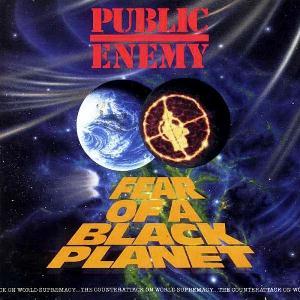
Public Enemy – Fear Of A Black Planet: Round 81 – Tom’s Selection

Fear_of_a_Black_PlanetSurely a ridiculous choice for the ‘How the hell did that get into my record collection’ round, Fear of a Black Planet is widely (and rightly) regarded as one of the finest hip-hop albums of all time…if not one of the finest albums of all-time per se. So it should be of no surprise to find it in my regular rotation. However, I have only owned it (and its sister album, the equally fine It Takes A Nation Of Millions To Hold Us Back) for a couple of years having been stung into action by Rob and Nick’s response to my less than enthusiastic reaction to our first hip-hop album at record club – it was round 6, and Rob brought the album Niggamortis by Gravediggaz.

At the time I had precious little hip-hop in my record collection and what there was tended to stem from the more trip-hoppy end of the genre…or be the Beastie Boys! My reluctance to embrace hip-hop stemmed from my assumption that the vast majority of it was either misogynistic, unpleasantly aggressive, racist or a combination of all three. Sure, De La Soul existed but they, in my mind, were the exception that proved the rule! I had heard Straight Outta Compton and reacted really badly to it. I had heard a Public Enemy album in really bad circumstances (I think, in retrospect, that it must have been the debut Yo, Bum Rush The Show) but I hadn’t really listened to either. Convinced that hip-hop had nothing to offer me and that I had no way of connecting with it, I was happy to close the door and dismiss it as ‘one of those’ genres that I just didn’t need.

But a strange thing happened to me in Round 6. Whilst I can’t say my tastes aligned particularly with the music of Niggamortis, it did sow a few seeds of possibility and that, coupled with Rob and Nick evangelising on the subject of Public Enemy’s finest albums (and, if I’m being totally honest, their reputation amongst the cognoscenti)  led to me quickly enquiring as to whether my vinyl ditching chum, Steve, would care to part with his Public Enemy records in exchange for some beer money.

Well, of course, the rest is history, at least in as much as I now completely see what the fuss was all about – these two records are monumental in every sense. Lyrically outstanding, I love the fact that none of the cheap shots I used to associate with hip-hop are here at all. Sure, Public Enemy are pretty pissed off but this is the stuff of righteous indignation, political disgruntlement, genuine frustration at the inequalities of life. I also love the clever way they are highlighting the stupidity of their critics (that would have been me, guys!). By playing clips from interviews and reviews they are letting their critics words speak for themselves, throwing a spotlight on the narrow-minded ignorance of some of their more negative commentators. Furthermore, the title of the album is simply genius and the irony is palpable – ‘we know you feel threatened so, just to underline the fact, we thought we would remind you with the title of our new record’.

Just as eye-opening to me was the sound of the record. My previous PE experience, during a VERY long drive with a (soon to be ex) girlfriend, left the impression that Public Enemy records were rants over squeals, monochromatic and abrasive and hard work. If Rebel Without A Pause is in any way representative of their early work I can still see why I would have struggled – this is powerful music with very little light.  An album of this would have been hard enough to take at the best of times! But, two albums down the line, the music is nothing like that. Funky, fun even, but always impressive, it’s easy with Fear of a Black Planet to get lost in the grooves and find yourself wallowing in the words as if they are just another instrument; the white water atop the torrent of momentum that these incredible compositions create, it really does sound like nothing else in my collection and, whilst far from being ‘easy’ it is also far from being inaccessible.

Choosing between the two Public Enemy records I own was pretty much a toss of a coin – they are both great. I went with Fear Of A Black Planet mainly due to the fact that I have listened to it less and therefore had more to discover but also because it is, perhaps, a little warmer and more groovy (in much the same way I slightly favour Check Your Head to Paul’s Boutique). Whatever, there is no doubt that both records are outstanding and, together, they stand as a colossal reminder to me to keep an open mind – I should never have been in a position where either record would have been eligible to bring to this round!

Rob listened: I got into a fight with my Brother over ‘Fear of a Black Planet’. He was the hip-hop head in our house and by the time Public Enemy’s third was released, he had practically worn out the first two. Although I hadn’t been obsessing like he had, I had certainly been falling for them alongside him. We shared a record player at that time, precariously and, on one or two occasions, fatally, located beneath the dartboard. So we would alternate, which meant that he was learning about Public Image Limited whilst I was absorbing Run DMC. He got the grips with The Smiths whilst I became a discerning KRS-One listener. When Public Enemy arrived on the old phonograph (I bought him ‘Yo! Bum Rush the Show’ for christmas) we found our first and perhaps still our most heartfelt musical overlap. In the urgency and abrasiveness I heard echoes of Sex Pistols. In the dizzying lyrics I found resonances with The Fall, another insane musical compendium I was trying to get to grips with. In the alien otherness of those first two records I found the challenge and urge to reject that would characterise many of my very favourite records over the next years.

So it was that when ‘Fear of a Black Planet’ came out, I was the one old enough to get the bus to Manchester and buy a copy. One copy. For me. When I brought it home and Stu cottoned on that I was planning to keep it, things turned tricky. Silly really, we had to listen together anyway, but I guess I could see where he was coming from. As I recall, I tactically left it in his collection after a little while, such that I had to buy myself a second copy years later. But, by that time, we’d worn out the first one together and my oh my, what an album. My favourite of theirs, I think, the balance being tipped by the sheer bustling richness of sound on tracks like ‘Revolutionary Generation’, ‘Welcome to the Terrordome’ and ‘911 Is A Joke’. In the end, I’m glad we shared the listening experience even if ownership of the vinyl was disputed, and to be fair, I think I too would lose my shit if someone tried to deny me this incredible record.

Graham listened: Almost came to this as a completely fresh listen. Off my radar when it was released and not really ever engaged with PE. Expected to be challenged/intimidated by the album, but found the complex layers of sounds fascinating. Who knew, huh?

Nick listened: A guy I was at university with once asked me to manage his rap band based purely on the fact that I owned a copy of this album. Nothing came of that conversation. But this record, wow. Maybe Nation of Millions slightly edges it for the brutally enticing juxtaposition of noise and groove, whereas this is slightly richer and more ‘lush’ (if that’s not a crazy word to use about PE). I doubt I know it as well as Rob does, but this has been a part of my life for the best part of 20 years, and it’s still fabulous.

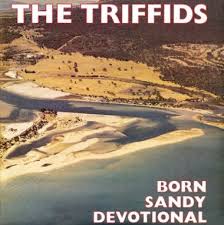
The Triffids – Born Sandy Devotional: Round 80 – Tom’s Selection

download (1)I introduced Born Sandy Devotional to Rob and Graham via Courtney Barnett’s History Eraser – a song by an artist that is definitely, and suddenly, having her time in the spotlight. I love that song and Avant Gardener even though the rest of her debut ‘album’ (it’s actually a couple of EPs stitched together) I can take or leave. In History Eraser there is a point towards the end of the song where the music kind of melts away and Barnett coos the immortal line, as seductively as you like:

And in the taxi home I’ll sing you a Triffids song

It sounds like the most enticing and exciting gift ever uttered on record and I remember hearing this song on the radio for the first time and a shiver running down my spine upon clocking this line – it just seemed so cool that a band that never really got their dues in their time were being name-checked by a young singer-songwriter 30 years on. If I were a betting man, I reckon the song in question would have come from Born Sandy Devotional and would more than likely be a song that has become, in some circles anyway, the Australian national anthem that never was. That song is Wide Open Road – as majestic an Antipodean anthem as I have come across and synonymous with the wide open spaces and the spellbinding monotony of the Australian outback. It’s a brilliant highlight of a brilliant album but, despite its notoriety and status, the other nine tracks on Born Sandy Devotional more than hold their own against it and, together they coalesce to form a unified and cohesive whole.

I guess it’s fair to say that I have become Mr Antipedes in the eyes of my fellow record clubbers – sure they have all dabbled but, in their eyes, I am the addict (Rob even asked me the impossible question whilst listening to BSD: Australian or NZ albums – which would I ditch first?). It got me thinking as to why this should be. Why have I been particularly drawn to a music from 12,000 miles away to an extent that is, perhaps, ‘beyond normal’?

Well, it has struck me that in the music of The Triffids lies the answer…Born Sandy Devotional (and the other two Triffids albums I own) are almost impossible to pigeon hole. Sure, they are eclectic, but that’s not it -they are far from a sprawling mess of styles like, say, the White Album. Born Sandy Devotional feels like a singular statement, a yearning for the motherland, a set of ten perfect little short stories set to music, the sort of stuff Raymond Carver might have come up with if he had ever bothered to do all the other stuff as well as just writing the words down. They tell tales of the outback, the parched white beaches of the Australian west and the bit between the two, and were written by yet another Aussie band holed up in mean old London town missing the sky, sun and surf of home. But what I particularly love about the music of The Triffids is that what at first sounds so familiar when taken on face value is actually so unusual. If I worked in a record shop and the owner asked me to stick it in a rack defined by genre, I would struggle. Jangle-pop? Not really. Post-punk? Definitely not, but at times there are echoes. New wave? Possibly…it’s a tricky one! Pop? You must be joking. Yet The Triffids on Born Sandy Devotional are hardly innovating, just writing and playing well crafted, articulate and intelligent songs that really speak to me. I’m not sure there are all that many bands that do that. And I wonder whether the remoteness of the starting point (they were from Perth after all) helps.

Whilst listening to Born Sandy Devotional on the night, I became aware for the first time of the circumstances of David McComb’s untimely death. A combination of a tragic set of medical issues that appeared to have stemmed from his heroin addiction, the revealing of this fact seemed to envelope the music with yet another layer of poignancy and sadness as far as I was concerned. It’s great that these days Australian artists like Courtney Barnett don’t feel the need to relocate to the other side of the world in order to make it in the music industry, but I do wonder whether the music of The Triffids, and The Go-Betweens and The Bad Seeds would have sounded the same if the bands hadn’t been wrenched from the comforts of home and been made to endure the trials and tribulations of life on the other side of the globe! And, to my mind anyway, as a love-letter to the motherland, Born Sandy Devotional is hard to beat.

Rob listened: There’s an important clue missing from Tom’s write-up. We’re all, whether we realise it or not, irreversibly bound to the music that suffused our formative experiences. Tom’s trip to Australia was one of the forges on which his adult self was formed. And so, there are two key reasons why he is Mr Antipodes in our little musical United Nations. Firstly, functional: He must, consciously or otherwise, have heard lots of this stuff, or stuff derived from it, or stuff about to inspire it, that the rest of us just weren’t hearing. Secondly, he really dug the place, came back a different person, and the music that surrounded became bound up in his DNA, and now, presumably, acts as a trigger for his memories of an important time.

For me, the Triffids, the Chills, the Go-Betweens, were all names that flowed through the inner pages of the music press I was discovering in the late 80s, but I never had the opportunity to get my hooks into them, or vice versa. Now when I hear them I hear sounds I like, patterns I recognise, signifiers I respond to, but I just don’t have the history, the personal and musical connections, the dust of the road engrained in the folds of my skin, to really get them completely. I like them a lot though, and long may they rock up at Record Club, whoever chooses to bring them (Tom).

Tom responded: Nice ideas Rob, but you’re way off on both counts I’m afraid. Whilst I was in Australia I never even caught a whiff of anything remotely like The Triffids or Go-Betweens – I was spending time with (usually) visiting climbers and the Aussies I met were predominantly into Red Hot Chillis or NWA or Pixies or Violent Femmes…or Midnight Oil! Your second point is also, bizarrely, incorrect. I really disliked my year in Australia, counted the days to come home and only my incomparable stubbornness and need to avoid loss of face prevented me jettisoning the trip within the first month.

I have fond memories of the trip now that time has dulled the experience but I really don’t think either of these factors are the cause of my fondness for this music, it’s much more to do with the artists’ ability to operate as outsiders; artists who operate away from an identifiable scene have always appealed to me and I feel these bands provide that (in much the same way as American Music Club).

Rob re-responded: Okay Tom, fair enough, you know best. However I wonder whether my first para would still stand if I simply replaced the word ‘dug’ with ‘went to’? Whether you liked it or not, it does seem to have been a formative time. And whether you heard the music at the time or not, surely there has to be some connection or resonance between the two?

Graham listened: 2nd round running I was lazily expecting a bit of jangle pop (albeit Oceanic) based on reading something 30 years ago in Melody Maker. Despite my immaculate research there was certainly a lot more depth to this. The second part of my review is now redundant as I too thought that the heat, dust in your mouth, “sheila” in one hand and Fosters in other would contribute better to understanding of the sound and cultural references. Moving to a conclusion, it was rewarding listen and probably the best Australian album I ever heard (but can’t say my research has been too deep!).

The dB’s – Stands For Decibels: Round 79 – Tom’s Selection

5099969595455_600I don’t know whether I mentioned this when writing my response to Nick’s post on Abbey Road but my relationship with it has charted a meandering and, at times, surprising path. My first experience of a Beatles album was Sgt Peppers but the one I fell hardest for and the first album to teach me the lesson that what at first sounds awful often turns out to be great was Abbey Road. I was ten or eleven at the time and instantly fell in love with Boney M’s Greatest Hits – who wouldn’t! -but, before long, that side of the TDK C90 (or was it Memorex?) was being rewound in favour of the fab four’s final opus – Ra Ra Rasputin well and truly lost out to Polythene Pam! Before long, the tape got stretched, but still I carried on listening avidly (obsessively) until I knew ever wonky nuance of its 45 or so minutes (I knew its length was close to 45 minutes because there wasn’t enough room for Her Majesty (no great loss) and I assumed my Dad had just cut off the end of I Want You (She’s So Heavy) because it went on a bit and he was conscious of the possibility of running out of tape. Imagine my surprise when I later bought the album on vinyl and found the Beatles themselves had done exactly the same).
But then a strange thing happened. As my Beatles collection grew and my Rolling Stones one began, I stopped listening to Abbey Road. And it sat parked (more or less) for the next dozen or so years, occasionally being played but never repeatedly. I can’t remember the chain of events of what happened next but somehow the tape (a different one by now) found its way into my car and I started to obsess over the album once again. This time it sounded different. Not just the sounds of the album, but the melodies, those melodies I knew so well that I had heard countless times before, were transformed when I listened through my twenty four year old ears! I guess I knew what to listen out for, could contextualise the album in a way I couldn’t when I was younger. To use a modern cliche, I now knew the ‘tropes and signifiers’! George Harrison’s masterpiece, Something, in particular, blew me away, a little more with each new listen, the fact that I had become aware that Sinatra rated it the most beautiful love song ever written perhaps affecting the way I listened to it.

In an admittedly very roundabout way, I am now getting to the point….exactly the same thing has happened during the last couple of months between me and the dB’s debut album, Stands For Decibels. Having listened to it a lot when I first acquired it I had ‘parked’ it for a similar length of time as Abbey Road, revisiting it occasionally but never for a sustained enough period of time to re-click with it. The prospect of a themeless Record Club and an urge to play something that the others would be unlikely to know already persuaded me to give it another chance. And, sure enough, I now feel this album is a very different beast to the one I originally spent time with.

I had thought that Stands For Decibels was a collection of eleven of the purest pop songs – like a early indie version of Help! or Turn Turn Turn or some such. Finely crafted songs, jangly guitars, harmonies and middle eighths and tunes about love and seasons and stuff like that. However, second time around, the ever-so-slightly off kilter nature of the songwriting, singing and lyrics (and the absolutely breathtaking drumming throughout) has made me completely re-evaluate the record. Somewhat appropriately, considering how this is a record that draws heavily from Big Star, my conversion can be summed up thus: whereas I thought this record was the eighties equivalent to #1 Record, it is actually much closer in spirit and adventure to Radio City. And that, in my book, is no bad thing.

In fact, the only problem I have with the album now, is one that I have always had with it. Opener, Black and White, is just too good. Anything that follows has to appear anticlimactic and, as a result, I have always struggled with the inevitable drop off. However, this time around I have rationalized the situation and have come to enjoy Dynamite’s weird (unique) vocals – the way they draw the word out in what can only be described as a sneer – and She’s Not Worried’s bubblegum harmonics. In fact the entire album has a depth perhaps not evident on initial listens and it sounds increasingly magnificent with each passing listen. Maybe in ten year’s time, having been kept off the turntable by more current pretenders, I will discover yet another facet to Stands For Decibels and be reminded, yet again, that the old guys had the best tunes all along!

Rob listened: Let’s be honest, we’re at something of a disadvantage when it comes to ‘Stands For Decibels’. I hadn’t heard it before, or indeed heard of it before. In fact, when Tom pulled it off the shelf I, reasonably, assumed it was another of the cache of vinyl he seems to have smuggled in from 1980s New Zealand, perhaps imagining he was going to kick start a new rock and roll revolution like those Liverpool dockers unloading shipments of blues in the 50s and 60s. But it wasn’t.

Meanwhile, Tom and the dB’s (that apostrophe is annoying, by the way) have had sufficient time together to fall in love, get comfy with each other and then become enraptured all over again. This unveiling at Record Club now seems more like a renewal of vows between the pair.

Anyway, at first listen I got more of Tom’s second wave vibe. The second-cousin-to-REM dream rock sound was familiar, but it seemed shot through with dogged and really quite disarming call-backs, not only to 60s pop and psychedelia, but to doo-wop, folk and soul. Nothing like the straightforward scratchy proto-college rock I was expecting, I can see just why this record has been giving Tom pleasure after unknown pleasure for so very long.

Graham listened: Far too quickly I classified this as the jangle type pop I was sort of  expecting it to sound like. The it went and got a lot more interesting and complicated from a musical point of view. Some bits reminded me of the less familiar tunes produced by the Monkees, some of the Beachboys and some of early REMish qualities. Throw in what Rob found as well and you have an interesting album, which by the end, I can see why Tom cherishes it so much.

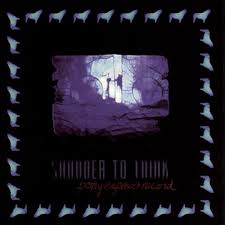
Shudder To Think – Pony Express Record: Round 78 – Tom’s Selection

downloadAlthough nine times out of ten a record played by someone else at record club is the record I would have chosen by that artist, occasionally an album has been produced that has elicited a gasp of surprise, perhaps (read as ‘hopefully’) only internally, as in, ‘you brought that one?!?’ I thought it might be ‘fun’ to put the cat well and truly amongst the pigeons and set the ‘Anything You Can Do I Can Do Better’ theme. It turned out on the night, somewhat disappointingly it has to be said, that the moggy in question had had its claws removed, its teeth blunted and its pigeon hating gene well and truly modified. It all went off without a hitch – it transpires we are a far more laid back bunch than I had previously thought and nobody really fought for their former choice.
When I went through the list of albums we have played at record club (a mind-boggling 300 or so records now), many of the records I have selected would now be replaced by something else from that artist’s catalogue. Rob was right with his rejection of Imperial Bedroom – but Trust is the keeper as far as I am concerned, not This Year’s Model. Hejira is a very fine record but I now prefer The Hissing of Summer Lawns and Court and Spark (probably the latter album would be my pick), their spellbinding complexity only becoming apparent over the course of the squillions of listens I have given them in the last couple of years. Strange Mercy was a bit of a hobson’s choice – an album of the year in a year when I bought very few albums. Actor is still St Vincent’s high water mark as far as I am concerned. I would also replace Barafundle with Spanish Dance Troupe, Knock Knock with either Supper or A River Ain’t Too Much To Love and maybe even Ekstasis with Loud City Song (although I am still getting to know the latter it sounds pretty amazing to me).

The others too have occasionally produced something other than the record I would have brought. Admittedly sometimes they have been hampered by a theme but in the case of Shudder To Think (coincidentally the same evening PJ Harvey’s Let England Shake was played) there was no such excuse. Rob was just plain wrong!

I can see why he would go for Get Your Goat as it panders to a more indie lo-fi scuzzed up aesthetic (without really being any of those things). It’s a bit more definable I suppose. Pony Express Record is a slippery fish, its modus operandi seems to be to try to meld as many genres as possible into every song, fly off at a tangent both melodically and lyrically whenever you think you’re getting a handle on things, in general to be as willful and annoying as possible. It shouldn’t work, it doesn’t really for the first ten or so listens (as Nick and Graham will no doubt confirm) and it very nearly doesn’t work at all. But somehow, and God only knows how people manage to write songs that do this, after a certain amount of work on the part of the listener, the mists clear, the sun beams through and all you can hear is one glorious hook after another after another.

And that’s why I think Pony Express Record is a notch above its slightly more accessible predecessor. But, then again, PER was my first Shudder To Think record and, having acclimatised to its bizarre structures and Craig Wedren’s preposterous singing voice and lyrics, maybe Get Your Goat just sounded a bit safer because I already knew what to expect. So maybe, just maybe (whisper it) I have been wrong all along!! Rob?

Graham listened (and for at least 20 mins was thinking “what the **** is this all about”): But sorry to disappoint Tom, because by the end I was firmly on board.  It would require many listens to fully enjoy the hugely intricate mix of hooks/riffs/structures/time changes/lyrics (and not quite sure I’m ready to submit myself to that yet) but it was all there after one listen. An amazing album.

Rob listened: First, a disclaimer. I’m going to write this without reference to my write up for ‘Get Your Goat’ which means I may be wrong when I say I brought that to just our second meeting and also that I may, in a few words time, be repeating myself when I go on about Craig Wedren having a voice like a raygun. If I didn’t say that last time, I should have.

Everything Tom said, but ‘Get Your Goat’ is better. One of the recurring themes in our discussions, sometimes explicit, often not, is the relationship between supposed ‘career peak’ records and those that lie either side of them and how both intersect with the maps of our own tastes and the geo-musicological forces that shaped them. Long may that continue. Trying to tease out of each other why we like one thing more than another is one of the great things about this club. The fact that we never quite nail any of it down is one of the great things about music, art and life. This themed-round was particularly fine in this regard. Bravo Tom.

‘Get Your Goat’ was my first Shudder To Think record. I was given it to review by an uninterested editor who saw me as the guy who liked noisy american music. He pretty much had me banged to rights. Because I had to write about it, and because at that stage I was a conscientious reviewer, I listened to it over and over and over, because I had absolutely no idea what was going on. And then, out of the conflicting vectors and topographies, shapes and relationships began to emerge until I had the measure of it. It probably took 20 or 30 listens. We’ve spoken before about records that ‘click’ and I’m generally happy to remain confused by those as once they click that seems like a puzzle solved with no need to return to it. Shudder To Think aren’t like that. Their songs are repetitive, melodic, hook-driven, poppy. It’s just that they’re working from a shattered set of rules. It just takes patience to get what they’re up to, and you’re away.

So, I love ‘Get Your Goat’ like a first love. When ‘Pony Express Record’ came along, It made sense straight away. It’s a fine, fine record and I totally get why it is considered their masterpiece, but for me it is a ramping up and honing down of what they were already doing. It’s their perfect statement and I like a little imperfection. I guess I also have to say that it is quite a lot closer to some of the Math Rock records it helped to inspire. That’s not it’s fault, but if a step towards ‘Get Your Goat’ is a step away from Tool, then i’m taking that step.

Anyway, I’ve written too much already, but let me tell you about Craig Wedren’s voice…

Julia Holter – Ekstasis: Round 77 – Tom’s Selection

ekstasis I guess, if truth be told, I have put off writing up my blog on Ekstasis, mainly because I don’t really know what to write about.

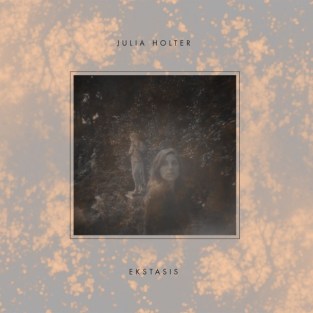
I could write about the music itself, which is exquisite; complex in structure yet often simple in sound, it conjures up, almost exactly, the image on the cover of the album – opaque, stately, almost classical, and calming in a monochromatic way. This is not music that grabs you by the lapels and demands your attention. No, this is music that creeps up on you, ekes its way into your affections bit by bit until you realise, one day, that you are in love. But writing about music is boring, so I won’t do that.

I could write about Holter herself; about how she grew up in Los Angeles and then went to university in the same goddam town (who does that?) to study musical composition. But if I were to do that, you would all be thinking, ‘surely she isn’t feeling it for real, surely it all sounds like some anodyne textbook exercise, unemotional, distanced, detached’. And in some ways, you would be right, but you would also be so, so wrong. And I wouldn’t want you to get the wrong idea about Julia Holter because:

a) She’s lovely.

b) She makes unbelievably beautiful music.

So I won’t be risking you getting the wrong impression about Miss or Ms (don’t think it’s Mrs) Holter by writing about her either.

I could write loads about the first track off the album, Marienbad, which is, it turns out, a spa town in the Czech Republic. But nothing I write about this incredible piece of music could do it justice – even if I could find a way to adequately describe the way it twists and turns and segues and never repeats and has a breathtaking hook that takes her four minutes to get around to – well, you would still need to listen to the thing because it’s much, much better than my words can do.

So I’m going to leave it at this: Ekstasis is a brilliant, amazing, magnificent, stupendous, exquisite, spellbinding, fragile, innovative album….and, by my reckoning, is one of the very best albums that I have heard this decade/century/(hell, let’s go for) millennium. And I know this as it is just about the most difficult record to listen to that I own. ‘Hang on’ I hear you cry, ‘haven’t you wittered on before about Trout Mask Replica and Sun Ra and The Red Crayola and John Coltrane. Surely Julia isn’t in the same ballpark?’ And I’d have to agree with you, because Ekstasis is nothing but a pure pleasure to spend time with. ‘So what do you mean?’ you’d remark, somewhat exasperatedly. So, I’d chuckle a bit and go on to explain that with four short sides of 45rpm vinyl, Ekstasis takes more effort to tee up and play through than almost anything else in my collection bar A Gilded Eternity by Loop…and I can’t remember the last time I bothered to listen to that! The fact that Ekstasis regularly finds itself on my turntable is surely proof enough that this is a remarkable work of art, one that I can not recommend highly enough and one that I have found very difficult (as I am sure you’ll agree) to describe.

Buy it.

Rob listened: As Tom worried about being unable to write about this for a week and a bit, my memory of it has faded sufficiently that I too now have very little to write about it. I did really enjoy it at the time. We talked a lot about who it sounded a little like, or more who it seemed to share a compositional palette with. The names mostly bandied around were those of artists whose work I tend not to connect with quickly and over time either come to dislike, or to admire as exhibition pieces, rather than living, breathing music. I thought ‘Ekstasis’ sounded divine though, and somewhere, off at some wild perpendicular, it created a hitherto un-noticed overlap in my musical venn-diagram, just between Oneohtrix Point Never and Grouper. And there it will stick until I have time to love it properly.

Nick listened: It’s much easier to listen to on CD; you just put it in the machine and press ‘play’ once, and 60 minutes later you’re feeling content and blissful.

I bought this after Tom played “Marienbad” at us a couple of years ago, but I must confess I’ve not listened to it a huge amount since then. I should do; it’s lovely. As is her follow-up, the slightly earthier, brass-tinged Loud City Song, which I listened to quite a bit more. I’ll go back to this; I want to go back to it. It’s beautiful.

And slapped wrists for Mr Rainbow for once again suggesting, in a roundabout way, that studying something and being trained in it somehow means you don’t have, or somehow lose, ‘soul’ or ‘authenticity’ or ‘passion’, which is crazy talk, you old punk. (I’m aware that Tom is about the least punk person I know. And also not old.)

Timber Timbre – Hot Dreams: Round 76 – Tom’s Selection

Timber_Timbre_Hot_Dreams

Like Nick, I find the whole ‘Album Of The Year’ thing a bit hard to get my head around – it’s not so much the process of choosing a favourite from the albums I own as much as thinking about all the albums I haven’t heard, or even heard of, that I am supposedly placing below my chosen one. I always thought that album of the year lists would be much more informative if the producer of the list were to indicate just how many albums they considered when making their list. After all, non-inclusion of an album could mean it’s a stinker…or, more probably, it simply hasn’t been taken into account. The thought that my number one (out of five!!) would be weighted just a highly as someone who has got to know a hundred albums in 2014 makes the process flawed to such an extent as to surely render it worthless.

To illustrate my point, I thought I would bring Timber Timbre’s fifth album, Hot Dreams. It was released on April Fools Day yet I only became aware of it for the first time when I saw it in The Drift’s album of the year list in November(!)…at number 100. And that was it as far as I could tell (my interest in the album was actually piqued sometime later upon listening to an enthusiastic review by Anthony Fantano at his website, The Needle Drop) – having kept abreast of the majority of better known websites’ end of year lists, despite the misgivings I outlined earlier, I failed to find Hot Dreams in any other ‘best of’ list (even The Guardian newspaper, who gave the album top marks in their review and described it as a Lynchian masterpiece overlooked it in their albums of the year list). Which must make it just about the ‘least successful album of 2014 that featured in an end of year list’! Quite an accolade!

But listening to Hot Dreams reinforces to me just how arbitrary the whole thing is. Whilst not top of my list (FKA Twigs’ LP1 is head and shoulders above anything else I’ve heard this year), Hot Dreams is a fine, fine record. Cinematic, beautifully constructed, cohesive and supremely atmospheric, it is surely worthy of a bit more attention than it got. I’m not making any grand claims for Hot Dreams, it won’t change your life, I doubt you will be naming your kids after the band members and it is unlikely that it will come to be seen as the wellspring of a new genre ten years down the line but, as Nick wrote when he was commenting on Buffalo Tom’s Let Me Come Over, music doesn’t always have to shift the world off its axis; sometimes providing the listener with what is, ultimately, just an enjoyable, transformative and captivating forty minutes is enough. And that’s something that Hot Dreams does for me in spades; from the leaden, ominous opener of Beat the Drum Slowly, to the ever evolving and creepy Run From Me, via the towering peaks of The Grand Canyon, The Low Commotion and, perhaps the most beautiful song I heard in all of 2014, the album’s title track, the only thing that stops Hot Dreams being a stone cold classic, for me, is the final instrumental track, The Three Sisters, which has, so far, failed to capture my imagination in the way the rest of the record has.

But, minor quibble aside, Hot Dreams is surely an unlucky record from an unlucky band that deserves greater recognition than last place in the ‘Great 2014 EOY Lists Competition’ (especially when you consider how said competition was won by a fine sounding, but pretty unremarkable, album of guitar based rock music).

Rob listened: Loved it. Also, I shared Tom’s confusion as to why this record didn’t get more plaudits and wider coverage during the year. I assume it’s something to do with Timber Timbre trading in well-established tropes and genre-signifiers. (SARCASM ALERT!) Understandably this would put them way behind The War On Drugs. It’s a shame because sometimes bands try new things for the sake of doing so when, judging by the outcomes, they probably shouldn’t have bothered, whilst others find some new angle through which to approach well-worn surfaces and in doing so make those shine anew. So well done Timber Timbre for breathing dry, desert air into Lynchian balladry in the Tex Mex dramamine dancehall, producing a work that sounds like John Barry soundtracking Jim Ballard’s ‘Earth Is The Alien Planet: The Musical!’

I liked it a lot.

Nick listened: I’d never heard of Timber Timbre before tonight, and I imagine that was part of the problem in terms of end-of-year plaudits; some stuff gets pitched at critics (and audiences) as potential end-of-year-bait from the moment “Auld Lang Syne” dies down, and other stuff just doesn’t get talked about at all. I received PR emails and Jiffy Bags full of promo CDs and photocopied press releases for years (I still get the damn emails) and I still don’t fully understand the mechanics by which our collective tastes are made. There’s a PhD thesis to be written on the cultural mechanics and social psychology of it. (There’s also the simple mechanic that album reviews are written by individuals, and lists are compiled by groups who often simply haven’t all heard the same records; the freelancers writing for The Guardian don’t sit around sharing an office, for instance; I doubt many of them have ever even met.)

Anyway, I’m not sure I got all the subtleties of the Tex Mex signifiers – to me this was kind of like early Portishead (in terms of atmospheres and partial sonics, if not post-hip-hop mechanics) transposed to anywhere in the States. I enjoyed it, but it’s not so much of a catnip-y sound for me as it obviously is for Tom and Rob. What I did love was the saxophone – I wish there’d been more of Colin Stetson. But nonetheless, an intriguing, well-crafted record that I enjoyed listening to, and which didn’t deserve to be ignored the way it seems to have been.

Jake Thackray – The Very Best Of Jake Thackray: Round 75 – Tom’s Selection

41xWQcgj75LIsn’t it funny how frequently inspiration comes from the most unexpected of corners? Who would have thought that my latest musical obsession would have stemmed from a chanced upon half hour programme…on Radio 4 of all things?

Until the point I heard Isy Suttie talking enthusiastically about Jake Thackray on the radio station’s Great Lives slot, I had never heard of Thackray at all. But I was immediately captivated by the snatches of his music played on the show and won over by the reverence shown him by both guest and presenter and so I went and bought myself a cheapo compilation of his songs straight away. However, until last week, and Nick’s ‘Bring Something That Isn’t An Album’ theme, I hadn’t actually got round to listening to it. In fact I almost didn’t at all. I thought we were planning to miss a week due to Nick’s imminent birth so I had ordered a couple of records that would have fitted the theme perfectly. Upon realising my mistake with the dates, though, I knew that my new purchases would not arrive in time so I thought, with low expectations it has to said, I would give Jake a go. I would never have guessed at the treasures contained within.

Thackray’s songs have left me spellbound. Utterly charming, witty and poetic but often cut through with pathos, they also have an honesty, an integrity that make them so, so hard to resist. Put it this way: within seconds of first song The Blacksmith and the Toffee Maker starting up, Thackray was already my latest hero. And that status was only strengthened when it became apparent that this was a man for whom seeking that status would be, genuinely, the last thing on his mind – Thackray’s modesty is obvious and is rendered by his infatuation with his songs’ characters, their tales and the sound and words of the English language in general that are on display throughout this compilation.

But Thackray’s music is also intriguingly hard to pin down. His background is interesting and sheds light on some of the juxtapositions of his music. Born in a poor part of Leeds in the late 1930s, Thackray became an English teacher upon leaving university and started out on his career in France teaching in Lille, Brittany and The Pyrenees. Whilst there he discovered a love for the songs of Jacques Brel and Georges Bresson, before heading back to the UK (via a brief stint in Algeria) to teach in a school in Leeds.

As a result you are frequently blindsided by his songs – English scenes are often tinged by the faintest echoes of Gallic chansons, irreverent one minute, heartrendingly melancholy the next, every word carries weight, every song tells a story; what seems at first to be seaside postcard smut is often turned on its head when the next line reveals a previously undisclosed double meaning. This is clever stuff, disarmingly simple music that reveals a hidden depth with lyrics that demand to be listened to, worked out and, crucially, enjoyed.

And I have enjoyed Thackray’s lyrics like little else I have heard. On the night, I printed out the lyrics to Thackray’s tour-de-force Lah-di-Dah for Rob and Graham to read through as the song played. I think these lyrics are amazing, not just because of the tale they tell (about a bridegroom telling his prospective bride how he will get along with her gruesome family for her sake) but because of the sound of the words themselves and their meter:

 And I’ll smile and I’ll acquiesce

When she invites me to caress

Her scabby cat

There’s not a duff track on this compilation. If you don’t like the music, the story will have you in stitches (in Leopold Alcocks he rhymes wisteria with hysteria, Brasso with Picasso), if he plays it straight you’ll be close to tears (Old Molly Metcalfe, The Hair of The Widow of Bridlington). Accusations of misogyny miss the point – even though these were unenlightened times, I’m not so sure Thackray wasn’t being ironic all along. Besides, seeing as he’s now my latest hero, it’s better to switch off your PC detector and enjoy the magnificence of the wordplay, the luminosity of the music, the genius of the man, warts and all!

Rob listened: I love this club. I went through the same experience Tom describes above as Thackray accelerated from zero to hero in the space of two or three tracks, but with Tom as host rather than Matthew Paris.

And what a wonderful discovery. Ignoring the detail for now, Thackray – his songs and their delivery – was so redolent of aspects of the 1970s that I took in with mothers’ milk. Listening to this selection felt at times like having a past life uncovered. Which also brought some sadness. As we left after Round 75 was complete I wanted nothing more than to talk about Thackray with my father. I have no idea whether he was a fan, or even aware, other than knowing that he didn’t have any of his records. I feel sure however that he must have at least recalled him fondly. Dad was a Yorkshire man, like Thackray, and a fan on music and comedy that prized wordplay above simpler levers, from Spike Milligan and Michael Bentine in the 50s to Keith Michell and Dave Allen in the 80s. Dad’s also pretty much the only person I think I could reach out to have the conversation that would place Thackray where I want to see him in the context of the sounds behind my childhood house, the TV appearances on That’s Life! and the web of references and connections to others of the time. That’s not something I can do now.

I should return to the album and, in fact, that’s what I’ve been doing almost constantly this week. Jo’s sick of hearing ‘Lah Di Dah’ and of me pausing all chatter so she can register the beauty in the glottal brick wall Thackray powers his accent through during the last of the song’s three titular syllables.

I would take issue with Tom’s description of the music as ‘disarmingly simple’. It sounds pretty deft and complex to me, even, perhaps especially, when plucked out on a nylon-stringed guitar. But it’s Thackray’s words and their delivery that deliver the win here. It’s almost bracingly novel to hear someone deliver a lyric as a single, onward-questing tale. No verse, verse, chorus, verse here. Thackray is a balladeer in the old sense of the word, telling tales, finding titillation, bringing joy. And he’s funny too. The record is packed with details that warrant dwelling over, but one of my favourites is the pure comic genius in the slightly overwrought delivery of the line “I  was amazed, and really rather tired”. This guiy knew how to wring a laugh.

That’s enough. You should hear this and hear it carefully. If you love the English language, and particularly if you or your parents set serious foot in the late 60s or early 70s, you’ll be entranced.

Sister Sledge – We Are Family: Round 74 – Tom’s Selection

51mvCQ-e3YLThe seed was sown when we were preparing for our Singles World Cup round. Whilst musing over my eight favourite singles of all time, it became evident to me just how much I needed to own a copy of We Are Family by Sister Sledge. You see, great though the title track, Lost in Music and He’s the Greatest Dancer are, for me, Thinking of You is simply one of the very best pop songs ever made, good enough to have made it into my top eight…and I would have proudly submitted it had I had owned it at the time.
I loved it then, as a 14 year old, hearing it on the radio on the school bus, doing its bit to make the journey to school (on what was, no doubt, another grim and gloomy November morning) a little more bearable. And I love it now, just as much, from the spare choppy guitar riff that lets you know you’re in for a treat, a mouth watering appetiser that presages the glorious delights to come, to the spectacular (no other word will do – especially now that ‘awesome’ means next to nothing) bassline, to the melancholic strings that anchor the song. It’s just sublime.

But it would be wrong to suggest that We Are Family the album is all about one song. In fact, I am sure that many fans of the Sledge would not even place Thinking of You in their top three on the album. Yes, all four singles from the record are top drawer but it’s the quality of the non-singles that’s the greatest surprise to me.

I always assumed that disco records would be all about the singles. After all, wasn’t disco about dancing…and you’re not going to hear an album being played at the local nightspot…so it made sense, in my mind at least, that a disco album would be a couple of great singles and a bunch of filler. Such was my desire to own a physical copy of Thinking of You, that I was prepared to overlook this presumption. But, in the case of We Are Family (and the two Chic albums I own) the strength in depth is remarkable. In fact, to my mind, the only track on We Are Family that outstays its welcome is…wait for it…We Are Family itself, which is obviously fantastic, for the first four or five minutes at least, but the final three minutes are unnecessarily repetitive and feature the only example of over singing on the entire record – Kathy’s usually honeyed, easy singing style being pushed dangerously close to Whitneyesque shrillness, it does at least help you realise just how great the singing on the rest of the record is!

As Rob suggested in his post on Saturday Night Fever, disco had become a somewhat maligned art form over the years (more for what it represented than the music itself), but Chic’s triumphant return to the stage last year has ensured that once more they are right back where they belong, in the zeitgeist, the hottest ticket in town and the purveyors of cool. And what could be cooler than donating eight of your very best songs to a struggling girl group with a bunch of talent and a wonderful set of lungs, to produce (by your own admission) the best front-to-back album of your entire career?

Rob listened: The recent rehabilitation and elevation of Nile Rodgers and the Chic Organisation feels like a major wrong righted, although perhaps not on quite the universal scale I had assumed. Until recently I’ve had a major block on the pre-punk 1970s and disco is an easy target for dismissal. It’s a deliberately apolitical music which became the soundtrack for elitist hedonism in a time when across town others were attempting kick culture up the backside. For me as a young music follower looking back, although not all that far, disco represented an abnegation of duty. Others, it should also be noted, were declaring ‘Disco Sucks!’ for entirely different and entirely reprehensible reasons.

Looking back today, and having to gaze a lot further, it seems possible that most people knew Chic were incredible all along. I guess I just like to stick to my guns, even if they are aimed at the wrong targets.

Hearing ‘We Are The Family’ for the first time in full brings home just how dunderheaded you’d have to be to find against this music. It’s absolutely exquisite, an object lesson in balance, restraint, technique, precision and polish. The sound Chic constructed is as distinctive, original and self-owned as the Beach Boys, Public Enemy or Led Zeppelin, and at least the equal of all of those. At least three of the songs on this record would be unarguable choices if we had to submit examples of the highest cultural output of our species to visiting alien dignitaries.

I’m going to stop writing now, as I have nowhere left to go.

Nick listened: This was great.

13th Floor Elevators – Bull of the Woods: Round 73 – Tom’s Selection

1317216493_9a

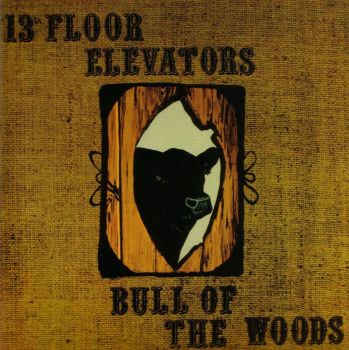
Whilst playing Bull of the Woods at record club I postulated that, in this day and age, it is unlikely I would ever have got my grubby mitts on 13th Floor Elevators’ third and final album…not because acquiring music is any more difficult now than it was back in the late 80s – it’s not, it’s easier – but because information is so easily accessible (and because I am such a sucker for it) that I would have read one too many lukewarm reviews and dismissed the album as not worth owning. I would have also have been pushed into buying one of The Elevators’ first two albums, seeing as popular opinion would seem to suggest that these are far superior. Just in case any of you reading this have those first two albums and don’t really like them…well…don’t give up on Texas’ finest purveyors of acid fried psychedelia just yet as, to my ears, Bull of the Woods is by far the best record of the three and I enjoy it as much as pretty much anything else from that era.

Note that I haven’t made any grand claims for Bull of the Woods’ greatness as yet. And I’m not going to. After all, the record has all sorts of flaws that, to many, get in the way but to me makes the thing even more intriguing and captivating. I love the fact that the album sounds like it was recorded in a swamp, I love the fact that the vocals come and go in and out of the mix as if the singer (mainly Stacy Sutherland I believe) was moving from one room to the next. And I absolutely love the fact that Tommy Hall has ditched his bloody electronic jug in the canal! Listening to the ‘classic’ first album and then to this, I was struck at just how different the two records are. Whereas The Psychedelic Sounds Of…is all spiky, jangly and wobbly, Bull of the Woods is a true blues groove swamp monster. Obviously Roky Erickson’s lack of involvement in Bull of the Woods makes a big difference and the two tracks he had a hand in writing – Never Another and May The Circle Remain Unbroken – are probably the albums two most distinctive songs, the former veers all over the place in much the same way as, say, Love’s The Daily Planet and the latter is a weird mantra type coda, shimmering away like the sun setting as if on the bands’ very own career (seeing as it is the last song on their last album).

But surrounding these two cuts are nine songs that show a side of the guitar driven sound of late 60s US rock’n’roll like little else I’ve heard. I remember listening to Bull of the Woods for the first time having bought it on impulse, being vaguely aware of the name of the band from a Melody Maker interview with Spacemen 3 or Loop, and being held spellbound for the entire sitting; from the first murky blues riff of Livin’ On slithering into view to the last heartrendingly fragile vocal of May the Circle slipping out of reach. And for a while, Bull of the Woods was my favourite album, supplanting the House of Love’s eponymous (sort of) debut album and Spacemen 3’s Playing With Fire.

On the night Nick asked me if I still loved this record. I took a while to answer because I really wanted to take the time to differentiate between the love of nostalgia and the love of something you truly cherish for what it is, unencumbered by the warm glow of memories of times long gone. Well, it will come as no surprise to my fellow record club chums that in light of Graham’s theme for our next evening together I have been listening to another album I held in high regard from that time in my past and, inevitably, I have compared the two records. Nostalgia pah! I can now say Nick, with utmost confidence, that my love for Bull of the Woods is as strong as it ever has been (the other record sounded dated and somewhat adolescent in comparison). I think it’s a great, great record warts and all and I wonder just how many other ‘disappointing’ third albums I’ve let slip through my grasp over the years!

Rob listened: This is a great call by Tom. He and I, in our own very different ways, are constantly having our musical choices curated by taste-makers or, more often in this age of democratic star-ratings, the masses.

Tom is a student of discographic lists. Name any artist and he will be able to tell you which album is supposed to be their apogee. He has an extensive mental list of records he is looking out for, and these are always winnowed down to one or two from any particular artist. How many potential connections has he missed out on this way?

I, meanwhile, am just gullible and act under the constant sense that others know what’s good for me much more than I do. A score below 7.0 is enough to strike a record from my ‘listen-to’ list, whilst a negative review of a record I have already become pleasantly acquainted with is all that’s required for me to question my own response. If that guy says it’s bad, it must be bad. What do I know? How much great stuff do I miss out on by allowing others to act as arbiters for my own taste?

My musical journey never took me to the 13th Floor, and therefore I never got into the Elevators. I did come to feel great affection for Roky Erickson when I reviewed his 1995 album ‘All That May Do My Rhyme’, a sweet collection of naive universal folk boogie that was very hard to resist. In common with most bands I would have had no idea at all which of the 13th Floor Elevators records was supposed to be the best or worst, other than recognising the iconic cover of the first album. In general I guess this gives me slightly better odds of picking out the hidden gem in any particular band’s back-catalogue. I have a list of bands I fancy, but rarely specific records although this does sometimes lead to record-store paralysis (“Hey, I always meant to try The Byrds. I wonder if this record is one of the good ones or not? Perhaps i’ll just leave it…”).

On the night ‘Bull Of The Woods’ more or less passed me by, but listening back to it now on headphones, i’m loving it. Groovy, direct, sharper than i’d expected and packed with great tunes. It sounds more than a match for any of those other records by big names of the 60s that I have no idea I’m supposed to own. For this band at least, I now know which album i’m looking out for.

Graham Listened: Opening signs weren’t good for me and researching the construction of Electric Jugs (take care when googling) was a welcome distraction. After a while I began to get past the mess of production and recording and actually started to “hear” it! Although far more bluesy, I picked up on some notes of early Barrett era Floyd in its psychhier moments and by the end, quite enjoyed the groove.

Nick listened: I own the first two 13th Floor Elevators albums, but to be honest I’ve never got past the (really) tinny, uber-cheap late-60s garage production on them. Or the incessant wibble, which is, on first encounter, kind of like an awesome sampled loop that would be a great big irresistible insistent hook if it were in a piece of techno, or something. I do adore the original version of “Slip Inside This House”, though. This, shorn of so much wibble, and with slightly meatier sound, I thought probably was better. I’m not sold on the “Roky Eriksson is a genius” myth, though.