The XX – ‘Coexist’: Round 74 – Rob’s choice

The X - CoexistI’ll spare you the details, except for these:

In the autumn of 2012 I was walking my dog in the red sunshine glow of Jacob’s Ladder beach. I had headphones on and at some point in that walk, completely without warning, one of the songs from the middle section of ‘Coexist’ completely and permanently rearranged my brain. After those three and a half minutes I was, and remain, a different person.

Two of the things that this record proved to me are:

1. Music can change people, permanently. See above.

The big changes in my life that ‘Coexist’ came to symbolise and, ultimately, to soundtrack, were already well underway. They were seismic, irreversible, long trailed and well understood. And yet it took a piece of music by 3 people from Wandsworth to catalyse the mental and physical shifts required in and of me. They may eventually have happened some other way, at some other time, but they may not have. I could have been a different person now had they not.

2. Music, once it’s out there, can come to mean almost anything, and the recipient of music is at liberty to twist and reshape it to their own purposes.

We took this album, this collection of 11 songs, and we turned it into a soundscape into which we could place the unfolding changes in our lives. Now they are intrinsically linked. The opening chiming notes of ‘Angels’ are, for me, the most evocative in all of recorded music and everything that follows on the record has been weathered, hammered and twisted, shaped by the environment and by our use, to fit the purpose we chose to put it to.

And it was made for a different purpose, or at least to convey something very different. Lyrically and in mood ‘Coexist’ is a record about a slow, almost imperceptible break-up. The protagonists, voiced by Romy Madley Croft and Oliver Sim begin “Being as in love with you as I am” and by the end “can see it in your eyes/Some things have lost their meaning”. Across the 39 minutes they have drifted apart and, having recognised the separation as it was happening, found themselves powerless to stop it. It’s a meticulous psychodrama almost completely divorced from any physical details apart from slowly untouching hands and sunsets reflected in the surface of an eye.

Musically it’s exquisite. My recollection is that on release it was generally considered an insufficient step forward from, perhaps even a paler facsimile of, their debut album. That’s a total mistake. Perhaps it presents a de-energised take on its predecessor, itself one of the most identifiable, trademarkable sounds to emerge in recent years. But as The XX step away from the door of the club, severing the already distant umbilical connection to the dance floor, they step into real life, albeit in abstract. And on ‘Coexist’, with its drifting, disorienting, shifting sound palette, they inhabit that world fully. We can hear them breathing it in and out, in and out, in and out. In our case, real life and this album became almost indistinguishable.

This record means a lot in our house. We have the lyrics to one of the songs framed on one of our walls. Music has been a defining force in my life for more than thirty years and yet this is the only time in my life that I had put up someone else’s words and declared them representative of my heart.

I’d go so far as to say that if music burned down and we could save only one album it would be this one.

Nick listened: Every music fan has a different relationship with every record, that they have any kind of relationship with, to every other music fan who also has a relationship with that record. If that makes sense? Some of those relationships are deeply felt and profoundly emotional, some are frivolous and aesthetic. They’re all valid and they can all have meaning, and often the best shared musical experiences come from the ways these different relationships intertwine. I’d quite enjoyed this record by The xx up until last night, on the basis of a downloaded copy and a handful of plays. Now I feel very warmly towards it indeed, and it’s ascended my list of things to pick up and buy next time I’m in a record shop. That’s what talking about and sharing music can do. That’s why we have this little club.

Tom listened: Although he was adamant he didn’t, I’m convinced Rob lent me Coexist a while ago. Whatever, I had certainly listened to it a few times prior to tonight but I had obviously never given it a fair spin. I am pretty sure it didn’t make its way out of my car, which is a problem for just about any album, but particularly one that trades in such sonic subtleties and atmospheres as Coexist. So on my tinny old CD player in my tinny old Citroen, Coexist didn’t stand a chance…what I could hear over the noise of wheels on tarmac sounded pretty ropey; in my experience, icy vocals and minimal instrumentation don’t tend to fare too well in that environment.

Listening properly, Coexist was transformed (well, we listened properly for the first half of the album at least – I seem to recall that conversation took us a bit off task on the latter tracks but this solely reflects our collective inability to concentrate on anything for more than half an hour. It is, in no way whatsoever, a reflection on the quality of the music), to such an extent that I simply couldn’t tell what the problem was in the first place. I wouldn’t say I liked it unequivocally as the coolness of the vocals still jarred slightly, but I can certainly now see where Rob’s coming from, at least!

Cornershop – ‘Handcream for a Generation’: Round 73 – Rob’s Choice

IMG_0105When the history of British music is written there’s a fair chance that Cornershop will be forgotten. That’s a shame, a crime perhaps. Many, many bands have made much bigger splashes but much smaller contributions.

Cornershop, like XTC before them, came out of a scene which they soon transcended, going on to make truly original music, blending influences in new ways, testing the limits of their talents and steadily finding sounds that others were missing. In doing so they made their way out into territory that they alone mapped and colonised. This left them seeming outliers when in fact, again like XTC, they are, at their heart, a deeply British band. In their records can be found a sound collage of the last 40 years of at least one, if not more, of Britain’s histories.

By the time they reached ‘Handcream For A Generation’, their fourth album, they were at their most confident. They were buoyed by the success of ‘When I Was Born For The Seventh Time’, a record that had perfected the loose-limbed groove they had been working out over the preceding two and, thanks to a Norman Cook remix, rode it all the way to number one. Four years later, with ‘Brimful of Asha’ still echoing through playlists up and down the nation, they returned with easily their most ambitious album. Whilst it may not have captured anything like the attention of its predecessor, for me it’s their definitive statement, or at least my favourite. It’s a record of pure and flawless pleasure and always the record of theirs I choose, always without hesitation and never to be disappointed. It’s never not a pleasure to hear.

Which is not to say that the pleasures herein are steady and consistent. The wild variety of ‘Handcream’ is confounding, but ultimately one of the reasons to love it. It swerves fearlessly from lazy funk to pulsing trance to pastiche 70s cock rock to playground singalongs to 15 minute Eastern bliss-outs with apparently no grand purpose or scheme. The whole collection wears a huge smile on its face and, like a stick of rock, this attitude is evident wherever and however you slice it. Each song does something different yet all retain a hazy upbeat vibe and none fail to get fingers, feet and heads moving happily.

Zoom in even further and the detail is a microscopic treasure trove. There’s the three different telephone tones used to propel ‘People Power’, the repetition of song titles across several tracks as if political slogans, the moment in ‘Motion the 11’ when the MC stops the session just to make sure the engineer is recording because “this might just be the one”. ‘The London Radar’ straps flight announcement samples together, Avalanches-style, and gets the whole thing airborne like a 70s British Airways advert. Then there’s the simple pleasure of the opening track ‘Heavy Soup’ which introduces the main players and trails several of the tracks they are about to perform, as if this were live at the Harlem Apollo. It’s playful, endearing and pulled off with just enough verve and attention to detail.

Those who waited five years for ‘Handcream for a Generation’ to land seemed to struggle to know what to do with it. The trick was simple, just enjoy it. For me, it’s much better than ‘When I Was Born…’. Here they combine not just happy grooves, but 70s rock, 90s electronica, millennial hip-hop, timeless dancehall and sunrise mantras and the whole melting pot thing has more spike, more juice, more joy, more thrills.

In the midst of all this there’s a subtle, oblique politics at work. Even post-millennium there seemed to be something of an open challenge in the seamless combinations, as opposed to clashes, of sounds, cultures, languages and styles in this record. Although the band make no direct claims herein, the album stands as a state of the sound of the nation address more freewheeling and convincing than any others I can recall from the period.

It’s the Cornershop album I always reach for and in the 12 years since I first heard it, I’ve reached for it a hell of a lot.

Tom listened: Before this evening my knowledge of Cornershop did not extend beyond Brimful of Asha. I liked that single well enough, kind of in the same way as, say, Wake Up Boo, it cheered me up to hear it on the radio, gave me hope that all was not lost with chart music (unlike nowadays, I have to say) but it didn’t occur to me to delve any deeper into Cornershop’s music – I always thought it would be a case of ‘more of the same but less so’.

I certainly never imagined that Cornershop would cover the breadth of musical landscapes in evidence on Handcream for a Generation. In scope it reminded me of In a Bar Under the Sea era Deus and the Beastie’s Check Your Head – high praise indeed. As Rob has suggested, it is charming and fun, like the kid in school that makes everyone else laugh just by showing up, it all seems effortless.

My only gripe was the 15 minute Noel Gallagher sullied jamathon. Some long songs seem vital (Marquee Moon, Halleluwah, Sister Ray), others outstay their welcome. This one could have ended after 5 minutes!

Graham listened: What a revelation this was. I just about knew that Norman Cook had reinvented Brimful of Asha in to a hit but suppose I just thought that might be the only interesting thing Cornershop were capable of. No need to study to hard on this, just sit back and enjoy a groovy, funny, cultural mash-up that ensues from the beginning.

A real, between the eyes reminder, of the value of DRC!

Nick listened: I actually really liked the 15-minute Noel G-powered ragga-drone-groove-thing. As an album this was all over the place and difficult to get hold of mentally, but thoroughly enjoyable. I vaguely recalled a couple of the singles from the time it came out, and recalled it being moderately well-received, but it had pretty much evaporated from my memory over the intervening years. I own When I Was Born… (and recall the shop assistant in Northampton Spinadisc being visibly pleased to sell it to me when I was at university) but have barely listened to it in 15 years, which makes for a weird kind of ‘what if’ sensation with the band when presented with later work which is just as good but not blessed with a seismic hit single (or three; “Sleep On The Left Side” and “Good Shit” were all over the radio way back when, too, if I recall).

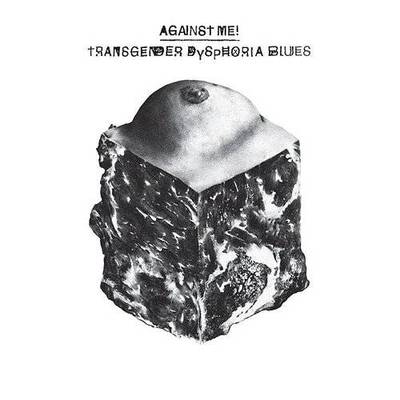
Against Me! – ‘Transgender Dysphoria Blues’: Round 72 – Rob’s choice

Transgender Dysphoria BluesThere’s been some discussion here recently about hipsters, vampires, locusts and dilettantes. Accusations have been flung, recriminations have been slung. Mostly at me. Mostly by me.

Some of my favourite parts of the stories we uncover during our Record Club ramblings are to do with the routes we take to find particular artists and records. Some we hear first, one way or another. Some we read about and pursue, some flicker of interest having been ignited. Some come recommended. Some we lunge towards for unspecified, perhaps unknown reasons. When we get there, some of us trouble ourselves about how and why we arrived. Conditioning tells us to value those records and artists found through some pseudo-organic process, following connections, ignoring external influence – as if that were possible – and somehow tracing a path of truth to the music that beats within our souls.

When we are led to stuff we sometimes feel like we cheated, which is stupid, or like we’re acting the hipster, arriving late at someone else’s party and trying to act like you we were there from the start, despite clearly not knowing any of the rules. I’m a hipster for Against Me! who, despite having been around for 17 years, have only just registered with me. I’m not sure it’s possible to be a hipster arriviste when referencing an album that reached number 23 on the Billboard Chart. However, this is Against Me!’s sixth album, and I’d basically never heard of them before. And here’s the thing…

The reasons I wanted to listen to this record were the positive reviews and because I read about singer Laura Jane Grace transitioning to become a woman. One of the reasons I kept remembering that I meant to get around to listening to the record was the striking illustration of a disembodied breast on the cover. Sticks in the mind, the more you see it.

Those all seem like things I should apologise for.

[Here we go, more sclerotic inner conflict from Rob the self-flaggelating dilettante – just shut up and get on with it you hang-dog wazzock.]

Bear with me.

It does seem a little, shall-we-say, crass, callous, rubbernecked, to investigate a record partly because you read that the singer used to be a man and is now a woman and neither were Genesis P Orridge. Maybe, maybe not. All I can say is that this element of the Against Me! story stuck in my mind, and yes, seems to have generated a profile boost – or is that just me as well? – and ultimately, I check the album out.

Throughout ’Transgender Dysphoria Blues’ Laura Jane Grace takes our curiosity and forces it much deeper down our throats than we thought it might go. You may arrive in part wondering what a transgender woman looks and sounds like when fronting a punk band, but you’ll soon be confronting what a transgender woman feels like when trying to live her life. The record is, as might be expected, specifically concerned with Grace’s experience as a transexual.

Musically it’s direct, rattling rock and roll, played straight and with gusto. There are few artful touches, no flavour of the avant-garde. Against Me! are frequently described as ‘punk’ but in sound they’re nowhere near very much music I would stick that label to. This is tub-thumping, stage-strutting rock music bristling with air-punch hooks and holler-along melodies, and it does that thing with fizzing energy and thrilling gusto. Every so often a rock record will come along and remind you just how amped good, sharp rock records can make you feel.

Meanwhile, if punk is an attitude, and if that attitude is about outsider-ship, being yourself and expressing that directly and unapologetically, then Laura Jane Grace is about as punk as they come. This is the band’s sixth long-player and since the fifth she’s been transitioning to become a woman. The best, most bracing, most air-punching thing about the whole album is that rather than make a downbeat record about how tough that absolutely certainly must be, she’s written a bunch of songs that, despite their often bluntly dark and despairing lyrics, are delivered with such attack, such righteous defiance, that they leave you thinking about nothing other than how fucking amazing she sounds and acts. And why the hell not?

It’s bracing, direct and straight-talking. It’s perhaps a shame to reflect on how remarkable that is, but before we bemoan any lack of directness in other songwriters, remember just how difficult it is to be this concise, this expressive, this communicative. There are lots of lines strewn across the record’s 29 minutes which come over as unpolished and raw. Why not? If you have something to say, a feeling which you know how to communicate, laying a gauze of poetic artistry over it is obscurantism.

More than anything, ‘Transgender Dysphoria Blues’ feels like a full, unadulterated dose of someone else’s reality, one which you really couldn’t imagine clearly for yourself. And in this age of communication overload, communication this direct still feels like quite an achievement.

Nick listened: Very glad Rob brought this along because, like him, I’d read quite a bit about it earlier in the year, having not really heard of Against Me! except in the most vague way before, and was intrigued to hear it.

Strip away the nature of Laura Jane Grace’s story and the extraordinary directness of the way she tells it and expresses the emotions she’s been through via these songs, and I’d have no interest in Against Me! at all; there are, I suspect, a thousand punkrock bands across the UK and the US doing not dissimilar stuff in terms of riffs and rhythms and shouty choruses (I’ve know of plenty just in and around Exeter over the years), and I have pretty much zero interest in any of it aesthetically. So yes, there’s a sense of voyeurism or tokenism involved in paying attention to and appreciating this record, which borders on being uncomfortable. Furthermore, as someone unfamiliar with how the mechanics of this genre work on an intimate level, I have no idea whatsoever if these particular riffs, rhythms, and shouty choruses are amongst the best that punkrock has to offer, or if they’re entirely mediocre.

But concerns like that are pretty much irrelevant, because the subject matter renders this album, for one listen and concurrent read-through of the lyric sheet at least, a fascinating, moving, and enlightening experience. I don’t know that I’d want to listen to Transgender Dysphoria Blues again for purely ‘musical reasons’ (whatever that means), but musical reasons are seldom the only reasons for listening to music anyway.

Tom listened: I feel a little bit guilty about what I am going to write here because, if I’m totally honest, all I can recall about TDB is the way I felt about it when it was playing rather than what it actually sounded like. But I remember thinking, in much the same way as Nick, that without the lyrics, this record is pretty unremarkable (hope I am not misinterpreting you here Nick – if so, I humbly apologise). The energy is admirable, the riffs are tight, the songs have hooks and melodies sure, but they seemed too predictable to draw the listener in and, in direct contrast to LP1, there seemed to be very few twists and turns…moments where I thought, ‘Christ, didn’t see that one coming’. That, in itself, is not necessarily a pre-requisite of a good record but I couldn’t help feeling that Against Me seemed to have spent a disproportionate amount on the lyrics, leaving the music to work itself out as something of an afterthought.

I didn’t really notice the lyrics…!

Joni Mitchell – ‘Hejira’: Round 71 – Rob’s choice

Joni Mitchell - HejiraWe’ve played somewhere North of 200 records since 2 February 2011 when Tom, Nick and I sat down to listen to Bark Psychosis, McCarthy and Skip Spence. Nick’s challenge for this evening’s meeting was to bring back to the group something which one of the other players had already presented. It could be something you wanted to hear again, something you thought we might have more to say about, something you wanted to reexamine from a different angle or, more likely, something you thought we had unjustly talked all over the first time around.

I like to be thorough, so I made a list.

Much as I have genuinely loved hearing old favourites again, or making proper acquaintance with records that had passed me by first time, the biggest effect DRC has had on me has been to introduce me to a huge amount of music I had either avoided to simply not heard before. I’ve been intrigued and pleased to hear absolutely everything everyone has brought, no matter what my preconceptions, except for Marillion who are fucking shit.

So, as I scrolled down the list, I marked out the records I might choose.

I could have chosen something I might have presented to the Club had I not been beaten to it by one of the others, like ‘Hidden’ or ‘Venus Luxure No 1 Baby’ or ‘She Hangs Brightly’ or ‘The Drift’ or ‘Strange Free World’ or ‘Post’ or ‘Silent Shout’ or ‘…Well?’ or ‘Clear Spot’ or ‘Psychocandy’ or ‘Spiderland’ or ‘The Smiths’ or ‘Icky Mettle’ or ‘Knock Knock’ or ‘Third’ or ‘Life’s Rich Pageant’.

I could have brought along something I already had that I thought deserved a second listen and re-examination, for good or for bad, like ‘Let England Shake’ or ‘Richard D James’ or ‘Strange Mercy’ or ‘Spirit of Eden’.

I could have used this as a spur to go out and buy something I really, really liked on first hearing and wanted to get to know a lot better, like ‘Double Nickels On The Dime’ or ‘Oar’ or ‘Another Green World’ or ‘The Modern Dance’ or ‘Drive By’ or ‘New Boots and Panties’ or ‘Super Roots 7’ or ‘Dusty in Memphis’ or ‘New History of Warfare

I could have bought something I have subsequently hammered on Spotify and given back more substantially to the artist who made it, like ‘Grace and Danger’ (except he’s dead) or ‘Young Man in America’ or ‘The Idler Wheel’ or ‘John Wizards’.

Instead, I decided to choose one of the records I’d first heard at a meeting and then subsequently made the effort to go out and buy.

I went through the master list.

I made a sub-list.

There was one record on it.

This one.

I’m not really sure how this came to be. I’ve loved, admired, been intrigued by and wanted more of dozens and dozens of the records I’ve first heard at DRC. How come I only ever went out and bought one? I guess Spotify explains that to a very large extent, but not completely.

Perhaps what’s happening is an extension of the way we used to listen to and share records with our friends? Given the chance I would always buy something the others didn’t already have covered. They would do the same and, in doing so, we would increase the total span of records available to the community. Why double up on Spacemen 3 when one of us could be taking care of Husker Du? If that long-dormant instinct has been kicked into life by DRC, then that’s pretty cool. Certainly DRC is by far the closest I’ve come to sharing my record owning, buying and listening life with a bunch of others since I left University.

Even this record I picked up almost by chance. Every couple of months or so I have what’s left of my hair chopped back by a local barber who has an MBE but not, tellingly, for his hairdressing. This usually happens early on a Saturday morning and by the time I hit the market town streets there are weekend stalls setting up, one of which has two boxes of vinyl for sale, curated, I’ve always assumed, from house clearances and the like. They’re worth a browse nowadays although pre-DRC I would have scoffed at them, more than likely. As it is, I’m now more than willing to take a cheap punt on something I would have dismissed as 70s AOR or leftfield 80s pop before Tom, Nick and Graham opened my ears. Last Summer I spent £12 on 11 records almost all of which I would have previously overlooked and at least half of which are brilliant. See here: (http://instagram.com/p/Wop2QBSfOh/?modal=true).

I picked up ‘Hejira’ on one of these mornings. I’ve listened to it a whole lot since then and going back to it again this last week has been a great pleasure. I don’t have anything of weight to add to Tom’s beautifully judged write-up from Round 47 other than to say that I’m working through most of the reactions he describes and have been ever since I got this sleek, elliptical and wonderful record, across the street from the barber shop.

It’s not the DRC choice I’d take to a desert island. It’s not the biggest revelation. It’s probably not even in my top 20 of previous choices, but I like it a great deal and it’s absolutely as good a representation as any of the way DRC has had a really big impact on my life.

Tom listened again: Funnily enough this Summer has been one where I have listened to Joni Mitchell and pretty much nothing else. Occasionally dipping back to Blue (which still leaves me cold – a little too reedy and willowy for my tastes) but immersing myself completely in the complex, deep waters of Court and Spark and The Hissing of Summer Lawns, it’s ironic that Hejira is the only Joni album I don’t think I’ve revisited at all. Not because it isn’t magnificent but because I already know it well, whereas C&S and HoSL have languished in my collection collecting dust for nigh on 20 years waiting for the dullard in me to listen hard enough to see the genius they so blatantly are.

Hejira is a VERY different beast to both those records but is just as good and I left the evening feeling a little guilty that I had neglected it so during this Summer’s Jonifest.

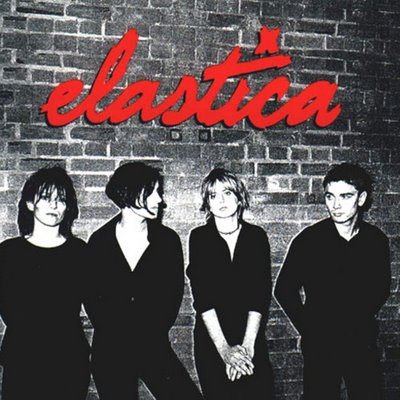
Elastica – ‘Elastica’: Round 70 – Rob’s ‘choice’

Elastica - ElasticaNothing helps a record gain a little extra frisson, perhaps some extra purchase in the long run, more than the sense that there’s some deep-seated reason that you should dislike it, but you just can’t help yourself.

As I recall, I was heavily prepared to find against Elastica. The press at the time did a pretty good job of painting Justine Frischmann as a hanger-on with pretensions. When they weren’t doing that, in what in retrospect was a shocking display of route-one sexism, they were focusing on the band’s magpie tendencies. Where had they nicked this riff from, and whither this drum part? They were classic talentless bandwagon jumpers, surely?

By about the third time I heard ‘Stutter’, none of that mattered. Freewheeling spiky punk pop, wantonly brief and sharp enough to slip between your ribs and cut deep where it hurts. Also, and this may help some, sometimes assumed to be about the drunken impotence of one of the great totems of the scene we were all supposed to be looking up to. It’s a giddy, cocky rush of pure joyful adrenaline described memorably by Spin magazine as “deliver[ing] four brilliant pop songs”. After this, they could be forgiven almost anything. That they followed with the insistent insouciance of ‘Line Up’ and the bopping swagger of ‘Connection’ seemed almost miraculous.

All of which generated enough excitement that even a straight-laced kiddo like me could giddily look past things that would have turned me off alchemists of lesser stripe. An album full of singles, B-sides and stuff we’ve heard before? No problem, I’m happy to have it all in one place. Band being sued by Wire and The Stranglers? Ah well. Who cares when the songs are this damned good?

This point is worth dwelling on before dismissing.

Firstly, fair enough. If you were, or indeed are, Colin Newman or Jean Jacques Burnel and you heard a new band blatantly lifting ‘Three Girl Rhumba’ or ‘No More Heroes’ then you might well dash off a stiff rejoinder of a legal nature. And you would be well within your rights.

Otherwise, forget it. Lifting, appropriating and adapting other works is the essence of pop art and pop music, and Elastica did it with such élan that all we could do was fight to surpress our grins.

QED: ‘Vaseline’, an 80 second track which pares Blondie’s ‘Sunday Girl’ down to its essence and then smacks you in the face with it, twice. It’s a fabulous piece of work. 6 years later Soulwax and Richard X chums were making merry with mash-ups and nowadays it’s impossible to imagine pop without the joyful liberating of old songs in the service of the new. Elastica led the way.

Also, and here I’ll rest, those reference points are exquisite, especially at a time when were were otherwise being encouraged to revere Lennon at his most bloated or anything with a Union Jack slapped unironically across its rickenbacker. If a hundred people went back to discover ‘Pink Flag’ as a result of ‘Connection’ then good job Elastica, say I. If I had to choose between bands reappropriating Wire and bands trying to be Status Quo, I know which way I’d be heading. In fact, I did have to, and I did.

Listening back now, what comes through with full force is the bristling life and energy of this debut album. By contemporary standards it’s nowhere near as arch and contrived, as knowing and detached, as you might expect or remember. It’s a killer, front to back, armed to the teeth with glinting choruses, razor-sharp guitar angles and enough attitude and disregard for safety to make you fear for what it might do next.

Here’s another way it stands in marked contrast both to its contemporaries of the time and to those who have followed. Elastica understood the power of brevity. Their songs do what they have it in them to do, with bags of energy, and then they STOP. Take ‘Annie’, a belter packed with pogo power and head-banging brio. It zings along for 1min 14seconds and then, its business done, it just ends. Where most other bands would be searching for a bridge to take them back to a point where they could run through the whole thing again. Elastica pull the plug and leave an electric aftertaste crackling around the room.

On its release in 1995 ‘Elastica’ became the fastest selling debut album since ‘Definitely Maybe’ and kept that rather niche honour for a further ten years, a demonstration of just how connected the worlds of pop, art and spectacle were with what people were actually anticipating and buying. Almost twenty years later it still stands up tall.

To my mind there were two truly great britpop records, and this is one of them. And tough luck, Albarn and Anderson. Your ‘hanger on’ made the list comfortably ahead of either of you.

Nick listened: Em brought this into our record collection when we moved in together, too. Great songs, great attitude, great production. Yes, it’s ‘derivative’, but I can’t name much music which isn’t. I can, however, name a lot which isn’t as good as this.

Tom listened: I have never considered Elastica as contenders and, as a result, I was pleasantly surprised by their debut which was punchy and sharp. But whilst I can see why Rob would suggest this to be one of the top two Britpop albums (I’m guessing Different Class would be the other one), for me, the best albums by Blur, Supergrass and (if they are can be ‘genrefied’ as Britpop) Super Furry Animals all seemed to have a certain something (playfulness perhaps, identity maybe) that Elastica seemed – on a first listen – to lack. Enjoyable enough though!

Eleventh Dream Day – ‘Live To Tell’: Round 70 – Rob’s choice that never was

eddlttTom’s rules were simple. Pick a letter, pick a number. I ended up with E8 and so began at the beginning of the E’s, counted records until I reached the eighth and then pulled out the first album I came to.

I spend time thinking about my choices for Devon Record Club. There are rules to follow, often themes to be adhered to and I have my own internal standards and checklists that need to be respected. I think carefully about whether my records will surprise, delight or horrify the other attendees. I prepare and curate my choices and one of the unintended effects is that the one person who rarely gets a surprise from them is me. One of the reasons I like the occasional ‘Year of Release’ theme is that it restricts choice and sends me to records I might otherwise overlook.

Before I pulled out my randomly selected album, this felt like the ultimate extension of that. A choice over which we have no choice. Exciting! Well, maybe. One of the things it’s made me think about is what makes a good record to listen to and talk about. That’s because as I counted along the Es, I passed Earth, Echo and the Bunnymen, Eggs, 808 State (misfiled perhaps?) and landed in the middle of Elastica. Their debut album was the seventh record I counted, and thus had ticked by. A shame I thought. It’s a perfect record for generating debate and disagreement and one of the fuels of our meetings is the power of pontification. It’s also a really terrific listen. But I missed it by one, thanks purely to the accident of me filing it before the EPs I own by the same band.

And next up was this, the only record I own by Eleventh Dream Day. One the one hand: perfect. A record I’ve had for 20 years and probably listened to less than 20 times. A new discovery for me as well as the group. Except, I’ve passed it over when scanning the Es over the years for a reason. It’s a decent record, but one surrounded by more immediately interesting, rewarding, ear, eye and finger grabbing choices. It could be a wallflower, hanging in the back waiting for a chance to shine, or it could be just an average record.

Eleventh Dream Day, from Chicago, are, as they say, stalwarts. They formed in 1983 and have been releasing records ever since. ‘Live to Tell’ is their fifth from a list that, to date, numbers twelve. They’ve had generally positive reviews, but after a couple of records on Atlantic, of which this was the second, their shot at breaking through had passed. Clearly they weren’t in it for fame and fortune and have carried on making music together ever since. Inevitably I have to note that perhaps they are most notable as the other project of Doug McCombs, bass player of Tortoise.

‘Live To Tell’ is a pretty good album, full of rousing, alternative rock tunes which bustle through at a fair clip. They’re scuzzy, straightforward and have a little cowpunk stomp about them which is both endearing and energizing. Critics seems to share the view that they are influenced by Neil Young. I don’t get that from the songwriting or the playing, but almost every song has a pause whilst the band step back to make space for a slashing guitar solo. And that’s about that. I like it well enough and I’ve enjoyed listening to it ahead of the meeting. I just can’t imagine it’s going to turn any heads this evening, in much the same way I can’t quite imagine meeting someone who declared “Eleventh Dream Day” when asked to name their favourite band. That’s not an insult, by the way, although I fully accept that it sounds exactly like one.

So, it goes back onto the shelves alongside (spiritually, but not physically) other records, by Razorcuts and Surgery and Rein Sanction and That Dog and Tsunami and Scrawl, that I’ve picked up for unknown reasons and which have languished ever since. Maybe those ones will sound revelatory if they pop out of Tom’s random record generator. We’ll have to wait and see.

Update: I miscounted and the evening before the meeting, with this piece already in the can, I realised that the 12″ of ‘Bring On The Dancing Horses’ had been lurking next to ‘Crocodiles’ all the time. Which meant my REAL E8 was something different after all.

Nick didn’t listen:

Tom listened to one track: And thought it sounded pretty good. But hasn’t explored any further…

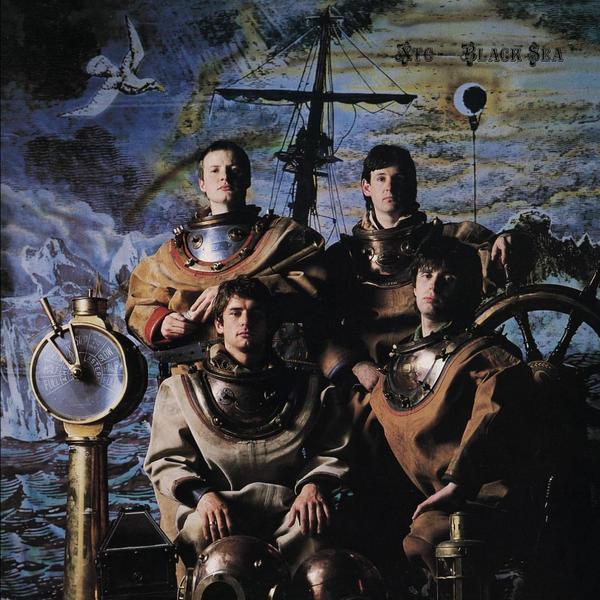
XTC – ‘Black Sea’: Round 69 – Rob’s choice

XTC - Black SeaXTC got their hooks into me at an early age. They stuck there, I incorporated them and many years later they reeled me in.

I’ve argued before that everyone has a formative period when they are soaking in music from all around them and that the sounds that make up part of this absorbed fluid are the sounds which resonate the most down the years. Judging by the songs that still make the hairs at the back of my neck stand up, even though I was too young to buy them and have no direct association or specific attachment to them, my sweet spot was roughly 1979 to 1982. Not everything, you understand, in fact probably just a handful of songs, all told, but my what a whallop they still pack.

‘It’s Different For Girls’, ‘One In Ten’, ‘Games Without Frontiers’, ‘Johnny and Mary’, ‘Walking On The Moon’, ‘Mirror In The Bathroom’, ‘Ashes to Ashes’, ‘Geno’, ‘My Girl’, ‘Oliver’s Army’ and on and on. I can place these and dozens of other songs within this timeframe just by the tingly effect they have on some reptilian part of my central musical cortex, where they pulse away forever, immortal, ready to transport me back to the kitchen of my parent’s house where I sat once, bathing in radio.

Some of these songs are by artists I’ve gone on to get to know well and cherish, like Dexy’s and The Beat. Others are total outliers for me. Bowie and Gabriel are major artists but we’ve never connected. I think of XTC as almost the prime example.Their charting singles from ‘Making Plans for Nigel’ through to ‘Senses Working Overtime’ lapped away at the edges of my developing sense of pop music and slowly became beloved years before I ever realised they were so deeply in my head but it’s only in the last five years or so that I’ve gone back and started to spend time with the albums that host these signature songs. In some ways I regret it, as with repeated playing comes a certain wearing away of the frisson, the scent of magic and transportive effect. Also, before I always knew they were there, waiting for me to reach out to them in discovery. Now that’s gone.

In every other way, no second thoughts. The records are rich, vibrant, inventive, playful and a pleasure to spend time with. None of them hit the bullseye quite like those key singles did when I was a schoolboy, but then how could they?

XTC are outliers, related to no-one, reminiscent of few and followed by fewer. They found and kept their space thanks to their twin engines, Colin Moulding and Andy Partridge, and driven by the two they put out 8 albums in as many years, from the buzzing post-punk This Is Pop? of ‘White Music’ through to the lush pastoral orchestrations of ’Skylarking’ (11 in 11 if you count the Dukes of Stratosphear and stretch out to 1989’s ‘Oranges and Lemons’). All this despite the well-documented breakdown that effectively ended them as a touring band.

The nexus for me still sits somewhere between ‘Drums and Wires’ and ‘Black Sea’, when they were spiky, driven, ambitious, unsettled and squirting out taut, telling pop in unique shapes whilst expanding their range and depth year on year. ‘Black Sea’ gets the nod although i’m not entirely sure why. In practice it might be because it’s exactly half way between the pop-zap of ‘Drums’ and the looser more folk inflected ‘English Settlement’. Every XTC record sounds like a step along the way, a mid-point between the last one and the next one. Perhaps the mark of a great band is one who’s best work you just can’t choose.

We talked about singles earlier, and ‘Black Sea’ produced five, although only three of these troubled the charts: ‘Generals and Majors’ is a fine bobbing and whistling bustle of a tune, poking a fairly blunt stick at militarisation but, primarily, giving us an incessantly toe-tapping first single, ‘Towers of London’ is a down-tuned paean to the builders who lost their lives whilst constructing the capital’s skyline, then next to last on the album comes ‘St Rock (Is Going To Help Me)’, a scratching, scathing hooligan of a number, on the one hand all slabs of guitar and stamping baselines, on the other a gleefully snickering poke at male impotence and incompetence.

The remaining 8 tracks are as varied and strong as these, if lacking the weight of 30 years airplay. ‘Respectable Street’ is the true bridge between The Kinks and ‘Parklife’, otften passed over when tracing the lineage, it nails suburban curtain twitchers (“Avon lady fills the creases/ When she manages to squeeze in/ Past the caravans/ That never move from their front gardens”) and stands as a clear signpost to the band’s heritage, which came down more from the Beatles and their contemporary chroniclers of the surreal mundanity of English life than from the Year Zero punks they just happened to be contemporaneous with.

Elsewhere there’s the party-starting nuclear terror stomp ‘Living Through Another Cuba’, ‘Love At First Sight’ and ‘No Language In Our Lungs’ demonstrating two sides of XTC’s pop stridency, the clattering ‘Paper and Iron’ and even an incongruent seven minute closer ‘Travels In Nihilon’ which comes over like a galley-ship freak out and just about manages to earn its place.

I can’t point you to one place for everything you need to hear from XTC (although you could start with ‘Fossil Fuel’, their dizzyingly strong singles compilation). To me they are a band who need, or indeed deserve, to be consumed whole. There’s more than enough for lovers of smart British rock to lose themselves in a back catalogue that really does reward a deep dive. That they never produced a single definitive statement ultimately, to my mind, is to their credit. They were too restless, too inventive, too playful, too damned good to be pinned down in one place.

Tom listened: That XTC are fantastic goes without saying. What it is that makes them so is harder to pin down. They don’t seem to do all that much that’s different to a plethora of other bands but are just off kilter enough to make them compelling. Maybe it’s Andy Partridge’s singing – a kind of back of the throat (but not raspy) my food’s gone down the wrong way kind of warble that sounds awful on paper but is palatable enough in practice to ensure that XTC stand out from the crowd. Maybe its the mix of pop hooks, new wave sounds combined with a whiff of psychedelia (which became more of a pong as XTC grew older). Maybe it’s just that they had the best tunes. Whatever, XTC stood out at the time, released a slew of impeccable singles but, it appears, had strength in depth. Sure enough, Black Sea sounded like a must have – more accessible and less arch than the sole XTC album in my collection, Skylarking. Another Mitchell endorsed cracker!

Graham listened: I used to love XTC as a youngster. Strangely I do not posses anything by them these days. I’m sure in a cardboard box lurking in the loft storage I would find a whole host of C90’s with their albums on, because I definitely used to have them on at home and in the car. So their absence from my collection is as much about media and format changes as it is about my lazy record buying. It was great to be reminded how great and important they were. It spurred me on to think about finding and opening that Pandora’s box of C90’s, to be reminded of what other treasures my tastes of the early 80’s could offer up. They’ll definitely be a bit of Aztec Camera and Orange Juice (like XTC, absent from my collection these days) knocking around in there. If DRC are really lucky, I’ll find a copy of Marillion’s 1984 ‘Real to Reel’ live album! Wish me luck boys!

The Chameleons – ‘Strange Times’: Round 68 – Rob’s choice

The Chameleons - Strange TimesI have no idea how big the Chameleons were, or how far their music spread. Let’s not panic, i’ll look it up before I finish writing this, and I have my suspicions, but they could have been the biggest band in the world or just a tiny little secret that occasionally leaked out of the North West. I suspect they were somewhere between the two, and retained the possibility of being both at the same time, like some sort of musical quantum uncertainty.

They certainly never seemed to fit comfortably within the world around them, ironic when you consider their name. They were too grandiose to be successors to Joy Division, too artful to beat U2 to the stadium doors, too long-form and serious to grab radio time from The Smiths and too rocking to divert attention from Talk Talk.

Yet for those of us who grew up around Temptation at the Hacienda, the Ritz on a Wednesday night, DeVille’s on a Saturday, the Chameleons were part of our musical lives. No record threaded so mysteriously through the DNA of Manchester indie clubs more than 1986’s ‘Strange Times’, their third album and the last of their first incarnation.

‘Soul In Isolation’ would drag the extrovert introverts out onto the empty floor to share their inner turmoil through a common language of shuffling moves and fringe flicks. Later in the evening ‘Mad Jack’ would pull everyone else in to shake their heads around and at the end of the night ‘Swamp Thing’ would have them all howling to the dripping rafters.

And yet even then they felt like a secret. These songs, along with ‘Tears’, the earlier ‘In Shreds’ and ‘Up The Down Escalator’ could be heard on local late-night radio (shout out to Tony the Greek), and those nagging, un-put-downable melodies would snake their way into your head and yet always their was the sense that half the youngsters bellowing “Not too many hours from this hour/ so long/ a storm comes/ or is it just another shower?” as a note of defiance against the encroaching night would actually struggle to name the band they were feeling so emotive about.

They weren’t exactly ahead of their time, their slanted post punk approach had been done in detail by the time they started in 1981, instead they seemed more to be between times. The pantheon of post ’77 Manchester bands trips of the tongue of any music fan. Buzzcocks, Joy Division, New Order, The Smiths, Happy Mondays, Stone Roses and onwards to Oasis and the end. If you’re lucky they might thrown in The Fall, Magazine, 808 State and a few other choice names. If they mention Northside it’s time to sidle away.

The Chameleons never get a look in, despite operating in a relatively open space between scenes, post Joy Division, pre-Madchester and despite trading in an enthralling rock music, which weaved epic ambition around beguiling instrumentation and a singer with a voice, half Marc Almond, half Manfred Mann’s Paul Jones, strong enough to drag his own searching melodies all the way from heaven down to earth and back.

‘Strange Times’ captures them at their confident best. ‘Mad Jack’ kicks off with driving energy and then we’re into what comes over now like a greatest hits home straight. ‘Caution’, a rolling, queasy piece of jangle with a sharp undertone. Then ’Tears’, featured here in a slower, more meditative alternate take from the version released as a single. The vocal melody is beautiful and strong enough to carry both versions. ’Soul in Isolation’ tends towards clattering industrial rock but plays its hand just enough to stay the right side of the line between epic and overblown. Then ‘Swamp Thing’ with it’s eastern inflected introduction, jackboot drums and perfectly pitched growth from snaking intimacy to bellowing catharsis.

The remaining five songs are fine examples of mid-80s post-punk rock, as strong as anyone else was putting out. They retain just the faintest whiff of the sixth form, but the honesty and heart which underpins the writing is more than sufficient to get them by.

Plus, Mark Burgess’s facility with a vocal hook really is something remarkable, his ability to segue between hooks within a single song is transcendent and by this point it had been developed to its most intoxicatingly powerful. ’Tears’ for example contains at least three vocal melodies so elementally unforgettable that lesser bands could have hung careers off any one of them (for reference: 1: “And I wasn’t worried at all”, 2: “Can you tell me how will it be now, how will it be?” and 3: “Will the ghosts just stop following me?”).

They deserved better at the time. ‘Strange Times’ was their major label debut (on Geffen – one of the theories as to why they never made the splash they might have is that their first label, Statik, obscure but an offshoot of Virgin and thus the band never featured in independent charts and so evaded the music press fairly effectively) and it failed to trouble the charts. There’s no mention of it in the end of year lists.

They deserve better now. To my ears they are still the equal of any of the bands plying their trade in the space between punk, goth and rock in the mid-80s and at their best they do things few others were ever capable of.

Tom listened: Already familiar with The Script Of The Bridge, The Chamelons’ debut album, I knew what to expect from Strange Times but, in much the same way as a cliched old game of English football (on at the moment…but I’ve found something better to do, Graham and Ed!), this was very much a game of two halves, one of which exceeded expectations! Which is to say that I adored the first few songs here. They were bright and brisk and sharp and melodious and reminded me a little of a slightly more earnest and darker (read: gothier?) That Petrol Emotion. The second half of the record I found to be less captivating but I imagine this was as much to do with it being the end of the evening and a first listen as opposed to any significant drop off in quality.

So, on reflection, The Chameleons’ third album was a hit with me…but on points only. Curiously, however, I didn’t come away from the listen feeling compelled to acquire any Chameleons’ stuff – in much the same way as Script Of The Bridge, I enjoyed Strange Times as it played but because the sound and aesthetic is very much of its time and, for me, it’s not a time (or sound) that particularly resonates, I couldn’t imagine ever feeling compelled to pull it off the shelf to explore what it has to offer. That’s my loss I suppose!

Graham Listened:  Stuff from this period generally hits my ‘sweet spot’ and Rob definitely delivered with this one. Not sure if it is rose-tinted ears falling for simpler times but this was great to listen to. I’m sure a C90 of this and some other Chameleons’ offerings are knocking about in box somewhere. Just one of those bands that were ‘classy’ at the time and had a sound that you wanted to hear. I never picked up their albums but that was mainly down  with me aligning my self with the darker side of the ‘force’, as I toyed with the Sisters and The Mission. My loss ultimately.

Nick listened: People have been telling me to listen to The Chameleons for years; apparently Embrace sound(ed) like them (in the early days). Well, as we’ve discovered, I think I hear Embrace differently to most people, and I didn’t quite get the lineage here that’s been suggested to me, even though I could hear similarities to the likes of Echo & The Bunnymen, who I can hear as precedent for that Yorkshire band.

Being that bit younger than most of the other guys, this didn’t trigger any Pavlovian responses in me. I quite enjoyed it, but something in Burgess’ voice didn’t appeal, and the melodies felt a little gauche and unsophisticated at times; I wonder if those were two of the things that prevented them crossing over beyond their home territory?

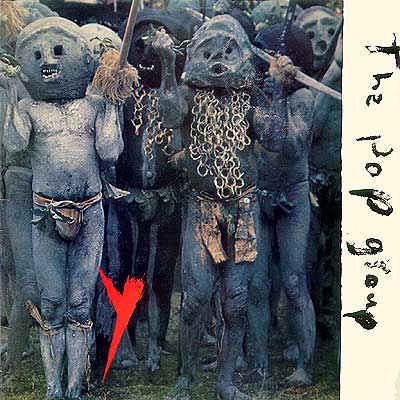
The Pop Group – ‘Y’: Round 67 – Rob’s choice

The Pop Group - YNick set a theme for the evening. Reminding us that the meeting date coincided with his birthday he batted his eyelashes and modestly declared himself the subject. “Birthdays, beards anything,” he clarified. Ladies and gentlemen let me tell you, sometimes it’s hard to resist temptation. But resist we must.

If my maths are correct ‘Y’, the debut album by Bristol’s The Pop Group, was released roughly 3 weeks before Nick was born, meaning that when he did eventually make his first appearance it was at the point at which the plucky five-piece were beginning to accept that they were not going to storm the Top 40 after all. Whilst it might not have made an impact on the pop charts, this record has banged, clanged and hollered down the years ever since.

We’re fond, some of us, of trotting out the worn-smooth line that in the late 70s punk rock changed everything, creating a Year Zero after which culture could be rebuilt, better. The evidence taken in the round speaks against such a clearing of the decks but it’s undeniable that for some it genuinely was a starting point at which preconceptions could be destroyed and from which new and radical art could follow. Those who went on to make the absolute most of this opportunity did so largely by ignoring the two-chord rallying cry of what we now call ‘punk rock’ and instead adopted the ‘do anything but do something’ artistic template, striking out towards new noises, ignoring constraints and displaying rampaging disregard for the rules, expectations and requirements of rock music.

One of the earliest and most committed of these were Bristol’s The Pop Group who combined jagged funk, slashing guitars, dubby bass lines, exploratory noise and vocals so wild and vitriolic they sounded at times as if they were physically bursting out from frontman Mark Stewart, who was part street corner leaflet pusher, part pulpit thrashing preacher, screaming in tongues, whispering in panic. ‘Y’ was the first of their two albums.

One way or another we speak a lot here about influence, discovery, sequence, timing, originality. It’s impossible for someone as slapdash as me to start to put together a roadmap for a band like The Pop Group. Instead here is a facile observation: ‘Y’, a lacerating musical cluster bomb of control-and-release aggression, came out just 9 years after the Beatles broke up. I’ll accept that this is meaningless if you’ll accept that it makes you sit back and think “holy crap the Seventies must have been quite a decade”.

35 years later ‘Y’ still delivers a significant shock. It’s disorienting and electrifying from the moment it starts, impossible to ignore throughout and almost unimaginable in its scope and composition until you’ve let it work its way into your system and begin to live there. It sounds every bit the revolution its creators were attempting to foment.

Picking back through rock music to find progenitors for this feels like a fruitless task. Sure there’s some of the wild danger of Beefheart at his most blindly instinctive, along with a dash of the Magic Band’s primeval blues. The influence of dub reggae, which runs through much of the most challenging and groundbreaking music to come out of punk, is here, presumably from the same sources that would flow through the Slits, with whom The Pop Group shared a drummer for a while. And there is funk throughout, deployed as an agent of change. But where James Brown may have created funk to get people moving their feet, dancing together towards freedom, The Pop Group use it as a means to propel us towards the barricades, molotov cocktails in our hands.

You have to turn towards improvisational jazz to attempt to explain or trace sources for much of what’s happening here. Rock and pop may not boast antecedents for The Pop Group but presumably Ornette Coleman and Charles Mingus would have recognised much in the stabbing, visceral guitars, searching, fractured rhythms and Mark Stewart’s possessed vocal performances. Almost every track on the album just goes off at some point, dissipating, searching, fragmenting, often destroying a killer groove for two minutes of angry, echoing space. Through it all runs an incredibly deft rhythm section who, you begin to realise, are subtly underpinning the whole thing, bringing back even the most far-flung exploration to the bedrock pulse. Throughout, the playing is exceptional. They may have striven for primitivism in some of their sounds, but the skills they used to create them sound highly sophisticated.

Elsewhere there are slashed up voices and processed sounds which begin to hint at the industrial soundclash approach Mark Stewart would go on to explore with the Maffia, Tackhead and On-U Sound System. There is ‘Don’t Sell Your Dreams’ a dying monster made of collapsing dub which spends 6 minutes trying to decide whether to live or die and can’t. It could and should be unbearable but again there is something, some tiny thread, some lifeforce flowing which brings the piece together into something quite compelling. There’s even a throwaway instrumental B-side bonus track on the CD reissue, ‘3.38’, which seems to casually contain the genetic code for the next 15 years’ worth of hip-hop.

Few were able to follow the scorched trail this band left behind. One group who certainly recognised the breakthrough that had made were nascent The Birthday Party. According to this clip, Nick Cave and his bandmates were utterly enervated and transformed by an early Pop Group performance shortly after arriving in London.

[youtube:https://www.youtube.com/watch?v=BUC2GmzJpGY%5D

Whilst it’s hard to find many genuine predecessors of this unholy, incredible noise within rock music, hearing it now it’s impossible to ignore how many artists, starting with Cave and co, pushed their way through the breach that this Bristol quartet made back when Nick was a nipper.

Sometimes when you reach back to influential records from the past, it’s hard to put yourself in the shoes or headphones of the original listeners and to feel the visceral excitement they must have felt. Sometimes that’s because the original context can’t readily be conjoured. Sometimes it’s because the artistic legacy has been so thoroughly plundered in the years following as to leave the original source drained. Either way, these records often sound flat, played out even if you haven’t actually heard them before (seeing as we’re in 1979, I’m looking at you Gang of Four). Not so with ‘Y’. If released today it would be utterly thrilling and having come to it properly so late, it’s my favourite album of 2014 so far.

It’s a record in protest at life full of songs in revolt against themselves. It’s unbelievably good, utterly without compromise. It contains the blueprints for a hundred brilliant records, only a few dozen of which have yet been made.

Tom listened: The Pop Group are a band I have wanted to hear for a long, long, time and now that I have, I have to say that about two thirds of the record was worth the wait. Rob primed us before playing Y (funny that I brought an album by X…where was the Z?) that we would have to go with it a bit; that, at times, it would be just a bit too tricky to appreciate on a first listen. ‘Right’, I thought, ‘I’ll show you Mitchell…I’m going to like it all, right from the off’. But, of course, he was right. Whilst the majority of the record was pretty much spellbinding, the other bits simply sounded like self-indulgent proggy nonsense to me, which I find particularly ironic considering this album’s release date and obvious post-punk leanings. So..the jury’s out as far as I am concerned, and I guess that only repeated exposure to the album and familiarity would tell as to whether the less structured side of the record would reveal its true worth…or not.

Nick listened: I’ll echo Tom; this was a confusing record, wherein bits of it seemed like absolute genius, and other parts felt like indulgent dross. Repeat listens would probably unpack the dross and make you appreciate it more.

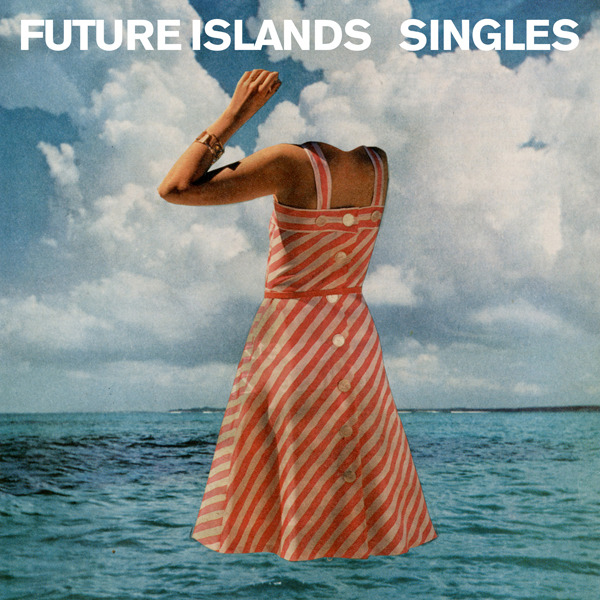
Future Islands – ‘Singles’: Round 66 – Rob’s choice

futureislandsThese days I rarely consider the role of performance in music. Circumstances have dwindled my opportunities to see live bands effectively down to zero. I hardly ever watch music on TV, maybe hitting two or three heritage docs on BBC Four in the space of an average year. I never seek out music videos, even when they are recommended.

I realise I’m missing out on part of the experience. I used to be thrilled by live shows by bands I loved and, sometimes, bands I didn’t know. As someone who spent a reasonable chunk of his adolescence looking like a bargain bucket Morrissey, then a half-arsed Happy Monday, then an unremarkable former member of the Jesus and Mary Chain, I’m hardly unaware of the extra dimension that the look and feel of the band brings to the noise they are making, to the fans ability to identify with and inhabit their music. I’m aware that even if these things seem to have become unimportant to me, the bands I follow are still putting in just as much effort to perfect them, to add layers to their musical core. I’m just not paying attention.

Truth be told, I could’t even tell you what the majority of the artists I like these days actually look like. [Hang on, i’ll test that theory. Bear with me while I look at my records of the year post from 2013

Well, I reckon I could pick 5 of the 11 out of a line-up. I’m surprised by that, although note that those include Nick Cave, Sam Beam and Bradford Cox, all of whom cut fairly distinctive figures].

This is not a stance or an extension of some philosophical or aesthetic approach – I don’t really do that stuff – it just seems to have happened. I just listen to the music. Nowadays I don’t even really care who’s in the band, or what they’re doing. I’ve never been big on appreciation of the craft of music. I love sounds, but rarely connect the appreciation of those sounds to an appreciation of the skill or virtuosity that may have been necessary to produce them. Come to think of it, not only don’t I know what most of the new artists I like at the moment look like, if they’re in a band I don’t even know what the individuals are called. Even worse, by and large I don’t even bother with song titles either.

Sounds stupid, huh? Maybe it is.

Anyhow. I started talking about performance…

A month or so ago, Baltimore synth-pop outfit Future Islands managed to blindside me and break through all this dead-eyed detachment and, in the space of 3 minutes, force the most focussed U-turn I can remember making in my 30 years as a music lover.

A few years ago Tom lent me a copy of ‘In Evening Air’, their debut album. He thought I might like it. I did not. I hated it. It’s rare that I take badly against a record, but I really couldn’t stand this one. I hung on for half the tracks and then had to finish my walk in silence. It was the voice, swinging wildly from David Bowie to Ella Fitzgerald, sometimes in adjacent syllables, both delivered as if in pastiche by a particularly hammy Lon Chaney. I found it utterly unbearable. I’m not one to shy away from an unusual vocalist. I would choose Mark E Smith, Captain Beefheart, Joanna Newsom and Tom Waits among my very favourites, but something about the shameless artifice of Samuel T Herring’s singing had me clawing for my headphones. It seemed so desperate, so attention seeking. I felt physical repulsed by it. They’ve been filed under ‘not for me thanks’ ever since.

And then. And then. Having picked up (somehow) on some minor internet buzz, I checked out their recent performance of ‘Seasons’ on the David Letterman show. Within about 90 seconds, it all made sense. Within 3 minutes i’d shifted my opinion 180 degrees. I understood immediately that the focal point of these wild growling pleas and distressed torch singer yelps was a frontman who was not the flamboyant dandy I had assumed and feared, but a regular Joe Shmoe battling with his burning desire to express himself through song. It’s a totally compelling performance. Passionate, unabashed, somehow discovering the embarrasing geek that we all fear we might be if given a microphone and an audience and parlaying this into something true and vulnerable and somehow quite magnificent. The hopelessly extreme dad-dancing, the moments when his eyes get the thousand yard stare and it seems he might just crumple right there in the middle of the stage, the futile half-punch crescendoes, the desperately assertive chest-beating. Even the last-ditch death-metal dredging. It all makes sense.

Here it is:

[youtube:http://youtu.be/1Ee4bfu_t3c%5D

(I made the mistake afterwards of checking out ILX to see if others had been similarly affected by the thing. No, they hadn’t. Plenty of people speak up for the band and most cite Herring’s frontmanship as one of the key reasons they’ve always been fans. Others enjoyed once again being able to blankly slap down some enthusiasm, unable to understand why anyone would get excited about “another average synth pop band”. Here’s a tip for a happy life, as a minor aside: avoid internet forums if you want to retain any unfettered joy for something you think may be loveable. Unless your opinions are bulletproof then you’ll come away feeling your affection has been shot to pieces. And if they do happen to be bulletproof to the point of being immutable, what’s the point of trading them with others online?)

Nonetheless, I’ve hammered ‘Singles’ over the last four weeks or so. In many ways Future Islands are just another synth pop band, reaching back to grasp some of the faded glitterball glamour, retrofuturist electronic buzz and sparse despair of the mid 1980s and, essentially, doing a pretty good job of it.

Actually, come on. That’s selling them way short. They do a pitch perfect job, building their sound from an exquisite palette and creating deliciously economical soul pop.

Anyway.

It’s Samuel T Herring’s voice that lifts the record out of the ordinary but, somehow, he takes the rest of the band with him, and reflected in his flailing, wheeling performance – for a performance it is every time he opens his mouth to sing – their sound gains lustre and a spring in its step. Ultimately these are 10 fine songs, short and sharply constructed, by a band who sound every bit the Joe Shmoes giving it everything they have in an attempt to force their way out into some new territory, to create a breakthrough. We suspect they’ll never make it,  and perhaps they know too, but that tension, of the ordinary trying to become extraordinary, is what makes Future Islands such a strangely intoxicating affair.

Nick listened: Otis Redding. Samuel T Herring is clearly (as far as I’m concerned) a massive, massive Otis Redding fan. And he’s lucky enough that his vocal cords are capable of showing that inspiration in a pretty impressive way. After years of cool detachment from synth bands, this emotive, performative juxtaposition is a little surprising (although not quite as surprising as when he went full-on ‘Cookie Monster’).

The album as a whole left me a little nonplussed, but that Letterman performance was off the scale good; people used to perform like that all the time. I love a bit of artifice.

Tom listened: I can see the headlines now:

‘Mitchell In “Changes His Mind” Shocker. You Turn if You Want To…He Has!’

I told you they were good all along, didn’t I?

Now that I’ve picked my jaw up from the floor (I had resigned myself to always having my enjoyment of In Evening Air tempered by the fact that Mr Mitchell and myself were on different pages of the hymn sheet), I will add that whilst it lacked the immediacy of Future Islands’ second album I sensed, on the basis of one play, that Singles has great depth and possibly greater staying power than In Evening Air. The listen left me very tempted but, fortunately for me, I am very tempted by a lot of records at the moment! It is, however, firmly on the list.