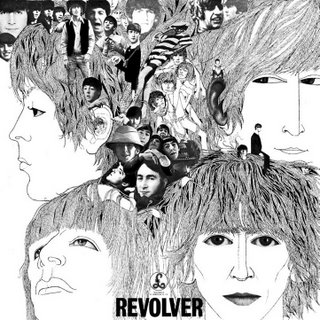
The Beatles – Revolver – Round 7: Nick’s choice

I’ve been wondering how we would deal with something thoroughly “of the canon”, especially something from the 60s, for some time now given how much new music we’ve tended to consume at Devon Record Club, and as much as I love Another Green World, it’s not quite canon enough and there’s something about its sound that makes it seem a little “out of time”, so it didn’t quite give us that sense. So I thought I’d go for the daddy, possibly the most acclaimed album of all time.

I first got into The Beatles in 1993 when I was 14; it was a fallow time for them at that point, pre-Oasis, pre-Anthology, and my friends were pretty much all in thrall to Nirvana and their coat-tailers, so being into The Beatles was a slightly odd thing. They didn’t seem as culturally pervasive as they would shortly afterwards. Although maybe that was just my house…

Revolver is a fascinating record; it seems incredible that it was The Beatles’ seventh studio album in four years, when you consider that Beastie Boys have only just released their seventh full vocal studio album after the best part of 30 years. It runs to just 35 minutes, yet there are 14 songs, none of them less than catchy or, at one’s most critical, formally interesting given the state of pop music at the time, and in those 35 minutes there are so many styles, so many ideas, so many melodies, that it can easily overwhelm and leave one befuddled as to what Revolver actually is in and of itself, what it stands for, what it did, what it still does.

At 14 I think I only recognised Eleanor Rigby and Yellow Submarine, and so Revolver was a Pandora’s box to some extent; She Said She Said, Taxman, I’m Only Sleeping, And Your Bird Can Sing, and, of course, Tomorrow Never Knows, were bizarre revelations, pointing towards a different band again from the ones that produced She Loves You et al circa 1963 and then Strawberry Fields et al circa 1967 (the period from 65 through 67, from Day Tripper through Rubber Soul and Rain to Revolver is my favourite stretch of The Beatles’ career). The lurch from Yellow Submarine into She Said She Said is extraordinary, schizophrenic, psychotic, confusing. It makes no sense and yet it works.

The Beatles can very easily seem obvious and passé, and I know that while Tom is a fan, Rob feels little or no need to listen to them because the songs are everywhere, ingrained in our society, but I still gain so much pleasure from going back every so often, from McCartney’s egotistic bassplaying on Taxman, from the melange of sounds on Tomorrow Never Knows, from the surging melodic thrill of And Your Bird Can Sing, from the exquisite melancholy of For No One, that I don’t think I’ll ever be tired of The Beatles, and Revolver in particular.

Track: Orbital – The Girl With The Sun In Her Head

To accompany Revolver, I chose this 10-minute piece of cinematic techno, the first song I ever heard by Orbital, the first piece of full-on techno I ever listened to, and probably the single piece of music that has changed the way I think about, react to, and listen to music the mist in my entire life.

Urged on by salivating reviews comparing the parent album of this track to classical composers rather than thudding luddite dance-bods, and by an older brother who told me to “do [myself] a favour and just buy it”, I picked up In Sides on the day of release from Woolworths in Teignmouth, skipped my afternoon sixth form class, took it home, and had my brain realigned. I’d never listened to anything like it before, and I was rapt from the start. I remember a friend who had a penchant for figuring out how to play Stone Roses songs on guitar saying “anyone could make techno”, and I challenged him to really listen to this song, and figure out how to play it on guitar. At that point he acquiesced that yes, maybe it did take a certain melodic skill and compositional talent…

I’d listened to Screamadelica and Massive Attack and Björk a lot through 1995, moving slowly further and further away from boys with guitars, but Orbital was a final leap into the beyond; once over the wall there lied Prodigy, Underworld, Aphex Twin, and then, in the future, Four Tet, Caribou, Stars Of The Lid, and so much other music that I love so much and wouldn’t ever want to be without. I’m grateful to Orbital, and to this song in particularly for giving me the tools to enjoy it.

Tom Listened: I recall obtaining a version of Revolver in 1981 from a pirated cassette stall in Hong Kong, along with (their words not mine) Ob La Di Ob La Da (Vol 2) – ie the second disc of the White Album – and one of the early ones, A Hard Day’s Night I think. I had never heard of Revolver and although I fell in love with all three albums, Revolver hit hardest. I think it’s interesting that both Nick and I discovered The Beatles for ourselves when we were both quite young and during a period of time when the Beatles were relatively rarely mentioned. Classic albums are much less satisfying if you’ve already heard two thirds of the songs beforehand!

Whilst Tomorrow Never Knows was playing (surely one of the most, if not THE most, significant single step forwards in the history of ‘pop’ music) I had a rant about young people and their conservative tastes and how, a few years ago, I played this and 9 other Beatles tracks to one of my classes and this was very poorly received. So I got my tutor group of mainly 18 year olds to review it. Of the 13 students who produced a review, 5 were pretty much wholly positive, one was wholly negative and the other 7 in general liked the song but found the music confusing and cluttered and complained that it was hard to hear the lyrics. It appears I underestimated them!

A selection of their comments:

‘Sounds a bit like Massive Attack.’

‘Good to mong out to and very good recording quality for its time.’

‘Sounds really modern (Friendly Fires?) – interesting production techniques.’

‘Overall, enjoyable and interesting to listen to.’

‘It sounds like a palatable squeaky gate, which is quite nice(!). It sounds like something I’d listen to when cooking.’

‘A load of crap – sorry not my thing.’

‘Interesting…but a bit jumbled and I found it hard to understand any of the lyrics.’

‘Was Okay but left confused.’

Rob listened: It’s easy and largely pointless to say that The Beatles created pop music. Listening back to their records and tracing the genetic codes of the music we’re listening to 40 years later is fun, but largely an empty exercise. They invented nothing, they just got to empty territory before anyone else, colonised it almost completely, plucking the riffs from the trees, building houses across the genre flatlands and bathing in the rivers of production techniques and studio possibilities. Their offspring have been the dominant strain in pop and rock ever since.

The Beatles were hard working, talented, charismatic, creative, curious, but not geniuses. Circumstances gave them the opportunity to expand way farther, way more quickly than any other band had before and they had the talent and drive to do so. Someone had to. In doing so they set the templates for both pop music and pop stardom. If we set them as a cultural measuring stick, then of course they will be regarded as the best, the most infllutential the most original.

I’m just not interested in them. I don’t listen to them, i don’t care about them. They never got to me at an early age, like they did Tom and Nick, other than via the radio and that’s always been enough for me. I’ve never felt sufficiently interested to listen any deeper, which is not the reaction I had when I heard Dylan, the Velvets, Beefheart etc. You are welcome to argue than none of the music I love would exist without The Beatles, but agin, that’s irrelevant.

Anyway, that’s got that off my chest. I enjoyed listening to ‘Revolver’ and i’m glad Nick chose it. I knew all but four of the songs (again, why bother listening back when you can absorb the back catalogue just by keeping your ears open), and the whole thing passed very pleasantly, with the possible exception of ‘Taxman’, a classic riff-and-strut pop song blighted by a lyric railing against progressive taxation sung from the heart by a suffering Harrison. Poor George must have been down to his last ten million and was understandably upset. It’s a shame he never got around to writing that extra verse in which the taxman takes his money and builds schools and hospitals for poor people.

I’ll stop now.
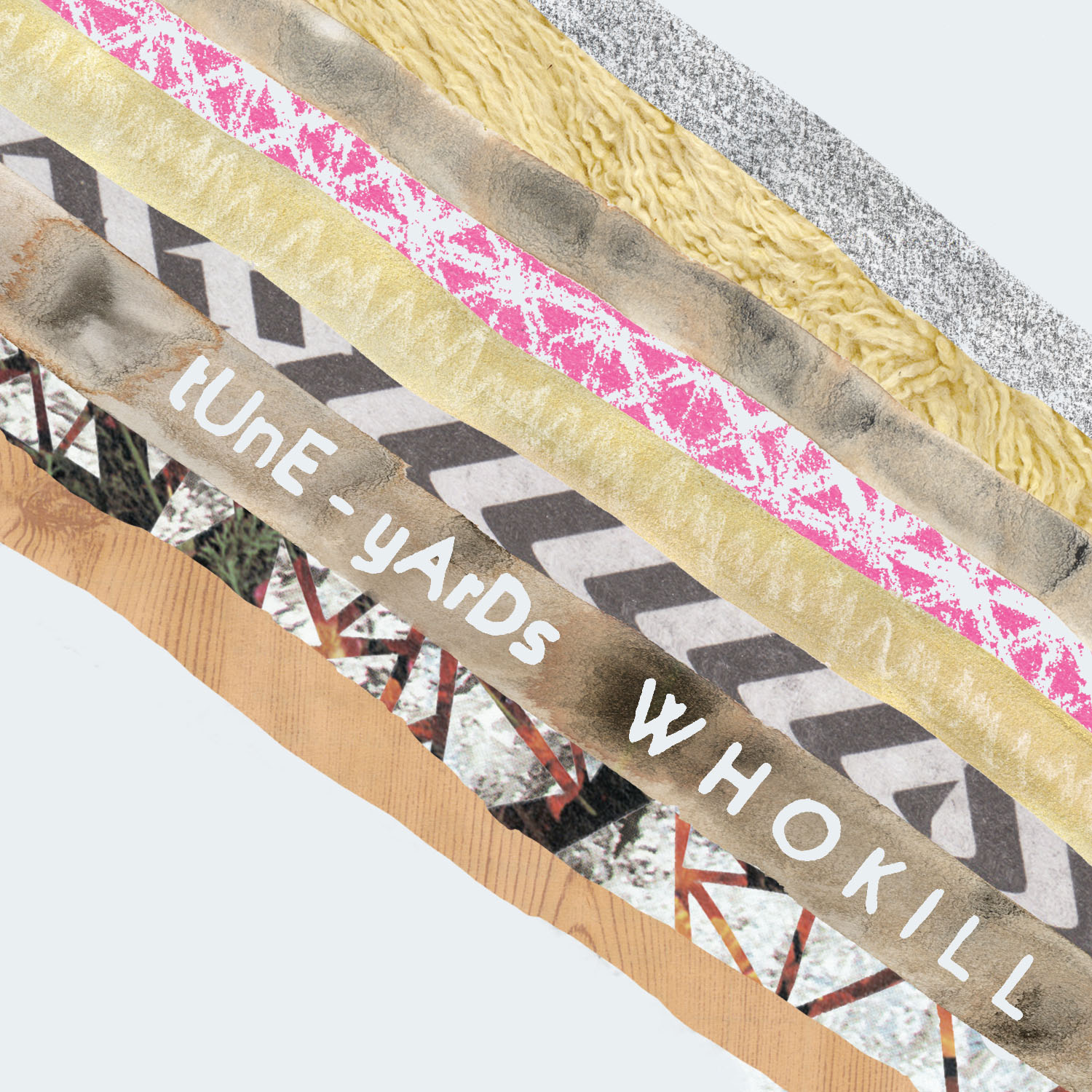

tUnE-yArDs – Whokill – Round 7:Tom’s Choice

For our 7th (!) time around, I chose Whokill by the band with the most annoying name to type in the history of rock music. I chose it because it is a remarkable record.

I suppose that if a relationship with a record is a bit like a relationship with a person, Whokill and me are in our first flush of love, where we can not wait to re-acquaint ourselves, to spend a little ‘quality’ time together. Most of my other choices for DRC are much longer in the tooth, resembling a couple approaching their ruby anniversary – we respect each other, we have our many good days and the occasional bad day, we know when to give each other space but we’re there for each other in our time of need. Will Whokill ever get beyond first base?….Only time will tell, but at the moment things are looking good (and writing this inane drivel has made me realise that owning a record collection is a bit like being a Mormon. Maybe I should move to Salt Lake City and be done with it). I literally can not wait to slap it on the turntable and lose myself in its myriad sounds and ideas. And it needs to be played loud – as in LOUD. This is no shrinking violet!

The last time I felt this way about a record was when I first put the needle to Actor – St Vincent’s amazing 2009 offering. Although sounding nothing alike, the two albums share much common ground. Both are supremely confident records, both unpredictable and surprising and both attempt (and succeed?) to be something that is unlike anything else that has ever been recorded. Which is easy if you’re happy to hit a badger over the head with a croquet mallet whilst stamping in a vat of blancmange, but is more of a challenge if the aim is to make a coherent, listenable and enjoyable album. In my opinion, both of these artists pull this off magnificently.

But whereas Annie Clark’s album has sweet tunes sung by a sweet voice in abundance – admittedly most have been skewered at some point or other – Whokill is possibly harder to pin down. Funky baselines accompany clatter and clutter and a holler that is unlike anything you’ve heard before. In the course of one song, Merrill Garbus’ voice can veer from an (only slightly) female version of Shaggy (the reggae star not the slacker cartoon character – now, that WOULD be something), to a guttural, unnerving roar, to a voice of almost Ella Fitzgeraldlike purity. It really is remarkable.

Whokill is an unusual album as it starts with three of its most awkward, challenging songs – My Country, Es So and Gangsta. Get through these exhilarating offerings and you’re rewarded with one of the albums warmest and most accessible cuts – Powa (described by Nick as ‘almost like a torch song’). Side two of the vinyl is simply stunning – the single, Bizness, is a highlight but, for me, the following two tracks (Doorstep and You Yes You) reach even higher peaks. The album takes an unexpected change of pace and texture on the lullaby Wooly Wolly Gong and then signs off with the typically choatic Killa.

Rob will no doubt want to expand on this (as it was his observation) but Whokill is a bit like an inverse of Bitte Orca by Dirty Projectors. The albums have similarities in terms of their sound but Bitte Orca’s pop sensibilities tend to be hidden deep within its tangential song structures and crazily altering time signatures. It takes a bit of work. Whokill comprises of what are, essentially, ten pop songs which have been smashed to pieces, liquidized, but are still pop songs at heart. It is a truly remarkable record, one that it would be very hard not to have an opinion about, and that has to be a good thing.

Nick listened: I’m undecided regarding what I thought of tUnE-yArDs, beyond the fact that I will only ever copy&paste their name and never faff around typing it ‘properly’ myself. It veered wildly from crazy, multi-directional, non-linear collage-esque sonics (with vocals just as erratic), to much more straightforward blues & soul style songs (sung in a straightforward blues & soul style way – I asked if Merrill was black, although i didn’t expect her to be), seemingly front-loading the oddest three numbers and then (almost) evening out into more placid territory afterwards. I’m aware it’s garnering rave reviews, but I suspect it’s the type of record that needs to be picked-apart to a degree and absorbed rather than fallen in love with straight away. But who knows? People are different.

It reminded me of lots of different things: the Micachu album from 2009; Beck circa Odelay; various blues singers and songs. It didn’t particularly, and thankfully, remind me of Dirty Projectors (I’m really not keen on Bitte Orca). It didn’t really remind me of Actor by St Vincent either though, which is a shame, because I love that record to bits. I felt like it would take me multiple exposures to get to grips with Who Kill, and I wasn’t sure the payoff would be worth the effort.

Rob listened: This was the second time I’d heard the album. I really enjoyed it. Particularly intrigued by her voice which seemed belt out the tunes whilst being weirdly difficult to get a handle on.

Albums which need work to get to know tend have to take their chances with me. Whereas Tom listens 6 times to anything before he’s happy to pass judgement, i’m perfectly happy to be wooed first time around. As Tom has mentioned, ‘Whokill’ seemed to me great avant-garde pop with strange undercurrents, rather than an initially difficult record which slowly reveals pure pop beneath the surface, like ‘Bitte Orca’. I have a feeling, from the way it’s being written about, that this will be top three in lots of end of year lists

Puressence – ‘Puressence’ – Round 7: Rob’s choice

Puressence are one of my great lost bands. I’m personalising that statement because being a lost is nothing special, almost all bands are, and the ‘great’ here refers to their lost-ness rather than making a direct claim to greatness. I do think their first two albums were pretty damned great, but clearly few others agreed, hence the lostness. Is that clear?

So, i’m not claiming objective greatness for them, but it does rankle with me that this Failsworth band sank leaving few ripples when far inferior outfits are cruising the stadium circuit trading on songs without half the shine, scale and punch of this set. The alternative universe in which these guys are rocking Glastonbury and The Killers are kicking around their parents houses wondering where it all went wrong is tantalisingly close and its proximity raises interesting questions about which bands make it and why.

Puressence, the story goes, met on the coach to Spike Island and decided to form a band straight after the gig. Which is pretty cool. As this, their 1996 debut album, amply demonstrates, they had two things going for them. Firstly, they wrote songs with detail and edge and contour but which, pretty unfailingly, all harboured jet-powered hooks which still hit like rockets when they go off. Secondly, they had James Mudriczki, he had the voice of an angel and he knew how to use it and how to counterpoint it against surging rock music. It’s a great album and the follow-up, ‘Only Forever’, was even more direct and catchy.

I’m not sure how this is going to go down at DRC, especially on a night when I suspect Nick might be bringing ‘Magical Mystery Tour’ or similar. My guess is that Tom will be out, but Nick might be in, at least to the extent that he wants to talk about Embrace in relation to this. However, I wanted to bring this at some point, perhaps as an example of the sort of record that won’t make any lists and that no-one else will really remember of care about but that in another world could, perhaps should, have been the biggest selling album on the planet. And we all have one of two of those on our shelves, don’t we?

Track choice: Bonnie ‘Prince’ Billy – ‘You Want That Picture’

Just a wonderful song. It’s only 3m30s and two extended verses long but it manages to be both intimate and profound, bridging between a lovers’ argument and our place in the Universe effortlessly whilst transforming appropriately from a downhome country shuffle to an epic hymn and back again.

Nick listened: I used to listen to, and love, a lot of music like this when I was 16, 17, 18. I knew of Puressence, but for some reason I never investigated them. I knew the singer had an angelic voice, I knew they were serious, surging young men, probably not averse t the word epic, but they passed me by. A few months after this album was released, Embrace came along, and they were the last band of this type that I had any interest in.

Despite having never heard it, I felt like I knew the contours of this record from the get-go, the way the album started, the way it ended, the guitar sound, the moments when things stepped up into overdrive…

It may just be that I don’t listen to music like this anymore, that I feel I have no need for it, but I get the idea that no one makes music like this these days; things seem spikier, shorter, as a rule. Even the likes of Coldplay, and maybe Elbow, seem to be doing something quanitifiably different, more kitchen-sink and less standing on a mountain in the rain.

I honestly don’t know whether I enjoyed this or not.

Tom Listened: I’ve got to hand it Rob…he keeps you on your toes! I’ve known the fella for getting on a quarter of a century now and yet I had no idea he had rousing stadium rock  anthems lurking in the ‘non-loft’ section of his collection. Looking back through his 7 selections so far, it makes Deus seem like a one-trick pony in comparison….amazingly eclectic and challenging. Next week…Mariah Carey sings Big Black?

So, whilst I didn’t get Puressence (although the lead singer’s voice was mightily impressive and would have fitted a band like, say, Wild Beasts a treat….oh, hang on…), I have that nagging ‘Rob likes this so it probably is really good if you’re prepared to give in to it’ thing going on. Because, it pains me to say, he is usually right!

However, 1996 suddenly seems a long time away and records that I have recently turned
to from that era also sound pretty dated these days especially, it seems, those made by the English. As both Nick and Rob have hinted, Puressence’s sound is not easily recognisible in this age of freak-folk, Americana, African rhythms and blurred boundaries. Whilst I don’t think I’ve listened to an album of music like this before (although I did once own Queen’s It’s a Kind of Magic), Puressence didn’t manage to convince me that I had been missing out.

PS The BPB track, however, made me suspect that I have been somewhat lacking in judgement in terminating our relationship in 2003.

Brian Eno – Another Green World – Round 6: Nick’s choice

Knowing that Rob has never knowingly listened to Eno, and being more than a little interested in the pioneering producer (we share a birthday in addition to many attitudes regarding music, and as well as many of his records I also have a number of his iPhone generative music apps, and own a set of Oblique Strategy cards), I was always going to choose one of his records to play at Devon record Club, and it was pretty much always going to be this one (as it’s my favourite). The question was only ever when. Rob’s own house, given that he’s never heard Eno before, seemed to be the obvious choice. So there we are.

I first heard Another Green World while studying at university, and I’ve owned three copies over the years since; that original CD issue, plus the new remaster from about six years ago, and also a 12” LP copy, which I keep framed on a wall. Although me saying of a record “that’s one of my favourite records ever” has become something of a comedy catch-phrase at Devon Record Club, in the case of Another Green World it is absolutely true: I don’t know what the other 49 would be, specifically, but if I was forced to take 50 record with me to a desert island or suchlike, this one is coming with me.

Mythologically, Another Green World bridges the gap between Eno’s early glam rock solo records, like Taking Tiger Mountain (By Strategy), and his later ambient albums, like Music For Airports. In truth, though, Eno actually recorded his first fully ambient record, Discreet Music, before he recorded Another Green World (both came out in 1975, Another Green World in September and Discreet Music in November), meaning that actuality is, as usual, more complex and less linear than the stories we think of as being history. I’ve just read Geeta Dayal’s excellent 33 1/3 book on Another Green World, and she recounts the relationship between the two records, and 1977’s Before And After Science, which is often thought of as a precursor to Another Green World, expertly.

Literally, though, Another Green World does bridge the gap between rock and ambient, being made up of five vocal tracks and nine instrumental ones, the two types of song sequenced relatively evenly across the course of the album (unlike, say, Bowie’s Heroes or Low, which both group the ambient tracks together on side two).

It starts judderingly, with the quasi-funky motions (courtesy in part due to Phil Collins, who may be an odious twat, but who sure can play the drums) and elongated, timeless textures of Sky Saw, and the album slowly becomes more and more gentle from thereon in. The lyrics, when they’re present, mean nothing, and are sung with Eno’s typical flat intonation; Another Green World is almost entirely about the textures, the motions, the architectures: I find the slow, simple chord progressions of and layered sonic materials of The Big Ship almost unbearably moving.

Most of the time I can’t discern guitars from synthesizers from pianos from “electric elements” from “unnatural sounds” from “organ and tape” from “treated rhythm generator” (all of which and more are listed in the sleeve as being played), but the individual elements are not the point here; Another Green World’s genius is in how the components combine, interact, and alter each other through context. Tellingly I have never, as far as I can remember, listened to Another Green World on headphones; I always play it in full, in order, via speakers, whether I’m busy being occupied with other things or trying to concentrate on the album alone.

Interestingly I learnt from Geeta’s book that Another Green World was recorded in a rush, under pressure, with no songs (save I’ll Come Running) prepared in advance, and largely took shape in post-production, as it were, with Eno editing together disparate performances and ideas in a similar manner to Miles Davis’ In A Silent Way and Talk Talk’s Spirit Of Eden, another two of my favourite records ever.

Tom listened: I only own two Brian Eno records – Here Come the Warm Jets and Music For Airports – and they are so different that it is difficult to believe that they have been made by the same artist. Another Green World has been one of my ‘most wanted’ for a long time now but, as a vinyl junkie, my searching has always ended in disappointment. One of the aspects of this record that I found most fascinating (other than the fact that it is totally and utterly marvelous) is that it enables the listener to see the route from Eno’s initial ‘glam punk’ eclecticism to his late 70s minimalist ambient stuff. Rob and I were amazed by the production on this record; to think that this album was released at a time when Mud, The Sweet, The Nolan Sisters, The Bay City Rollers, Brotherhood of Man et al were producing such drivel and yet 35 years on, it sounds as though it could have been released yesterday. An essential record, methinks by one of rock music’s few geniuses.

Rob listened: PiL, The Smiths, Joy Division, The Fall. They got me aged 15 and told me, directly or otherwise, that if it was pre-1976 and it wasn’t the Velvet Underground or the Stooges, then I shouldn’t be listening to it. I obeyed, and even this far down the line I reckon the artists who have genuinely breached that particular line in the sand are countable on one hand (Beefheart, Dylan, Nick Drake, Stevie Wonder… erm… I own ‘Solid Air’ and ‘Astral Weeks’?). If I have to go back and get acquainted with Eno, who’s going to listen to that Archers of Loaf b-sides compilation?

Still, ‘Another Green World’ was full of very pleasant surprises. I expected floating ambience, but instead got sharp, crisp, clever electronic rock music that sounded both timeless and clearly directly influential on much of the stuff we’ve been listening to since its release. I’d buy it, but there’s a Death By Milkfloat double live album out next week.

The Feelies – Crazy Rhythms – Round 6: Tom’s Choice

Every so often something comes along that opens up a whole new set of listening possibilities, revealing a trove of music that had, up to that point, remained hidden or obscured. In the past John Peel, The Melody Maker and, dare I say it, Pitchforkmedia (as it was then) have all had a significant impact on my musical horizons and have introduced me to countless recording artists: some good, some bad and some downright ugly…but mostly good. At roughly the turn of the millennium, I purchased The Spin Alternative Record Guide and, for a while, this became my bible. I liked the way it was so confidently written even if, at times, it seemed to be deliberately willful. I liked that it wasn’t afraid to give ’10’s in its reviews. And I particularly liked the fact that it was crammed full of albums, even artists, that I hadn’t heard of before. My appetite was well and truly whetted and I scoured the local – and not so local – record shops looking for some of those lost jigsaw pieces. I picked up some great records in this time: Wild Gift by X, The Roches’ first album, some Pere Ubu classics, The Mekons’ Rock ‘n Roll, Compilation by The Clean, DB’s Stands for Decibels, most of Elvis Costello’s early records. It was an exciting time. I also managed to find Crazy Rhythms by The Feelies.

Crazy Rhythms is a great record, of its time but still fresh today. It’s one of those records which heralds a new beginning, using what has come before it but moulding it into new sounds and shapes. So, whilst echoes of The Modern Lovers, The VU, Can and Talking Heads can be heard loud and clear throughout this album, the band have a vision that is very much its own and are just using elements of their influences’ music to realise it. Each song is a single groove, no verse-chorus-verse predictability here, and structurally they remind me most of miniature versions of Halleluwah, Can’s epic groove fest. But where as Halleluwah is a sprawling, primal monster, The Feelies’ efforts are tight and spiky.

The album kicks off with a minute of barely audible percussion (the studio equivalent of the sound of a stalactite dripping onto the floor of a cave) that is joined, from way off in the distance, by a buzzing electric guitar that grows and grows and grows so that by the time the beat kicks in, the listener surely has no idea what is coming next. It is as thrilling a start to an album as any (hell, Nick had declared before the first song was out that he was going to buy the record!) and a great statement of intent. If it still sounds amazing in 2011, imagine how it must have felt to have chanced upon this album back in 1980! The Boy With Perpetual Nervousness (the album’s opener) sets the tone for the record, but its peaks are equalled, if not surpassed, by what comes later: Loveless Love, Moscow Nights, Crazy Rhythms itself, all blinding tracks that swell from quiet beginnings to huge, unpredictable grooves. Both Rob and Nick commented on the speed of the playing (fast!) and the unusual structures of the songs.

The Feelies took six years to produce the follow up album; I don’t own it and I don’t feel I need to. Crazy Rhythms is nigh on perfect!

PS…if the person who I lent my copy of the Spin book still has it and is reading this…can I have it back!

PPS…DRC Coincidence of The Fortnight The Spin Alternative Record Guide has their top 100 alternative albums listed. In the list Crazy Rhythms comes in at number 49, Another Green World at number 50. It’s nice to know that my choice was slightly better than Nick’s!

Rob listened: Another thoroughly pleasant shock. Expected this to sound like They Might Be Giants, based only on the observations that they look EXACTLY LIKE THEY MIGHT BE GIANTS. Instead it’s like a thriving cross between Bow Wow Wow, Talking Heads and Neu!. That’s pretty good in my book. Loved the sheer speed of it – boy these guys played fast – and loved the utter disrespect for song structure, replacing verse-chorus-verse with halfverse-extended groove-halfdifferentverse. I confess that once I’d got my head around the approach, I found the second side a little more repetitive, but that would probably open up with repeated listens. As this was released in 1980 it can nestle safely on my shopping list.

Nick listened: As insinuated in Tom’s post, I got along VERY well with this. I’ve only very vaguely even heard of The Feelies, and had no idea what they might sound like. I think I expected something jokey and New Wave, based on the cover (and the fact that Weezer pretty shamelessly ripped it off) and the year of release; to actually be confronted by a load of elongated, elastic, jittery grooves, more in common with CAN than Elvis Costello, was delicious. Like Rob I loved the speed of it too; I remember being told that it was harder to play slow than to play fast, especially when it comes to drums, but I’m glad that The Feelies didn’t feel the need to try and prove that. Something about it reminded me of really early Byrds, too; the energy and pace of stuff like Feel A Whole Lot Better, perhaps. I’ll be buying this when I get back from holiday in June and have some disposable income again.

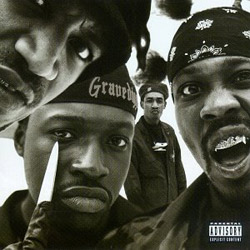
Gravediggaz – ‘Niggamortis’ – Round 6: Rob’s choice

My brother took care of the hip-hop in our house which gave me sporadic access to some amazing music but leaves me with a pretty superficial and now at least 15 years out of date exposure. I still clutch several favourites dearly and follow some names when I can.

Gravediggaz combine the talents of RZA from Wu Tang Clan, Frukwan and Prince Paul from Stetsasonic and Poetic, an unattached New York rapper who has since passed away. His untimely death adds yet further frisson to ‘Niggamortis’, released in 1994, an album about death and horror in which he plays The Grym Reaper, alongside The Undertaker, The Gate Keeper and the RZArector.

It’s notable for a couple of reasons. Firstly, it sounds great. Spooky and atmospheric but always banging, the slasher-movie sound effects are never allowed to overwhelm the cracking beats.

Secondly, it’s a good concept brilliantly realised. Branded ‘Horrorcore’ on release, there’s very little that’s gratuitous in here apart from some of the more lurid imagery. Instead ‘Niggamortis’ is firmly in the George A Romero school. Gravediggaz portray the abandoned urban underclass as ‘the mental dead’ and cast them in a wild zombie flick, taking the opportunity to lay on the gore, but never at the expense of the underlying message of dead-life in the urban wasteland.

Frukwan explained that the group was “digging graves of the mentally dead, and it stood for resurrecting the mentally dead from their state of unawareness and ignorance”. It’s a bleak but blackly funny album and ultimately, I think, empowering.

It’s interesting to listen back to ‘Niggamortis’ at a time when Odd Future Wolf Gang Kill Them All are gaining such attention/notoriety. Both outfits sounds pretty amazing at their best, but whilst the Gravediggaz were certainly a little shocking at the time, they seem less so now, and their schlock horror approach was always intended to drive the message home. You can’t honestly say the same for OFWGKTA at this stage.

Finally, let’s say hats off to Poetic. his performance as the Grym Reaper is daringly unhinged and always worth revisiting. In several verses he sounds like Captain Beefheart’s younger brother (which hopefully will appeal to Tom) and I think the good Captain would have approved. Here’s hoping they’re duetting together somewhere up there or, if you take the Gravediggaz line, somewhere 6 Feet Under.

Tom Listened: My brother liked The Rockingbirds! He didn’t cater to my hip hop needs and I have held a dim and admittedly prejudicial view of the genre ever since I listened to Straight Outa Compton by NWA – a nasty and aggressive record that was being regarded as a joke (and a particularly tasteless one at that) by my listening partners. Straight Outa Compton left such a lingering aftertaste that I have pretty much dismissed hip hop ever since. Listening to Niggamortis (the name doesn’t really do it for me), opened my eyes a little. I was still squinting, but through the slits I recognised a sound that was more complex, musical and interesting than I was expecting. I found the lyrics hard to take and the vocal delivery, whilst no doubt accomplished, was too ‘in your face’ for my tastes (I didn’t really get the Beefheart thing) but this album has made me think about my dismissive attitude and I have subsequently purchased Nation of Millions and Fear of a Black Planet (although I have yet to listen to them). I am glad Rob subjected me to this – DRC, not only there for the pleasant things in life!

Nick listened: I’ve gone through so many phases with hip hop; loving De La Soul and A Tribe Called Quest at 11 years old, Public Enemy and Wu-Tang at 17, Outkast and Missy at 24, dabbling in Jay-Z and Nas’ power struggles and Def Jux’s aesthetic along the way, loving Kanye’s second LP, hating his latest, and basically feeling divorced from the genre (if you can call it a genre anymore; like ‘rock’ it’s now so big that the term is pretty much meaningless) for the last 5 years or so. Partly it’s because I’ve got less and less interest in the lyrics of new music as I get older, and partly it’s because I suspect my tastes are ossifying and I’m feeling less compulsion to keep up with what’s cutting edge or popular. I also think mixtape and download culture has moved hip hop away from the way I consume music, too; the genre has evolved its methods of production and distribution and I’ve stayed still. I’ve never knowingly listened to Lil Wayne. I’ve barely listened to Odd Future.

Anyway, enough about me. In 1997 or so the idea of Prince Paul and The RZA making an album together was right up my street, but for some reason I never got around to buying Niggamortis, even though I always meant to. Maybe it was the gothic / horror imagery? It took me until my 20s to appreciate George A Romero, after all. Listening to it finally at DRC I thoroughly enjoyed the sound of it, especially the way I could pick certain loops or beats out as being RZA-like or Prince-Paul-like, and I could totally embrace the lyrics being analogies for the way that black underclasses are made to feel by society (particularly poignant having been watching a lot of The Wire lately), but I didn’t really feel it, if that makes any sense? Maybe it was discussing it while we were listening to it that was the problem, so that I couldn’t really take in the words. Maybe hip hop just needs longer to soak into my consciousness these days. I think I’ll ask Rob if I can borrow it. I think I’ll revisit 36 Chambers and those Ghostface solo albums.

And the rapper who guests on that Ghostface song whose name I couldn’t remember? Jadakiss! Just came back to me.

Kurt Vile – Smoke Ring For My Halo – Round 5: Tom’s Choice

In typical teacher fashion I set my charges a homework and then neglect to do it myself! A vinyl copy of my new purchase coupled with a week in a caravan in North Wales has not been conducive to completing the required six listens since the meeting (I have probably managed about four) but I have begun to grow into the record and it has started to reveal its secrets with each subsequent listen. My relationship with Kurt Vile’s latest album is now at the stage where I know the songs well enough to recognise the occasional motif/melody/riff, have a sense of the running order of the songs (so that I can anticipate the sound of the next song before it appears) but I am still a long way from making sense of the record as a whole. To me, this sounds like an exciting and interesting album, more enticing, perhaps, than his last release (2009’s Childish Prodigy). It has a breadth of style that the previous album lacked and a poppier side to Vile’s songwriting is revealed in songs like ‘Baby’s Arms’ and ‘Runner Ups’. Vile’s voice is instantly recognisable and at times reminds me of an authentic version of Bobby Gillespie’s somewhat affected Southern drawl. It is also pivotal. Replace his singing with a more anonymous vocal and the effect of the album would be very different – there is no doubt that Smoke Ring For My Halo (the title kind of gives it away) needs to be delivered by a voice that has lived the songs. In my mind, no matter how pretty the tune – and some of them are surprisingly pretty – Beiber would struggle to pull off the cover version! My current thinking is that this album could be special but could just as easily fade away into the background of my collection.

My reasons for setting the condition of bringing a ‘first-listen’ album to this meeting centre on my frequent inability to make accurate judgments of a record’s quality on first listen, something that the format of the club requires on (often) two listens a session. I am amazed at how difficult I still find this, having been through the process thousands (if not tens of thousands) of times. So I thought it would be interesting to document the process of getting to know an album from scratch to see how the listener’s relationship with the album develops with familiarity. During the meeting itself I felt a little disappointed with my choice. Bill Callahan’s Apocalypse sounded to me to be one of his very best (and that’s saying something) and Zaireeka was more like a religious experience than a record! So poor old Kurt Vile never really stood much of a chance; I truly believe nothing can measure up to the sound of Zaireeka and Apocalypse’s twists and turns made Smoke Ring For My Halo seem a little linear and predictable. But maybe the comparison is unfair, perhaps a little like comparing Citizen Kane to Inception 3D or something (note, I am not saying that SRFMH is the musical equivalent of Citizen Kane). However, as I have subsequently listened to SRFMH, the gap has closed, Zaireeka’s sonic assault has faded (although I am not sure the neighbours would necessarily agree) and Kurt Vile’s songs have revealed a complexity and warmth that was not evident to me on first listen. God knows how the professional reviewers ever reach a decision when having to award stars to records!

I am going to buy Apocalypse, I am going to carry on listening to SRFMH and I will return to update this post when I have got to know both albums properly*.

* Zaireeka is obviously going to have to wait.

Nick listened: I feel amazingly sorry for Kurt Vile, because I can remember almost nothing about this record given what followed at this session: Zaireeka blew everything else out of the water, and while I’ve listened to the Callahan a few times since, I’ve had neither chance nor inclination to revisit this. I was expecting it to be more gnarly, more noisy, but instead can only recall it being pleasant if nondescript alt.country. Sorry Tom, sorry Kurt!

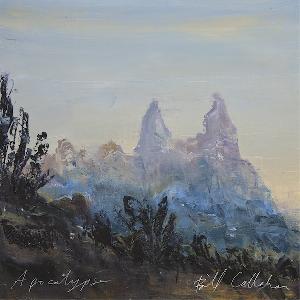
Bill Callahan – Apocalypse! – Round 5: Nick’s choice

I bought this especially for DRC while I was in London the day before the meeting at which it was to be played. Finding a record shop in Covent Garden proved more problematic than it used to, as they’ve seemingly all been replaced with Fred Perry vendors. I was wearing a Fred Perry at the time and felt this was a bitter irony directed personally at me. Apocalypse! was still shrink-wrapped when I arrived at Tom’s house, as per instructions to bring something unplayed. I’d not heard a note, though I had read a couple of things which pointed out longer songs and looser structures than Callahan had used before.

I only started listening to Callahan once he started using his own name; I’ve heard, to my knowledge, no Smog records at all. I quite like Woke On A Whaleheart, but I adored Sometimes I Wish We Were An Eagle, so I was looking forward to Apocalypse.

Tom has asked that we only write these pieces after six listens; I’m on two plays (DRC and one other), but frankly if I wait for six it’ll never get done, and anyway, Zaireeka really strafed everything else played or discussed last Thursday into tiny little bits. And what’s DRC without some rule-breaking?

So, Apocalypse! is looser, and the songs are longer, Callahan’s voice is still deep and rich and dry and wry and, to my ears and brain, more than a little sardonic. I had an interesting twitter chat the other day with someone from The Quietus and someone from NME about whether the song America (and specifically its lyrics) is good or bad, or funny, or ironic, or heartfelt. We concluded that it is good, and funny, and ironic, and heartfelt, all at the same time.

I am struck for some reason, and I’m not sure why, having played them both back-to-back at the weekend, that Apocalypse! is “about” guitar, both texture and melody, in the same way that …Eagle is “about” drums, both dynamics and rhythms. I’ve enjoyed it thoroughly both times I’ve played it, and I look forward to playing it more – it feels very much like a grower, although the textures, instrumental variations, and words are appreciable from the off. But I need to write this now, because it’s hanging over me like a piece of homework and I need to blitz it out so I can get onto my next thing I want to write.

Sorry Tom!

Tom Listened: This was brilliant and I am going to buy it. On vinyl. So there.

More later…..

(Footnote: Both the Kurt Vile album and this had at least one song that had a ‘Van Morrison when he was good’ vibe going on. Strange as he has drifted out of fashion in recent times – when I started getting interested in alternative music, back in the late eighties, most issues of Melody Maker would mention Astral Weeks at some point or other. Thought it was worth mentioning – possibly another DRC weird coincidence?).

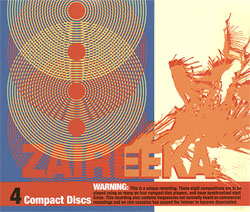
The Flaming Lips – ‘Zaireeka’ – Round 5: Rob’s Choice

When Tom chose ‘albums you’ve never listened to before’ as this week’s theme, there was only one choice for me. This is the album that Devon Record Club was made for.

I bought ‘Zaireeka’ when it came out in 1997. It’s taken 14 years for me to get enough like-minded individuals together to actually play it. ‘Zaireeka’, you see, is not a normal album.

You know all this already, and if you don’t i’m not going to go into great detail. If you’re really interested you should buy Mark Richardson’s excellent book on the subject. Mark was good enough to tweet into our little listening party which really helped to create the sense of event which ‘Zaireeka’ was conceived to deliver.

The album comes on 4 cds, all of which must be played at the same time. That’s difficult, maybe impossible, to achieve with fewer that 3 people, which immediately breaks out of the album as solitary experience. You have to have friends round to listen with you or else you simply can’t listen. Even tougher, you have to stop the thing and restart after each track. As Nick enjoyed explaining to us, and as Mark pointed out from across the Atlantic, CD players spin at 5000rpm, so they are all working at very slightly different speeds. The difference is undetectable when listening to one song on one player, but leave four blaring at the same time and they’ll surely drift apart over the course of a full album, leaving you with total cacophony by the time the final track rolls around.

So, not only did I have to bring the CD, I also had to bring 3 CD players to make playback possible. Cue ten minutes of frantic wiring, plugging, positioning and generally scurrying around like fat kids in a sweet shop and we were ready to go.

I expected to be disappointed, or at least not to be surprised. I guess I expected to hear a bunch of slightly woozy, off-kilter Flaming Lips songs. That would have been pretty good for me. We got so much more.

It’s not an easy experience to describe, and again, that speaks to what a wonderful success the whole enterprise is. You just have to be there. Far from just a crazy way to present the album the Lips wrote between ‘Clouds Taste Metallic’ and ‘The Soft Bulletin’, ‘Zaireeka’ is the real deal: something completely other. Sonically, conceptually and intellectually on a totally different plane from anything i’ve been amidst before or since.

The sound rises and falls, grows and dies, whirls around you. It’s tough to imagine what it’s like to be in the middle of it and now i’m out of it, it’s tough to recall. So much more intense and physically affecting than I could have anticipated, I was taken totally by surprise by the sheer intensity of it. At times the volume of sound is quite shaking and the running around we found ourselves doing, trying and usually failing to identify which speakers were threatening to bring the walls crashing in so we could turn them down, just raised the sense of performance.

The only real comparison I can make it with being in the middle of a classical concert performance, with sounds coming from all around you in overwhelming quantity. It’s unlike anything you’ll have heard before, and totally amazing and joyously surprising for that very reason.

In the middle are what sounded like pretty decent, if out there, Flaming Lips songs. They struggled to get the recording sessions going until they realised that they had to record for the 4 channel format rather than just disassemble existing songs to fit. And boy did they open up a can of sonic whup-ass. Never knowingly under-cooked they shot for the moon here and ended up somewhere west of Jupiter.

That’s enough hyperbole from me. I could go on and on. I won’t. Find someone who has the album and organise to play it with them. They’ll thank you and you’ll thank me.

Other notes:

Marge, our dog, was with us. I’ve never seen her react to music before. At times she sat in the middle of the set up looking urgently from speaker to speaker following the currents around the room. And that was before the dogs starting barking…

Think about what an achievement it is to conceive of a record that can only work as a live performance, which will be different every time you hear it and which demands you get together with other people just to begin to play it. Then imagine that the band who conceived it went ahead and made it 100 times better than it needed to be.

We agreed, as we talked, that The Flaming Lips are a much better live experience (perhaps the best) than they are an album band. ‘Zaireeka’ destroys that distinction. Hail them, laud them, carry them shoulder high.

Nick listened: I had announced, in Rob’s car on the way to Tom’s house, my intention to play ‘Zaireeka’ next time I hosted Devon Record Club, as I have a lot of stereos and had just read Mark Richardson’s book, which he sent me a copy of because he liked the sound of our little club, and it seemed like the perfect record for an arrangement like ours. Rob kept magnificently schtum about what was in his bag.

I was delighted that Rob had brought it though, despite him scuppering my plans, because ‘Zaireeka’ is a remarkable thing. Unlike Rob or Tom I’ve actually heard it before; a couple of times at university, when my housemates and I pointed each bedroom-stereo towards the landing, and once at home, with Emma, a similar array of motley sound-emitting-devices scattered about my parents’ home and us brandishing two remote controls each… I’ve also heard a stereo mixdown of it a couple of times, burnt to CD and given to me by a friend who is a ravenous Flaming Lips fan (the mixdown completely misses the point). So I knew what to expect, even though you can’t expect anythign with this record.

I’ve already written some of my thoughts on our listen to ‘Zaireeka’ as part of last week’s #musicdiaryproject, so I wont go into it too much more here, except to say that it really is an extraordinary, overwhelming, physical experience. I think part of my fascination with fidelity is down to trying to achieve that sense of being consumed by music that ‘Zaireeka’ gives you, that tidal wave of sound that engulfs you and your collaborators in listening from all sides. As Rob suggested, I’m not bothered by The Flaming Lips on record, as much as I’ve been smashed into emotional pieces by them live, but ‘Zaireeka’, though one can only ever hear it properly once in a blue moon, is really something else.

Tom Listened: I became aware of Zaireeka when it was released but as I recall, the reviews at the time focused mainly on the gimmick rather than the effect…although I may be wrong. Whatever, as someone who never really got The Flaming Lips on record, I had always considered Zaireeka as something I could quite happily do without. It turns out I was right to think this in as much as I can now never listen to any of my other albums and feel fully satisfied! Listening to Zaireeka is the aural equivalent of opening Pandora’s box and for the first time in a long time I was blown away by a musical experience. It had nothing to do with the songs. On flat, tinny, single CD format I am not sure I would be bothered to listen again – I just don’t connect with Wayne Coyne’s whimsical flotsam. It was all to do with the sound, which is just phenomenal and, at times, I truly felt as though I could see the eruptions of noise as they ejaculated a torrent of sound from nowhere in much the same way as a lava lake might operate.

To sum up, it seems appropriate to draw a comparison between Zaireeka and heroin – the pleasure it brings may be intense but  may make you feel that all that came before is a pale imitation.

For the record, I have never taken heroin.

Guided By Voices – ‘Bee Thousand’ – Round 4: Rob’s Choice

I reviewed ‘Bee Thousand’ when it was released in the Summer of 1994. I’ve tried hard to find a copy of what I wrote, but it’s proving elusive. I had hoped to look back and find my younger self seeing clear-eyed through the tape-hiss and four-track glitches to the heart of a great rock record. perhaps it’s best I don’t catch up with what I did end up committing to print, but I’m pretty sure even then I had a feeling that there was something special about GBV.

‘Bee Thousand’ is the band’s seventh album and was intended to be their last. Robert Pollard was fed up with keeping a band together and ready to return to his teaching career and ‘Bee Thousand’ was recorded to collect the odds and ends left over from GBV’s previous ten years together. Instead it gathered increasingly enthusiastic coverage, catapulting the band into a further decade of recording and Pollard into the heart of the indie rock firmament.

It’s a remarkable album that raises fascinating questions about conceiving, writing, recording and playing rock music. Is Pollard peddling pastiche or is he channeling tunes direct from the heart of British Invasion rock? How can the band bang out songs so poppy, so perfectly melodic, apparently by the yard? 20 songs in 35 minutes! Short, sketchy songs yes, but perhaps any other approach would fail them.

I stopped keeping up with GBV a couple of albums after Bee Thousand, but by then they had repeated the same trick across at least 4 great albums. Listening again in preparation for the Record Club, I was particularly struck by how these songs, these scraps of harmony and rhythm, are the absolute opposite of the disposable throw-aways they should by all means be. They get richer and more rewarding with every listen and every year.

I’m a romantic when it comes to music. Some might describe Robert Pollard as an imitator, a copyist, a lo-fi chancer trading in scratchy punk-pop fragments. When I listen to ‘Gold Star For Robot Boy’, ‘Echos Myron’ or ‘Buzzards and Dreadful Crows’ I prefer to think he’s a magician, pure and very simple.

Tom Listened: It’s a long time since I listened to a prime era GBV album for the first time and I am not sure I can remember how it felt. Certainly, Under the Bushes…. is a much more straightforward beast by comparison and now that I’ve listened to Bee Thousand I can see how Alien Lanes is very much the bridge between the two, mixing Bee Thousand’s tangential skewdness (?) with Under the Bushes pop sensibilities. Bee Thousand is probably the album I most want to own that I don’t already and, although there is NO WAY anyone can make sense of it on a first listen, I am certain that I would still be listening to it regularly (and finding something new every time) in a decade’s time.

Nick listened: I strongly suspect that Rob has been absolutely gagging for the chance to play something this lo-fi on my hi-fi, given my reputation for being such a sound-geek, and, if he suspected that GBV’s aesthetic would be like sandpaper to my brain, then… well, he wasn’t a million miles away, but he wasn’t entirely correct, either. If anything GBV sounded worse than I had expected or feared; the term “lo-fi” has come to mean something different in the 00s than it did in the 80s or 90s, and Bee Thousand sounds absolutely nothing like the last No Age album (which I love) for instance. It literally is like someone playing a broken guitar, someone drumming with pencils on a damp paperback, and someone else mumbling, while they record it on a dictaphone with a cardboard box over it. Looking at the credits, I was astonished how many members GBV had. So I confess that I did find the sonic aesthetic off-putting; it was like having auditory cataracts or something. But I didn’t hate Bee Thousand. I didn’t find it to be the messy, lo-fi Beatles-esque pop classic Rob painted it as either, but I was intrigued by the modus operandi of it, and plenty of the tracks were catchy and melodic beyond the scuzz. Beyond the scuzz, though, it seemed like, with the way the songs, so short, so quick, so cut-up into little chunks, so breaking-up-like-radio-static before your ears, were composed as well as presented, that Bob Pollard was trying his damnedest to obliterate them and make them unlistenable (but in a different way to Alex Chilton, say, on Sister Lovers), and I can’t understand why; is he ashamed of his songs? Scornful of his potential audience? It seems a little churlish to so wilfully do this to your music when people like Ron Sexsmith are desperate to move in the other direction. I’ll have to take Rob & Tom’s words for it that the melodies and tunes seep through and infect your brain after multiple listens, though, because I can’t really see myself digging any further with Guided By Voices…