The Associates – Sulk – Round 10: Tom’s Selection

The late 80s and early 90s were a time of musical epiphany for me; not so much for the newly made music I was acquiring (although much of that was great) but more due to my realisation that, with an open mind and a bit of effort vast troves of undiscovered sonic treasure were lying in wait. I loved to pore over the music papers reading the band interviews intently, trying to determine the influences of my favourite new group, the albums they regarded as inspirational, and I soon realised that these albums tended to be much better than the record that was actually being plugged by the band in interview.

So, whilst I had a thing for Spacemen 3 at the time, the music they introduced me to through their interviews (Suicide, Television, Stooges, Can, Modern Lovers and many more)  has been played far more regularly in my household than, say, Recurring or Playing With Fire. The touchstones come in and out of fashion (I haven’t seen, for example, Starsailor or Astral Weeks referred to much in the last decade – two albums that were omnipresent in the British music press back at the turn of the 90s), but the weight of history is (almost) always a good judge of what constitutes a ‘classic’. However, the major music publications seem to have a frustrating tendency to gravitate to the canon – do we really need to be told that ‘Blonde on Blonde’ is a great album, yet again – so for the real gems, those wonderful records that have slipped into obscurity, I found the artists themselves to be a rich and surprisingly reliable source.

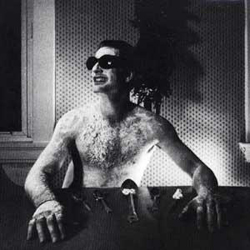
I can’t recall when I first became aware of Sulk (I don’t think it was through the Spacemen 3) but I do remember finding it on many occasions in second-hand record shops and walking on by, perhaps thinking that the last thing I needed in my collection was a load of sub-Duran New Romantic twaddle. It was also one of those records that appeared so frequently that I always thought to myself, ‘I’ll get it next time’. And then eventually it stopped turning up. And so I really wanted it. And I couldn’t find it! By the time I eventually secured a copy of Sulk, my levels of anticipation had become dangerously high, beyond that point where the outcome could normally be anything other than disappointment…at least that would be the case with most ‘ordinary’ records. But Sulk is anything but ordinary. Yet another ‘one off’ (they seem to be cropping up every meeting, these ‘one-offs’), Sulk is surely the weirdest, most challenging music ever to be referred to as ‘pop’. To echo my comments about Nick’s Rita Lee record from the last meeting, it is almost inconceivable these days that a record like Sulk could shift sufficient copies to reach number 10 in the album chart and stick around for 20 weeks.

The album itself is curiously put together, book-ended as it is by two instrumental tracks (‘Arrogance Gave Him Up’ and ‘nothingsomethingparticular’) – ironic considering Billy Mackenzie’s unimpeachable singing voice! Time hasn’t been as kind to these tracks and their reedy synths and tinny drumming, whilst nodding back to Bowie’s ‘Low’ and ‘Isi’ by Neu, in no way reflect the gargantuan complexity and thrilling innovation abundant throughout the album’s core. But as soon as the opener, Arrogance… finishes, it is clear things are going to be strange. ‘No’ begins with 30 seconds of unsettling guttural noise before erupting into a doom laden world of minor chords and ominous vocals that manage to sound both stately and otherwordly yet not crap (ie as in Goth). From thereon Mackenzie  is unrelenting, battering his audience with yelps and howls before suddenly diving into the depths of his remarkable four-octave range. The music is skittery yet magisterial, at times disorientating and always fascinating. To appropriate the words of one of my fellow DRC members Sulk is ‘one of my favourite albums ever’. Sub-Duran New Romantic twaddle this most certainly is not!

Nick listened: That opening paragraph, if you pushed the dates back a decade, could be something I would write, almost spookily so.

Anyway, once again Tom has chosen an album that I have owned for years but never listened to properly; I bought Sulk alongside Fourth Drawer Down probably six years ago or more, both albums together for a fiver or something, purely based on vague internet renown for the former album and Billy Mackenzie’s voice. Rob and Tom were insistent that I’d recognise Party Fears Two; I didn’t.

Sulk itself is, as suggested, a bizarre record: the drums seem too quick, too chaotic, for the songs; the synths and keyboards are somewhere between Bowie’s Berlin years and the worst 80s Miami Vice cheese, triggering cognitive dissonance regarding one’s taste; Mackenzie’s voice, and what he’s singing, are so flamboyant and strange as to seem avant-garde, yet we’re told this is pop? I think it’s only pop because it isn’t something else; pop by default.

Did I enjoy it? I was confused by it, which is a good sign, but I’m not sure what I thought of it yet. Like Pere Ubu, I’ve got the CD out of my racks and put it in a little pile mentally marked “to listen to soon”. Sadly I think Tom’s, and often Rob’s, choices suffer to my ears because of my antipathy to vinyl; that vinyl warmth that so many people love is like a veil over my ears on first listening, and I don’t feel like I’ve been able to hear the record properly a lot, especially if it’s in any less than terrific condition. I’m going to get teased for being a fidelity snob again…

Rob listened: Weirder than Nick’s Brazilian? Quite possibly. Either way, this is becoming a theme of the Club: records which either sound, or get filed as, ‘pop’ and turn out on revisiting, or closer listening, to be madder than a beach ball full of speeding frogs. I knew the two singles from ‘Sulk’ and ‘Party Fears Two’ is a fave, but hadn’t heard the album. It’s surprising. Had it been released in the last five years the critics would have been falling over themselves to praise its polyrhythmic precocity and we would assume The Associates were both wildly creative musicians and bulging-brained boffins. I haven’t looked back at the reviews, but I suspect back then they were just considered noisy Dundonians.

Anyhow, by far the major theme of the Club thus far has been the examination and revelation of how we listen to and discover music. Tom’s post and Nick’s response made me realise one of the key differences between their approaches and mine. Although in many ways we have ended up in the same places, amidst the hurly burly of discussion over the last 6 months, I’ve found myself wondering whether the way they seek music differs in some fundamental way to the way I do. Now I understand. When I read interviews, reviews and lists, and register the names of the bands and albums that have shaped the bands and albums that I love, I rarely, if ever, go looking for them. I’m never intrigued by a band’s advocacy of some long-lost obscurity whilst I am always irritated and dismayed when artists and articles talk about new bands they have discovered and of whom i’ve never heard. I love to read lists as much as they do, but when I scan them I do so looking for affirmation of the records I already have, rather than rare unseen names waiting to be learned and investigated.

I’ve thought a lot about this over the last couple of days and I could go on at even greater and more tedious length, but that’s what our meetings are for.
The Necks – Drive By – Round 10: Nick’s choice


Wow, round 10 already; it seems like we only started doing this the other week, whilst paradoxically also feeling like Devon Record Club has been around forever. Intriguingly, my choice this week evokes a similar musical sense of eternal repetition and perpetual change and newness.

Drive By by The Necks, like the Rita Lee album I chose last time around, was a record that struck me as being perfect for DRC back when Rob first mooted the idea, even if it does contravene etiquette by being 17 seconds longer than the allotted 60-minute running time in our rule book. I first came across it, and them, in January 2004, when an article in The Guardian intrigued me.

The Necks are a 3-piece “improvisational trance jazz” group from Australia, who occupy a bizarre and, as far as I can discern, unique landscape somewhere between ambient music, jazz, minimalism, modern classical, and a whole host of other things. They’ve been together for more than 20 years, releasing over a dozen records. Almost all of those albums consist of a single, hour-long improvisation, some recorded entirely live, others with overdubs added later.

As with many artists, my first exposure to The Necks remains my favourite; I own another 5 albums by them in addition to Drive By, all slightly different, all very similar, all very, very good indeed, but Drive By is the one I go back to most often; and I go back to it a lot. If I could scrobble my CD players, I’m pretty confident that I’d have played this record more than any other single album in the last 7 years. When I worked in the film & music department in the library, and we played music for our patrons, this was the record that garnered the most comments – from students to shelvers, it seemed to intrigue and beguile everyone who heard it.

Which is fascinating, because the very nature of what The Necks do makes their music incredibly hard to discover; you won’t hear them on the radio, or find them on YouTube, and any 30-second snippet of their music you might preview on iTunes would make no sense, because what they do needs to be consumed whole, whether you’re paying full attention to it or just embracing its utility as background noise. The Necks perfectly fit Eno’s description of ambient music as being like a painting; it can be in the room with you and you can ignore it, face away from it, but it still shapes the colour and mood of the room around you; or else you can stand before it and become absorbed. At the same time as being ambient, Drive By, and much of their other work, is also intensely physical, groove-based, rhythmic.

A quote from Lloyd Swanton, the bass player, describes some of the band’s own aims: “We’re not at all offended if someone falls asleep [at one of our gigs]. We are trying to conjure that trance-like state just before you do nod off. I believe it’s known as the ‘alpha state’, where the normal barricades between the different parts of your brain start getting broken down, and so you make all sorts of connections that wouldn’t be made if you were alert. That’s actually a very rewarding and rich state to be in, so if people can hover there, that’s fantastic.”

Rob listened: Despite the flagrant rule-break, I loved this. It’s also the only time my wife has walked into one of our meetings to tell us how much she likes something she’s hearing through the door. It generated an interesting but ultimately possibly futile discussion about how we ‘use’ music, which Nick has outlined above. Futile, I reckon, as the fact is that we all just enjoyed the piece, both in its entirely and in the detail of the playing and the pleasure of its minute-by-minute unfolding.

Tom Listened: I too thought this was a great listen, even exclaiming at one point (around the seven hour mark, or something) ‘this is brilliant!’. It must be to sustain interest with such subtle shifts between phases; very little changes from one minute to the next and then, all of a sudden, you realise that what you are listening to is completely different to what you were listening to five minutes beforehand. It’s a kind of uberwatchingthepaintdry alchemy that should be as boring as…my maths lessons…but somehow is a riveting, yet relaxing, listen.

There is a problem though. I enthusiastically borrowed Nick’s CD after the meeting fully intending to listen to it lots. I have yet to find the right circumstances to put it on. With a hectic family life, lots of cycling/climbing/gardening, work, half hour long journey to work, ferrying the kids around etc etc, I literally haven’t yet found an hour (and 7 seconds) when I can sit down down and give this album a full spin. I don’t want to listen to half of it, so I do wonder whether it would get played much given my current life circumstances. In ten years time, when the kids are full time loiterers up the park and my body has fallen apart, I’ll probably own every album The Necks have ever made and listen to them regularly.

Echo and the Bunnymen – ‘Ocean Rain’ and ‘The Idolness of Gods’ – Round 8: Graham’s choice

Will keep it brief as it is so late as a result of a little technical difficulty and a lot of laziness!

Initiation ceremony over, I humbly unveiled my first offerings to veteran members. Having been drawn to the Bunnymen by the successful singles from their 3rd album, “Porcupine”, I invested in “Ocean Rain”.

At the time it received many plays, though I’m not sure it was truly appreciated until many years later. Compared to the offerings from similar bands on the verge of “big time”, this was not what I was expecting.

As for the band’s own claims at the time that it was the “greatest album ever”, this probably did more to lead to the album not being given the full credit it deserved. However, aside from a few “Doorsish” departures on “Thorn of Crowns” and “Yo-Yo Man”, it still sounds fresh, interesting and highly original to me. A combination of “pop”, drama and lush playing and lyrics fills the majority of the album. “My ship’s a sail, can you hear its tender frame, screaming from beneath the waves?”, being a personal favourite from “Seven Seas”.

The album is again being toured in its entirety some 27 years later, so maybe it is finally receiving a more rounded level of appreciation as Ian McCulloch’s witticisms mellow (very slowly) with age. On that note, my follow up track, some 26 years later, was “the idolness of Gods”, from 2011’s “The Fountain”.

This album was remarkably bright, breezy and “poppy” for a band in their early fifties, much to do with the production from John McLaughlin (see Busted, 911, Five etc!). Nestling at the end of the album was this track which harks back to earlier days. But with the title of the track you could imagine that “Mac the Mouth”, is sending a message out to young pretenders to his crown!

Enjoyed both Spoon and Arab Strap, and inclined to listen again to more of their output. Apologies to Tom, however Pere Ubu still leaves me a little cold. I tried hard to like them when the NME was telling me to back in the 80’s, but I’m yet to get on board.

Tom Listened:  Back in the day I railed against most of the music my peers were listening to often, admittedly, without giving the music a chance. At the time I was determined to dislike The Smiths, Bruce Springsteen, Prince and The Dead Kennedys simply on the grounds that they were commonly played on the 6th form Common Room stereo by OTHER people (Half-Man Half-Biscuit were the exception…EVERYONE liked them!). Sometimes disliking these bands took real effort as, despite myself, I found myself enjoying some of their songs (although, obviously, never admitting it to anyone else). However, I was always relieved that my dislike of U2 and Echo and the Bunnymen was never seriously tested. Even if they had produced the most amazing music I’d ever heard (‘the greatest album ever made’!?!), Bono and McCulloch’s huge egos and seemingly bottomless reserves of self-importance ensured that my resolve was never remotely tested. They were just so easy to dislike.

Perhaps this was my loss. New Year 2011. I put together a music quiz to bore/terrorise my friends with and whilst looking for suitable fodder from the Pitchfork 500 collection, I’ll be damned, The Killing Moon sounded incredible. Sharp and clear on modern, expensive equipment, melodic and timeless, it revealed itself to me at last for what it really was – a fine example of 80s pop, all the better, perhaps, for being freed from its context and distanced from its creator’s bleatings. So I was keen to hear Ocean Rain by the time Graham announced his choice to us.

The album, to me, hasn’t fared as well as The Killing Moon. I sensed that it was a grower and that it would take more than one listen to be able to judge it properly, but some of the tracks seemed on first listen to be a little dated and, unsurprisingly, pretentious. That said, I would certainly welcome the chance to get to know it better and see whether my middle aged self is able to see past what my teenage self couldn’t!

Nick listened: I know Ocean Rain well and like it a lot; I’ve been down in the Cornish cave where the sleeve photo was taken, holding a piece of string tethered to a rickety dinghy in that subterranean pool, the guitarist of a band perched, petrified, in the dinghy, camera pointed at him and being asked questions. Daft. So is the record; c-c-c-cumber, c-c-c-cauliflower, etc etc. It’s the daftness, allied with the grace and delicacy, that makes McCulloch’s rampant twatness stomach-able on this record, but not really on any others. Because whilst I like little bits and bobs of other Bunnymen records, the occasional song or two, none of them approach this; at times magisterial, grand, and ornery, but also aware of its own silliness.

The more modern single I didn’t like one bit, though, I’m afraid; it seemed the type of stodgy, staid, unimaginative post-Coldplay dadrock that I feared the Bunnymen would be making in 2009, with none of the sparkle, space, or strangeness of Ocean Rain.

The Afghan Whigs – ‘Uptown Avondale’ – Round 9: Rob’s EP choice

Afghan Whigs - Uptown AvondalePerhaps this would have been better chosen for the ‘decade of progression’ round, as it captures a band at precisely the moment when they dropped what they were doing and grasped their destiny. By the time they called it a day the Afghan Whigs had established themselves as fine alchemists of 90s guitar rock and bleeding 60s/70s soul. The route to their ‘Black Love’ and ‘1965’ albums begins in ‘Uptown Avondale’, the 1992 EP comprising four cover versions of Motown-era classics – ‘Band of Gold’, ‘True Love Travels on a Gravel Road’, ‘Come See About Me’ and ‘Beware’.

Listening back, and knowing where they went next with ‘Gentlemen’, you can almost hear the band cutting loose and declaring ‘THIS is who we are and THIS is what we want to do’ They forge new ways to meld the blank stare of grunge and the subtextual bleakness of soul, nowhere better than on a desolate version of ‘Band of Gold’. Hear the wheelspin as they power off towards the future they’d been waiting for.

Nomeansno – ‘Wrong’ – Round 9: Rob’s album choice

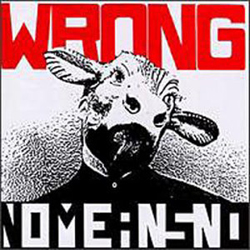
Nomeansno - WrongNomeansno are a group of contradictions. The brothers Wright grew up in British Columbia apparently listening to jazz and prog rock, but by the time they came to form the band punk had detonated like a dayglo nuke up and down the West coast of America. Starting out with just bass, drums and vocals they developed a style that was as progressive and arresting as it was influential. By the time they recorded ‘Wrong’, their fourth album, they had it absolutely nailed.

It’s a killer. By turns fiendishly complex and frenziedly heads-down it’s nonetheless never less than a gripping, white-knuckle ride. By this point the band were a three piece, with guitarist and co-singer Andy Kerr, credited here as ‘None of your fucking business’, helping to hone the slashing edge of their chainsaw punk. The playing, through the twists and turns and switching signatures, is exhilaratingly tight.

Their success is in resolving so many polar opposites within their music and lyrics to such an irresistible synthesis. Their sound is bass-driven and spiky yet shackles both jazz-crazed changes in tempo and operatic high drama within its blistering body blows. Conceptually Nomeansno are both too smart for their own metaphysical good and as dumb as a bag of hammers (or a bunch of teenage hockey hooligans – see their alter egos The Hanson Brothers). They simultaneously lay bare the human condition in all its bleakness whilst driving home a clear conviction that the only way to deal with the inevitability of our own annihilation is to blow a raspberry in its face and laugh. The gleeful wordplay and controlled goofiness that would characterise them from this point on begins to come to the fore on ‘Wrong’, but it is never overplayed, taking a back seat to the sheer, joyful rush of the band’s giddy, whirling, jabbering, slam-dancing noise.

Tom Listened: I was surprised by how much I liked this. When I first met Rob, back in the late 80s, he was very much the hardcore king (musically at least…not sure about his other interests) and I must admit that I had assumed Nomeansno were just another one of Rob’s ‘bleak shouty bands’ that were prevalent at that time. The reality was much more melodic, humourous and interesting than I was expecting suggesting that either Nomeansno are not one of Rob’s ‘bleak shouty bands’ or that Rob’s ‘bleak shouty bands’ are not actually all that bleak or shouty. The vocals very much reminded me of D Boon from The Minutemen (ie not shouty at all), and whilst the guitars do sound driving there are enough variations in texture and tone to make them a riveting listen, at times reminding me of X at their most exuberant, elsewhere reminiscent of the Stooges at their Dirtiest. I’m not sure whether it is down to the fact that Wrong reminded me of the Minutemen or not but I expected the songs to be much shorter than they were, and maybe I would have preferred it if some of them had been a little punchier, but that small criticism aside, this earned a sizeable (and unexpected) ‘thumbs up’ from me.

Nick listened: I was surprised too, especially as Rob seemed to think, mischievously, that I’d hate it! In fact I liked it so much that I bought it online before we’d even got quite to the end of it. I heard pre-echoes of Kyuss, of Dismemberment Plan, and post-echoes of some of Miles Davis’ more rampantly aggressive 70s electric material (bits of Dark Magus, Live:Evil). I’ve listened to it once since it arrived, in the car, and enjoyed it again.

My Bloody Valentine – Isn’t Anything / You Made Me Realise EP – Round 9: Tom’s Selection

My Bloody Valentine. Well, it had to happen sooner or later! Seeing as I haven’t acquired an EP for a considerable time, Nick’s request for our 9th meeting seemed like an ideal opportunity to go back to one of my late 80s obsessions – MBV – and a time when I would readily snaffle up anything that the Melody Maker suggested was great, irrespective of format. As a result, my My Bloody Valentine collection currently has EPs outnumbering LPs and, I would guess, this situation is likely to remain as it is for a fair while yet!

Of the the three MBV EPs I own (You Made Me Realise, Glider and Tremelo)  the former is by far my favourite but then, let’s face it, it was made by a band at its peak. A controversial statement perhaps, but listen to the records!

Having played You Made Me Realise followed immediately by Isn’t Anything at DRC, I was surprised at how different they sound to each other. I bought the two records at the same time (in early 1990!) and always lumped them together as two sides of the same coin, perhaps viewing the You Made Me Realise EP as the leftovers of the Isn’t Anything sessions. Listening to the two records the other night however (for the first time together for well over a decade), it sounded obvious that the EP was MBV flexing their new found muscle, bending sound and experimenting with distortion over what are (with the exception of the still flabbergasting title track) essentially C86 jangle pop tunes of the type typical of their early EPs and the Ecstasy and Wine LP.

Isn’t Anything isn’t anything like anything else. The echoes of MBV’s past are much more distant and the band are fearless and excited, perhaps knowing that what they were producing was unique and essential. It all sounds totally instinctive and jaw-droppingly good and, whilst I can accept the argument that MBV would go on to make music just as beautiful in the future, they would never again sound so confident and natural.

It’s almost impossible these days to not make comparisons between Loveless and Isn’t Anything and maybe it was easier to appreciate Isn’t Anything for what it is at the time of its release, uncluttered by the substantial reputation of its successor. I remember being dumbfounded on first hearing Isn’t Anything. I remember being slightly bored on first hearing Loveless. I can appreciate that Loveless was a remarkable achievement, a coherent aesthetic statement that opened up new avenues of exploration for popular music but, to me, it sounded so considered, so polished. I missed Isn’t Anything’s visceral quality and its sense of ‘let’s get this moment nailed down before it’s lost forever’. My theory is that Kevin Shields was terrified of having to outdo Isn’t Anything and the direction he eventually went in with Loveless was of the head – Isn’t Anything sounds to me like a record that came from the heart.  And played loud with your undivided attention it still sounds incredible.

Rob asked who we thought their influences were at the time Isn’t Anything was recorded. We struggled to come up with anything at all. Isn’t Anything really does sound like a record that came out of nowhere, had its moment in the sun, and then skulked off to the shadow cast by its attention seeking younger sibling. One senses that this generally under-appreciated slab of avant-rock (?) will go on to have the last laugh yet!

Nick listened: Unsurprisingly I know both Isn’t Anything and (the title track of) You Made Me Realise very well indeed; having never found the EP on a reasonably-priced physical copy, though, I’ve only ever heard a couple of the other tracks, which were all I could find on P2P networks at decent bitrates, way back when I used to still use P2P networks (I stopped in 2005). You Made Me Realise still feels epochal, and hearing it via vinyl and big speakers for the first time was awesome; it’s always struck me as a shame, though, that the “holocaust” section isn’t strung-out longer on record like it reputedly is live (I’ve never seen MBV). The rest of the tracks, especially Slow, which I already knew, didn’t disappoint, but they did strike me as feeling slightly immature and unformed, like MBV were taking steps towards an aesthetic they had yet to fully master. This has struck me about some of the other EP tracks I’ve heard from this era, too; many of them don’t seem as finished as the tracks that ended up the two legendary LPs.

It was the first time I’d heard Isn’t Anything in full for probably several years, and it’s still an awesome, bizarre record; it feels like it’s built out of Lego, constituent parts stuck together; like the bass runs and feedback squalls of Soft As Snow (But Warm Inside), which feel disjointed, like different parts of different songs, but which somehow work together. There’s a physicality, a bass, a drive, to Isn’t Anything which I think, on some days, makes me feel it’s a better record than Loveless, which can feel one dimensional and rhythmically staid at times. Isn’t Anything is no less rhythmically staid, but that physical dimension adds an enticing brutality.

Rob listened: My Bloody Valentine are one of those bands I like/admire/listen to without ever having obsessed over. ‘You Made Me Realise’ was a highlight of Students’ Union indie nights when I was at my shambling dancefloor peak and I bought ‘Isn’t Anything’ on the strength of that one still staggering song. It’s hard to think of any other track which smashes together the propulsive drive of rock music with the bliss and freedom of sheer noise, harnessing the best of both breeds and producing something completely new. Still amazing.

The album I never really immersed myself in. So I was pleasantly surprised to find that I remembered the details of most of the tracks, even if I would have struggled to name them if pressed. Like Nick, I think this is the first time i’ve listened to the record on a proper set-up. When I bought it I had a turntable with built in speaker which, one assumes, is not what Kevin Shields had in mind for the first of his two master statements. It sounded terrific. Like the others, i’ve never really connected with ‘Loveless’. Too hard to lurch about flopping your fringe to, and that’s where MBV and I really hit it off.

Rita Lee & Os Mutantes – Hoje É o Primeiro Dia do Resto da Sua Vida / Disco Inferno – The Last Dance EP – Round 9: Nick’s selection

Ever since Rob sent the first email about forming Devon Record Club, it has been my instinct to play this (almost) lost 1972 psychedelic rock… masterpiece? Classic? Slice of lunacy?

Five years ago the superlative Soul Jazz Records put out the wonderful Tropicalia compilation. Tropicalia was a late 60s Brazilian movement which Os Mutantes (The Mutants) were forerunners of alongside the likes of Gilberto Gil, Caetano Veloso, and Gal Costa. The artists fused British Invasion style pop a la The Beatles, Byrds, Monkees, etcetera, with more traditional Brazilian sounds like Bossa Nova and Samba. The results were fantastic, and after playing the compilation endlessly I bought reams of albums by the leading artists.

Rita Lee was a member of Os Mutantes, and released a debut solo album in 1970. Hoje É o Primeiro Dia do Resto da Sua Vida (The First Day Of The Rest Of Your Life) was actually written and recorded as an Os Mutantes album, but record company disputes meant it was released as Rita Lee’s second solo LP (the original lineup of Os Mutantes would splinter soon after).

I wrote about the album here for Stylus back in the day at quite some length, so I wont go into too much more contextual detail or musical exegesis here. But suffice to say that Os Mutantes had an early reputation for blowing speakers with their overdriven guitars and throwing everything and anything they fancied into their extravagant mixes (bassist Arnaldo Baptista was the group’s producer, and like McCartney not shy in emphasizing his own contributions!). Hoje É o Primeiro Dia do Resto da Sua Vida, far from being a swansong, is arguably the band’s most exultantly bonkers record, swinging from straightforward songs in the Música Popular Brasileira style, like opening number Vamos Tratar Da Saúde, and the wondrous penultimate track, De Novo Aqui Meu Bom José, to crazy excursions like Tiroleite and Tapupukitipa, which are almost brain-meltingly strange, even in the experimental border regions of late the 60s and early 70s.

I love this record pretty unreservedly, but it’s nuts. Completely barmy. I have a feeling that neither Tom nor Rob will have heard anything quite like it before…

Disco Inferno – The Last Dance EP
I tasked everyone with bringing an EP alongside their album this week instead of an individual track. The EP, as a three or four (or five, or maybe more) song unit, is something I have great affection for, and that I vaguely hope these disconcerting digital times may bring back into fashion.

Anyway, possibly the most quietly renowned EP band is Disco Inferno, late 80s postpunk revivers turned early 90s postrock visionaries. Buying a sequencer and hooking it up to their guitars revolutionized their sound and opened up reams of possibilities, which the band enthusiastically explored across the course of five EPs and two albums from 1991 to 1996. The Last Dance EP features the title track twice in slightly remixed forms; an understated indie pop tune, it’s adorned with delicately creative production (making subtle, clever use of their sampler-love) and a joyous, sky-kissed guitar solo. More importantly, it contains the explosive and misleadingly titled DI Go Pop, which essentially recreates the apocalyptic squall of My Bloody Valentine’s You Made Me Realise entirely using sampled sounds and digital noise. Finally, Scattered Showers ties up this four-song, 23-minute collection in a beatific, yet morose, shimmering haze of sound. It’s possibly my favourite of their five legendary EPs, which Rough Trade are promising to compile onto one handy CD at some stage this year.

Tom Listened: We’ve listened to a considerable amount of weird stuff already at DRC and I have regularly been hurled out of my musical comfort zone by my fellow members. But of all the records we’ve listened to, Hoje É o Primeiro Dia do Resto da Sua Vida by Rita Lee takes the biscuit. Bonkers…completely and utterly bonkers. And really difficult to get a handle on. And yet, apparently, huge in Brazil (and pretty popular across the globe) at the time. Which says a lot about the times we live in now!

This makes me think about the Beatles. I have often wondered how they would have fared if they had started thirty years later and had followed the same musical trajectory. I would have thought that Rubber Soul, the point where they really started to get interesting/challenging, would have been the point where their popularity began to wane. But, of course, that’s not how it happened in the 60s. People went with them, bought into each new twist or turn on their journey and maybe this opened their minds to such bizarre music as that on offer on this record. There is no way Rita Lee’s album would be massive nowadays; it’s far too difficult for current times and demands far too much from a modern consumer of music…hell, even a minor player (in terms of global popularity)  such as tUnE-yArDs sounds predictable and linear when judged against the chaos of Hoje É o Primeiro Dia do Resto da Sua Vida. There has obviously been a marked shift in society between then and now – and perhaps we owe the previous generation (and their mind altering substances) a debt of gratitude for enabling albums such as this, The White Album, Piper at the Gates of Dawn, VU and Nico, Trout Mask Replica, Ziggy Stardust etc etc etc to burn so brightly and light the way for the innovators of future, less enlightened times to plunder.

Rob listened: So, yeah, this was pretty mental. I don’t really know anything about Tropicalia beyond what i’ve heard on Radio 4 documentaries about the scene, and particularly it’s politics, so it was good to finally listen to one of it’s artefacts properly. We had fun trying top prise apart the various influences and sounds that comprised this melange of musics from around the world and we did aural double-takes as weird and wonderful noises and instruments popped and parped in just when we thought things couldn’t get more unusual. It’s interesting to hear this and marvel at how freely Os Mutantes apparently blended influences and then reflect on how relatively closed western pop and rock then became during the following decades.

I hadn’t heard the DI EPs before. I love ‘It’s a Kids World’ from ‘Technicolour’ but I haven’t given that album enough time yet and I believe that it’s relatively frowned upon by aficionados of the band, which seems a shame to me.  ‘The Last Dance’ struggled to reveal its subtleties amidst the distortion and feedback of a Devon Record Club evening, but if I could afford to buy it, i’d give it some more attention. All I can remember is that one of the songs really did sound like My Bloody Valentine, which seemed distinctive enough until Tom revealed his choices.

Spoon – Waiting For The Kid To Come Out / Transference – Round 8: Nick’s selection


I took two selections along to Tom’s house for his fiendishly themed week – the pair listed above, and also The Colour Of Spring by Talk Talk and the Mark Hollis solo album – and, because I couldn’t decide, I let the other DRCers pick. As Tom and Rob both know the Talk Talk album and the Hollis album well, but neither had heard Transference by Spoon, they plumped for Texas’ finest. (Had they not, for reference, I would have played The Colour Of Spring in full alongside the opening track of the Hollis album, which is also entitled The Colour Of Spring; it seemed to make sense.)

While Talk Talk would have been an excellent example of a songwriter developing into something unrecognisable, I liked the idea of Spoon as a band who, to some ears, have barely changed what they do at all in over 15 years together, and who have found serious mileage and respect, an actually quite a lot of diversity, through minute examination of the politics of small differences.

Sasha Frere-Jones in the New Yorker described Waiting For The Kid To Come Out, the second track on the Soft Effects EP, which was released in 1997 (a year after their debut album, Telephono), as Spoon’s first “great” song. I’m not sure whether I agree with it being great or not, but it’s certainly both much better than anything from Telephono and also the first song where Spoon started demonstrating two facets that would go on to define them as a band. Firstly, they started to consciously remove elements from their music, and secondly, they started to seriously play around with rhythm and texture.

Even so, Waiting For The Kid To Come Out is complex and overstuffed compared to later Spoon; there are far more compositional sections than latter day fans might expect (it feels like there are about four differently structured versus, two distinct bridges, a chorus that gets two runs through, plus a stripped-back, processed percussive interlude), and more words too. Not to mention more hooks than a Velcro prom dress. Clocking in at just under 2:45, it manages to be both stuffed to the gills and strangely economical.

Transference comes 13 years after the Soft Effects EP, and is the hangover after the party that was Ga Ga Ga Ga Ga; after the relative maximalism of that album and Gimme Fiction, Transference strips back and takes away again, often reducing sections of songs to single instruments. Even when Spoon do play all their instruments together here, they follow Jacki Leibzeit’s “repeat repeat repeat” maxim; The Mystery Zone, I Saw The Light and Nobody Gets Me But You all elongating with precious little variation.

Transference is odd in other ways, though. The poppier, more accessible songs that might have been lavished with trumpets and handclaps on Ga Ga Ga Ga Ga are here corrupted, truncated, left sounding like weird demos where the sound moves around in ways that seem unfinished. The sweetest melody is left with no company but a piano, other songs end abruptly as if the tape ran out mid-song, or else fade-out far quicker than seems comfortable.

I’ve seen people claim that this combination of repetition and obfuscation is difficult or obnoxious or lazy, but I love it; I bought into Spoon’s aesthetic heavily with Ga Ga Ga Ga Ga, explored their back catalogue quickly and deeply, and now consider them the best “band” (where a band is a “gang” playing together in a room) of the last decade. Transference suggests to me that they might keep it up for the next decade too. It sounds exactly like Spoon always sound, but just different enough to give it its own character in their catalogue.

Tom Listened: My relationship with Spoon began in about 2005 when I picked up a copy of Kill The Moonlight and I immediately clicked with its punchy production and tight playing. Britt Daniel’s earthy and confident singing and the album’s ability to land a killer punch when you were least expecting it has sustained my interest and has led to this being one of my favourite albums of the past ten years.

For me Gimme Fiction was a disappointing follow up, too hit or miss (I know there are those who suggest this is Spoon’s finest moment) and, although we had a troubled first week, Ga Ga Ga Ga Ga and me now get on just fine…I find it to be a consistently good record, at times very good, but it rarely entices me to pull it off the shelf – the edginess of Kill the Moonlight being replaced with pop laden hooks, effervescent horns and a slightly glossy sheen doesn’t quite give it the same appeal as far as I’m concerned.

So I felt that with Transference’s somewhat patchy reviews and forum chatter, it was probably time Spoon and I parted company. Silly me. Transference sounded great and if, like me, you miss the Spoon of Kill the Moonlight, you’ll welcome the dynamics and edge of Transference’s grooves. I can see why some would find this a backwards step for Spoon but that’s where I wanted them to go and I will now be adding Transference to my shopping list.

I thought Waiting For The Kid To Come Out was a fantastic song, very easily identifiable as Spoon, rough around the edges (as I like it) and it has piqued my interest in the subsequent albums – Series Of Sneaks and Girls Can Tell….this could get expensive!

Rob listened: I like Spoon, and like Nick I started with ‘Ga Ga Ga Ga Ga’. It took a while for me to get past the big showstopping numbers like ‘Underdog’ and ‘Finer Feelings’ to develop a feel for what the band were trying to and now I like the weird, flat, snaky songs that fit between the bold pop tunes just as much. Next I was given their entire back catalogue all in one go, which hangs together like a big amorphous lump for me. I have no idea if ‘The Beast and Dragon Adored’ and ‘I Turn My Camera On’ are on the same record as ‘Monsieur Valentine’ and/or ‘Jonathon Fisk’. And so that’s where we sort of ground to a halt. like Tom, the reviews for ‘Transference’ were pretty much enough to stop me going out and buying it, and like Tom, I thought it sounded pretty great hearing it for the first time. I’ll go back for more and perhaps this will be the first new Spoon record i’m able to digest properly.

Pere Ubu – The Modern Dance (& Ice Cream Truck) – Round 8: Tom’s Selection

The premise: An album and a track by the same artist that has at least ten years between them. We spend a lot of time at DRC talking about artistic development over time. I thought it would be interesting to make this the focus of the meeting, to hear it rather than just talk about it.

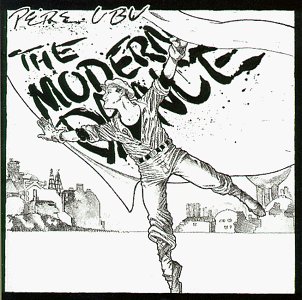
For some reason I agonised over this selection more than any other since we’ve been meeting. I had narrowed my choice down to about four different artists and plumped for Pere Ubu in the end as their development through the late 70s and 80s is particularly interesting. However, the choice of album also led to much deliberation – should I opt for Dub Housing, the band’s mind-blowing but hugely difficult second album, or the (slightly) more immediate, straightforward pleasures (a word that can not really be used when considering Dub Housing) of the 1978 debut – The Modern Dance? Well, in the event, The Modern Dance prevailed – its hooks and more conventional sounds and structures are easier to digest in a single sitting yet it still sounds vital and innovative after nearly 35 years! How is that?

Well, I put much of it down to Beefheart. To me, a considerable proportion of the music that has dated badly over the decades has been very easy to pigeonhole, to place within a scene (think psychedelia, punk, prog-rock, glam, new romantics, shoe-gaze, Britpop, Madchester etc). Despite inevitably having a bright start, usually spearheaded by a groundbreaking album or two, as we all know it doesn’t take long for the chancers and talentless to hop aboard and before you know it much of the music that exists within a scene seems to lack soul (as in artistic integrity); the music is no longer coming from the heart but heading to the pocket. And all the detritus that the scene attracts starts to devalue the very stuff that made it so vibrant and exciting in the first place. The sounds of the scene become ubiquitous to the point of tedium so that when you go back to the source, to that cherished album that once sounded so fresh and unique, it no longer sounds like the record you once thought it was. It just sounds dated.

Anyway, getting back to Beefheart. Love him (Rob, me) or not (Nick, philistines), there is no denying that he was one of popular music’s great innovators, totally out there on his own, making music unlike any that had been made before (on the whole) and unlikely to ever be replicated. There are not, to my knowledge, many Captain Beefheart tribute bands around! Fascinatingly, not one of the scenes listed above could be said to have been remotely influenced by him and the music that he produced on the majority of his albums is pretty much impossible to categorize. It seems that those who have been influenced by Beefheart tend to inherit his ability to produce art that is timeless. It’s probably partly due to the fact that it will, by definition, be challenging music that is too difficult for your average jobbing musician out for a fast buck to appropriate. So these bands plunder a rich seam, only accessible to the talented and/or visionary.

The Modern Dance, by taking elements of Captain Beefheart’s sound and approach to making music (the yelped vocals, the unexpected twists and turns in song structure, the brevity yet complexity – we’re not talking Pink Flag era Wire here – of the songs themselves) sounds to me like it could have been made yesterday, 35 years ago…or any time in between. Because there isn’t really anything else like it. It’s an amazing record, one that gets better with each subsequent outing and one that sets a consistently high bar from the initial nails across the blackboard wake up screech of Non-Alignment Pact to the aggressive hands claps, warbly organ  and ‘It’s just a joke man’ refrain of Humor Me. I love it!

Which makes 1988’s Cloudland album so fascinating. I’ve given this record a good few chances over the years and each time I’ve gone back to it, I’ve expected to discover it wasn’t the album I thought it was. Yet, having dug it out again for DRC, it still sounds as awful as ever to my ears. The production on the album is turgid 80s rock at its worst, the songs are linear and predictable, the band sound forced and tired, the magic has gone. Although 10 years younger, Cloudland sounds dated in a way The Modern Dance (and Dub Housing for that matter) don’t and although we played Ice Cream Truck, it was a random choice (Nick selected it for us) and any one of the other tracks on the album could have been used to illustrate the fact just as effectively.

In researching the two records for the meeting, I discovered that Cloudland was the result of the record company’s desire for them to make a ‘pop’ record. It made me think of a similar situation that had occurred 14 years previously when the great visionary artist of his time tried to produce an album that was dictated by his pocket, not his heart. The album was Bluejeans and Moonbeams and the artist – Captain Beefheart!

Rob listened: As a teenager, discovering and falling for PiL, The Fall and Joy Division, Pere Ubu were always there in the background, mentioned obliquely in reviews of other bands, apparently occupying a space somewhere in the same orbit as a bunch of bands I loved. I never went there. I guess I didn’t know where to start and had no-one to tell me. Then last year when Nick guested on ‘Strangely Strange but Oddly Normal’ on Phonic FM host Mark Armitage played a Pere Ubu track on which my wife commented: “this is the sort of racket you’d like”. She was right. I liked this on it’s own merits, and also because despite its idiosyncrasies I could hear through-lines from Can and Beefheart via Talking Heads and Wire to The Fall and Sonic Youth. I suspect that ‘Dub Housing’, if it’s an unhinged as Tom suggests, might be even more up my alley.

Nick listened: This was the first week where I owned every record played at DRC, even if I’d never actually played either of the choices that Rob and Tom brought along. Pere Ubu I never played because… well, I don’t know. I picked up this, and Dub Housing, years ago on the strength of the name-check in Losing My Edge by LCD Soundsystem; I found them cheap and it seemed silly not to stockpile them for later listening. I thing I put on Dub Housing first. Maybe I was expecting King Tubby. It was enough to make me not put on The Modern Dance, even after Mark played it when I guested on his radio show. When Tom played me the whole thing, though… well, it’ll get played soon. Now’s the time.

Arab Strap – ‘The First Big Weekend’/’The Last Romance’ – Round 8: Rob’s choice

First, a mea culpa. I got my dates wrong, or at least I took my dates from allmusic.com. In fact these two records, Arab Strap’s first single and last album, were released 9 years apart rather than the 10 that tonight’s theme demanded. I can only apologise.

This embarrassing oversight notwithstanding, from ‘First’ to ‘Last’, Aidan Moffat and Malcolm Middleton’s career trajectory demonstrates beautiful, redemptive and complete progress, both musically and philosophically.

Their first album, ‘The Week Never Starts Round Here’ still sounds like focussed, pulsing post-rock topped by the after-party mumbles of a hammered scottish prose-poet. Listening back, it’s surprising just how musically similar it is to Chemikal-Underground-label-mates Mogwai’s ‘Come On Die Young’, an album it preceded by 3 years. ‘The First Big Weekend’ is markedly different from much of the rest of the record, lashing Moffat’s picaresque journey through 4 days of beer, birds, brawls and everything in between to the thudding headache-beat of one club night too many. Steve Lamacq memorably called the track “The best song of the decade”.

From here Arab Strap’s records became steadily more confident and exponentially more sombre. Moffat’s bleakly honest and terribly funny lyrics catalogued descending sexual desperation and humiliation, the blasted blur of the boozehound from first pint to hair of the dog, and ultimately traced the outline of the existential abyss at the centre of modern workaday hedonism. Beneath this Middleton’s music chilled and slowed almost to match the stunned depths of one of Moffat’s protagonist’s hangovers.

Whilst never less than beautiful, the albums seemed to be chasing themselves down into the depths where nothing moves and no-one survives. After stirrings on ‘The Red Thread’, 2003’s ‘Monday At The Hug And Pint’ brought relief, re-introducing some of the joy into the duo’s music, principally as Middleton’s arrangements became more expansive, bringing pace and dynamism back and beginning to create a bleak pop entirely of their own forging.

‘The Last Romance’ saw this through wonderfully. Finally Moffat’s words, as woundingly sharp and painfully wry as ever, met their match in songs that pulsate and drive forwards, the first Arab Strap songs you could dance to since, well, since ‘The First Big Weekend’. Musically it’s their finest record, the songs standing proudly on their own two big, presumably slightly swaying, feet. It’s catchy, for god’s sake. And just when you’ve come to terms with Arab Strap being hook-laden, you realise another even more profound transformation has taken place. Although the album starts with a couplet as cracklingly ribald as the infamous opener to ‘Philophobia’, by the time the last five songs roll around, Aidan Moffat is leaving behind the past ten years of drinking and shagging all his chances away and moving, shuffling, towards, settling into romantic love. And when this finally comes, after nine years of following his every godforsaken mis-step and misanthropic side-swipe, it’s as beautiful a feeling as finally marrying off that best friend who you never thought would find the right girl.

The closing track ‘There Is No Ending’ is unashamedly positive and uplifting to the extent that my wife and I came pretty close to having it play as we got married which, for Arab Strap, is one hell of a transformation. It’s the last song they ever released and a perfect way to end the perfect, if slightly wobbly, story arc and a near faultless career.

Tom Listened: I wonder what it would be like to be Aiden Moffat’s girlfriend. To know that every last detail of your relationship, especially the stuff that happens upstairs, will eventually find its way into an unremittingly bleak portrait of Scottish life. I wonder whether Aiden Moffat gets to have a girlfriend now that he has released so many records!

I have stalled in writing my response to The Last Romance because I wanted to get to know it a bit better beforehand. I had liked what I had heard at DRC but I knew that with Arab Strap, the words are too central to overlook and I didn’t really get to grips with them on the night. So today I listened intently whilst driving around the South Devon countryside on another glorious Spring day and the sounds coming out of my car stereo were somewhat incongruous to that rural idyll. As Rob suggests, some of the songs on The Last Romance bounce along splendidly with a momentum that has often been lacking on previous Arab Strap releases and, at times today, I would find myself completely lost in the music…and the music is wonderful. So is Aiden Moffat’s singing. I love his voice. I admire the Scottishness of it, the honesty in the way he slurs his words making no attempt to pander to his audience’s possible preconceptions of what signing should be like.

It’s the words themselves I have a problem with on The Last Romance. I own Philophobia and think it’s a great record. I went back to it tonight to re-assess whether it’s Arab Strap’s or my own development that has made the difference. Whilst I was listening to the lyrics (and there really is no escaping the lyrics on an Arab Strap album), it struck me that Philophobia’s words possess two qualities that The Last Romance seems to be missing – tenderness and scope. Whilst Philophobia’s music is probably the darker of the two, the lyrics talk of love, of kissing, of flirting and of the route to the bedroom rather than (exclusively) what happens once you’re there. Rob attests that there is light at the end of Arab Strap’s tunnel (so to speak) from five songs off but lyrics like ‘And when I wake up stiff, please just feel free to use me/Then go to work and let me wonder what it was that made you choose me’ (from track 8 – Dream Sequence) suggest that optimism is a subjective quality. So whilst we get there in the end, with There Is No Ending the journey to that point is a long and, for me, harrowing affair.

Nick listened: Well, when I say I “own” everything that was played this (last) week, that’s not quite true. The Arab Strap CDs in our collection belong to my wife, and I have never listened to them. I have no idea why: the only thing I’ve heard connected to them is the Belle & Sebastian track that one of them guests on, which I really enjoyed, so there’s no excuse for not delving further. I loved The First Big Weekend, the way it took an ostensibly dance beat and strung it out from being a rave into being an icky hangover. I need to own it. I also enjoyed The Last Romance, although not quite as much; though it varies texture and approach over the whole record, the first two or three songs seemed a little too billowy and direct for me when thrown into relief with The First Big Weekend. By the time There Is No Ending swung around, though… well, Rob summed up the sense of redemption nicely. Gorgeous melody, gorgeous arrangement, totally different feel to everything else on the record and across their career. A fine way to bow out.