Ian Dury And The Blockheads – New Boots And Panties: Round 43 – Tom’s Selection

Ian_Dury_y_The_Blockheads-New_Boots_And_Panties-FrontalI know we’re supposed to write about the album but in the case of New Boots And Panties my acquisition of it is a tale in itself. If you’re sitting comfortable like…

I went to London just before Xmas and, with a couple of hours to kill following the planned meeting, I wandered into Soho to have a browse in some of the record shops on Berwick Street. I came across a copy of Ian Dury’s first album. After weighing up whether I could afford to part with the monumental sum of £4 the shop required, I decided ‘to hell with it’ and bought a record I had never consciously sought or even considered owning before. Upon returning to Devon, I promptly left it on the train.

And then, almost immediately, New Boots and Panties became the holy grail – the album I had to have. My greatest desire (after the wife…if you ever happen to read this, Karen)! I went straight onto Amazon when I got home that night to seek out a vinyl copy to replace my lost one and almost purchased it there and then but having spent an inordinate amount of money on records recently (well, not all THAT much…just in case you’re reading this, Karen) I resisted for the time being.

Then, a few days later we were having lunch with some friends and John was regaling us with tales of his time living in London…apparently he spent a disproportionate amount of time going to see Ian Dury in concert. On hearing this I told him my tale of woe at which point he scooted off to his living room and after 10 minutes or so returned clutching his cherished copy of NBAP…for me to have! What a man! So, if you’re reading this, John this one goes out to you!

Oh yes, the record…Well, if all you know are the hits – and they are fairly ubiquitous after all, there won’t be too many surprises here. But what you do get is a superb distillation of working class Laaandon – right from the album’s first line, ‘I come awake with a gift for womankind’, you know exactly where you stand – this is an album that couldn’t have come from anywhere else and I am not sure it could have come from any other point in time either. It seems to me, that Dury featured very prominently in Damon Albarn’s listening preferences around the time of Parklife but whereas Blur’s efforts are at best homage and at worst parody (and I am a fan), Dury is the real deal. Take Billericay Dickie for example, a song about a sex crazed bricklayer from…Billericay…It is hilarious but also rings so true, people like Dickie really do exist but not many, to my knowledge, have featured in songs. So as I guffaw along to lyrics such as ‘I had a love affair with Nina, In the back of my Cortina. A seasoned up hyena could not have been more obscener’ and ‘you should never hold a candle if you don’t know where it’s been, the jackpot is in the handle on a normal fruit machine’ I also revel in the great British art of innuendo and double entendre and the fact that I can play this song to my ever more knowing children and they still don’t have a clue what he’s singing about! So lyrically it’s where it’s at as far as I am concerned.

Musically…well NBAP is certainly varied and it travels on quite a journey from the almost disco opener of ‘Wake Up and Make Love To Me’ through the wistful ‘My Old Man’ and the vaudevillian ‘Billericay Dickie’ until, three songs from the end Dury goes all punk on us and we get the one, two, three blast that is ‘Blockheads’, ‘Plaistow Patricia’ (the spoken interlude just before this track is not for children’s ears and unfortunately if they heard this they would know what he was going on about!) and Blackmail Man. A thrilling end to a great piece of (very) British musical history.

Rob listened:Great to hear this. Like Tom, I’ve never sought out any of Ian Dury’s stuff, although I reviewed a couple of later blockheads collections once upon a time. It’s a great listen, not just for Dury’s peerless vaudeville geezer schtick but also for the abandon with which the blockheads blend and switch between punk, pub rock, funk, disco and knees up.

It’s sad to reflect that whilst we now have immediate access to all the music from everywhere in the world, and the opportunities for musicians and artists are arguably also more open, someone like Ian Dury wouldn’t get within a million miles of public recognition on anything like the scale he did in the late 70s. Not only did he bring us some wonderful music, his character said a lot about what it was to be British, to be different, to be creative and to be just a little wild. Please correct me if I’m just being an old fuddy daddy, but I don’t think that could happen in 2013.

Nick listened: I’ll just echo exactly what Rob said – this was a great listen, and I feel like we’re past the point in our cultural history where a record like this by a character like this could become popular.

Graham listened: Growing up in the East End/ Essex borders I’ll admit to being pretty confused about  Ian Dury during the late 70’s/early 80’s.  While posters for his gigs were plastered all over my “manor”, as it were, I couldn’t get a grip on the reasons for his popularity. He seemed too old to be a pop star and played a brand of “rockney”, not too dissimilar to Chas ‘n’ Dave. With time I began to appreciate just how naive and ignorant I was as a spotty teenager!  Great to hear this and it wasn’t too long ago I watched the recent biopic of his life. A complex character in the extreme.
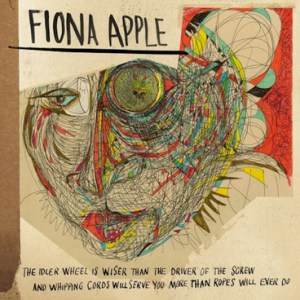
Fiona Apple – The Idler Wheel etc: Round 42 – Tom’s Selection

FionaAppleIdlerWheel600GbAs we reach the end of another paltry year of contemporary purchases for me and the end of year lists are pouring in full of albums I’ve never heard of by outfits I’ve never heard of, I’m more unsure than ever of the worth of the process. You see, I could easily come up with a list of THE top ten albums from this year but it would include the majority of current albums I’ve got to know well over the last 12 months. If I were to post said list, I’m sure any reader would assume I had devoured far more music than I actually have and would not realise that my number 10 would represent a scraping of the barrel rather than a glittering jewel plucked from a huge vault of varied and comprehensive listening. At the other end of the spectrum are those lists that are so long they beggar belief – how can anyone get properly acquainted with 100+ albums in a year? Yet you regularly see lists of this length made by a single person! Do they do anything other than make lists while sitting around their stereo all night long? Probably not. Either that or (whisper it) they don’t really know what they’re talking about.

That said, it would be disingenuous of me to suggest that I don’t avidly follow the lists at this time of year scouring them to find that undiscovered gem I had previously overlooked or been unaware of. And as this is a time of giving as much as receiving it’s only right that I do my bit to contribute to the end of year thing. So…just in case you’ve lived in a cave over the last 12 months, have not followed the reviews or just think you happen to dislike this sort of thing, Fiona Apple released an album in June…and that’s my album of 2012 (and I’m fairly confident about this). It’s called: The Idler Wheel Is Wiser Than the Driver of the Screw and Whipping Cords Will Serve You More Than Ropes Will Ever Do (not sure these album titles do her any favours). I would urge you to listen to it. You may well find it not to your taste, and that’s fine, but I think you should definitely check it out. I say this, not because I’ve listened to hundreds of new albums this year but because I think it’s a remarkable album – brutal and subtle, always interesting and unsettling even if it veers tantalisingly close to ‘kooky’ territory at times (too close for some, perhaps). This is the first Fiona Apple album I’ve owned but it will probably not be the last.

The last time I heard a solo female artist sound this confident and instinctive on a record was on St Vincent’s second album Actor. The two albums don’t sound that alike really but they share an honesty and a lack of self-consciousness that enable the songs to reach parts that more considered records (see Strange Mercy) do not.  But whereas Actor has moments of sonic assault, it seems to me that The Idler Wheel is all about space, momentum and the balance between simplicity and complexity which seem to coexist simultaneously on many of the songs. Check out Periphery, Johnathan, Werewolf, Every Single Night…that’s practically half the album already! All these songs have such spartan instrumentation, often just a piano plonking away every now and then – it’s the melody lines and Apple’s (exquisite) singing that lift the song from the ordinary to the frequently extraordinary. That and the astonishing drumming that reaches it’s zenith on the album’s breathtaking closer Hot Knife which, for the most part, is just a drum, Apple and her sister Maude Maggart. This was a joker track (songs that we have to listen to properly..although you are allowed to check the football scores during them, apparently) for which nobody needed to be instructed not to speak! It’s a cracking end to a cracking album and if you can find a record from 2012 that I (and my family for that matter) prefer you’ll be doing well. Maybe the answer lies in those end of year lists. Then again, maybe not!

Nick listened: I bought Fiona Apple’s debut album many, many years ago, I think on the advice of my older brother after enjoying her cover of Across The Universe. I quite liked it, as I recall, but haven’t played it in many years – I suspect it was a victim of the post-adolescent indie boy’s fear of women. I’ll be revisiting it soon to reasses.

Because this was awesome; several times during the playback I said “this is a jazz album!” and, with its minimal arrangements, sense of musical freedom and unusual chords, it certainly felt closer to jazz than mainstream pop. Apple’s vocals, almost scatting at points, add to the impression. I was intrigued and beguiled by The Idler Wheel, and I’ll be picking it up pretty soon, I think. PS. I did indeed pick up a copy, last week in The Drift; I also picked up Ekstasis by Julia Holter, which Tom played a track from. An expensive week’s listening!

Graham listened: Unfortunately I am a bit of a ‘Kooky Monster’ and offer short shrift to those that bend, rather than play within or completely break, the rules. An interesting listen but it fell outside my my boundaries on to the stony land of stuff I don’t try hard enough to appreciate.

Rob listened: I had Fiona Apple filed somewhere only slightly to the left of Alanis Morissette and due North of Liz Phair. To be honest, all I really knew about her was that she used to be a bit poppy, had gone a bit more left-field and kept getting mentions on Pitchfork, although i’d never really unravelled whether this was because they dug her or because she was having some sort of extended public breakdown.

I’m so pleased Tom sorted all that out for me. ‘The Idler Wheel’ clearly deserves all the plaudits it has received. Somehow both rich and sparse, it feels like creature who’s internal structures you can see working mysteriously away whilst it lives and breathes. We talked about how lazy it feels to compare female singer songwriters only to other female singer songwriters. To be fair, we’re probably equally lazy when it comes to comparing male performers too. I wonder, however, whether the reason we find ourselves invoking St Vincent and Merrill Garbus and Joanna Newsom when we listen to a record like this, is that women just happen to be making the most challenging and inventive music at the moment?

Loved it, will buy it.

John Maus – We Must Become The Pitiless Censors Of Ourselves: Round 41 – Tom’s Selection

WeMustBecomeThePitilessWhen it comes to (self) discipline (Graham’s well thought through and carefully considered theme for Round 41) I can’t think of a better album title than ‘We Must Become the Pitiless Censors of Ourselves’ which happens to be the name of John Maus’ album from 2011. This title seems particularly prescient at the moment seeing as the British press is currently under such intense scrutiny following the publication of the Leveson report. If only Rebekah Brooks, Andy Caulson, Paul McMullen and the like had listened to John Maus, the media in this country might not be in the perilous state it is currently in.

To be honest, the main reason I took this album to record club is the title – We Must Become…is an album I bought on the basis of scouring the end of year polls and internet chatter at the end of last year and, whilst I have always liked it well enough, it’s been pressed to play at 45rpm which is such a faff on my turntable (as I have to lift the platter and fiddle with a rubber band to change the speed) that I have never really got to know it properly. At this point I must take this opportunity to implore Record Companies to put the playing speed on their albums as this was the second time I have listened to an album for a considerable length of time (the other occasion was Yellow House by Grizzly Bear) before realising that I was playing it at the wrong speed…I had read that the vocals were quite ‘doomy’ and odd on We Must Become…so my eyebrows were a little raised when I first played it, but I soon came round to the idea and actually quite enjoyed the record in its ‘extra-baritone’ state until I realised the error of my ways. But there are probably millions, if not billions, of folks out there listening to their John Maus and Grizzly Bear albums at the wrong speed and none the wiser…which is really a great shame as they are actually a little better (if less unusual) when played at the intended pitch.

The album itself is an odd one, but one that I have grown increasingly fond of over time. For me there are two pinnacles that, a little bit like towering transmitter masts, radiate their quality over the rest of the album, gradually working their influence into acclimatising the listener to some of the less accessible tracks that surround them. Believer and Hey Moon are two of my favourite songs of the past few years and I am mesmerised by their grandeur and the lightness of touch that Maus demonstrates in creating such a perilously wonderful soundscape. In the wrong hands Believer could be an 80s Xmas single by some horrible synth band – it’s all there, the washes of ever-so slightly cheesy synthesisers, the tinny metronomic drums, the lumpy bass. But Maus skilfully navigates the line, treading ever so close to it at times but (just about) always staying on the timeless, vaguely Eno-esque side of it as opposed to crossing over into Flock of Seagulls territory. Someone on Youtube has commented: ‘Damn, Phil Collins got much better’; about as slight as a compliment can get, but I know what he means. Hey Moon is, for me, even better – a beautiful ballad that was originally recorded by one Molly Nilsson (Swedish so presumably nothing to do with Nilsson of Without You fame). It’s a stunning track that emanates its quality over the rest of the album so effectively that before many listens even the most awkward of songs (I’m looking at you Matter of Fact) start to sound like works of near-genius.

Many internet folk rated this one of the very best albums of last year and whilst it has become cool to lambast the end of year list in some quarters I probably wouldn’t have discovered this overlooked gem without them. And looking back at the records I have now heard from 2011, I have to say that, in my opinion, We Must Become the Pitiless Censors of Ourselves is right up there with the best of them!

Rob listened: This is a mercurial record. I listened to it a few times after it placed so strongly in so many end of year lists and found it too elusive to get a grip of. I’m sure that my tinny laptop speakers didn’t help because this evening it sounded like a totally different proposition. I’m not quite sure why that might be. Maus’s aesthetic seems to involve writing reasonably straight electronic pop songs and then processing the hell out of them to drag every note, every drumbeat, every synth wash back to some muddy mid-80’s netherworld, topping the whole with his voice, a sort of stunned Mark Burgess doom-boom. Listening back again now i’m caught between the two. I don’t know why he does it, but i’m glad he does. I’m not sure whether it’s okay to like a song like ‘Keep Pushing On’ which is essentially ‘Electric Dreams’ played down a quarter-mile sewer pipe, but I do. I can see how insidiously this could grow on you, and I reckon i’ll give it a change to take root.

Nick listened: Like Rob I noticed this place well in lists 12 months ago, but unlike him I didn’t feel at all compelled to investigate. Listening to it hasn’t changed this ambivalence – it wasn’t bad in any way, but I struggled to get a sense of the songs beneath the aesthetic, and, because the aesthetic didn’t really do it for me, there was little else for me to walk away with.

Graham Listened: If Tom could see my hands, he would instantly recognise them as the “wrong”. Put this album in them and it is unlikely to come out well. Maybe my elderly years means I’m can recall some of the worst of new romantic/synth pop better than others. Anyway my prejudice got firmly in the way and I didn’t really get past the “this sounds like….”, and trying to figure out why you would want to recreate such a sound.

Metronomy – The English Riviera: Round 40 – Tom’s Selection

As someone who grew up a few miles away from PJ Harvey (in fact my old schoolmate Max Griffiths was in a band with her but chucked her out on account of her ‘not being good enough’ – Max, where are you now?) and, until last year, never having owned one of her records, I think it is safe to say that I find it hard to appreciate music that has been made on my doorstep. I suppose I have always felt that something made nearby is only known to me because it’s local, rather than good, and therefore I have tended to be suspicious of its worth. However, The English Riviera has bucked this trend and, seeing as it is a concept album about Torbay, its charming reverence towards my local area is now working to its advantage. I am incredibly proud of soggy old South Devon and feel privileged to live here…and listening to The English Riviera you get the impression that Joseph Mount (Metronomy in all but name) feels the same way.

I was intending on playing The English Riviera at Record Club at some point anyway – I knew that Nick and Rob both had pretty ‘meh’ (as I believe we say these days) reactions to it when they had given it a casual listen last year but was confident that the DRC treatment would help them appreciate its lush sound and nigh-on perfect pop melodies – so when Nick suggested the ‘Home’ theme it didn’t take much thought for me to decide on my choice. I can not think of any other album I own that has such a defined sense of place and when that place is your doorstep and your doorstep is somewhere you’re very fond of, it’s hard not to fall in love.

The English Riviera is, for me, quite a different sort of album from many of my recent offerings. This is not one of those records where the songs have to co-exist to make sense. Although there is an underlying theme on The English Riviera, these are pop gems that more than hold their own in isolation. The English Riviera is the album I hoped Peter Bjorn and John’s ‘Writer’s Block’ might have been. Having heard Young Folks before I bought it, I was hoping for an album crammed with similarly infectious hooks and sweet melodies. But, to be frank, Young Folks towers over the rest of the album, the other offerings occasionally veering perilously close to atrocious (Poor Cow, Amsterdam, Let’s Call It Off). Metronomy’s latest album, however, keeps the bar impressively high throughout and whilst the singles, The Look, The Bay and Everything Goes My Way (a bit like a cross between Don’t You Want Me and Young Folks with the whistling replaced with cooing) are probably the most immediate songs on the album, I enjoy all the tracks just as much now that I have got to know the album  – in fact I might even venture to say that these days I like the latter half of side two even more than the beginning of side one!

Although I am always a little wary of lauding a record that I haven’t possessed for long, I am pretty confident that long after the newness of The English Riviera has worn off, the warm glow I get from its affectionate take on Devonian seaside life will continue to burn.

Nick listened: I downloaded The English Riviera out of curiosity but hadn’t really given it more than a cursory listen before the other night – I quite liked the singles but hadn’t been struck by anything else, and to be honest I’m not sure I’d actually sat down and played it start to finish. Forced into doing that by DRC, I was pleasantly surprised – there was more subtlety and nuance, and less ‘ego song’, than I’d suspected / expected: often the songs seemed to get the tune out of the way relatively quickly, leaving space for a groove or instrumental, achieving a nice balance of tunes-to-music, much like the last Antlers record. Also like that record, none of the songs here screamed I-AM-A-SONG at the listener; rather the tunes and melodies unfurled themselves slowly, suggesting they’ll reward attention and repeated exposure. Very pleasantly surprised.

Rob listened: I gave ‘The English Riviera’ an extremely cursory listen via Spotify shortly after it had been released. I was at work at the time, didn’t concentrate and didn’t hear anything to make me want to listen again. I suspect I have a slight repulsion for very local music, the opposite to Tom’s attraction to this. It’s a stupid attitude, I know. Regardless, I find music from across the Atlantic endlessly exotic, even when it might be crass and dumb when understood in cultural context. The more you understand the musical idiom, the easier it is for a record to hit a grating note, for an artist to choose a clanging word. Records by English artists have to be near perfect for me to love them. That’s not fair and I’m sure I’m the loser in that equation.

Anyway… DRC exists for us to listen properly to records we haven’t given attention to before. This one, on second listen, was great. It reminded me of Wild Beasts ‘Smother’ (a near perfect English record) in its restraint and economy, which make it all the more delicate and delicious. Packed with understated tunes too. It’s a growing favourite in our house already.

Captain Beefheart – Clear Spot: Round 39 – Tom’s Selection

I’m going to go out on a limb here…Clear Spot is Captain Beefheart’s best album. There, I said it! Sure, it’s not as ‘out there’ as many of his other discs but, let’s be honest, we have all listened to it a helluva lot more times than Trout Mask Replica, Lick My Decals Off Baby or Doc at the Radar Station. Haven’t we?

I got lucky with Beefheart. I chanced upon Clear Spot whilst I was at university without realising that it is THE gateway drug as far as the good captain’s discography goes. Weird enough to be compelling, tight enough to be thrilling, concise enough to leave you wanting more…yet, crucially, not too difficult. It does sound like music after all! I imagine that if I had bought one of Beefheart’s more avant-garde offerings as my first Beefheart purchase I may have stopped there. If I had bought one of his mid-70s ‘pop’ albums I almost certainly would have given up on him there and then. No, if you fancy checking yourself out some Beefheart and are not too scared about the addictive qualities of his music, Clear Spot is definitely the place to start.

Now, I am a huge fan of Trout Mask Replica and (especially) its follow up, Lick My Decals Off Baby, but I can’t help feeling that in some ways they are less of an accomplishment than Clear Spot. Groundbreaking they most definitely are and both are easy to admire, but they are so hard to love and I don’t think I have ever experienced that chill down the spine listening to them that I did when playing Clear Spot at record club last night – that thing you get every so often with a record when you REALLY listen intently and you are just blown away by how good it sounds, how it twists and turns so unexpectedly yet maintains its groove, its structure, its accessibility. I guess it helped knowing there were two Clear Spot virgins present so maybe I was imagining what they were hearing, as the opener Low Yo-Yo Stuff writhed its way to its conclusion. To use a sadly devalued (in current times) term…just awesome!

As Rob pointed out on the night, Clear Spot somehow manages to fuse so many genres of music that it should be a complete mess. How can a great soul ballad such as Too Much Time, follow the boogie stomp of Nowadays a Woman Gotta Hit A Man and lead into the garagey delta-blues of Circumstances and pull off the trick of sounding so right? I guess there are three things that tie all the disparities together on Clear Spot – the lyrics, the voice and the grooves. The songs on Clear Spot (the only exception being the 90 second afterthought of Golden Birdies) hang together so brilliantly, always on the verge of cacophony and discordance, but pulling back in the nick of time, returning to the groove that so wonderfully underpins the entire album. There was an inordinate amount of head bobbing and foot tapping (about as animated as we get) whilst Clear Spot played and I imagine that is the last thing anyone who only knows Beefheart through TMR would have thought.

Unlike Neil Young (see Round 38), I went on to acquire many more Beefheart albums that I really like..in fact I own eight Beefheart albums and I like every one! His is a fascinating catalogue; a singular artist deserving, to my mind, of every word of praise that has ever came his way but I have always felt it was a great shame that the alchemy he chanced upon on Clear Spot (the album he allegedly wrote partly as an apology to his band for putting them through the two previous albums) was never really repeated, his later albums veering much closer to TMR and LMDOB in style.

Nixk listened: I bought Trout Mask Replica whilst at university and, frankly, hated it. Listened about three times and thought it was unbearable discombobulation rather than music. So I decided that Captain Beefheart wasn’t for me. On the strength of Clear Spot, I may have been hasty and wrong – because it was awesome. I will be seeking it out at some point in the future.

Rob listened: My favourite Beefheart album and has been since I bought it almost 20 years ago. Like Nick and unlike Tom, I started with ‘Trout Mask Replica’ when it was reissued in 1990. Unlike Nick I found it baffling, laughable, fascinating, challenging and, for all those reasons, rather thrilling. I still can’t say it’s ever come fully into focus for me as some of the devout claim it will, but its existence and the fact it holds such cultural cache, is something we should all rejoice in.

‘Clear Spot’ is radically different in so many ways, but as Tom points out, it is illuminated yet further by the radioactive afterglow of TMR. I can’t add much to Tom’s assessment of the album other than to throw in a couple of extra adjectives: tight, gripping, moving, mesmerisingly sung and to mention that the only reason Jo and I didn’t get married to one of the songs from ‘Clear Spot’ is that we couldn’t choose between ‘Too Much Time’, ‘My Head Is My Only House…’ and ‘Her Eyes Are A Blue Million Miles’.

“I look at her, she looks at me, in her eyes I see the sea…”

Graham Listened: I have tried to appreciate/understand Beefheart in the past and failed miserably. I have sought out footage and recordings to help in the process but never really understood why he is regarded as a genius in many quarters. Maybe tonight I came close to getting it at last. I bobbed my head and tapped my foot appropriately to an overall sound I felt comfortable with. There were moments where I wondered “why has he done that” and “what is going on here”, but not enough to alienate me in the way exposure to Beefheart has in the past. My defenses have been weakened!

Neil Young – Tonight’s The Night: Round 38 – Tom’s Selection

The mid 70s were an interesting time for popular music, not that I can remember much of it first hand, due to being five at the time…as opposed to off my head on drugs! Of those records that have stood the test of time, it seems as though a disproportionate number of them are bleak, harrowing, doom laden evocations of the human condition. Maybe these records document the point in time when the hippy dream turned sour, the idealism of the late 60s and early 70s giving way to self-doubt, cynicism and suspicion. Maybe the hippies had nowhere left to go but here. Ironically, seeing as he was the arch anti-hippy, this trend may have been kick started by Lou Reed’s 1973 rock opera, Berlin, which is just about as dark as an album can get and surely hugely influential (although you never can tell about influence, can you Nick!). Whatever, in the next couple of years there followed a slew of similarly unsettling offerings such as Gram Parson’s Grievous Angel, Big Star’s 3rd and Joni Mitchell’s Hissing of Summer Lawns. Artists were experimenting musically and thematically and were really challenging their fan-base in the process. It seems as though many of these records were poorly received in their day but they make for captivating listening all these years on and, to me, often sound far more interesting than their bigger selling precursors. Possibly the epitome of this phenomenon is Tonight’s the Night, Neil Young’s most ragged, tortured and, arguably, finest LP.

First a confession. I have never really ‘got’ Neil Young. This is strange considering I have a ridiculous number of Neil Young albums (after all, there are a ridiculous number of Neil Young albums to have). I have always suspected a case of ‘Emperor’s New Clothes’ about his records; to my mind they often don’t go anywhere particularly interesting – a guitar workout lasting 10 minutes is pleasant enough but when the riff is so simplistic and linear (see Cowgirl in the Sand, Down By the River, Southern Man, Like a Hurricane), it can all get a bit monotonous. In comparison to, say, Halleluwah by Can which twists and turns and goes to all sorts of surprising places in its 20 odd minutes, I never found all that much to discover in Neil Young albums. But I kept buying them because I kept reading about how they were so good. The next one was going to be THE ONE. But it never was. Then I bought Tonight’s the Night…and then I stopped buying Neil Young albums!

It was obvious from the off that this one was the real deal. The history of the album, the circumstances that led to it being the work it is, is well documented. Suffice to say, Young was in a pretty bad place going into making Tonight’s the Night…and it shows. And that is what makes it such a compelling listen. The songs teeter on the brink of falling apart throughout the album; they are raw, wounded and as vulnerable as the man who wrote them. Listening to Tonight’s the Night recently, I once again find myself wondering whether an album this messy would even get released in this age of studio perfection and computer technology. Having recently made two mega-sellers in Harvest and After the Goldrush, Neil Young must have had pretty much carte blanche at Reprise at the time and, whilst artists who have overwhelming power have often made appalling records, in this case such clout was surely necessary in getting it released – after all, the album only saw the light of day two years after it was recorded! Listening to it today makes me wonder about those decision makers in the big record companies. Alright, Tonight’s the Night was never going to sell as many copies as Harvest, but its tarnished brilliance is so hard to deny that it would have to be an inordinately cynical ear to turn it down.

There is little point singling out individual tracks as they really need to be heard as part of the whole. Young’s triple LP best of, Decade, includes the title track and Tired Eyes but neither of these songs make half as much sense as they do when heard on the album itself. As Rolling Stone’s Dave Marsh put it, ‘This is Young’s only conceptually cohesive record, and it’s a great one.’ Me, I’m glad I persevered with Young and, who knows, maybe one day I’ll go back to and fully appreciate all those other albums of his I’ve purchased over the years. But even if I never listen to one of his other records again, I know Tonight’s the Night is one album I’ll never grow tired of.

Nick listened: Tom introduced this by saying, twice, “Nick will hate this”, and describing it as (paraphrasing rather than verbatim) “the most rubbishly performed, sung, played, and recorded record ever”. He also said (verbatim) “This is the only Neil Young album that I own that I like. I own eight Neil Young albums.”

Well, I didn’t hate it. I own about four Neil Young albums (Harvest, Gold Rush, Everybody Knows This Is Nowhere, and Rust Never Sleeps) and I quite like all of them. I quite like Neil Young, in a completely non-committal way, in that I think he’s a good songwriter, decent guitar player, and interesting, charismatic singer. I didn’t think Tonight’s The Night was badly played, sung, or recorded – certainly Neil’s vocals go a little further off-piste a little more frequently than on other records I know by him, but it was never monstrous or offensive – if anything, it was kind of touching for him to be clearly reaching beyond himself, writing songs and melodies outside his range. Neil’s tremulous, cracking vocals, if anything, accentuated the emotional heft of these songs about the deaths of his friends.

Rob listened: I liked this a lot. I rarely delve back beyond 1977 but many of the records I’ve bought in the last 15 years or so have a clear and direct lineage with the music that came from America in the midst of her post-Sixties comedown. Tom preceded ‘Tonight’s The Night’ by playing ‘Brute Choir’ by Palace Music. The two records could have been recorded in the same year. Neil Young’s songs here, perhaps simply as a result of their simplicity and honesty, sound as fresh and raw as the day he wrote them. Quiet, meaningful albums tend to get crushed like so many wheel-broken butterflies at DRC meetings where, truth be told, we like to talk more than we like to listen. ‘Tonight’s The Night’ had our rapt attention and rightly so.

Graham listened: Not sure what happened to the incredibly well-crafted review I left last week but here is a repeat summary. I also quite like Neil Young but have never sought out any of his records. I’ve considered it but then I’ll see him singing live on tv and pause for thought. After Tom’s introduction (which may have been a clever ploy for future use) I was expecting a bit of a ramshackle mess. What we got was something sincere, sensitive and captivating.

Van Dyke Parks – Discover America: Round 37 – Tom’s Selection

The themes, assuming we have to adhere to them, comrades, are definitely getting more challenging. For our latest meeting we had to bring something that the others would find surprising (I suspect this was Graham’s attempt for the rest of us to join him in Marillion based shame). In the weeks following our last club night I have wrestled with this idea, as in, ‘How do the others perceive my musical leanings?’ Cue much heart wrenching psycho-analysis. You see, I have had an ever more overwhelming sense that my selections for record club up until now have been depressingly predictable. Even the less likely records have been predictable in their unpredictability. So, short of going to a second hand record shop and making some random selection I was more than a little stumped. In the end I opted for Discover America, probably a blindingly obvious choice for me to bring, but a music that is so unusual that until I bought it a couple of months ago, I had no idea existed. Surely that must be surprising?

I almost didn’t buy Discover America. Although I have been on the look out for some Van Dyke Parks on vinyl for most of my adult life, when it eventually turned up in The Drift record shop in Totnes, brand spanking new reissues of Discover America, Song Cycle and Clang of the Yankee Reaper, I was tempted to leave them on the shelf.

The reason? Until recently all I knew of Van Dyke Parks was that he released a few odd but revered records in the late 60s and early 70s and that he was closely involved in the Beach Boys’ Smile project. As a big fan of Pet Sounds (see Round 14) I had eagerly bought Brian Wilson’s Smile when it was released a few years ago. Hated it. When the true version saw the light of day in 2011 I was given it as a birthday present and was shocked to find it wasn’t much better. So my eagerness to check out some Van Dyke Parks had already cooled somewhat. Nevertheless, it seemed churlish to pass up the opportunity when it finally arose, so I asked the lady behind the desk in the shop which of Song Cycle or Discover America she would recommend in particular, to which she replied, ‘Neither. I don’t really get anything from Van Dyke Parks records. Do you?’ and she turned to her assistant who agreed wholeheartedly that VDP records were most definitely to be avoided. Whilst I admire the honesty of their answers, I can’t help but question their sales technique. Surely the idea of stocking a record is to sell it!?! Luckily for me, Mr Parks and The Drift, I stubbornly disregarded their advice and bought Discover America anyway, no doubt falling for the oldest sales trick in the book in the process.

Regardless, I have quickly grown to love Discover America. But that’s not to say that it wasn’t tricky at first. In his review of the first three VDP albums, Pitchfork’s Jayson Greene said, ‘If you’ve heard any of Van Dyke Parks‘ solo records in your life, your first reaction was likely some variant on “I don’t get it.” That’s okay, you weren’t supposed to.’ In fact, the only person I know who has unequivocally expressed a liking to Discover America first time through is my “notoriously hard to impress because she is ten” ten year old daughter, Tess. Maybe that’s because she is coming to it without the weight of expectation that decades of homogeny in modern music produces in us. You see, Discover America is an album of cover versions of 1940s calypso songs as played out in the mind of a 29 year old American composer. It’s different!

The album starts with Mighty Sparrow’s own recording of Jack Palance but from then on it’s all Parks’ own interpretations. And it’s clear a few listens in that this is a work of complete reverence for the material, Parks’ tongue is most definitely not in his cheek! It’s charming stuff and definitely not an album to section up into chunks – not many of these songs would make sense on a compilation of white American music of the last few decades. That said, current faves include the Toussaint compositions, Occapella and Riverboat, the bluesy vibraphones of John Jones and the lilting ‘Franco’ style Bing Crosby. But it’s the sort of album where the favourites chop and change and the whole is much greater than the sum of its parts.  Whether Discover America constitutes a surprising choice or not remains to be seen, I’m just as interested to see if the DRC crew can see past the weight of popular opinion and join Tess in ‘getting it’ from the off.

Nick listened: Clearly I ignored the vague theme to “bring something surprising” (my records are all, bar new purchases, still packed ready for moving, so I’ve not got much choice for “surprising”!). But so did everyone else! Except Tom, who now has an exceptional track record of bringing records by artists I’ve been aware of for what seems like aeons but never got round to listening to. VDP is very much one of those – I knew he hung out with the Beach Boys and Byrds, scored other people’s records, and was generally a significant “figure” in that era of “classic” US pop/rock that certain print magazines have never got over, but I’ve never been curious enough to pick up a record. If I had, it would almost certainly have been Song Cycle, his debut, rather than this strange curio of a record. I have no idea how faithful VDP’s versions of these calypso songs are – I suspect his arrangements are considerably more ornate (orchestras not being that prevalent in the calypso I know!), but he does throw in steel drums and suchlike from time to time. It took me a few tracks to get a grip of what Discover America was doing, but by the second half I’d got into the vibe, and found myself really enjoying it. Would listen again.

Rob listened: Tom had played this to me a few weeks earlier when he was still in his period of bafflement with it. In my appreciation of music, or at least in the way I approach musical appreciation, I’m much closer to Tom’s children Tess and Kit than I am to the great man himself. I never feel the need to get underneath the skin of a record, unpick what makes it work, disassemble and reassemble it to learn how it fits together. I’d rather not know. It spoils the magic somehow.

Even if I did feel the need, I just don’t have the musical acuity of a Rainbow Snr or the critical vocabulary of a Southall. I just go with gut feeling. I found ‘Discover America’ supremely disorienting the first time I heard it. The second time it sounded like a crazy, sunny wonder. My only complaint is that it leaves me tantalised. Why is this such a curio? Why didn’t a tributary of the pop floodplain flow down from this record? How would the next 20 years have been different if our most prominent songwriters has displayed such  wild abandon and then chucked in such grin-spreading tunes?

Graham listened: When I saw the cover of this immediately concluded we were in for  something like REO Speedwagon or Journey. Not that I have have any of their albums, it just looks like the album cover that they would have.

That scary moment aside, I was very confused by this and the who/why’s/what’s it all about for a while. Something definitely not to bother too much about with this album and far better just to sit back and enjoy a very strange but ultimately ‘feelgood’ classic that I had never heard of prior to DRC.

Tom Waits – Bone Machine: Round 36 – Tom’s Selection

As a consumer of music who rarely listens to the words, let alone thinks about their meaning, concept albums usually pass me by. So it was with a sense of mild despair that I scoured my collection once Nick had suggested this as the theme for our latest meeting. It turns out, once I had actually thought about the lyrical content of a few ‘possibles’ that I own far more ‘concept’ albums than I initially thought (I put the word concept in inverted commas here because I am still unsure as to what a ‘concept’ album is). But I read somewhere on the internet – and the internet never lies, right? –  that Bone Machine is a concept album about death (THE concept album about death?) and as it is also one of my favourite albums… in the world…. ever, I didn’t ponder the voracity of the claim for too long before convincing myself that I could convince the others that Bone Machine is most definitely an album with a concept. After all, even though it doesn’t have any pixie queens or made up kingdoms, it does have locusts…just like any other concept album worth its salt.

Then a funny thing happened. As I listened to Bone Machine in the run up to the meeting, I began to hear things I had never heard before. Like…the words, for example. Of course, I had heard the words before. But I had never really thought about them and how they fitted together with each other and what they were trying to say and the like, so whilst I had always loved the lines ‘What does it matter, a dream of love or a dream of lies? We’re all gonna be in the same place when we die’, loved the way they sound and the images they evoke, I hadn’t really thought about what Tom Waits was trying to say with them. And I never really thought about how this song, Dirt in the Ground, fitted with the preceeding The Earth Died Screaming and the succeeding Such a Scream, a song whose main character (presumably Waits’ wife Kathleen Brennan) has ‘a halo, wings, horns and a chain’. It seems an awareness that Bone Machine is a concept album about death (or mortality) has made me appreciate it even more, which is quite an achievement as it was already languishing somewhere in my top ten albums…in the world…ever.

Whilst I am a huge fan of Waits, I still section his albums into divisions. In my mind Mule Variations and Real Gone belong with some of the pre-Kathleen Brennan albums in the third division of Waits’ discography. Second division and we have Frank’s Wild Years, The Black Rider and Alice. First division – Swordfishtrombones and Rain Dogs.* But Bone Machine is the Tom Waits equivalent of Liverpool FC circa 1975-1985 (as opposed to Liverpool FC circa 2012/13 – sorry Graham, couldn’t resist). Unimpeachable! It’s a parched album, tinder dry and is the most evoking of tumbleweed/dustiness of all his records. I got to know it whilst spending a year in the Australian outback and I can think of no better soundtrack or location depending on which way you’re looking at it. And although the album is riddled with death, it’s by no means a depressing listen. As always, Waits treats us to some exquisite ballads (A Little Rain ends with the devastating lyric, ‘She was 15 years old and she’d never seen the ocean…and the last thing she said was “I love you Mom”), and the album ends with the kooky ‘pop’ song, I Don’t Want To Grow Up and the sweet redemption of the closer, That Feel.

For me however, it’s the one-two-three of Goin’ Out West, Murder in the Red Barn and Black Wings that elevate the album from classic to  top ten…in the world…ever….and now that I have thought about the words, it’s even better than before!

* Of the later Waits albums I do not own Blood Money, Orphans or Bad As Me so they are currently not ‘divisioned’. I am not really a fan of pre-Brennan Waits…they lack the all important ‘clank’, and they are unlikely to ever be ‘divisioned’ as a result.

Nick listened: I know Bone Machine pretty well, but in an abstracted, ambient-music way – when I ran the film and music department of the university library we used to play this album quite often in the office (it was an unusual office!), and it was probably my introduction to Tom Waits. I’ve since bought several other albums by him, and would count Rain Dogs as my favourite, with this coming in second. I’ve never really thought of it as a concept album about death, but then again I seldom have a clue what Tom Waits’ cheese-grater-and-bourbon voice is actually singing about. So yes, a great record (I adore Waits and Brennan’s clattering, ramshackle percussion and live-in-a-workshop[!] vibe), and brilliant to hear in the company of the DRC crew.

Graham Listened: Firstly, in order to qualify my selection for Round 38, I heartily agree    with Tom that members should not be too constrained by any particular theme. Having never heard a full album by Mr Waits this was a real treat. I can’t think of an album I have listened to in the last few years that conjures up such strong all round sensory images of the types of places it was recorded in/conceived in/meant to be played in/set in etc., etc. The equivalent of the physical poetry of Dalglish underpinned by the grit and steel of Souness and Case.

Tom Replied: …but what about Fairclough?

Graham Responded:………….http://www.youtube.com/watch?v=Iu7vySQbgXI

Rob listened: I love Tom Waits, but i’m not a completist. ‘Bone Machine’ is one of the two or three of his albums of the last 30 years that I don’t have so it was an absolute pleasure to hear it. I’m finding it hard to place it within the discography as for me Waits is one of those artists who just IS, like an elemental being, he just exists on some other plane. His work is unique and, as a body, almost unimpeachable. I certainly don’t have the critical tools to start dissecting it, I just love it all, like Nick Cave or Will Oldham.

I think I received a ribbing on the night for suggesting that he sounds lke he lives in a workshop full of broken instruments, but it’s flattering that Nick has appropriated the line nonetheless. I certainly can’t claim involvement in or comprehension of the Liverpool AFC metaphor which Tom and Graham seem to be one-twoing merrily along.

Swell – …Well?: Round 35 – Tom’s Selection

When my brother Ben died of cancer in 1997 I had the distinctly uncomfortable experience of going through his record collection and picking through those albums that had been stacked in his room at my parents’ house. It was a horrible process, one that I really would have preferred to have avoided at the time but now, 15 years later, I treasure those records of his and the memories they evoke.

Ben and I had always been competitive with each other; whether playing table tennis or Elite, doing our ‘O’ levels or winding up our Dad, we were constantly trying to outdo each other. Sure, he was my best mate (he was lots of peoples’ best mate) but I suppose one-up-man ship is part of the territory. However, we shared a love a music and for most of our teenage lives our tastes pretty much coincided – The Beatles, Dire Straits, Queen and Elton John….typical teenage fodder! However, once we went to university and our musical horizons broadened our musical preferences aligned far less frequently. I don’t know whether this was our competitive relationship subconsciously seeping into our musical world but whilst I had a thing for Big Star, Ben opted for The Rockingbirds; I fell in love with Love’s Forever Changes, Ben with Ben Folds Five and so on. Of course there was much we agreed on, many bands or artists that were just too irresistible. Swell were one of these bands. …Well? was an album that Ben discovered and we both enjoyed immensely. And I still do to this day!

Swell are/were a four piece formed in San Fransisco in 1989. They played indie-rock. They were often mentioned in the same breath as Red House Painters and American Music Club but this was down to geographical reasons and journalistic laziness rather than any similarity in aesthetic. Swell sound (to my ears) nothing like either of the aforementioned bands. In fact I struggled to think of any of Swell’s contemporaries who were producing a remotely similar sound. Pavement? Too scuzzy and lo-fi. Fugazi? Too hardcore and shouty. Slint? Too portentous and ominous. The closest soundalike I could come up with when listening to …Well? prior to record club is Spoon, but only in as much as both bands build the majority of their songs around a briskly strummed acoustic guitar, layering the sound with clean electric guitars, often groovy bass runs and usually nimble and light percussion. But they don’t really sound all that similar, as I am sure the others will attest!

Regardless, Swell were unlucky. Their sound is immediately accessible, all the songs on …Well? are hook-laden and captivating and they deserved to sell a lot more records than they did. From ear worming its way into my consciousness all those years ago …Well? has become one of those records that always gives me that little thrill of anticipation just before the needle finds its groove. It’s one of those records I’m very glad my kid brother purchased – I just wish he’d bought a few more records by Swell and a few less by The Rockingbirds!

Nick listened: I wasn’t blown away by Swell (who I hadn’t heard of prior, I don’t think), but I did enjoy listening to Well, and sometimes that’s enough. I’ve been vacillating between the sheer existential assault of The Seer by Swans and the just very pleasant, enjoyable grooves and hooks of A Thing Called Divine Fits this week, and wondering which I prefer. It’s like comparing apples and oranges, obviously, but the enjoyable, easy-to-parse, safe-to-consume-in-company records often get listened to far more often than the astonishing, perception-realigning stuff. Anyway, I digress. Whilst I definitely didn’t get Red House Painters or American Music Club (not that I know either all that well), I didn’t quite get Spoon either, but it was certainly closer to that end of the spectrum. Joy Division were mentioned, and whilst there wasn’t the sense of present desolation you get from that band (nowhere near, in fact), there was something a little doomy about the linear, propulsive, crawling basslines that drove the songs along. And who on earth are The Rockingbirds?!

Rob listened: I don’t get Spoon, or Joy Division, or Red House Painters, but I do get a healthy dose of Ben when I listen to Swell. I loved ‘…Well?’ the first time he played it to me and I went on to love 3 or 4 more of their albums. There’s something smoky, sassy and backwoods about ‘…Well?’. It sounds handmade and warm, like getting back together with an old friend and conversing in a shared language. Which, in a way, I suppose it is.

Graham listened: I had never heard anything by the band but was aware of the name. If this had been on my radar at the time I am sure I would have indulged. Wonderfully accessible, loose and relaxed sound which would have ticked lots of boxes for me, just at the time (post ‘Green’) I was falling out of love with American bands. Will be asking Tom for  a borrow.

Junior Boys – Last Exit: Round 34 – Tom’s Selection

Over the past decade I have become increasingly predisposed to the possibility of enjoying synthesised pop music. Throughout my twenties I hung on to Neil Young’s somewhat derisive line from his 1992 song Natural Beauty, ‘an anonymous wall of digital sound’ and made most of my music purchases accordingly – guitars, bass and drums will do thank you very much. I would occasionally dabble in an Underworld or Sabres or DJ Food release but nothing really grabbed me. I guess I have The Postal Service’s Give Up album to thank for my change of heart; an album that at first set my teeth on edge but gradually became a firm favourite despite Ben Gibbard’s undeniably insipid singing voice and the decidedly adolescent nature of the lyrics. If I have any guilty pleasures in my record collection (according to Rob there is no such thing but then I  reckon there is not much Catholic blood chugging through his veins), Give Up would surely be towards the top of the list. Whatever, it opened up a genre of music that I would probably have otherwise dismissed and I now look forwards to the latest offerings from, say, Hot Chip or Metronomy as much as any other band. So whilst my original choice of debut album was discarded on account of the recent glut of post-punk at the club, I was just as excited by the prospect of playing Junior Boy’s first record: Last Exit.

Last Exit is a curious album. If it qualifies as pop it’s only just. Atmospheric definitely and not necessarily easy to comes to terms with. On face value it can seem at times to be ridiculously simplistic but this is a red herring. The complexity is there but as it is shrouded in minimal bleeps and blips, skittering drum patterns and barely there vocals it may take the casual listener a while to recognise. This is a record to play loud and listen to carefully. It works as background music too, but the payoff is greatly reduced.

So what sets it apart from the myriad other ‘blip pop’ albums around? Well, for me it’s the space, the emptiness, the way that notes and beats seem to coexist on this album without much sense of what each other are doing  so that, suddenly (and invariably immediately prior to full alignment) they drop out of the song altogether a bit like with the planets where the constituent parts chance upon an instantaneous moment of cohesion every so often. It’s all just maths after all! But that’s not to say that Last Exit feels in any way random or willfully difficult. This is a meticulously constructed album with subtle melodies (especially on album highpoints Teach Me How to Fight and Birthday), gentle grooves (see Bellona and Under the Sun) and consistently effective song-writing.

Maybe Neil Young was (partly) right at the time he wrote the lyrics for Natural Beauty. But had he been able to to transport himself twelve years into the future he might have discovered an album of digital music that blew his theory out of the water – an anonymous wall Last Exit most certainly is not.

Nick listened: A lot of (seemingly intelligent) people said a lot of very, very crazy, hyperbolic, rabidly excitational things about Last Exit around its release in 2004. “Junior Boys have done no less than singlehandedly re-imagined a future for white pop,” started one review from an online music magazine (a very good online music magazine at that!). At the time I was a little bemused; I’d seen their name talked about in whispered reverence online for a few months as early EPs and singles crept out, remixes by the likes of Fennesz and Manitoba (now known as Caribou), and I’d listened to Junior Boys expecting great… nay, ASTONISHING things. Nothing less than a future for white pop, perhaps. And what I got was… minimal to the point of vapidity, shy to the point of solipsism, so empty and desiccated and cold and uncommunicative that it seemed like the opposite of pop, rather than a reinvention thereof. Which isn’t to say that it was bad – just not at all what I thought I was being sold by the discourse.

Eight years on, I still find Junior Boys, and Last Exit in particular, much easier to theorise than to love, much easier to talk about than singalong with. There are some great, subdued melodies here, doubtless (Birthday, High Come Down), and some delicious grooves (Under The Sun), plus moments of vatic beauty, but were there really tunes, hooks, choruses, actual pop thrills? I wasn’t sure.

I was delighted that Tom faced his electronic trepidations and chose this record, and was able to play the vinyl, after I was so used to MP3s and then a CD; the warmth and hum of vinyl, which normally feels like a veil over details and excitement to me, helped Last Exit make more sense to me, made it more human. If my CDs weren’t packed up ready for moving, I’d have dug it out as soon as I got home so I could listen to it again. An intriguing record, but still, for me, hard to truly love.

Rob listened: First things first, that’s a truly Catholic attitude to guilt Tom! Confess your most minor discretions and hope the biggies go unnoticed. If your idea of a guilty pleasure is the Postal Service, then you need to get out and start sinning much more heavily.

I really enjoyed ‘Last Exit’ and have listened to it a couple of times since. It’s unwinding a little more each time. Having neither a time machine or a crystal ball, I can’t comment on the extent to which it may or may not have opened up the future of electronic pop music, but its corners and curves seem to me to have been passed down through the bloodline, perhaps smoothed by evolution, and can be seen beneath the skin of The XX, about whom similar claims continue to be made.

Graham listened: Having been ‘largin it’ (well in the kitchen anyway) to some of the Olympic opening ceremony dance tracks the night before, tonight would surely be an epiphany in my journey towards appreciation of modern electronica/dance? Nope. In parliamentary terms I refer the other honorable members to the answer I gave in Round 32 about Four Tet.