The Go-Betweens – Liberty Belle And The Black Diamond Express: Round 52 – Tom’s Selection

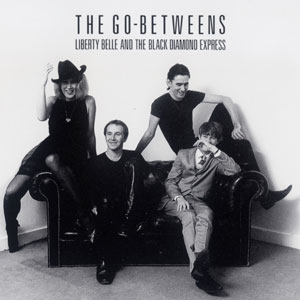
the-go-betweens-liberty-belleI thought I would take advantage of Nick’s non-appearance at round 52 to play something that I presumed he would have no interest in hearing seeing as it inhabits two of his musical blind spots – jangle-pop in general seems to get short shrift from Mr Southall and as the Go-Betweens hail from Australia, the chances of Liberty Belle offering much in the way of aural pleasure for him was always going to be slim. However, as it is my favourite album by one of my favourite bands, I always intended to bring it to record club at some point – this seemed like the ideal opportunity (if you’re reading this Nick and are gutted that you missed out on hearing what is one of the most exquisite indie pop albums ever made, I will happily lend you my copy…or you can, no doubt, find it on Spotify).

Liberty Belle was my first Go-Betweens album. I bought it in the wonderful Spring of 1993 having just returned from a year travelling through the band’s  homeland. On reflection, the timing couldn’t have been more prescient. Liberty Belle offered the perfect soundtrack to those gloriously fresh yet warming days of a great British Spring and listening now I am instantly transported back to that time, a time of re-discovery, enjoying my old haunts as if they were new, having spent some time away, with fresh and excited eyes. The Go-Betweens always traded in melancholic nostalgia and never more so than on their majestic fourth album. Liberty Belle is crammed full of wistful melodies and sparkling, iridescent guitars and violins conjuring up a warmth and comfort that sounds as though it could be cloying and trite but, for me, is simply beautiful and so affecting that it is all I can do not to shed a tear as the closing bar of Apology Accepted shuffles off into the play out groove.

Strangely though, Liberty Belle also provides me with a nostalgia for an Australia I never actually experienced – a dustier, simpler land to the one I spent time in. It’s the Australia I wanted it to be rather than the one I found myself in. Maybe that’s part of the reason why this album resonates so deeply with me. And maybe it’s the Australia the band wanted to be in as they suffered the grey miserableness of life in grimy old London town, 12,o00 miles from home!

All the Go-Betweens albums I own are great but all bar Liberty Belle house at least one clunker, one track that makes me question the band’s ability to sift the wheat from the chaff. But Liberty Belle for me has no weak links at all, just ten perfect pop songs from the bright and breezy opener Spring Rain through to the aforementioned Apology Accepted. The songs are divided equally between Robert Forster and Grant McLennan (Oz’s answer to Lennon and McCartney?) and scattered throughout are musical and lyrical pearls. There is no point giving a track-by-track account of the album as, a bit like Sister Lovers by Big Star, choosing one above the other is almost impossible – they exist partly to complement each other, the best one is the invariably the one you’re listening to at that moment in time.

It’s hard for me to be objective about a record I hold so dear and, much like the albums by American Music Club, I can entirely see that Liberty Belle could never have claims to greatness within the pantheon – this is no Trout Mask Replica, Revolver, Blonde On Blonde or What’s Going On, the musical world did not shift off its axis upon its release – but that isn’t the point. Albums such as Liberty Belle, that have the capacity to drill into our deepest, hardest to reach emotions are the ones that I would always pull first from the fire. Remember Nick, the offer’s there should you ever feel the need…

Nick didn’t listen: It’s just jangle pop, isn’t it? It’s probably quite good if you like that stuff.

Rob listened: I never bonded with The Go-Betweens and so clearly the sort of life-long love affair Tom and the GBs have shared just wasn’t possible. At the time I think I wanted them to be as immediate as the Wedding Present, as intricate and enveloping as The Smiths and as otherworldly as R.E.M. Instead they were something else, something either too subtle, or just tuned differently to my teenaged ears. I’ve since spent very enjoyable hours with ‘Bellavista Terrace’, their Best Of… but this was the first of their albums proper I’ve given my full attention to. I really enjoyed it. Really really. I’ll listen again and maybe go further. But I’ll never get it as hard as Tom. Some bands just snag you at the perfect time and make a mark on your heart and if you miss them, you’ll never know what you could have had.
ABC – The Lexicon of Love: Round 51 – Tom’s Selection

lexicon-of-loveUnless you’ve been living in a cave for the last couple of months you’ll be well aware that recent shenanigans at DRC have featured our Singles World Cup.  According to our extensive survey and sophisticated statistical analysis, Massive Attack’s Unfinished Sympathy is the best single of all time, confirming in the process what Graham and myself had long suspected…our musical tastes are just a cut above (we both happened to choose this track as one of our top 8). Yet in the aftermath, I found myself anguishing over some of my choices wondering what might have been, especially in light of a few howling omissions. Omissions such as:

  • No Witchita Lineman as I assumed Rob and Nick would both choose this.
  • No song by Nile Rogers – in fact nothing remotely disco at all.
  • No Say a Little Prayer by Aretha Franklin.
  • Nothing from one of the finest pop albums ever: The Lexicon of Love by ABC – an album so filled with gleaming pop perfection that any one of its 9 tracks could have been submitted (as they all must have been released as singles somewhere in the world at some point in time…I’m sure I remember Many Happy Returns reaching number 1 in Guinea Bissau in 1995).

The least I could do was to take this to our first bona fide meeting since Singles World Cup.

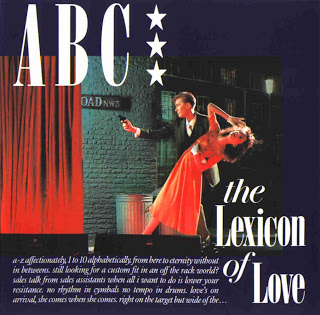
Lexicon of Love is one of those albums (like Steve McQueen and London Calling and Tonight’s the Night and Searching for the Young Soul Rebels and…) that I bought out of a sense of obligation to its classic status, having never really been drawn to its songs whenever I heard them on the radio. But really a tinny old transistor could never do justice to such complex, orchestrated magnificence. So whilst I entered into my Lexicon of Love experience with low expectations, it wasn’t long before I began to see what all those fawning critics were on about. I was hooked, lined and sinkered!

Although most definitely pop music, The Lexicon of Love offers so much more than this might suggest and hence stands proud at the top of that shiny, synthesized pop edifice that existed in the early to mid 80s. So many bands tried to run with this baton only to trip up within a few steps, missing the point that hidden within these nine pop jewels is a subtlety and sophistication that rewards repeated listens and works on so many levels that even after hundreds of listens it reveals new twists, sounds and atmospheres. Although a completely different beast, maybe the next record to come along that managed to repeat this trick so successfully was Portishead’s Dummy – I can’t think of many records in between these two that could claim to balance accessibility, sophistication and innovation quite so adeptly.

Yet despite having such riches in abundance, Lexicon of Love is defined by its two chart smashes – let’s face it, everyone of a certain age can sing along to Poison Arrow and The Look of Love. But to suggest that these two tracks are the album’s crowning glories is just plain stupid….they are all crowning glories. Tears Are Not Enough and All of My Heart were also released as singles and are every bit as good (in fact I prefer them, but that doesn’t necessarily make them better) and my favourite track of all varies with each listen although I always find the majestic and ominous Valentine’s Day to be absolutely breathtaking.

Although ABC went on to release a string of well enough regarded albums after the Lexicon of Love, they were always chasing their tails and their latter day output has always been (perhaps inevitably) overshadowed by this gargantuan debut album of pure pop perfection..after all, when you’re at the top, the only way is down!

Rob listened: Well, I don’t think ‘Lexicon of Love’ has anything in common with ‘Dummy’, but I do think that it sits squarely in the middle of Tom’s sweet spot, nestling in amongst other sophisticated 80s pop suites like ‘The Dreaming’, ‘Sulk’ and ‘Spirit of Eden’. I do remember the singles making quite an impression over a crackly AM radio, but I never went back to ‘Lexicon’ after I started buying records of my own, so tonight was my first time hearing it through. I loved it, predictably. I’ve been back to it four of fives times in the ten days since we met and have had ‘All Of My Heart’ in constant Head Music rotation. There must be pop music as head-spinning as this being made right now. I wish I had the time to open my ears to it, but first of all I think perhaps I’ll spend a couple of decades mining all the stuff like this I missed first time around.

Nick listened: I’m aware of the esteem that this is held in, but aside from a couple of snatches of choruses to the singles, I’m just a little too young to have felt its initial impact or to have been swept up in the resultant ripples later on. As a result, most of this was pretty much brand new to me, which seems nuts given the way the other guys enthusiastically talked about it, even if they hadn’t been into it at the time. 80s sophistipop is a rich seam, and this has nudged its way onto my longlist of stuff to explore further, the way Prefab Sprout did when Tom brought that.

Singles World Cup – First Round – Sixteenth Tie

It’s

Brian Eno – Baby’s On Fire

Have you ever heard a guitar solo like that? If Eno is God, Fripp is the devil.

VERSUS

Ike and Tina Turner – River Deep, Mountain High

The creative madness of Phil Spector helped to creative this monster of a “wall of soul”. The brass, the reverb, its all so glorious, underpinned by the tempestuous and ultimately abusive relationship of the Turners.

WINNER: Ike and Tina Turner


The Only Ones – The Only Ones: Round 50 – Tom’s Selection

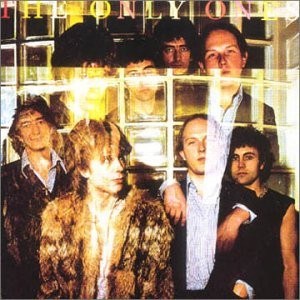
onlyDuring my first year at university I became infatuated by what I knew at the time as (but now am not so sure) the debut album by The House of Love…the one with Christine on it rather than the one with Shine On on it. Whatever, for a while (until the disappointing 2nd/3rd album was released) I, perhaps unwisely in some respects, hung on every word Guy Chadwick offered and I couldn’t help but notice his obsession with Peter Perrett and his band The Only Ones. It seemed that pretty much every issue of Melody Maker had some reference to The Only Ones by Chadwick and before long my record store browsing priorities had shifted from ‘H’ to ‘O’. Eventually I found myself a copy of The Only Ones’ final album, Baby’s Got A Gun and, although I need to remind myself of it in light of my recent full conversion to the first two albums, my initial impression was that it wasn’t very good…at all. So I stopped looking for Only Ones albums and moved onto something else – to be honest, I had probably given up on The House of Love by then as well.

But, as is so often the case, I chanced upon The Only Ones first two albums when they weren’t on my radar, bought them (thinking that at the very least I would now have a copy of Another Girl, Another Planet) and then played them for while, enjoying them well enough but still not really falling under their spell. I dug out the debut a few months back thinking it could be interesting DRC fodder, gave it a cursory listen and dismissed it as not good enough. However, a second (crucially?) LOUD listen brought it to life and since then I have listened to little else, alternating between The Only Ones and Even Serpents Shine both in terms of what’s on the turntable and in terms of which one I prefer.

Having given it much more thought than is necessary (or healthy) I have come to the conclusion (in contrast to most internet blogs I have seen) that there is nothing to choose between these two fine, scuzzy, exciting and spontaneous sounding records. After all, internet preferences seem to split the vote between those who favour the punkier immediacy of the debut or the more consistent uniformity of the sophomore offering. For me, they’re both great records and, the deeper I delve, the closer I get to seeing what Chadwick was on about all those years ago. Fabulous song-writing, excellent musicianship, messy production and over all, Perrett’s whiny, note imperfect and definitely acquired taste of a voice. I love Perrett’s guts to have a go with such limited vocal chords (although, after all, many of the biggest names in rock’s pantheon – Dylan, Reed, Young, Cohen – could hardly hold a tune) but I have a feeling there are those (I include Nick in this list) for whom his voice will prove too difficult to see past. It really is their loss as, by (proper and loud) listen three or four, you will not even notice those flat and warbled tones as you anticipate the complexities of what is coming next, reveling in the fine melodies on offer and wonderful interactions of the band.

The Only Ones kicks off with a red herring. The Whole of The Law is as gentle a song as Perrett ever wrote and, sweet and melodious as it is in its own right, it doubles up as the ideal appetite whetter for what comes next – only the best intro in modern music bar none! Another Girl, Another Planet is a true classic but to my mind the intro is so good that the rest of the song doesn’t quite compete and I enjoy the other punk rockers on the album (City of Fun, Language Problem, The Immortal Story) just as much. Interspersed between these energy fueled anthems to doomed youth are longer, brooding exercises such as Breaking Down and The Beast, in which Perrett’s voice is really put through its paces. He just about holds onto those long notes as if heroically highlighting his own shortcomings and laying himself bare just as much through his singing as through his lyrics. Either Perrett had very little self-awareness, supreme and mis-placed self-confidence or (most likely) wanted to really challenge himself and play to his weaknesses as his voice on these tracks is far less conventionally effective than on the faster numbers, if no less affecting.

So whilst The Only Ones may well be an acquired taste (and Even Serpents Shine perhaps even more so – the songs twist and turn more unpredictably even though the singing is stronger), with the benefit of volume, openness of mind and an acceptance of that voice, you will be able to welcome another couple of classics into your home, classics that will keep on smouldering away, giving pleasure long after the latest flavour of the month has burnt itself out.

Nick listened: Tom’s right, of course, that PP’s voice is… rubbish. To be frank. But, I reckon I could get used to it, because musically this record was great – intricate, tuneful, exciting, varied, and great fun. I was aware of the name The Only Ones, and Another Girl, Another Planet, but knew nothing of the context at all. A really good choice.

Rob listened: The Fall are my favourite band. Perrett sounded like Pavarotti as far as i’m concerned, so no problems there. No real problems at all, in fact. Having only known ‘Another Girl…’ previously, this was a real surprise, rich and deep where I had expected scratchy surface. For a band who could, and in the minds of millions may well, have stopped after just one track, The Only Ones certainly seem to have taken their chance to make something much more substantial then your average one hit wonders.

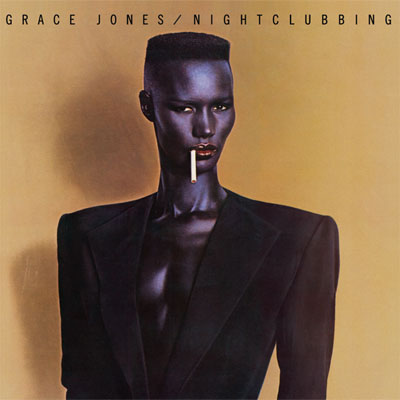
Grace Jones – Nightclubbing: Round 49 – Tom’s Selection

nightclubbing-As I recall, my first exposure to the phenomenon that is Grace Jones was the car crash TV experience of her infamous appearance on the Russell Harty chat show in the mid 80s. I guess that at the time she was out promoting Island Life (her Best Of compilation) and Slave to the Rhythm was vamping its way up the charts. Settling down to an undemanding 30 minutes of light celebrity chat I was confronted by the sight of Jones pummeling Harty (in hilarious flappy hands fashion) on live TV because he had the gall to slightly turn his back on her as he tried to interview one of his other guests. It was all way too much for my sensitive teenage self and I ran away, cowering, to hide behind the sofa. And that was that….

…until, that is, I was given a copy of the wonderful compilation Funky Nassau: The Compass Point Story. Amongst its sunny grooves and extended funk work outs is My Jamaican Guy (or My Usain Bolt Guy as my 8 year old son likes to sing) an infectious number that, although far from Jones’ finest song, was enough to pique my interest in her back catalogue and, following some internet research, it wasn’t long before Nightclubbing had risen to the top of my ‘most wanted’ list.

Nightclubbing is no way near as scary as my 14 year old self would have feared – listening to it, it seems as though Jones had yet to develop that terrifying yet cartoonish (if you’re reading this Grace, please don’t be angry) diva thing – on Nightclubbing she comes across as ominous and otherworldly but, crucially, genuine and real; more ‘Alien’ than ‘Godzilla’ if you see what I mean. Consistently excellent throughout and surprisingly accessible, I suppose Nightclubbing’s most well known track is Pull Up to The Bumper; a song so crammed full of innuendo that it is incredible that Mike Read (or any of his virtuous, upstanding chums at Radio 1 at the time) didn’t choke on their (hairy) cornflakes and immediately ban it from the airwaves, hence saving our delicate sensibilities from its possibly prurient content whilst they could carry on….doing all that fine work for charity!

But Pull Up To The Bumper is by no means the standout in the set, just one of the many highs. It is preceded by Walking in the Rain, a song that sounds like it could have been written for a James Bond film and a hell of a lot better than A View to a Kill it is too (not hard admittedly). Following it is Jones’ radical reinterpretation of Bill Withers’ Use Me which is transformed from a soulful strumalong into a gargantuan slab of reggae/funk that crawls along like some slithery, hungry jungle-based animal for its riveting five minutes or so – listen to it and tell me you don’t think of a crocodile or python or something.

One thing that speaks volumes about the quality of Nightclubbing are the cover versions – as well as the ones already mentioned, Jones also has a stab at Iggy’s Nightclubbing (unsurprisingly, given the album’s title) and somehow makes it her own, whilst sounding unmistakably Iggyish in the process. Jones also covers Sting’s Demolition Man (from Ghost in the Machine) and, whilst it’s easy to forget that Sting used to write good songs every now and again, next to this The Police sound decidedly safe (I like both versions and, to me, neither sound like filler – still not sure about what constitutes ‘filler’, despite Nick and Rob’s best efforts to educate me – but Jones’ version is surely less fillery than The Police’s).

And there we have it – Nightclubbing: exciting, vital, as fresh as it ever was and no where near as scary as one might expect.

Rating: PG

Rob listened: I had the same introduction to Tom, and the same reaction. Growing up I had no idea what Grace Jones was. Singer? Model? Robot? Insurrectionist? Mental case? A prim 10-year old, I rejected her. Way too scary. Despite the fact that less than 5 tears later I’d be dragging Public Image Limited and The Fall into the house, I retained a subconcious view of Jones as a dangerously transgressive figure best avoided, a Ballardian anti-hero.

Of course, throughout that time her music was seeping in via the radio and TV, but really it was only seeing her astonishing performance at last year’s Diamond Jubilee concert that the penny dropped and I began to think of her as an International Treasure.

‘Nightclubbing’ was great, although credit to Graham for observing that ‘having Sly and Robbie as your rhythm section helps’. I’ve since bought ‘Warm Leatherette’ which on early inspection sounds equally alluring and distinctive. I like Grace.

Nick listened: I know this pretty well, having got acquainted with it a decade or or so ago when I worked in the library – we had a copy on 12″ and there was a period when it got a battering on Friday afternoons. As intimated by Tom and Rob, Grace is an amazing, ageless, alien presence in our culture; I think my first encounter with her was in the film Vamp, which was… influential… to my pre-adolescent self. As I said on the night, I hope the new Daft Punk album sounds like, and is almost as good, as this. A brilliant record. I should probably buy my own copy now.

Graham listened: For all the reasons the others have mentioned, I never understood, or liked, Grace Jones. She seemed to emerge from a gratuitous New York nightclub/fashion/modelling scene which I completely despised in the late 70’s/early 80’s. I was convinced she only got the breaks because of her physical attributes and that there were others more deserving of the support from record companies. Her image and diva-like behaviour left me cold. This album felt cold and detached with her image being as important as the sound. Annoyingly, it is very good.

Buffalo Tom – Let Me Come Over: Round 48 – Tom’s Selection

10805Buffalo Tom were the grunge era’s nearly men; seemingly always on the verge of breaking through into the big time but destined to be forever looking on from the sidelines (like the everymen they so blatantly were) whilst the demi-gods – Cobain, Vedder, Dando, Corgan – strutted their charismatic stuff through the pages of NME, Melody Maker, Rolling Stone and Spin and on to the day glow X-factor hit machine of its time that was MTV. I love the band photo of Buffalo Tom on the back of Let Me Come Over – Bill, Chris and the eponymous Tom sat around an anonymous table in some anonymous diner, looking slightly apprehensive yet vaguely excited like three young Dads about to go and see their children in their first Xmas panto. It’s a brilliantly mundane photo of a brilliantly ordinary band (that’s not meant to sound pejorative at all) and it wholeheartedly captures the reason why I like them so much…and why they could never mix it with the big boys – they were just three great blokes singing great songs without an iota of pretense or showmanship.

And that’s why, of all the records I immersed myself in the Spring of 1992 (one of the key turning points in my life) this is the one with the greatest power to evoke personal (rather than scene based) nostalgia. You see, when I listen to Nevermind or Blue Lines or Slanted & Enchanted all records that, in their own way, broke a mould and set a new agenda, and all records that I love or have loved, I do get a sense of nostalgia but they don’t take me back to myself, sat in my bedroom in my parents’ house counting the days before I would leave to go on my trip of a lifetime to Australia. No. I am reminded of Grunge and Trip-Hop and Lo-Fi and the music scene in general at the start of the 90s. These records are so connected to what came next, so steeped in the scene they spawned that, for me, the memories they evoke are forever blurred, tarnished even, so that I can’t even tell whether those memories are true or illusionary. But seeing as it was one of the most exciting times of my life, full to overflowing with the thrill of anticipation, it’s great to head back to those feelings every now and again…and that’s where Let Me Come Over comes in.

Buffalo Tom existed in a vacuum really. They had no angle, no ‘USP’ as Nick puts it. They just wrote really good songs…well, I liked them anyway! Admittedly some of their work was patchy and, for me, their five albums go: good, not so good, great, not so good, good. But I may be wrong as I haven’t listened to albums 1, 2 or 4 for some time now (and there are a few other albums but I don’t know them). But I am pretty sure that album number 3, Let Me Come Over, is the one where the stars aligned and there can be but a few albums of straight ahead US alterna-rock with a hint of grunginess that set the bar so consistently high through 12 tracks. There are no weak links here, no filler, no mis-steps and revisiting Let Me Come Over is like spending time with a long-lost, very dear and completely trustworthy friend. There’s no danger, no unpredictable mood swings or ghosts in the closet, just warmth, pathos and 12 sweet melodies – from the noisy opener of Staple to the noisier closer Saving Grace, through moments of calm (Frozen Lake), poignancy (Mineral, Porchlight) to anthemic sing-alongs like Taillights Fade and the unimpeachable Larry – that make me feel good about life. And what’s wrong with that?

Rob listened: I loved Buffalo Tom and I fully endorse Tom’s assessment of their place just below and to the right of the pantheon. Although a couple of their songs, ‘Sunflower Suit’ and ‘Crawl’, had as much impact one me and held the same addictive pull on me as anything Nirvana or Pixies ever released, it seems broadly fine for them to stand as workmen. The work they did was great and they made me very happy by doing it. ‘Birdbrain’ probably has more resonance for me, soundtracking the Summer between my first and second year at university, but it was great to hear ‘Let Me Come Over’ again after so many years. It may be off in the distance now, but its taillights have yet to completely fade.

Nick listened: My brother, who’s about the same age as Rob and Tom, professes to only like 3-minute-power-punk-pop. I have noticed that he has a Buffalo Tom album or albums on his shelves. Which is not surprising. Despite being aware of them for ever, seemingly, I’ve never actually listened to them knowingly. As such, I’ve got none of the attachment to them that Rob, Tom, and presumably my brother might do. This was very pleasantly workmanlike, as it were, but I definitely got the sense that it lacked that certain je ne sais quoi or creativity or charisma or insanity that the likes of Nirvana or Smashing Pumpkins had which made them explode out of the scenes from which they emerged. But Buffalo Tom don’t seem to be all that bothered about not exploding, which is fair enough.

Graham listened: Another band I always knew were there and deserved investigation, but never got around to it. I thought this was really great and after borrowing the album and listening to some others, I would agree it sounds their best. Strangely it sounds as if the ‘…Tom’s did it for Tom, in the same ways the Screaming Trees, did it for me around the same time. As no-one is  still reading this far down a review, its probably safe to reveal I currently don’t, and have never have owned, Nevermind. Phew, think I got away with it!

Joni Mitchell – Hejira: Round 47 – Tom’s Selection

joni-mitchell-hejiraSubconsciously pandering once again to the boss’ surname, I found myself selecting another ‘Mitchell’ record to follow on from round 24’s ‘Mitchell record of the Anais variety’. Funnily enough the two records are pretty happy bedfellows as they both work as song cycles that are played out in the rural hinterland (in Anais’ case ‘Wilderland’) of the USA. And both give the impression of being laboured over, refined and revised coming as close as can be to realising the vision of the artist who made them. Lyrically rich and musically sumptuous, these two records stand out amongst those I have brought to Record Club of being works of great artistic accomplishment and skill and what they lack in spontaneity and raw edge they gain in depth – they are records that reward repeated listens and close attention. Rob must be a proud Mitchell indeed; surely it’s time the male members (unfortunate terminology admittedly) of the clan stepped up to the plate!

Of all the Joni albums I own (Blue through to Hejira), this one has always been the one I have been predisposed to, the one I regularly pull off the shelf, the one I am intrigued by. It’s not an easy listen; the songs are long and wordy and lack conventional melody; Joni’s voice throughout is exquisite but conversational in style and so the hooks that exist (and they do exist) are to be found elsewhere. Perhaps in the words she sings – current faves: ‘He sees cars as sets of waves’, ‘While the boarders were snoring under crisp white sheets of curfew’, ‘As snow gathers like bolts of lace waltzing on a ballroom girl’, ‘I dreamed of 747s over geometric farms’. To my untrained ears, these sound like the closest thing in my record collection to being poems set to music.

If the words don’t do it for you, perhaps the bass will as it is just about the only instrument on the entire album providing variety within the songs. And the playing is wonderful throughout, whether by Jaco Pastorius or Max Bennett, the bass draws you in and keeps you guessing right from the word go – in fact I reckon I could happily listen to the bass on album opener Coyote with no accompaniment on an infinite loop.

Having recently had a bit of a breakthrough with Hejira’s forebear, The Hissing of Summer Lawns, it has become ever clearer that the differences between the two albums is incredible. THOSL’s songs are the exact opposite of Hejira’s; complex structures that writhe out of of your grasp just as you think you’re getting to grips with them. Hejira is a much more subtle listen – it requires patience and a willingness to get to know it, not so that it no longer jars (as with THOSL) but so that those miniscule variations in arrangements and motifs can be recognised and enjoyed and if you ever worry that you’re going to have got them all worked out and have nothing left to unearth (you won’t!) you can always just kick back and spend an hour with one of the finest wordsmiths modern popular music has yet produced.

Nick listened: I’ve only ever listened to Blue by Joni, even though she’s an artist who seems to get name-checked by a huge amount of musicians I love (Tom began his intro on the night by saying how much Patrick Wolf loves this album). I’m aware that some of her later work is very jazz-influenced/derived, and have been curious to investigate The Hissing of Summer Lawns for a while. Hejira wasn’t really on my radar though, and on one listen wasn’t quite jazzy in the way I’d have liked – though from what Tom said I suspect Hissing… might be. It was still lovely though, and the lyrics are so dense and literary (note: I’m not putting ‘literary’ or ‘poetic’ lyrics on any higher artistic level than wordless guide vocals) that they’d take far more attention (and time) to unpack than a DRC session can facilitate. Awesome bass playing. A lovely and compelling sound.

Rob Listened: I’ve never knowingly listened to a Joni Mitchell album. I carried some ill-formed impression of what they’re like – drippy James Taylor-esque acoustic cooing – which i’m sure formed back when my musical planet was cooling from the molten heat of post-punk, pre-rave Manchester. It doesn’t help that her heyday sits squarely in my mid-70s blind spot.

Hejira was great. Fluid of motion, pure of sound. It fleetingly recalled lots of stuff I really did fall in love with and to, but remained resolutely other. I loved its flowing construction, clearly very deliberate, but seemingly unfolding casually, constantly, like a dreamy meander through the wilderness.

I’ve never knowingly listened to a James Taylor album.

Slint – Spiderland: Round 46 – Tom’s Selection

slint_spiderlandSometimes you just don’t know how lucky you are!

I chanced upon Spiderland not long after it had been released. My curiosity had been whetted by Albini’s stratospherically hyperbolic review in the Melody Maker (possibly the most renowned signing off of any album review ever?) . But I never actively sought out Spiderland, it was just on my radar when I went sniffing out that next life-changing album. And so it turned out to be…because once Spiderland had got its hooks into me, it just wouldn’t let go; it made much of my record collection at that point in time seem formulaic, safe and unoriginal and in many cases it made me appreciate those awkward, spiky albums (you know: Beefheart, latterday Waits, Red Crayola, Pere Ubu) all the more. For many years (back when I used to consider such ridiculous notions) – especially in those early days when it was MINE and I didn’t have to share it with all manner of post-rock wannabees – Spiderland was right at the top of the tree, my favourite ever album…if anyone would care to ask. So I was lucky to experience it at the moment of birth, when it crawled out of its modest Kentuckian primordial swamp and hear it in all its breathtakingly original glory.

I sympathise with the Nicks of this world who have come to the ‘party’ after the event. Acquiring acknowledged classics long after the hype machine has kicked into top gear is often a curiously hollow experience for me. Appositely, it took me a long time to warm to Closer by Joy Division (Rob’s choice for this round – I purchased it in 1993) because I had unrealistic expectations of what it could offer…it is just music after all, very good music as it happens but still just music! Similarly, over the decades Spiderland has gained almost mythological status with ever increasing numbers of name checks from admiring fans (often musicians) and its sound and structures have been echoed by other acts, some good, many awful. When such a weight of expectation combines with poorly conceived lowest common denominator copycat bands, surely the most likely outcome when listening to the motherlode is disappointment! No, it’s always better to get there first, when you have no expectations and can only be surprised by what you hear on the first listen.

That said, I didn’t necessarily click with Spiderland immediately. I recall getting Mercury Rev’s Yerself is Steam at about the same time and that was a much less subtle more obviously ‘out there’ record than Slint’s offering and so, for a while, that took pride of place on my turntable. But before long Spiderland’s creepy world took over and it was just about all I wanted to listen to for the majority of 1991 – a year that for many is exceptional but for me was all about just one record (I was always disappointed by Loveless, Bandwagonesque and Laughing Stock, much preferring their predecessors. Yerself is Steam went the way of Nevermind and fizzled out pretty quickly despite both having burned bright initially). But Spiderland was the gift that kept on giving, each listen revealing new sounds, fresh variations and dynamics, the atmosphere of the record would alter with the weather, my mood, the location I was listening in. It was quite unlike anything else. Hell, my Nan even thought I was doing the hoovering one day when she walked past my room and it was on. I can think of no higher praise than that!

It was obvious from the off that Slint had laboured over these six songs, which makes the story of Spiderland’s recording all the more remarkable. In a perilous financial situation going into the recording studio, Slint could only afford two days studio time to nail their masterpiece. Luckily they had spent six hours a day every day for the previous six months practising! Even more extraordinary, none of the vocals had ever been heard before as the band only practised the songs as instrumentals. McMahan had never ‘sung’ before either which makes his perfectly judged singing (no one would ever argue that McMahan is a strong singer but that’s not what this is about) on Washer all the more impressive. The upshot is that Spiderland is played superbly and constructed meticulously yet manages to stay fresh and feel relatively spontaneous and real.

Twenty two years on I am still in thrall to this amazing record. I genuinely heard new things on it when listening again prior to our meeting and I am pretty sure that Spiderland will prevail long after its unfortunately oversimplistic mantle as the birthplace of post-rock has long been worn away. Slint never went on to make another LP and that’s right. As my friends will attest, I wouldn’t buy it anyway! After all, how can you improve on perfection?

Nick listened: Sadly I didn’t hear Spiderland until 2007, by which time, sadly, I’d already endured a decade of Mogwai and Godspeed and Explosions In The Sky and other miserable men in black clothes doing things in the name and wake of this record, and it was impossible for me to hear past that legacy. (Good grief, Mogwai are a tedious band, who promise so much and deliver so little. About one song per album is worth taking away.)

So finely did Slint lay down the template for the people who followed them that I’ve been unable to hear them as anything other than cliché themselves; the mumbled vocals, the pointy, repeating & changing guitars, the drums that jar at the edges of where you expect them to be, the passage from quiet to loud, the crushing crescendos. Do Slint do it better? They might do, but it’s a thing I’ve heard so much, and feel I’ve gone way past (it feels like a very late-adolescence, early-20s sound and emotion and instinct to me, and I don’t particularly want to go back there) that I can’t quite tell.

Tom’s passion for this record makes me want to get it though. I’ve dug out my copy of Spiderland, asked for a lend of his 33 & 1/3 book on it by Scott Tennent, and I’ll see what happens.

Rob listened: Will Oldham/Bonnie ‘Prince’ Billy is one of my favourite, most precious artists. I love him and everything he does. I bought the first Palace Brothers records solely on the basis that he was the guy who took the photo on the cover of ‘Spiderland’. I loved that record too. I never understood it, and I never wanted to. I don’t know what they were trying to achieve, have no idea whether they felt they succeeded. I don’t know what other people see or hear in it, but for me it’s a shattered haunted house of a record, constantly shifting, reforming and slipping my expectations. I don’t listen to it too much these days, I reckon because I don’t ever want to solve its puzzles. One of the greats.

Graham listened: Certainly one where the discipline of DRC pays off. Had I been listening alone, I’m not sure I would have got much further than 5 minutes. When Tom suggested some loose comparisons to ‘Spirit of Eden’, I may have expressed myself somewhere along the lines of, “yur avin a laarff”. By the end of 6 tracks, I was intrigued and wanting to hear it again.

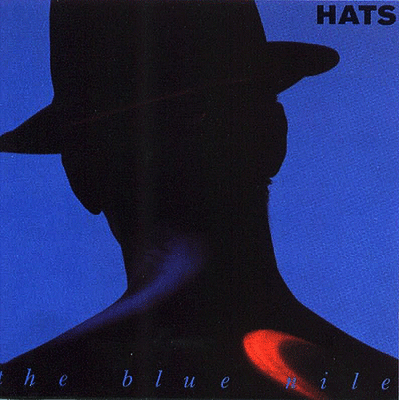
The Blue Nile – Hats: Round 45 – Tom’s Selection

bluenile_hatsGraham sowed the seed at our last meeting – as cinematic listening experience go Hats is up there with Dummy as one of the most evocative, image laden pieces of art this side of an Ennio Morricone soundtrack.

Hats is the Blue Nile’s second album and for me, it is exquisite in every respect. I’ve seen it described in various places as melancholic, plaintive, wracked, harrowing but to my mind none of these adjectives quite nail it. The word that always springs to my mind when I listen to Hats (although you don’t really listen to Hats, you live inside it) is ‘romantic’…doomed romance undoubtedly, but beautiful with it and so, so sad that it is one of the few albums, possibly the only album that consistently leaves me choked up. Whilst this was being played at record club Rob seemed to mysteriously morph into Graham and just sat through the entire record without uttering a word. I am intrigued to know whether this was due to him:

a) Being asleep.

b) Becoming so maudlin whilst listening to Hats that he couldn’t bear to speak for fear of blubbing.

c) Being mesmerised by the album’s emotional heft and musical brilliance.

d) Being none (or all?) of the above.

No doubt the truth will out with time. Whatever, Hats broke new records for the quietest listen we have yet had with whole tracks passing by in total silence!

In direct contrast to an Elvis Costello album, Hats sets a high bar from the off and maintains that quality throughout. On the night I played Always Coming Back To You as a precursor (my favourite song from Scott 1) because Hats has always struck me as the kind of album that Scott Walker would have been making if he had continued to produce albums like the first couple of self-titled efforts on into the 1980s. The production values are undeniably of their time, but the songwriting is timeless, from the gigantic swirling mass that is Headlights on the Parade, the equally fine (despite the Tina Turner bassline – thanks Graham) Downtown Lights which reveals an uncharacteristic glimpse of Paul Buchanan’s anger and angst in the song’s quite brilliant coda, to the more stately, practically funereal ballads of Over the Hillside, Let’s Go Out Tonight and From a Late Night Train. Throughout Buchanan’s voice is ravaged and ragged, always effortlessly powerful but equally always restrained; this is a heroic effort free of sentimentality where the city is the backdrop and hopeless love is the subject.

The city plays a huge part in Hats success as an album, creating images in the mind that are hard to shift and shape the record, providing the ‘scenery’ for the acts that are played out in its seven perfect jewels.  But the city that The Blue Nile evoke on Hats is a million miles away from the snafu city that Bitches Brew has always conjured up, the dangerous city that Stevie Wonder sang of on Innervisions or the alienating, paranoid Cities on Talking Heads’ Fear of Music. No, Hats is a city of upturned collars, hunched shoulders, drizzly pavements, loneliness and street lamps. And this picture is painted in each and every song, nuanced and subtle and poignant and devastating until the final Saturday Night offers the faintest of glimmers of hope when Buchanan admits that he ‘loves an ordinary girl (who will) make the world alright’. The fact that earlier in the song he admits to the listener that he expects this love to be unrequited is par for the course…this is The Blue Nile after all, not bloody Katrina and the Waves!

Nick listened: There isn’t much else to say after Tom’s beautiful write-up here. I’ve owned Hats for years and, while I don’t play it all that often because it does, certainly, require a specific mood to fulsomely appreciate, I do love it dearly. A beautiful, lovelorn, windswept, failed urban romance of an album.

Graham Listened: A band I seemed to have read a good deal about over the years and would probably have had agreed they were good despite never having listened to one of their records. Tom, your write up says it all, in fact, “I hang on every word you say”. Magnificant sweeping cinematic vibe, whereas I always had imagined a far more delicate and paired back sound. Shows how much I know!

Rob listened: First things first. Tom, since you asked, the answer is ‘not quite’ to each of the four options above, but if you mixed them all together into some sort of swirling mood-gloop, that’s probably somewhere near how I felt. In truth, my state of mind was largely being shaped by the comedown from three days of codeine-based painkillers, followed by the double-whammy of a massive local anaesthetic and preparatory root canal work. The effects of the former were fading, and aftermath of the latter starting to make itself felt. I guess in some senses, the Blue Nile probably did fit my mood fairly well.

It struck me, listening back to ‘Hats’ a couple of times after the meeting, that to share Tom’s feelings for it you probably either had to have lived with it through thick and thin and to know it intimately enough that Paul Buchanan’s weltanschauung becomes your own for the duration, or alternatively be attracted to the precise, smooth, lush signifier sounds of 80s sophisticate pop. I reckon Tom, Nick and Graham each tick one or both of these boxes. I’m afraid I don’t.

Some of ‘Hats’, particularly some of Buchanan’s vocal lines, has started to grow on me, and I can imagine the circumstances in which I might reach for it. Balanced against that, I feel sufficient, gentle, magnetic repulsion from the AOR sound that I suspect my mental filing system will keep pushing The Blue Nile towards the back.

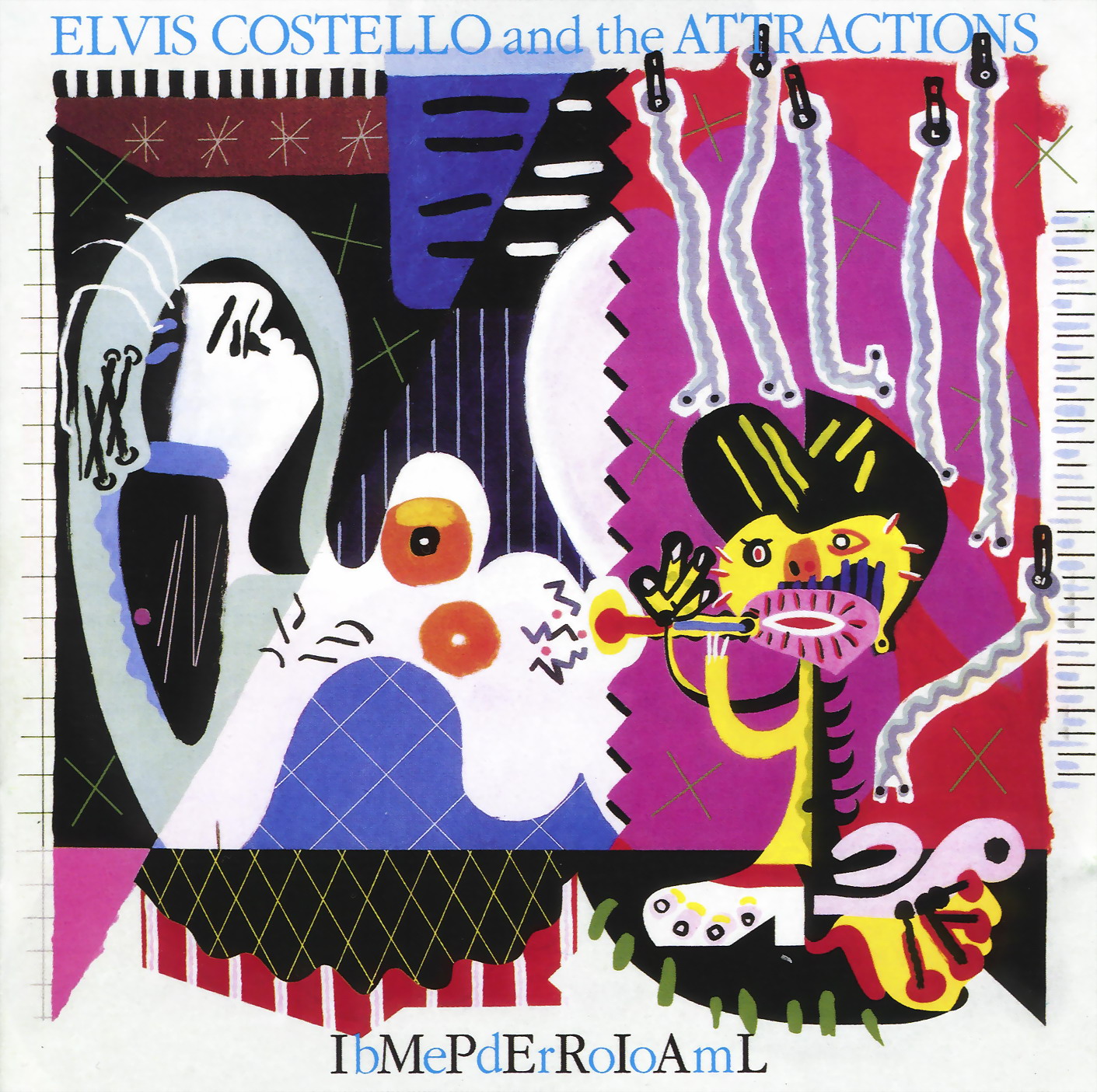
Elvis Costello – Imperial Bedroom: Round 44 – Tom’s Selection

28940Picking an Elvis Costello album is not an easy task. From 1977 to 1982, Costello was on such a creative roll that he released seven studio albums! That in itself is amazing, especially when compared to the typical time taken to make a record in the present day.  The record review website, Allmusic gives all bar Almost Blue, one of (!) Costello’s albums from 1981,  (an album that consists mainly of cover versions) five stars! Prolific he most certainly was. Rob Pollard he most certainly was not! With Guided by Voices there is always a feeling that they stumbled across their classic albums as if by chance. You know, throw enough stuff out there and, by the law of averages, you’ll eventually produce a classic or two. So whilst Guided by Voices hit a rich vein of form from Bee Thousand through to Under the Bushes, one always senses this had more to do with luck than judgement. Certainly there’s much chaff amongst the wheat of their discography. In contrast, Costello’s biggest problem is an embarrassment of riches – he was producing classic albums at such a rate that it all seemed too easy and somewhat overwhelming. All six classics from his initial run have their own identity, all six are packed with great songs but none stand out as THE classic. I suppose received wisdom is that This Year’s Model is his absolute peak – it’s raw and angry and full of energy and vitality. But for me it’s no better than Armed Forces (the melodies on Armed Forces are sweeter, the hooks stronger) or the GBVish Get Happy, crammed with little jewels that seem tossed off but reveal themselves as perfect and perfectly concise pop songs over repeated listens, or possibly his most underrated album, Trust, in which the fires of ire still burned bright but the music and song-writing was starting to show signs of the sophistication that would come into full effect on Imperial Bedroom.

In the end it came to a ‘coin toss’ between Trust and Imperial Bedroom and, whilst I imagine Rob would have preferred the angrier and more direct former choice, my daughter Tess informed me that Imperial Bedroom was the better album and there is no way I would ever argue with her. So that’s what I took.

When it was released in 1982, Imperial Bedroom was set up to fail. Rumour has it that Costello was somewhat piqued when Columbia marketed the album as his ‘Masterpiece?’ on first release. I’m not sure that it is a masterpiece. Then again, I’m not sure any of Costello’s albums are. For me Costello’s output has always been marred by its unevenness. The highs Costello hits are so, so high that they cast long shadows over the lesser tracks on all his albums. Here are a few examples:

My Aim Is True – compare Alison with Sneaky Feelings.

This Year’s Model – Lipstick Vogue vs Night Rally

Armed Forces – Party Girl vs Sunday’s Best

Get Happy – King Horse vs Black and White World

Trust – Watch Your Step vs Different Finger

Punch The Clock – Shipbuilding vs The Invisible Man

They’re all fine songs of course, but I would argue that the first songs suggested are all top of the Premiership the others are simply in another league (you can choose which one).

And in this respect, Imperial Bedroom is no exception. So, whilst it kicks off with what could well be his best song period in Beyond Belief (so amazing it is that I just had to add the hyperlink) and also has Costello top ten material in Man Out of Time and You Little Fool, some of the other (perfectly fine) songs on the album (..And In Every Home, Human Hands, Boy With a Problem) sag somewhat in comparison. But the great thing about Imperial Bedroom for me is that whilst it peaks and troughs it all sounds so good, is so beautifully arranged, played and sung (even though, as Nick pointed out, Costello has a ‘bloody weird voice’) that you can sit back, relax and let the album wash over you in a way that so few records in my collection, or indeed in Costello’s catalogue, do.

Nick listened: Tom’s back into the swing of things now – bringing records I bought years ago (when there were still record shops in places like Exeter) that I’d seen cheap and thought “yeah, I ought to have that”. About three early Costello records were bought together – this, Armed Forces, and Blood and Chocolate – after I’d picked up (and thoroughly enjoyed, as I recall) When I Was Cruel back when it came out in 2002. I’d had a Best of Elvis Costello and The Attractions compilation (I dunno where it is now but we’ve just reshelved the CDs and it’s not here anymore) so knew a handful of songs, but I just never managed to get around to listening to the three early albums proper. Who knows why? I should make a list of all the unplayed CDs on the shelves. Heard melodies are sweet, but those unheard are… pointless.

Anyway, I enjoyed this, and I played it again (my own copy!) over the weekend. I suspect, as with a lot of ‘songwriters’, that the songs will take many more listens to unfurl them properly (especially when there’s so many – 15 tracks on Imperial Bedroom). Christgau, who I’m not a fan of particularly, claims that the peaks of Imperial Bedroom are “as great as songwriting gets”, but also accuses Costello of being “precious”, “gnomic”, and “pretentious”. I’ve always got the feeling from Costello that he’s very much about craft, about artisanship, about deliberation, that he’s a scholarly songwriter, a wordsmith and a tunesmith. There’s nothing wrong with this at all – far from it – and I don’t imagine many songwriters just channel stuff from the ether, despite what the mythology of rock suggests, but with Costello this studiousness almost seems to count against him for some reason: like he can’t be perceived as ‘authentic’ (which is a massively loaded and problematic term I keep meaning to do battle with on my blog) because he’s too clever. Anyway, I was delighted Tom played this, and I look forward to getting to know it better.

Graham listened: I’m glad Tom brought this along as with the sole exception of ‘Blood and Chocolate’, I have never listened to an entire Elvis Costello album. I never appreciated his craftsmanship and talents in the early days and now I look at the size of his  back catalogue, its almost too daunting to know where to begin.  There were too many great songs to fully take on board in one sitting which led me to ponder why I would have ignored him as an artist at the time. Guess I and many of the record buying public just weren’t ready to appreciate such quality in 1982! Maybe, like bottles of good Burgundy, I should have bought more of his albums at the time, then laid them down for when I had a better educated (musical) palette.

Rob listened: I’m sorry to say that this passed me by, in the mid-eighties when I was aware of Costello but never really investigated beyond the chart hits, in the last few years when i’ve finally got around to buying and loving some of his early albums, and on the night when, for whatever reason, it just slipped around my ears and into the night. I got the sound of sophistication, perhaps Costello’s music catching up with his lyrical dexterity, but not much more. I’m sure this is an album that could become a favourite companion given time, as compared to ‘This Year’s Model’ which had me hooked half way through my first listen. Shallow, I know, but what can I do?