Deerhunter – Halcyon Digest: Round 72 – Tom’s Selection

download (1)Lacking inspiration for the notoriously difficult Round 72 I turned to the painfully untrendy Pitchfork website for help. Specifically their top 100 albums of the last five years list (aka Look Everyone, We’ve Got a New List. You Will Not Be Able To Resist A Skim Through and That Will Make Our Site Stats Look Much Better).

I thought I would take the highest placed album on the list that I own. And this is it. To make matters even more enticing, it’s an album I have never really got to grips with, always finding it some way off the brilliance that so many claim it possesses. To make matters even more enticing than that(!), it’s an album (and a band) that I know Rob loves, so I was fully expecting something akin to born again conversion to occur. Surely, I thought, if both Rob and Pitchfork think so highly of this album (Pitchfork rated it the third best of the last five years – that’s third best out of a hell of a lot of records), a careful listen whilst someone points out to me just what it is that I have been missing all this time will be all it takes. Unfortunately, it turns out that Nick’s arguments as to why Halcyon Digest isn’t such a great piece of work were more convincing, aligning as they do far more closely with mine and, as a result, I am probably further away than ever to understanding just what it is that makes this album so special.

Now I don’t want to give the impression that Halcyon Digest is a poor piece of work. It’s not at all. But, to me, it is deeply flawed. There are wonderful songs on Halcyon Digest (Helicopter stands out), there are good songs with outstanding bits to them (Desire Lines, Fountain Stairs), there are other good songs that are simply good all the way through (Earthquake, Coronado) but, to my ears at least, there are just too many clunkers here (Don’t Cry, Revival, Basement Scene) for this to attain anything even approaching classic status.

Thinking about Deerhunter in general and Halcyon Digest in particular, my biggest problem comes down to Bradford Cox’s way (or, rather, lack of way) with melody. Sure, an album doesn’t have to be packed full of soaring melodies to be a classic, but an album of well defined, discrete, guitar based tunes, surely needs to do better than this – too often on Halcyon Digest the pace is leaden, the tunes are predictable and the songs mumble their way through to a wholly unsatisfactory conclusion.

But the most frustrating aspect of all is just how close Cox is to producing a truly outstanding record. The guitar work on Halcyon Digest is remarkable – Cox can obviously make his guitar sing in ways that are far more affecting than his vocal chords – and the lyrics are never less than interesting. The second half of the album (once the execrable Basement Scene has been negotiated) is very good indeed and Helicopter has to be up amongst the best songs of the last few years. When he is good (it was the same for me with Microcastle and Weird Era Cont), Cox is very very good but…rather like the little girl with the curl in the middle of the forehead…when he is bad, he is horrid. And, unfortunately, from now on I can’t see anyone, be they Pitchfork, Rob or Bradford Cox himself, convincing me otherwise.

Nick listened: I bought Halcyon Digest as my ‘Christmas album’ back in 2010, and I quite like it. But I can’t go any further than that, and I’m absolutely baffled by the fact that some people, presumably, think it’s masterpiece enough that it ended up third in Pitchfork’s ‘decade so far’ list. (But I hate their number 1 choice, so, y’know, horses for courses.)

(As an aside I recall a similar list by Select Magazine in 1995, wherein they anointed Screamadelica, which I bought pretty much because of that list, and fell in love with.)

I’m baffled because Halcyon Digest doesn’t feel like a statement, a discovery, a platonic essence, or a perfectly crafted artefact to me; it just feels like ‘quite a good indie rock record’. Which isn’t a bad thing, I just don’t generally think of quite good indie rock records as being worth the plaudits they often get lauded with – see The Suburbs by Arcade Fire as another album I just do not understand the praise for; a few nice songs, a couple of them very nice indeed, but caught up in so much generic plodding that I can’t get excited about it.

Maybe it’s the genre-snob in me; I could accept the power and pleasure of a really generic soul record or dance record or jazz record, perhaps, but ‘indie rock’ feels like such a brown genre to me (in that it sucks in so many colourful influences but often ends up becoming a smear of brown rather than the rainbow it clearly wants to be) that, as much as I can enjoy it, it usually fails to transcend unless it does something dramatically creative or unusual or with really staggering perfection. Halcyon Digest just feels so utterly ‘quite good’ to me that I can’t imagine anyone feeling that passionately about it. Whereas, much as I dislike it, I can kind of understand the admiration for My Beautiful Dark Twisted Fantasy, even though I think it’s wrong.

Rob listened: And so it falls to me to quite like this record. And that’s fine. Tom, I reject your request for a guided conversion. If Deerhunter don’t click with you then that’s fine by me, fine for you and, one presumes, fine by them too. Even if I wanted to, I couldn’t adequately explain what I find so beguiling about this band and, probably, this record in particular. It’s a mercurial property, seen in glimpses, flashes of elemental purity. In fact, let’s call it alchemy. For what Deerhunter do so magically, is take the building blocks of outsider rock and roll, from Bill Haley to My Bloody Valentine by way of the Stooges, the Velvet Underground, Modern Lovers and the Jesus and Mary Chain, and stack them up to create something new, some delightful structure built from uncannily familiar parts.

It’s an instinctive conjuring trick, producing perfectly balanced creations, made with careful precision by savants trusting their guts. Part of its ticklishness is the opacity of the intent. Is this deliberate pastiche, or are they really channeling 50 years of heads down clamour? Is it knowing, or dumb? Ultimately, is it good? The answer, for me, is yes. Very. It brings together strands and sounds and stances and knits them into shapes old enough to fire sense memories and new enough to be untraceable. Deerhunter are the first breath of cold air you feel in your eyes and throat before you know that autumn is coming. Always familiar, always different.

There are, it has to be said, at least 16 records in the Pitchfork list that I would choose ahead of Halcyon Digest.
Bill Callahan – Apocalypse: Round 71 – Tom’s Selection

downloadAlthough, rather like Rob and unlike Nick and (to a lesser extent) Graham, I haven’t ended up going out and buying all that many records that have been played at record club, there have been many ‘double ups’ that I could have brought to the ‘Recycled Record’ theme evening. On reflection, I think one of the main reasons I haven’t bought that much that has been played by the others is because my focus has been in acquiring music that I could take to record club. Until Nick set this theme, any purchases of pre-played material would have been a wasted choice in my mind so, for example, the last time I bought a record I had XTC’s wonderful Black Sea in my hand but it went back on the rack when I came across Sparks’ Kimono My House…simply because I thought the latter album might be something to take along to a future meeting…and it has always been a record I had been intrigued to hear. So, assuming I used Rob’s criteria of only playing something I had bought since it had been played at record club, I had a similar paltry choice.

No matter, I have no problem playing Apocalypse at all. For me, Apocalypse is the best Bill Callahan (ie of the records he has released under his own name) album and one of the very best albums I have in my collection. But then, I am like a moth to a flame when it comes to Bill’s catalogue, whether it’s Bill in his early lo-fi, sardonic and disturbing Smog mode, or the paired back folk and country late period Smog stuff or, indeed, the lush, evocative and exquisitely weary records he has released as Bill Callahan.

When Nick played Apocalypse to us at the ‘bring something you haven’t played before’ evening (coincidentally, immediately prior to Zaireeka) I immediately fell in love with its laid back linearity and conversational style. And, curiously, I see it very much as a companion piece to Joni’s Hejira. Neither album gets anywhere near a chorus, they both wend their way across a lush American musical landscape, drawing you on in a deceptively simplistic way, the songs on both sounding like short stories set to music, the music on both enabling the listener to live within the songs, to experience the landscapes they describe so effectively. And, of course, both albums are lyrical perfection…my favourite line on Apocalypse is on the opener, Drover, where Bill concedes, ‘I consoled myself with rudimentary thoughts’; in fact it could be my favourite Callahan line, no damn it, it could well be my favourite line in all recorded music.

So despite Apolcalypse being something that three quarters of us know well and despite it being such an obvious Tom choice, I make no apologies for bringing it at all as, for my money, it’s one of the very best of the 250 or so albums we have shared with each other thus far…

…and it gives Rob a chance to get up to date with his homework!

Rob listened, both times: favourite line in all recorded music? But what of “I suppose a rock’s out of the question?”?

As this record closed, ‘One Fine Morning’ became the first track to have been played 3 times at DRC, and, even more remarkably, it’s been brought by three different people. This was my favourite track of 2011 and ‘Apocalypse’ was close to my favourite album. As Tom has helpfully pointed out, I didn’t write about it first time around. I’m not sure why, but I can recall finding it a difficult record to get a grip of first time around. As I recall our first impressions were of unconventional instrumentations and odd syncopations. The album finally came into focus later that year during and right across a happy holiday which turned into a sad one. I hesitate to place it in the Callahan canon. I love the economy and poetry of ‘Sometimes I Wish…’ which this doesn’t reach. I love the heartbreaking void at the heart of ‘Kicking A Couple Around’, which this record has, but hides. I love the modern myth-making of ‘Rock Bottom Riser’ and the dark hilarity of ‘Dongs of Sevotion’ and hell, almost everything else he’s ever done. To be able to find so much variety in a catalogue so superficially samey is a wonderful, resonant pleasure, one Callahan has delivered more than anyone with the excpetion of his mucker Will Oldham.

Low – Things We Lost In The Fire: Round 70 – Tom’s Selection

220px-Low_-_Things_We_Lost_in_the_FireRather like my ‘Guilty Displeasures’ theme way back in our 14th round, as far as I am concerned, the random choice idea didn’t really come off. In the former, we sat around listening to records that we didn’t really like …where’s the fun in that?…whereas the Random Round’s rationale – to unearth those forgoten records that get easily passed over when we come to make our choices but that turn out to be gems all along – was circumvented by the fact that the selection was truly random (despite my friends’ suspicions)  and, hence, threw up a series of surprisingly predictable Record-Club-like selections. The near misses – Ornette Coleman, Eleventh Dream Day – whilst being, perhaps, not as pleasurable/captivating/other (more applicable) adjective to listen to as what was actually brought, might have moved us further away from the standard Record Club fare we would normally offer up. Both Caribou and Elastica were fine listens (as is Things We Lost In The Fire in many respects) but that was not really the point! Nevermind…maybe we’ll have to try again some time.

Things We Lost In The Fire, Low’s fifth album, is the album that followed Secret Name (which Rob had brought to a previous meeting) and whilst it contains a few great songs, it has never quite held my attention as much as an album like it (full of well written and exquisitely performed songs, generally slowed to a funereal pace and sung in hushed tones and peerless harmonies) should. I have never quite figured out why this should be so as it ticks so many boxes for me…but I do know that I can’t ever get over the drop in quality when the perfect opener, Sunflowers, transitions into the tedious dirge of Whitetail. And I think its the juxtaposition between the very very good that punctuates the album at regular intervals, and the mundane or mediocre that crops up every so often, that limits my enjoyment of the record.

So, unlike The Wrens’ Meadowlands, where the sound of the record is the jarring factor for me (and there is no way back from this, to my mind), on TWLITF it’s frustrating just how close to having a bona-fide classic Low were. Why they had to release TWLITF as the three sided 55 minute long record when some judicious culling could have resulted in the double wammy of reducing chaff whilst making the album a more manageable listening experience, God only knows…all I know is that of all the records I have brought to record club, this one represents the choice I have been least excited about playing to the others. Bloody stupid theme if you ask me – whose idea was it again?

Nick listened: I guess if I’d thought about it, the ‘random’ function on an iPod often throws up seemingly unrandom selections and juxtapositions. I suppose this is because, as random as it is, it’s still picking from a collection curated by an individual, with, presumably, some kinds of consistent tastes or aesthetics running through their library in one way or another. So perhaps we shouldn’t be that surprised by what the supposedly ‘random’ selections brought up?

I own this – or, more accurately, Em brought this into our joint record collection when we moved in together. I don’t think I’ve ever listened to it. We own a couple of other albums by them, but the Christmas one is the only one that ever gets played. Generally around Christmas. I really appreciate what Low do, and I enjoyed listening to this, but I’ve never felt passionate about them in any way. I would gladly listen to it again; loved the Albini sound with their intrinsic slow delicacy.

Way, way better than The Wrens.

Rob listened: I guess I’m as close as DRC has to an official Low representative. I’m like one of those kids at a model United Nations, only sitting behind a table with another kid in black and a girl slowly hitting a snare drum. Very, very slowly.

I understand the way this them worked and the sort of responses it has generated. I know that’s the point. I’m struggling hard to let this one go. See, the comments above, all valid, are letting a stunningly beautiful record go slipping by as if it were nothing, a vaguely pleasant offering. ‘Things We Lost In The Fire’ is a thing of great wonder. If the world were forced to attentively listen to it once a day, the world would be a better place. I have spent parts of my life listening attentively to it and my life has become a better place as a result. I listened attentively to it this evening, when I could, and those bits were the best bits of the four hours we spent together.

I can’t really imagine what a bad Low record would sound like, and as such I have to be realistic about my partiality. However, any album which can finish with a run of three as strong as ‘Like A Forest’, ‘Closer’ and ‘In Metal’ deserves to be hoisted onto a pedestal and worshipped.

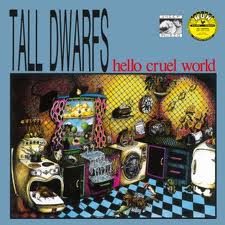
Tall Dwarfs – Hello Cruel World: Round 69 – Tom’s Selection

downloadSomehow I have gained the reputation of being the ‘New Zealand Man’ of Devon Record Club. I think this is mainly due to the fact that, until Round 69, I had brought one more album from New Zealand than anyone else! It’s funny how these things stick. I do, admittedly, probably have more Flying Nun albums in my collection than the others…mainly because their contents have brought me great pleasure over the years! Always packed with ideas, usually utterly charming and, crucially for me, shot straight from the heart, the work of The Chills, The Bats, The Clean and Bailter Space is right up there. Until recently, Hello Cruel World was a bit of an outlier – a Flying Nun release I didn’t quite get. But then, on repeatedly listening to it in preparation for Graham’s holiday themed meeting (‘Hello Cruel World’ – what most holiday makers exclaim when they realise their travel agent was being economical with the truth) I got it and it got me…in a big way.

Whilst all the bands I have listed have their own distinctive sound, in truth most operate at the jangly end of the indie pop/rock spectrum. Tall Dwarfs on Hello Cruel World most definitely don’t – this is weird stuff, a progenitor of lo-fi if you like. But much like Guided by Voices at their finest, Hello Cruel World is crammed with so much creativity that those little slivers of genius that are so easy to overlook initially reveal themselves over time. And whilst there are plenty of moments where it all seems to be on the brink of collapse (indeed, the ‘song’ Phil’s Disease Part 4 sounds very much like the joke is on us as Tall Dwarfs’ main man Chris Knox snores/snorts his way through the lyrics) every track does something interesting, there’s absolutely no guessing what’s coming up next and, throughout it all, the band’s naive charm is so endearing that you have to have a heart of stone not to be won over by them – in time, if not immediately!

Tall Dwarfs hail from Dunedin, one of the more remote(!) outposts on the South Island of New Zealand…and it sounds like just the sort of record you would expect to be made in such a place. Primitive and yet unmistakably humble, Tall Dwarfs at no point in proceedings make the mistake of taking themselves seriously and the sleeve notes are almost as enjoyable to read as the songs are to hear. Instruments are listed – percussion consists of mainly kitchen utensils or hand claps, songs were recorded in bedrooms or hallways, occasionally something as conventional as a guitar gets mentioned. But at no point does Hello Cruel World sound as though Tall Dwarfs were hindered by their lack of equipment. As Nick pointed out on the night, necessity is the mother of invention and these guys manage to whip up a MBV maelstrom of guitar noise on closer (and all time classic) Crush, produce Suicide like keyboard sounds (and deranged, Iggyish vocals) on The Brain That Wouldn’t Die, use echoey, sinister tape loops on Turning Brown And Torn in Two and then produce a ballad of sheer breathtaking beauty in Shade For Today. And that’s just the last four songs.

Graham suggested (and I’m paraphrasing here) that most of the songs were great but needed cleaning up. I couldn’t disagree more. Strip away the mess and the scuzz and the limitations and surely you’d lose much of what makes this record so special…and whilst it saddens me to say this, because in an alternative universe Tall Dwarfs are U2 and Bono and his crew are the weirdos that only sad old men at record clubs listen to…I imagine the majority of people would agree, at least in part, with Graham’s statement.

Rob listened: Buying, listening to, sticking with, investing faith in records which don’t immediately seem worth it. Perhaps we all do it, but surely this sixth sense that there is something meaningful hidden inside has to be borne of experience, and the nature of these formative treasure hunts must hugely influence the type of places we are drawn to linger in future? Nick seems to stick around records which seem disarmingly simple at first and dig away at the surfaces until he breaks through into hidden depths of structure, texture, intent and meaning. Graham seems to take an (increasing) interest in choosing records which come pre-loaded with a bunch of possibly unfair negative cultural signifiers, or just seem to stink to high heaven, and sticking with them, finding genuine pleasure and staying loyal to it. Tom and I seem to share a willingness to dig through noise and interference to get to the heart of records where necessary. I suspect we take different approaches, and there are different places we like to dig. Some records are unfamiliar, noisy, repulsive, alien and require time to bring into focus, to form a relationship with. Others are made of more traditional songs which happen, through necessity or choice, to be shrouded by layers of distortion, poor sound quality, deliberate obfuscation by the artist and it’s only by spending time that the hidden music emerges.

One of the many things I liked about this Tall Dwarfs record was that it seemed to mix both of these modi operandi (I googled it, I’m not Latin). One of the many things I like about Tom is that he saw the glittering prize at the heart of this music and stuck with it long enough to unearth it and present it to us.

Nick listened: Tom claimed, as he so often does, that I would hate this before he put it on, because it was lo-fi and fuzzy and a bit odd and recorded badly, etc etc. But “lo-fi” and “recorded badly” aren’t necessarily synonymous (and neither of them always = “unpleasant to listen to”), and, actually, I really quite enjoyed it; it reminded me in some ways of those really early Beta Band EPs, back when necessity was the mother of invention, when a lack of budget and equipment can force creativity into interesting innovations. There were hooks and melodies and tunes presented here, in the kind of creative, limited ways that add a real aura of doing it for yourself (and if anyone else likes it that’s a bonus), which can make things feel very intimate and appealing.

In many ways it felt as if Tall Dwarves had a similar set of aims to Everything Everything – to play as many styles of music as possible, to be as creative as possible, to not be limited by genre or expectations – except that, because they did have very real technological limitations, they were forced into decisions which made this record, for me, far more listenable and interesting than Everything Everything.

Graham listened: Certainly provoked some debate on the night about what we all are looking for. As an album its great, if takes a while to get ‘tuned’ in on the style. As an album it does what the artist wants and provides listeners with the determination, to unearth the pleasure within. Don’t feel the whole thing needs ‘cleaning up’ as by the end I was convinced it works as it is. There was a nagging sense for me throughout the album of ‘what if?’ Some of these tracks were great with striking melodies and hooks. Just couldn’t help feeling that a slightly more polished approach or maybe a cover by someone else, could have brought the band greater credit for what they had achieved with songwriting. Guess they weren’t bothered and were happy in themselves (as are the majority of their listeners!).

Steely Dan – Aja: Round 68 – Tom’s Selection

Aja2

Sometimes my willingness to be swayed by the word of others infuriates me. Curiously this phenomenon invariably seems to work in the negative sense…something I am convinced I would like gets struck off the list due to a negative comment here or a damning review there or the inevitable to and fro of opinions on the forums, or a raised eyebrow from Rob (conversely, it takes a lot longer and requires a much more emphatic and widespread response to convince me of something’s worth – more of that later). Of course, if you look hard enough, you’ll always find a naysayer or two and, as a result, I commit to far fewer acquisitions than I would if I was more impulsive and less drawn to the cut and thrust of cultural debate. There are advantages to my approach – I would be much poorer if I went and bought everything that caught my eye and I would have even more chaff in my collection than I currently do…but I may well also have a few gems in there that have passed me by!

The following story highlights the idiocy of my approach perfectly. If we’re sitting comfortably…

Many moons ago, my friend Clark Alston and I would go off on climbing trips around the country and, on said trips, we would pass the time talking about life, the universe and pretty much everything…but mainly climbing and music. Clark was a few years older and, at that time, those few years seemed to make such a difference. It was a time of great musical excitement for me as I was discovering that the late 70s and early 80s post-punk explosion was the motherlode…a time in musical history I would still rate as the most fertile and creative; anything seemed possible and listening back now it is remarkable how fresh, innovative, challenging and current much of that music seems today. And, unlike me (who had been easing into adolescence in a South Pacific island paradise), Clark had been there, living the dream, inhabiting those sweaty clubs packed to the rafters with spotty yoofs checking out the next Talking Heads or Magazine or Wire. And as a result, what he said (by and large) went.

So when Clark said that Pere Ubu’s Dub Housing was just about the best thing ever, I went out and bought it at the next available opportunity. When Clark waxed lyrical about the genius of Joy Division, I put aside my preconceptions and got Closer and Unknown Pleasures. And when Clark said Steely Dan epitomised everything he hated about music…well it has taken me 20 years to get past that one.

It may seem contradictory given my opening paragraph but the one thing that piqued my interest in Steely Dan was a recent artist poll on the ILM Forum. Suddenly there were all these people waxing lyrical about a band I had always told myself I would steer clear of. If the phrase ‘best band/album/song ever’ gets used often enough, eventually I will come round. So, after weeks of deliberation over whether to take the plunge and then which album to get, I found myself buying Aja online, trying not to think of Clark’s inevitably disapproving look as my mouse hovered over the ‘Purchase’ button on the website.

And now that I am well and truly obsessed with this breathtaking work of art, I have to say that it’s just as well Clark now lives in New Zealand or I would make it my mission to convert him to an album that is, admittedly about as far away a post-punk as you can get, but is surely as magical and inventive and soulful and exciting as any I own. In case you haven’t worked it out yet – I like it. But I totally get why you wouldn’t – the sound of Aja should be anathema to me, on the surface it’s so smooth and controlled and smothered, no rough edges or unpleasantness. If I had been subjected to the sound of Aja 20 years ago, I would probably not have been able to see past it. But experience can be a wonderful thing and now, a month or two in, I don’t even hear the ‘sound’ of the album. It sounds pretentious but I now listen from within the songs, they envelope me and I now find myself concentrating on detail, variation and musicianship, no longer hearing the sheen that so epitomises – perhaps misleadingly – Steely Dan’s production values.

Aja is seven long songs long and each one is a beauty. Side one is peerless – Black Cow, Aja and Deacon Blues all plough a funky jazzy furrow but are hook laden, make many twists and turns and, crucially, never just repeat themselves – each new verse or chorus holds a new surprise, an unexpected chord change, a melody shift, a missed beat, something to draw the listener deeper into the song, to reward the attention paid. Side two is almost as good and Peg (pretty much lifted wholesale by De La Soul for I Know) and I Got The News are possibly my favourite two tracks on the album. The guitar solo on Peg is a truly wonderful thing and Chuck Rainey’s bass work lifts the song to another level. The fact that Becker and Fagan auditioned five different session guitarists before choosing Jay Graydon (solely to play the solo on Peg) shows the depth of their shared vision – these guys knew what they wanted and were not prepared to compromise. The album took over two years to record. Listening to it, it’s not surprising such is the care and attention to detail evident throughout. A Guided by Voices album this is not!

So now I have taken my first steps in the waters of Steely Dan I am excited at the other wonders I have to discover – unlike many bands, there seems to be no consensus on their best album, it seems that any of the first seven (!) could be regarded as their best. So, what to buy next? It’s not such a bad problem to have!

Rob listened: I feel the same way about Steely Dan as Tom, in at least one respect. They represented one of the great landmarks of the overblown rick-kid music that most of the music I loved as an adolescent was supposedly trying to destroy. So, me, Steely Dan, bargepole. And no, I’ve never listened to them. Why would I need to?

But, but, but. If there’s one thing that Devon Record Club excels at, it’s overturning preconceptions, and Tom tends to supply the raw material them at a regular intervals. For me it’s the smoothness that tends to be the first turn off, but over the last 12 months or so both Joni Mitchell’s ‘Hejira’ and John Martyn’s ‘Grace and Danger’ have wormed their way through my defences over the course of a single run-through. I didn’t fall quite so hard for ‘Aja’ but I can see where Tom’s enthusiasm is coming from.

He quoted one of the two principals describing their process as ‘playing together until we can play it flawlessly and then carrying on beyond that to the point where things start to loosen up’ or somesuch, and through that prism I can see how enrapturing ‘Aja’ could become. Tonight I didn’t get too far beyond the superficial sheen, but I can sense the depths that Tom is swimming in and who knows, maybe one day i’ll dive.

Graham Listened: No, no, no, I won’t submit to liking Steely Dan! I’ve been troubled enough by Donald Fagen’s ‘The Nightfly’ during the last year and I’m not putting myself through that again. In 1982 I was 16 and must have been a bit of a hipster because I thought ‘The Nightfly’ was brilliant, sophisticated, clever etc…. Anyway, ffwd to 2013, when I purchased a CD of the same and this caused me probably the biggest trauma of the year and that’s going some for 2013. Like Aja, it sounded too clean, too smug, too lift musak. There, I feel better now, guess tastes change.

Nick listened: I’ve never knowingly listened to a Steely Dan album, despite thinking “Eye Know” by De La Soul is one of the greatest singles ever released. Like Tom and Rob, they were just beyond the ken for me, something never even to be considered, let alone investigated.

That said, I was keen to have this playback of Aja lift the scales from my eyes and open up a while new world to me. I wanted it to sound like the best, most intricate, most musicianly music I’d ever heard, for it to slot right in with various other technically-proficient stuff I love, from Grizzly Bear to Polar Bear to Owen Pallett to various other things where chops are not frowned upon as they once were. But it didn’t quite happen; the only track that jumped out at me was “Peg”, the one sampled for “Eye Know”, which was both uncannily similar to and also just different enough from the De La Soul song to fascinate; the bits I assumed would be sampled from it weren’t always, and the bits I thought De La Soul might have made-up themselves were clearly direct lifts.

Nevertheless I’m intrigued; I sensed something in Aja that might reward serious revisiting. So maybe I will.

Ed listened: When Tom first put this on I wondered what had attracted him to this cheesy 70’s American TV sitcom music.  I kept expecting the room to morph into a brightly-coloured milkshake bar.  However on listening to it again, my first impression was way off.  This isn’t just some slushy muzak, there’s real thought and creativity in it.  Unexpected chord progressions, catchy motifs, great drums, all enveloped in a professional-quality sweet wrapper.  Like Nick, ‘Peg’ might be my favourite and the track that helps me to understand Tom’s enthusiasm, although unfortunately I can’t seem to quite get away from the taste of chocolate malt.


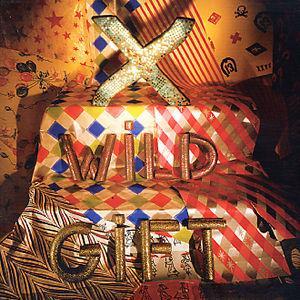
X – Wild Gift: Round 67 – Tom’s Selection

0008dk0hWhilst I’ve written before about the influence of Spin’s Guide to Alternative Music on my development as a consumer/ purchaser/ fan of (relatively) modern music, I’m going to do so again. You see, the one single band it gave me that had the greatest impact was X. As a list man (I know that’s not very cool) I was drawn to the Top Ten albums lists that punctuated the book every so often. Primarily lists by musicians, many of whom happened to be favourites of mine at the time, I was intrigued at how frequently X’s second album, Wild Gift, cropped up.  Frankly, despite following the ‘alternative’ music press for many years, I had never heard of X before acquiring my beloved (and now long lost) tome. So I quickly (and surprisingly easily) availed myself of some X LPs.

Funnily enough, although I think all of X’s first four albums are wonderful, wonderful things, I am not at all surprised that they had remained (lurking malevolently) in the shadows during this time. Thinking about it, they have, by and large, stayed there ever since – a distant reminder of a simpler era, their explosively concise brand of punkabilly representing the grand but slightly delapidated mansion at the end of the musical cul-de-sac that began with sturdy foundations from Link Wray, Carl Perkins and Eddie Cochran and then mixed in the dark energy of The Clash at their breeziest with lashings of The Ramones at their punkiest. But, as far as I am aware, X’s discography operates pretty much as its own genre and, hence, their influence on what has come since has been minimal. That, for me, is part of the attraction – there are no pale facsimiles to tarnish their sound, there was no bandwagon to jump on; whatever X tribute acts exist have not yet made it to rural Devon and I have never heard them played on BBC6 Music or any other radio station for that matter. X exploded (musically at least) out of Los Angeles in 1980 with the release of their debut album ‘Los Angeles’, produced three more classic records in the space of the next three years(!) and then slunk away for a while, returning to make a few more albums of, apparently, lesser fare.

My infatuation with X stopped at album 4 – More Fun In The New World. All are fantastic but, for me, Wild Gift (brilliantly fitting Nick’s birthday theme I thought) is just that little bit better than the others – the melodies are a bit stronger, the riffs a bit more natural, the palate a little broader. A misleading album on first acquaintance, its energy and brevity providing a sheen of fun that obscures its dark heart – X state they are desperate and, sure enough, familiarity reveals an record of domestic abuse, messy, dysfunctional relationships and urban desolation. With the exception of a couple of throwaway tracks (I’m Coming Over, Beyond and Back), Wild Gift is consistently strong throughout but the first four tracks are on another level and represent the zenith of X’s discography – if you don’t like these songs, I don’t think you’ll like X. Stall setter The Once Over Twice storms into punk anthem We’re Desperate. The pace slows a little for the (almost) white reggae of Adult Books which is followed by the blistering guitar work of Universal Corner which at four and a half minutes is the album’s longest track by some distance. There are other pearls throughout the album and on every track Billy Zoom’s guitar playing is breathtaking whether it’s riffing away in the background or centre stage as it lacerates another song through its heart.

As out of step now as they were in their heyday, X’s music stands as proud as it ever did, alone and defiant in its lonely little group of one – the best and (quite possibly) worst punkabilly group the world has ever seen.

PS I would be very happy to be corrected if the sweeping and completely unsubstantiated claim made in the paragraph above happens (as is more than likely) to be codswallop.

Rob listened: X must top the charts for bands most referenced and least heard. Or some such. I’m saying I used to see them name checked all the time but never heard anyone playing their stuff, or even, so far as I can remember, saw any of their records knocking about, okay? I can hear how Tom might hold them as the best thing ever, and the sounds in general and these songs in particular are appealing and fun. I think that you may have had to be there, however. I’m pretty sure that if i’d come across this record pre-1988 then I would still be clasping it to my busom today. As it is, it’s tough for me to hear it and rate it more than very enjoyable, no matter how much the sound of Talking Heads plating acoustic covers of Dead Kennedys numbers ought to appeal to me.

Nick listened: I should have responded to this earlier, because I can barely remember anything about it now, except quite enjoying it, and feeling that it must’ve been pretty directly influential on Dismemberment Plan.

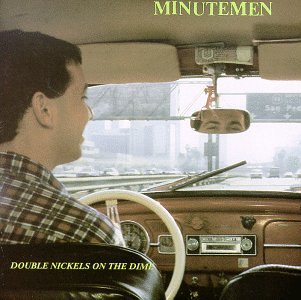
Minutemen – Double Nickels On The Dime: Round 66 – Tom’s Selection

minutemen-568-lIf blog posts had to mirror the album they featured, this blog post would be 2000 words long, as dense as Joseph Conrad’s Nostromo, simultaneously concise and sprawling, playful, irreverant, angry, political and downright brilliant. Unfortunately, I am writing it so it will be devoid of pretty much all these things, unless sprawling can be interpreted as waffly! When I introduced Double Nickels to the others at record club I stated that of all my records this is the one I would pull from the fire. Nick later paraphrased this as an admission that this is my favourite album. But in my mind they are not the same thing at all. My favourite albums (many of which have featured already at Record Club) would soon become irritating if they were all I had. But I relish the idea of having nothing other than Double Nickels to listen to – there is so much to explore in it, so many little wonders hidden away that I feel I am only just beginning to know (having owned the album for about 20 years now). Heck, I still don’t know the song titles; I can’t anticipate what is coming next as one songs ends and another begins; I don’t even know which side certain songs belong on if played in isolation. This is a million miles away from where I am with most of my collection – I like to really know an album, as in KNOW an album, get it all worked out, not because the end result is so attractive but because the journey to that point is so enjoyable. And that’s why Double Nickels is such an attractive proposition to me. I must have listened to it hundreds of times already over the years but I am still deep in the process of getting to know it. A few more pieces of the jigsaw fell into place during the run in to our evening but, to be honest, I am miles away from getting to that point where all is familiar and there are no surprises left to discover. As Rob said in his response to Slint’s Spiderland – he’s not sure he ever wants to work it out. Well, I have pored over Spiderland and I am pretty much there with that record…but the Minutemen’s amazing third album has a multitude of gems that still need to be unearthed by me, so many facets left to explore.

Initally I wasn’t all that predisposed to the idea of the Minutemen. At the time I was a big Husker Du fan and, knowing they were rivals of sorts, led me to place myself firmly in the Husker camp. It turns out the two bands had about as much in common as Blur and Oasis or The Beatles and The Stones – rivals for a similar demographic but musically a million miles apart. Expecting a Bob Mould style guitar onslaught coupled with pop hooks and harmonies, imagine my surprise when the first bars of Anxious Mo Fo lurched out of the speakers, all awkward and lean and shouty (not screamy!)…and nothing at all like New Day Rising!

In fact it is quite remarkable given the breadth of the musical vision that D Boon and Mike Watt demonstrate on the record that at no point in the 75 minutes of Double Nickels (all sorts of rules were broken at the club this evening) do they sound remotely like any of Husker Du’s output. As musical comparisons go, this one is the most crimson of all herrings.

So what does Double Nickels sound like? Practically impossible to sum up…but the overriding surprise to me on my first listen was just how groovy the album is – Mike Watt’s bass playing being nimble and inventive throughout and placing the music in a very different musical setting to much of the US underground around at the time. Another shock is how much space there is within the songs – guitars are spiky, individual notes discernible and clipped. Meanwhile Daniel Boon’s vocals and lyrics are never less than captivating, veering from mundane to political to heartfelt and poignant often in the course of one two minute song. And if, for some reason, you’re not keen on the current track, don’t worry – the next one will be around in the blink of an eye.

Admittedly, navigating a myriad ideas in the course of an hour and a quarter can be exhausting for a listener, particularly on a first listen or ten and, even after twenty years, a pause half way through does no harm. However, once the songs start to reveal themselves there really is no going back – as addictive records go, this is just about top of the tree for me. Unsurprisingly, this is the only Minutemen record I own – after all, with 45 songs of unimpeachable quality which are still evolving with each new listen, I feel that more Minutemen material would just be overwhelming. I am not claiming that Double Nickels is the perfect record but, for me, its imperfections make it all the more captivating. So do yourselves a favour and get yourselves a copy – you never know when the house may go up in flames!

Rob listened: I loved lots of the bands that learned from Minutemen, but it’s only in the last year or so that i’ve finally caught up with ‘Double Nickels’ and realised just how rich and influential this source material was. When I was living my life to the taut rhythms of Fugazi and NoMeansNo and Mudhoney and Nirvana and Sebadoh there were other bands, other names that hung in the background, just a little before my bands, just a little out of reach. Of those, I did go back for Husker Du but others, Minutemen, Meat Puppets, The Replacements, Black Flag, were left behind. Nowadays that just wouldn’t be possible but back then you had to know someone who could lend or tape you stuff, or to take a chance on a name half=remembered from an interview in an old edition of Sounds.

Now, when I finally get there, finally realise just how heavily the bloodlines of the records I did fall in love with at the time flow directly down from the spiky, lurching, free-ranging, tight, joyful, unafraid, funny, intoxicating, herky-jerky jumble of a record, it’s like one of those dreams where you find a record shop you never knew existed which stocks racks full of records you never knew existed by all your favourite artists.

It’s good, in other words. I think it’s really good.

Nick listened: I’m just gonna echo Rob – although this was massive and difficult to consume, it was also excellent and clearly very influential, albeit to a slightly different school of bands for me as for Rob; I certainly heard Fugazi’s DNA being formed here, but I also heard a lot of the Dismemberment Plan. Really enjoyable.

Gorky’s Zygotic Mynci – Barafundle: Round 65 – Tom’s Selection

barafundleAlthough it seems on the face of it that Gorky’s Zygotic Mynci have very little in common with the Kitchens of Distinction, dig a little deeper and you’ll see some similarities. Here is my case:

a) Fantastic pop songs that sound timeless and current at the same time? Check.

Evidence – Patio Song & Drive That Fast, Diamond Dew & Gorgeous Love, Spanish Dance Troupe & The Third Time We Opened The Capsule.

b) Complexity coupled with accessibility? Check.

Evidence – pretty much all of Barafundle, most of Strange Free World and Love is Hell.

c) Bloody stupid names that completely scupper any chance of widespread commercial success? Check.

Evidence – Gorky’s Zygotic Mynci!?!?! I mean…come on! Kitchens of Distinction!?!? You must be joking, right?

Which is such a shame in both cases as, in my opinion, both bands deserve to be held in much higher esteem these days than they seem to be. As if to underline their status as the nearly men (and woman) of British pop, Gorky’s hold the record for the most top 100 singles not to crack the top 40, a feat they achieved 8 times, their best three efforts making 41, 42 and 43!

Gorky’s Zygotic Mynci formed in the late 80s in Carmarthen and their early records sound as though they were made by a band that had little to no expectation that anyone else would be hearing them. So I suppose the band’s choice of moniker makes sense in that respect. But even in the mind-boggling weirdness that is their first album (Tatay) little pop gems reside, seemingly tossed off and somewhat adrift in a sea of in jokes and wilful awkwardness. However, by the time Gorky’s came to record Barafundle they had begun to learn how to construct an album – much of the playfulness remains intact but it’s now measured and used sparingly, never coming across as glib or gratuitous. And, for my money, it’s all the better for it.

I first heard Gorky’s music when I caught Patio Song being played on the radio at the time of its release in 1996. It was a revelation. I had been aware of the group for some time – it’s hard not to notice the name after all – but I had dismissed them as being something far too silly, a novelty group along the lines of Sultans of Ping or Carter TUSM. Yet here was a song sent from the gods, a beautiful, picked arpeggio, a wondrous melody, a couple of Slint like minor chord guitar runs tempering the sweetness and a blinding extended coda sung entirely in Welsh. Patio Song would still rank as one of my favourite singles from the 90s and at the time I found it irresistible. I bought Barafundle very soon afterwards, probably encouraged by the fact that the album was named after one of those breathkingly beautiful Pembrokeshire beaches I have visited so many times over the years. And I’ve never looked back.

Over the course of the last few weeks I have been listening to Barafundle pretty much non-stop and whilst doing so, I have struggled to find a way to adequately describe the music contained within. I’ll have a go but you’ll probably be none the wiser having read this!

You see, about two thirds of Barafundle is prog-punk psychedelia with generous lashings of folk. And, on paper, that sounds horrendous. Yet Gorky’s pull it off magnificently on Barafundle…most of the time. Whilst there are many examples of this style of music on the album, favourites Starmoonsun, Pen Gwag Glas and Meirion Wyllt all manage to traverse the same sort of musical breadth Joanna Newsom was attempting to negotiate on Ys, yet Gorky’s manage it in less than four minutes whilst never forgetting that they are ostensibly writing pop songs. Hence the more avant-garde material on Barafundle never outstays its welcome and, whilst the odd medieval interlude may jar on first acquaintance, the next melodic gem is only just around the corner (often in the same song).

The rest of the album hints towards the more straightforward music that Gorky’s would go on to make in greater abundance on their later albums. Often stunning (Patio Song, Sometimes The Father Is The Son, Diamond Dew) there are also a couple of missteps – I have always found Heywood Lane a bit too twee and Dark Night veers from exquisite to ponderous over the course of its five minutes. But, as a whole, Barafundle sounds as charmingly unpretentious today as on its release twenty years ago when it had the honour of showing all those Brit Pop wannabies that it is usually the outsider that has the best tunes.

Rob listened: A pleasure to hear again. I own ‘Barafundle’, or should I say ‘we’ do. It’s one of a relatively small set of records i’ve wanted myself but have been able to buy for my wife knowing that there was a reasonable chance she’d like it. And lo, under the cover of generosity, another album finds its way onto our shelves.

I like it a lot, but my go-to Gorky’s has always been ‘Spanish Dance Troupe’ which is a near perfect pastoral pop album. It’s 12 minutes shorter and, perhaps for that reason alone, always seemed more to-the-point, well-formed. It’s an extremely easy album to reach for and I did and do so often.

‘Barafundle’ sounds to me like the scrapbook that Gorky’s used to work out many of the ideas they had generated on ‘Bwyd Time’ would distill fully on ‘Dance Troupe’. It’s full of care and beauty and surprise and fun and gentle darkness. I can’t help but wonder whether if their musical venn diagram had included a techno circle, as did that for their compatriots Super Furry Animals, then perhaps they would have had the same critical plaudits showered upon them. Gorky’s really were one of the great lost bands. That’s not to suggest that they went unappreciated, far from it, but that there is another world not that far from our own in which they were having hit singles, rather than loitering outside the top 40, lacing daisies into each other’s hair.

Nick listened: This was lovely and melodic and sweet, but, as Rob suggests, perhaps a little long and rambling – it lost me a little in the second half and onwards, which felt like a shame. I’d not heard it before, though I’ve been aware of Gorky’s for 20-odd years now…

The Birthday Party – Junkyard: Round 64 – Tom’s Selection

1340222282_the_birthday_party_-_1982_junkyardWhereas most decisions as to what to take along to play to my friends at our evenings have been made in good enough time to ensure that the preceding days, if not weeks, have been spent immersed in the forthcoming offering, somewhat appropriately, Junkyard received its first airing in many years when I placed it on Rob’s turntable last Tuesday. You see, there’s only so much of Junkyard I can take. I think it’s a brilliant record, of course, but, for me, it’s such an uncompromising and exhausting listen that once every so often is enough. It made for quite a refreshing change as I was genuinely intrigued to hear The Birthday Party’s sophomore release again, wondering whether it would be as bludgeoning, scabrous and downright irreverent as I recall or if time and age had gone on to lessen its impact. I am pleased to say that, as far as I am concerned, Junkyard remains in exquisitely rude health, still sounding like a descent into a particularly troubled version of hell.

For those of you not in the know, The Birthday Party were (along with The Saints) the progenitors of Aussie punk but where as The Saints made a relatively straightforward, Stooges-a-like mess of a maelstrom, Nick Cave and his mates gravitated towards a much more angular and dysfunctional sonic space, cacophanous…sure… but, just like their lead singer, spiky, lean and menacing. In other words – post-punk as opposed to punk.

Junkyard has such a thin sound that at times it almost sounds like the feedback screech on Psychocandy…except there isn’t a whiff of feedback on this record just a lot of bottom, a gigantic helping of top and very little in between. What makes Junkyard so interesting is also what makes it so hard for me to listen to. It’s all about extremes – not only do The Birthday Party push the sound to the limit, Cave’s ‘singing’ veers from holler to deathly grumble and back again; always unhinged, often apoplectic, you hope for Cave’s sanity most of these vocal performances were single takes! Lyrically Junkyard pulls no punches. Right from the off it’s obvious Junkyard is going to cover some pretty radical and original territory. Who knows what came first, lyrics or music, but rarely have they complemented each other so perfectly. Take the funeareal eeriness of first track, She’s Hit, which sets the album’s stall out with the classic opening lines of: ‘There is woman pie in here. Mr Evangelist says she’s hit’. It is clear that even at this early stage of his career, Cave was travelling parts of the thesaurus other song-writers had yet to traverse. As opposed to more recent offerings from Cave, there’s no tenderness or melancholy here – Junkyard goes for the jugular with a length of barbed-wire and doesn’t let up until those barbs are well and truly embedded.

Although Junkyard turned out to be The Birthday Party’s swansong, it is surprising how much of a team effort Junkyard is. All members of the band are credited as song-writers yet there are no obvious cracks in Junkyard’s assault. So whilst Dead Joe, Big Jesus Trash Can, Kiss Me Black and Hamlet (Pow, Pow Pow) pummel their point home, 6″ Gold Blade, Seven Sins and Dim Locator aim for the same effect but get there in a more insidious and unnerving manner, their wiry guitars enhanced by some fantastic low slung bass runs from the unhinged hips of Tracey Pew. Final ‘song’ the eponymous Junkyard, is an incredible beast. To me, the song is the sound of a swinging guillotine heading towards the unsuspecting listener, the sound of The Birthday Party coming to finish off what they began those 40 long minutes ago. Is it any surprise I don’t listen to Junkyard all that often?

Rob listened: There’s probably some way to work out which artist you are most committed to. Number of albums owned is too crude. Percentage is simplistic and flawed (I own 100% of the albums released by Crunt, but only 25% of the albums Bob Dylan has managed so far). There must be some way to balance how long and how deeply you’ve stuck with an artist. If only we have a mathematician in the group.

Anyway, statistically speaking Nick Cave would probably sit atop the heap for me. I own all his records with the Bad Seeds and, so far, he’s given me no reason not to rush out and get whatever he releases next. Much of Tom’s description of Junkyard is like a dog whistle to me, scabrous swamp punk with a hollering madman beating his face into and through it. Give me more. However, like Tom, I rarely reach back for ‘Junkyard’ or, indeed, most of the first two or three of Cave’s records with the Bad Seeds, all of which still exhibited the pull of the Birthday party’s undertow. It’s not that I dislike them, far from it. The sound and the fury of these records are things I look for in new discoveries still, but I still find it hard to approach them in someone who is, as we have mathematically proven, one of my favourite artists. I’m going to conclude that this is down to nothing more than the sheer breadth of Cave’s body of work giving so much territory to spend time in that I just happened to have settled in the latter half. I genuinely believe him to be an artist who has got better and better, more and more relevant and impressive as the years have gone on, and so I feel fine sticking around West of ‘Tender Prey’. I love those oldies them when I hear them though, and I loved hearing ‘Junkyard’ once more this evening.

Graham listened: Didn’t feel quite so old this week when Tom sprung this one on us all. 32 years later it is still the sonic assault I remembered, a dangerous currency shared only between those of my generation willing to experiment with such stuff. The bass lines are fantastic and the guitar sounds unworldly. Glad to be refreshed with it again, but not sure I need it again for good long time!

Nick listened: I’d never heard this before, and it did pretty much what I was expecting. Enjoyably chaotic and discordant.

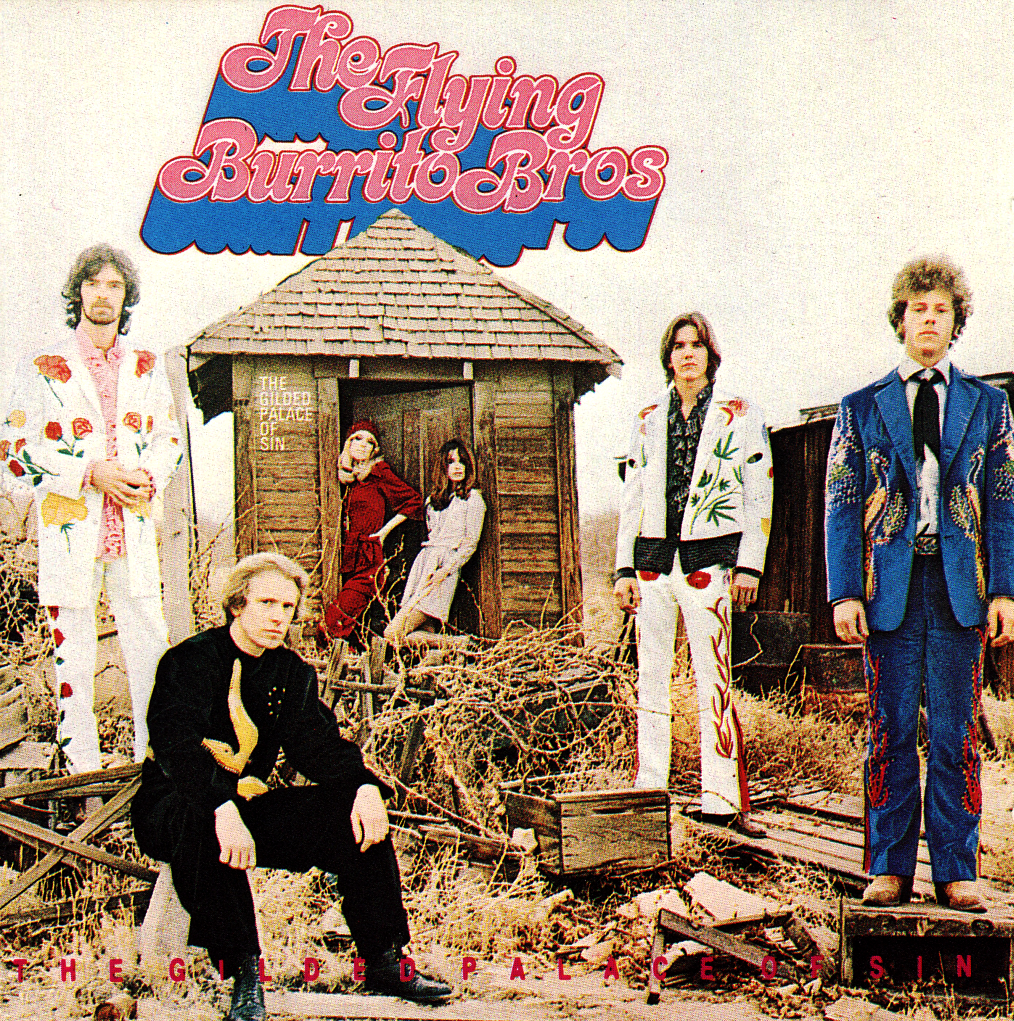
The Flying Burrito Brothers – The Gilded Palace of Sin: Round 63 – Tom’s Selection

The-Guilded-Palace-of-SinFirstly, I should come clean. The Byrds have never quite done it for me. Capable of veering from the absolutely sublime to worse than ridiculous in the space of a couple of seconds, they released a slew of almost, but not quite, great albums in the mid to late 60s, somehow managing to remain vital (to a point) despite multiple line up changes and alterations to their sound. Listen to All I Really Want To Do followed by Chestnut Mare if you don’t believe me – barely the same band…and it sounds like it! Which one you prefer is largely down to whether you prefer jangle pop or country and western inflected rock music. If you’re Nick the answer should be neither but I suspect the superior quality of early Byrds’ jangle pop is just sufficient to ensure that the former track avoids the broad brush he is keen to apply to both genres.

As with many bands, somewhere along the road something magical occured and with the Byrds most people seem to particularly revere their last two psychedelic albums – Younger Than Yesterday and The Notorius Byrds Brothers. They both contain more than their fair share of magnificence. But, by the same token, they both contain at least one drastic misjudgement of taste that leaves me wishing for a digital version of the album – they would definitely benefit from having some of those 60s excesses trimmed off the edges (Mind Gardens and Space Odyssey – I’m looking at you!). And how could they have passed Lady Friend by – a pearl of a track that only saw light of day as a single. They really were a little crazy back in the 60s!

For me, however, the zenith of Byrds related output (having never managed to acquire any of Gene Clark’s admired solo output admittedly) is the first Flying Burrito Brothers album – the Gilded Palace of Sin. Only loosely connected to The Byrds (late comer Gram Parsons and original member Chris Hillman comprise half the band), The Gilded Palace of Sin takes up where Parson’s sole Byrds album, Sweetheart of the Rodeo, left off. But where as Sweetheart is a more or less faithful set of mainly country and western standards, The Gilded Palace of Sin sounds more confident and more aware of what it is trying to achieve – an attempt to fuse the psychedelic sounds of prime time Byrds with the earthiness of more traditional American country folk music.

You don’t have to listen long to hear examples of this. First track, Christine’s Tune, storms along in a blur of nimble bass playing and pedal steel. However, the guitar break that follows is something else, rich in reverb it wails its way through the remainder of the song – although this is ostensibly an album that looks back to american roots music for its inspiration, there is enough that’s different to suggest that this would become the blueprint for a new approach to making music, a coming together of old and new in a way (although Nick will contest this point) that might not have been done before. Certainly, I know of no song that predates Christine’s Tune (or Wheels or Hot Burrito #2 for that matter) that mixes old and new so obviously and, arguably, so effectively.

But whether you like The Gilded Palace of Sin or not depends largely on how you feel about Country and Western – this is not a rock album with a bit of pedal steel over the top, this is a collection that digs deep into the great American songbook, an album that at the time of its release pointed the way to the future by looking way back in the past.

Rob listened: Tom’s right to point out the placement of this record in the development of some of the dominant strains of western music since the early 70s. I’m in no position to pronounce on it, but it feels right to say that there was little or no music before this time that had blended traditional American folk and the great American songbook which had dominated the preceding half century, with the heady possibilities opened up by the then raw and recent rift created by pop and rock. The trick now is to hear this as a startling departure, rather than simply an antecedent of the 40 years of pop and country which followed. Some trick if you can pull it off. My advice is don’t bother, it’s impossible.

Instead spend time with some great songs and feel the commitment and confidence of the young men who were shaping them from the raw earth around them. Sure there are hackneyed things on here, but time will do that. There’s still lots of stuff that sounds pretty fine to my ears.

Graham listened: I have a huge hang up with anything with more than a hint of C&W that means I struggle to take the listening seriously in case I should decide its ok to go and do the shopping in Asda wearing a Stetson and cowboy boots. If I overlay the Osmond analysis as a tool to explain http://www.youtube.com/watch?v=_AfXznngjGw Tom is able to lean towards Marie, whereas I’m more comfortable with Donny. Not that I didn’t enjoy the listen, its just a genre I wouldn’t reach for myself.

Nick listened: I quite like The Byrds, but the stuff I like is the psychedelic and jangly pop material they produced circa 65-67. As soon as the spectre of Country reared its head, I switched off, and I certainly didn’t investigate when some members of The Byrds pursued those avenues further. I have no fascination with the American midwest, I don’t like Westerns as a genre of film, and I don’t like Country as a genre of music; I could try and analyse why but to be honest I’m not that interested in doing so – I just instinctively disliked both since I was a kid. This was alright, as an example of something I don’t like!