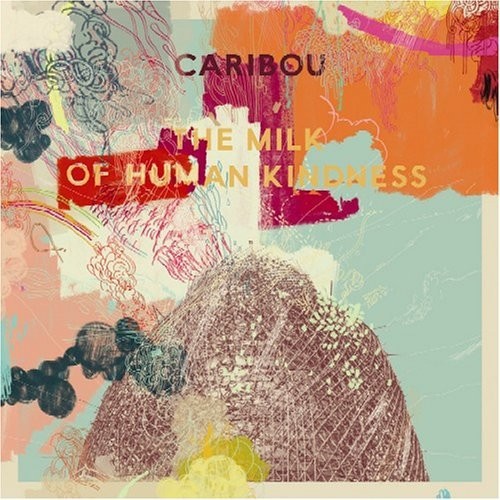
Caribou – The Milk Of Human Kindness: Round 70, Nick’s choice

caribouC26. I was convinced that Tom was trying to pull a fast one on me when my ‘random’ selection of letter and number lead me to Captain Beefheart’s Trout Mask Replica, a record he adores and I cannot stand. His stated goal was “to make us bring something we’d never ordinarily choose” to record club. Surely this was too much of a coincidence? And his methodology for picking my letter and number was a little weird…

But if he was involved in a confidence trick, he was hoist by his own petard; among Trout Mask Replica’s many sins are its extraordinary length, and at 79 minutes it’s too long to play at record club. (Were it 35 minutes long I might have more patience with it.) So, as per Tom’s rules, I moved along to the next eligible record. Which was Caribou’s The Milk Of Human Kindness.

(If it seems crazy that I’m still on ‘Ca’ at 26 discs into the letter C, than Cadence Weapon, Cake, Calexico, Califone, Bill Callahan, Isobel Campbell and, significantly, Can, are the reason.)

Sadly for Tom’s intentions, though, Caribou is exactly the kind of artist I would normally play at record club, although, to be honest, I’d never really considered bringing this record along, even though it’s something that got spun seemingly all the time when Emma and I first moved in together in 2007. Less frenetic than Up In Flames, less song-based than Andorra, …Milk… is still clearly the product of a laptop, an imagination, and a deep love of musical history, but it’s far happier to float in its own grooves and enjoy its own prettiness than most of Dan Snaith’s other work. I love it the way I’d love a chair or a coffee table; not with a deep emotional passion, but with a warm sense of comfort and aesthetic pleasure. It sits in the room engagingly but without being demanding, although you can easily immerse yourself in the complexities of what it’s doing if you so wish. I think of it as the record that made our first flat together start to feel like our home, and I associate it with our first cat, Bob, who sadly and suddenly died last week, because he was another key presence in gluing our domestic life together.

Musically, there’s some of the woozy, distracted, pseudo-60s psychedelic pop that had antecedents on Up In Flames and would come to fruition on Andorra, but there’s also a hefty slice of krautrock-ish repetition, and almost minimalism at points (well, in comparison to the maximalism of Up In Flames. I don’t know where Snaith gets his drum samples (if they are samples), but he uses the same kind of tumbling, rattling, jazzy fills here that he has throughout his career. I don’t know how much of his music is assembled from samples and how much is played live – certainly when he performs live Caribou is a band, and things are reproduced by musicians onstage – but whatever the mix is, he has a unifying gestalt running through all the work he’s released under this name.

A great record? I don’t know; a record I really like and have played an awful lot over the last nine years, that’s for sure.

Interestingly, the evening before we met it occurred to me that I own a legitimate second C26, too; I keep digipaks and other unusually-packaged CDs in a separate run of discs, and the C26 from that part of the collection was Ornette Coleman’s The Shape Of Jazz To Come. I intended to bring this with me and give everyone an option of which to play, vaguely hoping that we’d plump for Ornette’s notoriously difficult free jazz opus. Sadly, though, I managed to pick up John Coltrane’s still jazz but much less free Giant Steps, which sits next to it and has almost identical packaging. So we played Caribou.

Rob listened: Liked this a lot, which left me wondering about the problem I have with Caribou. Every time I hear them/him I enjoy it, but I’m never drawn back. I listened to ‘Swim’ a couple of times when it came out, before Nick brought ‘Andorra’ to a previous meet. I liked it well enough but found it an easy record to walk away from, as in literally to leave the room during. I never really got a grip of it. Then Tom and I found ourselves walking across a darkening field at the End of the Road festival and hearing Snaith’s touring incarnation of Caribou strike up ‘Sun’ on the stage we were passing. It sounded great, but we carried on to the bar and never headed back. I thought ‘Andorra’ was strikingly inventive when Nick played it for us. I’ve never gone back and listened to it again. ‘The Milk of Human Kindness’ struck me as even better, crammed with life and detail and touch and verve. I hope I will go back and spend some more time with it but on past performance I can’t promise. I’ll save you the long essay speculating on why we leave lying some records that we find really appealing. I don’t know the answer.

Tom listened: I thought this was absolutely tremendous – better than I remember Andorra being on a first listen and much more realised and cohesive than my sole Dan Snaith record – Manitoba’s Up in Flames. Whilst I totally get what Rob is driving at (and that is precisely what has put me off exploring Caribou’s output more fully) I feel that The Milk Of Human Kindness would probably be the best place for me see whether Caribou is very exquisite, beautifully constructed and arranged window dressing or something deeper and more substantial.

Carole King – Tapestry: Round 69, Nick’s choice

CaroleKingTapestryIt’s my fault, of course; I mentioned that I was on holiday the day after this meeting, and we’re approaching our usual summer break, so Graham said that “holidays” would be the theme. Now, growing up in Dawlish, everyday is a holiday, and growing up the son of Yorkshire folk, holidays are the maddest indulgence of all time, so I don’t have much experience of them; Emma’s dragged me abroad several times (I’m typing this in a log cabin by a lake in Sweden, as it happens), but they always seem like such an expensive faff when you could just stay at home and ride bicycles over Dartmoor every day for a week instead.

So when Graham said that fateful word, I had no inspiration at all. But one album, which I don’t associate with holidays and which lyrically has sod-all to do with vacations, popped into my head, and stayed there. So I decided to play that, rather than force some tenuous link, like I was sure the other guys would do.

And that album was this; Carole King’s multi-multi-multi-million-selling 1971 masterpiece of sophisticated, melancholy pop. I first bought it when I was about 20 or 21 at university, some 30 years after it came out. I knew it was famous, that it had sold a lot of copies, and I recognized a handful of the song titles. I didn’t realise how many of the melodies I would recognize, though, which was pretty much all of them; this is one of those albums that seems to have woven its very DNA through our pop-cultural landscape. Some might say it’s inoffensive, and it is, in that my mum and your grandad and nextdoor’s small children would all find something absolutely pleasant and pleasurable about it, but that’s not a pejorative at all.

Because Tapestry is an absolutely remarkable feat of songwriting (and not a bad feat of production and performance, either); when you realise how many songs Carole King wrote, up there in the Brill Building, for all sorts of other artists in the 60s and early 70s, and then you realise how many of her own performances of her songs are the definitive versions, too, then it becomes apparent just what a massive, seismic talent she was. And perhaps still is; I’ve never investigated beyond this album, because it just seems so perfect and of its time – I’d hate to hear artificial 80s production, for instance, dilute the warmth of her voice and her melodies, which fit so well here under a comfort blanket of homely arrangements played out on piano, guitar, bass, and drums, that sound at once timeless and absolutely of their time.

Possibly the most remarkable thing about Tapestry is how personal and intimate it feels, for a record that has sold so many copies to so many different types of people. Showered with Grammies and diamond discs and included in the National Recording Registry of sound recordings that “are culturally, historically, or aesthetically important, and/or inform or reflect life in the United States”, Tapestry is one of those rare things – a beautiful record that deserved enormous recognition, and received it. Plus, there’s a cat on the cover.

Rob listened: I don’t expect, reader, that you’ve been following the character development arcs that underpin The Adventures of Devon Record Club, but if for some perverse reason you have you’ll be expecting me to say that i’ve never heard nor felt the need to hear ‘Tapestry’. And you’d be right.

It’s one of the records that people like my parents listened to in the mid Seventies. When I found music, I rebelled against them and I rebelled against music as comfort, as safety. It’s like The Carpenters. James Taylor. To be ignored.

Before tonight I would have struggled to name any of tracks from ‘Tapestry’ with any confidence. I might have guessed a couple. As Nick rightly points out, it’s so woven into the fabric (that’s enough tapestry metaphors – Ed) of 20th century music that I could almost sing along with the entire album on first hearing. And to deny it would be to deny 40 years of pop history and to deny the pure songwriting talent that put together these beautifully simple pieces of craft and gave them to the rest of us. It’s part of all of us, whether we know it or not.

I’m a music snob who deserves everything he gets, and that’s why I love Devon Record Club.

Tom listened: The breadth of musical offerings in evidence at tonight’s meeting just goes to show how rich life’s tapestry is! By the way, Rob, is the ‘Ed’ in your comment, Ed Gore or Ed(itor)?

Listening to Tapestry you could see why it sold a bazillion copies back in the early 70s, why the post-punk generation would have passed it over and why we now look back on it so fondly. Melodically, Tapestry is very reminiscent of Todd Rungren’s early solo albums, I thought, and I thoroughly enjoyed listening to Tapestry, knew the majority of it already without realising it and am very happy for it to be a set of songs I chance upon every so often…like an old friend I occasionally bump into rather than actively seek out.

Graham listened: Not much more to say than this was magnificent and possibly the most moving collection of songs on one album that I’ve heard since blagging my way in to DRC. It pretty much shut us up, which is normally a good sign. Though I’m still giggling to myself about the four of us sitting listening so intently to “you make me feel like a natural woman”.

Owen Pallett – In Conflict: Round 68, Nick’s choice

inconflictI played Owen’s last record back in round 36, nearly two years ago, and have been eagerly anticipating his new record for what, at times, felt like far too long (it’s been four and a half years). Owen’s own albums sadly suffer at the demands of his dayjob (scoring things – albums, films, whatever else – for other people [Arcade Fire; Spike Jonze; etc]), so a four-year-gap is sadly all-too frequent. A shame, because his own records are, to my mind at least, considerably more rewarding and enjoyable than those that he works on for other people.

Anyway, In Conflict is here now, and, as with all long waits, once it’s over the present dispels its memory pretty swiftly.

As with Heartland, In Conflict is a sumptuous sonic experience, full of immaculately rendered synthesizer arpeggios and orchestral flourishes and rich rhythmic pulses and tiny details. People still refer to Owen as ‘a violin player’ as if that’s the sum of him, but it’s actually a tiny piece of a complex jigsaw.

At times it reminds of many other things – people he’s worked with, spoken about being inspired by, and been compared to – but always subtly and eclectically. If I had any musicological skills I’m sure I could fathom a reason why, but there’s something about what Owen does that feels intrinsically more musical, and deeper, and more rewarding, than most if not all of those touch points.

A little poppier and more direct than Heartland, In Conflict sees Owen not hiding behind characters or concepts anymore, and instead singing more honestly and overtly about himself, his life, and his feelings. This isn’t necessarily a good thing – great art doesn’t need to be inspired by real trauma, catharsis, or events, as far as I’m concerned, although it can certainly help – but Owen manages it wonderfully. I never feel emotionally bludgeoned, pummelled, or unduly manipulated like I do by some overtly emotive and personal music; Owen’s music strokes my emotions rather than squeezing them or battering them.

Anyway, some great things about In Conflict:
• The way the bass and drums kick in in “In Conflict” (yes, I only phrased it that way to repeat the word ‘in’ three times in a row).
• The way the melody evolves effortlessly through “On A Path” until nothing else could possibly happen but the inevitable chorus (which whirled on a nearly endless, joyous loop through my head yesterday as I cycled 70 miles over Dartmoor, and never once bored me).
• The way “The Riverbed” sets the tension level at ‘breaking point’ from the moment it begins and somehow manages to maintain that remarkable pitch throughout its entire length without shattering into a billion pieces or exploding into bombast.
• The way he literally sings a phone number at the end of “The Secret Seven” and it sounds wonderful.
• The way there are literally dozens and dozens of other great things I could have chosen, and I’ve barely even taken in what he’s actually singing yet. (Even though I know he’d like me, and everyone else, to sit and listen to this with the lyrics in hand; hell, he even put the lyrics on the album cover.)

So yes, another Owen Pallett album, and it is, again, very good. Wonderful, even. He’s so good at music.

Ed listened: Nick leant me ‘Heartland’ a few weeks ago and after a few listenings I still find it hard to get into. Owen Pallett is clearly a talented composer, a violinist (my instrument) so what’s not to like? Well, I found the album inaccessible, a little bit impersonal, like he was watching a film of his own life that no-one else could see. Mind you, Nick did say that it rewarded repeated attention so maybe I just haven’t listened often enough. Happily though I enjoyed ‘In Conflict’ straight away. It seems more direct and passionate and listening to it again now I am really enjoying the stylish sophisticated sound he is getting from his synth/strings combo. Particularly good is the corner around ‘The Passions’, ‘The Sky Behind the Flag’ and ‘The Riverbed’. The first with the slightly creepy synth slides, the second personal, really beautiful with a gorgeous string ensemble ending, then 40 seconds later the strident, urgent opening to ‘The Riverbed’ kicks in and washes away all that subtlety. If Owen Pallett can be this good maybe I should give ‘Heartland’ another go…

Rob listened: I liked this a lot. I also struggled with ‘Heartland’. I appreciated the distinctive vision and it’s always a pleasure to hear something that seems to have genuine originality, to sound not quite like anything you’ve heard before, but I found the whole experience too cold. I’m sure that was a layer to be melted through with repeated listens, but I never found the time or the motivation to make those.

‘In Conflict’ however was immediately intriguing and engaging. I liked the sound palette, open and enticing, I liked the acute approach to song construction. I also liked the contrast with my first impressions of ‘Heartland’. I found this new record derivative, and that’s not a bad thing. It reminded me of the Beach Boys, Wild Beasts and other maestros of the sophisticated pop delight. Some of the sounds hit me as direct lifts from the Oneohtrix Point Never record. For me, Owen Pallett is playing with other people’s music here, and that’s producing interesting and rewarding new combinations and sounds. I like them.

Tom listened: I’m going to be really boring here and re-iterate Rob and Ed’s comments. I admired Heartland but found it impenetrable; I just couldn’t connect with the songs although it was easy to recognise the skill and vision of the man who created them.

In Conflict felt better right from the off. Warmer, more inclusive and hookier, I really enjoyed the listen and now it’s only the reediness of Pallett’s voice that I have a problem with; in much the same way that I have never managed to get to grips with Thom Yorke’s singing or Bernard Sumner’s. But the songs on In Conflict seemed so good on first listen that it would be churlish to pass it by without giving it another chance!

The Beatles – Magical Mystery Tour: Round 67, Nick’s choice

beatlesMMTRound 67: because this came out in 67, you see. (Just; December.) But more importantly than that fact (which is actually merely incidental to this tale), in 1993 the FA Cup Final was on Saturday 15th May, which just so happened to be my 14th birthday. It also just so happened that the final was contested between Sheffield Wednesday – my family-supported club – and the evil, George Graham-managed Arsenal, the two teams meeting in a cup final for a second time that season. Arsenal had won the league cup, but surely Wednesday wouldn’t let that happen again, and would be triumphant on my birthday, and David Hirst and Chris Bart-Williams and Carlton Palmer and Chris Waddle et al would conjure me a day to remember forever.

But they didn’t. They drew. And it went to a reply five days later, which Arsenal won in ridiculous circumstances. And I instantly became much less interested in following football passionately, because it became very clear to me that all that romance and mythology and passion could very easily be struck down by ludicrous circumstances, that the good guys didn’t always win, and that even if you played ‘better’ you didn’t always get anything from it. So I needed a new hobby.

The other significant thing about May 15th 1993 is that my mum and dad bought be a ghetto-blaster type stereo thing, with a CD player. Previously I’d made do with an inherited cassette ghetto-blaster thing, and a cassette walkman I’d won on a kids’ TV quiz show when I was 10. But not I could have fidelity, invulnerability, and access to the enormous stacks of CDs that lined the shelves in the HMV where my brother worked. Out of love with football, gifted with a CD player, my passion and allegiances turned instantly, as fickle teenage passions often do, from one hobby to another; if you can call being in love with music a hobby.

One of the first CDs I had access to was this – The Beatles’ late-67 mish-mash EP-come-soundtrack-come-odds-and-ends thing, which rolled together Sgt Pepper leftovers and made-for-TV schmaltz with some amazing singles. My dad only owned a few handfuls of CDs, but this and Pepper were two of them, mystifyingly; he didn’t really like The Beatles that much and certainly wasn’t psychedelic in any way at all (other examples include Dave Brubeck, The Carpenters, Neil Diamond, and Queen; the latter also faintly incongruous). So I inherited (read: stole) Magical Mystery Tour and Pepper, and listened to them an inordinate amount of times, and preferred the less lauded one, possibly because it was groovier (that coda to “Strawberry Fields Forever”; “Baby You’re A Rich Man”).

21 years on, and it’s relatively clear to me now that Mystery Tour ended up being massively influential on my nascent musical taste: the abundance of weird codas that take tunes in totally different directions; the brass; McCartney’s enormous basslines; the faintly drifty instrumental filler; the eschewing of rhythm guitar; the synaesthetic sound palette that takes in everything you could imagine; the overt experimentalism that never excludes tunefulness; even the irritating schmaltz at the end. So much of this is now deeply embedded in the Pavlovian reactions I have to music that it’s quite weird going back to it now and considering it as a launch pad.

And oh man, do I still love “Baby You’re A Rich Man”. What bass, what drums, what crazy weird little organ fills. Amazing.

Tom listened: Even as a youngster, I always stuggled with The Beatles’ 1967 output. You’d think with a surname of Rainbow I would be more predisposed to the psychedelic end of the Beatles oeuvre but it has always left me cold. Listening to this again, for the first time in years, I found that little has changed. Sure there are a few pearls on MMT – as Nick rightly points out Baby You’re A Rich Man is one of the most under-rated Beatles songs and is deserving of all its latter day praise. It still feels cutting edge all these years later. I Am The Walrus is obviously brilliant but goes on too long. Strawberry Fields Forever is lovely and ground breaking and all that but I’ve probably heard it too many times and I love (unequivocally) the throw away Flying.

The rest veers, for me, from the tedious (MMT itself, Blue Jay Way, Hello Goodbye), to the mawkish (Fool on The Hill, Penny Lane) to the…well…the less said about All You Need Is Love and You Mother Should Know the better. To be fair, MMT was never meant to be more than a hotchpotch – cobbled together as opposed to meticulously crafted – but for me it represents the point at which The Beatles confirmed they had lost their way…only a year after the peerless Revolver too. The White Album’s mess hinted at a recovery, the dross to brilliance ratio being much lower and, as we’ve already discussed on these pages, Abbey Road is pretty great, but, for me, they peaked in ’66…in much the same way as English football (it appears Uruguay have nailed shut England’s coffin as I write).

New Order – Technique: Round 66, Nick’s choice

NewOrderTechniqueFor some reason I have never – well, until very recently – owned a New Order record. Not one. I have no idea why; I love many of their singles and must’ve picked up Substance a hundred times in record shops, only to put it down again each time, before I got to the counter.

There are, of course, plenty of artists – or authors, or directors, or TV programs – who I’ve made a subconscious (or conscious) decision not to delve into despite almost overwhelming acclaim and clear obviousness of tase-matching. As I’ve said before, you simply can’t investigate every potentially fruitful lead, because there isn’t enough time; I like riding bikes and playing football and doing other stuff too, as well as listening to records. It’s just a coping mechanism for the huge surplus there is of culture out there.

But sometimes circumstances, or fate, or whatever, aligns a little bit, and you end up deciding that now is the right time to finally investigate something. And now is the right time for me to investigate New Order. Embrace’s new record owing such a sonic debt to New Order (all those high, melodic basslines, synth oscillations and electronic drum pads) is just one catalyst among several.

Deciding I’d finally take the plunge, I asked Twitter where to dive, and the overwhelming vote was for Power, Corruption and Lies, which I duly bought and enjoyed thoroughly (especially “Your Silent Face” and, of course, the bonus non-album singles on the second disc of the remaster). Suitably impressed, I bought a copy of Technique about a week later (at the same time as I bought a CD copy of the Embrace album, actually). The very next day we had record club, so I took it with me, and so this was my first all-the-way-through listen to it (I’d put it on for about 20 minutes the night before, too), having never knowingly heard anything other than the singles previously (and not really remembering them).

So I don’t really have anything to say about Technique, because I’ve only listened to it a couple more times since. It’s certainly far more ‘Ibiza’ than PCL, and a little lacking in the (seemingly accidental) pathos and detached emotionalism they’re so good at as a consequence; I enjoyed it almost as much, though.

New Order are such a weird band; they seem to be comprised of (two, at least) unpleasant idiots who can neither play their instruments nor sing, and yet they’ve somehow managed to create some of the most emotional and beautiful music to ever emerge from Manchester (or anywhere else, for that matter). So tell me, where should I go next?

Tom listened: Over the course of the last six months it seems as though the others have conspired to give me a tour through the old and long lost TDK C90s that I used to own. Technique is another one of those – an album I always liked well enough but, much like most of New Order’s output, never really captivated me enough to entice me to part with my hard earned money. And so it was on the evening – really enjoyable, but musical ephemera  as far as I am concerned – something to do with Sumner’s vocals and the lack of warmth and emotion contained within the (admittedly) finely crafted and executed pop songs on the album. My guess is the closer (get it?) we get to Joy Division, the more I’ll connect with the music of New Order, but my instinct is that unless he has a Future Islands on Letterman moment, Bernard’s vocals will always be a sticking point for me.

Rob listened: A couple of answers and a couple of questions for you Nick. Firstly, go to Substance next. It’s as good a singles comp as any band could muster in the post-punk era, brimming with distinctive, inventive and intoxicating songs. Then Low Life followed by Brotherhood. Stop there, I reckon. You might like some of the stuff from Republic but the returns are diminishing by then. Movement is great, but perhaps a little too proto for your liking.

Questions: where on earth do you get the idea that any of New Order are unpleasant or idiots? I’ve interviewed three of them and they were warm, generous and thoughtful about their music. The fourth, Peter Hook, seems similar from what I can gather. They may have fallen out with each other, but I’m unaware of anything they’ve said and done that merits those descriptors above any other average rock star.

Secondly: where do you get the idea that they can’t play or sing? They are, all four of them, innovative and groundbreaking and they did what they did by playing their own instruments. You might find some of their technique (lol) rudimentary, but then such is rock and roll, where the emotion is often found wrung from the space between an artists reach and their grasp. Bernard Sumner’s voice is an absolute case in point. Hooky’s bass playing is distinctive and really pretty wonderful. If you’re levelling some sort of ‘they just pushed a few buttons’ charge at them, and I’m pretty sure you’re not, then I look forward to you saying the same about Orbital and Four Tet. Sorry Nick, but I think that’s lazy.

As for the album, I like Technique a lot, but not as much as the four that preceded it. It signalled the point where New Order made their last great contribution to the development of our music, their third if you count what they did as Joy Division. It’s also the point at which their direction started to diverge from where I was going (ie they went to Ibiza, I went to the Hacienda on a Wednesday instead of a Saturday). Nonetheless, they stepped ahead of the rest once more, which is pretty remarkable, and the record they made still stands up today.

Nick responds to Rob: I absolutely don’t mean “they’re just pushing buttons on synthesisers” when I say they seem like they can’t play their instruments, far from it: as Rob notes, I love lots of music that’s produced by people clicking a mouse or pressing a button rather than by stroking a harp or whatever. I mean that what they do play – the bass and guitar parts, and the drums (which are often off a machine rather than a kit, obviously) – often seems so simple and perfunctory as to seem amateurish or childlike; there feels like little freedom, improvisation, or melodic development. Of course, if there was freedom, improvisation, or melodic development, then the emotional heft that they achieve would be obliterated; it comes from the mechanistic, uncomfortable repetition, from the simplicity of the patterns being produced. Barney’s singing – flat and monotone and struggling with both range and sustain – adds to this sense I have that they’re almost just lucking it out somehow. But it’s what makes them brilliant.

As for them seeming unpleasant, again thats just a vague impression taken from a distance. They don’t seem to like each other much.

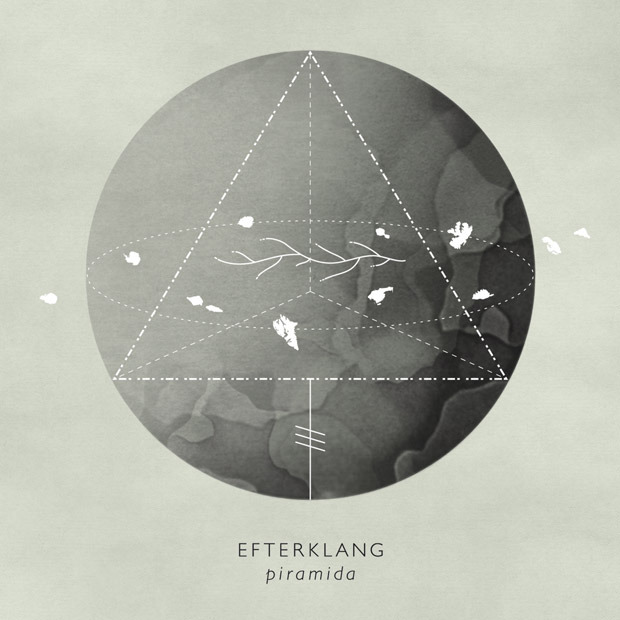
Efterklang – Piramida: Round 65, Nick’s choice

Efterklang-PiramidaSome records take time to reveal their charms, even if they give you the impression from the outset that they’ll be right up your street. Those slow-burn records can be faintly foolish choices for record club; as we’ve discussed many times, some types of record really lend themselves to this type of communal, concentrated, critical listening (with much babbling and consumption of curry atop the actual music), while others really don’t.

Efterklang are Danish (their name comes from the Danish for ‘remembrance’ or ‘reverberation’, according to Wikipedia), and I bought Piramida, their fourth album, at the tail end of 2012, the year it was released, after it received glowing reviews and various end-of-year-list plaudits. It’s taken me until this spring to feel like I ‘get’ it, although straight away I could tell it was really beautifully crafted, which is why I was intrigued to see how it would fare at record club. Unusually for me I followed the typical approach pattern of the other guys, and played Piramida several times in the run-up to our meeting.

Ostensibly an indie band, Efterklang are clearly au fait with various strains of ambient and electronic music. For this record they travelled to Piramida, a deserted Russian town inside the arctic circle (gorgeous pictures of the abandoned buildings decorate the sleeve) and recorded a host of ambient sounds of nothing happening in a place where nobody lives, which they then interpolated into the gentle, slow-paced, elegiac songs that comprise the album.

Decorated with intriguing percussion and beautiful touches of brass, as well as guitar, drums, keyboards, and various other bits and bobs including xylophone, synths, and choirs, the band concoct a beautiful, beatific, and faintly melancholic bedrock over which the vocals are delivered with a similar kind of linguistic remove to The Notwist; a sort of pseudo-medicated calm, the lyrics all words that I recognize but put together in phrases that, though they have a quiet emotional impact, don’t make any kind of cogent ‘sense’ to me. But that doesn’t matter, because, as Paul Draper once sang, the lyrics are just a vehicle for a lovely voice.

I’ll not make any great claims for this record – it’s not a life-changer – but it is a beautiful, affecting record, with the kind of low-key atmosphere and emotion that will prompt multiple plays and probably not see you tire of it any time soon. A slow-burner, in other words.

Wild Beasts – Present Tense: round 64, Nick’s choice

Wild_Beasts_Present_TenseSelf-perception is a curious phenomenon. Everyone hears things differently (as three years of this club have proven!), so what musicians are trying to achieve isn’t necessarily what their audience hears their music as containing. This is part of the reason why ‘influence’ is a crazy concept; people usually use it as a synonym for ‘sounds like’ rather than ‘informed/inspired by’, anyway, but influence can also manifest in ways that simply aren’t sonically identifiable. Things that may seem like obvious inspirations to an audience may never have been intended by the artist, and may be the result of pure, blind happenstance, or else some kind of subliminal, subconscious appropriation, rather than anything deliberate.

Which is a really long-winded way of saying that, like many bands, I’m not sure that Wild Beasts know exactly what they sound like, or appreciate entirely what they’re good at – or, at least, what this singular member of their fanbase thinks they’re good at.

There’s been lots of talk about Present Tense being brave and a change and a statement from various people – most notably Wild Beasts themselves – and suggestion that they didn’t just want to produce Smother all over again (not that there’d be much wrong with that, as Smother is an excellent, moreish record that I adore). Which is fair enough; change is a good thing, and the best bands, in my mind, constantly evolve.

Except that, to my ears, off a dozen plays or more, Present Tense sounds like, if not a repeat, than a very logical progression and next step from Smother, rather than any radical break or revolution. Which is also fine. It may upset the band given their stated intentions, but Present Tense is almost just Smother with synths, if you will. The lyrical sauciness is slightly more domesticated, perhaps, and the sound a little fuller and richer as spidery guitars are replaced by warmly enveloping synthesizers, but they sit together very well as a pair. They’ve also expressed a fear that people might be put off by them ‘going electronic’, but to me, at least, Wild Beasts’ most defining characteristics are their fascinatingly eccentric pair of vocalists, and the subtle interplay of their collective musicianship, rather than ‘guitars’ as a primary aesthetic, so moving to synths, especially after “End Come Too Soon”, seems entirely appropriate.

The other thing that Wild Beasts have talked about repeatedly with regards to this album is their intention to write ‘pop’ songs. Now I’m not saying that they’re operating in the realm of Ornette Coleman or Swans or Keiji Heino here – structurally there are verses and choruses and melodies and hooks, which are the tools you’d expect of ‘pop’ – but, like Smother, Present Tense is a subdued, subtle, sensual record, far more about slowly shifting mood than thrills and spills. It’s resolutely atmospheric rather than anthemic (not that all pop is about anthems, obviously), and as such feels like something slightly other than pop.

Which is fine, because it’s another beautiful and compelling record, and Wild Beasts are a wonderful band of outstanding musicians (their drummer plays like a beautiful drum machine, rather than a real human percussionist). If I have a complaint, it’s that there’s maybe not enough of the whooping, sensual cacophony they used to produce; not enough drama, not enough noise. I’d prefer it if, for instance, after Tom (the deep, throaty vocalist) sings the phrase “the destroyer of worlds” at the centre “Daughters”, in the middle of the album, the synths actually did rend apart and destroy the song, with a dramatic dynamic leap into sonic chaos, rather than just oscillate beautifully once again.

I have absolute confidence that Present Tense will continue to unfurl layer upon layer of sound and tune and interpretation over the next 12 months and beyond, and that it will prove to be absolutely as good as its predecessors. I’d just prefer it if they’d injected some roiling chaos into their sound as well as all this glorious subtlety; they’ve lost a little of what it was that made them wild.

Tom listened: Curiously, I always think of Wild Beasts as a great band but, on deeper reflection, I have only really clicked with the Two Dancers album and, even on that album, about half of the songs leave me cold. However, All The Kings Men is so, so great and much of what Wild Beasts do is a cut above standard modern indie fodder, that I can’t help thinking they have got an absolute no-holds barred classic album in them yet. Unfortunately, on the basis of a first listen, this isn’t it!

I’ve been listening to Smother a fair bit since Nick played us Present Tense in part because Nick and Rob both revere it and I have always felt I have needed to spend more time with it to truly appreciate its qualities. So I listened to it another three or four times over the course of the last week and, whilst I appreciate the skill and restraint Wild Beasts demonstrate, it’s just too languid for me. As Nick has hinted in his review, Present Tense takes the sound of Smother and smothers (I can think of no better word) it still further. I have no doubt that this was Wild Beasts’ intention, that they have full artistic control over their output and I am sure they have pulled it off magnificently…it’s just that they have taken their music in a direction that does little for me. Give me the yelps, energy and restrained wildness of the best of Two Dancers any day. To my mind, the band need to go back to that album…and remember their name…when they come to make their next record.

Rob listened: I like Wild Beasts a lot and I like ‘Present Tense’ a lot too. I disagree with Tom when he yearns for more of the verve and abandon of ‘Two Dancers’ and perhaps even ‘Limbo Panto’. One of the things I cherish about where they have gone since then is their apparently deliberate progression towards the essence of what they have, their sound, their vision.

I’d love to hear another song as deliciously dangerous and whoopingly wild as ‘All The King’s Men’, and the joy of that track has hardly diminished with the years, but there are lots of bands trying to squeeze out the next earworm melody, the next 6 Music conquering hook. Wild Beasts are treading a different path. They seem to me to be hanging on to some sort of genome they are trying to crack, to perfect. Just as artists took the motorik beat in the 70’s and attempted to get to the root of it by driving it on and on, exploring its context, putting it next to contrasting elements in attempts to reveal or capture its pure essence, so it seems to me that Wild Beasts are driving towards their own purest form without knowing quite what that is. (As an aside, check out the Wikipedia page for Motorik. Some very dodgy references if you ask me…).

I’m also reminded of Jeff Buckley and the excitement I felt thinking about what he would go on to do in the years and decades which followed ‘Grace’. When ‘Sketches’ was posthumously released it brought home to me just what a powerful artist he could have gone on to be, precisely because he was heading off to explore what he could do with what he had, rather than trying to write a bigger, more crowd-pleasing version of ‘Last Goodbye’.

I’ve enjoyed listening to ‘Present Tense’ for many of the reasons Nick gives above. I don’t think it’s as complete a record as ‘Smother’. It seems to be a partial step towards something else, something similar but different, and that’s more than enough for me in this case.

 Graham listened: I’ve enjoyed all the Wildbeasts I’ve heard at DRC and beyond. But never quite enough to think about going out and buying in to it in the days and weeks afterwards. Something about not being quite enough it in for me and my insensitivity to their subtlety.

Neneh Cherry – Blank Project: Round 63, Nick’s choice

neneh-cherry-blank-projectIn many ways Neneh Cherry’s first solo album in 18 years (since 1996’s Man) is almost as much of a collaboration as her excellent 2012 record with Swedish free jazzers The Thing; the difference, and why this is being referred to as a ‘solo’ album I guess, is that Neneh wrote the ‘songs’ for this (‘songs’ in scare-quotes because ‘what is a song?’), whereas most of The Cherry Thing was covers (plus one tune each by Cherry and Thing-leader Mats Gustafsson). Small differences.

Anyway, Neneh wrote the songs for Blank Project, and then sent the vocals – with nothing else at all – to London-based sort-of-jazz duo (and Four Tet collaborators) Rocketnumbernine (synthesizers and drums), who wrote the music around it. Four Tet, under his actual moniker Kieran Hebden, ‘produced’ the album, which seems to have caused some discombobulation; because Kieran is best known under his Four Tet guise for making jazz-inflected dance music, people seem to have assumed that his ‘production’ role here is equivalent to, say, Timbaland ‘producing’ a Missy Elliott album, i.e. that he built the tracks up entirely himself and Neneh just sang over the top. (Not, from what I understand, that this is how Timbaland and Missy work together anyway; I gather they’re far more collaborative than that.) The fact that Neneh comes from a soul / hip-hop / dance background (never mind the jazz and new wave and postpunk background she also has with, say, Rip Rig And Panic) is another signifier that people will make shorthand mental assumptions from; because any time a black woman and a white man work together on a musical project it absolutely must be the case that the white man has all the agency, according to rockist narrative.

Hebden has been eager to explain via Twitter that this is not actually the case at all, and that he pretty much just pressed ‘record’ in the studio. Anyone who’s heard his production work with other people, such as James Yorkston or Omar Souleyman, will realise that Hebden’s actually a pretty transparent presence at the controls. And, y’know, he produces under his own name, rather than as Four Tet, which seems to be a specific and distinct creative outlet, so I assume he sees them as different jobs, rather than producing other people as a chance to drizzle ‘Four Tet magic’ over someone else’s songs (though that might be interesting too). There are, of course, all sorts of questions I could go into about ‘what is record production?’ and the difference between engineering, producing, mixing, and so on and so forth, which I find fascinating, but I’ll spare you.

Anyway, Blank Project (the name essentially a working title from what the project was called in whatever software they used to record it) is fabulous; it consists entirely of vocals, drums, and synthesizers, and has a really light, minimal, almost improvisational feel that I really love. Rocketnumbernine are ostensibly a jazz duo, in some ways, and given Hebden and Cherry’s involvement and love of jazz this sense of spontaneity makes perfect sense, even on an ostensibly ‘pop’ record. The sound is wonderfully open and rich, the drums and synthesizers each allowed acres of space for their textures to shine through, and there are some great hooks scattered across all the songs. The whole thing is amazingly rewarding to listen to; the lyrics are darker than you might think at first listen, with several songs dealing quite bluntly with depression, and whilst Neneh sometimes relies on borderline cliché phrases, that fits the aesthetic perfectly. A brilliant record, however you look at it.

Rob listened: There was spirited and, from my end, relatively uninformed debate about this record as it played. I got quite animated without any sharp points I was able to articulate. Nothing new there. However I’d clearly missed the part of Nick’s introduction which actually, now I read it in his write up, nails precisely my problem with this album.

I’ve listened to ‘Blank Project’ quite a few times over the last couple of weeks. It’s been recommended from several different angles, including Nick who rated it the pick of a week which also included new records by Wild Beasts, St Vincent and The Notwist. I like a lot of it, specifically the gripping underpinning from Rocketnumbernine which seems rich both in detail and feeling. But there’s something I don’t like about it. As the others will attest, I know what it is but I haven’t been able to put my finger on why it doesn;t work for me. Put bluntly, it’s Neneh Cherry. I think she’s a fine artist who gets more and more interesting with each passing project. The problem here is that I don’t think her voice works on this record. Which is an arsehole’s thing to say, because it’s her fricking record.

I tried in vain to explain that there seemed to be a gap between her singing and the rest of the music. The others either couldn’t hear that, or didn’t think see it as a problem. I tried to postulate that her voice was neither good enough or bad enough to be interesting enough to match what was happening elsewhere. The others disagreed. I attempted, briefly, to point out parts of the record where the vocals just sound like they are straining, unable to get out of a middle range and into the places the songs need them to go. Who cares, they said? Normally I would agree.

However, reading Nick’s write-up and recalling his introduction on the night, I see the problem put clearly. A detail I’d missed. This record truly does sound as if the vocals were recorded in complete isolation and then mailed off for someone else to make music for. For me, there’s just a big disconnect. The music would be better with different vocals and the vocals would be better against different music. Which sounds stupid too, as normally a sense of disconnection, of poor fit, of wrongness, would only add to my enjoyment. Not in the case of this record, which I’ve listened to again this evening, for about the 7th or 8th time, and continue to enjoy. Apart from this one thing…

Graham listened: It didn’t get quite as much to me as it did to Rob, but I was also aware of some kind of distance between the music and the vocals on this album. I found the instrumentation, rhythms etc really engaging and she sounds dandy as a vocalist, but something didn’t quite fit. It sounded fantastic on Nick speakers but maybe that exposed the degree of separation that Rob better identified and Nick has given us an insight into. Probably would just sound more joined up in the car or less capable hi-fi and could move on to just enjoying the listen.

Tom listened: My relationship with Neneh Cherry never got off first base – obviously I know Buffalo Stance but beyond that I am pretty much unaware of her recorded output and have certainly never listened to one of her albums before.

I liked it…I didn’t have the same problem with it that Rob (and to a lesser extent Graham) had and thought that both elements of the music sounded really good, fresh and sharp; it kept reminding me of the more soulful stuff on Bomb The Bass’s mid 90s album, Clear, but with more dynamism and greater emotional heft vocals-wise. However, there was something about the clinical nature of the music that slightly put me off…I prefer things to be a little scuzzed up and messy around the edges and Blank Project seemed to be almost too well produced for my tastes.

Embrace – Embrace: Round 62, Nick’s choice

EmbraceTom accused me of dangling the ‘Embrace carrot’ at Record Club last time out, so I thought this week, sans theme, I’d hit him with the ‘Embrace stick’, and play the whole of their new album.

I’ve written about my weird relationship with this band at great length in other corners of the internet, so I shan’t bother going into it all again. I’ve also written thousands of words just about this record already, and listened to it about 40 times, which is just nuts. I think I’m insane when it comes to this band. Oh well. I’m very happy to be so; sometimes it’s brilliant fun and very rewarding. Other times it’s annoying and confusing. Oh well.

Embrace will always write ‘big’ songs, and some people will always hate that; that’s OK. People literally just hear music differently, as we’ve established here over the last three years. This record is stuffed full of mammoth choruses and chewable melodies and middle eights and hooks and sonic touches that draw on everything from post-metal to dubstep to stadium rock to New Order and a whole load of other stuff. It’s not the kind of record that lends itself to a record club listening context; any ‘aesthetic contemplation’ comes a little later on, after the tunes have embedded themselves and you can unravel them; also, for me, it packs a massive emotional punch that just wont exist for some other people. I’ve done a lot of unravelling, and this is an amazingly well produced record; it sounds utterly fabulous in how it’s mixed and mastered, unlike pretty much any mainstream rock record I’ve heard in years (and unlike most ‘alternative’ records, too, for that matter).

Anyway, as well as choruses and melodies and middle eights and hooks, they’ve added a host of synth and dance sounds to their palette; keyboards have always been prominent but never quite like the subdued, droning synthesizer oscillation that begins the opening track (which we talked all over so people probably only noticed the massive chorus and none of the subtlety). They’ve done stuff I always wanted them to do but which they never quite got round to, for whatever reason, and, compellingly, they’ve done it entirely themselves; no record company, no A&R, no producer, no engineer, no deadlines and no budgets. They sound like a new band making a really precocious debut album with a super-producer, rather than a load of 40-somethings who’ve been through the record industry mincer over and over again (unless you pay close attention to the words, perhaps). I’m delighted; I love this record.

Rob listened: I can’t remember all that much about ‘Embrace’, but that’s okay. I’m less interested in this band than I am in the relationships we make with bands and how some weather the storms, remaining strong despite rising and falling tides of critical opinion and cultural capital and others just fall away. I totally get Nick’s feelings for Embrace, and part of that is the acceptance that others won’t feel the same uneven, irrational but unshakeable and ultimately deeply rewarding passion. Who cares? Nick wins.

I can’t tell you too much about the record as we talked all over it and I can’t listen back to it without attempting to find a leaked copy. It sounded okay, some surprising elements, some familiar. I got that sense of a band trying to push themselves beyond their comfort zone and it certainly seemed to be producing interesting sounds at times.

Tom listened: Well, the good news is that this didn’t really sound anything at all like Oasis (thanks to Graham for reminding us just how much Embrace sounded like Oasis on the their first album by playing us a track from it on what turned out to be ‘Embrace’ night). It was much better than that. In fact, I quite enjoyed it, in probably much the same way as Nick quite enjoyed Real Estate. Some interesting ideas, one cracker of a tune about half way through…but, overall, a bit too ‘big’ for me.

Graham listened: I’ll get round to this album in a minute, but I have been ‘stalked by Embrace for some weeks now. They had a mention a few weeks ago and I felt inspired to unearth the ‘Good Will Out’ from its dusty home and gave it a spin. It then followed me in the car and hung around the house for 2 weeks. I enjoyed its celebratory moments but found myself induced into a melancholy stupor by many of the tracks and kept requiring repeated exposure to maintain the reduction in my pulse rate. I have no particular need these days to feel in such a way and I can only be thankful this album remained hidden in the cupboard during last Autumn.

After I played a track at this round, Nick then compounded my predicament by lending me ‘Drawn from Memory’ and ‘Dry Kids’. While I’ve enjoyed the more upbeat/frivolous tracks on both, I have been gorging myself on the deeper ballads. I’ve bought my daughter the songbook for their debut, so I can hear the piano parts on ‘Thats all changed ….’ and the ‘Good will…’ out on demand, well once she’s learnt them.

I never really got the Oasis, Verve, Coldplay etc. references to Embrace, as I never really listened to those other bands. I just thought their debut was a fantastic record and couldn’t understand why more people weren’t excited by them. Strangely I never bought any of the other albums but that will change following recent exposure.

As for this album, having read a little about its long gestation, I suppose I was maybe expecting it to sound a little more “out there”, but I’ll only be in a position to comment once I have a copy and am able to feed my growing ‘habit’.


Odds and sods – Round 61, Nick’s choices

A great idea from Tom – rather than supplicate ourselves to the orthodoxy of albums once again, let’s just play some songs, freestyle.

I keep a massive playlist on my phone called ‘I need this song on my phone’, which contains a broad selection of mixtape staples, songs I love that don’t feel, to me, like a part of a parent album. Singles, b-sides, EP tracks, those lone tracks you love by artists you otherwise don’t give a stuff about; there are loads and loads and loads of pieces of music I adore, but which I’d never want to waste a whole album choice on at record club.

So as soon as Tom mentioned the theme, I opened that playlist, scrolled through it, and made a longlist of about 20 possibilities – anything was fair game, as long as I hadn’t played it here before (and I’ve played a good handful – stuff like “Flim” by Aphex Twin – at record club already). On the night, I took about a dozen with me, and played through them in whatever order seemed best, without logic or theme or plan. These are they.

The Boo Radleys – “Lazarus”

The version on Giant Steps (which is wonderful but too long to play at record club) is an edit, and shears off the extended, rolling, dubby intro. Which is a shame, because that intro is exceptionally good, and, as heard on the proper 12” version, wonderfully sets up the tension that the awesome, trumpet-and-feedback driven, wordless chorus of “Lazarus” then spectacularly releases. Guitar feedback, trumpets, dubby basslines; this song rolls all the good stuff together. And it’s about being agoraphobic.

Rob listened: Great intro, great bassline, great chorus, if a little brutish. Unfortunately the whole thing takes on a taint of meh-ness whenever the singing happens. Always liked the Boo Radleys but, come to think of it, not really because I liked their music.

Graham listened: Thought I knew what the Boo Radleys were all about, clearly I don’t. Great track.

Tom listened: I really like Lazarus but I know what Rob means…the intro is just so great that the rest of the track finds it hard to keep up.

Snow Patrol – “An Olive Grove Facing The Sea”

Before they were massive, post-Coldplay rock behemoths, Snow Patrol were a weird little post-My Bloody Valentine indie band on Scottish label Jeepster. This track, from their second album (the one before they got huge), is a lovely daydream about mermaids, gentle and modest and absolutely beautiful, with an eyeball-swelling lone trumpet solo for added sadness.

Rob listened: Pretty lovely. I never had a huge problem with the early phase of their behemoth incarnation. It’s fascinating to listen back to this and try to trace the evolutionary steps they were about to take. I guess on balance I would have preferred them to stay where they were, but neither would have trouble my record-buying habits.

Graham listened: Another eye-opener as I have Snow Patrol filed firmly away.

Tom listened: I am having a re-listen to this as I don’t remember it from the night. It’s OK I guess but I find the vocals a bit mopey. Nice instrumentation though.

Manic Street Preachers – “Motorcycle Emptiness”

Sometimes anthemic rock is the best thing in the world; platitudinous lyrics and major chord surges and melodies that pile up on one another. This puts its foot on the monitor but still maintains a degree of decorum. “Under neon loneliness / motorcycle emptiness” James Dean Bradfield hollers, like some pretentious sixth form poet; it’s pompous and ridiculous, but by god it makes you feel amazing.

Rob listened: Awful. Hate it for all the reasons Nick lists above, plus the fact that underneath the imagined sheen of retro rock futurism, it’s a plodding track with some doo-doo-doodle-oodle-doo-doo guitar bits.

Graham listened: Wonderful. Brilliant. Great. Would have made it into my winning singles world cup team hadn’t I known that the Manic haters in our midst might have shot it down. Huge sound, rifftastic, pretentious but brilliant.

Tom listened: I fall somewhere between Graham’s and Rob’s two stools (sounds messy)…I don’t mind The Manics but find them annoyingly predictable and safe at times. That said, this is probably their best single and I really enjoyed hearing it again.

Dave Brubeck – “Take Five”

My dad was only really into Johnny Mathis and dinner jazz when I was growing up, and I think my love of jazz comes largely from him. This is a tune I’ve loved for a whole lifetime; it’s weird that it’s so well known and was such a hit, when it was basically composed as a vehicle for a Joe Morello drum solo. Just an unbeatable tune.

Rob listened: Perfect. Presumably there’s a section of the populace who can recall only one jazz tune, and if it’s not ‘So What?’ then it must surely be this. The audacity to create one of the most identifiable piano parts of the last 100 years and then stick one of the most memorable sax lines over the top of it.

Graham listened: I recalled this, I am that section of the populace.

Tom listened: Brilliant…more than justified the evening’s concept on its own. A truly remarkable piece of music, the drumming is out of this world. Thanks for bringing it Nick!

Embrace – “Blind”

I toyed briefly with the idea of playing eight different tracks by Embrace, to show the scope and range hidden behind the scenes that’s made me love them so much over the years, but that seemed a little like cheating. Instead, this track off their first EP, probably the song I’ve listened to most in the last 17 years, and which never made their debut album. Just about my favourite guitar sound ever – a giant, textured post-MBV crunch that maintains enormous weight and swims across the soundstage like a car on black ice – plus a massive chorus that’s actually some kind of defiant stand against anxiety and PTSD, plus ba-ba-ba backing vocals. Vulnerability turned into savagery in an attempt to defeat it.

Rob listened: If i’m honest, this sounded like Oasis, even down to the vocals. Decide for yourselves whether that’s good or bad.

Graham listened: I think I’ve kept it fairly quite to date, but I thought the ‘Good Will Out’ was an amazing record and while it did well, I thought it deserved much better recognition. For no reason that I can remember, I never bought the follow ups and thats something I may address. Nick rolling this out inspired me to dig out GWO and give it a spin.

Tom listened: Nick’s keeps dangling the Embrace carrot over us at Record Club, yet here we are, three years in, and still we wait for an Embrace album to be brought by Nick. I agree with Rob on this one – it does sound like Oasis! Hopefully their other stuff doesn’t.

Kyuss – “Super Scoopa And Mighty Scoop”

Josh Homme’s band before Queens Of The Stone Age, Kyuss were desert stoner rockers, detuning their guitars, taking PAs into the middle of nowhere, and playing exceptionally deep, exceptionally groovy rock for people to set things on fire to. This is just exceptionally fun; Homme plays with the riff, bending it and corrupting it into silly shapes, and the stop-start outro is pure heaviosity comedy.

Rob listened: Great, loopy, open rock. Shows you can be indulgent and silly and still kick it hard.

Graham listened: I should really like Josh Homme’s work more, given my tastes. But something doesn’t work for me. I own ‘Them Crooked Vultures’ and don’t think I even got to the end. Strange.

Tom listened: One of Rob’s other ideas (other than Record Club) – hey, I’ve just realised he’s had at least two – was to do a podcast and within it one of the regular features would be a ‘Slipped Under Our Radar’ slot in which we listen to something pretty significant/ubiquitous that has always passed us by. I think that was the gist of it anyway.  I can now cross Josh Homme off my list. Not really my cup of tea (unsurprisingly) as big rock riffage is to me what jangle pop seems to be to Nick.

Sugababes – “Overload”

Just great dancefloor pop; I remember dancing to this on countless drunken nights at university, whether on ‘dance’ dancefloors or ‘indie’ dancefloors or just daft student dancefloors. It’s simply brilliant, and brilliantly simple. I’ve literally only just this morning realised the line that runs from this back through All Saints and via Massive Attack to Neneh Cherry; it’s produced by Cameron McVey, Neneh’s husband, who worked on all her albums and was part of the revolving community of musicians who effectively comprised Massive’s Wild Bunch sound system in the 80s and 90s (he’s credited as ‘executive producer’ on Blue Lines).

Rob listened: I reviewed the album when it came out. I expected to be dismissing it as another manufactured girl band (not an anti-girl band thing, there were just loads of cobbled together girl and boy bands being prodded in front of us at the time), but 60 seconds into Overload I forgot all that. It’s a belter.

Graham listened: Oh the joy of feeling free to come out at my age and feel comfortable stating that I and other members have a soft spot for the Sugababes!

Tom listened: For my money, Sugarbabes are one the very best singles bands of the last  twenty years – always inventive, slightly quirky, great singing (as in, not all that great singing – their slightly flat vocals seem so cool in this age of Autotune and X Factor). I don’t think I can recall a bad song by them and I imagine their Greatest Hits compilation is a thing of massive joy from start to finish. Maybe I should buy it!