Four Tet – Morning/Evening: Round 83, Nick’s choice

morningI’d bought a great big pile of potentials to our previous session and talked through them all while introducing what I did play, unwittingly giving myself a big selection to choose from for this session, but as the weeks passed and turned into months since we last met, life took over, and the pile, which I’d left out as an aide memoire, got tidied away. Luckily Rob suggested that we’d talked about Four Tet, because it was record club and he’s a name that comes up onerously often, which gave me an excuse to play his beautiful new record, which I don’t think had quite been released when we last met.

When the title and track listing was announced back in the spring I immediately imaged what I wanted this record to sound like. The primary clue? It consists of only two tracks, each 20-ish minutes long, and they are called “Morning Side” and “Evening Side”. My hope was that Kieran Hebden had made something veering towards an ambient record, perhaps following the lead of the lovely, Eno-esque “Peace for Earth” from Pink. And you know what? He kind of has.

While there’s arguably slightly more ‘substance’ to this than some ambient records – it can and does reward close attention, and you could even dance to it relatively easily if you so wished – it is a decidedly low key affair nonetheless, and very happy to sit quietly in a room whilst you do other things, occupying the purpose of ambient music if not, precisely, the genre.

Hebden has talked about this record as being partially about embracing his family heritage following his grandmother dying in 2013, and the manipulated sample of Indian soundtrack singer Lata Mangeshkar that winds its way beautifully through “Morning Side”, although comparable to some similar vocal samples he’s used in the past, definitely feels like something new in his repertoire. It also feels entirely logical and comfortable.

“Morning Side” has received most praise in reviews and discussion that I’ve seen, but it might be “Evening Side” that I like best; its start is even more low-key than “Morning Side”, and it remains in this beatific state of quietude for some considerable time, before, during the final seven minutes or so, all the vocals, synths, and delicate loops fade away, leaving just a pulsing, hip-hop-ish, club-friendly drum track, which reminds me of the ecstatic John Stanier beats that close out the title track on The Fields’ excellent Yesterday and Today.

Morning/Evening is a very warm and beautiful record; to me it feels like a high point of Four Tet’s remarkably consistent catalogue, up there with There Is Love In You and Rounds. I can’t offer much in the way of critical analysis of it beyond saying that it’s a lovely thing to behold.

Rob listened: It’s a lovely record. A couple of weeks before this meeting, I’d had a week of long hours at work, hours in which I needed to get lost in some of the stuff I had to do. I found myself reaching for this album on Spotify and it worked a treat. It’s soothing, vitalising, warm and tender. I listened to it half a dozen times or more and it worked at any level of focus or attention. It’s also a beguilingly simple and natural-sounding music. This being Spotify I ended up letting it run and taking in large parts of Hebden’s discography back to the last record I bought, ‘There Is Love In You’. I loved what I heard, full of variety, equally gorgeous and scabrous, wide-ranging and exploratory and, in the background or the foreground, intoxicating. It really helped.

Tom listened: Nick seems to be in a rich vein of form at the moment for unveiling beautifully constructed music that soothes and caresses and envelopes in a kind of musical security blanket…nothing too challenging here but certainly very enjoyable to spend time with.

I thought the parallels with In a Silent Way were evident – two long tracks, the second building to an obvious crescendo having teased us with its restraint over the course of the previous 15 or so minutes. Some albums are so frequently misappropriated that you feel that the last thing the world needs is another album that sounds similar yet lesser. In a Silent Way is not one of them…and, anyway, Kieran Hebden has really only echoed the structure of that record; the music on Morning/Evening sounds all his own.
Dawn Of Midi – Dysnomia: Round 82, Nick’s choice

dysnomiaThis record immediately jumped into my head on the term ‘instrumental’ being suggested as the theme for our next meeting, and no matter how much I’ve thought about it, or what else I’ve listened to, nothing else has come close to dislodging it. Apart, perhaps, from …Endtroducing by DJ Shadow, which is too long to play.

I first saw mention of Dysnomia in the comments underneath my review of Open by The Necks for The Quietus some 18 months ago, where someone name-checked it as another modern, minimalist jazz album worth checking out. In an uncharacteristic move, I listened to a chunk of it online straight away, and was impressed, so hunted down the CD and ordered it the same day. It’s been in semi-regular rotation ever since.

Dawn of Midi are based in Brooklyn (isn’t everyone these days?), but formed at Cal Arts, and are called Qasim Naqvi (drums), Aakaash Israni (upright bass), and Amino Belyamani (grand piano). The music they play is ostensibly instrumental jazz, but you could easily hear it as closer in tone to minimal electronic music; they produce incredibly taut, repetitive, and satisfying grooves that put you in mind of intricate clockwork machinery, simple shapes arranged in complex patterns that overlap, interlock, and affect each other in subtly developmental ways.

Dysnomia was recorded live and the nine tracks, which run to a total of 46 minutes, segue seamlessly into one another like a single improvised composition. I’m aware that those two words together are oxy-moronic, but for a long time I genuinely have no idea whether these three musicians played completely off the cuff or whether they micromanage what they do in advance; it could have been either and I’d still have been impressed. As it happens, this really interesting interview with them reveals that it is micro-composed and rehearsed to within an inch of its life; three rehearsals a week for two years, until they played “like three people from the same village playing folk music their whole life together”. The interview also gives fascinating insight into their backgrounds, methodologies, and influences.

In terms of layman comparisons, The Necks are an obvious one, as is Steve Reich, but so are Tortoise, Portico Quartet, Nicolas Jaar, La Dusseldorf, Four Tet, and plenty of other people. Basically anything repetitive and minimal, but they also remind me of Fugazi, somehow, if Fugazi were a minimal, repetitive jazz / pseudo-electronic outfit rather than ragingly progressive post-hardcore punks.

Dysnomia is an alluring, intriguing record. It reveals everything it has to offer within the first few seconds, pretty much, and yet I’ve found myself going back to it endlessly over the last 18 months, playing it over and over, even just thinking about it and feeling a desire to play it at moments when I couldn’t. It lures you into a trance, compels you to move, creates a structure within your mind that allows other thoughts to occur even as it seems to occupy your attention. It feels very pure to me; Platonic, I guess, like an essence of an idea.

Rob listened: This was lovely, an intricate, ever-shifting machine set up and set off just for our wonder and pleasure. The sounds themselves were solid, meaningful, shaped and balanced. The slowly extending and contracting patterns were utterly fascinating. The idea that these three guys rehearsed to the point where they could play this stuff live is incredible, and gives this precise, abstract and delicately balanced piece an underlying sense of joyful humanity.

Tom listened: Firstly I’d like to get the obvious out of the way. This was a beautiful, intimate, addictive listen, with just enough variation along the way to keep me hooked in and fend off those ’emperor’s new clothes’ demons that often come calling when things get a little too minimal.

Almost as fascinating for me as the music itself is the fact that this and John Coltrane could fall under the same genre title. If you were an alien and were told that both these records (that is, Dysnomia and Coltranology Volume 2) were this thing known as ‘Jazz’, you’d surely head off home thinking this species were crazy. But the odd thing is that, however faint, you can just about hear the links, and can appreciate how, over time, one may have led (albeit via a very circuitous route) to the other; something to do with the innovation, the precision, the realisation of a singular vision..and the fact that they are not obviously anything else!

Green Day – Dookie: Round 81, Nick’s choice

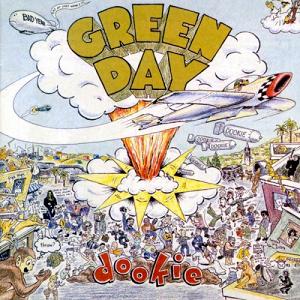
Green_Day_-_Dookie_coverI interpreted the theme as “wtf is this doing here?”, and decided that the pick had to be something both stylistically incongruous and without clear reason for existence in the collection. This ruled out lots of potentials: I know exactly why Sugababes albums are in the collection, for instance, and they’re not incongruous because I won several. Even the solitary and very incongruous Will Young album is there because of a fantabulous single that I just had to own (“Switch It On”). There are, of course, lots of records that I can’t remember why I bought them, but very few of them also seem incongruous stylistically (“let’s buy some more minimal faux-jazz/techno/whatever”).

Which left this, the third record by Green Day, which came out just before my 15th birthday and was gifted to me, by my older brother, shortly after that birthday, and which seems completely incongruous sitting in between Al Green and Grizzly Bear. 14 songs, 39 minutes, lyrical concerns as diverse and deep as masturbating and smoking pot. I listened to it intensely for a few months, and then put it away and got into other stuff that sounded nothing like this, and I haven’t listened to this in the intervening 20+ years.

I remember my friend Adam being very impressed by the drummer when I was a teenager, and not really understanding why: I recall being told many moons ago that playing music, like driving, was much easier to do quickly, and much harder to do slowly, so as fast as Tré Cool’s drumrolls were, they never really impressed. (Not playing an instrument, I dunno if that car analogy is true; it’s certainly more awkward to creep along on the clutch than it is to cruise at 55mph, though.)

Why this was in the collection I wasn’t sure; although I can remember its origin, I was sure I’d purged the copy my brother gave me aeons ago, but maybe the fact that it was a gift compelled me to hang on to it. I certainly never intended or expected to listen to it again.

Was it worth listening to again? Not really; I stopped identifying with it and finding it amusing within a few months when I was a teenager, and the intervening decades have done nothing to redress that chasm which opened up between who I thought I was and who this record seemed to be about and for. In my 30s Dookie sounds even more puerile and one-dimensional than it used to, even if that dimension is one of snottily good fun. My hobbies – bikes and boardgames and football and CDs – may still be adolescent to the core, but this wasn’t going to appeal even to a guilty-pleasure-centre in my brain. There are some nice melodies, but it is very, very samey, and tied strictly to an aesthetic that I never really liked anyway.

Green Day, it should be noted, have sold 75 million albums over the last 21 years. That’s seventy-five million. 75,000,000. More than the population of the United Kingdom. Wtf?

Rob listened: Nice to hear this on the same evening as Bob Mould. I liked ‘Basket Case’ when it came out but the rest of it seemed cookie-cutter and just uninteresting on some way. The music, the attitude, the performance all seem to have taken just half a step back from the point of being different, dangerous, enticing. Whereas Mould and Husker Du worked an arguably similar furrow (much earlier) they had edges and hooks and burrs and despair and fights and joy all of which allowed their songs to grow into my heart. Green Day seemed instead like something pre-packaged to pluck from a shelf I don’t need to visit any more.

Tom listened: Having never knowingly listened to Green Day before (unless they were the ones who did that Teenage Dirtbag song?) and having never felt the urge to, I came into Dookie with low expectations and a sinking heart. The dreadful album cover doesn’t help either!

It was alright I suppose.

But, as a result of losing my Green Day virginity, I am more confused than ever about music and my relationship with it, as in:

What were Green Day doing so right that they could sell millions and millions of records whilst countless other bands who sound similar (as in guitar based American indie) but better (Huskers, Replacements, Pixies, Buffalo Tom, Fugazi, Girls vs Boys) could only attract a fraction of their audience?

And what exactly were those other bands doing differently in terms of songwriting, musicianship and production that means they appeal to me so much whilst Green Day really don’t?

These are rhetorical questions!

The Smiths – The Queen Is Dead: Round 78, Nick’s choice

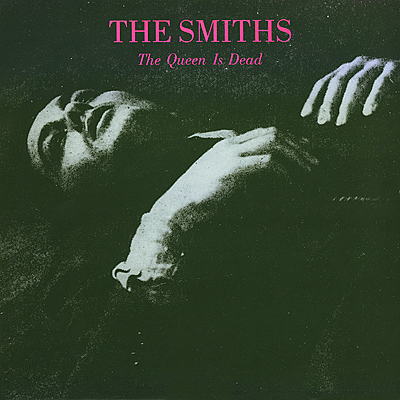
The-Queen-is-Dead-coverI was absolutely convinced that Rob had brought another Smiths album at some point (specifically, I thought, Strangeways Here We Come), but as soon as I pulled this out of my little knapsack I was informed that I was wrong, and that in fact it was Graham, who had played their eponymous debut. Serves me right for not researching.

But whatever; it still meant that I was OK to play The Queen Is Dead, which is my favourite Smiths record, if only by virtue of the fact that it was the first one I heard. Too young to be into them at the time (I’d just turned 7 when it came out, and was far more interested in Lego, I imagine, than Mancunian miserablism), I didn’t own a copy of this until I was 19 or 20 and at university.

One of the things that first struck me about The Queen Is Dead, and by extension The Smiths, given that I’d only heard a handful of tunes by them beforehand, was how funny they were. In the 90s when I was getting into music for the first time they were talked about as being impossibly dour and miserable, and despite the fact that I was probably at the height of my own personal miserablism during university, it was the theatricality and wit of Morrissey’s lyrics and delivery, rather than their angst-soaked pain, that appealed most.

Actually it was the melodrama that got me first, and I guess melodrama is the interface of angst and wit. The opening lines of “I Know It’s Over” – “oh mother I can feel the soil falling over my head” – so overwrought and adolescent and reaching, signified a self-awareness that I was only just becoming able to deal with, but which felt profound in its mocking of profundity, if that makes sense. There’s nothing quite as ridiculous as an over-earnest young man convinced of the import of his own, solipsistic emotional turmoil, and Morrissey at his best managed to both acknowledge and express that emotional turmoil and the ridiculousness at the same time. Did he know he was doing this? The answer, of course, doesn’t actually matter, but I doubt it was an accident. (Of course, as I became more familiar with The Smiths, I realised that this sense of humour had always been a key part of their genome, and that the people who’d claimed they were nothing but miserable were missing the point entirely.)

There’s a great story about how Johnny Marr, in the studio during the day with Joyce and Rourke, wrote and recorded what he considered to be one of his most beautiful tunes – a graceful, weaving, floating melody with the lightest of touches – and that he returned to the studio the next day to find that overnight Morrissey had written the lyrics, recorded the vocal, and called it, in an act of near blasphemy, “Some Girls Are Bigger Than Others”, royally pissing Marr off in the process.

The thing is, of course, that the reason The Smiths are so good, is precisely because of that awkward dynamic between Morrissey and Marr; the awkwardness, the cool, the humour, the miserablism all jumbled up together in a confusing but logical mix.

Graham listened: As we are at round 78, its getting difficult to remember why we brought some albums years ago. As I recall I was tasked with bringing something from 1984, which is why I brought the debut. But there is no debate in my mind about which is the better album. Though I’ve not played this for years I was reaching for my black polo neck and daffodils within seconds. Every lyric and riff came flooding back, as to me this will always be the ‘sound’ of The Smiths.

Rob listened: I was that miserable Mancunian and although I found them plenty funny, it was the mordant self-pity that got to me first. I found that completely over-powered and, to a great extent, I inhaled it, internalised it and built a sense of identity around it. Lots of us did. Due to age-constraints, The Queen Is Dead is the first Smiths album I heard (I was 15 when it came out and Andrew Nuttall, the class Cramps fan, lent me the record so I could tape it. Come to think of it, this might have been the first time anyone ever lent me a record…). And so, for me, it’s still the heartbeat of this most precious band. I love the luscious sound of ‘Meat Is Murder’, and that’s a record that arguably changed my life more than this one. I adore the spartan energy and somehow modern vintage sound of ‘Hatful of Hollow’, the urgent sound of four men inventing and inhabiting a world before your eyes. The beautiful shriek of ‘The Smiths’ will never lose it’s lustre and, although I never brought it to Record Club, ‘Strangeways…’ is a fine, fine record too. But this one, this is the bomb that started the war.

Tom listened: I can’t recall the circumstances now but I do remember buying The Queen Is Dead for my wife, Karen, thinking that she was a big fan. Having handed it over excitedly, she immediately took the wind out my sails by informing me that it didn’t have any of The Smiths songs she liked on it. As I was far from being a fan myself, it sat in a glove compartment for a number of years unlistened to and unloved.

That was until Graham played us The Smiths at record club and I realised that maybe, having hung on for 20 odd years, my aversion to Morrissey and co was cutting off my nose to spite my face. So I dug out The Queen Is Dead, dusted it off, and actually played the thing. And, of course, it is pretty magnificent. What’s more, now even Karen admits that, perhaps, the songs included on it are just as good, if not better, as the ones she cherishes so much from the group’s first flush of success. The icing on the cake is the fact that both the children love it, Tess for the stately majesty and doomed romanticism of There Is A Light That Never Goes Out…and Kit because it has the line ‘flatulent pain in the arse’ included.

My Bloody Valentine – Loveless: Round 77, Nick’s choice

mbvlovelessMany years ago I convinced someone I knew to buy Loveless, and their first reaction on playing it was to tell me they thought they had a ‘warped’ copy. I replied that they almost certainly didn’t, and that it sounding warped was kind of the point.

I’ve owned Loveless for the best part of 20 years now; I think I bought it in early 1996 when I was 16 and going through a very serious period of musical exploration. A lauded ‘classic’ even then, Loveless already carried a near mythical aura with it when it was barely 4 years old. I had no idea what to expect. Over the years since people have written reams and reams of verbiage about Loveless – it’s one of the few records I own a book about – and I still don’t know that anything anyone’s said would quite prepare you for what it sounds like on first listen.

Thinking about it now, I suspect Loveless might just be the album I’ve listened to the most over the last 20 years (and probably, therefore, in my life), which is weird, because I don’t think I would ever claim it was my favourite album. But maybe it is, by default? Maybe that’s what ‘favourite record’ means; the one you listen to the most. It’s been a go-to choice throughout mine and Emma’s 13+ year relationship, and it’s a go-to now that we have a baby daughter; the sheets of woozy noise and feedback and the simple, driving rhythms are perfect for lulling an infant to sleep. (As is a lot of sparkly, repetitive electronica. And Disintegration Loops.)

Tom played Isn’t Anything for us at record club a few years ago, and I said back then that “it has a physicality, a bass, a drive, which I think, on some days, makes me feel it’s a better record than Loveless, which can feel one dimensional and rhythmically staid at times. Isn’t Anything is no less rhythmically staid, but that physical dimension adds an enticing brutality.” I still agree with that, but facts can’t be ignored: I reach for Loveless a lot, far more than Isn’t Anything.

That one-dimensionality is actually one of Loveless’ strengths a lot of the time though; it may not cover the same degree of sonic terrain as Isn’t Anything, but the valley it does explore is exquisite. The way the segues between tracks help it coalesce; the way it has radically different effects depending on how you listen to it (a soothing balm when played quietly, a baffling, chaotic miasma when played loud); the way moving the position of your head makes those guitars phase in and out of sync with each other even more than they already do; the way the very simple, almost laughably linear song structures make you lose your place in the chronology of the album; even the way the lyrics, which Shields and Butcher apparently spent even more time perfecting than the music, can’t actually be discerned 90% of the time because they’re buried and overwhelmed in the mix: it all adds up to a blissful, intensely-textured, swooning sameyness.

I know “Soon” first and foremost as the closing track here rather than as the (indie disco) hit single it was 18 months or more before Loveless was released, so to me it doesn’t sound tacked-on (which is often suggested); it sounds like a tantalising signpost towards a future that took another 22 years to arrive. Brian Eno described “Soon” as “the vaguest music to ever be a hit”, and that’s a great word to apply to the album as a whole; ‘vague’. It sounds almost exactly as the cover looks. Wonderfully vague. I’ve never got tired of it.

Rob listened: I’ve never got into it.

I like My Bloody Valentine, and I like ‘Loveless’ some of the time, but I’d be lying if I said that I feel anything much more for it. It’s like a kid you knew at school who you always thought would be good to be friends with, but try as you might you only ever had fleeting, inconsequential conversations with. Years later, you find out he was killed in a fire at an ice rink and you realise you’re not all that bothered that he’s not around anymore. Maybe you miss the ice rink more, now you come to think of it.

You know. Like that.

I’ve tried, and over time I’ve heard all the things Nick talks about here, particularly that deftly disguised simplicity, swathed in blankets and fog, but unmistakeable. I hear them all, but those things just don’t add up to all that much for me. I really enjoyed listening to it again this evening. It sounded great through Nick’s fancy gear and he’s right that the volume adds texture and nuance, but the main thing for me was that I couldn’t leave. Because try as I might, over the years I’ve found ‘Loveless’ such an easy record to leave. If it’s the record Nick has listened to most over the last 20 years, then it must be the record I’ve wandered off in the middle of listening most during the same period. I like plenty of foggy records, and I love plenty of records that have never ‘clicked’ for me, their foreign mystery is part of the attraction. I guess I should be bold enough to admit that whilst I love ‘You Made Me Realise’ and ‘Feed Me With Your Kiss’ and I really like a bunch of other MBV tracks, I think that might be it. If I was bolder I’d stand here and tell you I think ‘Loveless’ is over-rated. But I’m not and anyway, who the hell am I to tell you that? I’m only bold enough to tell you that I don’t love it.

Tom listened: Nick has always attested that Loveless is,ostensibly, two different records: when played quietly it has the capacity to soothe and caress yet when the volume is turned up, it can pummel and disorientate and impress. I see what he means but I don’t think I quite get the record as he does – in its quieter state I find it too soporific and distant to be anything other than aural wallpaper. I like it much more when it’s loud but still have never quite clicked with it in the way I did with Isn’t Anything, no matter how high the volume level!

At record club Nick played Loveless in its ‘barely there’ state, so I have listened to it again tonight, turned the dial up and waited to see what would happen. It sounded much better to me and I really enjoyed it, but I still can’t quite get rid of the annoying nagging feeling that something is missing…just not sure what exactly. The melodies are there for sure; they are, if anything, even sweeter than on Loveless’ predecessor. There are moments of bliss, moments of brutality, and plenty of weirdness. Guitars are amazing throughout, obviously.

I think…and it feels strange to say this to a record that Nick has brought along…that my biggest single problem with Loveless is the production. No doubt it was a deliberate decision by Shields and Moulder (and Scully?) but, for me, the washed out waves of noise have the effect of producing an album that is a bit flat, and I miss the peaks and troughs, the light and shade of MBV’s output from the two or three years prior to Loveless. In the words of my daughter, who is unburdened by the weight of critical acclaim the album has received over the past 20 years, ‘I am indifferent to it – it sounds a bit like background music’…and this was whilst it pounded out of my speakers at ‘neighbour bothering’ volume! But I’ll keep returning to it every now and again and, who knows, maybe one day I’ll see the light.

Tanya Tagaq – Animism: Round 76, Nick’s choice

tanya-tagaq-animismThe ‘album of the year’ concept always troubles me. I’ve already played the two records (Owen Pallett and Wild Beasts) that would probably occupy the slot of my ‘favourite’ from 2014, and didn’t want to repeat, so I decided to play something that I like a lot and think deserves wider exposure. It’s not my favourite from the year, or probably even in my top five favourites, but I do admire it massively.

Although I already own an album featuring Tanya Tagaq (she guests on Björk’s Medulla), I wasn’t aware of her as an individual musician in any conscious way until September 22 this year, when Animism, her fourth solo album, won the Canadian Polaris Prize – an award that, to be reductive, is roughly equivalent to our Mercury Music Prize.

The Polaris is considerably more esoteric and generally rewards more creative music than the Mercury, though; although past winners include stadium-indie behemoths Arcade Fire and Apple-ad star Feist, they’ve also included scatological Dungeons & Dragons chamber pop star Owen Pallett, jazz & psyche tinged electronica darling Caribou, and anti-establishment post-rockers Godspeed You! Black Emperor. No M People or Alt-J in sight. It’s tempting to use this as evidence that Canada is some kind of cultural nirvana, but Bryan Adams and Celine Dion prove this isn’t quite the case.

So it’s not that much of a surprise that an album of orchestral and electronically enhanced Inuk throat singing should have won in 2014. It was Tagaq’s triumphant performance at the Polaris gala that caught my attention, and that of plenty of other people, judging by the way a YouTube clip of it feverishly seeded around social media in the days afterwards; an 11-minute improvisation wherein she led an orchestra, someone doing something with electronics, and a choir of throat singers through ecstatic and anguished guttural howls, percussive interludes, and an absolute gamut of emotions and vocal approaches. The performance was in front of a projected list of the names of hundreds of missing and murdered Inuit women. It was genuinely unlike anything I’d ever seen or heard. The presenter guy, astonished, could only manage to blurt out: “I mean HOLY SHIT! Was that something else or what? That was fucking… My God! Amazing! That was amazing!”

I ordered Animism pretty much on the spot.

And it didn’t disappoint, although it pretends it might; the opening track, “Caribou” (which Rob and Tom identified as a cover of the Pixies tune, which I hadn’t realised), is a bait-and-switch, offering the listener an almost by-the-numbers orchestral pop song, albeit beautifully recorded, wherein Tanya sounds a little like Lauren Laverne. There are hints in the closing moments that things might not be as you’d expect, but it doesn’t prepare you what happens across the rest of the album, as orchestral flourishes, percussive climaxes, semi-ambient vocal passages, and Tanya’s extraordinary throat singing explore a huge range of musical territory and texture. The strings, drums, and breathy yowls of “Fight” perhaps get closest to the Polaris performance, while “Uja” starts like a piece of minimal, reverberant electronica.

The album is dedicated to those missing and murdered Inuit women, and also contains a song called “Fracking”; despite having very few lyrics, it’s a pretty explicitly political work, about the literal rape of women and the figurative rape of nature. Combined with the varied and experimental sonic palette it makes for quite an experience. And that’s without really describing Tanya’s voice…

Tanya’s voice is an incredible thing. I’m not at all familiar with Inuit throat singing, but to Western pop-familiar ears what she does sits somewhere between Mercedes McCambridge in The Exorcist, the ‘Cookie Monster’ growl of some death/black/doom [delete as appropriate] metal, and the performative, ecstatic moans and cries of pornography. I’m pretty sure these three analogues aren’t in any way influences on what Tagaq is doing here, but when confronted with something so absolutely different to what you’ve heard before there’s little you can do but scrabble for comparisons.

The sleevenotes suggest that Animism‘s recording was at least partly paid for via crowdfunding, making it feel emblematic of 2014 even as it stands apart from almost every other piece of music I’ve heard this year. It’s not the record I’ve listened to or thought about most often this year, but there’s something about its strangeness (to me), about Tagaq’s deeply personal motivations, that I find really compelling.

Rob listened: I hadn’t heard of Tanya Tagaq until Nick, who heard of her a day before me, started talking in ecstatic terms about her Polaris performance. I smiled politely but never watched it (still haven’t, really should, but my tolerance for sitting and watching things is at an all-time low these days). So I came cold to this and found it impressive. I didn’t pick up on the political or philosophical overtones (neither did Nick – he was extrapolating from what he’d read into what he was hearing, which is perfectly fine) as the only words I could make out were written by Charles Thompson almost 30 years ago, but I did get some shape-shifting sounds some of which reminded be of other things (The Knife, Bjork) and some of which seemed to come from other worlds. In all, the record sounded as packed with genuinely interesting and intriguing stuff as any I’ve head this year.

Tom listened: Little did I realise that before tonight I had heard Tanya Tagaq’s dulcet holler on our copy (technically it’s Karen’s) copy of Bjork’s, rather too challenging for me, Medulla. So whether she is singing or throat singing on that LP…I don’t know, as I would estimate that I have listened to Medulla less than five times and can only recall the impression it gave rather than the sounds and songs. I have, however, heard the fine Inuit art form of throat singing on many occasions…every time I watch The Simpson’s movie and the Boob Lady section is on!

So, Animism turned out to be exactly, and nothing, like I expected…in that it was as challenging, difficult and abrasive as I thought it would be (once Nick had introduced it to us – like Rob I had no idea it existed until now), but it was also, at times, propulsive, catchy and beautiful. I preferred the latter  sequences/songs but imagine that with repeated listens the parts of the album that were harder to take on first acquaintance would begin to make more sense and provide an intriguing, as opposed to discombobulating, contrast.

Stevie Wonder – Talking Book (and “Isn’t She Lovely”): Round 74, Nick’s choice

Talking_BookGraham gave us the vaguest theme; this meeting being close to Bonfire Night and a club baby being due very soon indeed, he just said “fire, or birth”. Phoenix were the first thing that came to mind, but, much as I love Wolfgang Amadeus Phoenix and Alphabetical I’m not sure I’d have all that much to say or write about them.

The second thing that came to mind, from the ‘birth’ side of the equation, was “Isn’t She Lovely” from Stevie Wonder’s marvellous, but too-long-for-record-club Songs In The Key Of Life. Unless you’ve been on Mars for the last 38 years, you’ll know this song. Unless you’ve sat and listened to the album version, though, you may not have heard the extended version which features the sound of Stevie bathing his infant daughter and her gurgles and burbles and other baby noises. Even without that, “Isn’t She Lovely” is the most disarmingly open and forthright and unconditional love song I think I’ve ever heard, a feat made even more remarkable because it’s by Stevie Wonder, who seems to me like he has more disarmingly open and forthright and unconditional love songs than anyone else ever anyway, without recording an 8-minute gush of love about his daughter. But he did, and it’s amazing, so I played it.

Its parent album being 80+ minutes in length, I decided to go for another of Stevie’s classic 70s records as accompaniment. I only owned two others – Innervisions and Talking Book, and decided to go for the latter, as it’s both marginally less famous and also the one I know least well of the three.

Wikipedia tells me that original pressings of Talking Book featured the title and Stevie’s name in braille, along with the following message: “Here is my music. It is all I have to tell you how I feel. Know that your love keeps my love strong.” If pretty much anyone else had written that on the sleeve of their record I’d mime sticking my fingers down my throat, but somehow Stevie gets away with it. He also gets away with opening the album with “You Are The Sunshine Of My Life”, which is almost as ridiculously disarmingly open and forthright and unconditional as “Isn’t She Lovely”. There’s something about his delivery, his manner, his melodies – hell, his whole approach and being – that just exudes sincerity and goodwill. And he didn’t just keep this up for a couple of songs or a whole album; he’s kept it up for what seems like his entire life.

You’ll know “Superstition”, of course, and even a thousand sub-Olly Murs covers cannot dim its brilliance. You’ll also know “I Believe (When I Fall In Love It Will Be Forever)”, but you may not recall just how splendidly cosmic it is. Quite a lot of Talking Book wanders into cosmic territory, actually – loose structures and jazzy vamping define the feel of many of the songs, but Stevie’s ineffable melodic sense stops it ever wondering away from the listener.

I enjoyed going back to Talking Book, for the first time in ages, that I went out and bought Music Of My Mind and Fulfillingness’ First Finale at the weekend, so I’ve now got his complete run of renowned 70s albums. Has any other musician ever been so convincingly full of love and positivity?

Rob listened: No Nick, I’m not sure they have. I love ‘Talking Book’ as unconditionally as Stevie Wonder seems to love the entire human race. Much as I would be happy to send Sister Sledge into space as proof of the majesty possible in pop music, I would put Stevie Wonder at the front of the queue when it came to singing songs of pure, unadulterated love. Most of the music I like I think of as relating to or somehow, weirdly, emerging from my own life, my own circumstances, my own psyche. Stevie Wonder, however, seems to arrive unique and fully formed from another planet, presenting his music and saying, “here, this is my gift to you, humanity. This is what you could be.” Holy shit, the guy should be made King of the Entire World just for writing ‘Sir Duke’, let alone all the other insanely brilliant shit he also created.

So, ‘Talking Book’ I like a lot, although listening tonight it really did strike me just how noodling and free-form much of the record is. ‘You Are The Sunshine Of My Life’ and ‘I Believe’ are incredible bookends for an album which would be a total trasure even if it didn’t feature ‘Superstition’, aka one of the most amazing pieces of music of the last 50 years. As it happens, I prefer ‘Songs In The Key Of Life’ and maybe ‘Music Of My Mind’ (‘Sweet Little Girl’ excepted) but that’s to take nothing away from this quite wonderful record (his 15th! and second of 1972!) from a quite wonderful artist

Tom listened: Curiously, I too thought of bringing Wolfgang Amadeus Pheonix along to Graham’s Fire and/or Birth evening but I too thought, ‘what the hell could I write about it?’

I’m glad I second guessed Nick’s original choice of Stevie Wonder album as I believe he had intended to play Innervisions and I know that record reasonably well. I had, however, never knowingly listened to Talking Book before and I have always been keen to hear it, despite the fact it had nothing to do with fire or birth! Still, you’ve got to let the lad off at the moment as he has a lot on his mind, mainly to do with one of tonight’s themes.

So, what did I make of Talking Book? Well, it’s hard to say at this point. With the exception of the three or four ubiquitous tracks on the record I was surprised at how difficult the ‘album’ tracks were. Pretty much hookless as far as I could tell, Talking Book seemed to epitomise an album that needed to be lived with…I imagine that by the 7th or 8th run through I would be sitting there going ‘this is amazing, how could I not have heard the true genius of this at first’. It’s a process I’ve been through many times over, one that still excites and surprises me, and one that I am still hopelessly ill-equipped to anticipate. But, in as much as they can, my instincts suggest that Talking Book would be another Forever Changes, Berlin or Clear Spot.

Björk – Debut: Round 73 – Nick’s choice

BjorkDebutAs usual I had a handful of choices for Tom’s simple “your favourite album by an artist that isn’t considered to be the critical or fans’ consensus ‘best’” theme, but Björk’s was the first I thought of and, frankly, the one I wanted to play the most.

My assumption was that over the last 15 years or so, Post and, especially, Homogenic, had come to be regarded as Björk’s best records by pretty much everyone, but 21 years on from its release, and about 19 on from me first hearing it in full, Debut still remains my favourite front-to-back record by Iceland’s favourite daughter. Luckily, when it came to trial by RateYourMusic, Debut was indeed not her top-rated record, coming below those two and also Vespertine. Vindication!

Of course Debut wasn’t Björk’s debut album at all; as well as the small matter of her having fronted The Sugarcubes (a band who seem to get mentioned an inordinate amount at DRC, mainly by Tom), there was her eponymous ‘real’ debut album as a 12-year-old, which I suspect very few people outside of Iceland have ever heard. (And probably not many will have heard of.) (There’s also Gling-Gló, a 1990 album where Björk fronted a jazz trio. Never heard it, but intrigued…)

The sound of freedom after the collapse of The Sugarcubes, Debut was sort-of a record of Björk’s move to London and immersion in UK club music, taking in trip hop, house, dance-pop, and much more. It’s a vivacious, joyful album, which covers a lot of ground both musically and emotionally, but most importantly to me it’s also Björk’s must unabashedly ‘pop’ record; as odd as “Human Behaviour” might be, for instance, it’s also outrageously catchy, and when you add in “Big Time Sensuality”, “Venus As A Boy”, and the fabulous “There’s More To Life Than This (Recorded Live At The Milk Bar Toilets)”, there’s no doubt in my mind that this is not just Björk’s most accessible record, but one of the very best albums to come out of the mid-90s. I still love pretty much every second.

Rob listened: I was a big Sugarcubes fan and bought ‘Human Behaviour’, the single, and ‘Debut’, on their respective days of release. The single, a strange and snuffling, otherworldly beast, was enchanting, but seemed somehow a logical progression. The album felt very different, a deliberate and unmistakeable break with the past. It’s easy to forget what a bold step ‘Debut’ was. For Björk (out into the spotlight on her own without her band, and into new territory – easy to forget because she’s been taking radical steps ever since with almost every record) but also for the music of the time. Moving this decisively into club culture seemed almost jarring, although the record is anything but. However, like everything else she’s done, ‘Debut’ is wholehearted, sincere and completely convincing. Hearing it again I was surprised to note just how well it has stood the test of time, despite being so closely bound to the sounds of the 90s dancefloor. Perhaps not a true debut, but this is certainly the true arrival of one of the most distinctive and transfixing solo artists of our age.

Tom listened: When Nick played us Post, years ago now it seems, I just couldn’t get on with it. It felt too much of its time for my tastes and I could all too easily imagine it being rolled out during a dinner party scene in This Life or Thirtysomething. No fault of the record itself of course but, for me, the hurdle felt insurmountable and I knew that Post was one Bjork record I could strike off the list.

In contrast I thought Debut was spellbinding, much preferring it to its successor. Debut sounded fantastically assured, which I found surprising given the relatively short shrift that the latter two Sugarcubes albums received from the music press at the time of their release. Debut sounded to me like a record that had been made by someone who either felt they had nothing to lose or that they just couldn’t lose. Bjork didn’t really fit into either of these categories however – she had tasted considerable success with the Sugarcubes at the start of their recording career and must have had a distinctly sinking feeling as the music press turned on them with subsequent releases.

Yet, despite this, Debut sounds so confident. In fact it sounds just like the album to launch a uniquely successful solo career, one that says to the listener, ‘forget my previous missteps give me a fair listen, trust me and I’ll pay you back in spades over the course of the next 20 years (at least)’. Perhaps its ironic, therefore, that Post didn’t have the same effect on me but, whilst I may not love all the music that I have heard of Bjork’s over the years, it’s always interesting at the very least and, in the case of Debut, it sounded downright vital!

FKA Twigs – LP1: Round 72, Nick’s choice

FKA_twigs_LP1Recipient of much acclaim and even more discussion this year, FKA Twigs might be part of this supposedly modern mutant r’n’b thing that seems to be happening (possibly started by The Weeknd and pursued by How To Dress Well, in as much as these ‘things’ ever start anywhere identifiable), or she might be something else entirely. Let’s settle on something else entirely. If I’m reminded of other music (and I am, a little, although not that much) then it includes Julia Holter, Grimes, 4AD, and Radiohead’s post-electronic work rather than Whitney Houston or Beyonce or Maxwell. Which isn’t to say that one can’t detect similarities to those artists here; they’re just not the only, or even the main, reference points. Which is a clumsy and roundabout way of saying that FKA Twigs (from Gloucestershire, 26, former backing dancer for Ed Sheeran and Kylie Minogue) lives in that space between genres which so much post-broadband music inhabits.

FKA Twigs’ music also lives in another, more specific space; the space that surrounds sex between human adults. LP1 is… I’m hesitant to use the word ‘explicit’, but the eroticism and lust on display here are way beyond being implicit: “when I trust you we can do it with the lights on”; “I can fuck you better than her”; “my thighs are apart for when you’re ready to breathe in”. While not every song is quite this upfront and overtly sexual, there’s a strong tone and atmosphere that pervades the whole record. The fact that the final song is pretty explicitly about masturbation leaves little doubt that you’ve misinterpreted the mood.

This isn’t just titillation for the aural equivalent of the male gaze, though; although hearing female voices sing explicitly about sex and love from and for their own perspectives (rather than for a male audience) isn’t as rare as one might think (or as we’re lead to believe, possibly) (just this year we’ve heard St Vincent sing about masturbation, Karen O release an album called Crush Songs, and Tanya Tagaq release an extraordinarily sensual and political album dedicated to the missing and murdered aboriginal women of Canada), the sexuality on display here may well make men feel uncomfortable rather than aroused, and the emotions that accompany the actions described feel very much as if they’re coming from a female perspective rather than pandering to a male one. It’s intimate and private rather than exhibitionist, and every erotic action has an emotional fulcrum and fallout, even if not a motivation.

Likewise the musical content, although defiantly modern and sumptuous, is low-key and subtle, in terms of both melodies and beats; these are pop songs, but they’re not bangerz, and although there might be nods to multiple stripes of modern dance music there aren’t any crass drops in evidence, imbuing LP1 with both sophistication and intrigue.

Rob listened: I’ve been around the houses with LP1. I went through a phase of putting it on as  background music, and in that role I found it very easy to reach for. I like the palette and the restraint. It’s nice. A nice sound. I tried to listen to it more closely a couple of times but it slipped out of my grasp. I found it an easy record to walk away from. Listening to it with with Tom and Nick, both of whom have already spent a reasonable amount of time with it, I found it similarly evasive. I’d go so far as to say it seemed indistinct. After the meeting I decided I was fed up of it. We have enough woozy postmodern ambient dance scapes to last the rest of the decade don’t we. Isn’t LP1 just another to chuck on the pile?

Now, listening once more on headphones, it sounds utterly fabulous. Rich in detail, deeply resonant and cut through with dark undertows. Plus, and here’s the thing, the songs are first rate, each one hiding at least one moment that forces you to close your eyes and nod whilst an icicle is forced gently through your heart.

I’d planned to write about how I’d decided I can do without FKA Twigs in my life. I’ve changed my mind.

Tom listened: I have bought precious few records this year, mainly through lack of inspiration, so I was pleased when, a couple of weeks ago I picked up FKA Twigs and had something, at least, to play at our albums of the year meeting.

On first listen I thought I had discovered a massive flaw in my thinking…I hated the lyrical content of the first few tracks of LP1 to such an extent that even before the fourth track, Hours, had finished I was already wondering whether the record shop would allow me to return a record that had already been played. Great! I chance my arm on a record after months of abstainance and it turns out to be a dud. So much for album of the year!

But, but , but…a few more plays and it really does begin to sound like album of the year material. Sure, the lyrical content is still about a cringeworthily (I know that’s not a word) explicit as I can bear – that’s not going to change with exposure, is it! – but I barely notice it now, because the songs are just so damn good. The record is so crisp, the songwriting so innovative, the album so hard to pin down in terms of genre. Best of all, for me, is its unpredictability. Crescendos are missed, vocals drop out, songs slow down, speed up. It should be a mess but it works brilliantly. So the apparent flaws I felt were insurmountable at first have been well and truly neutered and I had been gearing up to producing LP1 at our last meeting of the year, looking forwards to announcing to all and sundry that my album of the year was yet another solo female singer-songwriter…when Nick goes and ruins it all prematurely. I guess now I’ll have to go out and buy something else. Here’s to hoping lightning really does strike twice!

The Flaming Lips – Zaireeka: Round 71, Nick’s choice

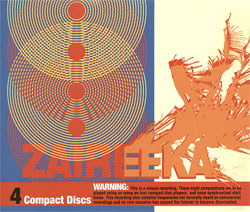
Zaireeka_coverI didn’t have anything specifically in mind when I announced this theme, just a vague thought that it would be interesting to revisit some of the things we’ve experienced together over the last three and a half years and see what we thought. My initial instinct was to assemble a list of all the albums I’ve bought because Tom, Rob, or Graham have played them at me, and play one of them – I made a list and there were several (certainly more than Rob!), but none of them screamed “play me! play me!”; they were nice-to-haves rather than game-changers. I suspect, in my mid-30s, with a couple of thousand albums on my shelves, that coming across genuine game-changers is something I’m pretty much past.

But then Rob emailed around the list of everything we’d ever played to each other, and one particular album jumped out at me instantly. Tom said as much the next time I saw him; he thought I’d chosen this theme as an excuse to play it again, which would have been entirely justified, it just wasn’t the case.

Rob initially played Zaireeka to us at Tom’s house back in round five, blindsiding me as I’d mentioned it to him in the car journey there (and failed to notice the three stereos in the back seat that he was bringing to facilitate the experience). Amazingly that makes it one of the first records we played together, but it feels like a very recently memory. This is probably because the experience of listening to Zaireeka is so strange, so vivid, so phantasmagorical, that it sticks in the memory.

The drum experiments, the ululating vocals, the dogs barking, the crazy narratives about pilots and pets and spies and psychedelic commutes, and, of course, the whole, exacting, interactive method of consumption: I think I’m OK in saying that Zaireeka is the most bona fide experimental, avant-garde, out there record I’ve ever had the pleasure of listening to. It is bizarre and wonderful, and I was delighted that I’d inadvertently given us the chance to revisit it again.

Tom experienced Zaireeka again: Expectations are a funny thing. I remember Zaireeka having such a profound effect on me the one and only time I had heard it before that, to some extent, I couldn’t wait to hear it again. I recall it totally eclipsing the efforts of Kurt Vile and Bill Callahan (our other offerings on that evening), feeling that nothing would ever be the same again as Rob unplugged the multitudinous stereos required to listen to the thing.

Of course, over time I have re-calibrated and no longer hear the apparent post-Zaireeka thinness of the sound that a conventional stereo system offers. So I was looking forwards to hearing Zaireeka (it was obvious from some way off that this would be Nick’s record for the evening)  but a little worried that it would be back to square one. However, for me, the effect of Zaireeka second time around was greatly reduced, due mainly, I suppose, to the fact that I knew what was coming. So I listened to the songs this time around, as opposed to the sounds. And, whereas last time around I didn’t really even notice them, this time I was reminded just how little Wayne Coyne’s songwriting does for me. I have six Flaming Lips albums (but have only bought one of them) and, of the six, the only one that has ever clicked at all was In A Priest Driven Ambulance…which is a long way away from their late 90s output in terms of aesthetic. So… Zaireeka is still an amazing thing to experience but, as an album of songs, falls some way short of the brilliance of the concept.

Rob listened: It’s still like nothing else. Like Tom, I also found myself listening past the disorienting sound space and the sheer technical achievement and starting to get to the songs. Unlike Tom, I found them more beguiling and pleasurable this time around, particularly ‘Thirty-Five Thousand Feet of Despair’. Nothing can replicate that first experience, but for me, this added a little more, rather than took away. I’d be happy to have it as an annual ritual.