Ought – ‘More Than Any Other Day’: Round 94 – Rob’s choice

oughtImitation is the sincerest form of flattery, they say. Or is that sarcasm? Anyway, flattery will also get you nowhere. No, hang on, that can’t be right, cos this record is gloriously imitative and it goes to all the right places, at least for those who grew up on spiky, exploratory underground guitar sounds coming out of US college towns in the late 80s early 90s. i.e. me.

Let’s start again. I can boil this down for you. This record sounds like lots of others, and that’s great.

Much like the Meilyr Jones album Tom brought to the last Record Club, the trick here, hang on, that’s not fair, it’s not a trick, a swizz, a rip-off… the secret here is that ‘More Than Any Other Day’ is a record that weaves its influences and its references through its DNA. Rather than hit them like a series of targets, it works with the raw material of the band’s favourite sounds and then allows these to bubble to the surface as and when they need to. It’s a group of four young men making music influenced by the sounds they love. Is that a crime? What? No it isn’t? Okay then. I’m glad we got that one sorted out.

Let’s be clear, this is no pop-post-hardcore party piece. The Montreal foursome run the gamut from Talking Heads and The Pop Group up through classic Dischord, think the searching geometric patterns of Lungfish, Shudder to Think, Circus Lupus. Somewhere in the background someone strikes a guitar and it goes ‘SKIIING’. The For Carnation, Seam and Bitch Magnet hove into and out of view. There’s a moment at the beginning of the title track that, viewed from a distance, is the moment at the beginning of ‘Breadcrumb Trail’ which is the moment at the beginning of ‘Spiderland’ by Slint and that is not something you want to be dabbling with unless you’re very sure of yourself.

And yet throughout this is not a set of knowing nudges, rather a long ticklish buzz to the musical memory. I’m getting old now. I’m 45, for heaven’s sake. As my performance at Record Club most weeks shows, I no longer have the encyclopedic grasp of (a very narrow slice of) the stuff that echoes around between whichever synapses fire when I feed them these sounds. I spend about 25% of my time at our gatherings declaring, of some minor detail of some record or other, ‘Oh yes, it sounds just like, oh wait, wait, I’ve got it… no. No I haven’t.” And so it is with Ought. The voice at the beginning of ‘The Weather Song’ is the absolute spit of… somebody else. It’s been driving me spare for about two years. But, that’s actually okay for me. In a weird and ultimately pleasurable way, what I get from an echo like that is a wobbly Proustian rush of all the music I used to know and love that used to, and I assume still does, sound like some of these sounds.

There are always records that sound like the records you like the sound of. No-one is doing this in complete isolation, producing sounds that relate to nothing. Even those bees sound a bit like Stars of the Lid or ‘Chill Out’. You can never keep hold of all the pieces of a subculture, never wrap your arms around a genre or, worse, keep it pinned down. And as of now, more than any other day, the connections go in all directions, backwards, forwards, sideways, upwards, downwards (like I said, all directions) in time and in space, as well as in politics, sensibilities, meanings. I get a real kick from this album. That’s perhaps partly explained, but certainly not diminished, by the connections I’m making and the reactions those connections are enabling.

Have I over-explained stuff you already knew enough for you now? Can’t we just get on and talk about the songs?

‘Pleasant Heart’ kicks off with energisingly bitey guitars and vocals, spiky, urgent, anxious. Good things. But the heart of the record comes in the next run of tracks. ‘Today More Than Any Other Day’ begins in Spiderland and then, over 5 minutes, accelerates and veers to somewhere completely different, building a rush of giddy existential joy, both liberated and liberating. Then comes ‘Habit’, one of my favourite songs of 2014. Imagine, if you will, that you are hunkered in a cell, contemplating your last night on earth when, just before your promised last meal arrives, a priest comes in to offer you some final absolution. You wave him away, but the priest is Christopher Walken, who precedes to crouch with you in the corner of the room, grasp both your hands in his, and tell you what’s on his mind, a surging sermon about absolution and addiction. ‘Habit’ is a bit like that.

All three songs feature guitars and drums of the sort I have previously alluded to. But they also feature Tim Darcy, a wonderfully lithe and animated vocalist who performs, rather than sings, his meanings. His voice shifts and pivots, sometimes mid-sentence. His yelps and gasps and barks are electrifying punctuations. He is the embodiment of the skinny, bespectacled college student jazzed to high hell on the possibilities of being in a powerful rock band. I have no idea of he wears spectacles. I guess he may have gone to college. I think I heard somewhere that they met at college.

He is Albini, David Byrne, Ian Svenonius, David Yow’s younger, calmer brother. He’s like the smart singer of that smart band you used to like but can’t quite remember but is actually a summation of all of the smart singers in all of the smart bands.

And that’s Ought. And the rest of the record is pretty much just as good. Good sounds, good band. Good.

Steve listened: Sounds like Talking Heads, like Pavement, oh there’s the Fall (as always) but I like Rob am cosseted with the familiar sounds of the music of my past. I liked this album and it was easy on my ear, but then it didn’t blow me away and awaken me to a new sound that I hadn’t heard before. I’d listen again though, quite happily. Imitation is the sincerest form of flattery, but only if you mean it, and you do it well, and Ought seemed to have at least carried this off with aplomb. I’d be interested in hearing how they developed their own style later on and how they sounded after this “get it out of our system” album had passed through…

Tom listened: Rob emitted a little sigh as I put Robbie Basho to bed (not literally, I hasten to add) and then went on to mutter, in an uncharacteristically doubt-ridden manner, that he wasn’t sure his album would work well coming after Visions of the Country. Well…he needn’t have worried! By the end of More Than Any Other Day, Basho’s acoustic warblings had been all but wiped from my memory and if it hadn’t been past my own bedtime, I would have been reaching for my old Feelies/Shudder To Think/Jawbox albums.

Although, as Rob and Steve have both suggested, they are not really doing anything that hasn’t been heard before, in stark contrast to Parquet Courts (for whom I have really struggled to see what all the fuss is about), Ought are doing it really, really, really well! The playing is sharp yet loose, the singing is surprising and welcoming, the rhythms are infectious and, crucially, the band seem excited to be playing their music…they sound like a team having fun! I liked the album more and more as it went on and, by the end, I had fallen pretty much hook, line and sinker!

Tim Hecker – ‘Love Streams’: Round 93 – Rob’s choice

tim-hecker-love-streams

It’s tempting to hear and see ‘Love Streams’, the eighth album from Canadian electronic artist Tim Hecker, as his warm and fuzzy record. It certainly has a more organic, perhaps even welcoming sound than his previous couple. Also, it has a nice pink-infused cover, so, y’know, it could be ‘Chill Out with Tim’ couldn’t it? Well no, not quite.

Hecker, as far as I can see, has always used the building blocks of ambient electronic and contemporary classical music as his canvas and then employed distortion and degradation as his primary operating methods. He takes sounds as roots and nicks and chips and twists and bends and burns and intertwines them into shapes and forms that seem simultaneously to have burst from within and withered dreadfully away from their original forms.

Previously he’s been heavily into pipe organs, pianos, guitars, software, the ‘virginal’ (an early percussive harpsichord) and anything else he can get his hands on. He treats these instruments seriously, with reverence and technical curiosity, never as playthings or sound fodder to be thrown willy-nilly. Instead he uses them as serious thematic elements, to enhance, divert, combine and amalgamate, as colours to use to build shapes and as shapes to use as foundations for colours.

I don’t go all the way back with Hecker, not yet at least, only to his last three full lengths. ‘Ravedeath 1972’ took as its intent the destruction of music, and was suitably scabrous. ‘Virgins’ used live ensemble sessions as the basis for its explorations. It seemed to me to say something about the degradation of the human spirit, signified by the juxtaposition between the virginal instrument itself and song titles and cover imagery both of which invoked some of the darkest places in our recent history. It was a remarkable piece of work. I can’t explain why, but that’s always part of the wonder.

Now, with ‘Love Streams’, the human voice is given primacy, featuring for the first time in any of Hecker’s original work. He recorded raw material with the Icelandic Choir Ensemble, reportedly having them sing nonsensical words and abstract sounds, all to give him a source of sound to electronically manipulate, the way he has previously done with acoustic instruments.

The result is simultaneously warm and accessible – the human voice draws us in to any soundscape, almost no matter what else lurks therein – and endlessly fascinating. Following the routes of the interplay and entwined, slow-motion combat of voices and synths and percussion is both challenging and intriguing. the sounds confound, deflect, obfuscate and delight. Still, this is no twinkly piece of ambient electronica. It’s an floating, abstract miasma, an imagination of the way another species might invoke music. Whereas long-time Hecker buddy Daniel Lopatin seems to delight in deconstructing and then reconstructing music, twisting, perverting and destroying its body but retaining superficial traces to allow us to identify the corpse, Hecker is in another realm from start to finish, a place where music evolved under different influences into a different life-form.

There are breathtaking moments on ‘Love Streams’ and a thousand moments that will slip by un-noticed until the hundredth time. There are combinations of colour and flavour and texture that you will not have heard before. It will make little sense to you on many levels and perfect sense on others. Ultimately this is a beautiful work of sound, and perhaps my favourite thing to listen to this year so far.

Tom listened: It’s confession time…I can recall very little about this album, although I do recall liking it! And I think that’s the problem I have with music that is predominantly electronic – generally I enjoy the experience of listening to it, but don’t find myself seeking it out for repeated spins (Fourtet’s Rounds has sat on my shelf for years and year, gathering dust. Music Has the Right…by Boards of Canada has been doing a similar trick in my car, Dubnobasswithmyheadman I’ve pulled out on a few occasions more recently, loved it, but it’s drifted back into the lesser visited recesses of my collection over the last couple of years). So, it makes me even more pleased that Rob and Nick bring this stuff to Record Club – surely exposing you to music that you wouldn’t naturally encounter is what it’s all about!

Apart from those bees.

nick listened: can’t remember a bloody thing about this but wrote it on my list of things to buy, so assume I liked it. Have two other Heckers and feel as if they’re more like homework than hobby, but this seemed to bridge that gap.

Beyoncé – ‘Lemonade’: Round 91 – Rob’s choice

25-beyonce-lemonade-coverw529h352-9c63e958-da7a-4ee1-b52e-30236f27c313

When was the last time the album of the year was made by the biggest pop star on the planet?

‘Thriller’ in 1982? ‘Sgt Pepper’s’ in 1967?

Give it six months and there will be another name to add to the list.

‘Lemonade’, Beyonce’s sixth studio album is a breathtaking piece of work in which production, author, subject and songs all contribute, all are bound together inextricably and yet all are worn so very lightly. This is no portentous, overbearing statement double album, it’s a breezy 45 minutes that manages to be uplifting, inspiring and sharp as whilst diving deep into dark and difficult personal and political issues. Again, again, again, I can’t stress enough how, despite the rawness on display, the execution of the 12 songs here is so deft as to be giddily exhilarating.

And let’s remind ourselves once more, this is the Biggest Pop Star on the planet pulling all of this off.

What’s more, she’s pulling it off amidst the meteorology of the interstellar forces between her and her husband, one Shawn Carter aka Jay-Z. Not only is this a remarkable record by the world’s biggest star, it’s one which is laced with implied criticism and public admonishment for one of the other top 5 stars in pop. Who she lives with.

It must have been some first listen in the Knowles-Carter house.

And so what do we have?

A record full of beautiful detail and flourishes. The bingo hall organ that rills through ‘Pray You Catch Me’, is incongrous, and just a bit weird, and deliciously fleeting. It’s gone before you realilse it’s happened, leaving a background echo and a sense that not everything is going to be okay on this fairground ride.

Elsewhere there’s the horn riff that emerges from the middle of ‘All Night’. It’s the hookiest thing I’ve heard in ages and it’s used so delicately that it becomes genuinely nagging and moreish.

It’s a record packed with moments too.

Like when the air horn cuts through the phasing sample from Andy Williams ‘Can’t Get Used To Losing You’. It’s subtly amazing, an act of low-key genius. The sound of a sweeping clash of cultures, and it’s a throwaway in the first 10 seconds of what becomes ‘Hold Up’, an exquisite track.

It’s also a record packed with startling, revealing, insightful and nuanced words. Take ‘Hold Up’. It’s no simple ‘you done me wrong’ diss track for a disloyal partner. Here is introspection, guilt, self blame, defensiveness, possessiveness, confusion, anxiety. This is a song written from the perspective of a woman who feels completely isolated by her jealously and, ultimately, by her husbands infidelity. It holds its tension until the very end and the repeated refrain “I look in the mirror, say ‘what’s up’?” a hopelessly defiant cry of loneliness.

The ambiguity and self-relexive power of these lyrics, even when plumbing the dark recesses of the heart, is a pure joy. “What’s worse, to be jealous or crazy, jealous or crazy?” And earlier, the psychological insight that delivers the line “I’m praying you catch me”, the protagonist yearning to be found running through her partner’s call list just so the suffocating suspicion and the dread she is writhing in can be brought out into the open.

The suspicion and self-doubt boils over in the next track, don’t hurt yourself a writhing, seething, excoriating smack down of a track. Underscored by thrashing barbed-wire guitar from Jack White, she bellows:

WHO THE FUCK DO YOU THINK I AM?…
(You can here her rage splattering against the mic here)

I am the dragon breathing fire
Beautiful mane I’m the lion
Beautiful man I know you’re lying
I am not broken, I’m not crying, I’m not crying
You ain’t trying hard enough
You ain’t loving hard enough
You don’t love me deep enough
We not reaching peaks enough

Uh, this is your final warning
You know I give you life
If you try this shit again
You gon lose your wife

Cards on the table, all I know about Beyonce’s marriage to Jay-Z I know through listening to this record. I have no idea whether this record alludes to true events or is an elaborately imagined and constructed fiction. It doesn’t matter.

It’s either a staggeringly frank statement from the most popular powerful performer in pop music, a performer who could have made an album of sugar kisses and butterflies and sold just as many copies, or it’s a work of astonishing authorial vision. If she’s putting herself into a character’s head, then it’s a different, but no less astonishing achievement.

And you shudder for the man who may have unleashed this avenging angel. And then you think, you go, you go, go give him what he deserves.

Elsewhere, there are wonders, from the country stomp of ‘Daddy Lessons’, again more complex than first apparent, and perhaps not quite so autobiographical, to
‘Formation’ which closes it off, with her rallying cry to black women to form up and slay in the struggle for gender and race power and equality. It’s no meek call for philosophical egalitariansim, it’s a red raw assertion of life, love, sex, money, greed, determination and power, inabashed and undeniable.

And once again, to close, all of this is in a set of 12 exquisitely constructed pop songs.

I’m going to stop now. Perhaps you have ‘Lemonade’ in which case you don’t have to take if from me, but here it comes anyway: This is quite something.

Tom listened: I wish we hadn’t had Lemonade with curry on the night, not because of any ensuing issues with my digestive system but because our physical removal from Graham’s living room to his dining table, coupled with his children’s bedtime meant that it was almost impossible to discern. I definitely felt the album suffered as a result and, occasionally found myself tuning in to something that sounded as if it was probably amazing, only for it to fade away just as rapidly in a melange of coriander and chit chat. A shame as I am sure I would have been impressed (and have been mightily by the stuff I have heard on the radio) and am very keen to acquire the album once it gets released on a decent format. I wish I could say more about it!


Big Country – ‘Steeltown’: Round 90 – Rob’s choice

steeltown-5320afbac36d4The theme warped a little even as Tom was trying to explain it. Bring something you owned before age 18. Bring something that you owned before you started to think music was cool. Bring a record from your childhood.

I think I know what he was getting at. Records that you bought and loved before you were conscious of the fact that the records you declared love for might be considered to say something about you and who you thought you were. I decided, therefore, to restrict myself to records I owned before I left school at 16. Between 16 and 18 I bought so much stuff that it would hardly be respecting the spirit of the theme to consider most of them, and at some point between those two ages, I definitely began to consider which records I was seen walking around with, which I lent in the common room.

Like a lot of you I’m sure, I can remember where I was and what I was up to when I bought many of my records, particularly those earliest ones. And so I also liked the idea of using these divining powers to lay my hands on my record collection and pull out the ones I knew I owned before I left school, effectively recreating the record collection I had at age 16. So I did, and it runs to no more than 25 albums, closing, I think, with Joy Division’s ‘Closer’, somewhat appropriately.

When it came to what to bring to the meeting, and knowing what Tom was after, there were only two or three records that were genuine contenders, and those narrowed down to one pretty quickly. The first record I ever bought was ‘Kings of the Wild Frontier’ by Adam and the Ants (as an aside, not only was this my first ever record, it was also alphabetically the first in my collection for 35 years, up until last month when I finally picked up a second hand copy of ‘Lexicon of Love’ by ABC). I’ve already played this at DRC. Next I fell for Frankie Goes To Hollywood and, much as I would relish the opportunity to unfurl surely the biggest gatefold glans in rock history for the boys at Record Club, sadly ‘Welcome To The Pleasuredome’, like it’s cartoon phallus, is just too long.

After Frankie I found – I think in this order – Big Country and then U2. The two bands seemed to me to be linked somehow at that point, perhaps as fellow Celtic descendants of shared punk and rock ancestors. I had the first five U2 albums but fell terminally out of love with them after seeing them play live on the Joshua Tree tour in June 1987. Even as a 16 year old thrilled by the scale of the event, there seemed something empty about the overall experience of what I had accepted was ‘the best live rock band in the world’. As a direct result of my disillusionment they remain the only band whose records I have ever sold on. Only ‘Boy’ remains in my collection. It’s only the last few years that I’ve regretted it and then very rarely. If anything my general feelings towards U2 have only chilled further, but I would still like to spin ‘War’ and particularly ‘The Unforgettable Fire’ another couple of times, for old times sake.

And so to Big Country. The process was, as I remember it, that I heard ‘Where The Rose Is Sown’ on the evening radio show that Timmy Mallett (for it is he) used to host on Piccadilly Radio in Manchester during the early 80s. I have a fairly clear, and probably unwittingly fabricated, memory of standing in my bedroom in the midst of some sort of fugue of brotherly mucking about, and stopping to listen to this brooding, stormy, military stomp coming from my clock radio. I was baffled, intrigued, and beguiled by it. Like so much of my favourite music, my initial encounter left me concerned and disturbed. Something about Stuart Adamson’s brutish open-throated moan, and the line ‘If I die in a combat zone, box me up and send me home’ seemed to immediately connect me to whole worlds I never knew existed and which I wasn’t sure I wanted to see. I was 13.

I got the album, not sure where from, maybe Tesco, knowing very little about the band and less about what to expect from the record. It was a lurch into the unknown, but one that it felt like I needed to take. Ultimately, spending time in ‘Steeltown’ further extended my growing realisation that music could shift me into completely new temporal and mental spaces. Here were sounds and shapes and characters and places and situations I had never encountered or considered before. Tellingly, in hindsight at least, here also was music that none of my friends knew anything about (although it turns out that ‘Steeltown’ was a number 1 album in the UK – I had no idea), and so began, in some small way, a lifelong quest to find music that would surprise and shock and perplex and be different.

I remember feeling so strongly that this strange, other place, embodied by the browns, purples and oranges of the soviet-style cover art, was somewhere I could reach, even though it didn’t sound like a particularly fun place to be. Here were abandoned wives, disenfranchised foundry men, conscripted soldiers in foxholes, a population mourning across the full gamete of loss. I found the sound incredible too. Energetic, dark, intoxicating, anthemic, strange and foreign. Clattering drums and shattering guitars and Adamson’s other-worldly voice all being driven along with insistent force.

And then, after the next album ’The Seer’, I moved on. Public Image Limited became The Fall became The Smiths became Joy Division and by the time I left school Big Country had become music that I used to listen to in the past. Whereas I could always stand up Frankie and Adam and the Ants as great, culture-defining pop music, Big Country seemed to be music that belonged in the attic of my personal past. I went back there every so often, maybe once every ten years, and usually with the patronising air of a tourist visiting a deprived country just to remind himself how much better he’s doing. How quaint this music that I used to enjoy!

All of which is to say that ‘Steeltown’ was the inevitable choice for this theme and now, having listened to it a dozen or so times over the last couple of weeks, I’m through the nostalgia and out the other side and into a rousing, inventive and distinctive rock record. It’s just as I remembered it, except, having listened past all the associations it has with my proto-teenage self, the years have not dulled it as I assumed they would. It’s a full and rollicking set, cut through with a darkness of tone that is enough to take the edge off the occasionally blunt songwriting.

The whole of the first side is pretty fantastic, high-reaching, energetic rock. The band seemed to understand that you could write songs and create albums about personal and communal desolation without having to make your music sound gloomy and dour. Instead ‘Steeltown’ swirls and chimes with the sounds of the land that created it. Mark Brzezicki’s militarily-minded drumming keeps the whole thing marching whilst Adamson’s guitar skirls and echoes in an almost shoe-gazing invocation of the bagpipes. It’s a bit of a stretch, but it seems arguable to me that what Big Country were doing when they created a form which blended contemporary rock with the sounds and textures of traditional Scottish music, deserved to be considered in the same light as the far more lauded efforts that Fairport Convention made to cross-breed rock with English folk.

And so there you have it. When the proposed theme began to morph from ‘Records You Liked Before You Knew What Was Cool’ into ‘Records You Liked When Your Cement Was Still Wet’, I should have swerved to XTC or Dexy’s or Madness or Human League or skipped forward to the impressions that really seemed to have shaped everything I’ve listened to since, see references above. Big Country were a first love, but one that I’d moved on from, one I actually forget when people ask me what bands got me started. However, it seemed right to go back to them, if only to revisit the flimsy favourites of youth. I was prepared to be embarrassed at DRC in the name of thematic honesty. Little did I suspect that the record would lose its surface covering of childhood memory and would begin to sing again in a different, perhaps even better way. It turns out that either I had amazing taste even as a 13-year old, or alternatively, that unbeknownst to me for all these years, Big Country have been mixed throughout the very cement that my foundations are cast in.

U2 Afterword: I’ve just had a brief listen back to ‘War’ for the first time in decades and within seconds it becomes annoyingly overwrought. Good grief Bono is a self-impressed vocalist, and with him helming, the whole thing is just so pompously over-inflated. Neither ‘Sunday Bloody Sunday’ nor ‘New Years Day’, both essentially fine, sharp post-punk rock tracks, can hold Bono back for more than 15 seconds before he barges in with an unnecessary ‘yeah!’ the only purpose of which is to declare, “I am here, listen to me”.

Stuart Adamson, by contrast, is a vocalist with a heavy and distinct style, but who uses it to serve the song. Fair enough, he doesn’t have the classical, physical strength of Bono as a singer, but sometimes singing is about what you don’t do, and what Adamson doesn’t do, Bono can’t stop himself from doing. Where Bono let’s fly constantly with the ‘oooooooh ooh oooooh’s, Adamson’s additional vocal touches run to the occasional ‘chk!’ sound, coming over like the noise of a man gasping for air amidst powerful emotional undercurrents.

When Stuart Adamson died The Edge gave a eulogy at his funeral, declaring that, “Big Country wrote the songs U2 wished they had.” He was right, and so was I.

Steve’s comment: I must say that before our meeting I would have put myself in the anti-Big Country camp. Following a listen to ‘Steeltown’ I was amazed at the richness and texture of the songs and was also inspired by the idea of taking Scottish folk and turning it into rock – almost the equivalent of roots based blues into rock & roll. At times the music did sound like a form rabble-rousing, a call to arms if it were. I will have to give it more of a listen since there seemed to be a lot in there that a first run would not pick up. The influences of Big Country on modern groups like Glasvegas seemed quite strong to me.

I have to agree with Rob on U2 though. I have never been a fan and even the early stuff grates on me. It is Bono to be honest. His vocal strainings and rock star pomposity come over all to early on in their career. Like he was trying too hard.

Tom listened: The stars aligned here – Rob’s offering contrasting starkly with Graham’s (thankfully) brief U2 interlude. The two groups stand comparison because they cover the same sort of ground (and were doing so at roughly the same time) and, despite not being a million miles apart musically, couldn’t be more different in almost every other way. Just goes to show how pivotal the frontman is, not just as an influence on the way the band sounds but, possibly more importantly, the way they make you feel.

Adamson sounds completely unpretentious throughout Steeltown. The instrumentation was a bit of an onslaught and, as a result, at times it was hard to see the melodies etched (scoured?) into the sonic barrage (my favourite song on a first listen was the last song on side 1 – it had a bit more space to it as it lilted in a vaguely folky way) but I would take a hundred listens of Steeltown (in fact that would probably be quite enjoyable) over spending another 4 minutes in the presence of bloody Sunday Bloody Sunday!

The Cure – ‘The Head On The Door’: Round 89 – Rob’s choice

head

What happened to The Cure?

They started out as a relatively, deliberately, monochrome outfit, trying to find their place in a post-punk hierarchy that had yet to settle. They had pop sensibilities from the start (‘Boys Don’t Cry’) and as their early albums dipped into darkness there were usually gleaming lights to attract the gaze, from the propulsive slouch of ‘A Forest’ on the way in to the wiggling weirdness of ‘The Caterpillar’ on the way out.

Then almost without warning, in the second half of the 1980s they went through a dizzying period of convulsive musical transmogrification that was hard to keep up with at times. The three albums they released between 1985 and 1989 are as wild and inventive as any stretch put together by a seriously big-selling rock band, before or since. Almost tripping over themselves in their rush to throw shapes and styles and colours around, they managed hit a seam of creativity and productivity wherein everything they put out went gold and yet almost every song that came along felt like another cocoon being split, another fantastic creature emerging from the body of the one that preceded it.

Perhaps there was something in the water into which Tim Pope shoved the wardrobe for the ‘Close To Me’ video. It does seem in hindsight that the way the band were presented in support of the two singles from this, the first of the three albums, seemed catalytic in some way. Dayglo smears, visceral lipstick, high-top trainers and Robert Smith’s giddy, sexy smile were all a part of their tumble into a truly novel and intoxicating dark psychedelia.

‘The Head On The Door’ kicked it off, and is itself kicked off by one of the finest pop songs of this or any decade. ‘In Between Days’ leads out the record, and is good enough to stand beside any piece you would care to name. It lodged itself on the radio where it has been for the last 30 years, and it still sounds just as heady all 30 years later. It captured what The Cure were able to tap into throughout their purple patch: a screwed-tight musical drivetrain rattling along at the hands of a sloppy, kittenish, fright wig pilot. For all the group were seen as slouchy, gloomy or doomy, what comes through loud and clear on these records, no more so than this, is just what committed, pulsating and perfectly proportioned rock and pop music these Basildon boys were producing by this stage in their career. ‘In Between Days’ is the perfect embodiment, particularly when taken with that simple yet delirious promo video. What both remind us is that when your base hues may be black and grey, dashes of colour used judiciously can be dazzling.

The rest of the album is as vibrant and succinct. ’The Blood’ smashes jangle pop into flamenco, ’Six Different Ways’ skips about like a tricksy fairy, while ‘Push’ is a driving rock song with a real tang. ‘A Night Like This’ stomps and swings with overwhelming confidence and closer ‘Sinking’ prefigures where they would end their run four years later, in the massive, drifting waters of ‘Disintegration’.

Throughout the album the songs are focused, punchy and bold. The production, by Robert Smith and David Allen, stands up wonderfully and even though there are some strong eighties signifiers (hello gated snare, we’ve been avoiding you) the overall sound is still fresh and undated.

‘Head on the Door’ broke the whole world open for The Cure. ‘In Between Days’ and ‘Close To Me’ became staples from Radio 2 to indie club nights and their record sales began to accelerate. The singles compilation ‘Standing on a Beach’ came out the year after and sold even more copies, closing with these two tracks, most likely the only two that most listeners had heard to that point, and in doing so rounded off the story of the the band’s metamorphosis. Listening back to that collection, you can hear it happening. It’s not as sudden as I may be implying here, but nonetheless, by the time they had wrapped ‘The Head on the Door’ and got it into the hands of hundreds of thousands of listeners, The Cure had flourished into a completely new prospect.

Two years later they made good on the promise, using their newly felt freedom to make ‘Kiss Me, Kiss Me, Kiss Me’, a genuinely sprawling double album that tripped and slipped between styles with gleeful abandon, from the swirling miasma of the opening, near title, track ‘The Kiss’ to the pure ambrosia of ‘Catch’ and on to more head rush pop (‘Just Like Heaven’), more Spanish inflections (‘Hot Hot Hot!!!’) and, well, just more of almost everything. This was the sound of a band saying, we can do all these things, and then tipping the toy box up over their heads.

The record that completed the trilogy, ‘Disintegration’, had them pulling all this back towards the centre, combining the confidence and ambition they had been building and testing with a cohesive, unifying mood. It may be their masterpiece, but that’s not to say it’s their most ambitious, their most fun or their most focused. All three of these records were, and remain, remarkable in their own various ways. They are emblematic of a band at the absolute peak of their powers doing stuff no-one else was doing and winning hearts and minds as they went. It all starts with ‘The Head on the Door’, a daub of lipstick, and the first ringing chords of ‘In Between Days’.

Tom listened: I’m sure I’ve written about this before (probably when Graham brought Bob Marley’s swansong Uprising to one of our previous get togethers) but the presence of a multi-million selling singles compilation in an artist’s discography can be a double edged sword.

Alongside Legend and Complete Madness, Standing on a Beach is one of those greatest hits albums that completely overshadows the rest of the band’s output..and mighty fine it is too. Unfortunately, however, its ubiquity has meant that I have not really felt the need to to explore any further – The Cure have become a ‘singles band’ to me and, prejudicially, I have always assumed that albums by them contain either a couple of doomy gems and a bunch of sludgy filler or a couple of gleaming diamonds and a bunch of poppy filler. And maybe that’s reflected in the fact that received wisdom suggests that their masterwork is Disintegration – an album that missed the Standing on a Beach cut by a couple of years and didn’t spawn a hit on the scale of Love Cats, Boys Don’t Cry, A Forest…or In Between Days or Close To Me. Sure, Love Song, Pictures of You and Lullaby are all fine tracks…but they haven’t entered the national consciousness in the same way as the aforementioned cuts.

I thoroughly enjoyed Head On The Door, but I love those two singles so much (they are probably my two favourite Cure songs) that I found it incredibly hard to see past them. The rest of the album sounded fine and I’m sure greater familiarity would bring big rewards but, on the night, it was a bit like meeting up with two of your best and oldest buddies having just made small talk with some strangers for 40 minutes.

Iggy Pop – ‘The Idiot’: Round 88 – Rob’s choice

theidiotIt felt disingenuous for me to bring a Bowie album. We’ve been over this before, but I never really connected properly with his music. I hugely admire what he did, and perhaps even more the way he went about it, but even despite having gone back to those records of his that I own over the last couple of weeks, and having dipped into many of the others via Spotify, I still don’t feel I could claim a solid connection with a particular record, perhaps with the exception of ‘Ashes To Ashes’, or at least not one strong enough for DRC.
But we’re allowed licence to interpret, and Bowie’s direct influence is so extensive and apparent that I haven’t had to push too far off-piste to find something. Initially I thought about bringing Lou Reed’s ‘Transformer’, a record I have always loved, that Bowie and Mick Ronson famously produced, and which I know some of the others have mixed feelings about (for some reason ‘New York Telephone Conversation’ is one of the most frequently pilloried tracks at our meetings – actually, for one specific reason: Nick likes to repeat himself).

Instead I skipped forward another 5 years to ‘The Idiot’, also produced by Bowie and, as with Transformer, also heavily reflecting the work he was doing as a solo artist at the time.

Iggy Pop and David Bowie were hand-in-glove throughout the Berlin period, having moved to the city together to escape their spiralling drug addictions. The writing and recording for ‘The Idiot’, Pop’s debut solo album, began in mid-1976, before Bowie started work on ‘Low’, although Iggy’s record was released after the first of Bowie’s Berlin trilogy.

The wikipedia page for ’The Idiot’ features a rather telling line, one that hints directly at just how fundamental was the range and impact of Bowie’s influence on the album: ‘The Idiot is regarded by critics as one of Pop’s best works, but is not generally considered representative of his output’. The specifics of the creation of ‘The Idiot’ has been a point of speculation ever since its release. Some have claimed that Bowie wrote the music and Pop the lyrics, others that they switched places frequently. There’s a commonly held assumption that this is effectively a Bowie record that he didn’t want to sing himself, with Iggy little more than a singing and dancing puppet. This view plays neatly into the dual narratives of Bowie as ceaselessly creative genius and Pop as primitive, well, stooge.

I prefer to hear ’The Idiot’ as a genuine co-creation, a meeting of musical minds from wildly differing backgrounds, histories and with vastly different capabilities. That might be partly because I tend to drift towards the uncategorisable savants who seem to be channelling or expressing some innate, restless, inexplicable force, rather than the super-geniuses who are so good because they’re just so damned good. I’ve never clicked with Bowie, but I guess I’ve always been on Team Iggy. Even so, you’d have to admit that ‘The Idiot’ does sound a hell of a lot like a Berlin-period Bowie record with someone else singing on it.

Happily, that’s a very good thing. Much of the tingling tension that animates the album comes from Iggy’s apparent spatial discomfort, his alien status in a soundscape constructed for Mr Pop, by pop’s most famous alien. Iggy sounds out of place in his own record, singing slowly in a lower register over icy, glass-cool synths and proto-industrial drums. He seems unsure whether to croon, to speak, to growl and so he tries all of these approaches and more. His delivery is constantly questing for a place to settle, a way to be, often within the span of just a single phrase.

The guitars that slice through from time to time raise a particularly other-worldly type of havoc, more New York art school than Motor City mosh pit. Check out ‘Nightclubbing’, a neutered disco strafed by a guitar that sounds capable of slicing planets in half. Elsewhere there are tracks that come over like the reanimated corpses of pop songs of the fifties, in a good way. There are songs that start ploddingly, almost declaring their dreary filler status, and yet they go on to charm and intoxicate, and much of the credit for that has to be laid at Iggy’s feet. He is the human heart beating at the centre of this wasted post-industrial wasteland. It’s a collection chilled by dislocation and yet thrilled by the possibilities that were opening up before these two artists.

Compare and contrast this album with the titular opening song from the follow up, ‘Lust For Life’, which was also produced by Bowie and released in the September of the same calendar year (’The Idiot’ was released on my 6th birthday, fact fans). It features Iggy back on sneering, snapping vocal form. It’s much more the rambunctious modern rock record he may have been expected to make on the way back from an early career ripping up the foundations of Detriot dancehalls. It’s terrific in its own way, and the two records together stand up next to any one-two in rock music, but ‘The Idiot’ is so idiosyncratic, so striking and so utterly beguiling that it stands just that little bit above.

Nick listened: I might’ve known Rob would be contrary.

But I’m glad he was, because I’ve been vaguely wanting to hear The Idiot since I read the 33 & 1/3 book about Low a few years ago, and thus found out that Pop’s debut solo album is, in some people’s opinions, essentially a fourth record in Bowie’s Berlin Trilogy.

And it really does sound like that; corrupted, industrial, mutated r’n’b with a sense of dark European theatre. I enjoyed it greatly, and was delighted when Rob gave me his CD copy because he’s ordered it on vinyl. Thanks, Rob!

The People’s History of Pop

This evening Devon Record Club are doing some recording with BBC Radio Devon for a piece they are putting together as part of the BBC’s ‘People’s History of Pop’ project. They got in touch, asking for some local perspectives, and all we do is talk about our own perspectives on pop music, so why wouldn’t we?

The brief we settled on was to have a conversation about each of the last five decades, from 60s through to 00s, focusing on the Band, Song and Concert of the decade. Coming up with a starter list has been an interesting and, I’ve found, surprisingly tricky exercise.

That’s partly for mechanistic reasons, like the brief which has sufficient room for interpretation to allow questions and debate to sneak in around the edges. Remembering that it’s the ‘People’s History of Pop’, which is intended as a series of personal histories, then we should be able to give a very personal perspective. However, also remembering that this is a piece for local BBC radio and that as a group we are, to some small degree, supposed to have some depth of knowledge of the subject, it feels wrong to be deviating from the expected norms too dramatically.

Take the 60s, for example, a decade I like to debate, but, beyond the legends and folklore, the details of which I am ignorant at least relative to the 80s and 90s. I would pick the Velvet Underground or Bob Dylan as my favourite artist, whilst acknowledging that if I could settle on a favourite Motown artist, they would be in with a shout. However, what right-minded commentator would not put the Beatles forward in this category? Perhaps that’s why were debating, not just enumerating.

My personal history of pop would have The Fall riding high through the 80s. I shall prepare to compromise.

Secondly, running through the process of compiling one’s own list brings home just how much our accepted history of the early decades of pop has settled, at least compared to the last couple of decades.

For the 60s I wondered whether ‘Good Vibrations’ or ‘God Only Knows’ should be best song, happily setting aside ‘This Old Heart Of Mine’ which might be my actual favourite, but really just choosing one of the already anointed choices.

For the 90s and 00s it was almost impossible to come up with a choice that I felt would satisfy the general listener with a healthy interest in pop history and also me. I told myself that this was partly because pop in those decades had become so polymorphous that there were no consensuses any more, no single culture that any one listener could be at the centre of. That’s true, but it must also have been the case in the 60s and 70s and yet I chose the Beatles and Bowie in less than 5 seconds.

The truth is, that whilst we have so much more music and choice now, including what has gone before, so many niches to lose ourselves in to the exclusion of so many others, that one day, perhaps in only 20 years, these decades too will boil down to a handful of consensus picks. Could be Beyonce. Could be Kanye. Could be Amy. Could be Taylor. It will be something, and it will feel simpler, but not necessarily better.

Looking forward to the discussion, as always. If we come up with an answer, we’ll let you know.

2015 playlist: Round 87 – Rob’s choice

A departure for DRC to mark the end of 2015. Instead of enforcing the traditional ‘Album Of The Year’ we were essentially able to bring whatever we wanted to fill a 50 minute slot, an idea that came from our compadres in Exeter Record Club who felt they wanted to exhibit playlists of the year rather than album of the year.

I’ll save you the usual unoriginal musing about how our listening habits are changing, but let’s note that this feels like a different approach for now different times. I bought and listened to and loved a number of albums this year, but none of them stood out as a clear record of my 2015. The majority of my listening was through spotify and various grab-bag podcasts and 2015 for me has indeed been about an evolving playlist rather than monumental records.

My full playlist of the year, compiled as it happened, is here, but boiling it down to 50 minutes left me with just 13. I paired these up thematically and then constructed a pyramid structure to support by song of the year (I’m sure you all did the same, didn’t you?). Those pairs looked like this:

Charli XCX (feat. Rita Ora) – ‘Doing It’
Grimes – ‘Kill Vs. Maim’

Pop music. I don’t know what it is any more but I know what I think it is when I think i’ve heard it. Let’s approach this from a different angle. It has been many many years since I could look a the singles chart, or a playlist put together by anyone under the age of 20, and have recognise anything at all, let alone engage with it on any meaningful level. I just don’t encounter this music any more. To be fair, or to be more precise, I don’t take the half step necessary to reach it. The music is more and more present in the same places, the same websites, where I go looking for the stuff I feel I do actually want. The poptimist school have forced a breach that seem permanent and now the reality is not just that pop music should be considered on a par with all other forms, but that some of the most sophisticated, innovative and intoxicating music being made anywhere also happens to be landing in the top 10.

So, anyway, this year I found myself hit between the eyes by a handful of pop songs, some old and some new. ‘Doing It’ was the first, I listened to it consistently through the year, I still play it several times a week eleven months after it was released. It is, in short, a banger, and this year, after all these years, it seems fine to say I love it.

The Grimes album closes the pop circle for me. I tried her earlier, critically lauded record ‘Visions’ a couple of times and just never got a grip of it. I don’t know what I expected, I don’t know what I think I got, but it never came into focus. I’ve been reliably informed since then that what she was actually doing was making pop music with an arty slant and a jewellers eye for detail. So now ‘Art Angels’ makes perfect sense. It’s razor sharp pop with lashings of artistic smarts and it also just kills. Best of all, putting it side by side with Charli XCX helps me to understand some obvious but fundamental truth. It doesn’t matter whether you got here from art school or the Brit School, playing warehouse PAs or playing the Pitchfork festival, these two songs are neighbours and stand shoulder to shoulder with each other in the same place.

Olafur Arnalds and Alice Sara Ott – ‘Reminiscence’
Nils Frahm – ‘Ode’

The two albums that I listened to most this year, according to Spotify, each more than 100 times. Both are subdued, intimate, deeply human and resonantly beautiful. ‘Reminiscence’ comes from ‘The Chopin Project’, an attempt by composer and electronic artist Olafur Arnalds and classical pianist Alice Sara Ott to combine works and motifs from Chopin with their own extrapolations, soundscapes and interpretations. The results are intriguing, involving and gorgeous, slipping between centuries, styles and instrumentation to create compositions that sound both classical and modern.

‘Ode’ is the lead track from a collection of solo improvisations played on the M370, a unique 12 foot tall upright piano. It’s careful, sparing, warm. As with much of his work you can hear the mechanism chiming, the deep humming of the strings, the breathing of the player and the ambience of the space. Most of all you can hear the lustrous sound of an instrument being explored by a minimalist master.

Father John Misty – ‘Chateau Lobby #4 (in C for Two Virgins)’
John Grant – ‘You & Him’

Filed together under ‘Cynical Post-Pop Men with Beards’. I fell hard for ‘Chateau Lobby #4’ the first time I heard it on the radio. The heady cocktail of swooning misanthropy and 70s high-rolling singer-songwriting hooked me in and I immediately wanted to listen to it all day. So much so that the album felt like a let down. I need to give it another chance. No such problem with John Grant. ‘Grey Tickles, Black Pressures’ kicks off with one of the most striking opening tracks I’ve ever heard and then goes on fully to deliver on this promise. ‘You & Him’ is the flat out funniest track, but it also neatly showcases Grant’s knack for writing an irresistible melody and delivering it with wild and heady instrumentation, in this case a rasping glam rock stomp forcing home the delicious slight of the best chorus of the year.

Vince Staples – ‘Summertime 06′
Kendrick Lamar – ‘The Blacker The Berry’

Hip-hop was vital this year and while Drake was whinging on about feeling a bit down in the dumps, Kendrick Lamar delivered a generation-defining album and Vince Staples followed shortly after with, effectively, a record that took the premise of Lamar’s last record, ‘Good Kid, m.A.A.d. City’, of a teenager trying to navigate life in the poorest neighbourhoods, and dialled in the focus and intensity.

Where ‘To Pimp A Butterfly’ is a wild-wheeling confrontation with the chaos, confusion, self-doubt and destruction set against an equally giddy musical backdrop running the range of a century of pioneering African-American music, ‘Summertime’ is an intimate, nagging, claustrophic experience, dragging the listener in close to what it’s like to be a 13-year old boy in Long Beach, California, growing up in a world that seems only to offer options of despair or destruction.

Both beautiful, both bleak, both brilliant.

Oneohtrix Point Never – ‘Sticky Drama’
Unknown Mortal Orchestra – ‘Multi-Love’

A highly tenuous pairing under ‘electronic’ a label which hardly does either any favours. ‘Multi-Love’ is one of the hookiest tunes if the year, specifically the visciously repeatable opening line ‘Checked into my heart and trashed it, like a hotel room’, but mainly the incredible drum pattern that kicks in like John Shuttleworth going bonkers on finding a new button on his bontempi.

‘Sticky Drama’ is a completely different beast, a savagely inverted r&b punctured by the sudden arrival of the devil searching for his asthma inhaler. In his distressed songs, compressed together from the digital detritus of a diseased pop culture, Daniel Lopatin is finding new and vital ways to interpret the world around us and foreshadow the places it may be going to.

Courtney Barnett – ‘Pedestrian At Best’
Natalie Prass – ‘My Baby Don’t Understand Me’

Old tricks, new life. Neither Courtney Barnett nor Natalie Prass are doing anything particularly new, but each is breathing hot new life into old approaches. ‘Pedestrian At Best’ is THAT riff, but hooked to Barnett’s overclocked vocal rant, veering from sneering to self-doubt and packing in many of the best lines of the year into a still-irresistible 4-minute romp.

‘My Baby Don’t Understand Me’ was the first song I put into my ‘2015’ playlist. It pursues an old-fashioned approach to song-making with admirable commitment, achieving a timeless, swooning delicacy as it sweeps between phases, Prass using her beautiful voice with measure and control.

Daughter – ‘Doing The Right Thing

‘Doing The Right Thing’ is my song of the year. I don’t know whether it’s my favourite, or the one I’ll remember in years to come, and yet it stands head and shoulders about the rest. The lead track from an album that will follow next year, it is as fine a testament to the value and power of songwriting as an artform. Put simply, it deals, poetically, with dementia, but more broadly it demonstrates how words and music can combine to force a new perspective and, even if only briefly, pierce the heart of life itself. No other song came together to such effect this year.

Bob Dylan – ‘Blood On The Tracks’: Round 86 – Rob’s choice

Bob Dylan - Blood On The TracksLet’s define some terms of engagement before we begin here. I’m making no claims for what I’m about to write other than a sure certainty that I have nothing original to add to what has already been written about someone I presume is the second most written about artist in the history of popular music.

I love Bob Dylan well and good. Personally, his music affects and nourishes me. In broader cultural terms he absolutely deserves his place in the firmament as one of the great iconoclasts, a razor-sharp revolutionary, a true genius who, alongside the Beatles, claimed more virgin territory than any other musician of the last 60 years. Like I said, nothing new in that view.

As I get older I want to know less and less about the artists I listen to. When it comes to Dylan, I’ve always felt that way. Despite, or perhaps because of, his rightful reputation as perhaps the artist most decoded, scrutinised, and pored over, I’ve never gone beyond what I find in the records. I couldn’t tell you who and what ’Tombstone Blues’ is about. ‘115th Dream’ always makes me chuckle, but I’m clueless on its wider context. For me the records, the sounds, are enough. In almost all cases I’ve never even gone so far as to read the lyrics. I’m not even a studious listener to the 10 Dylan albums I own. As happens most weeks at DRC, I expect that Tom, a record researcher at heart, will be correcting my remarks as and when I place tracks on the wrong albums and albums in the wrong sequence.

So, expect no further analysis. I’ll leave the subject of the wider placement of Bob Dylan in the pantheon of greats with a couple of observations made previously by hundreds of thousands of other people, but which help to explain why I find myself prizing and spending so much time with his music. It seems to me that more than any other artist of the 50s and 60s Dylan privileged words over music, and whilst the sound was often wildly inventive, clashing and smashing styles in ways that famously drove devoted fans demented, he always used it to support and carry the weight of his words and ideas. Unlike the Beatles, Dylan was not a technical innovator, although he did a huge amount to kick through walls between genres. But while the Beatles wrought their revolution from behind their guitars and studio desks, Dylan changed the world from within his own head.

And so to ‘Blood On The Tracks’, and here’s where my carefully prepared excuse of wilful ignorance hopefully begins to pay off. Tom asked us to bring ‘a phoenix record’ and, for the record and in case this is disputed, he clearly said we could interpret it pretty broadly. It took a little while, but ‘Blood On The Tracks’ was, eventually, the first thing that came to mind and once it did there was no dislodging it. I’m claiming is as a phoenix because I always had a fixed idea of it as a comeback or a return to form. Now I realise I may be on shaky ground here. Any Dylanologist worthy of the label could no doubt easily shred this assertion, and I’m more than happy to confess that I formed this impression vaguely and without consideration, such that now I find scrabbling back through the history hoping that I haven’t grossly misunderstood, but hear me out.

I think it’s pretty well accepted that Bob Dylan’s remarkable run of unimpeachable albums ended with 1969’s ’Nashville Skyline’. Fair enough, the album that followed it, ’Self Portrait’ (which I haven’t heard) is by reputation an odd affair and such an out-and-out stinker that it’s possibly a deep-cover masterpiece, or at the very least an artful prank we just haven’t understood yet. Whatever, most critics hated it and it has few defenders 45 years later. It was certainly the first mis-step from an artist who seemed incapable of slipping. Whilst there were well-regarded records in the couple of years that followed, with ‘New Morning’ a notable example (again, I haven’t heard it) there were also messy efforts like ‘Dylan’ and then better-recieved records like ‘Planet Waves’ and ‘Before The Flood’, which I’m discounting as they were collaborations with The Band.

I freely admit I’m making these rules up as I go along, but either way I think it’s fair to say that here was an artist who had a flawless 60s and who then faltered and staggered through the first half of the 70s, never landing anything that felt like a classic, a record for the ages. For someone who released ‘Bringing It All Back Home’, ‘Highway 61 Revisited’ and ‘Blonde On Blonde’ in the space of 14 months, this was a major, and his first, dip in form. That was until ‘Blood On The Tracks’.

So there’s my rationale. It remains only for me to qualify this as absolutely one of my favourite Bob Dylan records. I’m not sure it’s the one I would choose to bring as a sole representative of everything that makes Dylan such a critical cultural influence, but it does strike me as possibly the most concise and unified album of his career, largely due to a tight focus in terms of subject, which seems to impose a similar unity on the sounds and milieu of the record. Where ‘Blonde on Blonde’ or ‘Bringing It All Back Home’ get busy throwing off explosive firecracker ideas in all directions, ‘Blood On The Tracks’ is a dedicated singular statement.

It’s famously been considered a record about the breakdown of Dylan’s marriage, something which he’s consistently denied, whilst his son Jakob describes the album as “about my parents”. Dylan claimed at the time that he did not write confessional songs, but also professed difficulty understanding how people could enjoy ‘Blood On The Tracks’ when the songs expressed such pain. Confessional or not, Dylan must be drawing on direct experience to be able to write lyrics that so perfectly capture the confusion, jealously, desire, rage and impotence of a disintegrating relationship. There are heartbreaking songs here, but always twisted and leavened by unexpected reverses, contradictory feelings and self-defeating stances.

Perhaps most importantly for listeners normally resistant to Dylan’s more elliptical works, the songs here are as direct as he ever wrote. There’s only one long, looping, allusionary ballad, ‘Lilly, Rosemary and the Jack Of Hearts’, and even that can be enjoyed straight as an epic romp. The rest are clear and unobstructed songs about love, loss, regret and fate. We’re duty bound here to talk briefly about Dylan as a lyricist. I’ll keep it brief, and remind myself that I have nothing original to say. I do think that there is enough evidence in ‘Blood On The Tracks’ alone to substantiate Dylan as a genius of the form.

He starts most songs with a verse that ties him into what seems to be an impossibly restrictive rhyme scheme. He then precedes to weave dense, rich and fabulous tapestries from within these constraints, using them as platforms rather than shackles. That he can do so without ever, or at least very very rarely, feeling like he’s forcing it, is absolutely remarkable. Ultimately, like the best poets, he uses the limitations of rhyme and meter to harden and strengthen his words, to push him on to even greater heights.

I’m sure it’s been said before, but for me there’s a clear through line from Dylan to contemporary hip-hop. The lyrical density is certainly comparable. The sheer number of words Dylan pours into his records, barely a syllable out of place, can surely only be rivalled by the best rappers. There are also storytelling similarities aplenty. These are wild west songs populated by criminals, strippers and loners. When critics were getting their knickers in a twist over gangster rap in the 90s, I don’t recall any referencing back to the imagery and body count of ‘Blood On The Tracks’. Tied together within poetic structures this leaves songs like the infamous smack-down ‘Idiot Wind’ as pieces that could essentially be picked up in 2015 and rapped straight off the page.

Phoenix or not, career peak or not, ‘Blood On The Tracks’ is a dazzling record from a peerless talent.

Tom listened: I bought Blood On The Tracks when I was too young. I guess I was probably about 20 years of age, and I really didn’t get on with it very well. But then, I really didn’t get on very well with Berlin, Forever Changes and The Hissing of Summer Lawns either at the time I first heard them and they have gone on to become amongst my favourite records.

And I guess it’s always slightly needled me, the reverence with which this album is regarded in comparison to those wonderful albums made in the mid 60s. But hearing Rob’s clean CD (as opposed to my very crackly vinyl), interwoven by his effusive, practically evangelical, commentary and I could begin to see what all the fuss was about. I still can’t quite see why the lyrics are held in such high regard – give me ‘The ghost of electricity howls in the bones of her face‘ over ‘Come in she said, I’ll give you shelter from the storm‘ any day of the week – and, to my mind, Idiot Wind sounds a hell of a lot like Sooner Or Later but these quibbles aside, I really enjoyed listening to this again, re-acquainting myself with it and I will be scouring the second hand record stores to see if I can update my copy.

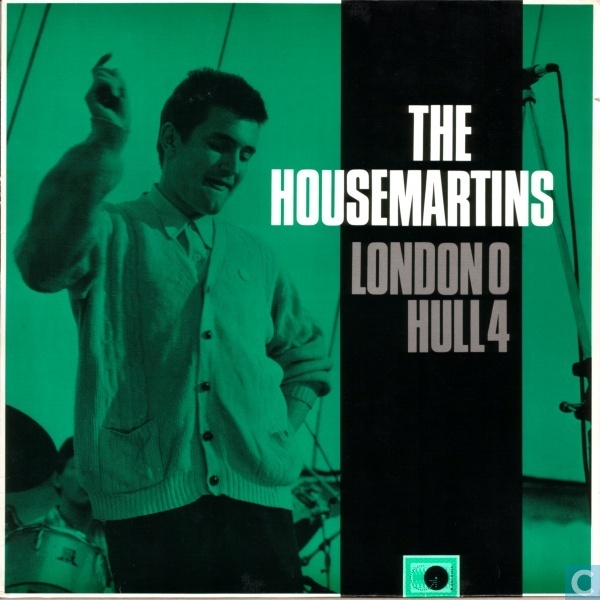
The Housemartins – ‘London 0 Hull 4’: Round 85 – Rob’s choice

The Housemartins - London 0 Hull 4I’ve come back to the Housemartins a couple of times in the last year or so. First time around I went to their second record, ‘The People Who Grinned Themselves To Death’. My recollection was of this as their tightest collection, shot through with stiletto-sharp pop songs and heart-rending ballads. I was right about the latter at least.

Most recently, partly meandering around trying to find something to bring to record club, I played ‘London 0 Hull 4’ properly for the first time in more years than I would care to remember. I was shocked by how vital it felt, how strangely contemporary it sounded, its exquisite references worn lightly but stylishly, and by how current and critical its subject-matter unmistakeably is.

I liked it plenty at the time, and it meant something to me, but coming to it now I feel as if I hear a much more resonant, better album than back then. Back then, 1986 to be precise, I was young. The Housemartins were seen as a step sideways from The Smiths, a band they never truly resembled in any way other than as the only other indie guitar group to make significant showings in the charts in the mid-80s. At the time this music seemed more straightforward, easier to understand, use and pigeonhole than that being produced by Morrissey, Marr and their muckers. No difficult things, like messy teenage feelings, being dredged up to deal with here. The Housemartins were making simple, mostly fast-ish, music about things like being unhappy about the Queen, or wars, or going to the pub. Those things were easy to understand. Painless. Nothing to worry about.

Things are different now. Things are pretty similar now.

I can remember what it was like to be a confused teenager. Perhaps you can too. One of the reasons I can remember so clearly is that The Smiths skewered the feelings of isolation and unloveability. They are pinned to my heart. But now, listening to The Smiths, much as I still love them, sounds like looking back at a past version of myself preserved in a glass tank. I know I was that person, but I’m not any more. The Housemartin’s however never carried an emotional punch for me. I loved lots of their songs, but that was all. It’s a shock then to discover that now, almost 30 years later, this is suddenly music that sounds raw, current, meaningful, challenging and relevant.

Paul, or P.d. as he styled himself back then, Heaton  declared that he hated writing love songs and found writing political lyrics easier. They inscribed their debut album with the phrase Take Jesus – Take Marx – Take Hope and ‘London 0 Hull 4’ is an evangelical album, preaching against the scourge of poverty and inequality of all sorts. Back then I had zero perspective on most of the things Heaton was singing about. I knew ‘Happy Hour’ wasn’t a straightforwardly happy song, but couldn’t square that with the way it was taken to the hearts and dancefloors of the nation. I thought ‘Flag Day’ was pretty much about him not liking the sale of commemorative poppies, which confused me a bit and briefly made me wonder whether I should be against that too. I’m pretty sure I thought ‘Sheep’ was about sheep.

Now this record and those songs stand clear as hard edged, punches un-pulled, social and political polemics, as sharp in observation and blunt in impact as anything Minor Threat ever wrote.

‘Flag Day’: “So you thought you wanted to change the world? Decided to stage a jumble sale. For the poor. For the poor. It’s a waste of time, if you know what they mean, try shaking your box in front of the Queen, because her purse is full and bursting at the seems.”

‘Get Up Off Our Knees’: “Famines will be famines, banquets will be banquets / Some spend winter in a palace, some spend it in blankets / Don’t wag your fingers at them and turn to walk away / Don’t shoot someone tomorrow that you can shoot today”.

‘Think For A Minute’: “‘Cause nothing I could say could ever make them see the light / Now apathy is happy that it won without a fight”

And how about that jaunty hit single? The one with the fun-tastic stop-motion video everyone was twisting along to back in 86?: “It’s another night out with the boss / Following in footsteps overgrown with moss / And he tells me that women grow on trees / And if you catch them right they will land upon their knees”

Just to ensure I’ve made my point, I’ll be blunt too. ‘London 0 Hull 4’ has a message that feels at least as sharp, important and vital today as it was back then. If you happened to be a dopey teenager when you first heard it, then it will mean much more to you in austerity Britain, as disabled people die months after being told they are fit to work, refugees fleeing western bombs are crushed under trains as they flee towards their liberators and the basic safety net for the most vulnerable people in our society is slashed and torn while those responsible for our economic cataclysm continue to get richer.

Got that? Good.

More importantly, ‘London 0 Hull 4’ also sounds hugely different to the record I internalised all those years ago. I recall an acoustic, jaunty jangle, somewhere on the axis between psychobilly and C86. In my defence, I had listened to barely anything back then. My reference points were few. Cut me a break, okay?

Revisiting now it’s clear that The Housemartins were a completely different outfit altogether. They reach back to hard-driving Northern soul and were closer to Dexy’s Midnight Runners than any of their supposed indie contemporaries. They were also richly informed by gospel, both in its multi-part harmonies and its sense of music as a force for social and spiritual change. Ultimately this music is closer to Sam Cooke or Aretha Franklin than to Talulah Gosh or the Chesterfields.

Their songs are buoyed along by Norman Cooke’s bouncing bass and propelled by Hugh Whitaker’s biting drums, topped off with sparkling guitar and Paul Heaton’s still angelic voice. I wasn’t ready for it at the time but, heard now, this is an astonishing debut record from an outfit who self-deprecatingly styled themselves “the fourth best band in Hull”. Nonetheless, they were mature enough to show full commitment to their vision right across the album, and confident enough in their sound to step back and pen swelling protest anthems like ‘Flag Day’ and ‘Lean On Me’.

They followed the album with their only number one single, ‘Caravan Of Love’, which I include here for similar reasons. I loved it at the time, when it’s a cappella delivery seemed a dazzling technical novelty. I got a my first proper record player for Christmas 1986 and I played this record over and over and over. Heard again years later it’s simply a beautiful piece of music, arranged and performed exquisitely, resonant with meaning and history. It’s a brave band that take on the Isley Brothers. With ‘Caravan of Love’ The Housemartins significantly surpass them.

It also informs further reflection on the album that preceded it. ‘Caravan’ was far from a novelty. In fact the band used to perform a cappella sets as the ‘Fish City Five’, even supporting themselves on occasion. ‘London 0 Hull 4’ is full of gorgeous, vocal harmonising, another clear line from the band’s origins and inspirations.

I’ve been thinking about bringing this, or it’s follow-up ‘The People Who Grinned Themselves to Death’, to record club for a long time, on the basis that I doubt the others know them all that well and they have some good tunes. One of the reasons Record Club is so meaningful, for me at least, is that it forces a deep immersion in the music you choose to present. The effect here has been pronounced, turning a record I liked a lot almost 30 years ago into a record I absolutely love and revere and can’t stop playing right now in 2015.

Nick listened: This album was brilliant – wonderful, even – but “Caravan of Love” – which I remember well but haven’t heard in probably 25 years – was exceptional. Rob’s cost me a tenner by playing this because I need to go and get a ‘best of’ now. Fabulous choice.

Graham listened: Didn’t see this coming and didn’t at all expect what I got from it. Always had the Housemartins pigeon-holed as smiley happy people not to be taken at all seriously. At release I was far too busy scrabbling around with more heavy/serious/sometimes awful bands to go any deeper in to this band, other than to recognise some catchy singles. Always perplexed by Caravan of Love and wondering where that fitted with them. An amazing track, but it was by the Housemartins? Anyway, tonight the music and the story was a thoroughly enjoyable education.

Tom listened: I’m sorry to rain on your parade Rob, but I just couldn’t get past Paul Heaton’s voice – I guess he’s kind of the equivalent for me of what Samuel T Herring was to you, before you saw that footage of him on that TV show.

Although back in the day I never really fell for The Housemartins, I remember liking them well enough and I was particularly fond of bopping around to Me And The Farmer at school discos and the like.  It was what was to come next – The Beautiful South – that tarnished my view of The Housemartins for, what would now seem to be, forever.

I find it odd that I have such an adverse reaction to Heaton’s vocals as they are, on the face of it, pretty innocuous. Obviously the others at record club don’t share my misgivings either but we all have our blind spots I suppose and this is one of mine.