Arab Strap – ‘The First Big Weekend’/’The Last Romance’ – Round 8: Rob’s choice

First, a mea culpa. I got my dates wrong, or at least I took my dates from allmusic.com. In fact these two records, Arab Strap’s first single and last album, were released 9 years apart rather than the 10 that tonight’s theme demanded. I can only apologise.

This embarrassing oversight notwithstanding, from ‘First’ to ‘Last’, Aidan Moffat and Malcolm Middleton’s career trajectory demonstrates beautiful, redemptive and complete progress, both musically and philosophically.

Their first album, ‘The Week Never Starts Round Here’ still sounds like focussed, pulsing post-rock topped by the after-party mumbles of a hammered scottish prose-poet. Listening back, it’s surprising just how musically similar it is to Chemikal-Underground-label-mates Mogwai’s ‘Come On Die Young’, an album it preceded by 3 years. ‘The First Big Weekend’ is markedly different from much of the rest of the record, lashing Moffat’s picaresque journey through 4 days of beer, birds, brawls and everything in between to the thudding headache-beat of one club night too many. Steve Lamacq memorably called the track “The best song of the decade”.

From here Arab Strap’s records became steadily more confident and exponentially more sombre. Moffat’s bleakly honest and terribly funny lyrics catalogued descending sexual desperation and humiliation, the blasted blur of the boozehound from first pint to hair of the dog, and ultimately traced the outline of the existential abyss at the centre of modern workaday hedonism. Beneath this Middleton’s music chilled and slowed almost to match the stunned depths of one of Moffat’s protagonist’s hangovers.

Whilst never less than beautiful, the albums seemed to be chasing themselves down into the depths where nothing moves and no-one survives. After stirrings on ‘The Red Thread’, 2003’s ‘Monday At The Hug And Pint’ brought relief, re-introducing some of the joy into the duo’s music, principally as Middleton’s arrangements became more expansive, bringing pace and dynamism back and beginning to create a bleak pop entirely of their own forging.

‘The Last Romance’ saw this through wonderfully. Finally Moffat’s words, as woundingly sharp and painfully wry as ever, met their match in songs that pulsate and drive forwards, the first Arab Strap songs you could dance to since, well, since ‘The First Big Weekend’. Musically it’s their finest record, the songs standing proudly on their own two big, presumably slightly swaying, feet. It’s catchy, for god’s sake. And just when you’ve come to terms with Arab Strap being hook-laden, you realise another even more profound transformation has taken place. Although the album starts with a couplet as cracklingly ribald as the infamous opener to ‘Philophobia’, by the time the last five songs roll around, Aidan Moffat is leaving behind the past ten years of drinking and shagging all his chances away and moving, shuffling, towards, settling into romantic love. And when this finally comes, after nine years of following his every godforsaken mis-step and misanthropic side-swipe, it’s as beautiful a feeling as finally marrying off that best friend who you never thought would find the right girl.

The closing track ‘There Is No Ending’ is unashamedly positive and uplifting to the extent that my wife and I came pretty close to having it play as we got married which, for Arab Strap, is one hell of a transformation. It’s the last song they ever released and a perfect way to end the perfect, if slightly wobbly, story arc and a near faultless career.

Tom Listened: I wonder what it would be like to be Aiden Moffat’s girlfriend. To know that every last detail of your relationship, especially the stuff that happens upstairs, will eventually find its way into an unremittingly bleak portrait of Scottish life. I wonder whether Aiden Moffat gets to have a girlfriend now that he has released so many records!

I have stalled in writing my response to The Last Romance because I wanted to get to know it a bit better beforehand. I had liked what I had heard at DRC but I knew that with Arab Strap, the words are too central to overlook and I didn’t really get to grips with them on the night. So today I listened intently whilst driving around the South Devon countryside on another glorious Spring day and the sounds coming out of my car stereo were somewhat incongruous to that rural idyll. As Rob suggests, some of the songs on The Last Romance bounce along splendidly with a momentum that has often been lacking on previous Arab Strap releases and, at times today, I would find myself completely lost in the music…and the music is wonderful. So is Aiden Moffat’s singing. I love his voice. I admire the Scottishness of it, the honesty in the way he slurs his words making no attempt to pander to his audience’s possible preconceptions of what signing should be like.

It’s the words themselves I have a problem with on The Last Romance. I own Philophobia and think it’s a great record. I went back to it tonight to re-assess whether it’s Arab Strap’s or my own development that has made the difference. Whilst I was listening to the lyrics (and there really is no escaping the lyrics on an Arab Strap album), it struck me that Philophobia’s words possess two qualities that The Last Romance seems to be missing – tenderness and scope. Whilst Philophobia’s music is probably the darker of the two, the lyrics talk of love, of kissing, of flirting and of the route to the bedroom rather than (exclusively) what happens once you’re there. Rob attests that there is light at the end of Arab Strap’s tunnel (so to speak) from five songs off but lyrics like ‘And when I wake up stiff, please just feel free to use me/Then go to work and let me wonder what it was that made you choose me’ (from track 8 – Dream Sequence) suggest that optimism is a subjective quality. So whilst we get there in the end, with There Is No Ending the journey to that point is a long and, for me, harrowing affair.

Nick listened: Well, when I say I “own” everything that was played this (last) week, that’s not quite true. The Arab Strap CDs in our collection belong to my wife, and I have never listened to them. I have no idea why: the only thing I’ve heard connected to them is the Belle & Sebastian track that one of them guests on, which I really enjoyed, so there’s no excuse for not delving further. I loved The First Big Weekend, the way it took an ostensibly dance beat and strung it out from being a rave into being an icky hangover. I need to own it. I also enjoyed The Last Romance, although not quite as much; though it varies texture and approach over the whole record, the first two or three songs seemed a little too billowy and direct for me when thrown into relief with The First Big Weekend. By the time There Is No Ending swung around, though… well, Rob summed up the sense of redemption nicely. Gorgeous melody, gorgeous arrangement, totally different feel to everything else on the record and across their career. A fine way to bow out.

Puressence – ‘Puressence’ – Round 7: Rob’s choice

Puressence are one of my great lost bands. I’m personalising that statement because being a lost is nothing special, almost all bands are, and the ‘great’ here refers to their lost-ness rather than making a direct claim to greatness. I do think their first two albums were pretty damned great, but clearly few others agreed, hence the lostness. Is that clear?

So, i’m not claiming objective greatness for them, but it does rankle with me that this Failsworth band sank leaving few ripples when far inferior outfits are cruising the stadium circuit trading on songs without half the shine, scale and punch of this set. The alternative universe in which these guys are rocking Glastonbury and The Killers are kicking around their parents houses wondering where it all went wrong is tantalisingly close and its proximity raises interesting questions about which bands make it and why.

Puressence, the story goes, met on the coach to Spike Island and decided to form a band straight after the gig. Which is pretty cool. As this, their 1996 debut album, amply demonstrates, they had two things going for them. Firstly, they wrote songs with detail and edge and contour but which, pretty unfailingly, all harboured jet-powered hooks which still hit like rockets when they go off. Secondly, they had James Mudriczki, he had the voice of an angel and he knew how to use it and how to counterpoint it against surging rock music. It’s a great album and the follow-up, ‘Only Forever’, was even more direct and catchy.

I’m not sure how this is going to go down at DRC, especially on a night when I suspect Nick might be bringing ‘Magical Mystery Tour’ or similar. My guess is that Tom will be out, but Nick might be in, at least to the extent that he wants to talk about Embrace in relation to this. However, I wanted to bring this at some point, perhaps as an example of the sort of record that won’t make any lists and that no-one else will really remember of care about but that in another world could, perhaps should, have been the biggest selling album on the planet. And we all have one of two of those on our shelves, don’t we?

Track choice: Bonnie ‘Prince’ Billy – ‘You Want That Picture’

Just a wonderful song. It’s only 3m30s and two extended verses long but it manages to be both intimate and profound, bridging between a lovers’ argument and our place in the Universe effortlessly whilst transforming appropriately from a downhome country shuffle to an epic hymn and back again.

Nick listened: I used to listen to, and love, a lot of music like this when I was 16, 17, 18. I knew of Puressence, but for some reason I never investigated them. I knew the singer had an angelic voice, I knew they were serious, surging young men, probably not averse t the word epic, but they passed me by. A few months after this album was released, Embrace came along, and they were the last band of this type that I had any interest in.

Despite having never heard it, I felt like I knew the contours of this record from the get-go, the way the album started, the way it ended, the guitar sound, the moments when things stepped up into overdrive…

It may just be that I don’t listen to music like this anymore, that I feel I have no need for it, but I get the idea that no one makes music like this these days; things seem spikier, shorter, as a rule. Even the likes of Coldplay, and maybe Elbow, seem to be doing something quanitifiably different, more kitchen-sink and less standing on a mountain in the rain.

I honestly don’t know whether I enjoyed this or not.

Tom Listened: I’ve got to hand it Rob…he keeps you on your toes! I’ve known the fella for getting on a quarter of a century now and yet I had no idea he had rousing stadium rock  anthems lurking in the ‘non-loft’ section of his collection. Looking back through his 7 selections so far, it makes Deus seem like a one-trick pony in comparison….amazingly eclectic and challenging. Next week…Mariah Carey sings Big Black?

So, whilst I didn’t get Puressence (although the lead singer’s voice was mightily impressive and would have fitted a band like, say, Wild Beasts a treat….oh, hang on…), I have that nagging ‘Rob likes this so it probably is really good if you’re prepared to give in to it’ thing going on. Because, it pains me to say, he is usually right!

However, 1996 suddenly seems a long time away and records that I have recently turned
to from that era also sound pretty dated these days especially, it seems, those made by the English. As both Nick and Rob have hinted, Puressence’s sound is not easily recognisible in this age of freak-folk, Americana, African rhythms and blurred boundaries. Whilst I don’t think I’ve listened to an album of music like this before (although I did once own Queen’s It’s a Kind of Magic), Puressence didn’t manage to convince me that I had been missing out.

PS The BPB track, however, made me suspect that I have been somewhat lacking in judgement in terminating our relationship in 2003.

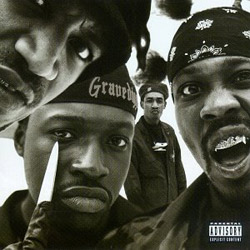
Gravediggaz – ‘Niggamortis’ – Round 6: Rob’s choice

My brother took care of the hip-hop in our house which gave me sporadic access to some amazing music but leaves me with a pretty superficial and now at least 15 years out of date exposure. I still clutch several favourites dearly and follow some names when I can.

Gravediggaz combine the talents of RZA from Wu Tang Clan, Frukwan and Prince Paul from Stetsasonic and Poetic, an unattached New York rapper who has since passed away. His untimely death adds yet further frisson to ‘Niggamortis’, released in 1994, an album about death and horror in which he plays The Grym Reaper, alongside The Undertaker, The Gate Keeper and the RZArector.

It’s notable for a couple of reasons. Firstly, it sounds great. Spooky and atmospheric but always banging, the slasher-movie sound effects are never allowed to overwhelm the cracking beats.

Secondly, it’s a good concept brilliantly realised. Branded ‘Horrorcore’ on release, there’s very little that’s gratuitous in here apart from some of the more lurid imagery. Instead ‘Niggamortis’ is firmly in the George A Romero school. Gravediggaz portray the abandoned urban underclass as ‘the mental dead’ and cast them in a wild zombie flick, taking the opportunity to lay on the gore, but never at the expense of the underlying message of dead-life in the urban wasteland.

Frukwan explained that the group was “digging graves of the mentally dead, and it stood for resurrecting the mentally dead from their state of unawareness and ignorance”. It’s a bleak but blackly funny album and ultimately, I think, empowering.

It’s interesting to listen back to ‘Niggamortis’ at a time when Odd Future Wolf Gang Kill Them All are gaining such attention/notoriety. Both outfits sounds pretty amazing at their best, but whilst the Gravediggaz were certainly a little shocking at the time, they seem less so now, and their schlock horror approach was always intended to drive the message home. You can’t honestly say the same for OFWGKTA at this stage.

Finally, let’s say hats off to Poetic. his performance as the Grym Reaper is daringly unhinged and always worth revisiting. In several verses he sounds like Captain Beefheart’s younger brother (which hopefully will appeal to Tom) and I think the good Captain would have approved. Here’s hoping they’re duetting together somewhere up there or, if you take the Gravediggaz line, somewhere 6 Feet Under.

Tom Listened: My brother liked The Rockingbirds! He didn’t cater to my hip hop needs and I have held a dim and admittedly prejudicial view of the genre ever since I listened to Straight Outa Compton by NWA – a nasty and aggressive record that was being regarded as a joke (and a particularly tasteless one at that) by my listening partners. Straight Outa Compton left such a lingering aftertaste that I have pretty much dismissed hip hop ever since. Listening to Niggamortis (the name doesn’t really do it for me), opened my eyes a little. I was still squinting, but through the slits I recognised a sound that was more complex, musical and interesting than I was expecting. I found the lyrics hard to take and the vocal delivery, whilst no doubt accomplished, was too ‘in your face’ for my tastes (I didn’t really get the Beefheart thing) but this album has made me think about my dismissive attitude and I have subsequently purchased Nation of Millions and Fear of a Black Planet (although I have yet to listen to them). I am glad Rob subjected me to this – DRC, not only there for the pleasant things in life!

Nick listened: I’ve gone through so many phases with hip hop; loving De La Soul and A Tribe Called Quest at 11 years old, Public Enemy and Wu-Tang at 17, Outkast and Missy at 24, dabbling in Jay-Z and Nas’ power struggles and Def Jux’s aesthetic along the way, loving Kanye’s second LP, hating his latest, and basically feeling divorced from the genre (if you can call it a genre anymore; like ‘rock’ it’s now so big that the term is pretty much meaningless) for the last 5 years or so. Partly it’s because I’ve got less and less interest in the lyrics of new music as I get older, and partly it’s because I suspect my tastes are ossifying and I’m feeling less compulsion to keep up with what’s cutting edge or popular. I also think mixtape and download culture has moved hip hop away from the way I consume music, too; the genre has evolved its methods of production and distribution and I’ve stayed still. I’ve never knowingly listened to Lil Wayne. I’ve barely listened to Odd Future.

Anyway, enough about me. In 1997 or so the idea of Prince Paul and The RZA making an album together was right up my street, but for some reason I never got around to buying Niggamortis, even though I always meant to. Maybe it was the gothic / horror imagery? It took me until my 20s to appreciate George A Romero, after all. Listening to it finally at DRC I thoroughly enjoyed the sound of it, especially the way I could pick certain loops or beats out as being RZA-like or Prince-Paul-like, and I could totally embrace the lyrics being analogies for the way that black underclasses are made to feel by society (particularly poignant having been watching a lot of The Wire lately), but I didn’t really feel it, if that makes any sense? Maybe it was discussing it while we were listening to it that was the problem, so that I couldn’t really take in the words. Maybe hip hop just needs longer to soak into my consciousness these days. I think I’ll ask Rob if I can borrow it. I think I’ll revisit 36 Chambers and those Ghostface solo albums.

And the rapper who guests on that Ghostface song whose name I couldn’t remember? Jadakiss! Just came back to me.

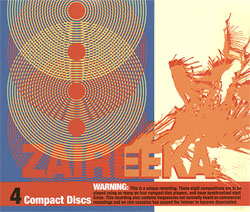
The Flaming Lips – ‘Zaireeka’ – Round 5: Rob’s Choice

When Tom chose ‘albums you’ve never listened to before’ as this week’s theme, there was only one choice for me. This is the album that Devon Record Club was made for.

I bought ‘Zaireeka’ when it came out in 1997. It’s taken 14 years for me to get enough like-minded individuals together to actually play it. ‘Zaireeka’, you see, is not a normal album.

You know all this already, and if you don’t i’m not going to go into great detail. If you’re really interested you should buy Mark Richardson’s excellent book on the subject. Mark was good enough to tweet into our little listening party which really helped to create the sense of event which ‘Zaireeka’ was conceived to deliver.

The album comes on 4 cds, all of which must be played at the same time. That’s difficult, maybe impossible, to achieve with fewer that 3 people, which immediately breaks out of the album as solitary experience. You have to have friends round to listen with you or else you simply can’t listen. Even tougher, you have to stop the thing and restart after each track. As Nick enjoyed explaining to us, and as Mark pointed out from across the Atlantic, CD players spin at 5000rpm, so they are all working at very slightly different speeds. The difference is undetectable when listening to one song on one player, but leave four blaring at the same time and they’ll surely drift apart over the course of a full album, leaving you with total cacophony by the time the final track rolls around.

So, not only did I have to bring the CD, I also had to bring 3 CD players to make playback possible. Cue ten minutes of frantic wiring, plugging, positioning and generally scurrying around like fat kids in a sweet shop and we were ready to go.

I expected to be disappointed, or at least not to be surprised. I guess I expected to hear a bunch of slightly woozy, off-kilter Flaming Lips songs. That would have been pretty good for me. We got so much more.

It’s not an easy experience to describe, and again, that speaks to what a wonderful success the whole enterprise is. You just have to be there. Far from just a crazy way to present the album the Lips wrote between ‘Clouds Taste Metallic’ and ‘The Soft Bulletin’, ‘Zaireeka’ is the real deal: something completely other. Sonically, conceptually and intellectually on a totally different plane from anything i’ve been amidst before or since.

The sound rises and falls, grows and dies, whirls around you. It’s tough to imagine what it’s like to be in the middle of it and now i’m out of it, it’s tough to recall. So much more intense and physically affecting than I could have anticipated, I was taken totally by surprise by the sheer intensity of it. At times the volume of sound is quite shaking and the running around we found ourselves doing, trying and usually failing to identify which speakers were threatening to bring the walls crashing in so we could turn them down, just raised the sense of performance.

The only real comparison I can make it with being in the middle of a classical concert performance, with sounds coming from all around you in overwhelming quantity. It’s unlike anything you’ll have heard before, and totally amazing and joyously surprising for that very reason.

In the middle are what sounded like pretty decent, if out there, Flaming Lips songs. They struggled to get the recording sessions going until they realised that they had to record for the 4 channel format rather than just disassemble existing songs to fit. And boy did they open up a can of sonic whup-ass. Never knowingly under-cooked they shot for the moon here and ended up somewhere west of Jupiter.

That’s enough hyperbole from me. I could go on and on. I won’t. Find someone who has the album and organise to play it with them. They’ll thank you and you’ll thank me.

Other notes:

Marge, our dog, was with us. I’ve never seen her react to music before. At times she sat in the middle of the set up looking urgently from speaker to speaker following the currents around the room. And that was before the dogs starting barking…

Think about what an achievement it is to conceive of a record that can only work as a live performance, which will be different every time you hear it and which demands you get together with other people just to begin to play it. Then imagine that the band who conceived it went ahead and made it 100 times better than it needed to be.

We agreed, as we talked, that The Flaming Lips are a much better live experience (perhaps the best) than they are an album band. ‘Zaireeka’ destroys that distinction. Hail them, laud them, carry them shoulder high.

Nick listened: I had announced, in Rob’s car on the way to Tom’s house, my intention to play ‘Zaireeka’ next time I hosted Devon Record Club, as I have a lot of stereos and had just read Mark Richardson’s book, which he sent me a copy of because he liked the sound of our little club, and it seemed like the perfect record for an arrangement like ours. Rob kept magnificently schtum about what was in his bag.

I was delighted that Rob had brought it though, despite him scuppering my plans, because ‘Zaireeka’ is a remarkable thing. Unlike Rob or Tom I’ve actually heard it before; a couple of times at university, when my housemates and I pointed each bedroom-stereo towards the landing, and once at home, with Emma, a similar array of motley sound-emitting-devices scattered about my parents’ home and us brandishing two remote controls each… I’ve also heard a stereo mixdown of it a couple of times, burnt to CD and given to me by a friend who is a ravenous Flaming Lips fan (the mixdown completely misses the point). So I knew what to expect, even though you can’t expect anythign with this record.

I’ve already written some of my thoughts on our listen to ‘Zaireeka’ as part of last week’s #musicdiaryproject, so I wont go into it too much more here, except to say that it really is an extraordinary, overwhelming, physical experience. I think part of my fascination with fidelity is down to trying to achieve that sense of being consumed by music that ‘Zaireeka’ gives you, that tidal wave of sound that engulfs you and your collaborators in listening from all sides. As Rob suggested, I’m not bothered by The Flaming Lips on record, as much as I’ve been smashed into emotional pieces by them live, but ‘Zaireeka’, though one can only ever hear it properly once in a blue moon, is really something else.

Tom Listened: I became aware of Zaireeka when it was released but as I recall, the reviews at the time focused mainly on the gimmick rather than the effect…although I may be wrong. Whatever, as someone who never really got The Flaming Lips on record, I had always considered Zaireeka as something I could quite happily do without. It turns out I was right to think this in as much as I can now never listen to any of my other albums and feel fully satisfied! Listening to Zaireeka is the aural equivalent of opening Pandora’s box and for the first time in a long time I was blown away by a musical experience. It had nothing to do with the songs. On flat, tinny, single CD format I am not sure I would be bothered to listen again – I just don’t connect with Wayne Coyne’s whimsical flotsam. It was all to do with the sound, which is just phenomenal and, at times, I truly felt as though I could see the eruptions of noise as they ejaculated a torrent of sound from nowhere in much the same way as a lava lake might operate.

To sum up, it seems appropriate to draw a comparison between Zaireeka and heroin – the pleasure it brings may be intense but  may make you feel that all that came before is a pale imitation.

For the record, I have never taken heroin.

Guided By Voices – ‘Bee Thousand’ – Round 4: Rob’s Choice

I reviewed ‘Bee Thousand’ when it was released in the Summer of 1994. I’ve tried hard to find a copy of what I wrote, but it’s proving elusive. I had hoped to look back and find my younger self seeing clear-eyed through the tape-hiss and four-track glitches to the heart of a great rock record. perhaps it’s best I don’t catch up with what I did end up committing to print, but I’m pretty sure even then I had a feeling that there was something special about GBV.

‘Bee Thousand’ is the band’s seventh album and was intended to be their last. Robert Pollard was fed up with keeping a band together and ready to return to his teaching career and ‘Bee Thousand’ was recorded to collect the odds and ends left over from GBV’s previous ten years together. Instead it gathered increasingly enthusiastic coverage, catapulting the band into a further decade of recording and Pollard into the heart of the indie rock firmament.

It’s a remarkable album that raises fascinating questions about conceiving, writing, recording and playing rock music. Is Pollard peddling pastiche or is he channeling tunes direct from the heart of British Invasion rock? How can the band bang out songs so poppy, so perfectly melodic, apparently by the yard? 20 songs in 35 minutes! Short, sketchy songs yes, but perhaps any other approach would fail them.

I stopped keeping up with GBV a couple of albums after Bee Thousand, but by then they had repeated the same trick across at least 4 great albums. Listening again in preparation for the Record Club, I was particularly struck by how these songs, these scraps of harmony and rhythm, are the absolute opposite of the disposable throw-aways they should by all means be. They get richer and more rewarding with every listen and every year.

I’m a romantic when it comes to music. Some might describe Robert Pollard as an imitator, a copyist, a lo-fi chancer trading in scratchy punk-pop fragments. When I listen to ‘Gold Star For Robot Boy’, ‘Echos Myron’ or ‘Buzzards and Dreadful Crows’ I prefer to think he’s a magician, pure and very simple.

Tom Listened: It’s a long time since I listened to a prime era GBV album for the first time and I am not sure I can remember how it felt. Certainly, Under the Bushes…. is a much more straightforward beast by comparison and now that I’ve listened to Bee Thousand I can see how Alien Lanes is very much the bridge between the two, mixing Bee Thousand’s tangential skewdness (?) with Under the Bushes pop sensibilities. Bee Thousand is probably the album I most want to own that I don’t already and, although there is NO WAY anyone can make sense of it on a first listen, I am certain that I would still be listening to it regularly (and finding something new every time) in a decade’s time.

Nick listened: I strongly suspect that Rob has been absolutely gagging for the chance to play something this lo-fi on my hi-fi, given my reputation for being such a sound-geek, and, if he suspected that GBV’s aesthetic would be like sandpaper to my brain, then… well, he wasn’t a million miles away, but he wasn’t entirely correct, either. If anything GBV sounded worse than I had expected or feared; the term “lo-fi” has come to mean something different in the 00s than it did in the 80s or 90s, and Bee Thousand sounds absolutely nothing like the last No Age album (which I love) for instance. It literally is like someone playing a broken guitar, someone drumming with pencils on a damp paperback, and someone else mumbling, while they record it on a dictaphone with a cardboard box over it. Looking at the credits, I was astonished how many members GBV had. So I confess that I did find the sonic aesthetic off-putting; it was like having auditory cataracts or something. But I didn’t hate Bee Thousand. I didn’t find it to be the messy, lo-fi Beatles-esque pop classic Rob painted it as either, but I was intrigued by the modus operandi of it, and plenty of the tracks were catchy and melodic beyond the scuzz. Beyond the scuzz, though, it seemed like, with the way the songs, so short, so quick, so cut-up into little chunks, so breaking-up-like-radio-static before your ears, were composed as well as presented, that Bob Pollard was trying his damnedest to obliterate them and make them unlistenable (but in a different way to Alex Chilton, say, on Sister Lovers), and I can’t understand why; is he ashamed of his songs? Scornful of his potential audience? It seems a little churlish to so wilfully do this to your music when people like Ron Sexsmith are desperate to move in the other direction. I’ll have to take Rob & Tom’s words for it that the melodies and tunes seep through and infect your brain after multiple listens, though, because I can’t really see myself digging any further with Guided By Voices…

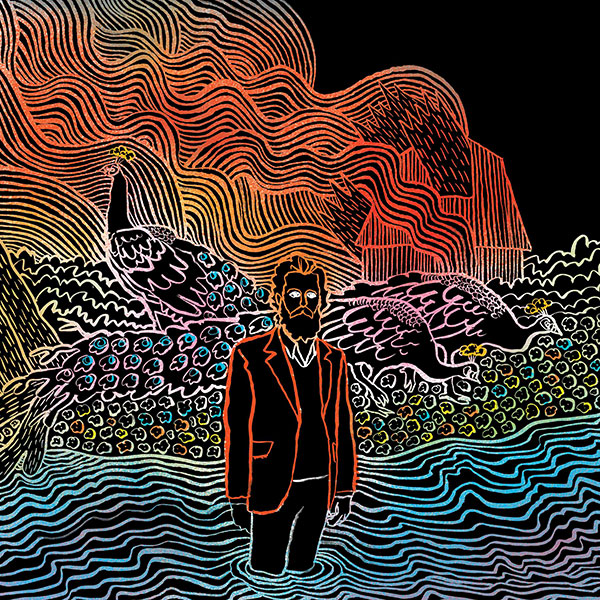
Iron and Wine – ‘Kiss Each Other Clean’ – Round 3: Rob’s Choice

I didn’t get on with ‘The Shepherd’s Dog’. I loved Sam Beam’s first two records, partly for their frail, bruised beauty, partly for the chime they struck with and against my fear of death, and partly because I could almost play them on the guitar. Almost, but not quite. Still, I had no problem with Beam, ever the Western frontiersman, pushing on into new territory with his third album. It’s just that the songs either weren’t that strong, or were swamped and flattened by the full band and their busier instrumentation. Tellingly, the best two tracks were those which could easily have come from ‘Our Endless Numbered Days’.

‘Kiss Each Other Clean’ is everything the last record should have been. It’s full, warm, at times complex but always admirably straightforward. Above all it’s confident and convincing. Listening with the others we drew a comparison with Tom Waits, not because of the sound, more through the feeling that Iron and Wine have got to this point by building from the bottom up, using whatever came to hand and mind, inventing rules of composition and tone as they go.

It’s very fine, from the swelling abstraction of ‘Walking Far From Home’ through the sweetheart country swoon ‘Tree By The River’ to the final sweep of ‘Your Fake Name Is Good Enough For Me’, a seven minute romp which begins with a proggy N’Orleans boogie, pulls a reverse ‘Paranoid Android’ gear change and finally kicks into a fervid, tumbling rush to salvation. This last track, perhaps Sam Beam’s best yet, seems to flash by in half the time of ‘The Trapeze Swinger’ Beam’s earlier 7-minute melody-mantra, a sure sign that he’s on to something rich and right.

Spotify link: Iron & Wine – Kiss Each Other Clean

Nick listened: My wife’s a fan so we already own a couple of Iron & Wine albums, but the downhome sound of the first couple didn’t really interest me. Sam Beam’s move into Califone-like territory on The Shepherd’s Dog, where texture and percussion became more important, appealed much more though, but, as Rob says, I wonder now whether the songs weren’t quite there. I’m not familiar enough with this one yet, but on the strength of hearing it and my wife’s curiosity at my description of it, we now own it. Without being glib, after a couple more listens it seems almost like a deliberate trip through the history of American music – a little bit of soul, a little bit of funk, a little bit of jazz, a little bit of country, a little bit of alt.rock – but there’s a lightness and a fluency that stops it feeling like an exercise and keeps it feeling like an album. Another winner.

Tom listened: For me, I doubt that Iron & Wine will ever match Our Endless Numbered Days and its wistful melancholy. I always found their first album a bit hit or miss but enjoyed The Shepard’s Dog and preferred the ‘different’ songs (‘Boy with a Coin’, ‘Carousel’, ‘Lovesong of the Buzzard’) to the ones that Rob has suggested in his write-up. So on one listen, I am not sure that the new album represents such a significant step up in terms of quality over its predecessor. I liked much of what I heard (although the groovy number on side two left me unconvinced) and liked the fact that Sam Beam is experimenting with his musical palate but, at the moment, am unconvinced that I need to own this album…a few listens on Spotify are required!

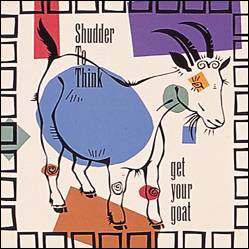
Shudder To Think – ‘Get Your Goat’ – Round 2: Rob’s Choice

Shudder To Think – ‘Get Your Goat’

'Get Your Goat' - Shudder To ThinkThis is Shudder To Think’s fourth album, released in 1992, and the one that preceded ‘Pony Express Record’, which is often listed as one of the great lost albums of the 1990s.

Here they use the shifting, interlocking time signatures that would come to map out Math Rock but with a looser, more open texture. Although their music is relatively complex, they aren’t as uptight as the bands that would follow them. ‘Get Your Goat’ sees the band playing with full confidence and joy in what they’re doing, but before they tightened and amped everything up for ‘Pony Express’. There’s warmth and fun in these songs, and each one contains at least one great melodic hook. Ultimately they were making challenging pop music, rather than just challenging music.

Craig Wedren’s voice is always pure pleasure too. He has rare, if not unique, drama and range, and when he holds a note it’s like being hit by a ray gun.

Bizarrely, as Tom was introducing his record choice, he described how he had bought the Jane Sibbery album in San Francisco in 1999 at the same time as buying ‘Get Your Goat’. He had no idea that I’d brought that very album along to play. It’s a small world, particularly if you’re focussing on the angular american post-punk of the late 80s early90s part of it.

New Order – ‘Elegia’ – from ‘Low Life’

I was listening to ‘Brotherhood’ the other day and I thought about this song. I realised that it may be the single track that showed me that slow music could be as affecting and powerful as fast music. When I was at University I used to have a tape full of slow songs, almost as a novelty. I used to play it when I wanted to mope about even more than usual. I remember it had ‘Hardly Getting Over It’ by Husker Du and ‘Honey’ by Spacemen 3. I’m pretty sure ‘Elegia’ was the first track, and without the start it gave me, maybe I wouldn’t have found my way to Low, Lampchop, Slint, Bonnie Prince Billy and about half my favourite records. I haven’t listened to it for about 15 years, so I brought it along.

Tom Listened: I love Shudder to Think and, bizarrely, very nearly chose Pony Express Record for this meeting. Even though I have owned Get Your Goat for over ten years now, I haven’t listened to it anything like as much as PER and it was a real pleasure to be re-introduced to it last night. I think it always suffered by being the second Shudder to Think album I acquired, although having heard both records in the past 24 hours I have come to the conclusion that both are awesome!! Cheers Rob, great choice.

Nick listened: Weird coincidence aside, I enjoyed this greatly. Shudder To Think are a band I’ve heard of over but never had the compulsion to listen to for some reason. They’re regularly trotted out as an influence by bands I’ve loved over the last 10-12 years, from At The Drive-In to Dismemberment Plan, and I could hear the work of those bands as echoes of this. I think Rob’s right that there’s a looseness, a popness, a sense of fun in this rather than a sense of architectural rigour, but it’s probably a 5-listen record before one knows the patterns, the stops and starts, enough to dance and sing along. But dancing and singing along will happen, I have no doubt. I’ve borrowed Pony Express Record from Rob as a direct result of this choice; which is surely the point of DRC.

McCarthy – ‘The Enraged Will Inherit The Earth’ – Round 1: Rob’s Choice

McCarthy – ‘The Enraged Will Inherit The Earth’

I’m not entirely sure why I ended up choosing this. I’m not even sure it’s my favourite McCarthy album, but it seemed to mystically percolate its way to the surface whenever I thought about what to bring his evening, so I decided to just stick with it.

McCarthy were one of the C86 era bands. I think they’re interesting for a number of reasons. Firstly, they sounded great. They jangle, but their sound, at least in the memory, has a complexity and density beyond most of their contemporaries, even on their early records where they were playing short songs in enough of a flurry that they almost tripped themselves up. Malcolm Eden’s voice isn’t quite substantial enough to carry the songs, and it’s hard to get a grip of at first, but there’s something in its blandness that makes it a perfect fit for the faceless authority figures he speaks for.

They’re principally remembered for their politics, which were always described as “Marxist”. However there’s real nuance in their lyrics which are usually delivered as half-dialogue – in this way McCarthy are the older, politicised sibling to The Wedding Present’s soppy lovelorn teenager – and frequently move through several positions and persuasions before arguing themselves around to the opposite of their starting point. As much as they espoused a particular ideology, they consistently struck out against hypocrisy of any stripe. See the single ‘Keep An Open Mind Or Else’, where the narrator begins ‘With my last breath i’ll fight for your right to disagree’ and ends quite differently. It’s clear that they were aware of the problems and worried away at the contradictions in their politics. You can’t help wondering where their current contemporaries are.

It’s easy to mock them as over-earnest, leftist librarians, but in hindsight, they had a more clearly thought through world-view than I’ve ever managed, and I envy them that. Their certainty used to scare me a little when I was a teenager, but then many of my favourite records started out being placed on a high shelf because I was too nervous to take them on.

McCarthy’s other claim to fame is that Laetitia Sadier left Paris to come here and join Tim Gane, her boyfriend and the band’s guitarist. She sings on this, their second album, and also their third and last record and when McCarthy split up, the two formed Stereolab together.

This album is not as immediate as their first, and not as accessible as their last, but I think it might be the best all-rounder.

Iron and Wine – ‘Walking Far From Home’

I brought this because it’s weird. Like Sam Beam singing an old Iron and Wine melody whilst a four year-old tries out the settings on a Bontempi organ in the background. In a good way.

Spotify link: Iron & Wine – Walking Far From Home

Tom (sort of) listened: Jangle pop is really hard for me to ‘get’ on an initial listen, even without the added encumbrance of a simultaneous chin wag and, therefore, I left the meeting feeling that I wanted to hear the record again before pronouncing on it. I was reminded of some of the Flying Nun records of the 1980s, especially the Bats (who made one of my favourite LPs in The Fear of God…a record, coincidentally, that I dismissed as ‘rubbish’ -technical terminology- the first time I heard it). I certainly didn’t think Rob’s selection was rubbish, far from it, but it wasn’t immediate either and I certainly need to spend more time on it before its (initially) homogeneous template begins to reveal its undoubted subtleties. Unfortunately, Spotify failed me in my hour of need!

Nick listened: I must confess I found it very difficult to take anything away from McCarthy – I’m not the biggest jangle pop fan anyway and find the aesthetic very hard to differentiate the politics of small differences from. Add in the fact that Rob identified its lyrical themes as its USP, the fact that I tend not to notice lyrics, and the fact that we merrily talked all over it, and I have to confess to remembering very little about it. A lesson in the kinds of things that may or may not work well at Devon Record Club, perhaps? Given the fact that we’re all, and me particularly, gobby opinionated sods.