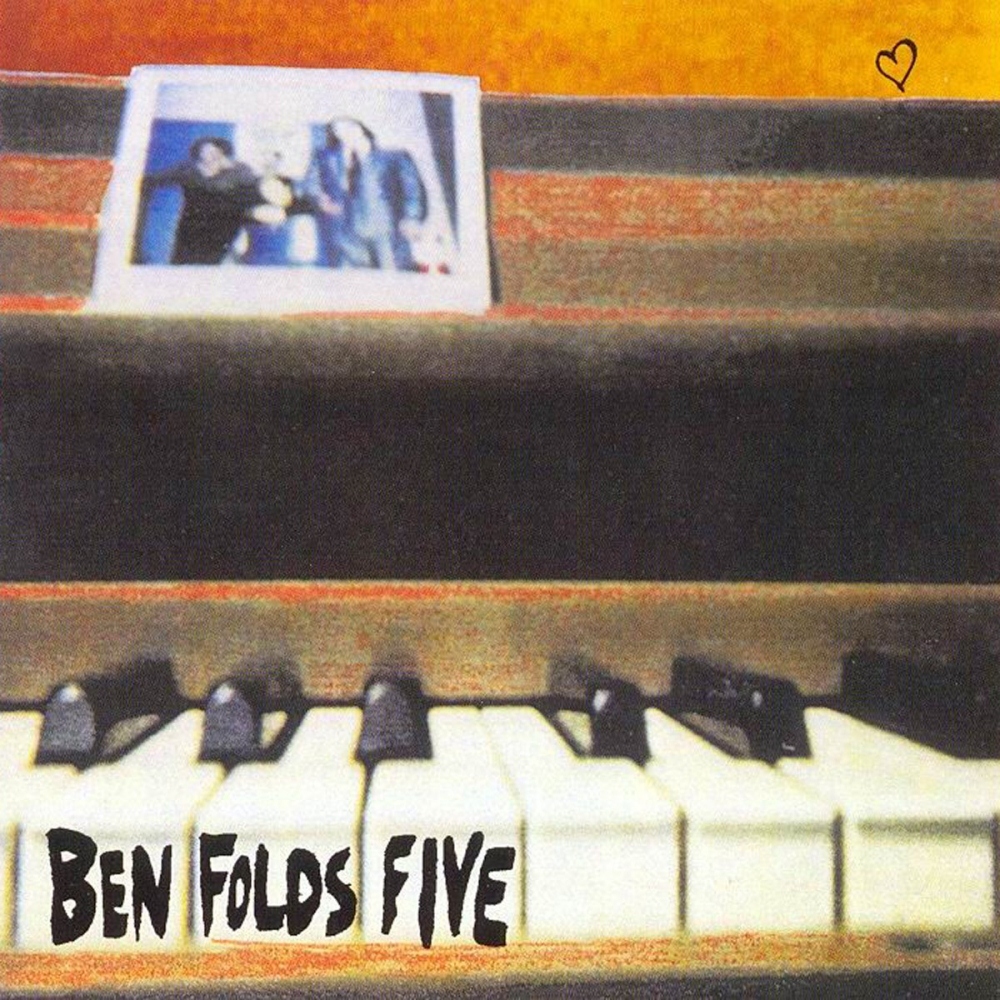
Ben Folds Five – ‘Ben Folds Five: Round 37 – Rob’s choice

Ben Folds Five - Ben Folds FiveWe were set a theme for this evening’s assembly. “Guilty pleasures or something surprising” we were ordered. I shall pass little comment on how closely my fellow members cleaved to this instruction, other than to say that two of them completely ignored it and the third brought an album of mental calypso covers which were, by any definition, surprising.

I went for the guilty pleasures angle. To be perfectly honest, I don’t believe in guilty pleasures, at least when it comes to art. You either get pleasure from it, or you don’t. But I understand the cultural concept and, if I’m really being perfectly honest, there are some songs and albums I love which give me pause to steel myself before I volunteer them in company.

I kicked off with ‘Ariel’ by Dean Friedman, the smart/stupid East Coast singer songwriter who, with this and his more notorious ‘Lucky Stars’, filled whole arteries of the radio network with cloying sugar syrup in the late 1970s. These singers and these songs (add to the list Neil Diamond, David Soul, Barry Manilow, Glen Campbell, Kenny Rogers, David Essex, Gilbert O’Sullivan, The Carpenters, Abba…) entered my young head by osmosis as I grew up. They were the first songs I learned to reject when I began to form a musical sensibility of my own and, for the last 15 years or so, they have been the songs which most immediately transport me back to my childhood. They carry such a sweet, beautiful charge that I find them irresistible.

I chose ‘Ariel’ as it’s the closest of these oldies to Ben Folds Five, a band who I loved unironically and unequivocally when they emerged but who many found unacceptably dorky, old-fashioned, retrogressive and just plain annoying. For me the band and this first album in particular wedded the energy and melodic dynamism of some of my favourite punk and indie (Buzzcocks, XTC, Madness) with the unfettered optimism and gawky sunshine of late 70s piano pop. ‘Ben Folds Five’ is an unashamed and infectious pop album, delivered by three smart-ass North Carolinians who managed, for a short period – probably two albums – to maintain a dreamy, unimpeachable alchemy of past and present.

I guess this albums slots into many ‘guilty pleasures’ lists, partly because it so plainly references old records and artists we’re supposed to feel guilty about liking (see my previous list), but also because Ben Folds himself, by many accounts, having established himself as the cheeky ivory-hammering nerd du jour, took a right hand turn and became a bit of a dick. I don’t read interviews too much any more, so I don’t know what the guy has had to say for himself. I do think he suffered unfairly through over-simplified interpretations of some of his most bracing songs (‘One Angry Dwarf and 200 Solemn Faces’, ‘Song for the Dumped’). It seems we spent the early 90s getting used to the fact West Coast rappers could speak in character and not expect to be censured for it and then withdrew the same privilege from specky college piano doofuses.

Whatever. ‘Ben Folds Five’, i’m not ashamed to admit, is possibly the record I’ve listened to most over the past 15 years. It’s a heady, funny, dynamic, moving whirlpool of wonder, to these 70s-grown ears at least. Pure innocent pleasure.

All of which leaves us to wonder, as all must at some stage, why on earth the piano never really caught on as a lead instrument? Too tough to play? Too expensive to buy? Too heavy to smash a drum-kit with? Who knows. I’m just glad Ben Folds managed it.

Nick listened: Sorry Rob, but I’m not buying this as a guilty pleasure, and it’s certainly not a surprising choice: you’ve mentioned before how much you love this record, and the whole idea of guilty pleasures is that you keep them hidden from public view!

That aside, it was great to listen to this: I’m not sure I’ve ever heard the whole thing front-to-back before, but I certainly know Ben Folds Five as a group, recognised the singles, and felt comfortable and familiar with the whole aesthetic and approach.

It does raise a couple of interesting questions, though. Firstly, does the instrument you compose on affect your compositions? As a non-musician it strikes me that it must do with at least some songwriters – the chords that fingers naturally fall to on a piano are presumably different to those for a guitar, the ways you move from chord to chord and note to note must be different, and then, presumably, the tunes that come out at the end must be somehow quantifiably different as a result. Could you compose a tune like Underground, with its drama and dynamism and melodicism, on a guitar? I kind of suspect you couldn’t, or, at the least, that it wouldn’t be an obvious thing to do.

And I wonder if this (My-First-Marxist-Cultural-Theory) tools-of-production-affecting-resultant-cultural-product micro-thesis is part of the answer to the second question, about why BFF were received the way they were, the “dorky, old-fashioned, retrogressive and just plain annoying” accusations, the perception of them being somehow faux and unworthy that came from the (often ravenously passive-aggressive pastures) of post-grunge alt.rock, where miserable authenticity and guitars are good and major-key pianos bad.

I dunno, but it’s an interesting thing to think about.

Tom Listened: Since writing my blog on Swell, Rob and I have been debating ( not continuously admittedly but it has cropped up on a few occasions) as to whether my brother really was enamoured with Ben Folds Five or not. Well, on the night Rob brought this to record club I had that rarest of things…a slight admission that perhaps I was right all along. I’m glad about that because I needed something to explain my somewhat unreasonable dismissal of this album at its time of release. It’s great fun – a set of rollicking, barn storming pop songs that race by (in a bit of a blur if I’m honest) in an early Todd Rungren power pop kind of a way. My only criticism is the uniformity of the songs – I would have preferred a little more light and shade in the compositions although I guess this often reveals itself with familiarity but it was hard not to compare Ben Folds Five with Something Anything and when the vast scope of that album is considered, Ben Folds Five seems like a much more focussed/unambitious offering….and occasionally the piano playing reminded me of Jools Holland, a man who will continue to set my teeth on edge long after they have all fallen out!

But, those slight reservations aside, this was definitely not something to feel guilty about and therefore failed supremely in fulfilling tonight’s theme…leaving a clear winner….ME!

Graham Listened: After the last round I had the music and lyrics of ‘Kaleigh’ stuck firmly in my head for a week afterwards. Rob certainly exacted his revenge, as for the last week I have been plagued by http://www.youtube.com/watch?v=x_tW3vU3RyQ. I singularly made this leap to Carole Bayer Sager after hearing Dean Friedman for the first time in a while. I may now be stuck in a 70’s Radio 2 playlist, so its probably the Beach Boys up next.

This album was great fun, though some tracks went on a little too long with a bit too much Jools’ish “noodling” for my tastes. The humour and irony of some of the Broadway/Showtune flourishes  were probably lost on me a  little. As the parent of an 11 year old daughter I find that anything related to Glee/HSM/Kids from Fame etc.etc., is no laughing matter!
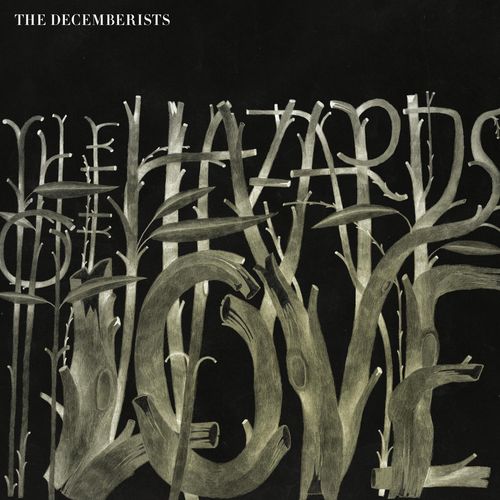
The Decemberists – ‘The Hazards of Love’: Round 36 – Rob’s choice

The Decemberists - The Hazards of LoveIn 2008 Colin Meloy and his troupe of troubadours attempted to lay to rest a question which had been troubling indie rock fans for some years: ‘What exactly would the Decemberists have to do to score less than 8.0 on Pitchfork?’ The answer, released in 2009, was ‘The Hazards of Love’.

It’s a proper concept album, a rock opera if you will, telling the tale of Margaret, who loses her heart to a shape-shifting forest spirit, the pair of them subsequently falling foul of his Mother, the abominable Queen. As you do.

It’s executed with verve and glee and, crucially, without any sense of irony. Meloy and co. had long acknowledged a debt to Pentangle, Fairport Convention and the artists of the British folk revival of the late 60s and early 70s. On their earlier records ‘The Tain’ and ‘The Crane Wife’ they dabbled with both song cycles and ornate folk-rock compositions and ‘The Hazards of Love’ sees them work this through to its logical conclusion.

I think it’s fair to say that the reception for the album was mixed. No-one really seemed to know what to make of it. The band had broken through with ‘The Crane Wife’ and i’m sure were expected to turn out a collection of stadium-sized tunes to cement their success and buy some bigger touring buses. Instead, this, an elaborate and full-blooded take on an outmoded form drawing in several singers to play a cast of ripe characters tottering their way through a pseudo-mediaeval narrative.

The first time I listened to THOL I cleared the evening, opened the gatefold sleeve for the lyrics,  and carefully followed along the themes and characters through the plot development. Turns out that’s the very worst way to go about it. The joy and the beauty of the record is not in the concept itself, rather in its execution. As soon as I gave up on it and began to treat it as a collection of songs, it opened itself up as  a delightful puzzle and a whole lot of fun to get involved with. The recurrent riffs and motifs that run throughout the piece form seams which occasionally erupt to the surface, coming to sound like old friends when they return. The cast of vocalists work well together but none can hold a torch to Shara Worden of My Brightest Diamond, who gives a full-throated turn as The Queen. If this opera had scenery, she’d be chewing it Pacino style.

My impression at the time was that most critics thought ‘The Hazards of Love’ was a mildly embarrassing mis-step, an indulgence from a band who had delved too deeply into their own affection for the music, the styles and the stories of the Olden Dayes. These days it just sounds like one of the Decemberists best albums, with memorable songs, great performances and a sense of a band coming together to create something in unison.

Nick listened: When I mentioned in my office that we were having a “concept album” evening a DRC, Ian (a potential future member) immediately said “The Hazards of Love!” I bought a Decemberists album once (The Crane Wife, I think – they’re still packed away for moving still so I can’t check) but wasn’t entirely taken with it for whatever reason – sometimes it’s just not the right time to get into a record or a band, is it?

So I was intrigued to hear THOL when Rob said he’d thought of it immediately too. I wasn’t disappointed; in fact I really enjoyed it, although, as usual on first listen to a record, I paid absolutely sod-all attention to the actual lyrics (Twilight-esque as they seem to be, with their tales of shapeshifting romance), but quite a lot of attention to the music, which was rich and rewarding, even when it dove headlong into prime Deep Purple Hammond-and-guitar-solo territory. Perhaps a little long (I’ve little tolerance for records that stretch much beyond 45 minutes these days), the only other criticism I’d throw at THOL is that I don’t really like Colin Meloy’s voice, which is too close to the pancreatic lost-my-dog-on-a-string moan of that guy from Neutral Milk Hotel. I’d love to hear THOL again, and maybe even pay attention to the words.

Tom Listened: We’ve had Marillion. May as well quote Meatloaf….Nick took the words right out of my mouth (thankfully not while he was kissing me). I don’t have a problem with Colin Meloy’s, or Jeff Mangum’s, voice and I haven’t ever connected the two but other than that I echo everything he said – a little too long, a little too indulgent at times, but, in general, surprisingly enjoyable, accessible and catchy…and on an initial listen much better than The Crane Wife. I liked it!

Graham Listened: Heartland lesson learnt, I just listened to this and picked up the lyric sheet on the odd occasion. Really grabbed me from the off with and immediately accessible (perhaps it had the Kayleigh factor in concept album terms?). Sad old hippy that I am, I really ‘dug’ the “John Lord’ish” keyboards and some of the guitar solo’s that I wasn’t really expecting to hear. Would take a good few listens for me to appreciate the full ‘concept’ as it were, but something I would be quite happy to do.

Death Grips – ‘The Money Store’: Round 35 – Rob’s choice

Death Grips - The Money StoreWhen ‘The Money Store’ was reviewed on its release earlier this year, most critics seemed to fall over themselves trying to explain how they had struggled to categorise the Death Grips sound (was it ‘Rock Rap’? was it punk hip-hop?) before magnanimously declaring that pigeonholing was a waste of time. Perhaps it’s only critics who worry when they can’t slot a record into a well-worn genre slot.

For me ‘The Money Store’ is a delirious, ravenous, rampaging record. It’s blunt: witness Stefan Burnett’s brick-in-the-face vocals. It’s dazzling: samples and electronics course through the album like lightning bolts. It’s brutal, both in the heavy hit of individual tracks and the pounding pressure that builds up across the record as the blows keep coming. It’s also huge fun. Try doing the washing up to ‘The Money Store’ without either dancing around the kitchen or stomping around the house pretending to be a yobbish street hustler.

E.B. White famously said, “Analyzing humour is like dissecting a frog. Few people are interested and the frog dies of it.” When I hear a record like ‘The Money Store’ the folly of labelling music seems pure and palpable. Artists like Death Grips, Flying Lotus and M.I.A. don’t belong in a set but all seem to be smashing together sounds to reproduce the noise of the urban 21st century. Why bother worrying where to file it? Just dive in an enjoy the sheer energy, insistence and inventiveness.

Tom Listened: Rob’s choices have become increasingly cacophonous over the past few meetings. Since the tranquility and grace of Lambchop, he has pleasured us with albums by Fugazi, Babes in Toyland and now this (I missed the Dumb offering but I gather that was no walk in the park either). I’d be happy to wager that he won’t be bringing Richard Clayderman to the next one!

Death Grips is everything Rob has said it is in his write up. I thought it was wonderful – messy, irreverent and packed full of interest and invention. Having said that (and we talked about this on the night), I don’t really feel the urge to own it – even in those increasingly rare moments when my still just about innocent children are safely out of earshot, I reckon The Money Store would be unlikely to find itself on my turntable as, in a similar way to Babes in Toyland, it’s such a demanding and exhausting listen that I’d need to get me some Clayderman as an antidote…and I don’t want to have to do that.

Nick listened: Big cosign with both Rob and Tom; this is as brutal, rambunctious, crazed, and enervated as described, and then some. It’s a very modern, 21st centruy style of cacophany, too, and as Rob suggests, difficult (pointless) to try and pigeonhole to the point where even trying seems ridiculous: I’d add Animal Collective to MIA and Flying Lotus in the post-millenial kitchen-sink-eclectic artists list, and there are plenty of others too, who throw seemingly everything into the mix, process it, chop it, add a crazy beat, and call it pop music despite it being really quite sonically extreme an awful lot of the time. I guess, in these post-genre times, ‘pop’ is about the most efficient catch-all term.

Like Tom, I’m not sure what use I’d have for Death Grips in my day-to-day life, when I’d listen to them or for what purpose. Of course, music doesn’t need to have a purpose; it is a purpose in itself, and when the crazy, angry clattering coalesced into bona fide dancefloor hooks on the final track, Death Grips’ purpose was brilliant.

Graham listened: The first album at DRC which inspired me to consider fitting a sub-woofer in my car, tint the windows and drive around the ‘hood with intimidation in mind (even if just going to the Co-Op). As a parent I would be moderately concerned if it appeared on my daughter’s ipod but I might just sneak it in the car to pump myself up for a difficult day at work. Fantastic.

Babes in Toyland – ‘Spanking Machine’: Round 34 – Rob’s choice

babes in toyland - spanking machineMany of my very favourite albums sounded , and still feel, like debuts, even if they weren’t. ‘Songs About Fucking’, ‘Goat’, ‘Feels’, ‘Clear Spot’, ‘White Light, White Heat’, ‘There Is No-one What Will Take Care Of You’, all arrived like breaches with the orthodoxy, simultaneously shocking, baffling, offensive and intriguing. It just so happened that their creators were a few records into their careers.

So, when Tom asked us to being a debut album, I immediately thought of first releases which had a similar transgressive impact rather than those which simply foreshadowed greatness to come. In truth I chose ‘Spanking Machine’ almost immediately, wavering a little in the run up, drawn by ‘Yo! Bum Rush The Show’ and ‘Exile in Guyville’.

But ‘Spanking Machine’ is a true debut. The first time I heard Babes in Toyland, via John Peel’s late night Radio One show, they sounded impossible, like nothing I’d ever imagined I’d hear. Traumatised and compelled in equal measures, I bought the album and it delivered a heavy payload. Today, having spent the intervening 23 years digging around mostly american alternative rock music, I still can’t piece together a credible explanation for where Babes in Toyland’s sound emerged from. Few if any of their predecessors had anything like their savage intensity, their black-hearted wit, their body-blow combination of neanderthal bluntness and explosive female emotion.

From the rollicking delta punk of ‘He’s My Thing’ and ‘Swamp Pussy’ to the teetering scream therapy of ‘Vomit Heart’ and ‘Fork Down Throat’, the record veers from clattering mosh starters to lurching musical breakdowns. It’s one of the most honest records I’ve ever heard. So many artists write and record with some thought, big or small, for whether people might listen and what they might think. ‘Spanking Machine’ is pure self expression from three women who came together with no idea of the unholy, primal racket they were about to make.

The result has integrity, rage, blood and body fluids. It has Lori Barbero learning to play the drums by beating the living shit out of them, Michelle Leon hitting her bass like a field gun and Kat Bjelland simultaneously shredding a guitar and her vocal chords, screaming like a grown woman channeling Regan MacNeil. Most of all, it carries a dangerous rock and roll charge which remains volatile and incendiary even to this day.

Footnote: If you happen to find yourself blogging about Babes In Toyland’s debut album, make sure you include the name of the band in your Google Image search if you value your sexual innocence and your browser cache.

Nick listened: It’s hard to imagine a greater contrast between Tom’s choice, which we played directly before Babes In Toyland, and Rob’s; from minimal, shy, winsome electronic boys to snarling, growling, thrillingly luddite girls. I was aware of the name Babes In Toyland but not really of their sound or ethos, beyond them being a rock band. Spanking Machine isn’t the kind of thing I’d normally listen to for pleasure, being at the brutalist end of the rock spectrum, but as a one-off DRC choice it was a great choice, particularly compared to what came beforehand. Not sure quite what Rob means about records that sound like debuts but aren’t though…

Rob attempted to clarify: I guess that was a vaguely made point even by my standards. I meant to say that a good proportion of my very favourite records and artists sounded shockingly new the first time I heard them, even if the records themselves weren’t debuts. They were debut musical experiences for me. So when Tom set the theme, I began looking for debut albums which also carried the full shock of the new, hence ‘Spanking Machine’, rather than those which might be lesser known works of artists who went on to create canonical works, say ‘Bleach’ or ‘From Her To Eternity’.

Tom Listened: Despite not knowing the debut album of one of his favourite recording artists (you will have to go and confess to high priest of American Indie-Folk…Cardinal William of Oldham), I agree with pretty much all else Rob says in his write up for Spanking Machine (he’s better when not dealing in facts, you see). I also agree with Nick.

Spanking Machine has been gathering dust in my collection for the last twenty years or so and it was thrilling to hear the first two thirds of the album again. I was surprised at the variety of sounds on offer both within and between songs and realised that there is much more (well, alright…more) subtlety to the Babes debut than I assumed. However by the half hour mark I was beginning to feel exhausted – aurally pummeled – and the last few songs passed by in a blur of vague recognition and a remembrance that Spanking Machine was one of those records that I often used the vinyl equivalent of the ‘Get Out of Jail Free’ card. One side was usually enough; thrilling, visceral and brutal.  Both, for me, in one sitting and it bordered on masochism!

Rob recanted once more: Oh for goodness sakes. This point about debut albums clearly got so munged up in my pointless tiny head that I conflated my list of debuts and not debuts. If you lot hadn’t made such a big deal I could have just removed the whole stupid paragraph.

Graham listened: The remaining debuts I looked at for this round just didn’t inspire me to pitch up with anything this round. If I had chosen anything and had to follow this, well, game over. Never heard it, so hung on by fingernails all the way through. Possibly the artistic/aural equivalent of flower pressing with a brick, awesome.

Dumb – ‘Thirsty’/Dub Sex – ‘Swerve’: Round 33 – Rob’s choice

Mark Hoyle and Cathy Brooks came out of Hulme, one of Manchester’s most blighted and slighted quarters, and channeled that parish’s cold concrete and desolate fire into not one but two great bands. Despite having the better part of a decade between them, both Dub Sex and Dumb were somehow not of their time and both were destined to disappear between the cracks, seeping back into the overflow.

At the centre of both undertakings was Mark Hoyle’s voice. Physically Hoyle, skinny and wire-spectacled, was every inch the disgruntled librarian, but when he opened his mouth he produced a sound like two drunks beating each other to death in a sewer. A glorious Mancunian roar from vocal chords which begged to be preserved and exhibited for future generations, even as they seemed to be tearing themselves to shreds with their every blasted syllable. If you think the voice cannot be a terrifying instrument of industrial post punk noise, hear Hoyle and think again. He was, whenever he opened his trap, magnificent.

That Dub Sex made such compelling music is all the more remarkable since Hoyle’s voice carries the weight of melody, bearing it with Titanic strength. ‘Swerve’ is pretty much perfect in my view. Three minutes of jagged, eviscerating force. ‘Waiting Room’ without the decorative tune. To my ears it compares favourably with Fugazi’s debut, a record which preceded it my just a few weeks. Why it wasn’t seized upon with the same voracity baffles me.

Dub Sex recorded EPs and singles and compiled these into a blistering but disjointed album, ‘Splintered Faith’, and then disappeared. Five years later, 1994, when Dumb’s debut single ‘Always Liverpool’ emerged as if from nowhere I couldn’t have been more excited. On ‘Thirsty’, the first of Dumb’s two albums, Hoyle’s voice and Brooks’ pounding bass guitar once again simultaneously lashed across and pinned down a raging noise, this time channeling in more melody, letting the sun shine in just a little. There are raging pop songs on ‘Thirsty’, alongside bludgeoning mosh-pit killers, alongside savant ballads, as incongruous as they are touching. It’s one of my favourite albums. I would take it to my desert island ahead of ‘Surfer Rosa’, ‘Nevermind’, ‘Candy Apple Grey’ or ‘Bug’.

But it sank without trace. I can’t even find an image of the cover art online to add to this piece. A few years later, now with two drummers, a more obtuse but only marginally less stunning second album, ‘King Tubby Meets Max Wall Uptown’, appeared, and that was the last of Dumb. I wish they’d gone on forever. I wish they were playing packed reunion shows, Hoyle’s voice holding up improbably through the years of gargling broken glass. I wish their music, so simple and irresistible, was played at weddings and school discos. Instead they are forever dumb.

Nick listened: It’s quite some time since we met for this session, so memory of Dumb and Dub Sex is fading. I do remember thinking that I understood what Rob meant when he compared Swerve to Waiting Room by Fugazi, but I think his “decorative tune” aside sums up pretty succinctly why Fugazi went on to sell a couple of million records around the world, and why you can’t even find Dub Sex’s record covers online. Plenty of music engages in the push-me-pull-you dynamics of attraction vs repulsion, where the abrasive and the pretty (or the funky) rub up against each other, from Public Enemy to My Bloody Valentine and far beyond. With Dub Sex / Dumb, there was plenty of the abrasive, but not quite enough of the pretty, whether that was hooks, melodies, texture, or something else. What they did was compelling enough, and I can see why Rob feels so strongly about it, but it was pretty unrelentingly grinding and dark.

Graham listened: Though I don’t recall ever hearing anything by Dumb, I’m sure I once read an article which praised their work. Having had a listen now, I can see why. Stark throughout but when the melodies/vocals are allowed through the darkness, they were stunningly engaging. Just came across as brutally, beautiful.

Fugazi – ‘7 Songs’ and ‘Margin Walker’: Round 32 – Rob’s choice

We had a theme this evening, or more accurately we were granted freedom from a specific constraint, having been told that if we wished we could bring a compilation and play ‘free and easy’ with the selection of tracks to bring it down under the permitted time limit. As it transpired this was a ruse to allow Tom to play us some really great Ethiopian jazz. I decided to twist the rules in another direction by playing the constituent parts of a compilation album, ’13 Songs’, which I don’t own.

‘7 Songs’ and ‘Margin Walker’ were combined and released as the ’13 Songs’ album in 1989, just a few months after their initial release and prior to the DC band’s first album proper, ‘Repeater’. Much of what is remarkable about what Canty, Lally, MacKaye and Picciotto achieved as Fugazi happened after these first two EPs. Their 6 studio albums are consistently inventive, thrilling, artful and passionate, proving that you didn’t have to hang out in free jazz NYC basements with John Zorn to turn your punk into art.

But, and it’s one of the best buts of the last 25 years of underground rock music, if they had disbanded after recording just these two EPs we’d still be talking about them today. They form a succinctly brilliant collection of songs. After Minor Threat and Embrace, Ian MacKaye’s stated intention was for his new band to sound “like the Stooges playing reggae”. It’s a nice quote and, whilst there’s no direct correlation with Fugazi’s sound, they certainly managed to capture the burning intensity of Iggy and the Stooges and also to put a big, beefy if not exactly dubby bass guitar front and centre.

‘Waiting Room’, which kicks ‘7 Songs’ off, is about as good as it gets for me. Unimpeachably brilliant, driven and driving it’s also, for the floppy-haired student of the late 80s, a dance floor slayer. Guy Picciotto joined the band late and, as second vocalist, his role was conceived as the equivalent of the foil to a lead rapper and you can hear how carefully his vocals slot around Ian MacKaye’s artful lunkhead hollering, chalk and cheese but perfectly complementary.  That the rest of the EP can sustain itself after this most iconic opener is testament to its strength. Post hardcore, or whatever we want to call it, never sounded as tight and economical and Fugazi were never as locked in to their intense groove.

The 6 songs of ‘Margin Walker’ are, if anything, even better. The palette opens up, with Picciotto now playing second guitar, lashing expressive noise on top of the rhythm section’s deadly efficiency. It’s here that the variety and exploratory space begins to breathe through Fugazi’s sound. They never looked back.

Having said previously that I would try to stop talking and writing incoherently about the disparity between the reality and some spuriously imagined public perception of a band, I can’t let that angle go without comment as we’re dealing with Fugazi. The gap is as wide as they come in this case.

They carried a reputation as the foremost political punk act of the nineties, but this was gained not by shooting their mouths off to the press, nor by filling their songs with slogans and agitprop. With a number of notable exceptions (‘Burning Too’, ‘Smallpox Champion’, ‘Cashout’ etc) their songs were rarely directly political. Instead they sang passionately about personal commitment and it was this, rather than some simple revolution, that they were seeking to achieve. In striving to be true to what they believed they took control of the production of their own records, ran their own label, insisted on $5 all-ages shows and $10 albums. Good on them. Why the hell wouldn’t you, unless to make more money for yourselves.

They became, unintentionally I imagine, a beacon band for army-jacketed straight-edgers, a movement MacKaye had unwittingly become a figurehead for thanks to a single Minor Threat song, and to this day they carry a sometimes toxic reputation for over-earnestness, hostility, sanctimony and exceptionalism which is almost entirely a judgement on their more zealous fans rather than the members of the band. I interviewed Ian MacKaye in 1995, as it happens. He was generous, non-judgemental and funny and one of the warmest musicians I ever spent a couple of hours with. And his band were one of the best I ever heard.

Nick listened: I’ve been binging on Fugazi since Rob played them at DRC, ploughing again and again through 13 Songs, Repeater, Red Medicine and The Argument, my favourite records by them – the only ones I don’t own are Steady Diet of Nothing and Instrument (Soundtrack) – and not really listening to much else. They’re a fabulous band, an all-time great guitar quartet, arguably the platonic essence of the band-as-gang, out to change the world together spirit of rock ‘n’ roll. I only got into them with The Argument, working backwards from there, but managed to catch them live before their current, decade-long hiatus. They were, thankfully, scintillating.

It’s a crying shame that Fugazi’s attitude and ethos gets talked about far more, as a rule, than their exceptional, exciting, tight, taut, telepathic music. A lot of this talk is po-faced to the point of appearing misanthropic, and it can feel incredibly gate-keeperish; for years, to me, they were a weird, cultish, vaguely scary name that I didn’t understand or feel that I had mandate to investigate. It also, albeit unwittingly, seems to breed a particularly devoted, sour-faced type of music fan, anti-corporate, anti-capitalism, anti-fun, and imbued with a fervent belief in the piety of their fandom and accompanying lifestyle. I like playing devil’s advocate with Fugazi fans, pitching Ian MacKaye as an entrepreneur par excellence, who nailed devotional brand loyalty from a target-market which actively sought not to be a target market at all. Thatcher would have approved of his innate small-business acumen…

But much, much more than that, I like listening to Fugazi’s music; the anthemic choruses, the breakneck tempos, the excitational riffs, the powerful emphasis on rhythmic subtlety and flexibility, the endless sense of discovery that they managed to achieve despite, ostensibly, mining a relatively narrow sound template and aesthetic (guitars, drums, shouting); they’re incredibly fun and thrilling to listen to.

Waiting Room is an amazing song, an astonishingly fully-formed start to a career, and though the rest of 13 Songs (as I know it) isn’t quite as fabulous as that opening salvo, it holds up pretty damn well, as does the rest of their career. Ignore the pugnacious politics and pontificating; it’s all garnish, and allows people who’ve never really listened to Fugazi’s music to have some kind of pseudo-authoritative take on them as an entity. The most important thing about any band, any musician, any artist, is the music / art that they create. I couldn’t really give a damn about their ethos. Their records are brilliant.

Tom Listened: I always meant to catch up with Fugazi. Now that I have I realise what I fool I have been all these years, missing out on what seems (on a first listen to 13 songs) to be some of the best guitar driven music of the last two, three, four…..hell, maybe all the decades since Mr Hailey suggested we first rocked around the clock. Tight, dynamic, inspirational with just enough colour to entice you back, I can see just why Fugazi are so lauded and only last night I was trawling through Amazon’s current vinyl stock, considering which album to get. This might be expensive….

As an afterthought, I played some youtube footage to Kit, my 7 year old son. His words were, ‘it’s rubbish and the singer’s rubbish…literally’. The youth of today!

Graham listened: A real treat for the uninitiated (i.e. me). Tight, tense, driven songs which inspire and demand attention.

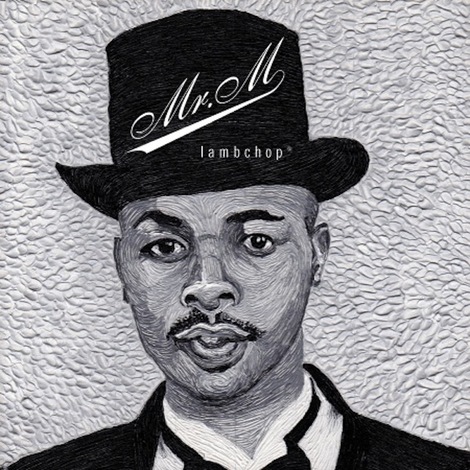
Lambchop – ‘Mr. M’: Round 31 – Rob’s choice

Lambchop - Mr. MIt’s been an unusual year so far, for reasons I don’t need to bore you with, and one of the upshots is that I’ve more or less stopped buying records. Whilst I’ve listened to lots and lots of new and new-old music via Spotify I’ve only actually bought two new albums released this year. The more the year progresses the more I’m starting to think that perhaps I only actually needed one. I’ve been listening to ‘Mr M’ almost compulsively since it came out. It’s at the forefront of my mins whenever I reach for music and, more times than not, I can’t come up with good reasons to skip past it.

I could have chosen any of Lambchop’s 11 albums to play for DRC. I like some more than others, but none are less than great. Allmusic.com describes them as “arguably the most consistently brilliant and unique American group to emerge during the 1990s” and that’s pretty tough to gainsay.

I’ve noticed that when explaining my DRC choices I have a tendency to tie myself in knots attempting to dispel what I imagine to be some fallacious public perception of a band or record I love. After two or three attempts on a given evening my fellow players get a glazed look, start ignoring me and begin talking about CAN instead. I suppose that this reflects a lack of self-confidence: I imagine that everyone else must be down on the music I choose to elevate and end up constructing tortuous ripostes to non-existent dismissals. I need to get over this pernicious mental hurdle.

This is important only in that this evening I found myself defending Lambchop against non-apparent charges of repetition and sameyness. These are easy to dismiss. Since ‘I Hope You’re Sitting Down’ in 1994 Kurt Wagner’s band may have retained the same essential method, but their music has stretched and flowed right across the landscape of modern American music.

It’s hard to be objective when I’ve been listening to this album at least half a dozen times a week for the last four months, but I think ‘Mr M’ may be their best record yet. This is intimate music, music with enough space and room for the listener to step inside it and have it feel like home and with such warmth that it’s almost impossible to resist doing so. The group play with such restraint, such gentle mastery that just being ion the same space as them is an enormous pleasure.

Still, despite line-ups which have chopped and changed and expanded to incorporate more than a dozen players at once at time, at the centre of Lambchop is always Kurt Wagner, his cracked and glowing voice and his words, the poetry of everyday scenes and scenery. He’s wonderful on ‘Mr M’. His singing balanced perfectly between hesitancy and insistence, his words tiptoeing a line from funny to bleak, from everyday to profound. “And the sky opens up like candy / and we do the best we can…” catches all the beauty and sadness of life in just two lines.

Apparently these songs were written partly to try to deal with Kurt’s grief at the suicide of his close friend Vic Chesnutt. They ache with loss but are so beautiful as to almost transcend it. “Took the Christmas lights off the front porch / What felt like February 31st”.

I can’t define beauty for you, and despite having heard Nick tack the word ‘phenomenological’ to it on more occasions than I care to remember, I’m none the wiser as to what it comprises. Still, if you pressed me for an answer right now, in mid 2012, I’d politely direct you to this record by this wonderful band. And then I’d be off, dreaming through these songs again, of that beautiful sound, wanting to live forever where that voice emerges, from that slight smile, from that face, beneath that cap, ideally sat on a chair on a stoop somewhere in Tennessee.

I didn’t have time for a track this evening, but we did talk about how great Lambchop’s performance of ‘Give It’ was at the Merge XX event a couple of years ago. This isn’t the best take around perhaps, Kurt’s voice is almost shot, but it’s a fantastic moment and it makes the feet skip and the hairs on the back of the neck twitch.

[youtube:http://youtu.be/zW3CRdTPEOY%5D

Nick listened: Nixon and Is A Woman were my introduction to Lambchop a decade ago, and I’ve subsequently investigated much of their previous work and kept pace with everything they’ve released since. Those two records still stand proud above the others in my esteem – Nixon with its drama, its soul, its occasional touches of dischord, and Is A Woman with its unique, laconic quietude. I’ve enjoyed everything else I’ve heard by them, and loved parts of it, but nothing else has really grabbed me. Oh C’Mon / No You C’Mon seemed like a strange concept (not a double album, despite apparent cohesion; too much to consume at once), Damaged was an uncomfortable listen given the context of illness, and OH (Ohio) just came out at the wrong time for me to give it time, and so has gatehred dust on the shelf. Mr M is the only subsequent release I’ve not bought yet, with emphasis on the yet; it sounded absolutely lovely, and I’ll keep an eye out for it over the coming months.

Tom Listened: A long time ago now I had an Uncut magazine sampler CD called Sounds of the New West and one of my favourite tracks on it was Saturday Option by Lambchop. After I became hooked on this song, I eagerly purchased its album, What Another Man Spills and there my relationship with Lambchop ended…..until, that is, Rob played Mr M to us.

On an initial listen I much preferred Mr M. WAMS never really grabbed me and I found it a bit of a mess of disparate styles and mumbled lyrics. Whilst I agree with Rob that Kurt Wagner has a unique singing voice, it’s not one I necessarily find easy to listen to. However, it sounded much better to my ears on Mr M, the context of the songs fitting his voice perfectly and there was a stately confidence throughout that perhaps reflects the self-belief that doing one thing well for a long time brings. So, just to put Rob’s mind at ease, I liked this record (as I do most of his offerings)!

Graham listened: Dangerous territory here. I’ve been aware of the band for many years and really liked what I had heard to date. Listening to a complete album for the first time has cemented my belief that this is a band I could really get in to. Could be expensive, 11 albums, where to start?

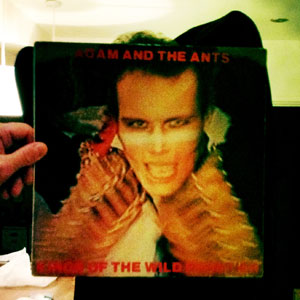
Adam and the Ants – ‘Kings of the Wild Frontier’: Round 30 – Rob’s choice

This is the first record I ever bought. I was 9.

I may not have made many retrospectively cool choices as a child, teenager, adolescent or, to be comprehensive, adult, but I think having ‘Kings of the Wild Frontier’ as a first record and Public Image Limited as a first gig both stack up. Perhaps I should have quit back then. My cache was never higher and has been worn away gradually but relentlessly by a string of poor hair choices, ridiculous jumpers and, most recently, lyric-heavy choices for Devon Record Club. But enough about me.

The backstory is reasonably well known, but bears repeating. After a dark, sexy first album ‘Dirk Wears White Sox’ which failed to make a commercial impact, Adam Ant hired Malcom McLaren to help his band break through. I guess they had a few conversations about pirates and then Malcolm, bless him, persuaded the entire band, minus Ant, to jump ship and form the backbone to Bow Wow Wow. Cheers!

It’s worth noting that very few of the horses McLaren backed during his time as a svengali actually romped home to victory. Even so, what happened next is delicious. Bow Wow Wow went on to middling success marked by bluster and controversy, mainly rooted in McLaren’s apparent willingness to exploit 15 year old Annabella Lwin’s sexuality to promote their records. Ant recruited a whole new band including, crucially, Marco Pirroni (briefly a member of Siouxsie and the Banshees), wrote a bunch of new songs and recorded ‘Kings of the Wild Frontier’ which went on to begin one of the oddest and most wonderful crossover smashes in pop history.

If you weren’t there it really is hard to grasp just how big Adam and the Ants were around the release of ‘Kings of the Wild Frontier’ and its follow-up ‘Prince Charming’. More noteworthy than just the fact of their success was the impact they had in the playground. In 1980/81 no school disco was complete without a small clique of lads wearing Adam Ant’s trademark white line across the nose. The pirate image clearly struck home with a younger audience, but when you factor in just how chart-unfriendly the material was, both musically with its aggressive, alien drumming and heaving vocals, and lyrically, all sex, death and insect invasions, we can only imagine what that generation of parents must have been thinking as they listened in outside our doors, and can only speculate on just how many youngsters had their musical and cultural outlook completely radicalised by this apparently throwaway bunch of pop dandies.

And now? The album’s high points still stand up. The clatter of ‘Antmusic’, the clubbing war cry of ‘Kings of the Wild Frontier’, the creeping horror of ‘Ants Invasion’ and ‘Killer in the Home’. There are some tracks which seem clearly to have been written just to match the new image, step forward ‘Jolly Roger’, but in all it’s a pretty good listen and one which  can hold its own pretty well against some far more renowned albums of the first phases of post-punk and new wave.

Perhaps its main achievement was to show that genuinely challenging and downright weird music really could cause a breach in the fabric of pop. I can’t think of many acts to have equalled Adam and the Ants in this regard since. Frankie Goes to Hollywood? Eminem? Slipknot? Any more suggestions?

Tom Listened: Much like Simple Minds (see round 29) I came to Adam Ant at precisely the wrong time. Unlike Simple Minds and their turgid Dad rock, Adam Ant’s problem was an ever greater reliance on gimmicky imagery and style over substance. So having narrowly missed out on Stand and Deliver, my first exposure of him on returning from three years of life in the Antmusic free zone of the South Pacific was, if I remember correctly, the vapid self-parody of Puss in Boots. I was not impressed, even though my new found mates seemed to lap it up…if you’ll excuse the pun.

But Kings of the Wild Frontier sounded wonderful at DRC…fun, obviously, but much less throwaway than I had expected. Dog Eat Dog is a brilliant opener and having just watched a TOTP performance of it from 1980 it is easy to see why the band became so massive – there is a conviction of purpose and an edge that makes it totally captivating viewing and listening, these guys really do seem to think they’re…pirates!?! Whilst the album Rob brought (of course it’s not true that this was his first record, he just chooses not to count those Nolan Sisters albums) picked its singles wisely, there was surprisingly little filler and it offered an unexpectedly (to me) enjoyable end to the evening, although the cover of Antmusic by Hyno Love Wheel (?)  didn’t really add much to the experience!

Nick listened: Adam Ant was one of the first pop stars I was ever aware of – Stand And Deliver and Prince Charming are pretty indelibly burnt into my brain. But I don’t think I knew anything from before that (to be fair, I was only 2 years old when the Prince Charming album came out), and certainly wasn’t aware of his postpunk roots or involvement with Malcolm McLaren and the whole Bow Wow Wow saga. I’ve only heard Antmusic consciously in the last few years, but it’s a great piece of music, and Stuart Goddard was definitely onto something, as this whole album (bar the ostentatious pirate song towards the end) was great fun and impressive. Wasn’t so fussed by the cover after the original was so good, though!

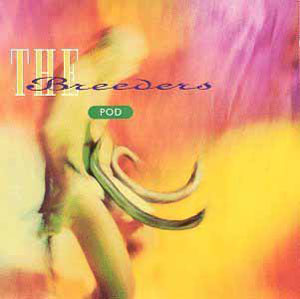
The Breeders – ‘Pod’: Round 29 – Rob’s choice

The Breeders - PodI’d had this in mind to consider for a DRC meeting for some time. Perhaps bruised by the recent realisation that I had only previously chosen one female singer (i’m going to add Low to bump that total up to two), The Breeders elbowed their way to the top of the list for this week.

I hadn’t listened to ‘Pod’ for a while and I was surprised when I came back to it. My recollection of it is so heavily influenced by the first Peel Session the band recorded, with Steve Albini, and which was broadcast before any of their music had been released. Specifically the song ‘Iris’, which at the time I found so disorienting, so much of a wallop to my sense of musical right and wrong that i’ve never forgotten it. I was actually surprised to find ‘Iris’ nestling part way through side 2 of the record. It grows and grows in my memory to the extent that I would have sworn it led the album off and that the rest of the collection merely trailed in its wake. I couldn’t have been more wrong. The real wonder of ‘Pod’ is the strength and certainty of all the songs. ‘Glorious’, ‘Hellbound’, ‘When I Was A Painter’, ‘Only In 3’s’, ‘Lime House’ and pretty much everything in between stands up as blunt and intense songs which challenge without being alienating.

There’s something about the directness of Kim Deal’s approach to songwriting, to her guitar and voice, that is unmistakable and, in it’s own way, unimproveable. In theory The Breeders were a genuine collaboration, at this stage at least, and Tanya Donnelly must take credit for bringing sunshine to ‘Fortunately Gone’ just as Jo Wiggs’ influence can be clearly heard in the dark undertow of ‘Oh!’ and ‘Iris’. But somehow this still sounds like Deal’s record (I know, she’s the singer..). I don’t think she necessarily gets the immense credit she deserves. Memory can be deceptive, but listening back properly now it seems to me that not only was ‘Pod’ the best Breeders record, it was also, with the exception of ‘Surfer Rosa’, quite possibly the best record Kim Deal ever wrote and played on.

Nick listened: For some inexplicable reason I don’t own Pod, despite thinking Gigantic is the best Pixies song, thinking Cannonball is one of the greatest singles ever released, and owning the other three Breeders records. This was really good, and I’ve added it to my list of things to buy. There’s really not much else to say.

Tom Listened: For some inexplicable reason I have a huge amount of affection reserved for the Pixies, despite only ever really liking Surfer Rosa. I was slightly disappointed with Doolittle for which I probably had unreasonable expectations, but listening again it still sounds forced and overly deliberate. The open and natural rawness of SR is more of an act on Doolittle it seems to me. From then on it was always going to be a case of diminishing returns as Bossanova and Trompe Le Monde went on to prove.

As a result, and despite being well aware of their output as I was an avid John Peel listener back then, I didn’t bother bothering with The Breeders. This felt like a mistake when I heard Cannonball for the first time, but still I held off. I seem to recall reviews at the time suggesting that the albums were patchy with high highs but quite a few fallow patches.

Well, Pod seemed to contradict this assessment – it sounded consistently high quality on the night…but also surprisingly dated. They don’t make them like this anymore and I suppose Kim Deal had such a distinctive way with melody and playing the bass (and the Pixies were so influential) that it comes as no surprise that this is a record very much of its time yet none the worse for it. Nice one Rob.

Graham Listened: This choice really highlighted an issue for me. I like the Pixies. I like Throwing Muses (even saw them live). I like The Breeders. I’ve enjoyed listening to all of them over the years,   but never felt inspired enough to go and purchase any of their albums. I really enjoyed listening to this album and I could happily listen to it again. I guess it could be down to a period in time when I fell out of love with American music (refer to Round 14 and blame REM) at end of 80’s. When I returned years later and started listening again to what our colonial cousins had to offer, I guess I picked up on things like Pearl Jam/Nirvana/Screaming Trees and had missed out on quite a lot. My loss, I suppose.

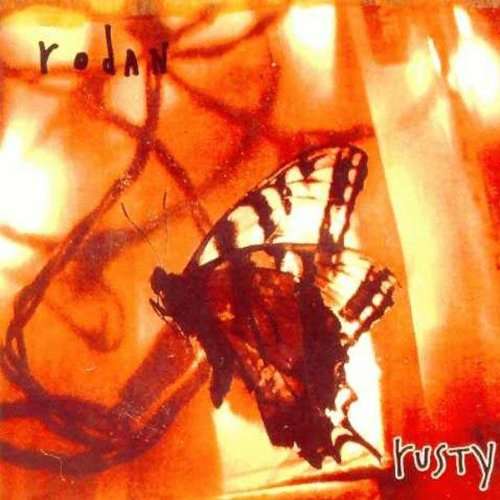
Rodan – ‘Rusty’: Round 28 – Rob’s choice

At our last meeting Tom, in a moment of brio, suggested the fanciful theme for the next meeting of ‘Albums that could be dogs names’. This was clearly ridiculous. I mean, the next meeting wasn’t even at his house so he had no right to be suggesting themes. If we’d received the complaint from Graham on the correct form, he would have been expelled.

The others, quite reasonably, forgot all about this, probably because it constituted such a flagrant abuse of the rules. I mean, seriously, he could have faced disciplinary action. Perhaps for that very reason, the idea stuck with me long enough for me to scan my vinyl for possible contenders. I came up with ‘Mr M’ by Lambchop, ‘Mush’ by Leatherface, the eponymous album by now forgotten outfit ‘That Dog’ and this, which shares a name with my Grandma’s old corgi cross. So I brought it along to sniff bottoms with Led Zep I, Keyboard Repair and Post. Only the latter was even slightly compatible, and even then the sniffing was one-way.

Rodan were from Louisville, Kentucky. This album, released in 1994, plus a subsequent 7″ single, comprises their entire discography. That’s 8 tracks in all. Nonetheless the two words that seem to crop up repeatedly when Rodan are written about nowadays are ‘seminal’ and ‘Slint’. ‘Rusty’, titled after the nickname of engineer Bob Weston – who later went on to be one third of Shellac, does share a methodology with Louisville predecessors Slint’s two records, but it’s not the direct descendent you might expect.

The weather fronts that seem to sweep this album bathe and batter the first two tracks, which are as opposed to each other as any opening duo I can think of. ‘Bible Silver Corner’ is spectral, delicate, beautiful, foreshadowing the work that some of its composers would go on to do as chamber rock outfit Rachel’s. ‘Shiner’ is a savage slasher, screaming and chopping away for two and a half minutes, which feels longer, in a good way.

The rest of the album walks the line of tension between these two extremes and in doing so conjures exquisitely twisted forms and breathes into them an energy that animates and lights them.

They get called ‘Math Rock’ too, and I think that’s unfair. For me Rodan were about freedom rather than rigid formalism. They represent a number of bands of the 90s who were able to fuse the exploratory lifeforce of jazz and, dare I whisper it, prog, with the stripped intensity of punk. At their best these bands stepped away from pretension and created liberating, exhilarating new noises. And Rodan were among the best.

Nick listened: By sheer coincidence I saw some music people talking in excited adjectives about Rusty by Rodin a few weeks ago on twitter, looked it up, and was intrigued enough to add it to my Amazon Wish List, which functions (as I’m sure it does for many people) as a repository of all those cultural artefacts that we have a passing interest in and, were a lottery win to materialise (tricky as I don’t play it), I’d casually and nonchalantly pick up, but which I doubt I’d be motivated enough to buy otherwise. “Stuff I’d like to know about”, we could call this category. I’d heard, very vaguely, of Rachel’s, but Rodin were previously unknown to me.

So I was pleased and intrigued to see Rob pull it out of his bag and enthuse about it too. As for what I thought of it… it was difficult to get a handle on it from one listen, and I suspect the twisting patterns and dynamics would reward repeat listens far more than initial exposure. It probably suffered a little in my mind by comparison to things which followed it but which I experienced first – the likes of Mogwai, Do Make Say Think, and various other all-too-linear, all-too-limited postrockers who don’t have the wit or vim to expand their sound palette or horizons beyond quiet-quiet-loud instrumental rock. I’m hoping there’s more to Rodin, and at some point, after a windfall, I’ll try and find out.

Rob replied: And maybe, after that windfall, and after those rewarding repeat listens, you’ll start spelling their name right.

Nick guttersniped: I was the only one of us who could spell Todd Rundgren.

Tom Listened: I owen Ruusty and hav dun 4 menny yeers, havin bort it (can’t think how to mispell ‘it’)…when it was released. I purchased it because Spiderland was my obsession, my favourite album at the time and it still resides somewhere towards the top of the tree as far as I am concerned. But I never really liked Rusty and I have never really worked out why.

Having listened to it again, I’m still a bit foxed but I can’t say much has altered. I guess I just find the tunes a little forced…and if I’m totally honest, tedious. And yet if you dissect the sound of the two records, Spiderland and Rusty are not very far removed at all. Both do the quiet/loud thing, the whispered vocals into ear piercing screaming. Both have six long songs that meander through their musical landscape a millions miles away from the usual verse/chorus/verse structure. But, for me, Spiderland does something that Rusty doesn’t…captivate. And therein lies the rub.

Graham Listened: I’m a simple soul and admit I couldn’t really latch on to this on first listen. But rather than something which I would choose to then ignore, this struck me a sound I would need to keep exploring. I’m not sure what ‘Math Rock’ might be, but the dynamics and tensions on this did not in anyway strike me as formulaic.