John Cale – Paris 1919: Round 16 – Tom’s Selection

Graham set us the task of bringing a ‘triumphant fourth album’ to the latest meeting and seeing as Paris 1919 had been on ‘the list’ since we started (as has Music for a New Society, but I haven’t felt mean enough to inflict that on my fellow members yet!), I thought it an excellent opportunity to treat them to what is, perhaps, John Cale’s most surprising, in some ways most disorientating and definitely most accessible offering.

As Mr Cale himself states in his autobiography, What’s Welsh for Zen, ‘Paris 1919 was an example of the nicest ways of saying something really ugly’. It’s the lushness of the sound, the sweetness of the songs, the warmth of the recording that is so unsettling not, perhaps, so much in itself but when placed within the context of John Cale’s career. After all, Cale was the man who gave the Velvets their visceral cutting edge: the screeching voila on The Black Angel’s Death Song, Sister Ray’s thrillingly exhausting battle for supremacy between Reed’s guitar and Cale’s organ, I Heard Her Call My Name’s cacophony. Cale’s post Paris 1919 output is, in many ways, just as challenging, never more so than on the aforementioned (totally harrowing) Music for a New Society. So it is a little unnerving to find this concise, perfectly formed treasure trove of sweet sounding songs nestling in the heart of Cale’s discography. It was interesting to see the surprise on the faces of my fellow club members as Child’s Christmas in Wales (a ‘jaunty’ little number) led into the beautiful, yet jarring, Hanky Panky Nohow. I guess they were expecting something much more obviously challenging and discordant. Yet not far beneath the surface, dark forces are at play and whilst I have no idea what any of the songs mean, I can’t help sensing they are much more macabre than they initially appear.

Cale’s lyrics are so oblique and cryptic on Paris 1919 – it is immediately obvious that these are not the random warblings of some 1960s acid casualty but skillfully constructed pieces that are packed with meaning but only decipherable by those with the intelligence, patience and motivation to do so. I’ve never bothered (or don’t have the capability!), but I am intrigued by lyrics such as ‘elephants that sing to feed the cows that agriculture won’t allow’, from Hanky Panky Nohow (why ‘Nohow’ not ‘Knowhow’?). And why is he welcoming the subject in ‘Graham Greene’ back to ‘Chipping and Sodbury’? It’s a rare occurrence for me that I pay much attention at all to lyrics; normally words in songs are there to carry melody and emotion for me, not meaning, but I find everything about Paris 1919 beguiling and the more I listen to it the more I realise that it offers so much more than what appears, on the surface, to be nine lovely, if somewhat odd, little pop songs.

Rob listened: I’ve heard parts of this before, although Tom doesn’t remember playing it. He was drunk at the time and had just recovered from a fit of the vapours having accidentally flashed the inner sleeve of ‘Bummed’ to a room full of sensitive Totnesians. I liked it then and liked it more this time. It seemed to have an exquisite balance between the restraint and delicacy of pastoral folk and the underlying sense that its subject matter was curdling away and turning things bad. Lovely stuff and definitely one i’ll look to get. Also amusing to note that the first artists we all thought it reminded us of turned out, without intent, to be Welsh (Gorky’s, SFA…). Something in the water or an enduring Cale influence in those parts?

Nick listened: (Whisper it) I’m not a massive Velvets fan. The eponymous album with I’m Set Free on it is very nice, and bits of the banana one are quite good, and I’m sure at the time they were pretty radical / cool / shocking / etc etc. I own White Light / White Heat but I can’t remember a damn thing about it. So I’ve never investigated post-Velvets solo work by the members, except for Transformer, which my brother bought me, and which, two famous songs besides, I think is complete bobbins. This, though, makes me interested to hear more of Cale’s solo work; it’s tuneful, beautifully arranged, intelligent, inscrutable, and enjoyable to listen to. I’d only ever vaguely recognised that Cale was Welsh, but it definitely makes sense hearing this and knowing that Gork’s and SFA are fans. A good choice.

Graham Listened: Now, way back, I probably liked the Velvets and Lou Reed a bit too much, and took it all a bit too seriously. I never really followed John Cale’s solo work, but I had a perception it would all be a bit too strange for me. Well, then Tom plays this! Nick has really said it all about the impression it made on me and it really drew me in. I found “jaunty” as an apt description on the night.

Mazzy Star – She Hangs Brightly – Round 15 – Graham’s Choice

Can’t remember what led me to this debut album in 1990, but it was certainly nothing like anything else I was listening to at the time. In fact when I look back at what I was mainly listening to then, I really needed to broaden my horizons!

Anyway, I came to this album with no knowledge of the Paisley Underground scene in California and the band’s beginnings in the form of Opal. I thought this record was astonishing and although it seems to have been reasonably warmly received at the time, I always felt it deserved greater credit. The wonderfully dreamy and
haunting sound of both vocals and playing made a big impact on me. From my own
collection I could identify the Velvet Underground and Doors references, along
with a sound I could only describe as a sort of Jesus and Mary Chain ‘lite’.
Researching the band now led me to discover Hope Sandoval’s later musical and
personal involvement with the Reid brothers.

The addition of folky/alternative country influences made
this a distinctive overall sound for its time. There are some Doorish
‘noodling’ moments on the album (particularly on the title track) but that
aside I wonder if this has been released within the last 10 years the impact
might have been different? Maybe the world would have been more interested and
accepting of such a crossover sound and less reliant on some of the boundaries
of the categories that applied at the time.

I never followed the band further with their other 2 albums
in 1993 and 1996, but have now caught up with them. The sound doesn’t move on
very much at all, but they still deserve a listen. Bizarrely, “Into Dust” from
the 2nd album, now features on the current tv adverts for “Gears of
War 3” (whatever that is!).

Nick listened: I’m very vaguely aware of Mazzy Star, familiar with their reputation and aesthetic if not their songs, particularly. Emma owns So Tonight That I Might See, and I’ve heard it a number of times but never really chosen to put it on myself. I’m also familiar with Hope Sandoval’s vocals from appearances of other people’s records, primarily Massive Attack’s (last?) album. This was lovely; more purely country than I would have thought, but also sparse, dreamy, and exploratory at points, too – the tracks that remind Graham of The Doors remind me of really early Verve b-sides. Different frames of reference! TI really enjoyed this, and it’s on the longlist of records to buy.

Tom Listened: I own She Hangs Brightly and knew it well at the time of its release. I probably haven’t listened to it in the last 15 years though! Upon re-acquaintance I was struck at how simplistic much of the record sounded, how these days a record such as this would no doubt be embellished to the hilt, adorned with strings and keyboards and choirs and the like. But, then, if you have a voice as pure and astonishing as Hope Sandoval’s (sounding like an ‘even more heavenly than Dolly Parton’ Dolly Parton on this record) in your armour, is there any need for additional extras? Well, I was left undecided, feeling that about half of the album was nigh on perfect, the other half sounded slightly under-developed…almost as though a  few strummed chords and a half-decent melody was felt to be enough when sung by Ms Sandoval. I’m not sure it was.

Rob listened: Not under-appreciated by me! This record was a turning point in my musical development. Tom’s brother gave it to me on a tape with ‘The Velvet Underground’ on the other side. It took a while, but I fell in love with the hazy perfection of ‘Halah’ and that led me down dreamy roads to Low, Lambchop, Bonnie Prince Billy etc etc. I may have found my way there without Hope and Dave, but it would have taken years longer. I still have the photos Ben took of the band when we saw them play in a tiny venue (Manchester Met, I think) c1994. We stood staring at Hope Sandoval, enraptured by her voice and, well, her. I’d probably do the same today.

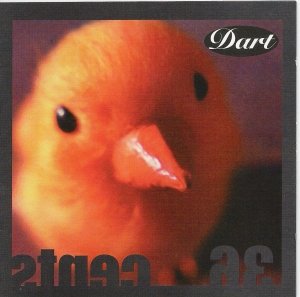
Dart – ’36 Cents An Hour’ – Round 15: Rob’s choice

So, we were challenged with bringing ‘Underappreciated albums of the 1990s’.

Way below ‘underappreciated’, Dart’s ’36 Cents An Hour’ was practically invisible. I was sent it to review in 1995, left it on the shelf for a few months, gave it a cursory listen and found it seeping slowly into my musical memory.

I can’t tell you too much about it. Nor can anyone. There’s barely anything online about Dart. Google the album title and you’ll find four blog posts (five now), three of which are empty. It’s mentioned just 4 times on I Love Music, 3 times by the same guy who used to know the band. I know there’s nothing out there about Dart because I’ve looked quite often over the last decades and even sent an email to lead singer Rick Stone 8 or 9 years ago praising the album and asking whether there was more music to come. He never emailed back and that remains the only time i’ve ever written to a band or singer. Some time later I did manage to track down a subsequent solo album by Stone, ‘Turn Me On, Turn Me Out’ which offered some sort of coda.

Dart were a four piece from San Francisco, or thereabouts. ’36 Cents An Hour’ is a rich, warm album that blends the careful craft of fuzzy alt-country with the pedal-driven oomph of prime shoe gaze. The apparently effortless combination is one of the things that that make it sound so timeless, one of those records that by the second time you hear it feels like it’s always been with you, but which is never wrung dry. The others are down to Stone. Without knowing the background I can’t be sure, but he sounds like kith and kin with David Gedge and Mark Eitzel, carving a complete body of work from one relationship gone bad. It’s mopey, pretty much, but fine with it. Then there’s his phrasing. Just as his band know precisely when to hit the effects pedal for maximum effect without losing subtlety, Stone knows just when to add an extra rasp and push to his voice to grab a line by the scruff of it’s neck. Together it’s a quietly powerful package.

It’s unusual for such a perfectly formed record, complete with lovely cover art, to arrive unbidden as if from nowhere, and a real shame that the band who produced it then disappeared into obscurity once more. If you get the chance, track them down and let them in.

Newsflash: I found a review on allmusic.com. Bless you Ned Raggett. He reckons they were based in London. Who knows where they are now? They could be just around the corner.

Tom Listened:I heard little of American Music Club in the music of Dart but I am minded to draw a comparison between listening to Engine (my first AMC purchase) and 36 Cents An Hour. At the previous meeting (I think it was when Meadowlands by The Wrens was playing) Nick posited that with enough plays almost any record can, through familiarity, become pleasurable to listen to …at least, I think that was what he was saying. Not sure how this applies to Barbie Girl, but I suppose there is an exception to every rule. I got the impression this would happen if I listened to 36 Cents An Hour, in much the same way as it did when I used to listen to, say, Buffalo Tom or Bright Eyes or The Lemonheads. All pretty unremarkable artists who have a habit of producing records crammed with pleasant enough songs that, over time, come to assume a disproportionate place in my affections.  I dare say The Wrens may yet pull off this trick, if I ever get round to listening to it again!

American Music Club, however, I pretty much hated on first listen. In fact, if it wasn’t for Melody Maker’s Allan Jones’ championing of them (and the song Nightwatchman), we would probably have never got past first base. I couldn’t stand Mark Eitzel’s foghorn of a voice and the arrangements of the songs on Engine seemed far too rocky, too bombastic to my ears. To say it jarred is an understatement.  But, with countless repeated listens, they came to be my favourite band for a while and I treasure my AMC collection (for all its flaws) as much as any other artist in my collection. Dart sounded to me to have come out of the Buffalo Tom stable, I liked it well enough, but there was nothing there that said, ‘you’re going to have to work hard to really appreciate me, now come on and rise to the challenge’ and, for me, that part of the process is the bit I like best.

Nick listened: I’m always surprised when Rob brings records like this – pleasant, tuneful, crafted but unremarkable indie rock – to Devon Record Club, which he’s now done a few times, as one of the first questions he asked me when we started talking about music two or so years ago was “what’s the most extreme music you listen to?”, which prompted in me a vague sense of inadequacy that my tastes weren’t ever going to be savage and abrasive enough to cut the mustard. So it’s always puzzling when he brings something that strikes me as being a little middle of the road.

Not that there’s anything wrong with that (I wrote the liner notes to Embrace’s b-sides compilation, for god’s sake), I just expect extreme noise terror more often! Likewise there’s nothing wrong with Dart (who won the prize for most unheard-of choice this week), but, as Tom suggested, it felt very much like the kind of record that would need time to soak in and reveal itself. It reminded me of many things – a little REM, a little shoegaze, a little alt.country, a little Pearl Jam, a little Embrace b-side, even – most of which I like. Had I stumbled across 36 Cents and Hour 16 years ago I might have loved it; today I’ve probably not got time to, sadly.

Graham listened: A very accomplished and mature debut offering. The style of sound ticked loads of boxes for me about things I would be listening to around late 80’s/early 90’s. There were some anthemic moments that would seem to be killer tracks for live performance. No sense that the vocalist was trying to sound like Michael Stipe but there were some moments when he sounded incredibly similar.  Wonder if timing played a part here and maybe there was just not the apetite for this sort of sound by 1995? Clearly hugely underappreciated.

Girls Against Boys – Venus Luxure No.1 Baby – Round 15: Tom’s Selection

After last meeting’s ‘Guilty Displeasures’ it was good to get back to normal and have records that we actually liked to listen to! That said, I wasn’t sure how Venus Luxure No.1 Baby would be received – alongside Todd Rungren, The Beastie Boys, Owen Pallett and The Necks, Girls Against Boys share the honour of being one of the few bands my long-suffering wife has ever offered a negative opinion on. And listening to the record again in the time leading up to the meeting, it was easy for me to see why – this is a harsh, abrasive sound, Scott McLoud’s voice grinding away like Mark E Smith with tonsillitis whilst his band conjure up the dirtiest, muddiest grooves ever to come crawling out of the swamp. Catch it on a bad day (ie a good day, bright sunshine, birds tweeting in the back garden, freshly baked bread etc) and it can sound so incongruous that it will need to go back on the shelf immediately, even before the (thrilling) introduction of In Like Flynn is over; although there are grooves galore on this wonderful record, it is about as far removed from the Jackson 5 as can be. But slap it on the turntable on an early Autumn night as the ever shortening days become increasingly apparent and the first post-Summer storms sweep in from the Atlantic and you’ll be in early 90s post-hardcore heaven.

I thought Venus Luxure No1 Baby was pretty under renowned at the time it was released, but in our meeting Rob heartily disagreed. The reasons for my mistake could well be due to the circumstances with which I bought the record back in ’93. Stumbling into my favourite record shop at the time (Replay Records in Bristol) , I chanced upon the record in their new releases section. The shop used to put stickers on some of the albums with handwritten comments by the staff and VL#1B had garnered a particularly complementary one. So I pulled it off the shelf, had the guy behind the checkout confirm that it was one of the top five records of the year (in fact he said it was probably #1, somewhat appropriately!) and walked out with my purchase having never heard a note or read a word on the band before. The thrill of putting a record on a turntable and having next to no idea what it will sound like (alright, it was on Touch & Go, so that offered a clue) is one that is increasingly hard to come by in these days of Spotify, 6music and Apple adverts and one that I miss. VL#1B hit the spot immediately. I have never been a fan of the bleaker end of US hardcore but I found Girls Against Boys’ sound to offer just enough light and colour so as to render their music captivating, accessible and unexpectedly groovy. There were wonderful surprises all over the record – the amazing bass runs on songs like the aforementioned In Like Flynn, Go Be Delighted, Bug House and Bulletproof Cupid, the use of keyboard riffs on Billy One Stop, Eli Janney’s whoops on Seven Seas, Rockets Are Red’s monstrous guitar riff, the fact that I could hear (admittedly) faint echoes of Slint at times – it is the multitude of ideas and idiosyncrasies that lifts VL#1B out of the genre, to stand alone as one of the pinnacles of the US Indie Rock scene of the time.

I was fortunate to see GVSB in 1993 and it is, to this day, my favourite gig ever. GVSB went on to release two more good to great albums, Cruise Yourself and House of GVSB but they never again matched the natural magnificence of Venus Luxure No1 Baby.

Rob listened: I loved V-Lux at the time and it still sounds just as good. I probably came to it more gradually than Tom, following a trail from Big Black, Husker Du and Fugazi that led me to the Jesus Lizard, GVSB and a bunch of stuff that woud certainly tip the bleak end of Tom’s hardcore scale. For me, GVSB are dirty sexy, driving, hard pop music. Pop in the sense that I can’t imagine why anyone wouldn’t be thrilled to hear this record. I’m delighted that Tom brought it tonight. Karen, you need to hear it again.

Nick listened: Girls Against Boys are another of those late-80s, early-90s names that I know of but have never heard – Tom and Rob are doing a sterling job of slowly introducing me to many of them! I really enjoyed this, the dirtiness of it, the low-key, low-slung grooves, the juxtaposition of twin basses, guitars, and muddy keys. Not quite so keen on the vocals, but I can live with them. Which I probably will be doing – this has gone on my list of records to buy in the near future.

Graham listened: Tom’s suggestion that this maybe labelled “hardcore” had me worried as not an area I’m would choose to explore. I was pleasantly relieved and in my perception I would describe this as more grungy pop. I imagine the live performances would up the octane levels though!

Long Fin Killie – Amelia – Round 15: Nick’s choice


I picked the theme “under renowned albums of the 1990s” specifically so I could finally play this record, which, once again, was one of the first I thought of when Rob suggested we do this thing.

Long Fin Killie emerged in 1994 from Scotland, precocious and practically fully formed, with a tune called “The Lamberton Lamplighter”, an extraordinarily weird, homoerotic pop song. An album followed, its aesthetic composed of ancient woodcuts, poetry, guest appearances by Mark E. Smith, elongated and indulgent musicianship, dulcimers, violins, thumb pianos, mandolins, bouzoukis; pastoral postrock meets shoegazing prog.

Amelia, like their previous two albums, is named after a tragic hero – Ms. Earhart followed Harry Houdini and Rudolph Valentino. Still intricate, intelligent, intuitive, indulgent and intense, but different from what the band had done before, more concise, more industrial, more muscular, less pastoral. There are none of the extended, minimalist grooves that had LFK defined as postrock; barely anything stretches past four minutes. Guitars chug and grind in aggressively repetitive patterns, bass is deep, informed more by techno’s slickened textures than rock’s organic pastures , and new drummer Kenny McEwan plays relentlessly skittish, drum ‘n’ bass-esque rolls and tumbles, the sonic positioning of tom-tom strikes and rattling snare rolls a precursor to the rhythms that would make Bloc Party’s debut seem so out of the ordinary eight years later.

But the bones of Long Fin Killie’s songwriting – intelligence, irreverence, an unpredictability that manifests as surprising catchiness – remain intact, and are maybe even made more sophisticated by brevity. Beneath the inspirational scree and metronomic tumble there are hooks and choruses, and Luke Sutherland’s amazing lyrics. Black, gay, adopted, and moved by English parents to somewhere ludicrously remote in Scotland, he’s the beautiful, passionate centre of it all, spitting inspiration and bile one minute and swooning sensually the next.

Perhaps the key thing about Long Fin Killie, and in particular their extraordinary musicianship, is the fact that nowhere in their entire career is their consummate skill manifested in the kind of “look at me, ma” soloing that tips so much music beyond acceptability; sure, Sutherland, Colin Greig (bass), Phillip Cameron (guitar) and Kenny McEwan (like David Turner before him) play like virtuosos, but it’s all about teamwork, about balance and subtlety, about being a group. Sutherland may have ostensibly been the bandleader and frontman, but his vocals are often blurred and hidden behind chiming and roaring guitars and rumbling bass.

Amelia was LFK’s last album; Sutherland went on to make more excellent music as Bows and Music:AM, as well as publish three novels (and play violin and guitar with Mogwai, and do plenty else besides!), but theirs is an under-dropped name. I’d mark them down, without hesitation, as my favourite Scottish band ever.

Tom Listened:  I was struck when I listened to this at the meeting the other night at how alike it sounded to Wild Beasts’ more recent efforts, although the LFK are obviously coming from a different direction musically and the excellent percussion throughout Amelia gave it a momentum and lightness of touch that Wild Beasts sometime lack. I really enjoyed listening to this, it was innovative, interesting all the way through and felt like it was one of those albums that is packed with stuff to discover with repeated listens. My only reservation is a similar one I had when Nick played Caribou in that I found myself wondering whether I would feel an emotional attachment to Luke Sutherland’s singing which, on an initial listen, seemed to lack the rawness and vulnerability of so much of my favourite music. I imagine, however, that this would reveal itself with familiarity and I  am keen to listen again.

Rob listened: I have the first LFK album, and i’ve barely listened to it. I think I bought it for the Mark E Smith guest spot, back when I was a Fall completist. I thought it sounded great, churning with fascinating details but, as Nick rightly points out, none of them showily displayed. It reminded me of A.R. Kane when they were turning less dreamy and more poppy and, more than most records we’ve listened to over the last 6 months, I found myself several times zoning out of the incessant nattering of my fellow club members and tuning into some absorbing progression in one of the songs. For me, ‘Amelia’ refused to be background music, which must speak to its power.

Graham listened: Now I have to admit this is way past anything I would normally lend listening time to, as the slightest hint of drum ‘n’ bass would have me turning off. But that what’s great about DRC because I sat and listened and allowed myself to hear the greater depth this had to offer, both lyrically and musically. My previous boundaries continue to be breached.

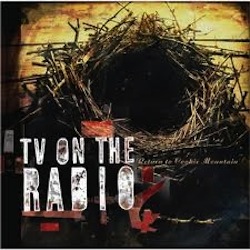
TV On The Radio – ‘Return to Cookie Mountain’ – Round 14: Rob’s choice

‘Guilty Displeasures’ is a great theme and once i’d set aside The Microphones ‘The Glow Pt 2’ and ‘Led Zep III’ (listened to them again, turned out they were pretty good after all) I settled on ‘Return to Cookie Mountain’ quickly.

It seemed to be lauded from all sides when released, it came 2nd in Pitchfork’s end of year list for 2006 and seemed, by all accounts, to be redefining rock music. I expected to have my head blown off when I heard it. I didn’t get it at the time and have been trying ever since. The symphonic/electronic swoosh of ‘I Was A Lover’ promises much, but the rest of the record is just so… damned… boring…

I don’t know why, but I just don’t hear anything revolutionary in here, and with the added irritation of some of the most drained, lifeless singing i’ve ever heard, I find it bland verging on unbearable. ‘Wolf Like Me’, for many the standout track, chugs along nicely, but what the hell is that playground chant-along we get in place of vocals with some passion, some life. Reading back, it makes sense that TV On The Radio apparently came to music from visual art. This record, to me, sounds like a conceptual, academic exercise. No fire, no danger, no jeopardy. No thanks.

I’ve listened to it dozens of times, each one expecting the switch to flick. Never happens. I mustered up the same optimism this evening, hoping one of my fellow listeners would articulate what i’d been missing and open the lock for me. I’ll let them speak for themselves, but the rest of DRC seemed to share my view as we listened again this evening, to the shocking extent that this became the first, and I hope the last, record we have ever taken off before it finished. I wonder now whether this is a hipster band, one that lots of people hope to like, but really, deep down, find their relationship with them is pretty cold and sterile.

Still, at least it’s not as boring as ‘Dear Science’.

Tom Listened: I think Return To Cookie Mountain is MORE boring than Dear Science. In fact, I quite like Dear Science; it has an lightness of touch and a bit of character…but I wholeheartedly agree with Rob in his assertion that RTCM is one of the most overrated albums of recent times. He’s right, it is mainly the singing that’s the problem. Although technically accomplished enough, both Kyp Malone and Tunde Adebimpe sound as though they are going through the motions on RTCM and this, coupled with pretty annoying production and some bland songs, suggest to me that this is, perhaps, one displeasure none of us have to feel too guilty about.

Nick listened: Total and utter agreement with Rob about this record. Like him I’ve been trying for five years to see what it is that other people, including plenty of whom that I respect in terms of musical choices, have seen in this record. At one point, many moons ago, I thought I’d had an epiphany with the piano strikes in Province, but it soon passed. RTCM is, to my ears, a mess of a record; loud, muffled, confused, aimless, passionless. A couple of times, including Wolf Like Me, it gathers some momentum and some life, but generally it sounds like a machine grinding confusingly for the sake of grinding, producing nothing, doing nothing, no end product. The melodies sound forced to me, the rhythms awkward and unphysical, unpleasurable, the drones and chaos atop neither exhilarating or beautiful. This was the first TVOTR release I bought, and had I not been determined to understand what their USP was it would have been the last; I’ve subsequently found that I actually really enjoy their debut EP and quite like their album previous to this, too; both employ a much lighter touch, a sense of freedom and fun that seems absent here for some reason. I hate to use words like dull and boring as pejoratives when writing about music because they’re so lifeless and meaningless and in the ear of the beholder, but RTCM, quite simply, bores the crap out of me. I thoroughly encouraged us to turn it off, and was delighted when we did.

Graham Listened: All I can really add to the comments above is “ditto”. Really lost on me how this could attract such critical acclaim. Nothing to feel guilty about in my opinion.

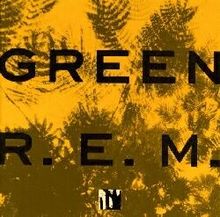
R.E.M. – Green – Round 14: Graham’s Choice

This choice provoked some serious debate within the assembled members. However I cannot be sure that my critique led to the consequent decision by the band to split up the week after our meeting. Having followed the band from the earliest days I should feel that this is the breakthrough album to gaining   widespread appreciation, but for me, something went off message here.

I admitted early on that personal circumstances and age had a big impact on this choice and no doubt prejudiced my opinion. I guess if you joined R.E.M at Green, then the consequent ride was enjoyable and you could even go back and enjoy a fantastic back catalogue. When this album came out I played it all the time for months and saw them again live.

As the years went by, I came to see this album as a turning point. On this and consequent albums there are some wonderful individual tracks, however I now feel that none of these albums hang together  as well as their first four. I’m not sure how  much the decision to leave IRS for Warner Bros influenced my opinion or the music on the album. To me Stand paved the way to having to endure Shiny Happy ……. on Out of Time. Inside out has always sounded like a less powerful rehash of Finest Worksong from the previous album and I now would venture that everything else on Green has been done better on the previous albums. The first four albums seem to have all the real edginess, power, musicality and cavalier style that Green lacks. What Green has for me is a “polish” to the sound which wasn’t required.

I freely admit that I grew up treasuring R.E.M. and somehow having a degree of ownership taken away from me when the success after this album kicked in. Maybe I’m bitter? However choosing These Days (Lifes Rich Pageant) as my track certainly cheered up this grumpy old man!

Tom Listened: Green was my first REM album and, although it took a while, I grew to admire its insidious melodies, eventually recognising structure and flow in songs where initially there seemed to be none (The Wrong Child, World Leader Pretend, Hairshirt), and enjoying the lighter moments for what they were; clever little pop songs that do a little more than they say on the tin. Like most ‘indie kids’ of the late 80s/early 90s, I then felt an obligation to explore REM’s back catalogue and found it much less consistent than music history would seem to suggest. I seem to have clicked with alternate REM albums: Reckoning, Life’s Rich Pageant and Green are my keepers, the other three are, for me, less essential. But, at the time, I certainly didn’t foresee the awfulness of REM beyond Green. In fact, if it hadn’t been for the frankly execrable Shiny Happy People, I may well have wasted my money on a few more REM releases before realising they had shot their bolt.

Listening again to Green the other night, I was confused as to whether my feelings towards the record could be objective, mixed up as they are with very distinct memories of a first term at university. As Green filled much of my listening time at that time and not a huge amount since, it operates like a time machine and as such, I find it hard to determine whether it’s the songs I like or the memories they evoke. Probably a bit of both!

Rob listened: I love ‘Green’. Always have and always will. I came to REM late, having somehow confused them with Green and Red in my teenage idiocy and fell for ‘Document’ and ‘Green’ at the same time. I think they’re two parts of the same phase, the band breaking away from their roots, beginning to experiment with where they could go next. I understand Graham’s reservations, but for me this is pretty close to a Desert Island Disc, and even if they went and split up in a week’s time, songs like ‘World Leader Pretend’ and ‘You Are The Everything’ will go on and on.

Nick listened: A measure of how much REM are on my musical radar; I didn’t know they’d split up until I came back to see if Graham had posted this, and when I found out I didn’t care. At all. This record if anything shows the slight age-gap in DRC; the other three members all know this record well and have strong feelings about it, all love at leads one phase of REM’s career, and could easily spend all night debating the minutiae of those phases and when they each got off the bus. So too, seemingly, could several of the people who responded on Twitter as we listened – far more responses than we’ve ever had about any other record, and all from people a little older than I am. Because I’d never heard this record before, and thought it sounded alright; much like most REM up to and including New Adventures In Hi-Fi (and maybe bits of Up). I only got on the bus, or rather, only saw the bus from a distance, after everyone else here had got off it. Oh well.

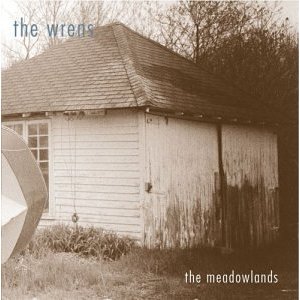
The Wrens – Meadowlands: Round 14 – Tom’s Selection

When I came up with it, I thought the idea of a ‘guilty displeasure’ was genius. An album that you knew you were supposed to like, that had become established in the annals of rock history as a key work (or potential key work) but that you just hadn’t clicked with yet. Throw it into the DRC blender, let the other guys point out where you are going wrong and, hey presto, you have another once-neglected classic to add to your trove.

There are plenty of albums in my collection that fit this bill. As a careful, as opposed to carefree, purchaser of records I will often research an album in minute detail before acquiring it, to such an extent that I often know the song titles, running time and recording history before hearing a note! I am definitely the opposite of a completist. I don’t think I own all the albums by any major artist who has stuck around long enough to make more than a couple of records (although I do own the Nick Drake box set, he hardly has an extensive discography) as I will ditch an artist as soon as I sense that I no longer need any more music by them. So I should only have a few guilty displeasure records in my collection; yet there are loads, and most of them tend to be the established classics, those BIG records that are firmly of the canon, in the top 50 of the latest (ridiculous) top 1000 records of all time lists. You know the ones: Sgt Pepper’s, Blood on the Tracks, most Neil Young, Funeral, Transformer, The Stone Roses, Screamadelica, Murmur. In other words, records that are so highly regarded that no amount of scouring the music press or internet review pages can put you off…because there just isn’t much written that could put you off. But I knew before our meeting that my mind is more-or-less made up about these records, that no amount of persuasion would alter the way I felt about them. So I went for The Meadowlands instead. Thought it would work. It didn’t!

I have only owned The Meadowlands for about six months, having wanted to own it for a few years beforehand. I first became aware of the album around about the time I started following Pitchfork – it was in their 2003 year end top album list (number 18 and scoring a whopping 9.5 – I put that in just for Nick, knowing how much he likes ‘the numbers’ – in their review) and I clocked it as an album that I would probably get on with. Over the intervening decade the album’s reputation seemed, if anything, to grow! In the end of decade chatter it frequently cropped up as one of the most important and rewarding releases of the noughties and was talked of as a grower of rare depth and staying power. Just my sort of thing. I probably had unrealistic expectations by the time I slapped it on the turntable for the first time.

What’s wrong with it? Nothing really. Most of the songs are pretty interesting with nice melodies, good to great lyrics, they shift around a bit, usually building to a climax but employing a range of dynamic shifts along the way. I certainly don’t dislike the record but, much in the same way Nick (wrongly, as it happens) feels about Pet Sounds, I don’t love it like I should…and I am beginning to feel I never will. In the back of my mind I am holding on to those comments I read that said, ‘hang in there, the time you invest will be more than paid off when it clicks’ but I have really tried already with The Meadowlands and it hasn’t clicked yet. I thought perhaps that playing it at DRC would do the trick but, if anything, the views of the fellow members (with the exception of Graham, who seemed to quite like it) reinforced my own. I think Rob, in particular, said something that rang true: ‘it all sounds a bit flat’. I know what he means and, whilst I haven’t completely given up on The Meadowlands yet, I do wonder if it will ever become anything other than a (slightly) guilty displeasure.

Graham listened: For a first listen I quite enjoyed this. Some tracks seem to ramble rather than develop, but I would certainly listen again (not that Tom would lend it to me when he saw the state that Green arrived in!).

Rob listened: This sounded inconsequential to me, I’m afraid. I’m aware of its rep, but it came across like run of the mill alternative rock, recorded just badly enough give it a patina of faux authenticity and desperation. I’m sure it’s completely heartfelt, and it appears to be a record that many people hold dear to their hearts, but Tom, i’d give up if I were you.

Nick listened: Writing for Stylus from 2002 to 2007, there were many, many record enthused about by my compatriot reviewers which I did not get, or, indeed, from the tone of their enthusings, did not even bother to try and acquaint myself with. This is one of them. The cover is awful; who knows where the phrase “you should never judge a book by its cover” originated, but I thoroughly disagree – book, and by extension record, covers are MEANT to be judged, are meant to lure you in, to make you want to hear a song or read a story, to offer an impression of what might be contained within. I guess Meadowlands did that for me; clumsily composed, solipsistic, monochrome, lacking definition, dated, without personality… I’m unsure whether I’m describing the artwork or the record, because this just sounded like pointless, identikit American woe-is-me pseudo-meaningful indie rubbish, and I suspect that a huge part of its mythos is based around its backstory (misery, delays, personal troubles, record label failings; who givers a toss?).

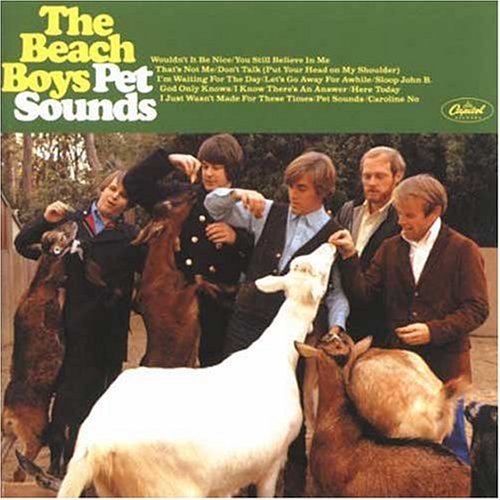
The Beach Boys – Pet Sounds – Round 14 – Nick’s selection


So here it is, possibly the holiest of holy cows. It’s not that I don’t like Pet Sounds – I do – it’s that I don’t love it, though I feel I’m supposed to. God only knows I’ve tried; I’ve owned it for half my life, and must have listened to it hundreds of times, on top of the number of times one must be passively exposed to songs like God Only Knows and Wouldn’t It Be Nice, which permeate the culture like very little else can. My wife loves it. Many of my musically inclined friends love it. Many of the musicians that I do love, love it. Much of the music that I would call my favourite ever music is massively, enormously indebted to it. But it just never clicked for me.

So while I find the rollicking drums of I’m Waiting For The Day exciting and pleasurable, I find Don’t Talk (Put Your Head On My Shoulder) and You Still Believe In Me to be just a little… dull. And I hate using words like dull, tedious, and boring to describe music, because they’re so undescriptive, so subjective, so lacking in specificity. And those instrumentals, they’re just… twee, and bland, and pointless. I can listen to the likes of Stars Of The Lid or The Necks for hours on end, but I just don’t get these.

Maybe it’s that it’s in mono, maybe it’s the slightly crunchy, wall-of-sound-ish edge to the production. Maybe it’s that The Beatles got me first, and The Beach Boys never had a Rain or a Tomorrow Never Knows, never had that dark, psychedelic edge. Maybe it’s the fact that Brian Wilson, for all his alleged infidelities and obsessive tendencies, here just produced a batch of nice, quite pretty, but ultimately emotionally immature love songs. They just don’t really move me; I don’t find the melodies pretty like I do those of songs like Something Like You by Michael Head & The Strands of Switching Off by Elbow, songs that also seem, to me, possessed of an emotional depth that I just can’t find here.

I’m intrigued by the relationship between familiarity and enjoyment, the idea that if you listen to anything often enough then recognition and association will supersede any kind of aesthetic response. I’m not sure what my relationship with Pet Sounds says about this idea; do I only like I’m Waiting For The Day through familiarity? Why don’t I, in that case, like Caroline, No, then? Why don’t I really love any of it?

Tom Listened: It’s inevitable that Pet Sounds is going to be compared to Revolver (or mid-period Beatles in general) such was the transatlantic competition between the bands’ major songwriters at the time, but the albums themselves bear no comparison…they are the aural equivalent of chalk and cheese. Brian Wilson had a completely different agenda to Lennon & McCartney at the time and sought to innovate in a different way. It seems to me that, on the whole, The Beatles were all about looking forward, pushing the musical envelope and forever searching for sounds/songs the like of which had never been heard before. The Beach Boys innovated by looking back. Sure they didn’t write a Tomorrow Never Knows, but then Lennon & McCartney didn’t write God Only Knows! Which is better? Probably only one way to find out…FIGHT.

Even at its most effervescent (which it certainly is not on Pet Sounds), the Beach Boys’ sound is a wistful, nostalgic take on adolescence. On Pet Sounds their music is superbly crafted melancholic pop; each gem a polished diamond, practically every note evocative of the sun setting over golden sands as you suddenly realise that it’s the end of August, soon the nights will be drawing in, the carefree life will be gone and the drudgery of the Autumn months will be upon you. It’s the sound of Brian Wilson falling apart, but still sane enough to realise his predicament. It’s a different way of letting the world know you’re finding things hard than shouting for Help; certainly more subtle, possibly more affecting. I love Revolver for the place it had in my own musical development, I love its wacky sounds and its bright and breezy pop, but it certainly has its share of clunkers. But I love Pet Sounds for its depth, its courage and for the fact that it doesn’t reveal its majesty too easily. I love Pet Sounds in a way that Nick doesn’t (and probably never will)  but then I always was a sentimental old fool!

Graham listened: Always good to look to the present and most recent prime minister for an apt quote on the the Beach Boys. I’m afraid “I agree with Nick”, is pretty much where I’m at on this one. I’ve tried to find the depth in this that others can find, but just not there for me.

Rob listened: I’m closer to Nick’s position on this. I’ve tried several times and never really managed to stick with ‘Pet Sounds’. I’m happy to take the lion’s share of the blame for that but come on guys, give me something to work with apart from the songs I can hear three times a day just by accidentally tuning in to Radio 2. I haven’t listened deeply enough to make my mind up once and for all, but i’m not sure how many more times i’ll feel drawn to go back.

The Unicorns – ‘Who Will Cut Our Hair When We’re Gone?’ – Round 13: Rob’s choice

The Unicorns were from Montreal, Quebec and they made this terrific album when they were in their early 20s. I mention their age as one of the many remarkable things they manage to accomplish here is to channel the spirits of two nine year-old boys. Nine year-old boys who are in a touring rock band, to be more precise. If that sounds odd, well it is, but it’s also hilarious and moving and it opens up a whole musical toy box which The Unicorns rifle through with demented gusto.

Nick Thorburn and Alden Penner essentially duet across the album’s 13 songs. The vocals go back and forth like a conversation between two cub scouts sharing a tent in a spooky forest. They’re obsessed with premature death and its avoidance (the album opens with ‘I Don’t Wanna Die’, closes with ‘Ready to Die’ and inbetween comes a run of three tracks all of which have the word ‘Ghost’ in the title), they bicker and whine, about being in a band and often about the other’s performance (“I write the songs/I WRITE THE SONGS!/ You say i’m doing it wrong/ YOU ARE DOING IT WRONG!”) and still have time to sing about being unicorns.

Meanwhile their songs, scratchy home-made punk pop in spirit, are incredible, gleeful experiments in smashing together incongruous sounds, instruments and styles. They can’t stand still for more than about 20 seconds and most tracks move through contrasting styles, time signatures, melodies and arrangements like a quick-change artist swaps hats.

None of this should work, but the alchemical miracle of ‘Who Will Cut Our Hair…’ is that it does. The whole thing hangs together, studded with irresistible hooks, great jokes, amazing noises all bound up by the threesome’s overwhelming energy, commitment and sheer sense of fun. It’s easily one of my favourite records of the last 10 years.

Nick Thorburn went on to lead Islands, another great band, forging records using subtly unconventional arrangements and approaches. My wife and I played one of their songs at our wedding ceremony. As if you care.

Nick listened: I enjoyed this record too, and quite a lot; sadly it seemed to suffer from going first, as Tom’s reaction to Caribou and my reaction to The Slits overwhelmed our reactions to this. The Unicorns are a band I’d heard of but not really registered, back in the days when I wrote for Stylus; looking at the timelines, this was released in late 2003, when I was at my most disenfranchised with indie, and costuming techno, hip hop, and chart pop pretty ravenously . Something as winsome and twee as two men, of about my age, singing like kids, would probably have raised my ire a bit, so it’s just as well that I ignored them at the time. Now, though, I can take it in sans the context and mood of the moment, and appreciate that, as Rob says, though the songs are topographically messy, the constituent parts are pretty uniformly excellent. Have a strong feeling that Em would like this, too. Must remember to borrow it off Rob.

Tom Listened: I had previously been lent this album by Rob and had returned it having given it a couple of half-hearted semi-listens; you know…washing machine on, in and out of the back door, kids screaming, that sort of thing. So I was intrigued and pleased to have been given the chance to hear Who Will Cut Our Hair properly and let the rarified DRC listening conditions work its magic (although Rob and I still need to learn to wave our hands frantically and ssh the chatter when we are getting to a good bit on our record).

So it was more than a little annoying that I spent the first two thirds of the record trying (possibly without resolution) to identify the soundalike voice. It could have been Jason Lyttle from Grandaddy, possibly Phil Elvrum (The Microphones/Mt Eerie) but whoever it was, trying to nail it in my head certainly got in the way of enjoying the record. And then, around track 9 or 10 I realised that the song I was listening to was pretty astounding, which made me wish I had been able to pay closer attention to the rest of the album, rather than having to listen to the sound of my mental filing system rifling through its ever more inaccessible information. Must remember to borrow this one from Nick!