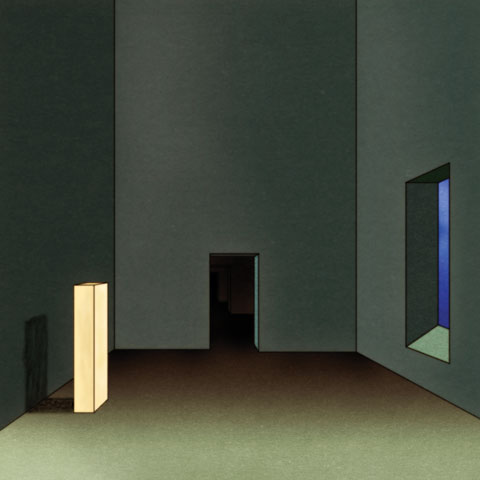
The Birthday Party – Junkyard: Round 64 – Tom’s Selection

1340222282_the_birthday_party_-_1982_junkyardWhereas most decisions as to what to take along to play to my friends at our evenings have been made in good enough time to ensure that the preceding days, if not weeks, have been spent immersed in the forthcoming offering, somewhat appropriately, Junkyard received its first airing in many years when I placed it on Rob’s turntable last Tuesday. You see, there’s only so much of Junkyard I can take. I think it’s a brilliant record, of course, but, for me, it’s such an uncompromising and exhausting listen that once every so often is enough. It made for quite a refreshing change as I was genuinely intrigued to hear The Birthday Party’s sophomore release again, wondering whether it would be as bludgeoning, scabrous and downright irreverent as I recall or if time and age had gone on to lessen its impact. I am pleased to say that, as far as I am concerned, Junkyard remains in exquisitely rude health, still sounding like a descent into a particularly troubled version of hell.

For those of you not in the know, The Birthday Party were (along with The Saints) the progenitors of Aussie punk but where as The Saints made a relatively straightforward, Stooges-a-like mess of a maelstrom, Nick Cave and his mates gravitated towards a much more angular and dysfunctional sonic space, cacophanous…sure… but, just like their lead singer, spiky, lean and menacing. In other words – post-punk as opposed to punk.

Junkyard has such a thin sound that at times it almost sounds like the feedback screech on Psychocandy…except there isn’t a whiff of feedback on this record just a lot of bottom, a gigantic helping of top and very little in between. What makes Junkyard so interesting is also what makes it so hard for me to listen to. It’s all about extremes – not only do The Birthday Party push the sound to the limit, Cave’s ‘singing’ veers from holler to deathly grumble and back again; always unhinged, often apoplectic, you hope for Cave’s sanity most of these vocal performances were single takes! Lyrically Junkyard pulls no punches. Right from the off it’s obvious Junkyard is going to cover some pretty radical and original territory. Who knows what came first, lyrics or music, but rarely have they complemented each other so perfectly. Take the funeareal eeriness of first track, She’s Hit, which sets the album’s stall out with the classic opening lines of: ‘There is woman pie in here. Mr Evangelist says she’s hit’. It is clear that even at this early stage of his career, Cave was travelling parts of the thesaurus other song-writers had yet to traverse. As opposed to more recent offerings from Cave, there’s no tenderness or melancholy here – Junkyard goes for the jugular with a length of barbed-wire and doesn’t let up until those barbs are well and truly embedded.

Although Junkyard turned out to be The Birthday Party’s swansong, it is surprising how much of a team effort Junkyard is. All members of the band are credited as song-writers yet there are no obvious cracks in Junkyard’s assault. So whilst Dead Joe, Big Jesus Trash Can, Kiss Me Black and Hamlet (Pow, Pow Pow) pummel their point home, 6″ Gold Blade, Seven Sins and Dim Locator aim for the same effect but get there in a more insidious and unnerving manner, their wiry guitars enhanced by some fantastic low slung bass runs from the unhinged hips of Tracey Pew. Final ‘song’ the eponymous Junkyard, is an incredible beast. To me, the song is the sound of a swinging guillotine heading towards the unsuspecting listener, the sound of The Birthday Party coming to finish off what they began those 40 long minutes ago. Is it any surprise I don’t listen to Junkyard all that often?

Rob listened: There’s probably some way to work out which artist you are most committed to. Number of albums owned is too crude. Percentage is simplistic and flawed (I own 100% of the albums released by Crunt, but only 25% of the albums Bob Dylan has managed so far). There must be some way to balance how long and how deeply you’ve stuck with an artist. If only we have a mathematician in the group.

Anyway, statistically speaking Nick Cave would probably sit atop the heap for me. I own all his records with the Bad Seeds and, so far, he’s given me no reason not to rush out and get whatever he releases next. Much of Tom’s description of Junkyard is like a dog whistle to me, scabrous swamp punk with a hollering madman beating his face into and through it. Give me more. However, like Tom, I rarely reach back for ‘Junkyard’ or, indeed, most of the first two or three of Cave’s records with the Bad Seeds, all of which still exhibited the pull of the Birthday party’s undertow. It’s not that I dislike them, far from it. The sound and the fury of these records are things I look for in new discoveries still, but I still find it hard to approach them in someone who is, as we have mathematically proven, one of my favourite artists. I’m going to conclude that this is down to nothing more than the sheer breadth of Cave’s body of work giving so much territory to spend time in that I just happened to have settled in the latter half. I genuinely believe him to be an artist who has got better and better, more and more relevant and impressive as the years have gone on, and so I feel fine sticking around West of ‘Tender Prey’. I love those oldies them when I hear them though, and I loved hearing ‘Junkyard’ once more this evening.

Graham listened: Didn’t feel quite so old this week when Tom sprung this one on us all. 32 years later it is still the sonic assault I remembered, a dangerous currency shared only between those of my generation willing to experiment with such stuff. The bass lines are fantastic and the guitar sounds unworldly. Glad to be refreshed with it again, but not sure I need it again for good long time!

Nick listened: I’d never heard this before, and it did pretty much what I was expecting. Enjoyably chaotic and discordant.
Deafheaven – ‘Sunbather’: Round 64 – Rob’s choice

Deafheaven - SunbatherWe’ve talked about black metal before, haven’t we? Let’s recap. I’m attracted to the sound like a moth to a cold flame. I’m repelled by the cod-Lovecraft imagery and look-at-me-being-icky-and-dicky lyrics and artwork. Not, let us be clear, because they strike a chilling blow to the very heart of what it is to be human in an inhospitable universe, but because they are very silly.

But there’s another way. There are a number of bands out there making interesting, creative black metal as open and exploratory as the best post-rock, as bracing as a hydrofluoric acid power shower and, crucially, laying off the schoolboy horror flick schtick. We say ‘hello’ to An Autumn For Crippled Children, Alcest, Botanist, Locrian and Have A Nice Life. Most prominently over the last 12 months, we have San Francisco’s Deafheaven.

This is a band who sound exactly like what they say they are: a black metal outfit who grew up loving Slowdive. Half their songs could be mistaken for a severely beefed up Cocteau Twins, albeit one where Liz Fraser has a really, really bad case of tonsillitis. In a hurricane.

‘Sunbather’ is their second album, and easily the most prominent cross-over metal record of last year. I’ll be honest, I don’t know a great deal about the ins and outs of the BM scene, but it does seem to have a totally schizophrenic relationship with its artists, one which touches on subcultural xenophobia whenever any of them threaten to escape from the crypt and out into the sunlight or, even worse, to bring outsiders back into the darkness with them. Deafheaven did both last year and, like Liturgy before them, have had to put up with constant examination of their ‘metal’ status as a result. Black Metal: the scene which loves to scream about total physical and spiritual annihilation, but won’t countenance you if you have a pink album cover.

’Sunbather’ is a great rock record. Essentially four long tracks with three, often beautiful, counterpoint  interludes, it has searing guitars, pummelling double-kick drums and yes, a guy screaming his lungs sore, although in this mix the vocals are essentially just another caustic sound to throw into the mix. But within the noise there is light and shade, colour and contrast, motion and intense emotion. Deafheaven aren’t afraid to pause, to gaze at their shoes and take their effects pedals for a couple of laps around the stratosphere. It’s a thrilling and, after a while, an apparently entirely natural combination of influences and they pull it off to epic effect. The album is mesmerising and convulsive whilst remaining reverential and even warm in tone for long stretches. The longer you live with it, the more it starts to become a soaring chamber-noise record, a la Godspeed You! Black Emperor. It’s dynamics are pure Slowdive, its details full of warmth and touch rather than dread.

If Deafheaven are sneered at by the corpsepaint gloom brigade as being ‘hipster metal’ then fine. If that means people will find them and their ilk via Pitchfork and The Quietus then great, because I read those websites and I want to find new, bold music which takes accepted forms and twists them into new shapes. And which rocks. So, I guess I’d nail my flag to the hipster metal mast. That’s because I like a lot of the music that idiots choose to nail that label to and also largely because a fair proportion of the DNA of the rest of black metal is completely stupid.

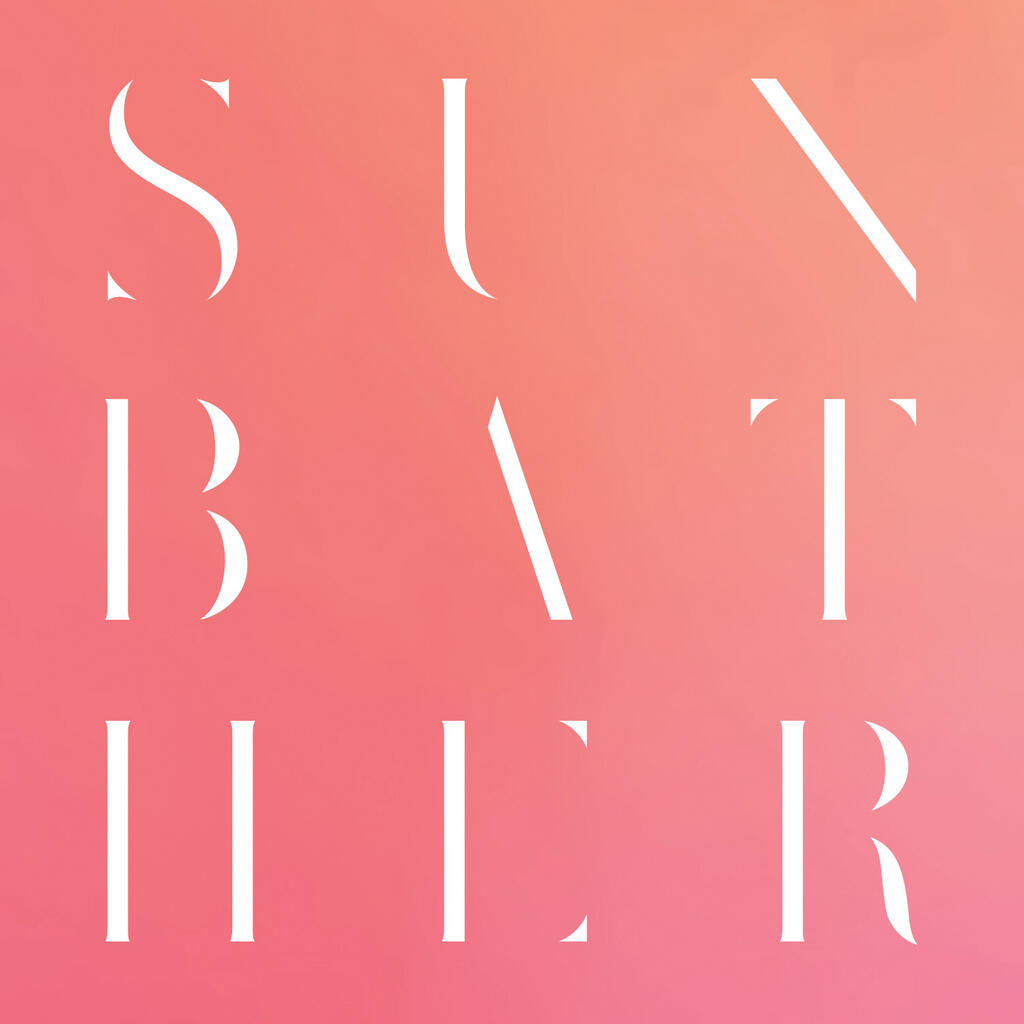
Nick listened: I strongly suspect that I am absolutely the kind of bearded, glasses-wearing, cycling, real-ale-drinking, boardgame-playing hipster douchebag that fans of ‘real’ ‘metal’ get upset about for liking this record. But I’ve kind of avoided it, partly for that reason, and partly because, despite the embrace of it by said hipster douchebags, there are still a couple of key sonic ingredients to this record (from the tiny snippets I’d heard before last night) that I absolutely cannot stand – firstly, the screaming vocals, and secondly, the ridiculous, relentless, contourless drumming, both of which seem to be absolutely essential to whatever-it-is that defines ‘metal’ (of the modern variety?) from ‘rock’, or whatever. So I’d picked up Sunbather and thought about buying it on numerous occasions, but never gone the whole way to the counter with it, despite the fact that I adore the graphic design (that font; that colouring – it’s meant to be the colour you see when you face the sun with your eyes closed, Rob tells us) and love the look of the physical object that is this album (obviously the CD is better looking than the LP). But I know it’s going to be full of screaming and ridiculous drumming. The question is ‘how much’?

By the end I was quite enjoying Sunbather, despite, rather than regardless or because of, my misgivings. The screaming and drumming still faintly nauseates me, but the vocals are mixed so that they’re not all that prominent, and the drumming isn’t quite constant. The lighter, airier passages that follow the cacophonies felt like beautiful contrasts – somewhere between shoegaze, postrock, and miserable acousticana – because that’s what they were, and the juxtaposition made them shine. I also suspect it made them seem far more phenomenologically beautiful than they actually are; so ugly are some of the other parts that by comparison almost anything else would feel warm and beatific, even if they’re actually just bog-standard postrock reveries and shoegaze plateaus. But that’s the politics of intimate genre familiarity.

I’d definitely like to listen to this a couple more times and ascertain further what I think and feel about it, because I’m totally not sure thus far. But I’m delighted that Rob blasted it at us.

Tom listened: Hmmm…once again Rob has opened the floodgates of debate, both in the real, and virtual, world…simply by bringing an album that straddles some of those genre boundaries we are so keen to erect. I suppose the boundary surrounding metal is a pretty robust one and it has, to my (admittedly scant) knowledge, rarely been breached. So Sunbather got us all talking and, I for one, find the conversation fascinating.

And it got me thinking more about my relationship to the genre than about the music itself. Why can’t I stand metal? And what binds ‘metal’ as a genre. What does this have in common with Def Leppard and what does that have in common with Anthrax and what does that have in common with Sunn o)))? Because they all have something that produces the same response from me and that’s to run away. In his lengthy response to Rob’s post, Chris states that metal has a strict sonic template…well, can you describe it because, whilst I am sure it exists, I can’t put my finger on what it is? That’s why Deafheaven is so interesting – remove the vocals and (to a lesser extent) the drumming and what’s left would be something that I would enjoy hugely. Listening again since Record Club, even the noisier bits remind me of Red House Painters and I could listen to them until the cows come home. So is it really just a screaming vocal that is putting me off or is there something more subtle at work that I haven’t managed to identify? For now I’ll ponder the answer and wait for that nice Mr Kozalek to do his Deafheaven covers album.

Graham listened: Doubt a numpty like me can add anything to the debate that this has inspired. I’m tempted to explore some more ‘metal’ crossover points, just to see where Tom’s fear and loathing begins and ends though. Back to this for a moment. I began enjoying it, then the drumming got on my nerve endings. I didn’t mind the vocals and started enjoying until yet again until the bloody drumming got my back up. I’ve streamed it a few times since DRC and still feel much the same way. I probably want them to explore the guitar sound further and leave the percussion and vocals behind. They surely won’t, so it will remain troubling. ps I’m no ‘hipster’!

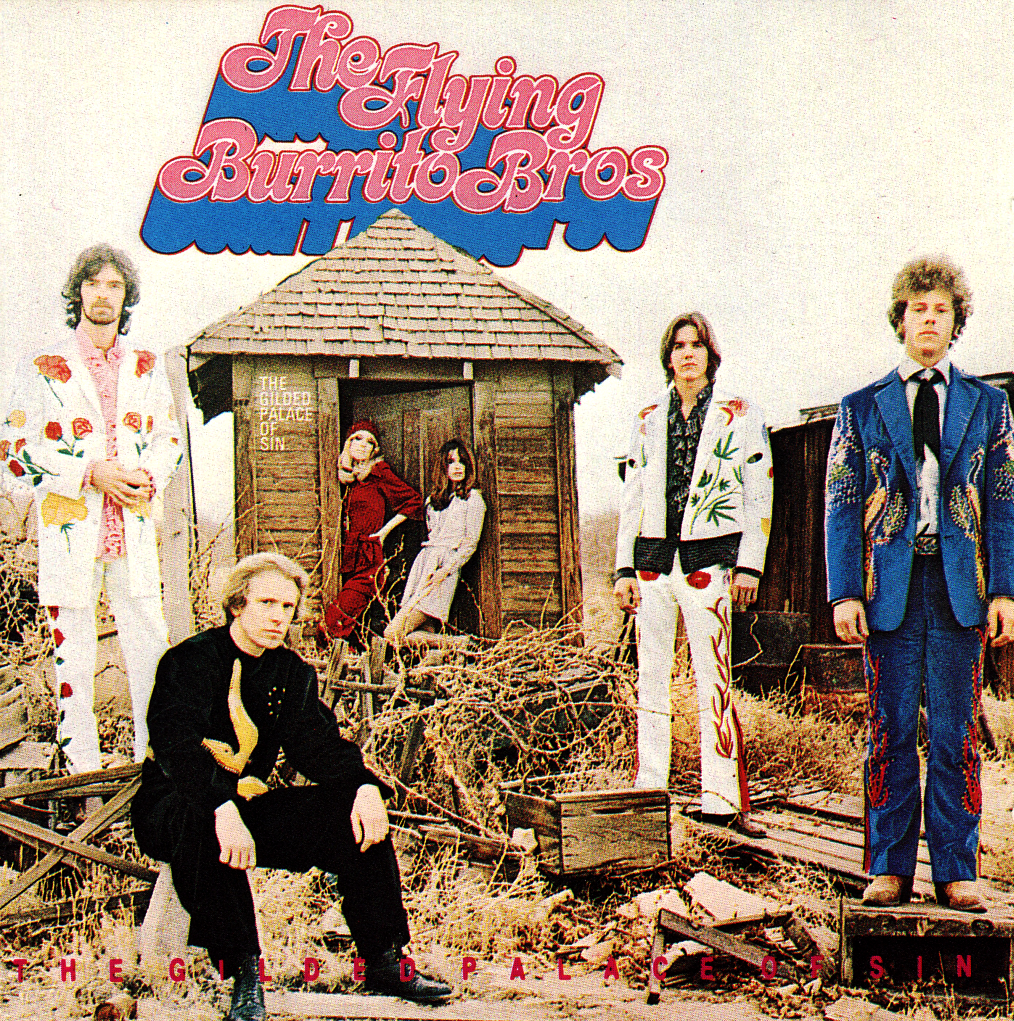
The Flying Burrito Brothers – The Gilded Palace of Sin: Round 63 – Tom’s Selection

The-Guilded-Palace-of-SinFirstly, I should come clean. The Byrds have never quite done it for me. Capable of veering from the absolutely sublime to worse than ridiculous in the space of a couple of seconds, they released a slew of almost, but not quite, great albums in the mid to late 60s, somehow managing to remain vital (to a point) despite multiple line up changes and alterations to their sound. Listen to All I Really Want To Do followed by Chestnut Mare if you don’t believe me – barely the same band…and it sounds like it! Which one you prefer is largely down to whether you prefer jangle pop or country and western inflected rock music. If you’re Nick the answer should be neither but I suspect the superior quality of early Byrds’ jangle pop is just sufficient to ensure that the former track avoids the broad brush he is keen to apply to both genres.

As with many bands, somewhere along the road something magical occured and with the Byrds most people seem to particularly revere their last two psychedelic albums – Younger Than Yesterday and The Notorius Byrds Brothers. They both contain more than their fair share of magnificence. But, by the same token, they both contain at least one drastic misjudgement of taste that leaves me wishing for a digital version of the album – they would definitely benefit from having some of those 60s excesses trimmed off the edges (Mind Gardens and Space Odyssey – I’m looking at you!). And how could they have passed Lady Friend by – a pearl of a track that only saw light of day as a single. They really were a little crazy back in the 60s!

For me, however, the zenith of Byrds related output (having never managed to acquire any of Gene Clark’s admired solo output admittedly) is the first Flying Burrito Brothers album – the Gilded Palace of Sin. Only loosely connected to The Byrds (late comer Gram Parsons and original member Chris Hillman comprise half the band), The Gilded Palace of Sin takes up where Parson’s sole Byrds album, Sweetheart of the Rodeo, left off. But where as Sweetheart is a more or less faithful set of mainly country and western standards, The Gilded Palace of Sin sounds more confident and more aware of what it is trying to achieve – an attempt to fuse the psychedelic sounds of prime time Byrds with the earthiness of more traditional American country folk music.

You don’t have to listen long to hear examples of this. First track, Christine’s Tune, storms along in a blur of nimble bass playing and pedal steel. However, the guitar break that follows is something else, rich in reverb it wails its way through the remainder of the song – although this is ostensibly an album that looks back to american roots music for its inspiration, there is enough that’s different to suggest that this would become the blueprint for a new approach to making music, a coming together of old and new in a way (although Nick will contest this point) that might not have been done before. Certainly, I know of no song that predates Christine’s Tune (or Wheels or Hot Burrito #2 for that matter) that mixes old and new so obviously and, arguably, so effectively.

But whether you like The Gilded Palace of Sin or not depends largely on how you feel about Country and Western – this is not a rock album with a bit of pedal steel over the top, this is a collection that digs deep into the great American songbook, an album that at the time of its release pointed the way to the future by looking way back in the past.

Rob listened: Tom’s right to point out the placement of this record in the development of some of the dominant strains of western music since the early 70s. I’m in no position to pronounce on it, but it feels right to say that there was little or no music before this time that had blended traditional American folk and the great American songbook which had dominated the preceding half century, with the heady possibilities opened up by the then raw and recent rift created by pop and rock. The trick now is to hear this as a startling departure, rather than simply an antecedent of the 40 years of pop and country which followed. Some trick if you can pull it off. My advice is don’t bother, it’s impossible.

Instead spend time with some great songs and feel the commitment and confidence of the young men who were shaping them from the raw earth around them. Sure there are hackneyed things on here, but time will do that. There’s still lots of stuff that sounds pretty fine to my ears.

Graham listened: I have a huge hang up with anything with more than a hint of C&W that means I struggle to take the listening seriously in case I should decide its ok to go and do the shopping in Asda wearing a Stetson and cowboy boots. If I overlay the Osmond analysis as a tool to explain http://www.youtube.com/watch?v=_AfXznngjGw Tom is able to lean towards Marie, whereas I’m more comfortable with Donny. Not that I didn’t enjoy the listen, its just a genre I wouldn’t reach for myself.

Nick listened: I quite like The Byrds, but the stuff I like is the psychedelic and jangly pop material they produced circa 65-67. As soon as the spectre of Country reared its head, I switched off, and I certainly didn’t investigate when some members of The Byrds pursued those avenues further. I have no fascination with the American midwest, I don’t like Westerns as a genre of film, and I don’t like Country as a genre of music; I could try and analyse why but to be honest I’m not that interested in doing so – I just instinctively disliked both since I was a kid. This was alright, as an example of something I don’t like!

Neneh Cherry – Blank Project: Round 63, Nick’s choice

neneh-cherry-blank-projectIn many ways Neneh Cherry’s first solo album in 18 years (since 1996’s Man) is almost as much of a collaboration as her excellent 2012 record with Swedish free jazzers The Thing; the difference, and why this is being referred to as a ‘solo’ album I guess, is that Neneh wrote the ‘songs’ for this (‘songs’ in scare-quotes because ‘what is a song?’), whereas most of The Cherry Thing was covers (plus one tune each by Cherry and Thing-leader Mats Gustafsson). Small differences.

Anyway, Neneh wrote the songs for Blank Project, and then sent the vocals – with nothing else at all – to London-based sort-of-jazz duo (and Four Tet collaborators) Rocketnumbernine (synthesizers and drums), who wrote the music around it. Four Tet, under his actual moniker Kieran Hebden, ‘produced’ the album, which seems to have caused some discombobulation; because Kieran is best known under his Four Tet guise for making jazz-inflected dance music, people seem to have assumed that his ‘production’ role here is equivalent to, say, Timbaland ‘producing’ a Missy Elliott album, i.e. that he built the tracks up entirely himself and Neneh just sang over the top. (Not, from what I understand, that this is how Timbaland and Missy work together anyway; I gather they’re far more collaborative than that.) The fact that Neneh comes from a soul / hip-hop / dance background (never mind the jazz and new wave and postpunk background she also has with, say, Rip Rig And Panic) is another signifier that people will make shorthand mental assumptions from; because any time a black woman and a white man work together on a musical project it absolutely must be the case that the white man has all the agency, according to rockist narrative.

Hebden has been eager to explain via Twitter that this is not actually the case at all, and that he pretty much just pressed ‘record’ in the studio. Anyone who’s heard his production work with other people, such as James Yorkston or Omar Souleyman, will realise that Hebden’s actually a pretty transparent presence at the controls. And, y’know, he produces under his own name, rather than as Four Tet, which seems to be a specific and distinct creative outlet, so I assume he sees them as different jobs, rather than producing other people as a chance to drizzle ‘Four Tet magic’ over someone else’s songs (though that might be interesting too). There are, of course, all sorts of questions I could go into about ‘what is record production?’ and the difference between engineering, producing, mixing, and so on and so forth, which I find fascinating, but I’ll spare you.

Anyway, Blank Project (the name essentially a working title from what the project was called in whatever software they used to record it) is fabulous; it consists entirely of vocals, drums, and synthesizers, and has a really light, minimal, almost improvisational feel that I really love. Rocketnumbernine are ostensibly a jazz duo, in some ways, and given Hebden and Cherry’s involvement and love of jazz this sense of spontaneity makes perfect sense, even on an ostensibly ‘pop’ record. The sound is wonderfully open and rich, the drums and synthesizers each allowed acres of space for their textures to shine through, and there are some great hooks scattered across all the songs. The whole thing is amazingly rewarding to listen to; the lyrics are darker than you might think at first listen, with several songs dealing quite bluntly with depression, and whilst Neneh sometimes relies on borderline cliché phrases, that fits the aesthetic perfectly. A brilliant record, however you look at it.

Rob listened: There was spirited and, from my end, relatively uninformed debate about this record as it played. I got quite animated without any sharp points I was able to articulate. Nothing new there. However I’d clearly missed the part of Nick’s introduction which actually, now I read it in his write up, nails precisely my problem with this album.

I’ve listened to ‘Blank Project’ quite a few times over the last couple of weeks. It’s been recommended from several different angles, including Nick who rated it the pick of a week which also included new records by Wild Beasts, St Vincent and The Notwist. I like a lot of it, specifically the gripping underpinning from Rocketnumbernine which seems rich both in detail and feeling. But there’s something I don’t like about it. As the others will attest, I know what it is but I haven’t been able to put my finger on why it doesn;t work for me. Put bluntly, it’s Neneh Cherry. I think she’s a fine artist who gets more and more interesting with each passing project. The problem here is that I don’t think her voice works on this record. Which is an arsehole’s thing to say, because it’s her fricking record.

I tried in vain to explain that there seemed to be a gap between her singing and the rest of the music. The others either couldn’t hear that, or didn’t think see it as a problem. I tried to postulate that her voice was neither good enough or bad enough to be interesting enough to match what was happening elsewhere. The others disagreed. I attempted, briefly, to point out parts of the record where the vocals just sound like they are straining, unable to get out of a middle range and into the places the songs need them to go. Who cares, they said? Normally I would agree.

However, reading Nick’s write-up and recalling his introduction on the night, I see the problem put clearly. A detail I’d missed. This record truly does sound as if the vocals were recorded in complete isolation and then mailed off for someone else to make music for. For me, there’s just a big disconnect. The music would be better with different vocals and the vocals would be better against different music. Which sounds stupid too, as normally a sense of disconnection, of poor fit, of wrongness, would only add to my enjoyment. Not in the case of this record, which I’ve listened to again this evening, for about the 7th or 8th time, and continue to enjoy. Apart from this one thing…

Graham listened: It didn’t get quite as much to me as it did to Rob, but I was also aware of some kind of distance between the music and the vocals on this album. I found the instrumentation, rhythms etc really engaging and she sounds dandy as a vocalist, but something didn’t quite fit. It sounded fantastic on Nick speakers but maybe that exposed the degree of separation that Rob better identified and Nick has given us an insight into. Probably would just sound more joined up in the car or less capable hi-fi and could move on to just enjoying the listen.

Tom listened: My relationship with Neneh Cherry never got off first base – obviously I know Buffalo Stance but beyond that I am pretty much unaware of her recorded output and have certainly never listened to one of her albums before.

I liked it…I didn’t have the same problem with it that Rob (and to a lesser extent Graham) had and thought that both elements of the music sounded really good, fresh and sharp; it kept reminding me of the more soulful stuff on Bomb The Bass’s mid 90s album, Clear, but with more dynamism and greater emotional heft vocals-wise. However, there was something about the clinical nature of the music that slightly put me off…I prefer things to be a little scuzzed up and messy around the edges and Blank Project seemed to be almost too well produced for my tastes.

The Jesus Lizard – ‘Goat’: Round 63 – Rob’s choice

The Jesus Lizard - GoatBen’s girlfriend Michelle gave me a tape of ‘Goat’ in 1991. I was scared of it. Scared of the name really. A prim and proper child by instinct, I was working my way out of my shell with help from William Burroughs, Public Enemy, Pussy Galore and Hunter S Thompson but still, The Jesus Lizard, raving out of Austin, Texas, sounded like a scary proposition. As it happens, they didn’t actually sound quite as trangressionally extreme as I might have anticipated, but to be fair neither did they come across as the sort of chaps you would want to hang around with much past sundown.

The music hit a sweet spot from the moment the opening track ‘Then Comes Dudley’ lurched into life. Grumbling gut-punch bass, ominous and insistent drumming, sharp and nagging guitars.

You’ll know within 15 seconds whether this band is for you, and they certainly were for me. There just something about the combination of heavy bass and unhinged guitars that acts like a dog whistle to these ears. Only much lower. I think I might happily trade about 15 years-worth of my record collection for another 8 or 9 records that did to me what ‘Goat’ still does, ideally in exactly the same way but, you know, new.

Now, bear in mind that if you really have formed your opinion within the first 15 seconds, you haven’t yet been introduced to David Yow.

The Jesus Lizard’s vocalist and frontman is, in some sense, both your worst nightmare and the coolest kid in class you’re secretly hoping will think you’re cool too. In another way, I guess a more meaningful way, he’s the guy who works at the slaughterhouse who all the other guys that work at the slaughterhouse are a bit scared of.

His vocals are as deranged as his live performances used to be. They swing around the concept of melody like a rabid orang-utan on a climbing frame. Half the time he sounds violently drunk, which it’s possible he was. He certainly built a reputation for being loaded and explosive on stage. I saw The Jesus Lizard play a tiny venue in Manchester in the early Nineties and Yow came over as nothing less than a new Iggy Pop, only psycho, flinging himself at the crowd (as opposed to ‘into the crowd’), his performance was some sort of bare-knuckle self-flagellation, like nothing I’d seen before or since.

If all of this makes him sound like an unlistenable lunatic, think again. In fact his vocals, swooping, hollering, yelping, are just a quarter of the band’s noise, a noise made up of elements which don’t so much compete against each other as fight and kick and scratch like cats in a sack. All four elements sound totally crazed but are performed with incredible self-control and, essentially, virtuosity. That they hang together so well is a miracle, producing all the slack-jawed wonder that word should invoke.

Take ‘Mouthbreather’, a hurly burly buzz saw of a track. Ravenous guitar meets tub thumping drums, they wrestle each either to the ground and proceed to roll down a bumpy hillside together, throwing punches all the way whilst Yow intones “don’t get me wrong, he’s a nice guy, I like him just fine… but he’s a mouthbreather”.

‘Goat’ is more focussed than their first album proper, the wild-eyed ‘Head’, and therefore somehow more menacing. Still, it retains the heavy madness that would be lost in subsequent years as the sound became more focussed. It’s the band’s high-point and, for me, a high point of the inspirationally unhinged post-punk noise that was being made in the last 80s and early 90s. These bands seemed to be rending open access to hitherto unexplored worlds of primal, blissful rock and roll, and for the relatively brief period where their imaginative reach exceeded their technical grasp, before musical competence caught up with them, they were making some of the most thrilling sounds of the last 50 years.

Graham listened: Rob has an uncanny knack of digging out albums that remind me of how exciting music can be to ears that have not been subject to years of acquired cynicism. Direct as can be with touches that sound like they are not going to work together, but pull it off in a stripped back sort of maelstrom. However, I would certainly cross the street if I heard Mr Yow coming towards me.

Tom listened: Having seen Jesus Lizard back in the day – at a Reading festival in the late 80s or early 90s – I was very pleasantly surprised by Rob’s offering. The contrast between the impact of carefully listening to Goat on a good stereo in a limited space with watching David Yow flail around on a stage hundreds of meters away in broad daylight as the sound gets lost to the elements and the crowd get increasingly apathetic is massive. At Reading, all I was left with was a memory of unstructured noise and a diminutive, bare chested man wailing away like some sort of demented despot stuck in one of those bad dreams where the louder you scream the less people listen. The recorded version of the Jesus Lizard experience revealed a wonderful album full of twists and turns and soulful rawness. I thought it was really good.

Nick listened: I own this! I’ve only listened to it about three times, but it’s pretty awesome, in a faintly brutal way. Very happy to hear it again, especially enlivened by Rob’s deep affection and context for it (I bought it many years after it came out, with no context other than ‘this is a good record’, which often isn’t quite enough to understand the whys).

Real Estate – Days: Round 62 – Tom’s Selection

Real-Estate-Days-630x630_jpeg_630x630_q85-450x450Having just endured the worst (unless you’re a duck!) winter since time began – endless rain and punishing storms interspersed by spells of mild, dreary dampness – music has become the antidote. Xmas and beyond was salvaged by the bright iridescent hues of the eponymous John Wizards album which in turn passed on the musical baton in early February to what has become an almost obsessive re-appraisal of Real Estate’s second album, Days.

I find myself surprised and a little coy at the depth of my feelings for this record – a record by a band with a frankly awful name; a record which itself has a pretty uninspiring name; a record that sounds as out of touch with the zeitgeist as The Grateful Dead did in 1977; a record so polite and edgeless that if you took it home to meet your mother, she would be signing the adoption papers before the end of side one. Indeed, I almost didn’t buy it all, convinced as I was that the last thing I needed at the time was more jingly jangly indie pop fodder (I had already bought Real Estate’s first album which I found to be annoyingly inconsistent and ultimately somewhat underwhelming). However, a combination of a good showing in the 2011 end of year lists, a very effusive shop vendor and a paucity of other possibilities convinced me that Days was worth a chance.

So I bought it and liked it well enough from the get go. It has always been one of those albums that has been an easy choice. As soon as first track, the appropriately named Easy, hits its straps I know the next 40 minutes are going to be enjoyable, relaxing and comforting. And that’s just what the doctor has ordered of late.

I’m not quite sure what it is that Real Estate do so well which, perhaps, latter day Shins don’t, as the differences between the sounds of the two groups are not all that marked. But there is something there! On the face of it this is a very conventional and undemanding record – ten songs, five on each side, sprightly guitars, great playing, a singer with an unremarkable but pleasant enough voice, lyrics that just sort of float by. For the first year or two, it was the melodies that I was drawn to and they’re great, but that in itself is not enough to explain why Days is so revered. So for a (long) while I was very happy to spend time with the record without really ‘getting’ it.

However, as my attention towards the record deepened this Spring I began to appreciate aspects of Days that I had previously overlooked – particularly the atmospheres of the songs which are imbued with a melencholia that floats through the album with the lightest of touches. I now find it almost impossible to listen to Days and not create an image in my mind of the sun setting over a millpond sea at the end of a perfect day. And that’s a pretty good place to be taken to as the horizontal rain lashes against the windows and the fences in the back garden give up their fight against gravity as yet another Winter storm threatens to extinguish the smouldering embers of our last hopes and dreams.

Rob listened: Wow. I skim read Tom’s piece and thought he’d decided to review that Sunn O))) record again.

I’ve spent quite a bit of time with this record since it came out, most of it only half engaged, but it’s something I reach for time and time again. I couldn’t tell you whether there is hidden melancholy. Come to think of it, i’m not sure I could tell you a single lyric from the whole album, despite having played it dozens of times. But it’s extremely pleasant, both in and of itself and as an evocation of lots of the music I used to wallow in during the late eighties. It feels almost deliberately formulated never to change anyone’s life, but there’s nothing wrong with that, and who knows? Perhaps it’s sneaking up on me as I type.

Nick listened: Oh, jangle-pop. I think someone once told me that The Stone Roses’ first album was jangle-pop. It’s not, even if some bits of it bore some vague relation to jangle-pop. (And “Sally Cinnamon” was about 50% jangle-pop, way back when.) So I’ve always been disappointed by jangle-pop, because the bits of The Stone Roses that I liked were the bits they nicked off Simon & Garfunkel or funk or Led Zeppelin or The Clash, it seems. Anyway, this was nice enough, in a jangle-pop way. It reminded me a little bit of late-period Teenage Fanclub, when the Neil Young solos and post-grunge noise had given way to lovely harmonies as far as the eye could see, and they sounded like I image morphine feels when you’ve had a kidney removed.

Graham listened: Completely washed over me in the very nicest of ways. I would have to find the right time and place to properly savour that feeling again but Tom has promised to give me a glass of cold white wine on the beach soon, and we’ll dig our toes in the sand and watch the sun go down together.

R.E.M. – Life’s Rich Pageant – Round 62 – Graham’s Choice

Lazy choice or back by popular demand afterMI0000031733 one track aired in last round? Probably a bit of both, spurred on by Nick reminding everyone he was still in short trousers when it came out.

After my turning point/guilty displeasure/downer on ‘Green’ many rounds back, I almost felt obliged to bring along the album which made me think R.E.M. were the most important band in the world when they released their 4th album in 1986.

Perhaps care free living and youth, adds rose-tinted memories to how I remember this sounding, but it stills sounds great to me today. Its the album I wanted them to make after the awkwardness of ‘Fables of the Reconstruction’ and they pulled it off magnificently.

Everything points to increased confidence in playing and Stipe’s vocals coming far more to the front of the sound. You start to get inklings into what an amazing vocalist he could be as he is not afraid to almost carry whole tracks with his voice.

They can rock out subversively, ‘Begin the begin’, ‘These days’ and  ‘Just a touch’. Go quirky, ‘Underneath the bunker’ and ‘Superman’. Get sentimental and sensitive with much of the rest of the album. In retrospect it does sounds somewhat stereotypically ‘jangle-pop’, but there is still so much variety and content bursting out it ticks so many boxes for me.

I wasn’t worried about how influential they probably were, as at the time I just wanted another album by them. Thankfully with ‘Document’ they delivered one last piece of glory.

Rob listened: ‘Green’ was my first REM record and I stepped back to ‘Pageant’ after spending a lot of time with the two albums which followed it. So for me it represents a warming and loosening of the hard-edged bite of ‘Finest Worksong’, the machine-tooled melody of ‘Exhuming McCarthy’ and the breathtakingly confident nouveau-pop of ‘Stand’. So, I loved it. ‘Begin the Begin’, ‘These Days’ and ‘Fall On Me’ seem about as good a way to start a record as I can imagine. ‘Swan Swan H’ and ‘Superman’ are pretty much perfect closers. All the stuff that goes in between is almost as good.

Tom Listened: Green was also my point of entry into REM’s work and I too worked back from there but, despite now owning all bar Document of REM’s first six albums, Green is the only one I’ve actually purchased. I guess that says something about my feelings for them – I like them…a lot…but they have never quite set my world alight in the way some other bands have.

The closest they have come to this is on Life’s Rich Pageant. As I stated in my comment last time, I listened to it a lot at uni but must have lost the cassette it was on because I literally hadn’t heard it for 20+ years. For some reason, since we’ve been doing this thing and I’ve been going back through my collection in search of nuggets from my past, those records that have led to the greatest disappointment have usually been the ones I enjoyed  most at the time. Maybe I was just after something different from music way back when; maybe it’s that I now feel I’ve worked the records out and there’s nothing left to discover from them; maybe they were records that ‘fitted in’ better with the time they were released and so have aged less well…I don’t know. As a result I was intrigued to hear LRP – I recall it being wonderful, bright and breezy, a bit rootsier/folkier than what was to come later and a bit poppier and less obtuse than what came before. It still sounded fantastic and I am very grateful to Graham who passed on his spare copy to me…it’s gone to a good home!

Nick listened: I’d not heard this before, because I was seven when it came out, and, y’know, you can’t go back and hear everything. Unlike everyone else around the table, Automatic for the People was my first contact with REM, which means my perception of them as a band is very different indeed to Graham’s, Tom’s, and Rob’s. I quite enjoyed this; it was surprisingly muscular, and not very jangle-pop (I gather they were mean to be quite jangle-pop very early on?). Every time the other guys talk about REM I have to clarify the timeline, and where in their catalogue whatever record they’re discussing falls, because I seem to have some kind of blindspot there. They’ll never be my band, but that’s fine.

Embrace – Embrace: Round 62, Nick’s choice

EmbraceTom accused me of dangling the ‘Embrace carrot’ at Record Club last time out, so I thought this week, sans theme, I’d hit him with the ‘Embrace stick’, and play the whole of their new album.

I’ve written about my weird relationship with this band at great length in other corners of the internet, so I shan’t bother going into it all again. I’ve also written thousands of words just about this record already, and listened to it about 40 times, which is just nuts. I think I’m insane when it comes to this band. Oh well. I’m very happy to be so; sometimes it’s brilliant fun and very rewarding. Other times it’s annoying and confusing. Oh well.

Embrace will always write ‘big’ songs, and some people will always hate that; that’s OK. People literally just hear music differently, as we’ve established here over the last three years. This record is stuffed full of mammoth choruses and chewable melodies and middle eights and hooks and sonic touches that draw on everything from post-metal to dubstep to stadium rock to New Order and a whole load of other stuff. It’s not the kind of record that lends itself to a record club listening context; any ‘aesthetic contemplation’ comes a little later on, after the tunes have embedded themselves and you can unravel them; also, for me, it packs a massive emotional punch that just wont exist for some other people. I’ve done a lot of unravelling, and this is an amazingly well produced record; it sounds utterly fabulous in how it’s mixed and mastered, unlike pretty much any mainstream rock record I’ve heard in years (and unlike most ‘alternative’ records, too, for that matter).

Anyway, as well as choruses and melodies and middle eights and hooks, they’ve added a host of synth and dance sounds to their palette; keyboards have always been prominent but never quite like the subdued, droning synthesizer oscillation that begins the opening track (which we talked all over so people probably only noticed the massive chorus and none of the subtlety). They’ve done stuff I always wanted them to do but which they never quite got round to, for whatever reason, and, compellingly, they’ve done it entirely themselves; no record company, no A&R, no producer, no engineer, no deadlines and no budgets. They sound like a new band making a really precocious debut album with a super-producer, rather than a load of 40-somethings who’ve been through the record industry mincer over and over again (unless you pay close attention to the words, perhaps). I’m delighted; I love this record.

Rob listened: I can’t remember all that much about ‘Embrace’, but that’s okay. I’m less interested in this band than I am in the relationships we make with bands and how some weather the storms, remaining strong despite rising and falling tides of critical opinion and cultural capital and others just fall away. I totally get Nick’s feelings for Embrace, and part of that is the acceptance that others won’t feel the same uneven, irrational but unshakeable and ultimately deeply rewarding passion. Who cares? Nick wins.

I can’t tell you too much about the record as we talked all over it and I can’t listen back to it without attempting to find a leaked copy. It sounded okay, some surprising elements, some familiar. I got that sense of a band trying to push themselves beyond their comfort zone and it certainly seemed to be producing interesting sounds at times.

Tom listened: Well, the good news is that this didn’t really sound anything at all like Oasis (thanks to Graham for reminding us just how much Embrace sounded like Oasis on the their first album by playing us a track from it on what turned out to be ‘Embrace’ night). It was much better than that. In fact, I quite enjoyed it, in probably much the same way as Nick quite enjoyed Real Estate. Some interesting ideas, one cracker of a tune about half way through…but, overall, a bit too ‘big’ for me.

Graham listened: I’ll get round to this album in a minute, but I have been ‘stalked by Embrace for some weeks now. They had a mention a few weeks ago and I felt inspired to unearth the ‘Good Will Out’ from its dusty home and gave it a spin. It then followed me in the car and hung around the house for 2 weeks. I enjoyed its celebratory moments but found myself induced into a melancholy stupor by many of the tracks and kept requiring repeated exposure to maintain the reduction in my pulse rate. I have no particular need these days to feel in such a way and I can only be thankful this album remained hidden in the cupboard during last Autumn.

After I played a track at this round, Nick then compounded my predicament by lending me ‘Drawn from Memory’ and ‘Dry Kids’. While I’ve enjoyed the more upbeat/frivolous tracks on both, I have been gorging myself on the deeper ballads. I’ve bought my daughter the songbook for their debut, so I can hear the piano parts on ‘Thats all changed ….’ and the ‘Good will…’ out on demand, well once she’s learnt them.

I never really got the Oasis, Verve, Coldplay etc. references to Embrace, as I never really listened to those other bands. I just thought their debut was a fantastic record and couldn’t understand why more people weren’t excited by them. Strangely I never bought any of the other albums but that will change following recent exposure.

As for this album, having read a little about its long gestation, I suppose I was maybe expecting it to sound a little more “out there”, but I’ll only be in a position to comment once I have a copy and am able to feed my growing ‘habit’.


Oneohtrix Point Never – ‘R Plus Seven’: Round 62 – Rob’s choice

Oneohtrix Point Never - R Plus SevenI like to make my DRC decisions early. Usually within 24 hours of one meeting I’ll know what I’m going to present at the next and will have it on hard rotation for the fortnight running up. This time around I was stumped for a couple of weeks. I felt I wanted something clean and sharp to offer contrast to last month’s Biafrademic and to make the most of Nick’s bright and sparkly set-up, but after 10 days’ scrolling and browsing, flicking and pondering, nothing was pushing its way to the front of the queue.

Step in then ‘R Plus Seven’, a record I’ve been intending to bring since I first heard it and now can since Santa’s elves were prescient enough to bash a copy together for me.

Daniel Lopatin, aka Oneohtrix Point Never, came to prominence self-recording his work on vintage samplers and synths, which he used to create collapsing drones in decaying electronic spaces. His discography is hard to pin down, with a couple of cassette releases and split albums floating about, but ‘R Plus Seven’ is his latest, released last year.

It’s a disorienting house of mirrors. Most tracks come over like six tracks randomly spliced together. Very few have genuine through lines. Most switch into and out of exquisitely composed sections wilfully and with no rhyme or reason. Whilst there are no tracks with any real form of beat (‘Cryo’ and ‘Still Life’ have dubby pulses partly running through them), it’s a record which manages to feel mobile through it’s sheer energy. There are exquisite things going on here with cut up human voices and strings. It’s also full of light and disconcertingly static, as if the listener is walking past a series of unconnected exhibits in a cathedral, each encased in highly polished glass.

It’s an incredible record, in the truest sense of the word. It made very little sense to me on first hearing and it’s almost as surprising and ungraspable on the 100th listen. We speak often – Tom in particular – of difficult records slowly giving up their hidden patterns and structures. I tend to experience, or at least identify, that process less often than the others. ‘R Plus Seven’ gets more and more beautiful with each spin but, somehow, meaning and sense seem to recede ever further into the distance. And that’s one of the reasons I love it. It seems that one of the dominant themes here is dissipation. Track after track hints at some coming coalescence only to drift apart bewilderingly. Nothing goes where you are expecting it.

Take ‘Zebra’ for example. It kicks off with bright, stabbing synths which 20 years of dance music tell us are going to coalesce to be joined by a rhythm track and then generally groove about for a few minutes, possibly building to a climax. But there are other counter sounds nagging away at it, pulling it down. Instead of hitting the dancefloor, after 60 seconds, the whole thing is wiped away to be replaced by choral voices. Then it’s all back 30 seconds later to be joined by a second, underpinning bass synth line signalling ‘hey folks, here we go!’ and then less than a minute later they are gone again. The remainder of the track is a slow, drifting fog within which seems to grate and grind some unknowable machine. Although the perky opening has gone, the possibility of its return creates a seeping tension for the remaining four minutes. Spoiler alert: There is no resolution. The track, you realise, has destroyed itself from the inside whilst maintaining its beauty throughout.

What’s going on here? A rave pastiche? A death allegory?

Even more remarkable than Lopatin’s ability to pull off track after dissolving track, is that he somehow manages to collecting and shepherd these separating points into a meaningful whole. I think that’s profound.

I’ve read several people discussing the record as a paean to the sounds of 1980s home computer sounds. I don’t get that. To me it’s a digital firework display being held in a church, the Internet Age version of someone swinging wildy around the FM dial, splicing together found noises into a jump-cut collage. All of which makes it sound like a piece of art, rather than a piece of music. The miracle of ‘R Plus Seven’ is that it is as intoxicating and compelling as any record I’ve heard recently. I can’t think of a single reason why it should hold together, and that it does just bolsters my admiration for it.

Ultimately of course the binding force is Lopatin’s artistic vision. I can’t conceive of the foundations which underpin this creation. I can’t even glimpse them as I listen and listen again, but they are there. I don’t expect to find my way to them any time soon. In fact, I hope I never do. Whirling my way through this fun-house is way too exciting for me to want to know its secrets.

As a final aside, when I first lined this up as a DRC choice, I would have said it was like nothing we’ve heard before. Then Tom played the John Wizards album for us a few weeks ago. To me the similarities were marked, albeit with completely different aesthetics and means of production. I loved that one too.

Nick listened: Daniel Lopatin is one of those artists who’s been in my orbit of awareness for what seems like aeons, but I’ve never felt compelled to take the leap into investigating his catalogue, or even consciously listened to him as far as I’m aware (beyond one long, pleasant drone track played at the other record club by Jon). Why this is, I don’t know; his records are acclaimed and seem to fall, from what I read, into part of the Venn diagram of my tastes. So I was glad Rob played this. As he suggests, like the Jon Wizards album it did move around all over the shop, which has left me, after one listen, without a sense of how good it is – because I suspect one would need to get to know the contours and juxtapositions and what-happens-next-ness in order to, y’know, pass judgement. The track Rob made us shut up for (“Zebra”) is a case in point; I think it was wonderful, but it was so confounding that I can’t actually recall any of it, despite paying really quite close attention at the time.

Tom listened: It’s funny how differently we hear things. From the many conversations we’ve had over the years on such matters, it appears as though Rob hears records for the first time in a very different way to me. He is an impressively efficient assimilator of information and is therefore much more definite in his reactions to records having heard them once than I am. John Wizards took a fair few listens to really click with me – Rob seemed to get it from the get go. Having heard it some more…I wonder whether he hears it differently now (care to shed some light on this Rob?).

So I feel very aligned to Nick’s point of view on this. My gut reaction was that this would be one of those records I would grow to love but…it’s so abstract and unstructured and (in direct opposition to John Wizzards) its musical palate is quite minimal and cold, that I couldn’t say for sure. To sum up: intriguing? Yes. Beautifully producedand constructed? Certainly. An amazing piece of work? Possibly…

Graham listened: Certainly an “out there” type of album. So much so it inspired me to start rambling some nonsense about shapes of audio construction and structures as it made its way out of Nick’s speakers. On occasion it felt like there were physical structures starting to fill the room. The fact it mad me think that way certainly shows it has impact! The way it teases you into thinking that some recognisable beat/melody is just around the corner, hits the border between intriguing and frustrating. Would have to get to know it much, much better to sit back and relish its potential.

Odds and sods – Round 61, Nick’s choices

A great idea from Tom – rather than supplicate ourselves to the orthodoxy of albums once again, let’s just play some songs, freestyle.

I keep a massive playlist on my phone called ‘I need this song on my phone’, which contains a broad selection of mixtape staples, songs I love that don’t feel, to me, like a part of a parent album. Singles, b-sides, EP tracks, those lone tracks you love by artists you otherwise don’t give a stuff about; there are loads and loads and loads of pieces of music I adore, but which I’d never want to waste a whole album choice on at record club.

So as soon as Tom mentioned the theme, I opened that playlist, scrolled through it, and made a longlist of about 20 possibilities – anything was fair game, as long as I hadn’t played it here before (and I’ve played a good handful – stuff like “Flim” by Aphex Twin – at record club already). On the night, I took about a dozen with me, and played through them in whatever order seemed best, without logic or theme or plan. These are they.

The Boo Radleys – “Lazarus”

The version on Giant Steps (which is wonderful but too long to play at record club) is an edit, and shears off the extended, rolling, dubby intro. Which is a shame, because that intro is exceptionally good, and, as heard on the proper 12” version, wonderfully sets up the tension that the awesome, trumpet-and-feedback driven, wordless chorus of “Lazarus” then spectacularly releases. Guitar feedback, trumpets, dubby basslines; this song rolls all the good stuff together. And it’s about being agoraphobic.

Rob listened: Great intro, great bassline, great chorus, if a little brutish. Unfortunately the whole thing takes on a taint of meh-ness whenever the singing happens. Always liked the Boo Radleys but, come to think of it, not really because I liked their music.

Graham listened: Thought I knew what the Boo Radleys were all about, clearly I don’t. Great track.

Tom listened: I really like Lazarus but I know what Rob means…the intro is just so great that the rest of the track finds it hard to keep up.

Snow Patrol – “An Olive Grove Facing The Sea”

Before they were massive, post-Coldplay rock behemoths, Snow Patrol were a weird little post-My Bloody Valentine indie band on Scottish label Jeepster. This track, from their second album (the one before they got huge), is a lovely daydream about mermaids, gentle and modest and absolutely beautiful, with an eyeball-swelling lone trumpet solo for added sadness.

Rob listened: Pretty lovely. I never had a huge problem with the early phase of their behemoth incarnation. It’s fascinating to listen back to this and try to trace the evolutionary steps they were about to take. I guess on balance I would have preferred them to stay where they were, but neither would have trouble my record-buying habits.

Graham listened: Another eye-opener as I have Snow Patrol filed firmly away.

Tom listened: I am having a re-listen to this as I don’t remember it from the night. It’s OK I guess but I find the vocals a bit mopey. Nice instrumentation though.

Manic Street Preachers – “Motorcycle Emptiness”

Sometimes anthemic rock is the best thing in the world; platitudinous lyrics and major chord surges and melodies that pile up on one another. This puts its foot on the monitor but still maintains a degree of decorum. “Under neon loneliness / motorcycle emptiness” James Dean Bradfield hollers, like some pretentious sixth form poet; it’s pompous and ridiculous, but by god it makes you feel amazing.

Rob listened: Awful. Hate it for all the reasons Nick lists above, plus the fact that underneath the imagined sheen of retro rock futurism, it’s a plodding track with some doo-doo-doodle-oodle-doo-doo guitar bits.

Graham listened: Wonderful. Brilliant. Great. Would have made it into my winning singles world cup team hadn’t I known that the Manic haters in our midst might have shot it down. Huge sound, rifftastic, pretentious but brilliant.

Tom listened: I fall somewhere between Graham’s and Rob’s two stools (sounds messy)…I don’t mind The Manics but find them annoyingly predictable and safe at times. That said, this is probably their best single and I really enjoyed hearing it again.

Dave Brubeck – “Take Five”

My dad was only really into Johnny Mathis and dinner jazz when I was growing up, and I think my love of jazz comes largely from him. This is a tune I’ve loved for a whole lifetime; it’s weird that it’s so well known and was such a hit, when it was basically composed as a vehicle for a Joe Morello drum solo. Just an unbeatable tune.

Rob listened: Perfect. Presumably there’s a section of the populace who can recall only one jazz tune, and if it’s not ‘So What?’ then it must surely be this. The audacity to create one of the most identifiable piano parts of the last 100 years and then stick one of the most memorable sax lines over the top of it.

Graham listened: I recalled this, I am that section of the populace.

Tom listened: Brilliant…more than justified the evening’s concept on its own. A truly remarkable piece of music, the drumming is out of this world. Thanks for bringing it Nick!

Embrace – “Blind”

I toyed briefly with the idea of playing eight different tracks by Embrace, to show the scope and range hidden behind the scenes that’s made me love them so much over the years, but that seemed a little like cheating. Instead, this track off their first EP, probably the song I’ve listened to most in the last 17 years, and which never made their debut album. Just about my favourite guitar sound ever – a giant, textured post-MBV crunch that maintains enormous weight and swims across the soundstage like a car on black ice – plus a massive chorus that’s actually some kind of defiant stand against anxiety and PTSD, plus ba-ba-ba backing vocals. Vulnerability turned into savagery in an attempt to defeat it.

Rob listened: If i’m honest, this sounded like Oasis, even down to the vocals. Decide for yourselves whether that’s good or bad.

Graham listened: I think I’ve kept it fairly quite to date, but I thought the ‘Good Will Out’ was an amazing record and while it did well, I thought it deserved much better recognition. For no reason that I can remember, I never bought the follow ups and thats something I may address. Nick rolling this out inspired me to dig out GWO and give it a spin.

Tom listened: Nick’s keeps dangling the Embrace carrot over us at Record Club, yet here we are, three years in, and still we wait for an Embrace album to be brought by Nick. I agree with Rob on this one – it does sound like Oasis! Hopefully their other stuff doesn’t.

Kyuss – “Super Scoopa And Mighty Scoop”

Josh Homme’s band before Queens Of The Stone Age, Kyuss were desert stoner rockers, detuning their guitars, taking PAs into the middle of nowhere, and playing exceptionally deep, exceptionally groovy rock for people to set things on fire to. This is just exceptionally fun; Homme plays with the riff, bending it and corrupting it into silly shapes, and the stop-start outro is pure heaviosity comedy.

Rob listened: Great, loopy, open rock. Shows you can be indulgent and silly and still kick it hard.

Graham listened: I should really like Josh Homme’s work more, given my tastes. But something doesn’t work for me. I own ‘Them Crooked Vultures’ and don’t think I even got to the end. Strange.

Tom listened: One of Rob’s other ideas (other than Record Club) – hey, I’ve just realised he’s had at least two – was to do a podcast and within it one of the regular features would be a ‘Slipped Under Our Radar’ slot in which we listen to something pretty significant/ubiquitous that has always passed us by. I think that was the gist of it anyway.  I can now cross Josh Homme off my list. Not really my cup of tea (unsurprisingly) as big rock riffage is to me what jangle pop seems to be to Nick.

Sugababes – “Overload”

Just great dancefloor pop; I remember dancing to this on countless drunken nights at university, whether on ‘dance’ dancefloors or ‘indie’ dancefloors or just daft student dancefloors. It’s simply brilliant, and brilliantly simple. I’ve literally only just this morning realised the line that runs from this back through All Saints and via Massive Attack to Neneh Cherry; it’s produced by Cameron McVey, Neneh’s husband, who worked on all her albums and was part of the revolving community of musicians who effectively comprised Massive’s Wild Bunch sound system in the 80s and 90s (he’s credited as ‘executive producer’ on Blue Lines).

Rob listened: I reviewed the album when it came out. I expected to be dismissing it as another manufactured girl band (not an anti-girl band thing, there were just loads of cobbled together girl and boy bands being prodded in front of us at the time), but 60 seconds into Overload I forgot all that. It’s a belter.

Graham listened: Oh the joy of feeling free to come out at my age and feel comfortable stating that I and other members have a soft spot for the Sugababes!

Tom listened: For my money, Sugarbabes are one the very best singles bands of the last  twenty years – always inventive, slightly quirky, great singing (as in, not all that great singing – their slightly flat vocals seem so cool in this age of Autotune and X Factor). I don’t think I can recall a bad song by them and I imagine their Greatest Hits compilation is a thing of massive joy from start to finish. Maybe I should buy it!