X – Wild Gift: Round 67 – Tom’s Selection

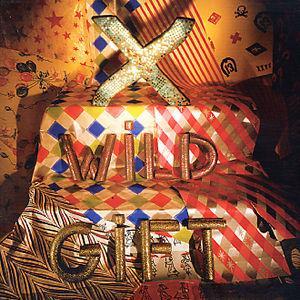
0008dk0hWhilst I’ve written before about the influence of Spin’s Guide to Alternative Music on my development as a consumer/ purchaser/ fan of (relatively) modern music, I’m going to do so again. You see, the one single band it gave me that had the greatest impact was X. As a list man (I know that’s not very cool) I was drawn to the Top Ten albums lists that punctuated the book every so often. Primarily lists by musicians, many of whom happened to be favourites of mine at the time, I was intrigued at how frequently X’s second album, Wild Gift, cropped up.  Frankly, despite following the ‘alternative’ music press for many years, I had never heard of X before acquiring my beloved (and now long lost) tome. So I quickly (and surprisingly easily) availed myself of some X LPs.

Funnily enough, although I think all of X’s first four albums are wonderful, wonderful things, I am not at all surprised that they had remained (lurking malevolently) in the shadows during this time. Thinking about it, they have, by and large, stayed there ever since – a distant reminder of a simpler era, their explosively concise brand of punkabilly representing the grand but slightly delapidated mansion at the end of the musical cul-de-sac that began with sturdy foundations from Link Wray, Carl Perkins and Eddie Cochran and then mixed in the dark energy of The Clash at their breeziest with lashings of The Ramones at their punkiest. But, as far as I am aware, X’s discography operates pretty much as its own genre and, hence, their influence on what has come since has been minimal. That, for me, is part of the attraction – there are no pale facsimiles to tarnish their sound, there was no bandwagon to jump on; whatever X tribute acts exist have not yet made it to rural Devon and I have never heard them played on BBC6 Music or any other radio station for that matter. X exploded (musically at least) out of Los Angeles in 1980 with the release of their debut album ‘Los Angeles’, produced three more classic records in the space of the next three years(!) and then slunk away for a while, returning to make a few more albums of, apparently, lesser fare.

My infatuation with X stopped at album 4 – More Fun In The New World. All are fantastic but, for me, Wild Gift (brilliantly fitting Nick’s birthday theme I thought) is just that little bit better than the others – the melodies are a bit stronger, the riffs a bit more natural, the palate a little broader. A misleading album on first acquaintance, its energy and brevity providing a sheen of fun that obscures its dark heart – X state they are desperate and, sure enough, familiarity reveals an record of domestic abuse, messy, dysfunctional relationships and urban desolation. With the exception of a couple of throwaway tracks (I’m Coming Over, Beyond and Back), Wild Gift is consistently strong throughout but the first four tracks are on another level and represent the zenith of X’s discography – if you don’t like these songs, I don’t think you’ll like X. Stall setter The Once Over Twice storms into punk anthem We’re Desperate. The pace slows a little for the (almost) white reggae of Adult Books which is followed by the blistering guitar work of Universal Corner which at four and a half minutes is the album’s longest track by some distance. There are other pearls throughout the album and on every track Billy Zoom’s guitar playing is breathtaking whether it’s riffing away in the background or centre stage as it lacerates another song through its heart.

As out of step now as they were in their heyday, X’s music stands as proud as it ever did, alone and defiant in its lonely little group of one – the best and (quite possibly) worst punkabilly group the world has ever seen.

PS I would be very happy to be corrected if the sweeping and completely unsubstantiated claim made in the paragraph above happens (as is more than likely) to be codswallop.

Rob listened: X must top the charts for bands most referenced and least heard. Or some such. I’m saying I used to see them name checked all the time but never heard anyone playing their stuff, or even, so far as I can remember, saw any of their records knocking about, okay? I can hear how Tom might hold them as the best thing ever, and the sounds in general and these songs in particular are appealing and fun. I think that you may have had to be there, however. I’m pretty sure that if i’d come across this record pre-1988 then I would still be clasping it to my busom today. As it is, it’s tough for me to hear it and rate it more than very enjoyable, no matter how much the sound of Talking Heads plating acoustic covers of Dead Kennedys numbers ought to appeal to me.

Nick listened: I should have responded to this earlier, because I can barely remember anything about it now, except quite enjoying it, and feeling that it must’ve been pretty directly influential on Dismemberment Plan.
The Pop Group – ‘Y’: Round 67 – Rob’s choice

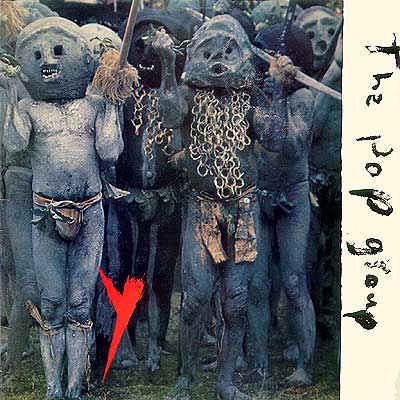
The Pop Group - YNick set a theme for the evening. Reminding us that the meeting date coincided with his birthday he batted his eyelashes and modestly declared himself the subject. “Birthdays, beards anything,” he clarified. Ladies and gentlemen let me tell you, sometimes it’s hard to resist temptation. But resist we must.

If my maths are correct ‘Y’, the debut album by Bristol’s The Pop Group, was released roughly 3 weeks before Nick was born, meaning that when he did eventually make his first appearance it was at the point at which the plucky five-piece were beginning to accept that they were not going to storm the Top 40 after all. Whilst it might not have made an impact on the pop charts, this record has banged, clanged and hollered down the years ever since.

We’re fond, some of us, of trotting out the worn-smooth line that in the late 70s punk rock changed everything, creating a Year Zero after which culture could be rebuilt, better. The evidence taken in the round speaks against such a clearing of the decks but it’s undeniable that for some it genuinely was a starting point at which preconceptions could be destroyed and from which new and radical art could follow. Those who went on to make the absolute most of this opportunity did so largely by ignoring the two-chord rallying cry of what we now call ‘punk rock’ and instead adopted the ‘do anything but do something’ artistic template, striking out towards new noises, ignoring constraints and displaying rampaging disregard for the rules, expectations and requirements of rock music.

One of the earliest and most committed of these were Bristol’s The Pop Group who combined jagged funk, slashing guitars, dubby bass lines, exploratory noise and vocals so wild and vitriolic they sounded at times as if they were physically bursting out from frontman Mark Stewart, who was part street corner leaflet pusher, part pulpit thrashing preacher, screaming in tongues, whispering in panic. ‘Y’ was the first of their two albums.

One way or another we speak a lot here about influence, discovery, sequence, timing, originality. It’s impossible for someone as slapdash as me to start to put together a roadmap for a band like The Pop Group. Instead here is a facile observation: ‘Y’, a lacerating musical cluster bomb of control-and-release aggression, came out just 9 years after the Beatles broke up. I’ll accept that this is meaningless if you’ll accept that it makes you sit back and think “holy crap the Seventies must have been quite a decade”.

35 years later ‘Y’ still delivers a significant shock. It’s disorienting and electrifying from the moment it starts, impossible to ignore throughout and almost unimaginable in its scope and composition until you’ve let it work its way into your system and begin to live there. It sounds every bit the revolution its creators were attempting to foment.

Picking back through rock music to find progenitors for this feels like a fruitless task. Sure there’s some of the wild danger of Beefheart at his most blindly instinctive, along with a dash of the Magic Band’s primeval blues. The influence of dub reggae, which runs through much of the most challenging and groundbreaking music to come out of punk, is here, presumably from the same sources that would flow through the Slits, with whom The Pop Group shared a drummer for a while. And there is funk throughout, deployed as an agent of change. But where James Brown may have created funk to get people moving their feet, dancing together towards freedom, The Pop Group use it as a means to propel us towards the barricades, molotov cocktails in our hands.

You have to turn towards improvisational jazz to attempt to explain or trace sources for much of what’s happening here. Rock and pop may not boast antecedents for The Pop Group but presumably Ornette Coleman and Charles Mingus would have recognised much in the stabbing, visceral guitars, searching, fractured rhythms and Mark Stewart’s possessed vocal performances. Almost every track on the album just goes off at some point, dissipating, searching, fragmenting, often destroying a killer groove for two minutes of angry, echoing space. Through it all runs an incredibly deft rhythm section who, you begin to realise, are subtly underpinning the whole thing, bringing back even the most far-flung exploration to the bedrock pulse. Throughout, the playing is exceptional. They may have striven for primitivism in some of their sounds, but the skills they used to create them sound highly sophisticated.

Elsewhere there are slashed up voices and processed sounds which begin to hint at the industrial soundclash approach Mark Stewart would go on to explore with the Maffia, Tackhead and On-U Sound System. There is ‘Don’t Sell Your Dreams’ a dying monster made of collapsing dub which spends 6 minutes trying to decide whether to live or die and can’t. It could and should be unbearable but again there is something, some tiny thread, some lifeforce flowing which brings the piece together into something quite compelling. There’s even a throwaway instrumental B-side bonus track on the CD reissue, ‘3.38’, which seems to casually contain the genetic code for the next 15 years’ worth of hip-hop.

Few were able to follow the scorched trail this band left behind. One group who certainly recognised the breakthrough that had made were nascent The Birthday Party. According to this clip, Nick Cave and his bandmates were utterly enervated and transformed by an early Pop Group performance shortly after arriving in London.

[youtube:https://www.youtube.com/watch?v=BUC2GmzJpGY%5D

Whilst it’s hard to find many genuine predecessors of this unholy, incredible noise within rock music, hearing it now it’s impossible to ignore how many artists, starting with Cave and co, pushed their way through the breach that this Bristol quartet made back when Nick was a nipper.

Sometimes when you reach back to influential records from the past, it’s hard to put yourself in the shoes or headphones of the original listeners and to feel the visceral excitement they must have felt. Sometimes that’s because the original context can’t readily be conjoured. Sometimes it’s because the artistic legacy has been so thoroughly plundered in the years following as to leave the original source drained. Either way, these records often sound flat, played out even if you haven’t actually heard them before (seeing as we’re in 1979, I’m looking at you Gang of Four). Not so with ‘Y’. If released today it would be utterly thrilling and having come to it properly so late, it’s my favourite album of 2014 so far.

It’s a record in protest at life full of songs in revolt against themselves. It’s unbelievably good, utterly without compromise. It contains the blueprints for a hundred brilliant records, only a few dozen of which have yet been made.

Tom listened: The Pop Group are a band I have wanted to hear for a long, long, time and now that I have, I have to say that about two thirds of the record was worth the wait. Rob primed us before playing Y (funny that I brought an album by X…where was the Z?) that we would have to go with it a bit; that, at times, it would be just a bit too tricky to appreciate on a first listen. ‘Right’, I thought, ‘I’ll show you Mitchell…I’m going to like it all, right from the off’. But, of course, he was right. Whilst the majority of the record was pretty much spellbinding, the other bits simply sounded like self-indulgent proggy nonsense to me, which I find particularly ironic considering this album’s release date and obvious post-punk leanings. So..the jury’s out as far as I am concerned, and I guess that only repeated exposure to the album and familiarity would tell as to whether the less structured side of the record would reveal its true worth…or not.

Nick listened: I’ll echo Tom; this was a confusing record, wherein bits of it seemed like absolute genius, and other parts felt like indulgent dross. Repeat listens would probably unpack the dross and make you appreciate it more.

New Order – Technique: Round 66, Nick’s choice

NewOrderTechniqueFor some reason I have never – well, until very recently – owned a New Order record. Not one. I have no idea why; I love many of their singles and must’ve picked up Substance a hundred times in record shops, only to put it down again each time, before I got to the counter.

There are, of course, plenty of artists – or authors, or directors, or TV programs – who I’ve made a subconscious (or conscious) decision not to delve into despite almost overwhelming acclaim and clear obviousness of tase-matching. As I’ve said before, you simply can’t investigate every potentially fruitful lead, because there isn’t enough time; I like riding bikes and playing football and doing other stuff too, as well as listening to records. It’s just a coping mechanism for the huge surplus there is of culture out there.

But sometimes circumstances, or fate, or whatever, aligns a little bit, and you end up deciding that now is the right time to finally investigate something. And now is the right time for me to investigate New Order. Embrace’s new record owing such a sonic debt to New Order (all those high, melodic basslines, synth oscillations and electronic drum pads) is just one catalyst among several.

Deciding I’d finally take the plunge, I asked Twitter where to dive, and the overwhelming vote was for Power, Corruption and Lies, which I duly bought and enjoyed thoroughly (especially “Your Silent Face” and, of course, the bonus non-album singles on the second disc of the remaster). Suitably impressed, I bought a copy of Technique about a week later (at the same time as I bought a CD copy of the Embrace album, actually). The very next day we had record club, so I took it with me, and so this was my first all-the-way-through listen to it (I’d put it on for about 20 minutes the night before, too), having never knowingly heard anything other than the singles previously (and not really remembering them).

So I don’t really have anything to say about Technique, because I’ve only listened to it a couple more times since. It’s certainly far more ‘Ibiza’ than PCL, and a little lacking in the (seemingly accidental) pathos and detached emotionalism they’re so good at as a consequence; I enjoyed it almost as much, though.

New Order are such a weird band; they seem to be comprised of (two, at least) unpleasant idiots who can neither play their instruments nor sing, and yet they’ve somehow managed to create some of the most emotional and beautiful music to ever emerge from Manchester (or anywhere else, for that matter). So tell me, where should I go next?

Tom listened: Over the course of the last six months it seems as though the others have conspired to give me a tour through the old and long lost TDK C90s that I used to own. Technique is another one of those – an album I always liked well enough but, much like most of New Order’s output, never really captivated me enough to entice me to part with my hard earned money. And so it was on the evening – really enjoyable, but musical ephemera  as far as I am concerned – something to do with Sumner’s vocals and the lack of warmth and emotion contained within the (admittedly) finely crafted and executed pop songs on the album. My guess is the closer (get it?) we get to Joy Division, the more I’ll connect with the music of New Order, but my instinct is that unless he has a Future Islands on Letterman moment, Bernard’s vocals will always be a sticking point for me.

Rob listened: A couple of answers and a couple of questions for you Nick. Firstly, go to Substance next. It’s as good a singles comp as any band could muster in the post-punk era, brimming with distinctive, inventive and intoxicating songs. Then Low Life followed by Brotherhood. Stop there, I reckon. You might like some of the stuff from Republic but the returns are diminishing by then. Movement is great, but perhaps a little too proto for your liking.

Questions: where on earth do you get the idea that any of New Order are unpleasant or idiots? I’ve interviewed three of them and they were warm, generous and thoughtful about their music. The fourth, Peter Hook, seems similar from what I can gather. They may have fallen out with each other, but I’m unaware of anything they’ve said and done that merits those descriptors above any other average rock star.

Secondly: where do you get the idea that they can’t play or sing? They are, all four of them, innovative and groundbreaking and they did what they did by playing their own instruments. You might find some of their technique (lol) rudimentary, but then such is rock and roll, where the emotion is often found wrung from the space between an artists reach and their grasp. Bernard Sumner’s voice is an absolute case in point. Hooky’s bass playing is distinctive and really pretty wonderful. If you’re levelling some sort of ‘they just pushed a few buttons’ charge at them, and I’m pretty sure you’re not, then I look forward to you saying the same about Orbital and Four Tet. Sorry Nick, but I think that’s lazy.

As for the album, I like Technique a lot, but not as much as the four that preceded it. It signalled the point where New Order made their last great contribution to the development of our music, their third if you count what they did as Joy Division. It’s also the point at which their direction started to diverge from where I was going (ie they went to Ibiza, I went to the Hacienda on a Wednesday instead of a Saturday). Nonetheless, they stepped ahead of the rest once more, which is pretty remarkable, and the record they made still stands up today.

Nick responds to Rob: I absolutely don’t mean “they’re just pushing buttons on synthesisers” when I say they seem like they can’t play their instruments, far from it: as Rob notes, I love lots of music that’s produced by people clicking a mouse or pressing a button rather than by stroking a harp or whatever. I mean that what they do play – the bass and guitar parts, and the drums (which are often off a machine rather than a kit, obviously) – often seems so simple and perfunctory as to seem amateurish or childlike; there feels like little freedom, improvisation, or melodic development. Of course, if there was freedom, improvisation, or melodic development, then the emotional heft that they achieve would be obliterated; it comes from the mechanistic, uncomfortable repetition, from the simplicity of the patterns being produced. Barney’s singing – flat and monotone and struggling with both range and sustain – adds to this sense I have that they’re almost just lucking it out somehow. But it’s what makes them brilliant.

As for them seeming unpleasant, again thats just a vague impression taken from a distance. They don’t seem to like each other much.

Minutemen – Double Nickels On The Dime: Round 66 – Tom’s Selection

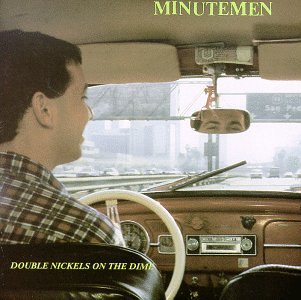
minutemen-568-lIf blog posts had to mirror the album they featured, this blog post would be 2000 words long, as dense as Joseph Conrad’s Nostromo, simultaneously concise and sprawling, playful, irreverant, angry, political and downright brilliant. Unfortunately, I am writing it so it will be devoid of pretty much all these things, unless sprawling can be interpreted as waffly! When I introduced Double Nickels to the others at record club I stated that of all my records this is the one I would pull from the fire. Nick later paraphrased this as an admission that this is my favourite album. But in my mind they are not the same thing at all. My favourite albums (many of which have featured already at Record Club) would soon become irritating if they were all I had. But I relish the idea of having nothing other than Double Nickels to listen to – there is so much to explore in it, so many little wonders hidden away that I feel I am only just beginning to know (having owned the album for about 20 years now). Heck, I still don’t know the song titles; I can’t anticipate what is coming next as one songs ends and another begins; I don’t even know which side certain songs belong on if played in isolation. This is a million miles away from where I am with most of my collection – I like to really know an album, as in KNOW an album, get it all worked out, not because the end result is so attractive but because the journey to that point is so enjoyable. And that’s why Double Nickels is such an attractive proposition to me. I must have listened to it hundreds of times already over the years but I am still deep in the process of getting to know it. A few more pieces of the jigsaw fell into place during the run in to our evening but, to be honest, I am miles away from getting to that point where all is familiar and there are no surprises left to discover. As Rob said in his response to Slint’s Spiderland – he’s not sure he ever wants to work it out. Well, I have pored over Spiderland and I am pretty much there with that record…but the Minutemen’s amazing third album has a multitude of gems that still need to be unearthed by me, so many facets left to explore.

Initally I wasn’t all that predisposed to the idea of the Minutemen. At the time I was a big Husker Du fan and, knowing they were rivals of sorts, led me to place myself firmly in the Husker camp. It turns out the two bands had about as much in common as Blur and Oasis or The Beatles and The Stones – rivals for a similar demographic but musically a million miles apart. Expecting a Bob Mould style guitar onslaught coupled with pop hooks and harmonies, imagine my surprise when the first bars of Anxious Mo Fo lurched out of the speakers, all awkward and lean and shouty (not screamy!)…and nothing at all like New Day Rising!

In fact it is quite remarkable given the breadth of the musical vision that D Boon and Mike Watt demonstrate on the record that at no point in the 75 minutes of Double Nickels (all sorts of rules were broken at the club this evening) do they sound remotely like any of Husker Du’s output. As musical comparisons go, this one is the most crimson of all herrings.

So what does Double Nickels sound like? Practically impossible to sum up…but the overriding surprise to me on my first listen was just how groovy the album is – Mike Watt’s bass playing being nimble and inventive throughout and placing the music in a very different musical setting to much of the US underground around at the time. Another shock is how much space there is within the songs – guitars are spiky, individual notes discernible and clipped. Meanwhile Daniel Boon’s vocals and lyrics are never less than captivating, veering from mundane to political to heartfelt and poignant often in the course of one two minute song. And if, for some reason, you’re not keen on the current track, don’t worry – the next one will be around in the blink of an eye.

Admittedly, navigating a myriad ideas in the course of an hour and a quarter can be exhausting for a listener, particularly on a first listen or ten and, even after twenty years, a pause half way through does no harm. However, once the songs start to reveal themselves there really is no going back – as addictive records go, this is just about top of the tree for me. Unsurprisingly, this is the only Minutemen record I own – after all, with 45 songs of unimpeachable quality which are still evolving with each new listen, I feel that more Minutemen material would just be overwhelming. I am not claiming that Double Nickels is the perfect record but, for me, its imperfections make it all the more captivating. So do yourselves a favour and get yourselves a copy – you never know when the house may go up in flames!

Rob listened: I loved lots of the bands that learned from Minutemen, but it’s only in the last year or so that i’ve finally caught up with ‘Double Nickels’ and realised just how rich and influential this source material was. When I was living my life to the taut rhythms of Fugazi and NoMeansNo and Mudhoney and Nirvana and Sebadoh there were other bands, other names that hung in the background, just a little before my bands, just a little out of reach. Of those, I did go back for Husker Du but others, Minutemen, Meat Puppets, The Replacements, Black Flag, were left behind. Nowadays that just wouldn’t be possible but back then you had to know someone who could lend or tape you stuff, or to take a chance on a name half=remembered from an interview in an old edition of Sounds.

Now, when I finally get there, finally realise just how heavily the bloodlines of the records I did fall in love with at the time flow directly down from the spiky, lurching, free-ranging, tight, joyful, unafraid, funny, intoxicating, herky-jerky jumble of a record, it’s like one of those dreams where you find a record shop you never knew existed which stocks racks full of records you never knew existed by all your favourite artists.

It’s good, in other words. I think it’s really good.

Nick listened: I’m just gonna echo Rob – although this was massive and difficult to consume, it was also excellent and clearly very influential, albeit to a slightly different school of bands for me as for Rob; I certainly heard Fugazi’s DNA being formed here, but I also heard a lot of the Dismemberment Plan. Really enjoyable.

Future Islands – ‘Singles’: Round 66 – Rob’s choice

futureislandsThese days I rarely consider the role of performance in music. Circumstances have dwindled my opportunities to see live bands effectively down to zero. I hardly ever watch music on TV, maybe hitting two or three heritage docs on BBC Four in the space of an average year. I never seek out music videos, even when they are recommended.

I realise I’m missing out on part of the experience. I used to be thrilled by live shows by bands I loved and, sometimes, bands I didn’t know. As someone who spent a reasonable chunk of his adolescence looking like a bargain bucket Morrissey, then a half-arsed Happy Monday, then an unremarkable former member of the Jesus and Mary Chain, I’m hardly unaware of the extra dimension that the look and feel of the band brings to the noise they are making, to the fans ability to identify with and inhabit their music. I’m aware that even if these things seem to have become unimportant to me, the bands I follow are still putting in just as much effort to perfect them, to add layers to their musical core. I’m just not paying attention.

Truth be told, I could’t even tell you what the majority of the artists I like these days actually look like. [Hang on, i’ll test that theory. Bear with me while I look at my records of the year post from 2013

Well, I reckon I could pick 5 of the 11 out of a line-up. I’m surprised by that, although note that those include Nick Cave, Sam Beam and Bradford Cox, all of whom cut fairly distinctive figures].

This is not a stance or an extension of some philosophical or aesthetic approach – I don’t really do that stuff – it just seems to have happened. I just listen to the music. Nowadays I don’t even really care who’s in the band, or what they’re doing. I’ve never been big on appreciation of the craft of music. I love sounds, but rarely connect the appreciation of those sounds to an appreciation of the skill or virtuosity that may have been necessary to produce them. Come to think of it, not only don’t I know what most of the new artists I like at the moment look like, if they’re in a band I don’t even know what the individuals are called. Even worse, by and large I don’t even bother with song titles either.

Sounds stupid, huh? Maybe it is.

Anyhow. I started talking about performance…

A month or so ago, Baltimore synth-pop outfit Future Islands managed to blindside me and break through all this dead-eyed detachment and, in the space of 3 minutes, force the most focussed U-turn I can remember making in my 30 years as a music lover.

A few years ago Tom lent me a copy of ‘In Evening Air’, their debut album. He thought I might like it. I did not. I hated it. It’s rare that I take badly against a record, but I really couldn’t stand this one. I hung on for half the tracks and then had to finish my walk in silence. It was the voice, swinging wildly from David Bowie to Ella Fitzgerald, sometimes in adjacent syllables, both delivered as if in pastiche by a particularly hammy Lon Chaney. I found it utterly unbearable. I’m not one to shy away from an unusual vocalist. I would choose Mark E Smith, Captain Beefheart, Joanna Newsom and Tom Waits among my very favourites, but something about the shameless artifice of Samuel T Herring’s singing had me clawing for my headphones. It seemed so desperate, so attention seeking. I felt physical repulsed by it. They’ve been filed under ‘not for me thanks’ ever since.

And then. And then. Having picked up (somehow) on some minor internet buzz, I checked out their recent performance of ‘Seasons’ on the David Letterman show. Within about 90 seconds, it all made sense. Within 3 minutes i’d shifted my opinion 180 degrees. I understood immediately that the focal point of these wild growling pleas and distressed torch singer yelps was a frontman who was not the flamboyant dandy I had assumed and feared, but a regular Joe Shmoe battling with his burning desire to express himself through song. It’s a totally compelling performance. Passionate, unabashed, somehow discovering the embarrasing geek that we all fear we might be if given a microphone and an audience and parlaying this into something true and vulnerable and somehow quite magnificent. The hopelessly extreme dad-dancing, the moments when his eyes get the thousand yard stare and it seems he might just crumple right there in the middle of the stage, the futile half-punch crescendoes, the desperately assertive chest-beating. Even the last-ditch death-metal dredging. It all makes sense.

Here it is:

[youtube:http://youtu.be/1Ee4bfu_t3c%5D

(I made the mistake afterwards of checking out ILX to see if others had been similarly affected by the thing. No, they hadn’t. Plenty of people speak up for the band and most cite Herring’s frontmanship as one of the key reasons they’ve always been fans. Others enjoyed once again being able to blankly slap down some enthusiasm, unable to understand why anyone would get excited about “another average synth pop band”. Here’s a tip for a happy life, as a minor aside: avoid internet forums if you want to retain any unfettered joy for something you think may be loveable. Unless your opinions are bulletproof then you’ll come away feeling your affection has been shot to pieces. And if they do happen to be bulletproof to the point of being immutable, what’s the point of trading them with others online?)

Nonetheless, I’ve hammered ‘Singles’ over the last four weeks or so. In many ways Future Islands are just another synth pop band, reaching back to grasp some of the faded glitterball glamour, retrofuturist electronic buzz and sparse despair of the mid 1980s and, essentially, doing a pretty good job of it.

Actually, come on. That’s selling them way short. They do a pitch perfect job, building their sound from an exquisite palette and creating deliciously economical soul pop.

Anyway.

It’s Samuel T Herring’s voice that lifts the record out of the ordinary but, somehow, he takes the rest of the band with him, and reflected in his flailing, wheeling performance – for a performance it is every time he opens his mouth to sing – their sound gains lustre and a spring in its step. Ultimately these are 10 fine songs, short and sharply constructed, by a band who sound every bit the Joe Shmoes giving it everything they have in an attempt to force their way out into some new territory, to create a breakthrough. We suspect they’ll never make it,  and perhaps they know too, but that tension, of the ordinary trying to become extraordinary, is what makes Future Islands such a strangely intoxicating affair.

Nick listened: Otis Redding. Samuel T Herring is clearly (as far as I’m concerned) a massive, massive Otis Redding fan. And he’s lucky enough that his vocal cords are capable of showing that inspiration in a pretty impressive way. After years of cool detachment from synth bands, this emotive, performative juxtaposition is a little surprising (although not quite as surprising as when he went full-on ‘Cookie Monster’).

The album as a whole left me a little nonplussed, but that Letterman performance was off the scale good; people used to perform like that all the time. I love a bit of artifice.

Tom listened: I can see the headlines now:

‘Mitchell In “Changes His Mind” Shocker. You Turn if You Want To…He Has!’

I told you they were good all along, didn’t I?

Now that I’ve picked my jaw up from the floor (I had resigned myself to always having my enjoyment of In Evening Air tempered by the fact that Mr Mitchell and myself were on different pages of the hymn sheet), I will add that whilst it lacked the immediacy of Future Islands’ second album I sensed, on the basis of one play, that Singles has great depth and possibly greater staying power than In Evening Air. The listen left me very tempted but, fortunately for me, I am very tempted by a lot of records at the moment! It is, however, firmly on the list.

Efterklang – Piramida: Round 65, Nick’s choice

Efterklang-PiramidaSome records take time to reveal their charms, even if they give you the impression from the outset that they’ll be right up your street. Those slow-burn records can be faintly foolish choices for record club; as we’ve discussed many times, some types of record really lend themselves to this type of communal, concentrated, critical listening (with much babbling and consumption of curry atop the actual music), while others really don’t.

Efterklang are Danish (their name comes from the Danish for ‘remembrance’ or ‘reverberation’, according to Wikipedia), and I bought Piramida, their fourth album, at the tail end of 2012, the year it was released, after it received glowing reviews and various end-of-year-list plaudits. It’s taken me until this spring to feel like I ‘get’ it, although straight away I could tell it was really beautifully crafted, which is why I was intrigued to see how it would fare at record club. Unusually for me I followed the typical approach pattern of the other guys, and played Piramida several times in the run-up to our meeting.

Ostensibly an indie band, Efterklang are clearly au fait with various strains of ambient and electronic music. For this record they travelled to Piramida, a deserted Russian town inside the arctic circle (gorgeous pictures of the abandoned buildings decorate the sleeve) and recorded a host of ambient sounds of nothing happening in a place where nobody lives, which they then interpolated into the gentle, slow-paced, elegiac songs that comprise the album.

Decorated with intriguing percussion and beautiful touches of brass, as well as guitar, drums, keyboards, and various other bits and bobs including xylophone, synths, and choirs, the band concoct a beautiful, beatific, and faintly melancholic bedrock over which the vocals are delivered with a similar kind of linguistic remove to The Notwist; a sort of pseudo-medicated calm, the lyrics all words that I recognize but put together in phrases that, though they have a quiet emotional impact, don’t make any kind of cogent ‘sense’ to me. But that doesn’t matter, because, as Paul Draper once sang, the lyrics are just a vehicle for a lovely voice.

I’ll not make any great claims for this record – it’s not a life-changer – but it is a beautiful, affecting record, with the kind of low-key atmosphere and emotion that will prompt multiple plays and probably not see you tire of it any time soon. A slow-burner, in other words.

Gorky’s Zygotic Mynci – Barafundle: Round 65 – Tom’s Selection

barafundleAlthough it seems on the face of it that Gorky’s Zygotic Mynci have very little in common with the Kitchens of Distinction, dig a little deeper and you’ll see some similarities. Here is my case:

a) Fantastic pop songs that sound timeless and current at the same time? Check.

Evidence – Patio Song & Drive That Fast, Diamond Dew & Gorgeous Love, Spanish Dance Troupe & The Third Time We Opened The Capsule.

b) Complexity coupled with accessibility? Check.

Evidence – pretty much all of Barafundle, most of Strange Free World and Love is Hell.

c) Bloody stupid names that completely scupper any chance of widespread commercial success? Check.

Evidence – Gorky’s Zygotic Mynci!?!?! I mean…come on! Kitchens of Distinction!?!? You must be joking, right?

Which is such a shame in both cases as, in my opinion, both bands deserve to be held in much higher esteem these days than they seem to be. As if to underline their status as the nearly men (and woman) of British pop, Gorky’s hold the record for the most top 100 singles not to crack the top 40, a feat they achieved 8 times, their best three efforts making 41, 42 and 43!

Gorky’s Zygotic Mynci formed in the late 80s in Carmarthen and their early records sound as though they were made by a band that had little to no expectation that anyone else would be hearing them. So I suppose the band’s choice of moniker makes sense in that respect. But even in the mind-boggling weirdness that is their first album (Tatay) little pop gems reside, seemingly tossed off and somewhat adrift in a sea of in jokes and wilful awkwardness. However, by the time Gorky’s came to record Barafundle they had begun to learn how to construct an album – much of the playfulness remains intact but it’s now measured and used sparingly, never coming across as glib or gratuitous. And, for my money, it’s all the better for it.

I first heard Gorky’s music when I caught Patio Song being played on the radio at the time of its release in 1996. It was a revelation. I had been aware of the group for some time – it’s hard not to notice the name after all – but I had dismissed them as being something far too silly, a novelty group along the lines of Sultans of Ping or Carter TUSM. Yet here was a song sent from the gods, a beautiful, picked arpeggio, a wondrous melody, a couple of Slint like minor chord guitar runs tempering the sweetness and a blinding extended coda sung entirely in Welsh. Patio Song would still rank as one of my favourite singles from the 90s and at the time I found it irresistible. I bought Barafundle very soon afterwards, probably encouraged by the fact that the album was named after one of those breathkingly beautiful Pembrokeshire beaches I have visited so many times over the years. And I’ve never looked back.

Over the course of the last few weeks I have been listening to Barafundle pretty much non-stop and whilst doing so, I have struggled to find a way to adequately describe the music contained within. I’ll have a go but you’ll probably be none the wiser having read this!

You see, about two thirds of Barafundle is prog-punk psychedelia with generous lashings of folk. And, on paper, that sounds horrendous. Yet Gorky’s pull it off magnificently on Barafundle…most of the time. Whilst there are many examples of this style of music on the album, favourites Starmoonsun, Pen Gwag Glas and Meirion Wyllt all manage to traverse the same sort of musical breadth Joanna Newsom was attempting to negotiate on Ys, yet Gorky’s manage it in less than four minutes whilst never forgetting that they are ostensibly writing pop songs. Hence the more avant-garde material on Barafundle never outstays its welcome and, whilst the odd medieval interlude may jar on first acquaintance, the next melodic gem is only just around the corner (often in the same song).

The rest of the album hints towards the more straightforward music that Gorky’s would go on to make in greater abundance on their later albums. Often stunning (Patio Song, Sometimes The Father Is The Son, Diamond Dew) there are also a couple of missteps – I have always found Heywood Lane a bit too twee and Dark Night veers from exquisite to ponderous over the course of its five minutes. But, as a whole, Barafundle sounds as charmingly unpretentious today as on its release twenty years ago when it had the honour of showing all those Brit Pop wannabies that it is usually the outsider that has the best tunes.

Rob listened: A pleasure to hear again. I own ‘Barafundle’, or should I say ‘we’ do. It’s one of a relatively small set of records i’ve wanted myself but have been able to buy for my wife knowing that there was a reasonable chance she’d like it. And lo, under the cover of generosity, another album finds its way onto our shelves.

I like it a lot, but my go-to Gorky’s has always been ‘Spanish Dance Troupe’ which is a near perfect pastoral pop album. It’s 12 minutes shorter and, perhaps for that reason alone, always seemed more to-the-point, well-formed. It’s an extremely easy album to reach for and I did and do so often.

‘Barafundle’ sounds to me like the scrapbook that Gorky’s used to work out many of the ideas they had generated on ‘Bwyd Time’ would distill fully on ‘Dance Troupe’. It’s full of care and beauty and surprise and fun and gentle darkness. I can’t help but wonder whether if their musical venn diagram had included a techno circle, as did that for their compatriots Super Furry Animals, then perhaps they would have had the same critical plaudits showered upon them. Gorky’s really were one of the great lost bands. That’s not to suggest that they went unappreciated, far from it, but that there is another world not that far from our own in which they were having hit singles, rather than loitering outside the top 40, lacing daisies into each other’s hair.

Nick listened: This was lovely and melodic and sweet, but, as Rob suggests, perhaps a little long and rambling – it lost me a little in the second half and onwards, which felt like a shame. I’d not heard it before, though I’ve been aware of Gorky’s for 20-odd years now…

Donato Dozzy – ‘Plays Bee Mask’: Round 65 – Rob’s choice

Donato Dozzy Plays Bee MaskInterpretation is one of the cornerstones of modern pop. In the 50s and 60s singers who would never have dreamed of writing their own songs would take songs from writers who would never have dreamed of singing them, and interpret them. Sinatra was renowned for decades as the finest ‘interpreter’ of modern songs, taking material and turning it into his own, finding the core of a piece and revealing it to us all.

Then in the 1960s, the role of interpretation in the development of pop music took a few different and often more problematic turns. Countless of the big hits of the decade which we still know 50 years on are second or third generation copies. Songs passed from group to group until one version achieved some sort of memetic superiority. This was not always a chummy passing of the baton (“I say, this ditty didn’t work out for me. Why don’t you have a go at it old fruit?”). Genres, sometimes whole cultures, were plundered for songs which could be parlayed into rock’n’roll success.

Since then, the role of interpretation in rock and pop seems to have dwindled to the dread cover version in which some band either pays tribute to or attempts to ride the coat tails of some other band, usually to the benefit of no-one except the original publishers. Performers are sampled, mimicked, sometimes pastiched, but rarely will an artist embark upon a serious reinterpretation of another artist’s work. Even when they do (Flaming Lips cover ‘Dark Side of the Moon’, Steven Malkmus covers ‘Ege Bamyasi’) there’s a sense that these are fun excursions, tributes, a laugh.

Meanwhile in other forms, notably literature and theatre, reinterpretations of stories, works, themes and pieces are a critical part of the discourse.

Where rock and roll moved away, dance music has taken on the full power of reinterpretation. Here the remix is so all-pervasive that radical re-imaginings of tracks routinely eclipse the originals, often becoming the core reference point for a piece of work. Undeniably it’s a fertilising, energising process, producing a seemingly endless sea of imaginative music.

Somewhere between the world of the radical remix and the Warhol wing of the modern art gallery sits Italian producer Donato Dozzy’s 2013 album ‘Plays Bee Mask’. The seven tracks, numbered ‘Vaporware 01’ through to ‘Vaporware 07’, take as their source the 2012 track ‘Vaporware’ by the Philadelphia-based electronic ambient artist Bee Mask aka Chris Madak. The original is a 13-minute soundscape which does its title proud, steadily forming ideas which disperse before they can resolve. It’s a beautiful piece, constantly changing, buzzing with life yet always shifting and uncertain. It’s a pure pleasure to listen to.

Dozzy took on the task of remixing the track and, presumably, realised quickly that to attempt alternative versions of the whole piece would be folly. the original ‘Vaporware’ shifts through many abstract phases with little through-line other than it’s drifting mood. Hammering these down to a rhythm or adding yet more sounds as ballast would have crushed them. Instead he took individual elements from the original work and isolated them, creating space in which to allow them to stretch and breathe and to allow him to examine them fully.

Each track seems to take a single motif from the original, mount it among other sounds, and set it slowly twisting and rotating so we can hear it from all angles. The care and attention is impressive. The sounds are enveloping, beguiling and beautiful. The record starts with rainfall and warmly chiming bells, progresses through steady, fizzing drones, pulsating voice shards, arpeggiated squelches which fall like tropical rain on bouncy leaves and head-nodding chord progressions with just a hint of rhythm before coming back down to where it started, with dripping bell chimes.

It’s perfectly possible to fall in love with ‘Plays Bee Mask’ without ever having heard the original ‘Vaporware’. I did. However, once you’ve grown accustomed to both, they begin to resonate, each highlighting and amplifying individual details of the other. The two works begin a fascinating dialogue. It’s quite some trick. It’s clear that Dozzy found the constraint of working with the raw material of someone else’s work immensely inspiring, and the results are a jewelled wonder. ‘Plays Bee Mask’  works as a puzzle, as a tribute, as individual tracks, as an album-length suite and as a pure experience in sound.

Tom listened: We chatted on the evening about Rob’s use of Spotify. If it has meant that he is more likely to find such wonderful music as this, then maybe we should all be doing it. I thought Plays Bee Mask was stunning, much prefered the album to the original and although it peaked in the middle, I enjoyed it all the way through. Dare I say it, I would be more tempted to pick this up on CD as the LP seems to have annoyingly short sides but as far as electronic music goes, this chimed with me as much as anything else I have heard.

Nick listened: I much preferred the ‘remixes’ to the original (which seemed to struggle to find direction), and enjoyed the remixes very much, but I can’t be as effusive as Tom; bits were blissful and beautiful, but others seemed a little too perfunctory – I thought about saying ‘formulaic’ but a lot of the point of electronic music is exploring formulae, so that didn’t quite make sense. I think I mean that some of it, for me, lacked a little emotion. But a fascinating, Borges-esque concept, really intriguingly executed.

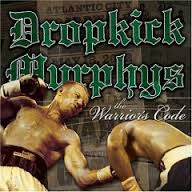
Dropkick Murphys – The Warriors Code – Round 64 – Graham’s Choice

I suppose some explanation is due download (1)
as to why I turned up this week with a Celtic punk album from a US band not really known that much out of Boston.  Partly lack of inspiration for Round 63, led me to some unusually adventurous/flippant CD purchases in an effort to explore new genres.

For this choice, movies and football hold the key, and Boston’s intense connection with its Irish heritage. The Red Sox are owned by FSG Group, who also own the ‘might reds’, so that explains a loose affinity to a band who are the local heroes and provided the team with ‘Tessie’ (live version on this album) as a stadium soundtrack.

My first exposure to the band was the inclusion of ‘I’m Shipping up to Boston’ in the Departed soundtrack (it also features here http://www.youtube.com/watch?v=ZDKrkmkUHsk, in the similarly acclaimed ‘The DeBarted’ . One of their best known songs and nearest thing to a hit record they have ever had. A riotous Celtic punk noise which I sought out, to be surprised to discover it’s a  Woody Guthrie cover about a one legged sailor, who knew?

Their  5th albumfrom 2005, it doesn’t really warrant too in depth a study of the ‘Dropkicks’ musical style, as they are probably the ‘Ronseal’ of Celtic US punk, by delivering exactly what it says on the CD cover. They borrow riffs and guitar styles left right and centre. Part of the enjoyment of the album is the familiarity with some of the echoes of the Clash, Skids, Big Country (plus a bit of Stiff Little Fingers) that fall out along the way.

To lighten the mood further, I manage to squeeze in ‘I hate every bone in your body except mine’, as a track from the gloriously named Buck Satan and the 666 Shooters. http://www.last.fm/music/Buck+Satan+and+the+666+Shooters/_/I+Hate+Every+Bone+in+Your+Body+Except+Mine I still haven’t fully completed my exploration of the world of country metal crossovers, but Buck and his gang are a start.

Rob listened: … sorry, got distracted there reading members of a white power forum debating whether Dropkick Murphys are racist or not, bemoaning their conclusion that they are not, and wishing they could have some of their songs for their ‘side’.

Funnily enough I’ve been wondering whether I can sacrifice a Record Club choice to bring some Big Country along. They were one of my first musical loves and, partly for that reason, their blend of post-punk-becoming-straight-rock and traditional Scottish melodies and sounds still has some frisson for me. I hear that in the first track or two of ‘The Warrior’s Code’ but it soon sinks beneath the surface of their tendon straining rock-punk which ultimately bludgeons flat any and all subtlety.

They do seem occasionally to take their feet off their collective pedals. ‘The Burden’ could easily be a Grant Hart Husker Du track, but in this context it sounds equally like the sensitive kid who’s going to get the crap kicked out of him repeatedly in this particularly uninviting school yard.

Tom listened: A new one on me, I am not sure I have even heard (or taken in at least) the name. Some of it sounded like The Clash, some of it like The Pogues, but in both cases I’d prefer to listen to the originals and am not sure The Dropkicks brought much of their own slant on proceedings. They can obviously play, they obviously have plenty of energy and I am sure they would be good in a live setting but, as an album, this left me cold I’m afraid.

Nick listened: Not really my bag, I’m afraid, but I didn’t dislike it. Reminded me of a more rambunctious Hold Steady, in many ways.

Wild Beasts – Present Tense: round 64, Nick’s choice

Wild_Beasts_Present_TenseSelf-perception is a curious phenomenon. Everyone hears things differently (as three years of this club have proven!), so what musicians are trying to achieve isn’t necessarily what their audience hears their music as containing. This is part of the reason why ‘influence’ is a crazy concept; people usually use it as a synonym for ‘sounds like’ rather than ‘informed/inspired by’, anyway, but influence can also manifest in ways that simply aren’t sonically identifiable. Things that may seem like obvious inspirations to an audience may never have been intended by the artist, and may be the result of pure, blind happenstance, or else some kind of subliminal, subconscious appropriation, rather than anything deliberate.

Which is a really long-winded way of saying that, like many bands, I’m not sure that Wild Beasts know exactly what they sound like, or appreciate entirely what they’re good at – or, at least, what this singular member of their fanbase thinks they’re good at.

There’s been lots of talk about Present Tense being brave and a change and a statement from various people – most notably Wild Beasts themselves – and suggestion that they didn’t just want to produce Smother all over again (not that there’d be much wrong with that, as Smother is an excellent, moreish record that I adore). Which is fair enough; change is a good thing, and the best bands, in my mind, constantly evolve.

Except that, to my ears, off a dozen plays or more, Present Tense sounds like, if not a repeat, than a very logical progression and next step from Smother, rather than any radical break or revolution. Which is also fine. It may upset the band given their stated intentions, but Present Tense is almost just Smother with synths, if you will. The lyrical sauciness is slightly more domesticated, perhaps, and the sound a little fuller and richer as spidery guitars are replaced by warmly enveloping synthesizers, but they sit together very well as a pair. They’ve also expressed a fear that people might be put off by them ‘going electronic’, but to me, at least, Wild Beasts’ most defining characteristics are their fascinatingly eccentric pair of vocalists, and the subtle interplay of their collective musicianship, rather than ‘guitars’ as a primary aesthetic, so moving to synths, especially after “End Come Too Soon”, seems entirely appropriate.

The other thing that Wild Beasts have talked about repeatedly with regards to this album is their intention to write ‘pop’ songs. Now I’m not saying that they’re operating in the realm of Ornette Coleman or Swans or Keiji Heino here – structurally there are verses and choruses and melodies and hooks, which are the tools you’d expect of ‘pop’ – but, like Smother, Present Tense is a subdued, subtle, sensual record, far more about slowly shifting mood than thrills and spills. It’s resolutely atmospheric rather than anthemic (not that all pop is about anthems, obviously), and as such feels like something slightly other than pop.

Which is fine, because it’s another beautiful and compelling record, and Wild Beasts are a wonderful band of outstanding musicians (their drummer plays like a beautiful drum machine, rather than a real human percussionist). If I have a complaint, it’s that there’s maybe not enough of the whooping, sensual cacophony they used to produce; not enough drama, not enough noise. I’d prefer it if, for instance, after Tom (the deep, throaty vocalist) sings the phrase “the destroyer of worlds” at the centre “Daughters”, in the middle of the album, the synths actually did rend apart and destroy the song, with a dramatic dynamic leap into sonic chaos, rather than just oscillate beautifully once again.

I have absolute confidence that Present Tense will continue to unfurl layer upon layer of sound and tune and interpretation over the next 12 months and beyond, and that it will prove to be absolutely as good as its predecessors. I’d just prefer it if they’d injected some roiling chaos into their sound as well as all this glorious subtlety; they’ve lost a little of what it was that made them wild.

Tom listened: Curiously, I always think of Wild Beasts as a great band but, on deeper reflection, I have only really clicked with the Two Dancers album and, even on that album, about half of the songs leave me cold. However, All The Kings Men is so, so great and much of what Wild Beasts do is a cut above standard modern indie fodder, that I can’t help thinking they have got an absolute no-holds barred classic album in them yet. Unfortunately, on the basis of a first listen, this isn’t it!

I’ve been listening to Smother a fair bit since Nick played us Present Tense in part because Nick and Rob both revere it and I have always felt I have needed to spend more time with it to truly appreciate its qualities. So I listened to it another three or four times over the course of the last week and, whilst I appreciate the skill and restraint Wild Beasts demonstrate, it’s just too languid for me. As Nick has hinted in his review, Present Tense takes the sound of Smother and smothers (I can think of no better word) it still further. I have no doubt that this was Wild Beasts’ intention, that they have full artistic control over their output and I am sure they have pulled it off magnificently…it’s just that they have taken their music in a direction that does little for me. Give me the yelps, energy and restrained wildness of the best of Two Dancers any day. To my mind, the band need to go back to that album…and remember their name…when they come to make their next record.

Rob listened: I like Wild Beasts a lot and I like ‘Present Tense’ a lot too. I disagree with Tom when he yearns for more of the verve and abandon of ‘Two Dancers’ and perhaps even ‘Limbo Panto’. One of the things I cherish about where they have gone since then is their apparently deliberate progression towards the essence of what they have, their sound, their vision.

I’d love to hear another song as deliciously dangerous and whoopingly wild as ‘All The King’s Men’, and the joy of that track has hardly diminished with the years, but there are lots of bands trying to squeeze out the next earworm melody, the next 6 Music conquering hook. Wild Beasts are treading a different path. They seem to me to be hanging on to some sort of genome they are trying to crack, to perfect. Just as artists took the motorik beat in the 70’s and attempted to get to the root of it by driving it on and on, exploring its context, putting it next to contrasting elements in attempts to reveal or capture its pure essence, so it seems to me that Wild Beasts are driving towards their own purest form without knowing quite what that is. (As an aside, check out the Wikipedia page for Motorik. Some very dodgy references if you ask me…).

I’m also reminded of Jeff Buckley and the excitement I felt thinking about what he would go on to do in the years and decades which followed ‘Grace’. When ‘Sketches’ was posthumously released it brought home to me just what a powerful artist he could have gone on to be, precisely because he was heading off to explore what he could do with what he had, rather than trying to write a bigger, more crowd-pleasing version of ‘Last Goodbye’.

I’ve enjoyed listening to ‘Present Tense’ for many of the reasons Nick gives above. I don’t think it’s as complete a record as ‘Smother’. It seems to be a partial step towards something else, something similar but different, and that’s more than enough for me in this case.

 Graham listened: I’ve enjoyed all the Wildbeasts I’ve heard at DRC and beyond. But never quite enough to think about going out and buying in to it in the days and weeks afterwards. Something about not being quite enough it in for me and my insensitivity to their subtlety.