Jake Thackray – The Very Best Of Jake Thackray: Round 75 – Tom’s Selection

41xWQcgj75LIsn’t it funny how frequently inspiration comes from the most unexpected of corners? Who would have thought that my latest musical obsession would have stemmed from a chanced upon half hour programme…on Radio 4 of all things?

Until the point I heard Isy Suttie talking enthusiastically about Jake Thackray on the radio station’s Great Lives slot, I had never heard of Thackray at all. But I was immediately captivated by the snatches of his music played on the show and won over by the reverence shown him by both guest and presenter and so I went and bought myself a cheapo compilation of his songs straight away. However, until last week, and Nick’s ‘Bring Something That Isn’t An Album’ theme, I hadn’t actually got round to listening to it. In fact I almost didn’t at all. I thought we were planning to miss a week due to Nick’s imminent birth so I had ordered a couple of records that would have fitted the theme perfectly. Upon realising my mistake with the dates, though, I knew that my new purchases would not arrive in time so I thought, with low expectations it has to said, I would give Jake a go. I would never have guessed at the treasures contained within.

Thackray’s songs have left me spellbound. Utterly charming, witty and poetic but often cut through with pathos, they also have an honesty, an integrity that make them so, so hard to resist. Put it this way: within seconds of first song The Blacksmith and the Toffee Maker starting up, Thackray was already my latest hero. And that status was only strengthened when it became apparent that this was a man for whom seeking that status would be, genuinely, the last thing on his mind – Thackray’s modesty is obvious and is rendered by his infatuation with his songs’ characters, their tales and the sound and words of the English language in general that are on display throughout this compilation.

But Thackray’s music is also intriguingly hard to pin down. His background is interesting and sheds light on some of the juxtapositions of his music. Born in a poor part of Leeds in the late 1930s, Thackray became an English teacher upon leaving university and started out on his career in France teaching in Lille, Brittany and The Pyrenees. Whilst there he discovered a love for the songs of Jacques Brel and Georges Bresson, before heading back to the UK (via a brief stint in Algeria) to teach in a school in Leeds.

As a result you are frequently blindsided by his songs – English scenes are often tinged by the faintest echoes of Gallic chansons, irreverent one minute, heartrendingly melancholy the next, every word carries weight, every song tells a story; what seems at first to be seaside postcard smut is often turned on its head when the next line reveals a previously undisclosed double meaning. This is clever stuff, disarmingly simple music that reveals a hidden depth with lyrics that demand to be listened to, worked out and, crucially, enjoyed.

And I have enjoyed Thackray’s lyrics like little else I have heard. On the night, I printed out the lyrics to Thackray’s tour-de-force Lah-di-Dah for Rob and Graham to read through as the song played. I think these lyrics are amazing, not just because of the tale they tell (about a bridegroom telling his prospective bride how he will get along with her gruesome family for her sake) but because of the sound of the words themselves and their meter:

 And I’ll smile and I’ll acquiesce

When she invites me to caress

Her scabby cat

There’s not a duff track on this compilation. If you don’t like the music, the story will have you in stitches (in Leopold Alcocks he rhymes wisteria with hysteria, Brasso with Picasso), if he plays it straight you’ll be close to tears (Old Molly Metcalfe, The Hair of The Widow of Bridlington). Accusations of misogyny miss the point – even though these were unenlightened times, I’m not so sure Thackray wasn’t being ironic all along. Besides, seeing as he’s now my latest hero, it’s better to switch off your PC detector and enjoy the magnificence of the wordplay, the luminosity of the music, the genius of the man, warts and all!

Rob listened: I love this club. I went through the same experience Tom describes above as Thackray accelerated from zero to hero in the space of two or three tracks, but with Tom as host rather than Matthew Paris.

And what a wonderful discovery. Ignoring the detail for now, Thackray – his songs and their delivery – was so redolent of aspects of the 1970s that I took in with mothers’ milk. Listening to this selection felt at times like having a past life uncovered. Which also brought some sadness. As we left after Round 75 was complete I wanted nothing more than to talk about Thackray with my father. I have no idea whether he was a fan, or even aware, other than knowing that he didn’t have any of his records. I feel sure however that he must have at least recalled him fondly. Dad was a Yorkshire man, like Thackray, and a fan on music and comedy that prized wordplay above simpler levers, from Spike Milligan and Michael Bentine in the 50s to Keith Michell and Dave Allen in the 80s. Dad’s also pretty much the only person I think I could reach out to have the conversation that would place Thackray where I want to see him in the context of the sounds behind my childhood house, the TV appearances on That’s Life! and the web of references and connections to others of the time. That’s not something I can do now.

I should return to the album and, in fact, that’s what I’ve been doing almost constantly this week. Jo’s sick of hearing ‘Lah Di Dah’ and of me pausing all chatter so she can register the beauty in the glottal brick wall Thackray powers his accent through during the last of the song’s three titular syllables.

I would take issue with Tom’s description of the music as ‘disarmingly simple’. It sounds pretty deft and complex to me, even, perhaps especially, when plucked out on a nylon-stringed guitar. But it’s Thackray’s words and their delivery that deliver the win here. It’s almost bracingly novel to hear someone deliver a lyric as a single, onward-questing tale. No verse, verse, chorus, verse here. Thackray is a balladeer in the old sense of the word, telling tales, finding titillation, bringing joy. And he’s funny too. The record is packed with details that warrant dwelling over, but one of my favourites is the pure comic genius in the slightly overwrought delivery of the line “I  was amazed, and really rather tired”. This guiy knew how to wring a laugh.

That’s enough. You should hear this and hear it carefully. If you love the English language, and particularly if you or your parents set serious foot in the late 60s or early 70s, you’ll be entranced.

Nirvana – In Utero – Round 74 – Graham’s Choice

Well this is a first. A review of an albumdownload I didn’t actually intend to play at DRC. I took this along simply as evidence that I had found something in line with my spontaneous theme. Before I could reach for my ‘theme stretching’ offering everyone else decided they wanted to hear it and it was already on. Still I’m sure I can find another theme to stretch in due course to squeeze in my original choice.

So what are my qualifications for writing up a review of this offering? I don’t own ‘Nevermind’, in fact I don’t recall ever  listening to it all. I came to Nirvana post ‘Unplugged’and being impressed by the tracks on here like ‘Dumb’, ‘All Apologies’ and ‘Penny Royal Tea’. Until this week’s round, they were really the only tracks I would flick to on this cd.   Without labouring the point then, this isn’t going offer much insight for Nirvana officienados out there.

But a strange thing happened during playing of this album. For the first time I actually sat there in Nick’s optimum listening position on the sofa and listened properly! I’ve clearly never done that before as I found power, angst, desperation, rawness, riffs, hooks and all sorts of stuff I’ve never tuned in to in previous listens when in car and in the background at home. Its obvious Kurt wasn’t a ‘happy bunny’ and it simply pours out of this record. How can you follow up  the explosion of  ‘Nevermind’? I don’t suppose you can, but then ‘muppets’ like me should at least be prepared to give this a proper listen and give it the credit it deserves.

Rob listened: I was there for Nirvana from the start. I loved them the first time I heard ‘Bleach’. I first heard the songs from ‘Nevermind’ live one afternoon at the Reading Festival before the album had been released and can still remember how it felt to have my mind blown that day by ‘Teen Spirit’ and ‘In Bloom’. I was waiting when that record came out and waiting when ‘In Utero’ was released 2 years later. I loved Nirvana hard.

Why then have their records been more or less shelf-bound for the last 20 years? Other artists get regular run-outs. I can only posit something to do with the total over-exposure to ‘Nevermind’. I’m not referring only to over-exposure in the culture, but even just in my house I practically wore the thing out, so much so that it just doesn’t seem to make any sense to go back to it. I do occasionally spin ‘Sliver’ or side one of ‘Bleach’. I’ll occasionally get an urge for ‘Molly’s Lips’ or ‘Been A Son’, but I never go back to the three studio albums in any serious way. Which, considering just how much I loved them first time around, is pretty stupid.

Unless, unless, these records are maturing, enriching with age. For sure, ‘In Utero’ gets better and better with age. Tonight it absolutely killed. Lyrically lacerating, rhythmically piledriving, packed with hooks and aggression and, yes dammit, good old fashioned corrosive angst. It has to be one of the finest rock records in history, a piece of work which both extends and justifies the form. If you’ve never heard it, hear it. If you’ve heard it before, hear it again, you’ll be amazed just how good it sounds.

Nick listened: I’m glad we ‘bullied’ Graham into playing this, because not only was it the most relevant choice for the theme, it’s also awesome, and I hadn’t heard it in a long time. I wasn’t around for Nirvana in anything like the way Rob – I was only 14 when Kurt died – and only really came to this album five years on from that, although I’d absorbed it via osmosis seemingly long before. I think it’s amazing, and much prefer it to Nevermind. Some people may have seen it as a failure, for whatever reason, but has a mainstream, multi-million-selling album ever been more sonically and emotionally brutal?

Stevie Wonder – Talking Book (and “Isn’t She Lovely”): Round 74, Nick’s choice

Talking_BookGraham gave us the vaguest theme; this meeting being close to Bonfire Night and a club baby being due very soon indeed, he just said “fire, or birth”. Phoenix were the first thing that came to mind, but, much as I love Wolfgang Amadeus Phoenix and Alphabetical I’m not sure I’d have all that much to say or write about them.

The second thing that came to mind, from the ‘birth’ side of the equation, was “Isn’t She Lovely” from Stevie Wonder’s marvellous, but too-long-for-record-club Songs In The Key Of Life. Unless you’ve been on Mars for the last 38 years, you’ll know this song. Unless you’ve sat and listened to the album version, though, you may not have heard the extended version which features the sound of Stevie bathing his infant daughter and her gurgles and burbles and other baby noises. Even without that, “Isn’t She Lovely” is the most disarmingly open and forthright and unconditional love song I think I’ve ever heard, a feat made even more remarkable because it’s by Stevie Wonder, who seems to me like he has more disarmingly open and forthright and unconditional love songs than anyone else ever anyway, without recording an 8-minute gush of love about his daughter. But he did, and it’s amazing, so I played it.

Its parent album being 80+ minutes in length, I decided to go for another of Stevie’s classic 70s records as accompaniment. I only owned two others – Innervisions and Talking Book, and decided to go for the latter, as it’s both marginally less famous and also the one I know least well of the three.

Wikipedia tells me that original pressings of Talking Book featured the title and Stevie’s name in braille, along with the following message: “Here is my music. It is all I have to tell you how I feel. Know that your love keeps my love strong.” If pretty much anyone else had written that on the sleeve of their record I’d mime sticking my fingers down my throat, but somehow Stevie gets away with it. He also gets away with opening the album with “You Are The Sunshine Of My Life”, which is almost as ridiculously disarmingly open and forthright and unconditional as “Isn’t She Lovely”. There’s something about his delivery, his manner, his melodies – hell, his whole approach and being – that just exudes sincerity and goodwill. And he didn’t just keep this up for a couple of songs or a whole album; he’s kept it up for what seems like his entire life.

You’ll know “Superstition”, of course, and even a thousand sub-Olly Murs covers cannot dim its brilliance. You’ll also know “I Believe (When I Fall In Love It Will Be Forever)”, but you may not recall just how splendidly cosmic it is. Quite a lot of Talking Book wanders into cosmic territory, actually – loose structures and jazzy vamping define the feel of many of the songs, but Stevie’s ineffable melodic sense stops it ever wondering away from the listener.

I enjoyed going back to Talking Book, for the first time in ages, that I went out and bought Music Of My Mind and Fulfillingness’ First Finale at the weekend, so I’ve now got his complete run of renowned 70s albums. Has any other musician ever been so convincingly full of love and positivity?

Rob listened: No Nick, I’m not sure they have. I love ‘Talking Book’ as unconditionally as Stevie Wonder seems to love the entire human race. Much as I would be happy to send Sister Sledge into space as proof of the majesty possible in pop music, I would put Stevie Wonder at the front of the queue when it came to singing songs of pure, unadulterated love. Most of the music I like I think of as relating to or somehow, weirdly, emerging from my own life, my own circumstances, my own psyche. Stevie Wonder, however, seems to arrive unique and fully formed from another planet, presenting his music and saying, “here, this is my gift to you, humanity. This is what you could be.” Holy shit, the guy should be made King of the Entire World just for writing ‘Sir Duke’, let alone all the other insanely brilliant shit he also created.

So, ‘Talking Book’ I like a lot, although listening tonight it really did strike me just how noodling and free-form much of the record is. ‘You Are The Sunshine Of My Life’ and ‘I Believe’ are incredible bookends for an album which would be a total trasure even if it didn’t feature ‘Superstition’, aka one of the most amazing pieces of music of the last 50 years. As it happens, I prefer ‘Songs In The Key Of Life’ and maybe ‘Music Of My Mind’ (‘Sweet Little Girl’ excepted) but that’s to take nothing away from this quite wonderful record (his 15th! and second of 1972!) from a quite wonderful artist

Tom listened: Curiously, I too thought of bringing Wolfgang Amadeus Pheonix along to Graham’s Fire and/or Birth evening but I too thought, ‘what the hell could I write about it?’

I’m glad I second guessed Nick’s original choice of Stevie Wonder album as I believe he had intended to play Innervisions and I know that record reasonably well. I had, however, never knowingly listened to Talking Book before and I have always been keen to hear it, despite the fact it had nothing to do with fire or birth! Still, you’ve got to let the lad off at the moment as he has a lot on his mind, mainly to do with one of tonight’s themes.

So, what did I make of Talking Book? Well, it’s hard to say at this point. With the exception of the three or four ubiquitous tracks on the record I was surprised at how difficult the ‘album’ tracks were. Pretty much hookless as far as I could tell, Talking Book seemed to epitomise an album that needed to be lived with…I imagine that by the 7th or 8th run through I would be sitting there going ‘this is amazing, how could I not have heard the true genius of this at first’. It’s a process I’ve been through many times over, one that still excites and surprises me, and one that I am still hopelessly ill-equipped to anticipate. But, in as much as they can, my instincts suggest that Talking Book would be another Forever Changes, Berlin or Clear Spot.

Sister Sledge – We Are Family: Round 74 – Tom’s Selection

51mvCQ-e3YLThe seed was sown when we were preparing for our Singles World Cup round. Whilst musing over my eight favourite singles of all time, it became evident to me just how much I needed to own a copy of We Are Family by Sister Sledge. You see, great though the title track, Lost in Music and He’s the Greatest Dancer are, for me, Thinking of You is simply one of the very best pop songs ever made, good enough to have made it into my top eight…and I would have proudly submitted it had I had owned it at the time.

I loved it then, as a 14 year old, hearing it on the radio on the school bus, doing its bit to make the journey to school (on what was, no doubt, another grim and gloomy November morning) a little more bearable. And I love it now, just as much, from the spare choppy guitar riff that lets you know you’re in for a treat, a mouth watering appetiser that presages the glorious delights to come, to the spectacular (no other word will do – especially now that ‘awesome’ means next to nothing) bassline, to the melancholic strings that anchor the song. It’s just sublime.

But it would be wrong to suggest that We Are Family the album is all about one song. In fact, I am sure that many fans of the Sledge would not even place Thinking of You in their top three on the album. Yes, all four singles from the record are top drawer but it’s the quality of the non-singles that’s the greatest surprise to me.

I always assumed that disco records would be all about the singles. After all, wasn’t disco about dancing…and you’re not going to hear an album being played at the local nightspot…so it made sense, in my mind at least, that a disco album would be a couple of great singles and a bunch of filler. Such was my desire to own a physical copy of Thinking of You, that I was prepared to overlook this presumption. But, in the case of We Are Family (and the two Chic albums I own) the strength in depth is remarkable. In fact, to my mind, the only track on We Are Family that outstays its welcome is…wait for it…We Are Family itself, which is obviously fantastic, for the first four or five minutes at least, but the final three minutes are unnecessarily repetitive and feature the only example of over singing on the entire record – Kathy’s usually honeyed, easy singing style being pushed dangerously close to Whitneyesque shrillness, it does at least help you realise just how great the singing on the rest of the record is!

As Rob suggested in his post on Saturday Night Fever, disco had become a somewhat maligned art form over the years (more for what it represented than the music itself), but Chic’s triumphant return to the stage last year has ensured that once more they are right back where they belong, in the zeitgeist, the hottest ticket in town and the purveyors of cool. And what could be cooler than donating eight of your very best songs to a struggling girl group with a bunch of talent and a wonderful set of lungs, to produce (by your own admission) the best front-to-back album of your entire career?

Rob listened: The recent rehabilitation and elevation of Nile Rodgers and the Chic Organisation feels like a major wrong righted, although perhaps not on quite the universal scale I had assumed. Until recently I’ve had a major block on the pre-punk 1970s and disco is an easy target for dismissal. It’s a deliberately apolitical music which became the soundtrack for elitist hedonism in a time when across town others were attempting kick culture up the backside. For me as a young music follower looking back, although not all that far, disco represented an abnegation of duty. Others, it should also be noted, were declaring ‘Disco Sucks!’ for entirely different and entirely reprehensible reasons.

Looking back today, and having to gaze a lot further, it seems possible that most people knew Chic were incredible all along. I guess I just like to stick to my guns, even if they are aimed at the wrong targets.

Hearing ‘We Are The Family’ for the first time in full brings home just how dunderheaded you’d have to be to find against this music. It’s absolutely exquisite, an object lesson in balance, restraint, technique, precision and polish. The sound Chic constructed is as distinctive, original and self-owned as the Beach Boys, Public Enemy or Led Zeppelin, and at least the equal of all of those. At least three of the songs on this record would be unarguable choices if we had to submit examples of the highest cultural output of our species to visiting alien dignitaries.

I’m going to stop writing now, as I have nowhere left to go.

Nick listened: This was great.

The XX – ‘Coexist’: Round 74 – Rob’s choice

The X - CoexistI’ll spare you the details, except for these:

In the autumn of 2012 I was walking my dog in the red sunshine glow of Jacob’s Ladder beach. I had headphones on and at some point in that walk, completely without warning, one of the songs from the middle section of ‘Coexist’ completely and permanently rearranged my brain. After those three and a half minutes I was, and remain, a different person.

Two of the things that this record proved to me are:

1. Music can change people, permanently. See above.

The big changes in my life that ‘Coexist’ came to symbolise and, ultimately, to soundtrack, were already well underway. They were seismic, irreversible, long trailed and well understood. And yet it took a piece of music by 3 people from Wandsworth to catalyse the mental and physical shifts required in and of me. They may eventually have happened some other way, at some other time, but they may not have. I could have been a different person now had they not.

2. Music, once it’s out there, can come to mean almost anything, and the recipient of music is at liberty to twist and reshape it to their own purposes.

We took this album, this collection of 11 songs, and we turned it into a soundscape into which we could place the unfolding changes in our lives. Now they are intrinsically linked. The opening chiming notes of ‘Angels’ are, for me, the most evocative in all of recorded music and everything that follows on the record has been weathered, hammered and twisted, shaped by the environment and by our use, to fit the purpose we chose to put it to.

And it was made for a different purpose, or at least to convey something very different. Lyrically and in mood ‘Coexist’ is a record about a slow, almost imperceptible break-up. The protagonists, voiced by Romy Madley Croft and Oliver Sim begin “Being as in love with you as I am” and by the end “can see it in your eyes/Some things have lost their meaning”. Across the 39 minutes they have drifted apart and, having recognised the separation as it was happening, found themselves powerless to stop it. It’s a meticulous psychodrama almost completely divorced from any physical details apart from slowly untouching hands and sunsets reflected in the surface of an eye.

Musically it’s exquisite. My recollection is that on release it was generally considered an insufficient step forward from, perhaps even a paler facsimile of, their debut album. That’s a total mistake. Perhaps it presents a de-energised take on its predecessor, itself one of the most identifiable, trademarkable sounds to emerge in recent years. But as The XX step away from the door of the club, severing the already distant umbilical connection to the dance floor, they step into real life, albeit in abstract. And on ‘Coexist’, with its drifting, disorienting, shifting sound palette, they inhabit that world fully. We can hear them breathing it in and out, in and out, in and out. In our case, real life and this album became almost indistinguishable.

This record means a lot in our house. We have the lyrics to one of the songs framed on one of our walls. Music has been a defining force in my life for more than thirty years and yet this is the only time in my life that I had put up someone else’s words and declared them representative of my heart.

I’d go so far as to say that if music burned down and we could save only one album it would be this one.

Nick listened: Every music fan has a different relationship with every record, that they have any kind of relationship with, to every other music fan who also has a relationship with that record. If that makes sense? Some of those relationships are deeply felt and profoundly emotional, some are frivolous and aesthetic. They’re all valid and they can all have meaning, and often the best shared musical experiences come from the ways these different relationships intertwine. I’d quite enjoyed this record by The xx up until last night, on the basis of a downloaded copy and a handful of plays. Now I feel very warmly towards it indeed, and it’s ascended my list of things to pick up and buy next time I’m in a record shop. That’s what talking about and sharing music can do. That’s why we have this little club.

Tom listened: Although he was adamant he didn’t, I’m convinced Rob lent me Coexist a while ago. Whatever, I had certainly listened to it a few times prior to tonight but I had obviously never given it a fair spin. I am pretty sure it didn’t make its way out of my car, which is a problem for just about any album, but particularly one that trades in such sonic subtleties and atmospheres as Coexist. So on my tinny old CD player in my tinny old Citroen, Coexist didn’t stand a chance…what I could hear over the noise of wheels on tarmac sounded pretty ropey; in my experience, icy vocals and minimal instrumentation don’t tend to fare too well in that environment.

Listening properly, Coexist was transformed (well, we listened properly for the first half of the album at least – I seem to recall that conversation took us a bit off task on the latter tracks but this solely reflects our collective inability to concentrate on anything for more than half an hour. It is, in no way whatsoever, a reflection on the quality of the music), to such an extent that I simply couldn’t tell what the problem was in the first place. I wouldn’t say I liked it unequivocally as the coolness of the vocals still jarred slightly, but I can certainly now see where Rob’s coming from, at least!

Björk – Debut: Round 73 – Nick’s choice

BjorkDebutAs usual I had a handful of choices for Tom’s simple “your favourite album by an artist that isn’t considered to be the critical or fans’ consensus ‘best’” theme, but Björk’s was the first I thought of and, frankly, the one I wanted to play the most.

My assumption was that over the last 15 years or so, Post and, especially, Homogenic, had come to be regarded as Björk’s best records by pretty much everyone, but 21 years on from its release, and about 19 on from me first hearing it in full, Debut still remains my favourite front-to-back record by Iceland’s favourite daughter. Luckily, when it came to trial by RateYourMusic, Debut was indeed not her top-rated record, coming below those two and also Vespertine. Vindication!

Of course Debut wasn’t Björk’s debut album at all; as well as the small matter of her having fronted The Sugarcubes (a band who seem to get mentioned an inordinate amount at DRC, mainly by Tom), there was her eponymous ‘real’ debut album as a 12-year-old, which I suspect very few people outside of Iceland have ever heard. (And probably not many will have heard of.) (There’s also Gling-Gló, a 1990 album where Björk fronted a jazz trio. Never heard it, but intrigued…)

The sound of freedom after the collapse of The Sugarcubes, Debut was sort-of a record of Björk’s move to London and immersion in UK club music, taking in trip hop, house, dance-pop, and much more. It’s a vivacious, joyful album, which covers a lot of ground both musically and emotionally, but most importantly to me it’s also Björk’s must unabashedly ‘pop’ record; as odd as “Human Behaviour” might be, for instance, it’s also outrageously catchy, and when you add in “Big Time Sensuality”, “Venus As A Boy”, and the fabulous “There’s More To Life Than This (Recorded Live At The Milk Bar Toilets)”, there’s no doubt in my mind that this is not just Björk’s most accessible record, but one of the very best albums to come out of the mid-90s. I still love pretty much every second.

Rob listened: I was a big Sugarcubes fan and bought ‘Human Behaviour’, the single, and ‘Debut’, on their respective days of release. The single, a strange and snuffling, otherworldly beast, was enchanting, but seemed somehow a logical progression. The album felt very different, a deliberate and unmistakeable break with the past. It’s easy to forget what a bold step ‘Debut’ was. For Björk (out into the spotlight on her own without her band, and into new territory – easy to forget because she’s been taking radical steps ever since with almost every record) but also for the music of the time. Moving this decisively into club culture seemed almost jarring, although the record is anything but. However, like everything else she’s done, ‘Debut’ is wholehearted, sincere and completely convincing. Hearing it again I was surprised to note just how well it has stood the test of time, despite being so closely bound to the sounds of the 90s dancefloor. Perhaps not a true debut, but this is certainly the true arrival of one of the most distinctive and transfixing solo artists of our age.

Tom listened: When Nick played us Post, years ago now it seems, I just couldn’t get on with it. It felt too much of its time for my tastes and I could all too easily imagine it being rolled out during a dinner party scene in This Life or Thirtysomething. No fault of the record itself of course but, for me, the hurdle felt insurmountable and I knew that Post was one Bjork record I could strike off the list.

In contrast I thought Debut was spellbinding, much preferring it to its successor. Debut sounded fantastically assured, which I found surprising given the relatively short shrift that the latter two Sugarcubes albums received from the music press at the time of their release. Debut sounded to me like a record that had been made by someone who either felt they had nothing to lose or that they just couldn’t lose. Bjork didn’t really fit into either of these categories however – she had tasted considerable success with the Sugarcubes at the start of their recording career and must have had a distinctly sinking feeling as the music press turned on them with subsequent releases.

Yet, despite this, Debut sounds so confident. In fact it sounds just like the album to launch a uniquely successful solo career, one that says to the listener, ‘forget my previous missteps give me a fair listen, trust me and I’ll pay you back in spades over the course of the next 20 years (at least)’. Perhaps its ironic, therefore, that Post didn’t have the same effect on me but, whilst I may not love all the music that I have heard of Bjork’s over the years, it’s always interesting at the very least and, in the case of Debut, it sounded downright vital!

Echo and the Bunnymen  – ‘Echo and the Bunnymen’: Round 73 – Graham’s Choice

To be honest the chances of me findingEcho_&_the_Bunnymen_album_cover any “hidden gems” by Round 73 were thin on the ground. Any curios I possess had probably been presented by now which left me looking for an album I liked (rather than cherished) but haven’t thought to bring along before. Consequently I really can’t find much to say about it!

Having produced ‘Ocean Rain’ at my virgin initiation  round way back, I found myself turning to the Bunnymen’s self titled 5th album for this choice. I can’t think of too many artists that have waited until their 5th album to go down the eponymous route (but expect someone will be along soon to point out how wrong I am on that), but maybe that suggests something about how the band were on the point of implosion by this point and maybe there was something of marking the end of an era.

My basic view is that there are 4/5 great pop songs on this album that lack maybe the edginess that people had come to expect from the band and meeting the standard set by ‘Ocean Rain’ was always going to be next to impossible.  ‘The Game’, ‘Bedbugs and Ballyhoo’, ‘Lips Like Sugar’ and ‘All My Life’ still all tick big boxes for me. The struggle with various recording locations, production and band cohesion give the album a strange bright and brash sound. The lush strings on ‘Ocean Rain’ are replaced by colder sounding keyboards which don’t work on all the tracks by any stretch of the imagination.

Scratch away at the surface and I still think some of their catchiest and best crafted songs are on this album with Ian McCulloch’s vocals complementing the songs rather than being overly dramatic/bombastic. Not their best, but certainly enough to keep me listening. Break-ups and reincarnation followed and I can’t comment on what came later as I’d moved on.

Rob listened: I can’t recall where we went on holiday in 1987, but I know that when I managed to get into the nearest Woolworth’s (I assume) to fork over my pocket money for a new cassette to stick in my walkman to pass the hours in the back seat of the family car, this is what I chose. ‘Songs To Learn and Sing’ was an iconic record for a mid-80s school-kid, and I knew half the songs on there from fleeting radio contact, but this was the first Echo and the Bunnymen record I got my hands on. And it didn’t sound quite as I’d hoped or expected. No drenching reverb, few yearning strings, relatively little solipsistic grandeur. Almost a different band, except for that voice. I listened to the album a lot, as I did everything I owned then, and whilst it never crossed over to become a favourite, there were songs here that created an itch I found very hard to scratch. Opening track ‘The Game’ is the best example. There is drama in there but it’s carefully, economically dispensed. I didn’t understand that at the time: I wanted maximalism. But all the same, I couldn’t stop listening, rewinding, listening again.

Hearing the album again was a treat. There are, as Graham says, some great songs herein. Mostly though it reminded me of how it felt to dive into music just because it was what you could get your hands on, to go deep and, when you surfaced, to find you still had some of it inside you. And try as I might, there’s something here I can’t scratch away.

Tom listened: As someone who never really got the appeal of Echo and the Bunnymen (I could never get past McCulloch’s ego…and I only became aware of the band when said ego was already fully formed in about 1984), I was surprised at how palatable the eponymous album was. I probably preferred it to Ocean Rain, I imagine for precisely the reason I am supposed to like it less, in that it doesn’t sound so much like an Echo and the Bunnymen album. A collection of nice enough songs!

Nick listened: My Bunneymen knowledge and interest pretty much starts and stops with Ocean Rain, although I do own a couple of the albums from earlier in their career. So I’d never heard this, and didn’t really recognise any of the (pretty fine) tunes. The production did definitely feel at odds with what I understood the Bunneymen’s signature sound to be, and though I don’t object to the overall aesthetic in general, I don’t feel this was the best embodiment of it.

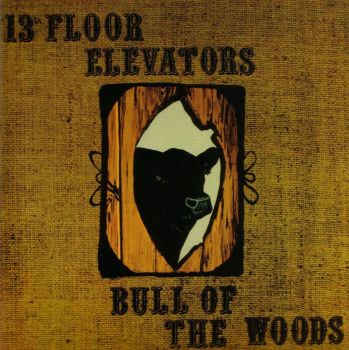
13th Floor Elevators – Bull of the Woods: Round 73 – Tom’s Selection

1317216493_9a

Whilst playing Bull of the Woods at record club I postulated that, in this day and age, it is unlikely I would ever have got my grubby mitts on 13th Floor Elevators’ third and final album…not because acquiring music is any more difficult now than it was back in the late 80s – it’s not, it’s easier – but because information is so easily accessible (and because I am such a sucker for it) that I would have read one too many lukewarm reviews and dismissed the album as not worth owning. I would have also have been pushed into buying one of The Elevators’ first two albums, seeing as popular opinion would seem to suggest that these are far superior. Just in case any of you reading this have those first two albums and don’t really like them…well…don’t give up on Texas’ finest purveyors of acid fried psychedelia just yet as, to my ears, Bull of the Woods is by far the best record of the three and I enjoy it as much as pretty much anything else from that era.

Note that I haven’t made any grand claims for Bull of the Woods’ greatness as yet. And I’m not going to. After all, the record has all sorts of flaws that, to many, get in the way but to me makes the thing even more intriguing and captivating. I love the fact that the album sounds like it was recorded in a swamp, I love the fact that the vocals come and go in and out of the mix as if the singer (mainly Stacy Sutherland I believe) was moving from one room to the next. And I absolutely love the fact that Tommy Hall has ditched his bloody electronic jug in the canal! Listening to the ‘classic’ first album and then to this, I was struck at just how different the two records are. Whereas The Psychedelic Sounds Of…is all spiky, jangly and wobbly, Bull of the Woods is a true blues groove swamp monster. Obviously Roky Erickson’s lack of involvement in Bull of the Woods makes a big difference and the two tracks he had a hand in writing – Never Another and May The Circle Remain Unbroken – are probably the albums two most distinctive songs, the former veers all over the place in much the same way as, say, Love’s The Daily Planet and the latter is a weird mantra type coda, shimmering away like the sun setting as if on the bands’ very own career (seeing as it is the last song on their last album).

But surrounding these two cuts are nine songs that show a side of the guitar driven sound of late 60s US rock’n’roll like little else I’ve heard. I remember listening to Bull of the Woods for the first time having bought it on impulse, being vaguely aware of the name of the band from a Melody Maker interview with Spacemen 3 or Loop, and being held spellbound for the entire sitting; from the first murky blues riff of Livin’ On slithering into view to the last heartrendingly fragile vocal of May the Circle slipping out of reach. And for a while, Bull of the Woods was my favourite album, supplanting the House of Love’s eponymous (sort of) debut album and Spacemen 3’s Playing With Fire.

On the night Nick asked me if I still loved this record. I took a while to answer because I really wanted to take the time to differentiate between the love of nostalgia and the love of something you truly cherish for what it is, unencumbered by the warm glow of memories of times long gone. Well, it will come as no surprise to my fellow record club chums that in light of Graham’s theme for our next evening together I have been listening to another album I held in high regard from that time in my past and, inevitably, I have compared the two records. Nostalgia pah! I can now say Nick, with utmost confidence, that my love for Bull of the Woods is as strong as it ever has been (the other record sounded dated and somewhat adolescent in comparison). I think it’s a great, great record warts and all and I wonder just how many other ‘disappointing’ third albums I’ve let slip through my grasp over the years!

Rob listened: This is a great call by Tom. He and I, in our own very different ways, are constantly having our musical choices curated by taste-makers or, more often in this age of democratic star-ratings, the masses.

Tom is a student of discographic lists. Name any artist and he will be able to tell you which album is supposed to be their apogee. He has an extensive mental list of records he is looking out for, and these are always winnowed down to one or two from any particular artist. How many potential connections has he missed out on this way?

I, meanwhile, am just gullible and act under the constant sense that others know what’s good for me much more than I do. A score below 7.0 is enough to strike a record from my ‘listen-to’ list, whilst a negative review of a record I have already become pleasantly acquainted with is all that’s required for me to question my own response. If that guy says it’s bad, it must be bad. What do I know? How much great stuff do I miss out on by allowing others to act as arbiters for my own taste?

My musical journey never took me to the 13th Floor, and therefore I never got into the Elevators. I did come to feel great affection for Roky Erickson when I reviewed his 1995 album ‘All That May Do My Rhyme’, a sweet collection of naive universal folk boogie that was very hard to resist. In common with most bands I would have had no idea at all which of the 13th Floor Elevators records was supposed to be the best or worst, other than recognising the iconic cover of the first album. In general I guess this gives me slightly better odds of picking out the hidden gem in any particular band’s back-catalogue. I have a list of bands I fancy, but rarely specific records although this does sometimes lead to record-store paralysis (“Hey, I always meant to try The Byrds. I wonder if this record is one of the good ones or not? Perhaps i’ll just leave it…”).

On the night ‘Bull Of The Woods’ more or less passed me by, but listening back to it now on headphones, i’m loving it. Groovy, direct, sharper than i’d expected and packed with great tunes. It sounds more than a match for any of those other records by big names of the 60s that I have no idea I’m supposed to own. For this band at least, I now know which album i’m looking out for.

Graham Listened: Opening signs weren’t good for me and researching the construction of Electric Jugs (take care when googling) was a welcome distraction. After a while I began to get past the mess of production and recording and actually started to “hear” it! Although far more bluesy, I picked up on some notes of early Barrett era Floyd in its psychhier moments and by the end, quite enjoyed the groove.

Nick listened: I own the first two 13th Floor Elevators albums, but to be honest I’ve never got past the (really) tinny, uber-cheap late-60s garage production on them. Or the incessant wibble, which is, on first encounter, kind of like an awesome sampled loop that would be a great big irresistible insistent hook if it were in a piece of techno, or something. I do adore the original version of “Slip Inside This House”, though. This, shorn of so much wibble, and with slightly meatier sound, I thought probably was better. I’m not sold on the “Roky Eriksson is a genius” myth, though.

Cornershop – ‘Handcream for a Generation’: Round 73 – Rob’s Choice

IMG_0105When the history of British music is written there’s a fair chance that Cornershop will be forgotten. That’s a shame, a crime perhaps. Many, many bands have made much bigger splashes but much smaller contributions.

Cornershop, like XTC before them, came out of a scene which they soon transcended, going on to make truly original music, blending influences in new ways, testing the limits of their talents and steadily finding sounds that others were missing. In doing so they made their way out into territory that they alone mapped and colonised. This left them seeming outliers when in fact, again like XTC, they are, at their heart, a deeply British band. In their records can be found a sound collage of the last 40 years of at least one, if not more, of Britain’s histories.

By the time they reached ‘Handcream For A Generation’, their fourth album, they were at their most confident. They were buoyed by the success of ‘When I Was Born For The Seventh Time’, a record that had perfected the loose-limbed groove they had been working out over the preceding two and, thanks to a Norman Cook remix, rode it all the way to number one. Four years later, with ‘Brimful of Asha’ still echoing through playlists up and down the nation, they returned with easily their most ambitious album. Whilst it may not have captured anything like the attention of its predecessor, for me it’s their definitive statement, or at least my favourite. It’s a record of pure and flawless pleasure and always the record of theirs I choose, always without hesitation and never to be disappointed. It’s never not a pleasure to hear.

Which is not to say that the pleasures herein are steady and consistent. The wild variety of ‘Handcream’ is confounding, but ultimately one of the reasons to love it. It swerves fearlessly from lazy funk to pulsing trance to pastiche 70s cock rock to playground singalongs to 15 minute Eastern bliss-outs with apparently no grand purpose or scheme. The whole collection wears a huge smile on its face and, like a stick of rock, this attitude is evident wherever and however you slice it. Each song does something different yet all retain a hazy upbeat vibe and none fail to get fingers, feet and heads moving happily.

Zoom in even further and the detail is a microscopic treasure trove. There’s the three different telephone tones used to propel ‘People Power’, the repetition of song titles across several tracks as if political slogans, the moment in ‘Motion the 11’ when the MC stops the session just to make sure the engineer is recording because “this might just be the one”. ‘The London Radar’ straps flight announcement samples together, Avalanches-style, and gets the whole thing airborne like a 70s British Airways advert. Then there’s the simple pleasure of the opening track ‘Heavy Soup’ which introduces the main players and trails several of the tracks they are about to perform, as if this were live at the Harlem Apollo. It’s playful, endearing and pulled off with just enough verve and attention to detail.

Those who waited five years for ‘Handcream for a Generation’ to land seemed to struggle to know what to do with it. The trick was simple, just enjoy it. For me, it’s much better than ‘When I Was Born…’. Here they combine not just happy grooves, but 70s rock, 90s electronica, millennial hip-hop, timeless dancehall and sunrise mantras and the whole melting pot thing has more spike, more juice, more joy, more thrills.

In the midst of all this there’s a subtle, oblique politics at work. Even post-millennium there seemed to be something of an open challenge in the seamless combinations, as opposed to clashes, of sounds, cultures, languages and styles in this record. Although the band make no direct claims herein, the album stands as a state of the sound of the nation address more freewheeling and convincing than any others I can recall from the period.

It’s the Cornershop album I always reach for and in the 12 years since I first heard it, I’ve reached for it a hell of a lot.

Tom listened: Before this evening my knowledge of Cornershop did not extend beyond Brimful of Asha. I liked that single well enough, kind of in the same way as, say, Wake Up Boo, it cheered me up to hear it on the radio, gave me hope that all was not lost with chart music (unlike nowadays, I have to say) but it didn’t occur to me to delve any deeper into Cornershop’s music – I always thought it would be a case of ‘more of the same but less so’.

I certainly never imagined that Cornershop would cover the breadth of musical landscapes in evidence on Handcream for a Generation. In scope it reminded me of In a Bar Under the Sea era Deus and the Beastie’s Check Your Head – high praise indeed. As Rob has suggested, it is charming and fun, like the kid in school that makes everyone else laugh just by showing up, it all seems effortless.

My only gripe was the 15 minute Noel Gallagher sullied jamathon. Some long songs seem vital (Marquee Moon, Halleluwah, Sister Ray), others outstay their welcome. This one could have ended after 5 minutes!

Graham listened: What a revelation this was. I just about knew that Norman Cook had reinvented Brimful of Asha in to a hit but suppose I just thought that might be the only interesting thing Cornershop were capable of. No need to study to hard on this, just sit back and enjoy a groovy, funny, cultural mash-up that ensues from the beginning.

A real, between the eyes reminder, of the value of DRC!

Nick listened: I actually really liked the 15-minute Noel G-powered ragga-drone-groove-thing. As an album this was all over the place and difficult to get hold of mentally, but thoroughly enjoyable. I vaguely recalled a couple of the singles from the time it came out, and recalled it being moderately well-received, but it had pretty much evaporated from my memory over the intervening years. I own When I Was Born… (and recall the shop assistant in Northampton Spinadisc being visibly pleased to sell it to me when I was at university) but have barely listened to it in 15 years, which makes for a weird kind of ‘what if’ sensation with the band when presented with later work which is just as good but not blessed with a seismic hit single (or three; “Sleep On The Left Side” and “Good Shit” were all over the radio way back when, too, if I recall).

Deerhunter – Halcyon Digest: Round 72 – Tom’s Selection

download (1)Lacking inspiration for the notoriously difficult Round 72 I turned to the painfully untrendy Pitchfork website for help. Specifically their top 100 albums of the last five years list (aka Look Everyone, We’ve Got a New List. You Will Not Be Able To Resist A Skim Through and That Will Make Our Site Stats Look Much Better).

I thought I would take the highest placed album on the list that I own. And this is it. To make matters even more enticing, it’s an album I have never really got to grips with, always finding it some way off the brilliance that so many claim it possesses. To make matters even more enticing than that(!), it’s an album (and a band) that I know Rob loves, so I was fully expecting something akin to born again conversion to occur. Surely, I thought, if both Rob and Pitchfork think so highly of this album (Pitchfork rated it the third best of the last five years – that’s third best out of a hell of a lot of records), a careful listen whilst someone points out to me just what it is that I have been missing all this time will be all it takes. Unfortunately, it turns out that Nick’s arguments as to why Halcyon Digest isn’t such a great piece of work were more convincing, aligning as they do far more closely with mine and, as a result, I am probably further away than ever to understanding just what it is that makes this album so special.

Now I don’t want to give the impression that Halcyon Digest is a poor piece of work. It’s not at all. But, to me, it is deeply flawed. There are wonderful songs on Halcyon Digest (Helicopter stands out), there are good songs with outstanding bits to them (Desire Lines, Fountain Stairs), there are other good songs that are simply good all the way through (Earthquake, Coronado) but, to my ears at least, there are just too many clunkers here (Don’t Cry, Revival, Basement Scene) for this to attain anything even approaching classic status.

Thinking about Deerhunter in general and Halcyon Digest in particular, my biggest problem comes down to Bradford Cox’s way (or, rather, lack of way) with melody. Sure, an album doesn’t have to be packed full of soaring melodies to be a classic, but an album of well defined, discrete, guitar based tunes, surely needs to do better than this – too often on Halcyon Digest the pace is leaden, the tunes are predictable and the songs mumble their way through to a wholly unsatisfactory conclusion.

But the most frustrating aspect of all is just how close Cox is to producing a truly outstanding record. The guitar work on Halcyon Digest is remarkable – Cox can obviously make his guitar sing in ways that are far more affecting than his vocal chords – and the lyrics are never less than interesting. The second half of the album (once the execrable Basement Scene has been negotiated) is very good indeed and Helicopter has to be up amongst the best songs of the last few years. When he is good (it was the same for me with Microcastle and Weird Era Cont), Cox is very very good but…rather like the little girl with the curl in the middle of the forehead…when he is bad, he is horrid. And, unfortunately, from now on I can’t see anyone, be they Pitchfork, Rob or Bradford Cox himself, convincing me otherwise.

Nick listened: I bought Halcyon Digest as my ‘Christmas album’ back in 2010, and I quite like it. But I can’t go any further than that, and I’m absolutely baffled by the fact that some people, presumably, think it’s masterpiece enough that it ended up third in Pitchfork’s ‘decade so far’ list. (But I hate their number 1 choice, so, y’know, horses for courses.)

(As an aside I recall a similar list by Select Magazine in 1995, wherein they anointed Screamadelica, which I bought pretty much because of that list, and fell in love with.)

I’m baffled because Halcyon Digest doesn’t feel like a statement, a discovery, a platonic essence, or a perfectly crafted artefact to me; it just feels like ‘quite a good indie rock record’. Which isn’t a bad thing, I just don’t generally think of quite good indie rock records as being worth the plaudits they often get lauded with – see The Suburbs by Arcade Fire as another album I just do not understand the praise for; a few nice songs, a couple of them very nice indeed, but caught up in so much generic plodding that I can’t get excited about it.

Maybe it’s the genre-snob in me; I could accept the power and pleasure of a really generic soul record or dance record or jazz record, perhaps, but ‘indie rock’ feels like such a brown genre to me (in that it sucks in so many colourful influences but often ends up becoming a smear of brown rather than the rainbow it clearly wants to be) that, as much as I can enjoy it, it usually fails to transcend unless it does something dramatically creative or unusual or with really staggering perfection. Halcyon Digest just feels so utterly ‘quite good’ to me that I can’t imagine anyone feeling that passionately about it. Whereas, much as I dislike it, I can kind of understand the admiration for My Beautiful Dark Twisted Fantasy, even though I think it’s wrong.

Rob listened: And so it falls to me to quite like this record. And that’s fine. Tom, I reject your request for a guided conversion. If Deerhunter don’t click with you then that’s fine by me, fine for you and, one presumes, fine by them too. Even if I wanted to, I couldn’t adequately explain what I find so beguiling about this band and, probably, this record in particular. It’s a mercurial property, seen in glimpses, flashes of elemental purity. In fact, let’s call it alchemy. For what Deerhunter do so magically, is take the building blocks of outsider rock and roll, from Bill Haley to My Bloody Valentine by way of the Stooges, the Velvet Underground, Modern Lovers and the Jesus and Mary Chain, and stack them up to create something new, some delightful structure built from uncannily familiar parts.

It’s an instinctive conjuring trick, producing perfectly balanced creations, made with careful precision by savants trusting their guts. Part of its ticklishness is the opacity of the intent. Is this deliberate pastiche, or are they really channeling 50 years of heads down clamour? Is it knowing, or dumb? Ultimately, is it good? The answer, for me, is yes. Very. It brings together strands and sounds and stances and knits them into shapes old enough to fire sense memories and new enough to be untraceable. Deerhunter are the first breath of cold air you feel in your eyes and throat before you know that autumn is coming. Always familiar, always different.

There are, it has to be said, at least 16 records in the Pitchfork list that I would choose ahead of Halcyon Digest.