2015 playlist: Round 87 – Rob’s choice

A departure for DRC to mark the end of 2015. Instead of enforcing the traditional ‘Album Of The Year’ we were essentially able to bring whatever we wanted to fill a 50 minute slot, an idea that came from our compadres in Exeter Record Club who felt they wanted to exhibit playlists of the year rather than album of the year.

I’ll save you the usual unoriginal musing about how our listening habits are changing, but let’s note that this feels like a different approach for now different times. I bought and listened to and loved a number of albums this year, but none of them stood out as a clear record of my 2015. The majority of my listening was through spotify and various grab-bag podcasts and 2015 for me has indeed been about an evolving playlist rather than monumental records.

My full playlist of the year, compiled as it happened, is here, but boiling it down to 50 minutes left me with just 13. I paired these up thematically and then constructed a pyramid structure to support by song of the year (I’m sure you all did the same, didn’t you?). Those pairs looked like this:

Charli XCX (feat. Rita Ora) – ‘Doing It’
Grimes – ‘Kill Vs. Maim’

Pop music. I don’t know what it is any more but I know what I think it is when I think i’ve heard it. Let’s approach this from a different angle. It has been many many years since I could look a the singles chart, or a playlist put together by anyone under the age of 20, and have recognise anything at all, let alone engage with it on any meaningful level. I just don’t encounter this music any more. To be fair, or to be more precise, I don’t take the half step necessary to reach it. The music is more and more present in the same places, the same websites, where I go looking for the stuff I feel I do actually want. The poptimist school have forced a breach that seem permanent and now the reality is not just that pop music should be considered on a par with all other forms, but that some of the most sophisticated, innovative and intoxicating music being made anywhere also happens to be landing in the top 10.

So, anyway, this year I found myself hit between the eyes by a handful of pop songs, some old and some new. ‘Doing It’ was the first, I listened to it consistently through the year, I still play it several times a week eleven months after it was released. It is, in short, a banger, and this year, after all these years, it seems fine to say I love it.

The Grimes album closes the pop circle for me. I tried her earlier, critically lauded record ‘Visions’ a couple of times and just never got a grip of it. I don’t know what I expected, I don’t know what I think I got, but it never came into focus. I’ve been reliably informed since then that what she was actually doing was making pop music with an arty slant and a jewellers eye for detail. So now ‘Art Angels’ makes perfect sense. It’s razor sharp pop with lashings of artistic smarts and it also just kills. Best of all, putting it side by side with Charli XCX helps me to understand some obvious but fundamental truth. It doesn’t matter whether you got here from art school or the Brit School, playing warehouse PAs or playing the Pitchfork festival, these two songs are neighbours and stand shoulder to shoulder with each other in the same place.

Olafur Arnalds and Alice Sara Ott – ‘Reminiscence’
Nils Frahm – ‘Ode’

The two albums that I listened to most this year, according to Spotify, each more than 100 times. Both are subdued, intimate, deeply human and resonantly beautiful. ‘Reminiscence’ comes from ‘The Chopin Project’, an attempt by composer and electronic artist Olafur Arnalds and classical pianist Alice Sara Ott to combine works and motifs from Chopin with their own extrapolations, soundscapes and interpretations. The results are intriguing, involving and gorgeous, slipping between centuries, styles and instrumentation to create compositions that sound both classical and modern.

‘Ode’ is the lead track from a collection of solo improvisations played on the M370, a unique 12 foot tall upright piano. It’s careful, sparing, warm. As with much of his work you can hear the mechanism chiming, the deep humming of the strings, the breathing of the player and the ambience of the space. Most of all you can hear the lustrous sound of an instrument being explored by a minimalist master.

Father John Misty – ‘Chateau Lobby #4 (in C for Two Virgins)’
John Grant – ‘You & Him’

Filed together under ‘Cynical Post-Pop Men with Beards’. I fell hard for ‘Chateau Lobby #4’ the first time I heard it on the radio. The heady cocktail of swooning misanthropy and 70s high-rolling singer-songwriting hooked me in and I immediately wanted to listen to it all day. So much so that the album felt like a let down. I need to give it another chance. No such problem with John Grant. ‘Grey Tickles, Black Pressures’ kicks off with one of the most striking opening tracks I’ve ever heard and then goes on fully to deliver on this promise. ‘You & Him’ is the flat out funniest track, but it also neatly showcases Grant’s knack for writing an irresistible melody and delivering it with wild and heady instrumentation, in this case a rasping glam rock stomp forcing home the delicious slight of the best chorus of the year.

Vince Staples – ‘Summertime 06′
Kendrick Lamar – ‘The Blacker The Berry’

Hip-hop was vital this year and while Drake was whinging on about feeling a bit down in the dumps, Kendrick Lamar delivered a generation-defining album and Vince Staples followed shortly after with, effectively, a record that took the premise of Lamar’s last record, ‘Good Kid, m.A.A.d. City’, of a teenager trying to navigate life in the poorest neighbourhoods, and dialled in the focus and intensity.

Where ‘To Pimp A Butterfly’ is a wild-wheeling confrontation with the chaos, confusion, self-doubt and destruction set against an equally giddy musical backdrop running the range of a century of pioneering African-American music, ‘Summertime’ is an intimate, nagging, claustrophic experience, dragging the listener in close to what it’s like to be a 13-year old boy in Long Beach, California, growing up in a world that seems only to offer options of despair or destruction.

Both beautiful, both bleak, both brilliant.

Oneohtrix Point Never – ‘Sticky Drama’
Unknown Mortal Orchestra – ‘Multi-Love’

A highly tenuous pairing under ‘electronic’ a label which hardly does either any favours. ‘Multi-Love’ is one of the hookiest tunes if the year, specifically the visciously repeatable opening line ‘Checked into my heart and trashed it, like a hotel room’, but mainly the incredible drum pattern that kicks in like John Shuttleworth going bonkers on finding a new button on his bontempi.

‘Sticky Drama’ is a completely different beast, a savagely inverted r&b punctured by the sudden arrival of the devil searching for his asthma inhaler. In his distressed songs, compressed together from the digital detritus of a diseased pop culture, Daniel Lopatin is finding new and vital ways to interpret the world around us and foreshadow the places it may be going to.

Courtney Barnett – ‘Pedestrian At Best’
Natalie Prass – ‘My Baby Don’t Understand Me’

Old tricks, new life. Neither Courtney Barnett nor Natalie Prass are doing anything particularly new, but each is breathing hot new life into old approaches. ‘Pedestrian At Best’ is THAT riff, but hooked to Barnett’s overclocked vocal rant, veering from sneering to self-doubt and packing in many of the best lines of the year into a still-irresistible 4-minute romp.

‘My Baby Don’t Understand Me’ was the first song I put into my ‘2015’ playlist. It pursues an old-fashioned approach to song-making with admirable commitment, achieving a timeless, swooning delicacy as it sweeps between phases, Prass using her beautiful voice with measure and control.

Daughter – ‘Doing The Right Thing

‘Doing The Right Thing’ is my song of the year. I don’t know whether it’s my favourite, or the one I’ll remember in years to come, and yet it stands head and shoulders about the rest. The lead track from an album that will follow next year, it is as fine a testament to the value and power of songwriting as an artform. Put simply, it deals, poetically, with dementia, but more broadly it demonstrates how words and music can combine to force a new perspective and, even if only briefly, pierce the heart of life itself. No other song came together to such effect this year.

Nick’s 2015 playlist: round 87

1. “The Charade” – D’Angelo
2. “King Kunta” – Kendrick Lamar
3. “Black Eunuch” – Algiers
4. “Accelerate” – Susanne Sundfør
5. “Feel You” – Julia Holter
6. “Realiti (Demo)” – Grimes
7. “Dot Net” – Battles
8. “Archer On The Beach” – Destroyer
9. “Nest” – Young Fathers
10. “A New Wave” – Sleater-Kinney
11. “Play Mass” – Sons of Kemet
12. “Peroration Six” – Floating Points

As 2015 draws to a close, we inevitably turn to our ‘best of the year’ choices. Having already played the two albums that would probably have been my singular choice (Four Tet and Polar Bear), and knowing that Graham had bought no new albums this year and Tom had bought not many, I thought I’d try and give a small overview of what I’d been listening to, so as to cover as many previously untouched bases as possible. The result? A 12-track, 50-minute-ish playlist, burnt on to a CDR like we used to do in the olden days, and then judiciously ignored because we were eating curry and talking over the top of it.

My mix for DRC is a close cousin of the playlist I put together for Exeter Record Club a couple of weeks ago, with things like Polar Bear and Mbongwana Star removed (because I had played the whole album here) and D’Angelo added (because I played the whole album there). I also took out a 12-minute Aphex Twin synth oscillation, because, though it’s very beautiful, it’s very long, and enabled me to get a couple of other tracks in instead, and thus cover more bases.

Oddly enough I started the playlist with something from 2014; D’Angelo’s magnificent “The Charade” from Black Messiah, which he dropped with about 36 hours’ notice almost exactly a year ago, and thus missed out on all the 2014 lists. Is it eligible for a 2015 mix or poll? Well it’s in a lot of them, but more importantly it’s amazing, so who cares. I’ve seen “All we wanted was a chance to talk / instead we got outlined in chalk” pitched as one of the best lyrics of the year; I’m not a lyrics person as a rule, but in terms of efficiency, impact, and message, I’m inclined to agree.

“The Charade” is the first of a trilogy of tracks from American artists who explicitly addressed the broiling civil rights issues facing the country through 2014 and, sadly, into 2015 (and beyond). I’m a white man from south west England, so “King Kunta” (enormous bass groove, echoes of p-funk) and “Black Eunuch” (scratchy guitars, handclaps, gospel) are most definitely not about me and the culture I live in, but I can recognise that they are powerful and compelling. And that they move hard and brilliant, albeit in three distinctly different ways.

I’m also not a Norwegian woman, but Susanne Sundfør is, and she made a fabulous album of emotional, diverse synthpop called Ten Love Songs, of which “Accelerate” is just one. Julia Holter, meanwhile, made an incredibly mannered album of precise, sophisticated art-pop – I found it harder to love than Loud City Song, but very easy to admire.

I found it easier to love Grimes’ music, even though I didn’t hear any of her 2015 output until last weekend, when the physical release of Art Angels finally hit the shops. The demo of “Realiti” strips back some of the overloaded (but enormously fun) production ideas and sonic touches of the rest of the album, and lets the tune shine. Similarly packed with hooks and ideas was the Battles album, which seems to have been ignored almost everywhere; if anything I enjoyed it more than their debut.

Destroyer originally released “Archer On The Beach” as a single about five years ago, and back then it was a basically Dan Bejar half-singing over some ambient backing provided by Tim Hecker. Re-recorded for Poison Season, it is a wonderful, subtle, slinking piece of pseudo-jazz. I’m disappointed, if not surprised, that Poison Season is getting none of the end-of-year plaudits that fell enthusiastically on Kaputt; for me it’s every bit as good, but it’s eclecticism and lack of over-arching schtick compared to its predecessor makes it less easy to mentally categorise and, thus, appreciate.

Young Fathers go a bit Motown on “Nest”, one of the loveliest songs I heard all year, before Sons of Kemet play some thoroughly modern-sounding, African-derived, dance-influenced jazz, with tuba, sax, and double drum kits. The only band I saw live this year: a great choice.

Somehow I missed out on noticing Floating Points until this year, despite his singles over the last few years all seemingly being right up my street, and him being mates with loads of other people whose music I love (Four Tet, Sons of Kemet, etc). “Peroration Six”, the closing track on his debut album, was the first thing I heard by him, and it practically took the back of my head off. Sadly the rest of the album isn’t quite as good – the middle third goes a little too Tangerine Dream – but this makes up for it; maybe my favourite track this year.

Rob listened: Well, the curry was pretty distracting… I loved the list. It’s always a wonder to see other people’s end of year lists, especially those that you might reasonably think will be quite similar to your own until it turns out they just aren’t. It’s an old saw by now, but Nick’s list also reminds me why I love record club so much. In the venn diagram of our tastes, the overlaps may be big in absolute terms, but they are still relatively small. We’re each out there in our own orbits, occasionally brining back messages from  other worlds.

So, we ignored much of this, but I remember some. the D’Angelo track sounded much more immediate and arresting than did ‘Voodoo’ when Nick dragged us through that a year or so ago. Enough for me to definitely want to go back and check out ‘Black Messiah’. I tarried with the Algiers record in the middle of the year, but found that I liked the concept better than the music. One I need to revisit. Susanne Sundfor sounded terrific and Grimes unrecognisable, as it turns out that Realiti is not on the vinyl version of the album. I disappointment, but a nice coincidence in the context of the meeting.

Battles sounded really charged. Amazing how this band seems to have completely disappeared from the radar. Fair enough, they haven’t really crossed my mind since 2007/08, which now sounds like my loss. Destroyer doing what Destroyer does is pretty good by my estimation.

‘Nest’ was the big revelation of the night. I haven’t really tried Young Fathers, probably having made some hopelessly false assumptions about what they would be. This track sounded really great, strong, scuzzy, motown rock with melody, urgency and nagging vocal hooks. Time for me to check them out, finally.

Sons of Kemet was great too. Floating Points kind of drifted by, but in it I could just about grasp the bits that would have lodged in Nick’s particular musical medulla. the album has recnetly topped the Resident Advisor poll of the year, and in their summary they specifically mention that the bits that didn’t seem to work initially absolutely come to form a major strength of the whole piece eventually, so, one for me to start out on and for Nick to persevere with.

Thanks Nick. Here’s to 2016.


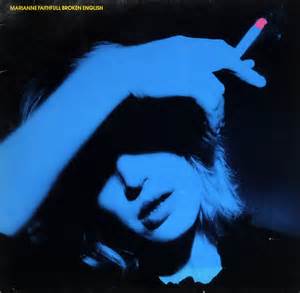
Marianne Faithfull – Broken English: Round 86 – Tom’s Selection

th8L08E8F7I have a few albums in my collection that do that thing where the whole work revolves (no pun intended) around one track. It may not be the best track on the album, but it centres it, acts as a focal point and can create the impression that all the other songs emanate from that source – the wellspring, if you like. A few records that, to my mind, do this thing: Astral Weeks (Madame George), Sgt Peppers (A Day In The Life), Marquee Moon (the title track), Stone Roses (I Am The Resurrection), Clear Spot (Big Eyed Beans From Venus). I didn’t think very long or hard about that list and I am sure some, if not all, of my choices are disputable but, for me, these songs do exactly the same job as Why’d Ya Do It? on Marianne Faithfull’s scathing 1979 comeback album Broken English.

I will always be able to recall the first time I heard this track. I had played the first side of the album a number of times already and loved what I had heard. The opening (title) song immediately stopped me dead on first listen. I was expecting to hear a floaty, wispy, 1960s folk-waif type of voice warbling above sparse and neatly strummed acoustic guitars. In fact I had very low expectations for Broken English…as I fired up the turntable in anticipation, I wasn’t really sure why I had bought it, other than the fact that it has a pretty unequivocal reputation. Imagine my surprise when a voice akin to a female equivalent of Tom Waits came creaking and croaking out of the speakers, whilst an early incarnation of The Knife layered glacial keyboard washes over an eerie and ominous bassline overlaid by shards of guitar set to emphasise the perilous nature of the subject material (the end of the world, of course…this was 1979, after all). The next three songs are all great but not quite as impactful. They smoulder rather than ignite but I would have been happy enough with my purchase even if side two turned out to be a dud.

Well, it turns out, that’s where the real treasure lies. The first time I played the second half of Broken English was on a sunny Sunday morning. My 10 year son, Kit, and I were in the dining room – him drawing cartoons and me pottering around. As close to familial tranquility as we come! A perfect time to check out that second side…or so I thought.

The single The Ballad of Lucy Jordan kicks things off – a sweet song that burrows its way into your psyche with repeated listening  – first time through it seems a tad lightweight but its (Dr) hooks are undeniable and soon work their way in.

For me the album just goes from strength to strength from there on. What’s The Hurry has been described as filler by some, but I love it. Next up is Faithfull’s rendition of John Lennon’s Working Class Hero – never has a plodding dirge sounded so appropriate, which is ironic given Faithfull’s aristocratic background…but surely that was the point! It also contains the first undeniable (as in clearly audible) use of invective on the album. It’s not a good word, it is used repeatedly but it expresses ire, so that’s kind of OK – I don’t think Kit clocked it anyway. Let it pass, don’t allude to it and I might just have got away with it.

Well, how was I to know what was to come! Strangely, given how closely it resembles a Grace Jones song (any Grace Jones song will do), Why’d Ya Do It shares none of Jones’ love of innuendo and suggestion (essential ingredients if you are to get away with it whilst listening with a ten year old). So whereas Kit has heard Pull Up To The Bumper on numerous occasions and, presumably thinks it about neat parking or traffic jams or some such, there’s no possible misinterpretation of what Faithfull’s getting at when she sings:

Why’s ya do it, she said, why’d ya let her suck your cock?

or

Every time I see your dick I see her cunt in my bed.

Listening that Sunday morning, I was caught in two minds – turn the record down, or off and run the risk of drawing attention to it or let it play on and hope that the boy had other things on his mind….or hadn’t learnt any of those words yet! I can’t remember what I did in the end, but Kit has never mentioned the incident to me since and doesn’t seem to be any more traumatised than normal, so presumably no harm was done.

To be honest, I’m not sure what to make of the track. It’s immense and incredible but it sullies the listener to such an extent that it is hard to enjoy. I’ve never heard lyrics like it and, whilst I’m sure they exist on other records, context is everything and I never expected to hear something like this coming from the mouth of the woman who, just over ten years previously, had sung As  Tears Go By as sweetly as you like. The transformation is unbelievable and surely this record could only have been made by someone with nothing to lose – a super-successful starlet of the 60s who came upon hard times, developed a heroin addiction that left her on the streets, penniless and led to the forced removal of her only child into the custody of her ex-husband, John Dunbar. Faithfull was arrested for possession of drugs in the late 60s, attempted suicide a few years later and suffered from anorexia nervosa for much of this period. To make matters worse, if that’s possible, she was vilified by the press whilst Mick and Keef perpetrated many of the same crimes but were hero worshiped in return. Not surprisingly, by the time she came to record Broken English, Faithfull was well and truly pissed off. Hence, the inclusion of Why’d Ya Do It – a song so scathing and hateful that it could only really make sense when sung by someone who had lived through the darkest of times and survived, just, to tell the tale.

So, in context, its inclusion makes complete sense, and knowing Faithfull’s back story has meant that I am able to enjoy the track all the more. Whilst it’s not surprising that the song was censored out of the Australian release of Broken English (it’s not surprising per se but it is, admittedly, surprising that this should have happened in Australia of all places!), its non-inclusion would dramatically alter the album and, I would have thought, significantly weaken it.

In fact, I now have proof that this is the case. Obviously God, or the boss at Devon Electric, doesn’t like the thought of us playing such filth at record club. I kid you not, in a moment of perfect timing to die for, at the start of the third line of the song where Faithfull just begins to warm up the lyrics, we had a power cut. But not one of those thirty second affairs. No. One that lasted just long enough to get the other three out of the house and safely on their way home to bed to dream their sweet dreams, unsullied by what is surely one of the most exquisitely foul mouthed rants to grace recorded music. It’s their loss!

Rob listened: I used to give so little time to a lot of the records I reviewed back in the 90s. Although Marianne Faithful is revered by many of the artists I hold most dear, I took against her after a couple of listens to ’20th Century Blues’, her 1997 record of songs from the Weimar Republic and beyond. Something to do with the voice (which has to be completely unfair – I would have lapped this stuff up from Tom Waits), the persona (I recall hearing her saying some stuff I found faintly objectionable, pious little shit that I was and still am) and the songs (a tough sell to a non-committed listener). Everything I’ve heard from her since has come through that stupid prism. Never having heard her in her first flush I had nothing to contrast this reinvention of her career to, so off she went into the bin, literally in the case of ’20th Century Blues’.

‘Broken English’ was a revelation. It’s everything Tom describes, but I also got a vibe from the relatively recently rediscovered ‘Hailu Mergia and His Classical Instrument’ a record made in the 1980s by an artist who placed his traditional instrument on top of the instruments he could find around him, in this case a drum machine and a Yamaha DX7 synthesiser, and from these disparate ingredients made something truly idiosyncratic and strangely, counter-intuitively, timeless.

Anyway, I liked this a lot and I’m actually glad it died before the last track, which sounds like it might have created an impression capable of overshadowing the rest of the work.


Kate Bush – Aerial: A Sky of Honey – Round 86, Nick’s choice

aerialAfter Tom had unleashed the theme for this meeting I had a few immediate thoughts – The Stone Roses being the primary one – but thought I’d do a bit of research before settling on something. So I asked for comeback album recommendations on Facebook and resurrected an I Love Music thread. Neither produced a single mention of this album, though, which somehow sprang to mind after a couple of days, and stayed there resolutely. In fact, it’s one of the few albums that I’ve listened to repeatedly in the run-up to a record club session. This isn’t surprising; at various points over the last decade I’ve found myself gorging on this fabulous, sensuous record at the expense of the rest of the music in the house.

(NB. Given that Aerial is a 70-minute, double-CD album, I decided to just play disc two. Because it’s amazing.)

Does it qualify as a ‘phoenix’ album? Aerial came 13 years after The Red Shoes, which, whilst hardly a disaster, hadn’t scaled the critical or commercial heights of Bush’s artistic peaks (arguably the apex of which is The Hounds of Love, still, somehow, unaired at record club. Bush followed its faintly unedifying promotional cycle by vanishing, judging by what’s offered forth here, into a decade or more of low-key domestic bliss.

Across the whole of Aerial there are songs about washing machines, raising children, painting in the garden, and skinny-dipping with your other half while your kids are tucked-up in bed. There’s also a song, on the first disc, where she literally sings the digits of pi, as if in response to some kind of music-journalistic quip about being able to make anything sound amazing.

I had the pleasure to review Aerial almost exactly a decade ago, and I raved about it then. I stand by everything I wrote; if anything, the intervening years have only made it grow in my estimation: pretty much nothing else I own sounds quite like this, or does what it does.

What does it do? Aerial is a concept album of sorts, split into two parts – A Sea of Honey and A Sky of Honey – which deal broadly with the vicissitudes of domestic life; a day in the life of a family bathed in light and birdsong, perhaps. The strict definition of the concept isn’t as important as the impression of it; it feels cohesive, like an object of gestalt with narrative flow, even if the ‘plot’ as it were is a little vague and impressionistic.

The second disc, A Sky of Honey, is a thing of wonder, that grows form modest beginnings – a prelude and then a prologue – through a flamenco / folk rumpus and then into an astonishing, visceral twilight reverie that is hinted at during “Somewhere in Between” and explodes into life through “Nocturn” and the album’s incredible closing title track. The final two tracks run into each other, and combine to make a quarter of an hour of the best music I’ve ever heard, an organic, rapturous party, at once intimate and expansive.

Sadly, the spectre of Rolf Harris hangs over Aerial; he plays didgeridoo and narrates a track, much as he did earlier in her career. His presence leaves a faintly bad taste in the mouth these days, but the quality of this record is such that his involvement can be looked over; he is a very minor part of proceedings indeed. Nevertheless, Aerial is one of the very best records I ever had the pleasure to review.

Rob listened: A great choice for the theme. As for the record… more or less ‘yes’ to most of the above, but somehow I still don’t quite get it, at least not 100%. I think Kate Bush is fantastic, but I just don’t get a rush from a lot of her music. She’s an absolute role model to rock stars, doing everything on her own terms, guarding her privacy, focussing on the work and balancing this admirably with family and life in general. I tend to like and appreciate whatever I hear of hers, but there’s something between me and her music that prevents me from diving in.

I hadn’t heard ‘Ariel’ properly before. I liked a lot of it, particularly what I think was the last track which built subtly to the point of being overwhelming . Much of the record however just seemed to drip with dog-whistle signifiers of ‘quality’, akin with records people seem to like because of the way they sound rather than what they do to them. That’s all fine for people who get off on that sort of thing, no problem from me, on you go. I just don’t have those buttons.

Tom listened: I guess I fall somewhere between Rob and Nick in terms of my feelings for Aerial – if Nick is 100% on board and Rob is 75% then I guess my percentage of ‘onboardness’ would hover around the 90% mark.

As I’ve written on these pages, my admiration of Kate Bush runs deep. The Dreaming is one of my favourite albums and I love Kate the person almost as much as the records she has produced – visionary, uncompromising (in the best possible way), slightly unhinged (in the best possible way) and totally and utterly genuine. What’s more, she makes amazing music.

However, when I cast my eyes over her discography, there is only the one disc that I would call completely, classic (although I haven’t yet acquired, or even heard, Never For Ever which is silly considering it is the album that comes immediately before The Dreaming and holds Breathing, Babooshka and Army Dreamers which already makes it half a classic). Up to The Dreaming, Bush was finding her way, incredible tracks sit side by side with the flotsam and jetsam of a young mind throwing everything and the kitchen sink into the mix, playfulness at the expense of consistency. Since The Dreaming (even on, whisper it, The Hounds of Love), Bush has been gradually shaving off those rough edges, polishing the diamond until it gleams so bright that it takes the breath away. And that’s where Aerial’s at – a beautiful piece, especially the second disc (which is by far my favourite of the two), stunningly performed and arranged, exquisitely produced but lacking those splinters that, for me, made her early work so compelling.

I don’t want to be overly harsh on Aerial though, if I want a breathtakingly enjoyable 45 minutes I can’t think of many better ways to do it…although, as Nick has mentioned, the use of Mr Harris’s voice throughout a A Sky Of Honey does detract a little in these post Saville days!

Bob Dylan – ‘Blood On The Tracks’: Round 86 – Rob’s choice

Bob Dylan - Blood On The TracksLet’s define some terms of engagement before we begin here. I’m making no claims for what I’m about to write other than a sure certainty that I have nothing original to add to what has already been written about someone I presume is the second most written about artist in the history of popular music.

I love Bob Dylan well and good. Personally, his music affects and nourishes me. In broader cultural terms he absolutely deserves his place in the firmament as one of the great iconoclasts, a razor-sharp revolutionary, a true genius who, alongside the Beatles, claimed more virgin territory than any other musician of the last 60 years. Like I said, nothing new in that view.

As I get older I want to know less and less about the artists I listen to. When it comes to Dylan, I’ve always felt that way. Despite, or perhaps because of, his rightful reputation as perhaps the artist most decoded, scrutinised, and pored over, I’ve never gone beyond what I find in the records. I couldn’t tell you who and what ’Tombstone Blues’ is about. ‘115th Dream’ always makes me chuckle, but I’m clueless on its wider context. For me the records, the sounds, are enough. In almost all cases I’ve never even gone so far as to read the lyrics. I’m not even a studious listener to the 10 Dylan albums I own. As happens most weeks at DRC, I expect that Tom, a record researcher at heart, will be correcting my remarks as and when I place tracks on the wrong albums and albums in the wrong sequence.

So, expect no further analysis. I’ll leave the subject of the wider placement of Bob Dylan in the pantheon of greats with a couple of observations made previously by hundreds of thousands of other people, but which help to explain why I find myself prizing and spending so much time with his music. It seems to me that more than any other artist of the 50s and 60s Dylan privileged words over music, and whilst the sound was often wildly inventive, clashing and smashing styles in ways that famously drove devoted fans demented, he always used it to support and carry the weight of his words and ideas. Unlike the Beatles, Dylan was not a technical innovator, although he did a huge amount to kick through walls between genres. But while the Beatles wrought their revolution from behind their guitars and studio desks, Dylan changed the world from within his own head.

And so to ‘Blood On The Tracks’, and here’s where my carefully prepared excuse of wilful ignorance hopefully begins to pay off. Tom asked us to bring ‘a phoenix record’ and, for the record and in case this is disputed, he clearly said we could interpret it pretty broadly. It took a little while, but ‘Blood On The Tracks’ was, eventually, the first thing that came to mind and once it did there was no dislodging it. I’m claiming is as a phoenix because I always had a fixed idea of it as a comeback or a return to form. Now I realise I may be on shaky ground here. Any Dylanologist worthy of the label could no doubt easily shred this assertion, and I’m more than happy to confess that I formed this impression vaguely and without consideration, such that now I find scrabbling back through the history hoping that I haven’t grossly misunderstood, but hear me out.

I think it’s pretty well accepted that Bob Dylan’s remarkable run of unimpeachable albums ended with 1969’s ’Nashville Skyline’. Fair enough, the album that followed it, ’Self Portrait’ (which I haven’t heard) is by reputation an odd affair and such an out-and-out stinker that it’s possibly a deep-cover masterpiece, or at the very least an artful prank we just haven’t understood yet. Whatever, most critics hated it and it has few defenders 45 years later. It was certainly the first mis-step from an artist who seemed incapable of slipping. Whilst there were well-regarded records in the couple of years that followed, with ‘New Morning’ a notable example (again, I haven’t heard it) there were also messy efforts like ‘Dylan’ and then better-recieved records like ‘Planet Waves’ and ‘Before The Flood’, which I’m discounting as they were collaborations with The Band.

I freely admit I’m making these rules up as I go along, but either way I think it’s fair to say that here was an artist who had a flawless 60s and who then faltered and staggered through the first half of the 70s, never landing anything that felt like a classic, a record for the ages. For someone who released ‘Bringing It All Back Home’, ‘Highway 61 Revisited’ and ‘Blonde On Blonde’ in the space of 14 months, this was a major, and his first, dip in form. That was until ‘Blood On The Tracks’.

So there’s my rationale. It remains only for me to qualify this as absolutely one of my favourite Bob Dylan records. I’m not sure it’s the one I would choose to bring as a sole representative of everything that makes Dylan such a critical cultural influence, but it does strike me as possibly the most concise and unified album of his career, largely due to a tight focus in terms of subject, which seems to impose a similar unity on the sounds and milieu of the record. Where ‘Blonde on Blonde’ or ‘Bringing It All Back Home’ get busy throwing off explosive firecracker ideas in all directions, ‘Blood On The Tracks’ is a dedicated singular statement.

It’s famously been considered a record about the breakdown of Dylan’s marriage, something which he’s consistently denied, whilst his son Jakob describes the album as “about my parents”. Dylan claimed at the time that he did not write confessional songs, but also professed difficulty understanding how people could enjoy ‘Blood On The Tracks’ when the songs expressed such pain. Confessional or not, Dylan must be drawing on direct experience to be able to write lyrics that so perfectly capture the confusion, jealously, desire, rage and impotence of a disintegrating relationship. There are heartbreaking songs here, but always twisted and leavened by unexpected reverses, contradictory feelings and self-defeating stances.

Perhaps most importantly for listeners normally resistant to Dylan’s more elliptical works, the songs here are as direct as he ever wrote. There’s only one long, looping, allusionary ballad, ‘Lilly, Rosemary and the Jack Of Hearts’, and even that can be enjoyed straight as an epic romp. The rest are clear and unobstructed songs about love, loss, regret and fate. We’re duty bound here to talk briefly about Dylan as a lyricist. I’ll keep it brief, and remind myself that I have nothing original to say. I do think that there is enough evidence in ‘Blood On The Tracks’ alone to substantiate Dylan as a genius of the form.

He starts most songs with a verse that ties him into what seems to be an impossibly restrictive rhyme scheme. He then precedes to weave dense, rich and fabulous tapestries from within these constraints, using them as platforms rather than shackles. That he can do so without ever, or at least very very rarely, feeling like he’s forcing it, is absolutely remarkable. Ultimately, like the best poets, he uses the limitations of rhyme and meter to harden and strengthen his words, to push him on to even greater heights.

I’m sure it’s been said before, but for me there’s a clear through line from Dylan to contemporary hip-hop. The lyrical density is certainly comparable. The sheer number of words Dylan pours into his records, barely a syllable out of place, can surely only be rivalled by the best rappers. There are also storytelling similarities aplenty. These are wild west songs populated by criminals, strippers and loners. When critics were getting their knickers in a twist over gangster rap in the 90s, I don’t recall any referencing back to the imagery and body count of ‘Blood On The Tracks’. Tied together within poetic structures this leaves songs like the infamous smack-down ‘Idiot Wind’ as pieces that could essentially be picked up in 2015 and rapped straight off the page.

Phoenix or not, career peak or not, ‘Blood On The Tracks’ is a dazzling record from a peerless talent.

Tom listened: I bought Blood On The Tracks when I was too young. I guess I was probably about 20 years of age, and I really didn’t get on with it very well. But then, I really didn’t get on very well with Berlin, Forever Changes and The Hissing of Summer Lawns either at the time I first heard them and they have gone on to become amongst my favourite records.

And I guess it’s always slightly needled me, the reverence with which this album is regarded in comparison to those wonderful albums made in the mid 60s. But hearing Rob’s clean CD (as opposed to my very crackly vinyl), interwoven by his effusive, practically evangelical, commentary and I could begin to see what all the fuss was about. I still can’t quite see why the lyrics are held in such high regard – give me ‘The ghost of electricity howls in the bones of her face‘ over ‘Come in she said, I’ll give you shelter from the storm‘ any day of the week – and, to my mind, Idiot Wind sounds a hell of a lot like Sooner Or Later but these quibbles aside, I really enjoyed listening to this again, re-acquainting myself with it and I will be scouring the second hand record stores to see if I can update my copy.

Burning Spear – Marcus Garvey: Round 85 – Tom’s Selection

BurningSpear-MarcusGarveyI’m going to start off by laying my cards on the table…I know next to nothing about reggae! Sure, I have owned Legend for many years now (along with pretty much everyone else) and have even gone on to add a number of Bob Marley albums to my collection, but other than that my experience has been limited to hearing the occasional Shaggy or UB40 song on the radio. I always suspected there were deeper and more rewarding veins to mine than that…but where on earth to start?
Well, good ol’ John Peel, that’s where. I mistakenly thought Peel had put a Burning Spear song in his Desert Island Discs’ collection – it turns out the song I was thinking of was Man Kind by Misty in Roots. No matter, Peel was my inspiration as I distinctly recall him playing Burning Spear at relatively regular intervals during the 15 years of so that I was an avid listener of his. At the time I would have probably have only given a Burning Spear song a cursory listen – I would have been far more interested in hearing the new Paris Angels, Telescopes or Chapterhouse offering! – but, since then, time has elapsed (and record club has happened) and my musical tastes have broadened significantly. And although the three aforementioned bands are all cultural behemoths who shifted the musical world (and, some would argue, society itself) off its axis, I would attest that Marcus Garvey the album might just be an even more significant work than anything offered up by this indie triumvirate!

Having finally acquired Marcus Garvey only recently – I tried to buy it online a few years ago but it never arrived – I was immediately surprised by its accessibility. I was expecting a much darker record, possibly due to the band’s name, possibly due to the fact that I knew Burning Spear to be a politically charged collective, possibly because Peel tended to gravitate towards the more challenging end of the musical spectrum. However, although the subject matter of the songs is highly political – Garvey himself was a key figure in the black rights movement of the mid twentieth century – the music is warm and inclusive and, although I would be the first to admit that I will always feel like an onlooker when listening to reggae, there is nothing on this album that feels alienating.

In fact, despite being released in 1975, the one thing that immediately stood out when listening to the album for the first time was the quality of the production. Every sound can be heard in crystal clarity and there is so much space in the recording that the excellence of the bands’ singing and musicianship is difficult to ignore. It’s almost impossible to not make comparisons with Bob Marley – I was trying to think of another genre of music where one single figure or band towers over the rest to the same extent…and couldn’t! – but I have to say that Marcus Garvey is, for me, a more successful album than any of the Marley albums I own (I have Burnin’, Natty Dread and Rastaman Vibration). That could be because the Legend cuts have become so ubiquitous that it is almost impossible to hear them with any sort of objectivity any more and, as a result, the album tracks feel less significant than they really are. But I have a sneaking suspicion that Marcus Garvey is just a better album, perhaps, in part, due to the fact that Burning Spear were not trying to write singles that sold in their millions and could concentrate on producing an album that works as a cohesive and complete whole, rather than just another collection of songs.

So, now that I have dipped my toes in the waters of roots reggae, I am keen to expand my horizons beyond the four albums and one compilation I currently possess. Where to go next though – Misty In Roots? Steel Pulse? The Congos?… UB40? Any recommendations would be gratefully received.

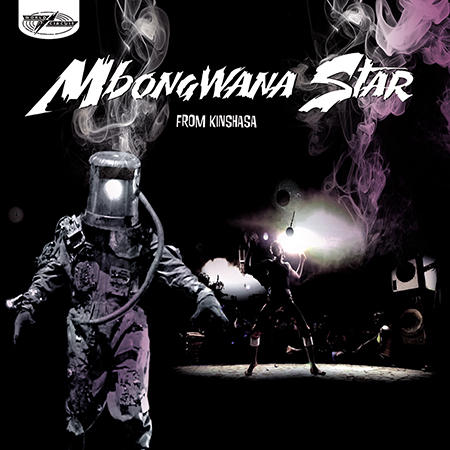
Round 85: Nick’s choice – Mbongwana Star: From Kinshasa

mbongwana-star-from-kinshasa-450sq_0Metacritic aggregates reviews of stuff – movies, games, TV, and music – and assigns an average score based on the (presumably mean) average of the scores of all reviews. It’s a useful resource for monitoring critical consensus each year, and also for seeing the obvious differences between the methodologies for how different types of reviewing work – films get panned far more often than records, for instance – and I’ve been using it for a decade or more.

One album that jumped out at me early in the year was From Kinshasa by Mbongwana Star; with a ‘metascore’ of 88, it was one of the highest-rated albums of the year so far, and I’d never heard of it (I’m not sure how I’d missed the glowing lead review in The Guardian). When some vouchers for that rainforest shop (which I normally boycott) unexpectedly fell into my hand a few weeks ago, I decided, never having seen this in my local record emporium, to take the plunge.

Before record club, though, I’d only listened to this once, and even then not managed to get all the way through: finding time to listen to records all the way through (rather than putting them on and then being distracted by something more important, like poo, or nappies, or nappies full of poo) is tricky with an almost-one-year-old in the house.

Off that single, distracted listen, plus last night’s record club spin, From Kinshasa sounded almost exactly as I’d expected, in that I’d not really known what to expect: heady, Congolese percussion, cloudy, fuzz-coated electronics, dirty, cavernous basslines, beautiful singing (presumably in Lingala), and guitar work that oscillates between (what I understand as) the soukous style, and something far more post-punk. It is, as the Guardian review suggests, a complete culture clash (with a fascinating backstory involving Staff Benda Bilili, several generations of Congolese musicians, and a producer/bassist from Ireland by way of France), that by turns sounds like experimental rock music, hip hop, dub, dance music, and what I’ll refer to (from my limited exposure and experience) as more traditional African music (I’m aware that Africa is a massive continent with thousands of cultural traditions and that this is a sweeping generalisation).

A bit more googling reveals that the album was intended to be called From Kinshasa to the Moon (the opening track is still called this), which makes the weird spaceman on the cover make a little more sense. ‘Mbongwana’ means ‘change’, and, like most change, From Kinshasa is exciting, confusing, and a little ominous. Luckily it’s also absolutely terrific.

Graham listened: It’s great when something like this comes up where I have no idea what it is going to be like, no reference points for anything like it and yet it still clicks with me straight away. It was great for all the reasons Nick says and transcended so many styles but never lost its groove. The African continent may just be about to enter my CD collection.

Rob listened: A great DRC moment. Nick attempted to set this one up, essentially telling us that he’d bought it based on a number at the top of a set of reviews and hadn;t even listened to it right through yet. None of those details are bars, of course, but they illustrate that perhaps we didn’t have overwhelming expectations as ‘From Kinshasa’ started to spin. It started probably as we might expect. A little dubby, a little afrobeat, a little non-specific African (for me to claim I could place it more specifically would be disingenuous, in fact I don’t remember Nick mentioning Soukous on the night, but I thought that style of guitar was at least one that I had heard quite a bit of before, and I didn’t hear it here). It fit nicely as a closer, almost a summariser, of the three records that had preceded it. We carried on chatting, agreeing that the record was pleasant, wondering vaguely what time we would get home, or get the washing up done in my case.

And then, as it progressed, the record began to weave a set of magic spells. We’re talkers at DRC and many a very fine record has been completely obliterated by our squawking, usually on completely unrelated topics. It seemed for all the world as if this one was going to follow suit, but from about half way in, various of us kept dropping out of the conversation and focussing in on what was happening in the music. It’s hard to explain, but there are incongruous details running through this music that acts as mesmeric lures. An unnecessarily frantic rhythm here, a skranging Gang of Four guitar loop there, an unplaceable, unshakeable loop that could be a keyboard, could be a guitar, seems most likely to be an ice-cream van over there.

By the time it finished, we were all listening pretty closely, variously agog at different times, and all wondering whether we’d just talked all over one of the albums of the year.

Tom listened: Wow. This one came roaring out of the blue, unannounced and unheralded; even by Nick, who hadn’t even listened to it all the way through before playing it to us.

From Kinshasa was an epiphany for me – an album from the African continent that sounded like nothing else, a music that tapped into the heritage and culture of the (somewhat appropriate) DRC but very much pointed a way forward into uncharted waters, a marrying of the old and the new, of tradition and modernity, of the developing world with the ‘western’ one. The one thing that fascinated me most of all was how Mbongwana Star did this – what was it in the sound of the album that produced this impact? Unpick any particular part and, in isolation, it was recognisable, familiar even; but melded together…wow!

One of the very best new discoveries that DRC (record club that is, not Democratic Republic of Congo) has provided me with thus far. I will be getting this album!

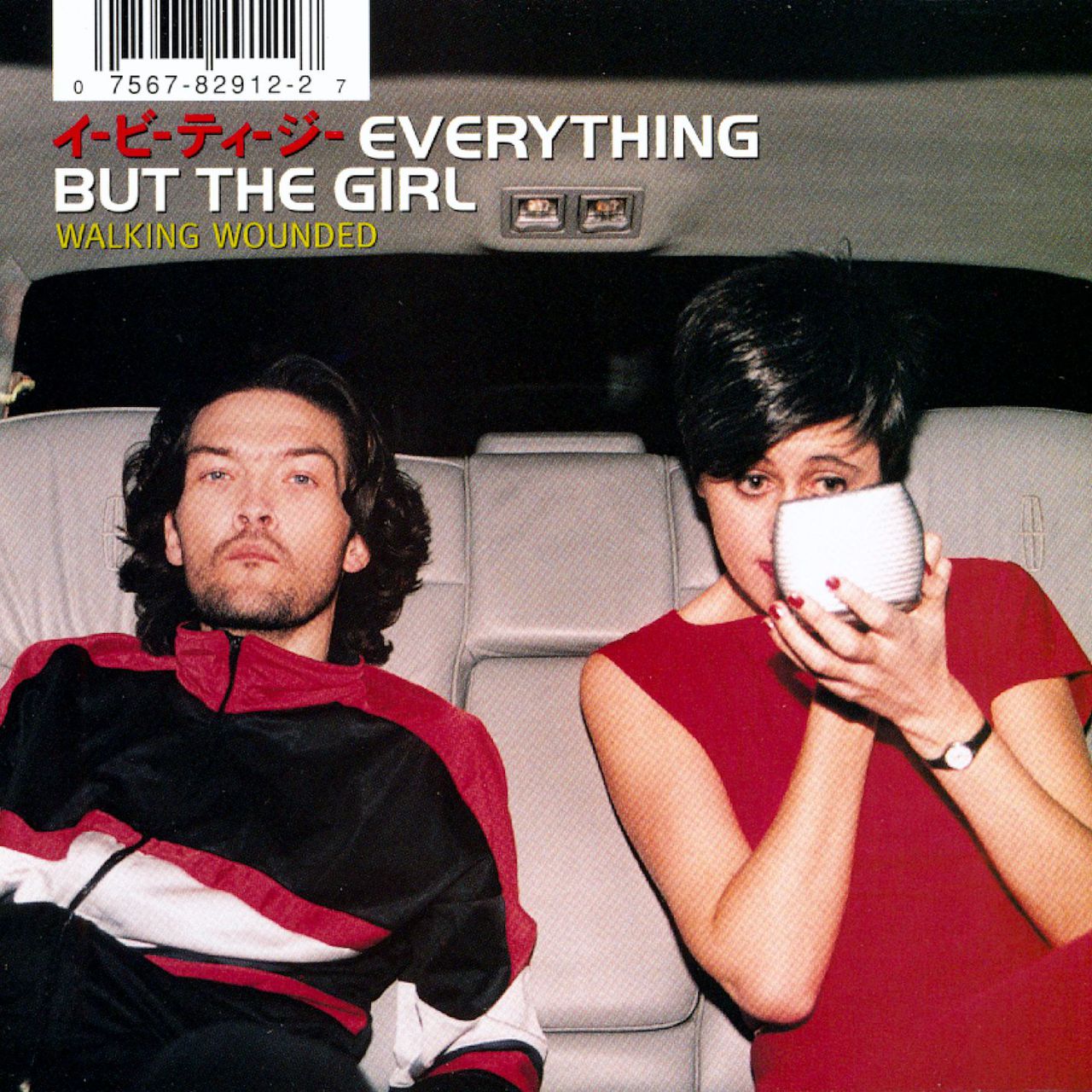
Everything But the Girl – ‘Walking Wounded’ – Round 85 – Graham’s Choice

What to bring to Round 85?

Simple really. During the week after the 1280x1280
clocks go back and on a wet and miserable night outside, a CD that has drifted through doors, windows, cars and holidays all summer, seemed like the perfect antidote.

I have no history with EBtG, other from thinking they sounded “nice enough”. I’m not even sure that I’ll explore them any further, but this impulse purchase of their 1996 album,  has just hit the spot all summer.

There’s a style of drum n bass I’d probably normally avoid, but somehow the cleanness/expression/lack of expression/control (we spent a long time searching for the right word and never found it) of Tracey Thorn’s delivery and the wash of keyboards over the top just makes it work superbly. That same delivery held me back from exploring their more acoustic/jangle pop work in the past as the fit just didn’t seem as good. The remix of ‘Missing’ from the previous album caught my attention back in those days as something more interesting.

There are huge slices of melancholy, loneliness and regret amongst the lyrics, but somehow the groove moves you positively through the whole album without bringing the listener down with it.

Maybe in Record Club terms this album represent the closure of a circle (note to self, there must be a great prog’ song somewhere called “Closure of a circle”, seek and deploy next round). Probably started with, ‘Dark Side of the Moon’ at Round 53 (unlikely to be ever written up for many reasons), ‘Vs’ Round 58 and ended up with this at Round 85. Funnily enough 85 is 58 fully turned around,  on that bombshell…..

Nick listened: This was great. I’m hoping I can find a copy for £1.99 like Graham did, because I want to own it. I enjoyed the singles enough (nearly 20 years ago!) as I was just starting to engage with music outside the realm of indie guitar nonsense, but the intervening years (and the education my ears have undergone) have made this sound richer and deeper. And if the (frankly gorgeous) drum programming and synth sweeps date this – almost to the month for connoisseurs, I’d wager – then the songwriting and delivery balance that out by being timeless. Brilliant.

Rob listened: Nick, I may be able to save you a couple of quid. I have a funny feeling I’ve got two copies of ‘Walking Wounded’. Tom’s theme for next time threatens to drive me into the loft to delve amongst the CDs, so I’ll have a look under ‘E’ while I’m there.

I remember this coming out, in fact I think I reviewed it at the time. Most of my reviews from back then are lost to the mists of time, fortunately. However, if forced to speculate, I think I would have been sniffy about ‘Walking Wounded’ for all the laziest reasons. I would have had EBTG down as dancefloor arrivistes, sliding themselves into the scene at just the point where it moved from the warehouse to the dinner party. All this as if I knew anything about drum and bass beyond half a dozen records…

There is a line of enquiry around the gentrification of underground dance music, with the co-opting of hardcore and jungle, those most explosively disruptive scenes, sitting at centre stage, but listening to ‘Walking Wounded’ now, and every time it’s come back around since it was released, the love and devotion for the music is plain the see. Fair enough, it feels lightweight (or perhaps simply light on its feet) but it’s also exquisite, bristling with a burnished sonic sheen, sprung tight by delicately constructed beats and all washed over by Tracey Thorn’s rich, refreshingly unshowy vocals. As Nick says, it may be very easy to carbon date ‘Walking Wounded’, but nonetheless, the older it gets, the better it sounds.

Tom listened: I had always discounted Everything But The Girl as being far too fey and whimsical to ever consider choosing to listen to. Of course, Tracey Thorn has crept into my record collection through the back door as she is a guest vocalist on Massive Attack’s Protection album (and her voice works fine there, although I always wished it had a bit more soulful depth to it…I guess I just missed Shara Nelson’s vocals). But I have never actively sought out an Everything But The Girl record (the band’s name itself is a total turn off to me) and, from the occasional clip I heard on the radio, their early stuff sounded exactly as I would have imagined. Not for me.

Walking Wounded came as a very pleasant surprise though. I liked Tracey Thorn’s voice on here – her unemotive (some less kind persons might say flattish) singing slots straight into the colder landscapes of drum and bass led trip hop and the whole album drifted by in a relatively captivating blur – if that’s not a contradiction in terms! I certainly preferred it to other, similar, fare (Lamb, Beth Orton, Morcheeba) who were releasing records around this time.

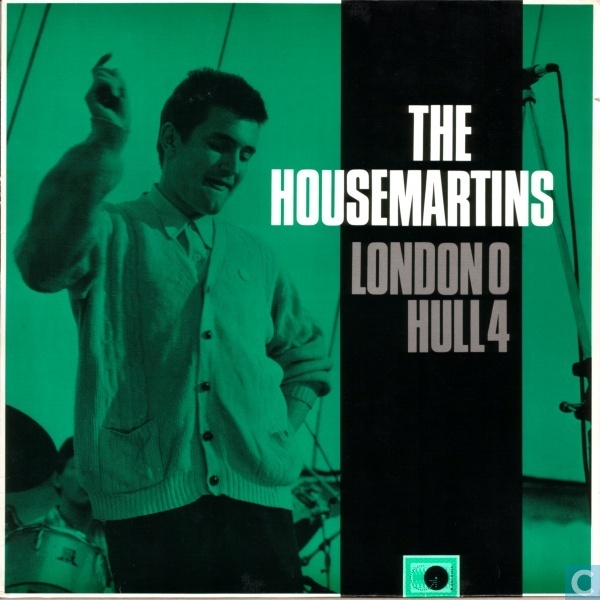
The Housemartins – ‘London 0 Hull 4’: Round 85 – Rob’s choice

The Housemartins - London 0 Hull 4I’ve come back to the Housemartins a couple of times in the last year or so. First time around I went to their second record, ‘The People Who Grinned Themselves To Death’. My recollection was of this as their tightest collection, shot through with stiletto-sharp pop songs and heart-rending ballads. I was right about the latter at least.

Most recently, partly meandering around trying to find something to bring to record club, I played ‘London 0 Hull 4’ properly for the first time in more years than I would care to remember. I was shocked by how vital it felt, how strangely contemporary it sounded, its exquisite references worn lightly but stylishly, and by how current and critical its subject-matter unmistakeably is.

I liked it plenty at the time, and it meant something to me, but coming to it now I feel as if I hear a much more resonant, better album than back then. Back then, 1986 to be precise, I was young. The Housemartins were seen as a step sideways from The Smiths, a band they never truly resembled in any way other than as the only other indie guitar group to make significant showings in the charts in the mid-80s. At the time this music seemed more straightforward, easier to understand, use and pigeonhole than that being produced by Morrissey, Marr and their muckers. No difficult things, like messy teenage feelings, being dredged up to deal with here. The Housemartins were making simple, mostly fast-ish, music about things like being unhappy about the Queen, or wars, or going to the pub. Those things were easy to understand. Painless. Nothing to worry about.

Things are different now. Things are pretty similar now.

I can remember what it was like to be a confused teenager. Perhaps you can too. One of the reasons I can remember so clearly is that The Smiths skewered the feelings of isolation and unloveability. They are pinned to my heart. But now, listening to The Smiths, much as I still love them, sounds like looking back at a past version of myself preserved in a glass tank. I know I was that person, but I’m not any more. The Housemartin’s however never carried an emotional punch for me. I loved lots of their songs, but that was all. It’s a shock then to discover that now, almost 30 years later, this is suddenly music that sounds raw, current, meaningful, challenging and relevant.

Paul, or P.d. as he styled himself back then, Heaton  declared that he hated writing love songs and found writing political lyrics easier. They inscribed their debut album with the phrase Take Jesus – Take Marx – Take Hope and ‘London 0 Hull 4’ is an evangelical album, preaching against the scourge of poverty and inequality of all sorts. Back then I had zero perspective on most of the things Heaton was singing about. I knew ‘Happy Hour’ wasn’t a straightforwardly happy song, but couldn’t square that with the way it was taken to the hearts and dancefloors of the nation. I thought ‘Flag Day’ was pretty much about him not liking the sale of commemorative poppies, which confused me a bit and briefly made me wonder whether I should be against that too. I’m pretty sure I thought ‘Sheep’ was about sheep.

Now this record and those songs stand clear as hard edged, punches un-pulled, social and political polemics, as sharp in observation and blunt in impact as anything Minor Threat ever wrote.

‘Flag Day’: “So you thought you wanted to change the world? Decided to stage a jumble sale. For the poor. For the poor. It’s a waste of time, if you know what they mean, try shaking your box in front of the Queen, because her purse is full and bursting at the seems.”

‘Get Up Off Our Knees’: “Famines will be famines, banquets will be banquets / Some spend winter in a palace, some spend it in blankets / Don’t wag your fingers at them and turn to walk away / Don’t shoot someone tomorrow that you can shoot today”.

‘Think For A Minute’: “‘Cause nothing I could say could ever make them see the light / Now apathy is happy that it won without a fight”

And how about that jaunty hit single? The one with the fun-tastic stop-motion video everyone was twisting along to back in 86?: “It’s another night out with the boss / Following in footsteps overgrown with moss / And he tells me that women grow on trees / And if you catch them right they will land upon their knees”

Just to ensure I’ve made my point, I’ll be blunt too. ‘London 0 Hull 4’ has a message that feels at least as sharp, important and vital today as it was back then. If you happened to be a dopey teenager when you first heard it, then it will mean much more to you in austerity Britain, as disabled people die months after being told they are fit to work, refugees fleeing western bombs are crushed under trains as they flee towards their liberators and the basic safety net for the most vulnerable people in our society is slashed and torn while those responsible for our economic cataclysm continue to get richer.

Got that? Good.

More importantly, ‘London 0 Hull 4’ also sounds hugely different to the record I internalised all those years ago. I recall an acoustic, jaunty jangle, somewhere on the axis between psychobilly and C86. In my defence, I had listened to barely anything back then. My reference points were few. Cut me a break, okay?

Revisiting now it’s clear that The Housemartins were a completely different outfit altogether. They reach back to hard-driving Northern soul and were closer to Dexy’s Midnight Runners than any of their supposed indie contemporaries. They were also richly informed by gospel, both in its multi-part harmonies and its sense of music as a force for social and spiritual change. Ultimately this music is closer to Sam Cooke or Aretha Franklin than to Talulah Gosh or the Chesterfields.

Their songs are buoyed along by Norman Cooke’s bouncing bass and propelled by Hugh Whitaker’s biting drums, topped off with sparkling guitar and Paul Heaton’s still angelic voice. I wasn’t ready for it at the time but, heard now, this is an astonishing debut record from an outfit who self-deprecatingly styled themselves “the fourth best band in Hull”. Nonetheless, they were mature enough to show full commitment to their vision right across the album, and confident enough in their sound to step back and pen swelling protest anthems like ‘Flag Day’ and ‘Lean On Me’.

They followed the album with their only number one single, ‘Caravan Of Love’, which I include here for similar reasons. I loved it at the time, when it’s a cappella delivery seemed a dazzling technical novelty. I got a my first proper record player for Christmas 1986 and I played this record over and over and over. Heard again years later it’s simply a beautiful piece of music, arranged and performed exquisitely, resonant with meaning and history. It’s a brave band that take on the Isley Brothers. With ‘Caravan of Love’ The Housemartins significantly surpass them.

It also informs further reflection on the album that preceded it. ‘Caravan’ was far from a novelty. In fact the band used to perform a cappella sets as the ‘Fish City Five’, even supporting themselves on occasion. ‘London 0 Hull 4’ is full of gorgeous, vocal harmonising, another clear line from the band’s origins and inspirations.

I’ve been thinking about bringing this, or it’s follow-up ‘The People Who Grinned Themselves to Death’, to record club for a long time, on the basis that I doubt the others know them all that well and they have some good tunes. One of the reasons Record Club is so meaningful, for me at least, is that it forces a deep immersion in the music you choose to present. The effect here has been pronounced, turning a record I liked a lot almost 30 years ago into a record I absolutely love and revere and can’t stop playing right now in 2015.

Nick listened: This album was brilliant – wonderful, even – but “Caravan of Love” – which I remember well but haven’t heard in probably 25 years – was exceptional. Rob’s cost me a tenner by playing this because I need to go and get a ‘best of’ now. Fabulous choice.

Graham listened: Didn’t see this coming and didn’t at all expect what I got from it. Always had the Housemartins pigeon-holed as smiley happy people not to be taken at all seriously. At release I was far too busy scrabbling around with more heavy/serious/sometimes awful bands to go any deeper in to this band, other than to recognise some catchy singles. Always perplexed by Caravan of Love and wondering where that fitted with them. An amazing track, but it was by the Housemartins? Anyway, tonight the music and the story was a thoroughly enjoyable education.

Tom listened: I’m sorry to rain on your parade Rob, but I just couldn’t get past Paul Heaton’s voice – I guess he’s kind of the equivalent for me of what Samuel T Herring was to you, before you saw that footage of him on that TV show.

Although back in the day I never really fell for The Housemartins, I remember liking them well enough and I was particularly fond of bopping around to Me And The Farmer at school discos and the like.  It was what was to come next – The Beautiful South – that tarnished my view of The Housemartins for, what would now seem to be, forever.

I find it odd that I have such an adverse reaction to Heaton’s vocals as they are, on the face of it, pretty innocuous. Obviously the others at record club don’t share my misgivings either but we all have our blind spots I suppose and this is one of mine.

Talk Talk – Laughing Stock – Round 83 – Graham’s Choicej

Setting a new tardiness  record in DRC 71tOFUGVgOL._SL1205_write up’s is generally my responsibility and the above is my latest contribution. Asked by Tom to bring something we talked about in Round 82 was easy for me as I had originally planned this for the instrumental theme for Round 82. Before we get too deep in the detail of this not actually qualifying as “instrumental”, I was all ready in Round 82 to come up with reasons/excuses about how this album had been “instrumental” in my musical education and how “instrumentally” it contained some content which I value above any other album. I’m confident all those reasons would have easily put fellow members mind’s at rest over an apparent bending of the theme by me,  for really the very first time….

Anyway, it never made it to the CD player as in the search for an antidote to the “challenge” of Haxan Cloak, Vivaldi’s Four Seasons was deployed as a bit of light and shade to  accompany curry takeaway.

Between Nick and I, we have now managed to complete a hat-trick of Talk Talk/Mark Hollis albums moving through from Spirit of Eden, Laughing Stock and his single solo offering. Three albums that shaped my tastes to the point that I didn’t need to explore this genre anymore. They are each complete and anything else I might try “because if you like this, you might like this etc..” just doesn’t work. I can go back to them all for memories and rekindle the impact, particularly the first two had on me. I regard them all, but particularly Laughing Stock, as unique and precious.

Others can, and have written more eloquently than I about the spontaneity and experimentation with recording techniques and improvisation that Hollis used to produce exquisite moments of melody, rhythm and drama on this album, but nearly 25 year’s later it still has the moments when everything else has to stop around you while you anticipate what is coming. The beginning and the end of the guitar part on Ascension Day being the best, of many examples.

Rob listened: Is that it with the Talk Talk now?

I quite like Talk Talk, but then I quite like a lot of bands. Some of the sounds this band makes seem remarkable. However, as we’ve established over a number of rounds now, I don’t love Talk Talk, in fact I find them a little disappointing because each time I approach them I want to finally fall hard for them and I never do. I am always enchanted by the love my fellow Record Clubbers feel for them however, no matter how much I enjoy acting the anti-Hollis curmudgeon. If I were to pick any of their records, this would probably be the one. Who knows, maybe one day, maybe after another 15 appearances at DRC, it will be the one.

Nick listened: I rarely listen to Talk Talk these days, for various reasons: I’ve internalised the sounds and emotions of their records so much that I don’t ‘need’ to very often; there’s lots of other music that is great to listen to instead; my wife doesn’t like them that much; and, most pertinently I think, the last two albums in particular aren’t very easy things to listen to. I have to be in the right mood. I don’t feel like they’re records I can just throw on and have playing away in the background. Does that make them more precious somehow than records I can have playing merrily away and pay little attention to? It’s hard to say.

Laughing Stock is more awkward than Spirit of Eden, more emotionally and sonically extreme. It strikes me as being profound in a way that very few – perhaps no – other records are. The opening moments of “New Grass” – those skipping drums, that dappled guitar breaking through the murky emotional clouds left by “Taphead” – are still amongst the most beautiful I’ve ever heard.

Which is all to say that Rob’s a disgusting savage with regards this band, basically.

Tom listened: Having discovered Spirit of Eden a couple of years before and having fallen head over heels in love with it during the intervening time, I can still recall the sense of  heightened anticipation I experienced as I placed the needle on the play in groove on my brand new copy of Laughing Stock. I could only have been disappointed! And I was…only a little, admittedly, as Laughing Stock is a fine, fine record, but nevertheless, something about it seemed more mannered; a tad overthought, less organic and therefore less natural sounding than its predecessor. I put the time in, expecting it to click, but I have never quite lost that sense of bewilderment and discombobulation when listening to Laughing Stock – whereas Spirit of Eden always left me wanting more, Laughing Stock seemed to be taunting me, challenging me to try to work it out whilst knowingly winking to its older sibling that it had set me an impossible task.

I guess what I am trying to say is that whilst I admire and respect Laughing Stock, I will always find it hard to love it in the way I do Spirit of Eden.