Big Country – ‘Steeltown’: Round 90 – Rob’s choice

steeltown-5320afbac36d4The theme warped a little even as Tom was trying to explain it. Bring something you owned before age 18. Bring something that you owned before you started to think music was cool. Bring a record from your childhood.

I think I know what he was getting at. Records that you bought and loved before you were conscious of the fact that the records you declared love for might be considered to say something about you and who you thought you were. I decided, therefore, to restrict myself to records I owned before I left school at 16. Between 16 and 18 I bought so much stuff that it would hardly be respecting the spirit of the theme to consider most of them, and at some point between those two ages, I definitely began to consider which records I was seen walking around with, which I lent in the common room.

Like a lot of you I’m sure, I can remember where I was and what I was up to when I bought many of my records, particularly those earliest ones. And so I also liked the idea of using these divining powers to lay my hands on my record collection and pull out the ones I knew I owned before I left school, effectively recreating the record collection I had at age 16. So I did, and it runs to no more than 25 albums, closing, I think, with Joy Division’s ‘Closer’, somewhat appropriately.

When it came to what to bring to the meeting, and knowing what Tom was after, there were only two or three records that were genuine contenders, and those narrowed down to one pretty quickly. The first record I ever bought was ‘Kings of the Wild Frontier’ by Adam and the Ants (as an aside, not only was this my first ever record, it was also alphabetically the first in my collection for 35 years, up until last month when I finally picked up a second hand copy of ‘Lexicon of Love’ by ABC). I’ve already played this at DRC. Next I fell for Frankie Goes To Hollywood and, much as I would relish the opportunity to unfurl surely the biggest gatefold glans in rock history for the boys at Record Club, sadly ‘Welcome To The Pleasuredome’, like it’s cartoon phallus, is just too long.

After Frankie I found – I think in this order – Big Country and then U2. The two bands seemed to me to be linked somehow at that point, perhaps as fellow Celtic descendants of shared punk and rock ancestors. I had the first five U2 albums but fell terminally out of love with them after seeing them play live on the Joshua Tree tour in June 1987. Even as a 16 year old thrilled by the scale of the event, there seemed something empty about the overall experience of what I had accepted was ‘the best live rock band in the world’. As a direct result of my disillusionment they remain the only band whose records I have ever sold on. Only ‘Boy’ remains in my collection. It’s only the last few years that I’ve regretted it and then very rarely. If anything my general feelings towards U2 have only chilled further, but I would still like to spin ‘War’ and particularly ‘The Unforgettable Fire’ another couple of times, for old times sake.

And so to Big Country. The process was, as I remember it, that I heard ‘Where The Rose Is Sown’ on the evening radio show that Timmy Mallett (for it is he) used to host on Piccadilly Radio in Manchester during the early 80s. I have a fairly clear, and probably unwittingly fabricated, memory of standing in my bedroom in the midst of some sort of fugue of brotherly mucking about, and stopping to listen to this brooding, stormy, military stomp coming from my clock radio. I was baffled, intrigued, and beguiled by it. Like so much of my favourite music, my initial encounter left me concerned and disturbed. Something about Stuart Adamson’s brutish open-throated moan, and the line ‘If I die in a combat zone, box me up and send me home’ seemed to immediately connect me to whole worlds I never knew existed and which I wasn’t sure I wanted to see. I was 13.

I got the album, not sure where from, maybe Tesco, knowing very little about the band and less about what to expect from the record. It was a lurch into the unknown, but one that it felt like I needed to take. Ultimately, spending time in ‘Steeltown’ further extended my growing realisation that music could shift me into completely new temporal and mental spaces. Here were sounds and shapes and characters and places and situations I had never encountered or considered before. Tellingly, in hindsight at least, here also was music that none of my friends knew anything about (although it turns out that ‘Steeltown’ was a number 1 album in the UK – I had no idea), and so began, in some small way, a lifelong quest to find music that would surprise and shock and perplex and be different.

I remember feeling so strongly that this strange, other place, embodied by the browns, purples and oranges of the soviet-style cover art, was somewhere I could reach, even though it didn’t sound like a particularly fun place to be. Here were abandoned wives, disenfranchised foundry men, conscripted soldiers in foxholes, a population mourning across the full gamete of loss. I found the sound incredible too. Energetic, dark, intoxicating, anthemic, strange and foreign. Clattering drums and shattering guitars and Adamson’s other-worldly voice all being driven along with insistent force.

And then, after the next album ’The Seer’, I moved on. Public Image Limited became The Fall became The Smiths became Joy Division and by the time I left school Big Country had become music that I used to listen to in the past. Whereas I could always stand up Frankie and Adam and the Ants as great, culture-defining pop music, Big Country seemed to be music that belonged in the attic of my personal past. I went back there every so often, maybe once every ten years, and usually with the patronising air of a tourist visiting a deprived country just to remind himself how much better he’s doing. How quaint this music that I used to enjoy!

All of which is to say that ‘Steeltown’ was the inevitable choice for this theme and now, having listened to it a dozen or so times over the last couple of weeks, I’m through the nostalgia and out the other side and into a rousing, inventive and distinctive rock record. It’s just as I remembered it, except, having listened past all the associations it has with my proto-teenage self, the years have not dulled it as I assumed they would. It’s a full and rollicking set, cut through with a darkness of tone that is enough to take the edge off the occasionally blunt songwriting.

The whole of the first side is pretty fantastic, high-reaching, energetic rock. The band seemed to understand that you could write songs and create albums about personal and communal desolation without having to make your music sound gloomy and dour. Instead ‘Steeltown’ swirls and chimes with the sounds of the land that created it. Mark Brzezicki’s militarily-minded drumming keeps the whole thing marching whilst Adamson’s guitar skirls and echoes in an almost shoe-gazing invocation of the bagpipes. It’s a bit of a stretch, but it seems arguable to me that what Big Country were doing when they created a form which blended contemporary rock with the sounds and textures of traditional Scottish music, deserved to be considered in the same light as the far more lauded efforts that Fairport Convention made to cross-breed rock with English folk.

And so there you have it. When the proposed theme began to morph from ‘Records You Liked Before You Knew What Was Cool’ into ‘Records You Liked When Your Cement Was Still Wet’, I should have swerved to XTC or Dexy’s or Madness or Human League or skipped forward to the impressions that really seemed to have shaped everything I’ve listened to since, see references above. Big Country were a first love, but one that I’d moved on from, one I actually forget when people ask me what bands got me started. However, it seemed right to go back to them, if only to revisit the flimsy favourites of youth. I was prepared to be embarrassed at DRC in the name of thematic honesty. Little did I suspect that the record would lose its surface covering of childhood memory and would begin to sing again in a different, perhaps even better way. It turns out that either I had amazing taste even as a 13-year old, or alternatively, that unbeknownst to me for all these years, Big Country have been mixed throughout the very cement that my foundations are cast in.

U2 Afterword: I’ve just had a brief listen back to ‘War’ for the first time in decades and within seconds it becomes annoyingly overwrought. Good grief Bono is a self-impressed vocalist, and with him helming, the whole thing is just so pompously over-inflated. Neither ‘Sunday Bloody Sunday’ nor ‘New Years Day’, both essentially fine, sharp post-punk rock tracks, can hold Bono back for more than 15 seconds before he barges in with an unnecessary ‘yeah!’ the only purpose of which is to declare, “I am here, listen to me”.

Stuart Adamson, by contrast, is a vocalist with a heavy and distinct style, but who uses it to serve the song. Fair enough, he doesn’t have the classical, physical strength of Bono as a singer, but sometimes singing is about what you don’t do, and what Adamson doesn’t do, Bono can’t stop himself from doing. Where Bono let’s fly constantly with the ‘oooooooh ooh oooooh’s, Adamson’s additional vocal touches run to the occasional ‘chk!’ sound, coming over like the noise of a man gasping for air amidst powerful emotional undercurrents.

When Stuart Adamson died The Edge gave a eulogy at his funeral, declaring that, “Big Country wrote the songs U2 wished they had.” He was right, and so was I.

Steve’s comment: I must say that before our meeting I would have put myself in the anti-Big Country camp. Following a listen to ‘Steeltown’ I was amazed at the richness and texture of the songs and was also inspired by the idea of taking Scottish folk and turning it into rock – almost the equivalent of roots based blues into rock & roll. At times the music did sound like a form rabble-rousing, a call to arms if it were. I will have to give it more of a listen since there seemed to be a lot in there that a first run would not pick up. The influences of Big Country on modern groups like Glasvegas seemed quite strong to me.

I have to agree with Rob on U2 though. I have never been a fan and even the early stuff grates on me. It is Bono to be honest. His vocal strainings and rock star pomposity come over all to early on in their career. Like he was trying too hard.

Tom listened: The stars aligned here – Rob’s offering contrasting starkly with Graham’s (thankfully) brief U2 interlude. The two groups stand comparison because they cover the same sort of ground (and were doing so at roughly the same time) and, despite not being a million miles apart musically, couldn’t be more different in almost every other way. Just goes to show how pivotal the frontman is, not just as an influence on the way the band sounds but, possibly more importantly, the way they make you feel.

Adamson sounds completely unpretentious throughout Steeltown. The instrumentation was a bit of an onslaught and, as a result, at times it was hard to see the melodies etched (scoured?) into the sonic barrage (my favourite song on a first listen was the last song on side 1 – it had a bit more space to it as it lilted in a vaguely folky way) but I would take a hundred listens of Steeltown (in fact that would probably be quite enjoyable) over spending another 4 minutes in the presence of bloody Sunday Bloody Sunday!

The Stone Roses – The Stone Roses: Round 90 – Steve’s Selection

Stoneroses

My choice for the album that cemented my music tastes before “I left home” was easy. It had to be The Stone Roses’ first, and some would argue their only album. If any record defines a moment in my life it was this one. Manchester was a kind of mythical place for me. I was born there, my dad worked there and one half of my family was from there. But there was nothing to draw me other than that. Growing up in a village outside Crewe didn’t really define me by my birthplace, and then along came The Stone Roses. I suppose many people, north-south-east-west of the country would pretend to be “Mancunian” because of this album, but that’s because it made you want to belong, to something great. After this came out I definitely wanted to go back. It would be nearly 10 years before that happened, but that’s another story….

The band themselves came out of nowhere, and history about them would only be filled in retrospectively. Such was their impact on the scene with this album. Well actually there was no scene before they came. They laid the road out before them, and defined a scene with just this one record. Originally a “goth band”, inspired by the melodic 60s overtones of Primal Scream’s “Velocity Girl” they ambushed us all with a new sound, having released a few poor selling singles prior to this (such as So Young). Remarkably, they only had a very local Manchester following at this point as well. Then came this album was released in May 1989. I was 16 years old…

People often compare them to the Byrds, but I think their music, on this album, transcends even the definition of 60s inspired indie pop. There’s much more to them than that. From the opening bass line of “I Wanna Be Adored” gives you anticipation, a feeling that something great is about to happen….and then the power chords of Jon Squire’s guitar sailing majestically across and trickling down with beautiful finger picking. There’s rock influence, but it’s not too overpowering (unlike the second album), and there’s even the brooding goth in there. Much underrated (I feel) is Reni’s drumming. There’s deeply complex rhythms in there that no other band at the time was attempting, changes in pace and subtlety. The merging of tribal dancing and rock is beautifully displayed on ‘Waterfall’ and ‘She Bangs the Drums’. Throughout the album it’s just one majestic track after another, but they were not afraid to slow it down and make introspection the theme of the day (‘Shoot You Down’ is sublime). The lyrical conent is also sufficiently vague to make you want to know more. Who, what, where? Drawing you in piece by piece. Pulling you to them, their places. In that way they deviate hugely from other bands who would definitely follow in their steps (Oasis springs to mind here), and those of their contemporaries. But that was it. This one album. The strange thing is that it barely sold at the time, and actually there was very little knowledge of it outside of a localised scene (or so I thought at the time). But it changed everything. People instantly dressed differently. They grew their hair longer and wore baggy jeans. There was an attitude that this album brought then enabled confidence in my youth and allowed me to be part of a real scene, a movement. It was a time when I could truly say “this is my time, happening now”. This movement danced in harmony with the rave scene, shared the apparel and boosted Manchester into something that could compete with London and knock it off its pedestal. The North was better and everyone wanted to come there and be a part of it.

When I thought of what to bring along for this meeting there was no doubt. When I looked for it however I couldn’t find it. Disaster! I had bought an original copy back in ’89. I even remember the day when I purchased it in Crewe. I started dreaming that I had seen it in my collection. After a bit of social media posting and some frantic accusations around the house (sorry to my wife for this) my brother admitted that he had it. It caused so much fuss in the house. But then it would. It is that special to me. Despite it being special to me I didn’t listen to it for nearly 20 years, and only very recently bought it again on CD. In some ways I couldn’t listen to it because it was so “of its time” for me. Now I feel I can go back to that time. Back to the summer of ’89 and pretend I am a ‘manc’, swagger around the living room and dance like a monkey to it when it gets played at a wedding disco. I guess there is a whole generation of us that feel this way. It was a very definitive signpost in my life, pointing me towards my hometown, drawing me back to my roots. When I listen to it now it makes me want to go back again “where the streets are cold and lonely, and the cars they burn below me”. My eyes are filling right now…

Rob listened: In the context of a Devon Record Club evening, ‘The Stone Roses’ turned out to be something of a curate’s egg. It’s a ‘grail’ record, one that all five of those in attendance own, and that’s surprisingly rare. It’s also a record that we all agreed had made a big impact on us when we first heard it. It’s clearly a landmark of one sort or another. So why then, did we also have to admit that in 89 previous evenings of discussing the intimate nooks and crannies of each of our lives with music, this band and this record have barely been mentioned, if ever at all?

We concluded that ‘The Stone Roses’ is a total one-off. The band were never able to come anywhere near repeating its mercurial success and, as such, it stands alone now, captured in aspic more than 25 years since the echoing opening of ‘I Wanna Be Adored’ first seeped into the public consciousness. Nor was it able to have any genuine lasting impact on the music that followed it. It may have been a singular achievement, but it was not one that other musicians were able to build upon any more than the band themselves. If you disagree, feel free to list the significant artists whose music was unmistakeably influenced by The Stone Roses in the comments so we can tell you you’re wrong.

And so, unique, unrepeatable, alone, it stands forgotten, I would argue.I confess that at the time, although I lived closer to the epicentre than did Steve, and was in and out of Manchester throughout, The Roses never really and truly caught a grip of me. Already several years under the sway of The Fall, Joy Division, PiL and The Smiths, The Stone Roses seemed exquisite at times, but largely unsubstantial. I wish I’d gone to some of the gigs with my mates, but even back then, I wasn’t that bothered about this lot, and the years have only served to confirm that. I suppose the thing I love most about The Stone Roses is the devotion they inspire in those who were and remain completely smitten by them. It’s a heartening reminder of the way music can light a fire at the centre of your life.

Graham listened: I still adore this album and listen to it regularly. Often while cooking, which I’m sure the band had in mind when recording. It, and they, are unique, they got it so right, just the once. The reunion should be a source for joy, but leaves me feeling the memories might have been best left alone.


Ted Leo + The Pharmacists – Shake The Sheets: Round 89 – Tom’s Selection

So Nick’s response to my claim that  Brian Eno’s Here Come The Warm Jets (see Round 88) was pretty ‘out there’, asserting that it was ‘just pop music’ really got me thinking as to what ‘pop music’ actually is, what distinguishes it from other genres and whether it has come to mean something significantly different to its more literal origins. Pop music as ‘popular’ music never made much sense to me. After all, wasn’t Mozart pretty darn popular in his day (and still is)? As is/was Metallica, Miles Davis and Robert Johnson? So, record sales alone doesn’t cut the mustard as far as definitions go. Nick suggested that pop music is anything with a riff, a repeated motif. Well, Mozart maybe not so much but the other three examples fit neatly inside that definition (as does William Basinski!) but I wouldn’t consider any of them to be pop music. So, I’m none the wiser really…The closest I can come to reaching a conclusion is typically vague – something to do with the way pop music makes me feel; it has to have signposts or signifiers that are recognisible and is, therefore, comforting and embracing. And it has to make me feel good. And whilst Here Come The Warm Jets certainly does the latter it does it in a different way; that good feeling is more one of excitement in its unpredictability as opposed to security in its well worn patterns and structures; something the songs on Eno’s debut solo album tend to lack.

I went back to my record collection immediately afterwards and started looking for the ‘pop’ albums on my shelves. And, sure, I have Beatles and Stones, Elvis Costello and Metronomy records but I also own Shake The Sheets by Ted Leo + The Pharmacists and that, to me, distills the essence of what I’m talking about into its purest form, possibly more effectively than any other album I own. Every song on Shake the Sheets is a pop gem as far as I’m concerned, there’s practically no experimentation with form or structure (as opposed to say, Happiness Is A Warm, Revolution #9), no genre exercises (Dead Flowers, New Amsterdam), no attempts at pastiche (Love Letters, Goodnight, Michelle) just eleven cuts of finest pop punk meat, in some ways purer in what it is setting out to do in the name of pop (as defined by…me!) than any of the aforementioned acts managed on any of their albums…although Costello comes close on This Year’s Model.

The strangest aspect of Shake The Sheets as far as I’m concerned is how much I like it given how close it sounds to a myriad horrible guitar based indie bands that you can hear pretty much every day on Steve Lamacq’s show on 6music. Maybe its a case of emperor’s new clothes, maybe I want to like Ted Leo (because I read that it was OK to like him) and therefore I do…but I prefer to think there’s something else, something more tangible about they way he writes and performs his music. Perhaps it’s the conviction with which he and the band perform, perhaps it’s the punchiness of the rhythm section, perhaps the melodies are just better. I don’t know the answer, but I find the question an intriguing one, one that I would love to put to him to see if he is consciously aware of what he is doing to stand apart from the Lamacq pop/punk/indie crowd (assuming, of course, that I haven’t completely misread the situation).

Lyrically, however, Shake the Sheets is a million miles away from your standard boy meets girl pop fodder. Opener Me and Mia is just about the catchiest song about eating disorders ever written, Heart Problems starts with the lyric ‘You got a problem with your heart, follow the line down your left arm’ before going on to list an alphabet’s worth of prescription drugs. The song Shake The Sheets itself contains my favourite lyric on the album, one that seems remarkably prescient as the US presidential election looms large:

‘I want to take it to the president
Him and all his cabinet with a broom
I want to sweep the Halls of Arrogance
Sweep the walls of the excrement of these baboons’

(Notice that in his vision of the future, Leo isn’t expecting there to be a female president. God help us!)

So the lyrics are a bit of a curve ball and yet, despite this, I can’t help but think of this album as one of the poppiest I own. Way more so than the indie rock of The Tyranny of Distance or the grunge punk of Hearts of Oak, Shake the Sheets has a thrilling pace to it that never relents, technicolour melodies to match the album sleeve and a verse chorus verse structure (with just enough in the way of subtle variations to surprise you even after the 50th listen) to get even the most dismissive thirteen year old daughter humming along. That, for me, is the very essence of pop music!

Rob listened: I should be beyond this sort of stuff by now. And, y’know, it’s possible to argue that Ted Leo and his Pharmacists are a watered down Husker Du or a knock off Replacements (I could speak more accurately to this imagined accusation if I knew anything much about the Replacements).

But there’s a counter-argument that looks down on Ted Leo from a great height and observes that he is surrounded on all sides by a history of rock and pop music in the shapes of XTC, The Beatles (you know, when they were a good straight down the line giddy speed pop band), Squeeze, The Hold Steady, Buzzcocks, The Cars, They Might Be Giants, Dead Kennedys, Rocket From The Crypt, Lemonheads (you know, when they were a straight down the line giddy punk band), Silver Sun and a couple of dozen other bands that I’m totally in the tank for. And if Ted Leo and the Pharmacists can be safely placed in the midst of a crowd like that, then I’d be a fool to deny them.

I’m still unsure why I’ve found this record so simply pleasurable to listen to over the last few weeks when there have been a glut of bands taking a similar approach to so-called pop punk over the last few years most of whom I wouldn’t micturate upon if they were combusting. Perhaps it’s something to do with the… maybe the… oh sod it.

The chorus to the title song has something in the quality of the voice (that still reminds me of someone I can’t quite remember) which is part singer, part buzzing death machine, and this alone is enough to make me want to listen to the whole album a hundred times.


Brian Eno – Here Come The Warm Jets: Round 88 – Tom’s Selection

51S2KFVAJDLAs far as I am concerned, Brian Eno is, in many ways, the polar opposite of Neil Young. In the case of the latter artist I own an inordinate amount of music (bewilderingly, I found myself buying yet another Neil Young album – On The Beach – not so long ago to add to my inexplicably large collection) without ever really understanding why he is held in such high esteem (Tonight’s The Night being the exception, but even that is some way down my all time greatest albums list). Eno, by contrast, I love. He’s always interesting, constantly innovating; refreshingly challenging whilst remaining, essentially, accessible. I admire his eloquence, his creativity, his obvious and flaunted intelligence and his visionary approach to pushing the boundaries. Yet I only own two albums by him. They are Ambient 1: Music For Airports and Here Come The Warm Jets…and they sound like they could have been made by different artists on different planets! In fact, Another Green World, Nick’s choice way back in round 6 sounds different again although traces of both albums (if I recall correctly) can be heard echoing distantly on this, the third album Eno made as a solo artist.

So what is Here Comes The Warm Jets? Well…I’m even more confused than ever. It’s all of these things: groundbreaking, bonkers, beautiful, calming, unsettling, surprising, melodic, discordant, intriguing, unpredictable. It’s none of these things: formulaic, bland, safe, unapproachable, intimidating.

But is it pop music?

Well, that question led to some heated discussion on the night between (unsurprisingly?) Nick and myself. I think we were listening to Dead Finks Don’t Talk at the time, a track which sounds, if anything, like a weirder version of early Gorky’s Zygotic Mynci (ie, when they were really weird, not ‘throw a couple of dogs barking in between two stunningly beautiful folk ballads’ weird) and I posited, perhaps foolishly, that for a man who had just come out of Roxy Music, a band that had recently experienced significant chart success with Virginia Plain, Do The Strand and Pyjamarama alongside impressive album sales for both their first two albums, this was a pretty ballsy move, a statement of intent that here was a man far more interested in making music for its own sake than for chasing fame and fortune. Sure, it’s not Oneohtrix or Emptyset or another one of those ‘Rob bands’ that seem to exist purely so that he can revel in the effect they have on Graham’s sub woofers (no euphemism intended) but I wouldn’t class it as ‘pop’ music either.

Admittedly, there are glimpses of pop on the album. Opener, Needles in the Camel’s Eye for example is a glorious three minute blast of noisy momentum with a hook laden guitar solo as its coda – a bit like getting on a pop bus with a breeze block on the accelerator and careering into Avant-Gardesville in  a spectacular multi-coloured explosion of sounds and wailing. Elsewhere, Baby’s On Fire sort of sounds like pop music if you narrow your eyes, squidge your ears and use your imagination but has some of the most blistering fretwork ever committed to vinyl. And Eno’s singing, if it can be called that, is more of a snarky sneer; all nasal passages and sheep-like tremelo, a bit like Kenneth Williams saying ‘I told you so’ over and over and over.

Other tracks drift by (On Some Faraway Beach, Here Come The Warm Jets) in an (almost) instrumental, (almost) ambient haze, or lurch out of the swamp laden with dirty grooves and monster loops (Driving Me Backwards) or sound like a crazy loon having dropped one tab too many (The Paw Paw Negro Blow Torch).

I like Record Club for many reasons but one of them in particular is that it has the uncanny knack for making me re-evaluate my preconceptions, prejudices and firmly held beliefs, about music in general and, more often than not, music that I have owned (and loved) for many years. This discussion was no exception; it got me thinking about what pop music is, what it’s for and, crucially, what it isn’t. And so I have thought about it for a long time now – I played this album on our Bowie tribute night about two months ago – and I have concluded that pop music is different things to different people and, for me, by veering close to the line every so often and offering that glimpse of pop nirvana only to head off again just as rapidly, Here Comes The Warm Jets is about as far away from pop music as you can get..and to exemplify the difference in what I mean, I dug out one of my favourite pop albums for Round 89…

Rob listened: I was really pleased to finally get up close to ‘Here Come The Warm Jets’, for a couple of reasons. Firstly, before I’d looked at the cover art properly, I had always thought that the blue grass plant on the left of the image was some sort of Cookie Monster creature. Turns out it’s blue grass. Of course it’s blue grass.

Secondly, I’m a little distant when it comes to Eno. I admire his for many of the reasons Tom lays out above, but I guess I’ve always carried the sense that his music is an intellectual exercise, rather than an expression of passion or feeling. I stress, this is based on an ill-informed sense of Eno the man, rather than any significant exposure to his music.

Which makes this record such a thrill. It may or may not have significant intellectual or artistic intent, and we know that Eno has always been a thoughtful advocate for the interlinking of the two, but regardless, it’s a careering rock record, running wild with its own ambition, cackling as it tips over accepted norms. In that regard it reminds me of Michael Moorcock and JG Ballard, authors who were also at large while Eno was stretching out, and who also took seriously the project of using genre conventions to create new, unconstrained and transgressive art.

What’s particularly great about this album is just how effectively Eno marshals all of this into accessible and loveable music. And, directly or indirectly, this seems to me to be pop and rock music as much as The Kinks (‘Cindy Tells Me’) or Peter Gabriel (‘Baby’s On Fire’)  or Elton John (‘On Some Faraway Beach’). As for ‘Dead Finks Don’t Talk’, I was out in the kitchen making tea when it was playing, and I distinctly remember thinking ‘wow, this is a great track’. I loved the skittering groove, the focus of it, it’s simplicity and it’s motion. Then I came back in to find that it was causing some sort of ontological dust-up in my dining room. I thought it was straightforward, loveable music. With a weird shrieking guy hiding behind it, but, y’know, in a good way.


Aztec Camera – ‘High Land Hard Rain’: Round 89 – Steve’s choice

highlandhardrain

I was slightly nervous about introducing this album. Not only was it my first time at Devon Record Club but I had to admit that this was “my favourite album of all time”. I’ve received mixed press about my liking for this album, mostly coming at the end of a long night with a friend back home for some after-hours drinking. I have a certain reverance for it that only “allows me” to play it all the way through, which possibly shows an unhealthy love for it. Please bear with my foibles if you will and hear my case.

The album was released in April 1983 on Rough Trade (more later) and was the debut for the band, introducing the prodigious talent of Roddy Frame. He, it is said, wrote most of the album at the tender age of 15, and was 20 when it was released. The sheer talent displayed on this album is staggering for someone of that age. His guitar takes in 12 string, Spanish flamenco, and fast and furious strumming we so love to hear from this early 1980s independent music (don’t we?). He could have only started that journey early. Yet, underneath this talent is a tenderness, vulnerability and an insight into things unknown – possibly a love overseas (“I brought you some Francs from my traveling chest”) and an unbridled display of confidence in his ability (“You’ll spare me the thanks ’til you know I’m the best”) – the two opening lines of the second track on the first side (yes, it’s an LP not a CD, made to play in sides Nick). There’s bags of cleverness in here as well, with some lines turning in on themselves, such as “The cards are on the table now and every other cliché somehow fits me like a glove. You know that I’d be loathe to call it love” on “The Bugle Sounds Again”. A song to which I can readily shed a tear.

What I also love about this album is that it seems to get better and better as it goes through, reaching a final crescendo on “Back on Board”, only for it to come crashing down on “Down the Dip” (“I put all the love and beauty in the spirit of the night, and I’m holding my ticket tight. Stupidity and suffering are on that ticket, too and I’m going down the dip with you.”). The highs, the lows, the love the loss – all there in it’s beauty, glory and desperation. There’s also an eagerness about it, to get his word out there, to be heard. I love that about a debut album, and this one displays it more than any other I have listened to – and I have listened to this one a lot.

I only own this one album by Aztec Camera. It was too good for me to continue their journey with them. Before they were on Rough Trade they were signed to Postcard Records – perhaps the hippest label in town, run by the maverick Alan Horne. His philosophy was that the independents were going to take on the majors and produce better music than them – they succeeded but well after Alan’s time. In some ways Aztec Camera seemed too impatient for this pace of change, and this album almost reflects that, wanting to bring it forward. They of course went on to much greater commercial success, but on a major label. This album therefore sounds more well-crafted and honed than its contemporaries. Perhaps they could just play their instruments better than the jangled and angular indie pop around them. The album therefore stands as a white pillar in this era, demanding attention. Only a year later would The Smiths (their label-mates) smash onto the scene, and the rest would be history. When they came to a sad demise, with the departure of another guitar giant (Mr Marr) the only replacement that was contemplated, was Roddy Frame (apparently). I’m not surprised really, nor am I that he probably declined. He knew a gem when he saw it and wouldn’t want it ruined.

So, there you go. My debut write-up. I had to get it out there.

Rob listened: Welcome aboard Steve! And thanks for bringing this along as your opening gambit. It’s a bold move to declare that your first choice is also your favourite of all time (all downhill from here). In fact I’m struggling to recall whether any record we’ve heard in our 80-odd meetings has been introduced as a personal pinnacle. The others will, I’m sure, correct me. It’s what we do.

There was much general talk of first impressions while ‘High Land, Hard Rain’ played, both the way they are formed and the way they may change. After I found my way to The Smiths in 1986, Aztec Camera were one of the possible next steps. In fact several of my fellow musical explorers did go off in that direction, stopping to pick up Lloyd Cole and Prefab Sprout on the way. As it happens, I’d already lowered my rope ladder to allow The Fall, PiL and Joy Division to clamber aboard, and so my ship sailed in a different direction and please can I stop this metaphor now please?

Rough edges, voids, absences, disruptions are the way I find my way into the vast majority of the music I love. We talked a lot about how particularly  Aztec Camera and Prefab Sprout don’t have those, or at least don’t appear to at first, second or third listening. And so first time around, I found nothing to get to grips with, and since then I have always bounced off their polished surfaces and away towards something else.

I don’t dig virtuosity either, although I can marvel at it. It’s never enough to sell me on a particular artist or song. I totally get that what Roddy Frame was doing here was utterly remarkable for someone his age at this particular period in music. But that’s that. I’ve remarked upon it. Now I’m moving on.

I’ve listened to ‘High Land, Hard Rain’ a number of times since last week, admittedly distractedly, and the melodies and rhythms are are growing on me. I’ve found myself humming them in quiet moments and looking forward to hearing them again. But no click as yet. As I said to much unwarranted amusement on the night, I think that there’s a period in your live when you are forming indellible impressions about music (or anything else you are passionate about) when, to adapt a phrase from Billy Bragg, your cement is wet. And once it’s set, there’s no shifting it. I get Aztec Camera, I admire what they’re doing, I find it nice to listen to and I understand why this could be an all-time favourite, but not for me. My loss.

Tom listened: There are obvious parallels to be drawn between Aztec Camera and Prefab Sprout and, having spent some time unlocking the majesty of Steve McQueen, I can completely empathise with the difficulty Rob has in seeing past the smoothness of High Land Hard Rain but, concurrently, can recognise that this album could easily pull off the same trick as Prefab’s second album, sneak up on me discreetly and politely and then ‘Hey Presto!’ what do you know ,it’s gone and wheedled its way into my top 10 of all time list (if I had such a thing). Steve McQueen would certainly be in there! That said, I found this even more discombobulating on first listen; tricky key changes and meandering songs that offered much less structure than, say, Bonnie or When Loves Breaks Down or Appetite or…basically the entire first side of SM. But I’d bet that with repeated listens all that seemed awkward at first would melt away and reveal finely crafted tunes that give more and more with each new listen. I would certainly pick this up if I ever came across it in a second hand record store…

“)

The Cure – ‘The Head On The Door’: Round 89 – Rob’s choice

head

What happened to The Cure?

They started out as a relatively, deliberately, monochrome outfit, trying to find their place in a post-punk hierarchy that had yet to settle. They had pop sensibilities from the start (‘Boys Don’t Cry’) and as their early albums dipped into darkness there were usually gleaming lights to attract the gaze, from the propulsive slouch of ‘A Forest’ on the way in to the wiggling weirdness of ‘The Caterpillar’ on the way out.

Then almost without warning, in the second half of the 1980s they went through a dizzying period of convulsive musical transmogrification that was hard to keep up with at times. The three albums they released between 1985 and 1989 are as wild and inventive as any stretch put together by a seriously big-selling rock band, before or since. Almost tripping over themselves in their rush to throw shapes and styles and colours around, they managed hit a seam of creativity and productivity wherein everything they put out went gold and yet almost every song that came along felt like another cocoon being split, another fantastic creature emerging from the body of the one that preceded it.

Perhaps there was something in the water into which Tim Pope shoved the wardrobe for the ‘Close To Me’ video. It does seem in hindsight that the way the band were presented in support of the two singles from this, the first of the three albums, seemed catalytic in some way. Dayglo smears, visceral lipstick, high-top trainers and Robert Smith’s giddy, sexy smile were all a part of their tumble into a truly novel and intoxicating dark psychedelia.

‘The Head On The Door’ kicked it off, and is itself kicked off by one of the finest pop songs of this or any decade. ‘In Between Days’ leads out the record, and is good enough to stand beside any piece you would care to name. It lodged itself on the radio where it has been for the last 30 years, and it still sounds just as heady all 30 years later. It captured what The Cure were able to tap into throughout their purple patch: a screwed-tight musical drivetrain rattling along at the hands of a sloppy, kittenish, fright wig pilot. For all the group were seen as slouchy, gloomy or doomy, what comes through loud and clear on these records, no more so than this, is just what committed, pulsating and perfectly proportioned rock and pop music these Basildon boys were producing by this stage in their career. ‘In Between Days’ is the perfect embodiment, particularly when taken with that simple yet delirious promo video. What both remind us is that when your base hues may be black and grey, dashes of colour used judiciously can be dazzling.

The rest of the album is as vibrant and succinct. ’The Blood’ smashes jangle pop into flamenco, ’Six Different Ways’ skips about like a tricksy fairy, while ‘Push’ is a driving rock song with a real tang. ‘A Night Like This’ stomps and swings with overwhelming confidence and closer ‘Sinking’ prefigures where they would end their run four years later, in the massive, drifting waters of ‘Disintegration’.

Throughout the album the songs are focused, punchy and bold. The production, by Robert Smith and David Allen, stands up wonderfully and even though there are some strong eighties signifiers (hello gated snare, we’ve been avoiding you) the overall sound is still fresh and undated.

‘Head on the Door’ broke the whole world open for The Cure. ‘In Between Days’ and ‘Close To Me’ became staples from Radio 2 to indie club nights and their record sales began to accelerate. The singles compilation ‘Standing on a Beach’ came out the year after and sold even more copies, closing with these two tracks, most likely the only two that most listeners had heard to that point, and in doing so rounded off the story of the the band’s metamorphosis. Listening back to that collection, you can hear it happening. It’s not as sudden as I may be implying here, but nonetheless, by the time they had wrapped ‘The Head on the Door’ and got it into the hands of hundreds of thousands of listeners, The Cure had flourished into a completely new prospect.

Two years later they made good on the promise, using their newly felt freedom to make ‘Kiss Me, Kiss Me, Kiss Me’, a genuinely sprawling double album that tripped and slipped between styles with gleeful abandon, from the swirling miasma of the opening, near title, track ‘The Kiss’ to the pure ambrosia of ‘Catch’ and on to more head rush pop (‘Just Like Heaven’), more Spanish inflections (‘Hot Hot Hot!!!’) and, well, just more of almost everything. This was the sound of a band saying, we can do all these things, and then tipping the toy box up over their heads.

The record that completed the trilogy, ‘Disintegration’, had them pulling all this back towards the centre, combining the confidence and ambition they had been building and testing with a cohesive, unifying mood. It may be their masterpiece, but that’s not to say it’s their most ambitious, their most fun or their most focused. All three of these records were, and remain, remarkable in their own various ways. They are emblematic of a band at the absolute peak of their powers doing stuff no-one else was doing and winning hearts and minds as they went. It all starts with ‘The Head on the Door’, a daub of lipstick, and the first ringing chords of ‘In Between Days’.

Tom listened: I’m sure I’ve written about this before (probably when Graham brought Bob Marley’s swansong Uprising to one of our previous get togethers) but the presence of a multi-million selling singles compilation in an artist’s discography can be a double edged sword.

Alongside Legend and Complete Madness, Standing on a Beach is one of those greatest hits albums that completely overshadows the rest of the band’s output..and mighty fine it is too. Unfortunately, however, its ubiquity has meant that I have not really felt the need to to explore any further – The Cure have become a ‘singles band’ to me and, prejudicially, I have always assumed that albums by them contain either a couple of doomy gems and a bunch of sludgy filler or a couple of gleaming diamonds and a bunch of poppy filler. And maybe that’s reflected in the fact that received wisdom suggests that their masterwork is Disintegration – an album that missed the Standing on a Beach cut by a couple of years and didn’t spawn a hit on the scale of Love Cats, Boys Don’t Cry, A Forest…or In Between Days or Close To Me. Sure, Love Song, Pictures of You and Lullaby are all fine tracks…but they haven’t entered the national consciousness in the same way as the aforementioned cuts.

I thoroughly enjoyed Head On The Door, but I love those two singles so much (they are probably my two favourite Cure songs) that I found it incredibly hard to see past them. The rest of the album sounded fine and I’m sure greater familiarity would bring big rewards but, on the night, it was a bit like meeting up with two of your best and oldest buddies having just made small talk with some strangers for 40 minutes.

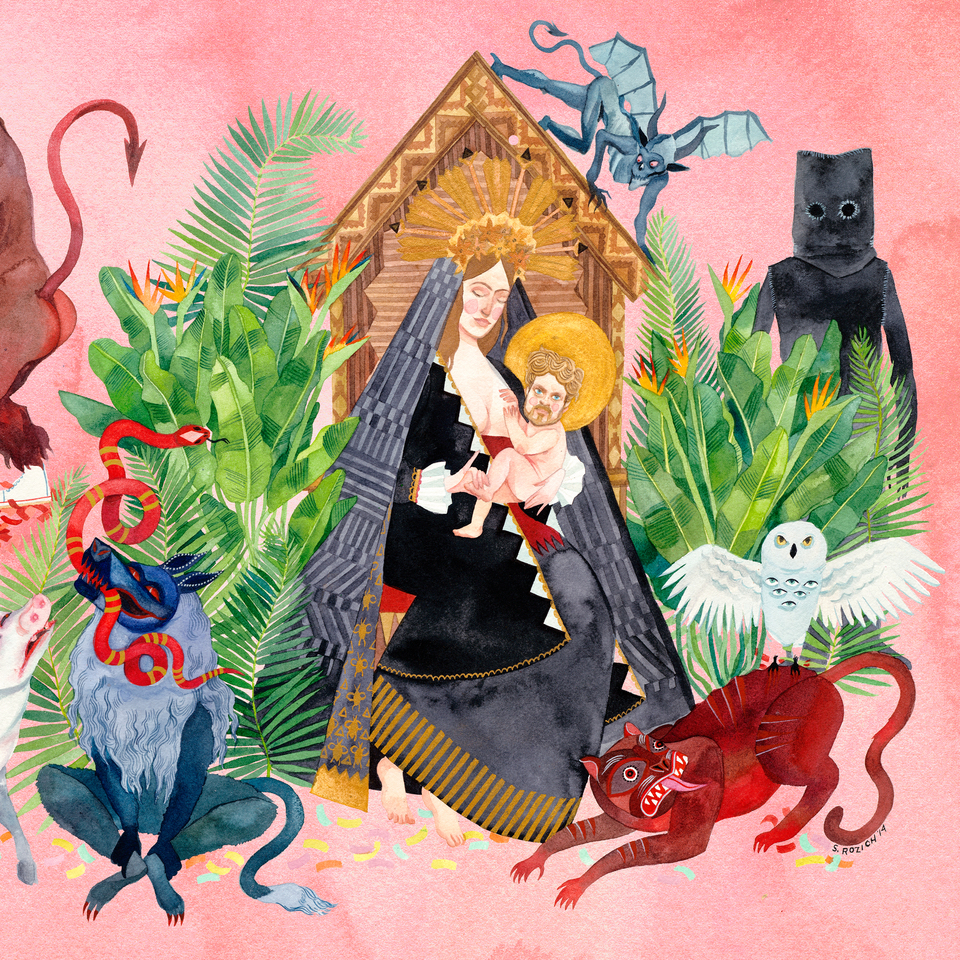
Father John Misty – I Love You, Honeybear: Round 89, Nick’s choice

My first exposure to this record was hearing “Chateau Lobby #4 (in C for Two Virgins)” on the radio in the car, sometime last summer. My immediate reaction was to exclaim “what the fuck is this shit?!”, so affronted was I by its easy-listening, 70s AM radio instrumentation and faintly creepy lyrics about pulling up someone’s wedding dress.

By the autumn, though, it was clear that the album it came from was going to garner oodles of end-of-year plaudits, and critical and friendly voices I trust were, by and large, singing its praises; some of them vehemently so. Emma and I were intrigued, so we bought a copy. First couple of listens; meh. 70s country-soft-rock with glittery shoulder pads, exactly the kind of retro bollocks I hate. But at some point we started playing it a lot, especially in the car, and it all began to fall in to place…

Josh Tillman, which is who Father John Misty is, was the drummer in Fleet Foxes for a while, and then recorded solo under the name J. Tillman. He released a handful of albums of self-consciously obscure and sincere singer-songwriter stuff, in the mould of Dennis Wilson or Nick Drake; ie. he deliberately wanted to be the kind of singer-songwriter who people only ‘get’ after they’re dead. Then one day it seems he had an epiphany of sorts on stage, when he realised that people were responding more to his between-song banter and shit-talk than to his songs.

The result of this epiphany? A new nom-de-plume and a new approach to being a musician, which both acknowledges and lampoons the methods and traditions of the singer-songwriter and the relationship between them and the audience, and, most importantly, them and their material. Some have described it as ironic distance, but for me it actually feels more honest; if this were theatre rather than music I’d say he was indirectly breaking the fourth wall. More on this later.

Anyway, despite initial misgivings, I now think I Love You, Honeybear is an amazing record, a document of the start of a relationship so honest, so warts-and-all, and so multi-faceted that I want to take it and rewrite the lyrics slightly so that it fits the early days of my own relationship, such is the emotional pull it has on me (aided, no doubt, by the fact that the object of the affections detailed has the same name as my wife). It makes me remember the heady, tumultuous, passionate times before mortgages and toddlers entered our lives, and it does it by being funny, caustic, cynical, weary, plaintive, self-aware, and so honest that it hurts.

The songs by and large eschew verse-chorus-verse structures, and instead move in a more creative fashion most of the time; which makes perfect sense, because both individually and as a whole they tell a story, albeit not entirely linearly; we start not quite at the beginning, and the very last words wind us back to a reminiscence of a first meeting. Occasionally there are refrains, but they tend to be melodic or instrumental; the lyrics seldom repeat, and the song structures are complex and rewarding, meaning that the album creeps up on you until its etched reams of itself into your cerebellum. Even the instrumentation, which made me shudder on first contact, is fabulous; more musicological minds than mine have described the songwriting and playing with awe.

Something which put me off I Love You, Honeybear initially was the overall presentation; the album title is horrible, the artwork is foul, the song titles make you wince (“When You’re Smiling And Astride Me”, eurgh). This is obviously deliberate; his albums as J. Tillman featured moody, black & white portraits of himself on the covers and song titles like “With Wolves”, “Visions Of A Troubled Mind”, and “Ribbons Of Glass”; in short they were boring, clichéd shit done a million times before by serious men in dark clothes with rhyming dictionaries and acoustic guitars. His new approach acknowledges the ridiculousness of being a musician, of the relationship between the singer and the songwriter and the singer and the audience. You could read it as disrespecting his audience, or you could read it as talking to them as intelligent people who can understand complexity. I favour the latter interpretation, obviously. The fact that he’s far more successful as Father John Misty than he ever was as J. Tillman suggests that people get it.

His Instagram feed furthers the approach by mocking the aesthetics of the role he assumes, but it also refers back to his songs. There’s a series of pictures of him in different locations – onstage performing; with Lana Del Rey in a very obviously posed and lit photoshoot; with groups of friends; standing in the middle of the road at night; behind the desk of The Late Show; in a livingroom full of colourful balloons; alone under a tree; with Thurston Moore’s arm around him – where, in every image, no matter who he’s with or what he’s doing, he’s glued to his smartphone, oblivious to what’s going on around him. The third song on I Love You, Honeybear is called “True Affection”, and is a very sincere appeal to talk “with the face” instead of through “all these strange devices”. The song is gorgeous and affecting; the photos juxtaposed with it are funny as hell.

One of the things that makes I Love You, Honeybear so rewarding is the shifting complexity of the emotional palette and lyrical perspective; it veers so often and so far in tone that unravelling the nuances is fascinating. There are straight-up jokes in the lyrics embedded alongside superficial nastiness and condescension, but there are also declarations of affection so deep and honest that they make my heart ache. Josh Tillman has been accused of misogyny, but the sentiments expressed are personal and specific, not generic, and balanced by self-deprecation and honesty. He’s listing things that bug him (and things that fascinate and bewitch him) about a single person, not an entire gender. And, frankly, the person he’s singing about seems to give as good as she gets, if not better.

There’s such attention to detail, such mundanity juxtaposed with such wonder, that it makes you wonder why more people don’t write lyrics like this; the conclusion is that they can’t. Often Tillman phrases things as if he was speaking directly to you, or writing for his own private need, rather than singing a song. Other lyricists sometimes seem to be trying to create new clichés, but he delves into specifics and similes in a way that completely eschews this. He’s not creating a new world, or abstracting this one; he’s chatting shit, being honest, making jokes to mask uncomfortable emotional truths, acknowledging the emotional barriers we put up. It goes beyond confession or candour into the often uncomfortable, complex, and sometimes irrational reality of actual human emotions, and it feels all the more affecting for it. He’s an asshole and a nice guy too, often at the same time, like most of us probably are.

The lyrics are so great, and so integral to my enjoyment of this record, that I thought about including loads of them here as examples. But, amazing as they are, they are lyrics still and not poetry, and removing them from the context of their musical accompaniment and vocal delivery shears them of a huge amount of their impact.

And what vocal delivery; I’m hesitant to talk about the nuance of this record again, but Tillman moves from a croon to a holler to a whisper so well, often in the same song; compare the engorged climax of “The Ideal Husband” to the lachrymose denouement of “I Went To The Store One Day”. It’s an amazing album to bellow along to as you drive; I nearly sang myself hoarse with it on repeat on a journey to Cornwall (which was silly, as I had to give a presentation when I got there).

And “Chateau Lobby #4 (in C for Two Virgins)”, the song I was so repulsed by on first hearing? I think it’s a masterpiece, one of the best songs I’ve ever heard. I genuinely can’t get enough of it.

Rob listened: This has been a favourite-in-waiting ever since I heard ‘Bored In The USA’ for the first time back in 2014. I had the same experience as Nick in hearing ‘Chateau Lobby’ without knowing who it was by, but the opposite reaction, falling in love with it before the second verse was done. The album proper took some time for me to get to know. As with Nick, getting it lodged in the car was the breakthrough, perhaps appropriately. Misty has the feeling of someone who could throw his battered suit carrier in the trunk of his car and disappear at any moment.

I recognise everything that Nick is saying above, but I don’t think it’s quite as unique or remarkable. Don’t misunderstand me, I think it’s great, and refreshingly nuanced and provocative. But to me this is a pretty standard literary approach to writing. Misty certainly does have ironic distance and Tillman is undeniably adopting a character and using him to say one thing whilst meaning another. He’s very skillful, lacerating at his best, and yes, he stands out because of the deftness with which he slips his stiletto between the ribs, seeking the heart. I think that’s less because he’s a genius (he’s not, he’s just very good) and more because we are used to most songwriters trying far less.

Tom listened: For some reason, I can’t help but compare Josh Tillman to John Grant…and, unfortunately, I have a problem with this association. My first exposure to John Grant was his Pale Green Ghosts album and I thoroughly enjoyed it initially. However, as I got to know it better I increasingly felt repulsed by it; the knowingness, bordering on smugness, of the lyrics had such a negative effect on me that I began to see that trait throughout the record – in the production values, the songwriting, the arrangements – to such an extent that I literally haven’t felt compelled to listen to it in years and I doubt I will again…at least, until Rob decides to bring it to record club! The odd thing is that 6music has recently had quite a lot of John Grant in spoken form (in interview or DJing shows) and I find him thoroughly likeable, engaging and modest!

Well…Father John Misty elicits the same feelings in me – he seems just too clever by half! I can admire the musicianship, some of the songs sounded truly beautiful, but I can’t shake the impression that every move is so deliberate, so considered that the soul has been all but sucked out of the music. Of course, I could just be experiencing what Nick felt when he first listened to the record and perhaps repeated exposure would reveal a compelling and addictive commentary on the human condition but I doubt whether I will stick around long enough to find out.


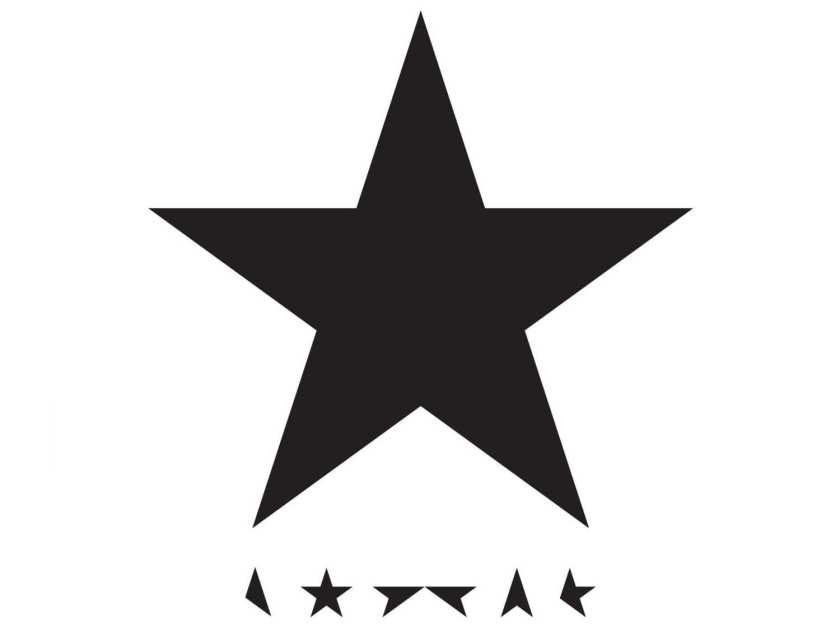
David Bowie – ★ (Blackstar): Round 88, Nick’s choice

DavidBowie★Well, we had to play at least one actual Bowie album, surely?

As usual I dithered on what to pick, only actually deciding on the evening (I took all the Bowie albums I owned in a rucksack). Having played Low at record club some time ago that was out, and my initial thought was to play 1. Outside, Bowie’s reunion with Eno from 1995.

1. Outside was the first Bowie album I ever heard, when my sixth form English teacher lent it to me a few months after it was released. 16-year-old me had no idea how to deal with 1. Outside, because it is a ridiculous conceptual mess, has too many songs, is about 25 minutes too long, has loads of ridiculous spoken-word character segues about ‘art-crime’ (wtf), and the mix is overstuffed with layers and ideas to the point of befuddlement and confusion on behalf of the already-conceptually-blindsided listener. 36-year-old me doesn’t really know how to deal with it any better.

That being said, many of the songs on 1. Outside are fantastic, and the music intriguing and creative; Bowie, Eno and their cabal of collaborators casually invent entire new genres at the drop of a hat (industrial jazz, anyone?). With some serious editing, it could have been one of Bowie’s very best records, but instead it’s perceived as an ambitious folly, and very dated. Not wanting to play the whole mess of an album, I compromised and played “I Have Not Been To Oxford Town” as an isolated track, because it’s very good.

Instead I played ★, because, well, it’s quite a talking point, for obvious reasons. I’ll spare you the contextual details – he’s dead, don’t you know – and instead say that, for me, ★ was the first contemporary Bowie record that I was interested in hearing. Pre-release chatter – Bowie’s recruited a jazz band and made a krautrock album! – made it sound like it would fall squarely in the Venn diagram sweetspot of my music taste, and so for the first time ever I intended to pick up a Bowie album on the day it was released.

I asked Emma to pick a copy up that Friday if she popped into town, but she didn’t, so she didn’t. I figured I might pop to Sainsburys after work and get a copy, but a footballing injury left me immobile for the weekend. And then I woke up on Monday morning and he’d died.

Which means that by the time I heard ★ I already knew the tragic context of its release, and was unable to listen without prejudice; it will always be the album he released two days before he died to me; it can never just be the new album by David Bowie. Which makes me a little sad, for several reasons.

Which is not to say that I’m in any doubt about the quality of Blackstar – the musicianship, songwriting, arrangements, and mixing are all pretty obviously excellent – I just wish I’d had a chance to form an opinion before the context was revealed.

What’s perhaps most surprising about ★ is how invigorated it is; “’Tis A Pity She Was A Whore” and “Sue (Or In A Season Of Crime)” in particular are powerfully driven, the new version of the latter almost sounding like Acoustic Ladyland’s frenzied modern jazz rock. It’s also incredibly forward thinking; you can tell it’s Bowie by his voice, obviously, but this is no exercise in retreading past glories – it’s another, final, reinvention, a new sound palette and aesthetic for someone who consistently explored new canvases and textures.

I didn’t pick up The Next Day until last weekend – at the time I wasn’t impressed by “Where Are We Now”, though I think it’s a lovely song now – but listening in hindsight it almost seems like Bowie was getting back in the saddle, working up to match fitness before the main event of this record, which I genuinely do think, even shorn of context, is as good as anything he’s ever done. That ★ is loaded with resonances it didn’t have for a couple of days after it was released just adds to its depth.

Rob listened: Nice to have a bit of Bowie for ‘Bowie Night’. I haven’t been following much of any discussion of Blackstar since Bowie died, but I guess like lots of people, it was the first of his records in living memory that I’d actually been approaching with interest as its release came around. I’d heard a couple of things about the discovery of the backing band and Tony Visconti describing how energetic the sessions had been. ‘Lazarus’ sounded great and an album featuring a reflective Bowie above some meaty, beaty, jazzy rock sounded like a pretty enticing prospect. And then he died and it suddenly never felt like the right time.

Since then I’ve gone back to ‘Scary Monsters’ and ‘Aladdin Sane’ and ‘Heroes’ and ‘Lodger’ and dabbled with other bits and bobs and especially gone back to those two Iggy Pop albums from 1977, but Blackstar has remained untouchable, a live relic too radioactive with meaning and Bowie’s recent touch to be manhandled. There’s a great line in an American Music Club song, perhaps my favourite of all of theirs, where Mark Eitzel sings “I’m as priceless as a brass ring / that’s losing the heat from your hand…” and I guess that’s how I felt about Blackstar.

So, thanks to Nick for breaking the deadlock. I thought the album sounded pretty good. The opening title track is pleasingly bold, austere and epic, the band slowly unfurling beneath Bowie’s (frankly shot, but not in a bad way) vocals and once those ten minutes are done we’re off an running. ‘Lazarus’ seems likely to stand as a musical epitaph, and it’s a beautifully measured and weighty piece. Elsewhere it was pleasing to note that Bowie still couldn’t shed his love of the shifting, skittering shuffle of a drum and bass beat and there was plenty to get absorbed in across the seven tracks.

I don’t think it’s possible to objectively compare this to Bowie in his 1970s pomp, but it’s a fine record, one I think I’ll go back to, and in that, for me at least, it’s up there with his best.

Tom listened: ….a long time ago now! In fact, since then we’ve lost such a slew of other recording artists (and, only tonight, there are concerns about Sinead O’Connor’s well being) that Bowie’s death seems like quite a distant memory. My world has turned pretty purple of late but if I look back past my current obsession I was deeply invested by the passing of THE great 70s pop icon, not least by the manner in which he orchestrated his life right up to the bitter end. The video for Lazarus had me spellbound – the confluence of music, image and reality aligning to give that brief period of time (because, it seems, all periods of time are brief these days) a real atmosphere.

So, like Rob and Nick, I was intrigued to hear Blackstar…but, to be honest, I still had pretty low expectations. Bowie had released so much less than ecstatically received stuff since Tin Machine that even when reviews started to pick up again (around about the time of Heathen I think) I immediately assumed it was the Mojo/Dylan effect of some hoary old rock journos thinking that the new album might echo if not surpass past glories if they shout about it loudly enough…and all at the same time!

Well…I was wrong about that. Blackstar is magnificent!


Iggy Pop – ‘The Idiot’: Round 88 – Rob’s choice

theidiotIt felt disingenuous for me to bring a Bowie album. We’ve been over this before, but I never really connected properly with his music. I hugely admire what he did, and perhaps even more the way he went about it, but even despite having gone back to those records of his that I own over the last couple of weeks, and having dipped into many of the others via Spotify, I still don’t feel I could claim a solid connection with a particular record, perhaps with the exception of ‘Ashes To Ashes’, or at least not one strong enough for DRC.

But we’re allowed licence to interpret, and Bowie’s direct influence is so extensive and apparent that I haven’t had to push too far off-piste to find something. Initially I thought about bringing Lou Reed’s ‘Transformer’, a record I have always loved, that Bowie and Mick Ronson famously produced, and which I know some of the others have mixed feelings about (for some reason ‘New York Telephone Conversation’ is one of the most frequently pilloried tracks at our meetings – actually, for one specific reason: Nick likes to repeat himself).

Instead I skipped forward another 5 years to ‘The Idiot’, also produced by Bowie and, as with Transformer, also heavily reflecting the work he was doing as a solo artist at the time.

Iggy Pop and David Bowie were hand-in-glove throughout the Berlin period, having moved to the city together to escape their spiralling drug addictions. The writing and recording for ‘The Idiot’, Pop’s debut solo album, began in mid-1976, before Bowie started work on ‘Low’, although Iggy’s record was released after the first of Bowie’s Berlin trilogy.

The wikipedia page for ’The Idiot’ features a rather telling line, one that hints directly at just how fundamental was the range and impact of Bowie’s influence on the album: ‘The Idiot is regarded by critics as one of Pop’s best works, but is not generally considered representative of his output’. The specifics of the creation of ‘The Idiot’ has been a point of speculation ever since its release. Some have claimed that Bowie wrote the music and Pop the lyrics, others that they switched places frequently. There’s a commonly held assumption that this is effectively a Bowie record that he didn’t want to sing himself, with Iggy little more than a singing and dancing puppet. This view plays neatly into the dual narratives of Bowie as ceaselessly creative genius and Pop as primitive, well, stooge.

I prefer to hear ’The Idiot’ as a genuine co-creation, a meeting of musical minds from wildly differing backgrounds, histories and with vastly different capabilities. That might be partly because I tend to drift towards the uncategorisable savants who seem to be channelling or expressing some innate, restless, inexplicable force, rather than the super-geniuses who are so good because they’re just so damned good. I’ve never clicked with Bowie, but I guess I’ve always been on Team Iggy. Even so, you’d have to admit that ‘The Idiot’ does sound a hell of a lot like a Berlin-period Bowie record with someone else singing on it.

Happily, that’s a very good thing. Much of the tingling tension that animates the album comes from Iggy’s apparent spatial discomfort, his alien status in a soundscape constructed for Mr Pop, by pop’s most famous alien. Iggy sounds out of place in his own record, singing slowly in a lower register over icy, glass-cool synths and proto-industrial drums. He seems unsure whether to croon, to speak, to growl and so he tries all of these approaches and more. His delivery is constantly questing for a place to settle, a way to be, often within the span of just a single phrase.

The guitars that slice through from time to time raise a particularly other-worldly type of havoc, more New York art school than Motor City mosh pit. Check out ‘Nightclubbing’, a neutered disco strafed by a guitar that sounds capable of slicing planets in half. Elsewhere there are tracks that come over like the reanimated corpses of pop songs of the fifties, in a good way. There are songs that start ploddingly, almost declaring their dreary filler status, and yet they go on to charm and intoxicate, and much of the credit for that has to be laid at Iggy’s feet. He is the human heart beating at the centre of this wasted post-industrial wasteland. It’s a collection chilled by dislocation and yet thrilled by the possibilities that were opening up before these two artists.

Compare and contrast this album with the titular opening song from the follow up, ‘Lust For Life’, which was also produced by Bowie and released in the September of the same calendar year (’The Idiot’ was released on my 6th birthday, fact fans). It features Iggy back on sneering, snapping vocal form. It’s much more the rambunctious modern rock record he may have been expected to make on the way back from an early career ripping up the foundations of Detriot dancehalls. It’s terrific in its own way, and the two records together stand up next to any one-two in rock music, but ‘The Idiot’ is so idiosyncratic, so striking and so utterly beguiling that it stands just that little bit above.

Nick listened: I might’ve known Rob would be contrary.

But I’m glad he was, because I’ve been vaguely wanting to hear The Idiot since I read the 33 & 1/3 book about Low a few years ago, and thus found out that Pop’s debut solo album is, in some people’s opinions, essentially a fourth record in Bowie’s Berlin Trilogy.

And it really does sound like that; corrupted, industrial, mutated r’n’b with a sense of dark European theatre. I enjoyed it greatly, and was delighted when Rob gave me his CD copy because he’s ordered it on vinyl. Thanks, Rob!

The People’s History of Pop

This evening Devon Record Club are doing some recording with BBC Radio Devon for a piece they are putting together as part of the BBC’s ‘People’s History of Pop’ project. They got in touch, asking for some local perspectives, and all we do is talk about our own perspectives on pop music, so why wouldn’t we?

The brief we settled on was to have a conversation about each of the last five decades, from 60s through to 00s, focusing on the Band, Song and Concert of the decade. Coming up with a starter list has been an interesting and, I’ve found, surprisingly tricky exercise.

That’s partly for mechanistic reasons, like the brief which has sufficient room for interpretation to allow questions and debate to sneak in around the edges. Remembering that it’s the ‘People’s History of Pop’, which is intended as a series of personal histories, then we should be able to give a very personal perspective. However, also remembering that this is a piece for local BBC radio and that as a group we are, to some small degree, supposed to have some depth of knowledge of the subject, it feels wrong to be deviating from the expected norms too dramatically.

Take the 60s, for example, a decade I like to debate, but, beyond the legends and folklore, the details of which I am ignorant at least relative to the 80s and 90s. I would pick the Velvet Underground or Bob Dylan as my favourite artist, whilst acknowledging that if I could settle on a favourite Motown artist, they would be in with a shout. However, what right-minded commentator would not put the Beatles forward in this category? Perhaps that’s why were debating, not just enumerating.

My personal history of pop would have The Fall riding high through the 80s. I shall prepare to compromise.

Secondly, running through the process of compiling one’s own list brings home just how much our accepted history of the early decades of pop has settled, at least compared to the last couple of decades.

For the 60s I wondered whether ‘Good Vibrations’ or ‘God Only Knows’ should be best song, happily setting aside ‘This Old Heart Of Mine’ which might be my actual favourite, but really just choosing one of the already anointed choices.

For the 90s and 00s it was almost impossible to come up with a choice that I felt would satisfy the general listener with a healthy interest in pop history and also me. I told myself that this was partly because pop in those decades had become so polymorphous that there were no consensuses any more, no single culture that any one listener could be at the centre of. That’s true, but it must also have been the case in the 60s and 70s and yet I chose the Beatles and Bowie in less than 5 seconds.

The truth is, that whilst we have so much more music and choice now, including what has gone before, so many niches to lose ourselves in to the exclusion of so many others, that one day, perhaps in only 20 years, these decades too will boil down to a handful of consensus picks. Could be Beyonce. Could be Kanye. Could be Amy. Could be Taylor. It will be something, and it will feel simpler, but not necessarily better.

Looking forward to the discussion, as always. If we come up with an answer, we’ll let you know.