The Velvet Underground – ‘The Velvet Underground and Nico’: Round 95 – Rob’s choice

banana

I ran through my vinyl, pulling out albums that seemed to me we should surely have reached within our first 350 choices. I found a dozen or so and then I stopped. It’s a testament to how wide and deep we have dug over the past few years that so many of the absolute staples haven’t registered yet. From this shortlist, the Velvet Underground stood head and shoulders above the rest. Tom’s comments are accurate: we really haven’t invoked the Velvets anywhere near as much as we might have been expected to. Off the top of my head, our top ten most mentioned are along the lines of CAN, The Beatles, Danny Baker, Coldplay, Rick Wakeman, Pink Floyd, Husker Du, Tim Buckley, Mark Lanegan and Steve Albini. I’d say there were a couple of names in there, three at a push, that could claim to be as influential as the Velvet Underground, especially when looking specifically at the music our past 94 rounds have demonstrated that we love the most.

So, one way or another, it does seem surprising that we’ve never had then before.

After my initial sift, my thought was to bring ‘White Light/White Heat’ which I considered the tabula rasa of alternative rock music, the point at which the Velvets cut loose from all restraint and flew into the stratosphere, breaking the mould and setting rock and roll free for generations of wild-eyed punks to capitalise. Then I listened to it, and enjoyed it as ever, but wondered whether it was something that bore re-presentation. As part of my deliberation I checked back in with ‘The Velvet Underground and Nico’, my theory being that this was essentially a record that could have come from any number of the emerging pop rock acts of the mid 60s. I also feel a lingering antipathy to it because, frankly, Nico’s voice has always left me cold. I understand that it leavens the sound here in a really useful way but, well, I just don’t like it.

Within a few minutes I was reminded just how disconnected I had become from the album, and just what a masterpiece of sweet and sour, concision and experimentation it was. And also, just how much wild, breakthrough sound it contains.

About half the record could quite easily have been recorded by Dylan, or the Doors, or Brian Wilson, or some other boundary-pushing iconoclast. Then there’s the half that just… couldn’t. ‘Venus in Furs’, as thrilling as ever even aged 50. The guitar that slices through the second half of ‘Run Run Run’ like a chainsaw, like nothing else anyone had ever heard before. The drone and majesty of ‘All Tomorrow’s Parties’. And ‘Heroin’, a shockingly beautiful masterclass of expressionist music-making, structure, form and intent all working in perfect, chaotic harmony.

In short, having left it on the shelf for 10 years or so, I was knocked sideways by just how brilliant a record it is, from start to howling finish.

I can’t believe we haven’t had it already.

Steve listened: I can’t believe you haven’t had it already, having come in late in the story of DRC. It is a classic but feels so out of place for 1967, the year of its release, given the subjects of some of the songs. It feels more like the realism and come-down of 1970s after the optimism of the hippy revolution had died down. Far grittier and sharper edges, less fluffy and more dirty spoon and from the bad end of town. New York and not San Francisco. Listening to it again was a great experience and reminded me of how I came to hear it for the first time. A wonderful record.

Tom listened: Of course Rob is spot on when he says that much of The Velvet Underground and Nico sounds like nothing else that had come before. And thinking about it, nothing else since has really embraced that buzzsaw guitar playing to quite the same effect. It is surprising that we hadn’t already had this album, yet I have never come close to selecting it as I don’t…whisper it…like it very much. With the exception of the majestic All Tomorrow’s Parties (I actually quite like Nico’s glacial tones) I just can’t click with it, and truth be told, never have…even though I spent a few years in my twenties trying to kid myself that the opposite was the case. I did love White Light/White Heat though, although that fire has dimmed over the years, and the third album has its moments and a great atmosphere…but throughout their career Lou Reed’s ego, lack of self-regulation (some of their songs go on way too long) and inability to write a deft melody line has ensured that, as far as I am concerned, The Velvet Underground have stayed a band that has been easy to admire but hard to love.

Grimes – Art Angels: Round 95 – Tom’s Selection

59ef246fMy choice for Nick’s ‘I Can’t Believe We Hadn’t Had This Already’ round elicited a disapproving sneer from our illustrious and sage leader when he walked in, late, to the strains of Belly of the Beat…or Kill VS Main…or some such.

It appears that my choice was ill conceived in that:

a) We had already had a couple of songs played from it at the Xmas round up last year (technically only one as far as I am concerned as Realiti is not on my version of the record and I, therefore, don’t consider it as part of the whole).

and

b) It’s only been around for about ten months.

Well, I see the first point as an irrelevance (we’ve never played the album) and I see the second point as…an irrelevance too! The irony is that Grimes has been mentioned far more times at record club than the band that made Rob’s record (I’m not going to give it away by mentioning it by name) and, hence, of the two, I am much more surprised it hadn’t yet been featured at the club. As a side note, I’m not surprised at all that neither Nick or Steve’s albums had passed us by up to this point!

But, seeing as Art Angels is a work of genius, a signpost to the future of pop music, an enduring classic (I’d put money on it) in its infancy, I felt it was about time somebody did the decent thing and took it along. It is also one of only a handful of records that everyone in my family is nuts about…well, maybe not my parents, but my wife and kids seem to love it just as much as I do.

And it’s not hard to see why. Because what Grimes is doing on Art Angels is stunning. Listening closely tonight to Belly of the Beat, trying to see what it is that makes the record so special, it struck me that it is the production (Claire Boucher did everything on this album, including the engineering!) that is particularly breathtaking. One of the albums shyest tracks, Belly of the Beat is, ostensibly, an acoustic strum laid over a programmed drum beat with some typically sweet vocals floating eight miles high above the instrumentation. Strip away the production and you’d be left with something lovely…but unremarkable, perhaps. Listen closely, however, and you’ll hear the workings of what is, surely, one of the great minds working in music today. Sounds come and go in torrents, gush and then recede, swirl and distort but, crucially, never feel forced or over-considered. The song itself never really does much, there’s no rousing singalong chorus, no real hooks, but it also never repeats, never gets lazy, constantly keeps you guessing and, consequently, leaves you wanting more. And more is what you get, because each and every song (even the weird little ones, the grit in the oyster, if you will) sound amazing. Art Angels is such a complete work, 45 minutes of aural, and cerebral, bliss, art masquerading as pop. I worry for Grime’s next album because it may never appear this natural, this unforced again. With Art Angels she’s pulled back the curtain, revealed the magic and, in the process, made things very difficult for her future self.

But worrying about something that may never happen makes no sense at all and so whilst I wait to see what her next move will be, I plan to wear out my copy of Art Angels whilst regularly reminding Rob of how it’s actually a much better album than a scuzzy 50 year old relic with a banana on the front. Whoops. I may have just let the cat out of the bag!

Steve listened: No need to get all defensive…It’s a great album although I wouldn’t have said that it was a classic one that we have failed to listen to yet, whereas a certain recording with a banana cover…is. I would also argue that Mr Cope’s entry into the world of music also fits that bill. But here’s me being all defensive of the other choices when Grimes’ album is, I agree, a pop masterpiece. It’s also a possible intersection in the musical Venn diagram between my tastes and my children’s. So, I will inevitably buy it and listen to a lot…..in the car.

Rob listened: We’ve only had 8 or 9 rounds of DRC since this record was released (slowing up guys…), and 3 or 4 of those had prescribed themes. So, on balance, I can very well believe that we haven’t had ‘Art Angels’ yet.

Which is not to say that it wasn’t a welcome arrival. I bought it when it came out, on the strength of the blistering ‘Kill V Maim’. I loved the album but never really allowed it to sink it’s hooks into me, and without the early attachment, it has sunk out of sight. Hearing it again reminded me how laser bright, mercilessly catchy and gobsmackingly inventive it is. Hearing all three wrapped up in one package is very, very rare and so I concur with Tom, this is a special record.

Glad we didn’t have to wait any longer.

Teardrop Explodes – Kilimanjaro: Round 95 – Steve’s Selection

220px-teardrop_explodes_-_kilimanjaro_cd_album_cover

Why on earth haven’t we played this album yet? This could be a question asked by the arch Drude himself, so full of ego (or ergot) he is, was, that the man seeks attention. Perhaps it is the cocky swagger of this debut of Mr Cope that sets a precedent of many more pretenders to come. All leather trousered and snake hips, snapping the minds of the youth. Yet, few have sounded quite like this album. Few sounded like it at the time. A post-punk psychedelic revival? XTC would later develop their own psychedelia through the Dukes of the Stratosphear, but nobody else had the gall surely? Here was a man astride a white piano on Top of the Pops LSD’d up to the eyeballs, appearing on the front cover of Smash Hits and sharing a house with a pre-Nirvana Courtney Love. Please God this is rock and roll! But enough of the image and the what for the music?

The opener ‘Ha Ha I’m Drowning’ has a horn section on it, which immediately jarred with me when I first heard it against a backdrop of punk. This combined however with the ghostly mellotron (I think it is a mellotron) and the crashing guitars, incredibly tight rhythmic drumming sends you immediately into an off-kilter bonkers go crazy dance across the floor. The horns and repeating lyrics (“You can watch rafferty turn into a serial”….”I just wander around”….”It’s just like Sleeping Gas. Oh so ethereal”) on ‘Sleeping Gas’ also lead you into what seems to be describing a drug induced nightmare. Is it a bad trip? He’s babbling, but trying to make sense of it all at the same time. Cope’s dalliances with hallucinogenic substances are well documented, and yet it is documented here so vividly and yet in a jolly distinctly English style. Perhaps the analogies with Syd Barrett are fair here, although there’s a distinctly post-punk feeling to this. It’s not the psychedelia of the 60s, nor the 80s. Cope interprets his descent himself, wobbling out of control. ‘Treason’ was the first single I think. I knew Cope’s nephew at University in Leeds and he told me the whole family had to buy a copy of the 45 when it came out. They viewed young Julian with some despair apparently. Later on in the album, on my favourite track (‘Bouncing Babies’) he sees his poisoned status in the family unit

“I was a poisoned child
I was fighting for my life
Clinging to something
Fighting for anything”

On ‘Brave Boys Keep Their Promises’ he notes

“Fighting with your relatives
You’ve got your mother and your father and your brothers to Your aunts and your uncles are all against you”

‘Poppies in the Field’ is perhaps one of the weaker tracks on the first side, but there’s an accomplished range of instrumentation, with sounds that can only be fitted into a psyche of the late 70s/early 80s. The album’s production, by Bill Drummond (later of KLF of course, who we have covered and talked about a lot) and Dave Balfe future-proofs the sound like Martin Hannett did with Joy Division’s Unknown Pleasures (what we haven’t covered that album either…with arguably the best opener of any post-punk album?). Cope growls on the first track on the second side (‘Went Crazy’), more overtly talking about his evolving and declining mental state (“Je suis suicide, je suis pain. Jabber indecision here we go again, I’m going (insane?)”). Perhaps this fame thing is too much for him? Drummond is alleged to have pushed him a little too far in his creative approach (there were legends about sliding acid tabs down a ruler into his mouth). He’s also alleged to have manipulated the Teardops and Echo and the Bunneymen to play simultaneous gigs in Rekjayvik and New Zealand along an ancient ley-line (you couldn’t make this up?). The chronicling of chronic depression and loss of mind through drug induced mania is no celebration of youthful abandon on this album. Far from it, more a warning to the intrepid journeyman. Cope exiled himself in Barrett-like seclusion in Tamworth (where he lived as a pre-Teardrop), an image he has tried to shake off. He re-emerged later with odd solo excursions (‘World Shut Your Mouth’ and ‘Fried’ being two examples) and we are of course indebted to him for chronicling Krautrock, Japrock and standing stones (‘Krautrocksampler’, ‘Japrocksampler’ and ‘The Modern Antiquarian’). Cope the scholar, or literary agent of the mind is brought to the fore on the last 3 tracks on this album, pointing to more eclectic musical styles, and less reliance on verse-chorus-verse structure that would sell singles at the time. ‘Thief of Baghdad’ is story-like, prosaic, with eastern influences milking through the patchwork of a wandering and fractured mind. The last track opens like early Depeche Mode (maybe they got their influence from here?) but quickly descends from the tight pop structure to the more open and surreal. And there it is. The end. For two glorious years Julian Cope was pinup number 1, on Top of the Pops and yet helter skeltering uncontrollably into a drug psychosis. Hardly what the established Radio 1 vanguards of the youth in the 1980s would call an example to teenage children, drowning drowning, and so the track fades and we hear no more like it then, or will hear it like it since……down the rabbit hole we go. Utterly brilliant.

Tom listened: Now, The Teardrop Explodes I knew of…Reward I had actually heard…but I’m not sure I had even heard of Kilimanjaro the album before Steve pulled it out of his bag on the evening.

More fool me because it’s a great record. A tad homogenous perhaps (most of the songs sounded like a bit of a rehash of the aforementioned single to be honest) but when the single is THAT good what does it matter. Loved this from start to finish…in another, better, world, perhaps this would have fitted the theme even more closely!

Laura Nyro AND LABELLE – Gonna Take A Miracle: Round 94, Nick’s choice

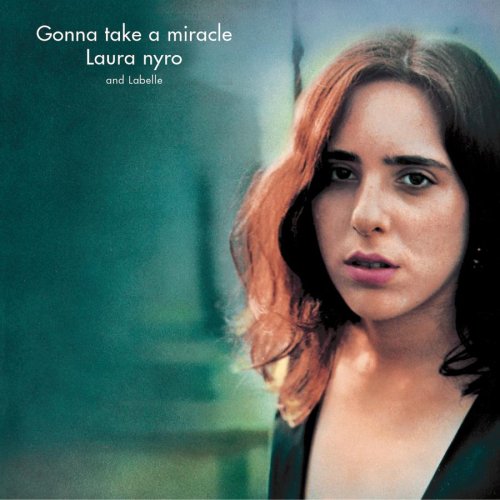
nyroI could, and should, have just gone for the safe choice, and picked something from this year that I knew no one else owned because we’d talked about it, like Anna Meredith or Thee Oh Sees. Or some semi-obscure electronica like Akufen or Superpitcher. Or some bloody modern British jazz, like I pick every other bloody round anyway. But no, I tried to be a bit clever, and pick something by someone that somebody might have heard of. Tom asked what year it was from. When I said 1971 he replied that he owned something by EVERYBODY from 1971. And he does, the bastard. So Laura Nyro AND LABELLE cost me a tenner. Unfairly, I might add, because this album of sumptuous, fangirl covers of the soul, R’n’B, doo-wop, girl-group, Brill Building and Motown that Laura adored growing up as a teenager in the Bronx is most definitely a collaboration, and Tom only actually owns a live album by Laura Nyro which features no LaBelle at all whatsoever, making this, I think, a record by a substantively different artist.

Anyway, quibbling aside, Gonna Take A Miracle is produced by Gamble & Huff, who are basically the architects of that sumptuous Philly soul sound, and it is lush (but not, note, overblown). Laura’s a good enough singer on her own, but backed up by Patti LaBelle, Nona Hendryx, and Sarah Dash, as well as the formidable musicianship of Gamble & Huff’s session band, she becomes part of something absolutely formidable, and not a little bit gorgeous. It’s a record made by great musicians as a tribute to the great music they grew up with, and as such it’s full of love.

There’s not a great deal else to say about Gonna Take A Miracle; it’s soul music, and it’s fabulous. I don’t have a back story with it particularly – I bought it years and years ago after reading about its status as a bit of a lost classic. I might argue that it contains the definitive versions of “Jimmy Mack” and “Nowhere To Run”, but arguing about this music seems churlish to say the least. Just enjoy it.

Mitski – Puberty 2: round 93, Nick’s choice

Erika_12JKT EPS_r3Frankly I’ve become rubbish at writing since I had a kid; my free time has been eroded, and I’d rather spend it on a bicycle or hanging out watching TV with my wife rather than hunched over a laptop typing. Hence the tardiness in writing this post, and the brevity of some of my recent responses. I am sure that you, faithful reader, are feeling pangs of yearning for more verbose times . (Today is a good day to post this, however, as Wikipedia tells me that tomorrow is Mitski’s birthday.)
So then, Mitski. I’d never heard of her before this earlier this year, when I noticed Puberty 2 sitting near the top of the Metacritic top albums list. The last time I noticed a solo artists I’d never heard of before on there was St Vincent in 2009, so I figured she was worth a punt. And she is!

Puberty 2 is, basically, an indie rock record; there are guitars, and bass, and drums (along with [synthetic, I assume] trumpets, and keyboards, and stuff), and a woman singing about identity and heartbreak and dreams belonging. There’s nothing here that hasn’t been done before, and many times, but Mitski does it very well: perhaps her half-Japanese, half-American heritage (“your mother wouldn’t approve / of how my mother raised me / but I do / I finally do”) offers a slightly different perspective; perhaps the fact that she studied music at university in New York state gives her a compositional edge. Perhaps we should ignore the ontology and just listen to the tunes?

There’s a definite 90s alt.rock aesthetic to a good chunk of Puberty 2: the crunchy guitars that aren’t afraid to reach a dynamic crescendo (get a load of the grinding, swooning climaxes in “Your Best American Girl”), and the distorted vocals that reveal emotional tension by masking it could be from 1996.

This is probably just cultural privilege and cliché, but Mitski‘s voice wasn’t what I expected either; it’s a much tougher, more strident vehicle, and reminds me of someone who I can’t quite place. (On the night Rob said, instantly, Angel Olsen, but at that point I’d never knowingly heard Angel Olsen, so it wasn’t her – though I’ve since bought her new record and there’s a definite similarity. Tom said St Vincent, but that didn’t scratch the itch either.)

Puberty 2 is incredibly hooky; this year it’s Mitski’s tunes that are buzzing around my head: from the gentle refrain of “I Bet On Losing Dogs” to the thrashy, discordant blasphemy of “My Body Is Made Of Crushed Little Stars” and the poppy rush of “Happy”. If I was 17 rather than 37 I think I’d be soaking this album in, playing it over and over again and using it as a scab and a balm and an exorcism. As it is I’m just appreciating it on some kind of artistic level, and faintly wishing I was 20 years younger.

I doubt the others can even remember it by now…

Moulettes – Preternatural: Round 94 – Steve’s Selection

Moulettes-Preternatural

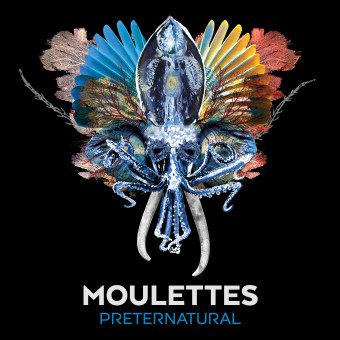
I’m well aware that the DRC have issues with progressive rock, but musical allergic rashes aside I feel that this album offers a fresh take on the so-called genre. It would however also be wrong to merely categorise Moulettes as even folk-rock, let along progressive rock, since there is much more depth to this album. The sounds are complex, and yes although there is a theme running through of a celebration of the mysterious creatures that inhabit our earth (some mythical?) it is not, I promise you, a prog rock record. This is not Yes’ ‘Tales from Topographic Oceans’, although I am sure that there’s some influence in there somewhere (….). It is not Jethro Tull either, but again, there is probably some influence there too. The opening track ‘Behemoth’ is an aural cavalcade. Although not on horseback, the sound may be riding through the sea astride the mythical Behemoth itself. Gasping delightful vocal harmonies are interspersed with a riff that sounds like an electric guitar, but I believe is actually a cello (played by the talented Hannah Miller). As an opener it leaves no room for doubt, this is a rock record and it packs punch from start to finish. But as I say, not just rock though…

World music and the far-east simmer underneath under ‘Patterns’ and I hear Kate Bush in ‘Medusa’, breakbeats on ‘Parasite’ interspersed with power riffs that could be out of any folk-rock crossover of the 1970s, but given new life here on fully mature arrangements covering new ground for a modern audience of any persuasion. It’s that broader appeal that the Moulettes have managed to achieve on this album, perhaps more so than their other outings (this is their 4th studio album), without sacrificing their soon and deep folk/psychedleic/progressive rock roots.

Their craft and musicianship is undoubted here. Many have made reference to their live performances, but I have issue with bands that rely solely on the adage  ‘they sound much better live’. Performance has stand on its own two feet and maybe draw you to the live experience. The production and sound on Preternatural is outstanding, and stands alone without the need to rely on a live rendition – although I am sure they the live shows are very much something to behold. Given this though there is what I interpret to be a lament to the loss of talented singers (on ‘Bird of Paradise Pt 2’) – is this about the loss of craft through the X-factor generation (?) and the loss of wildlife through climate change (?). There’s plenty of depth lyrically to this album, within each of the songs, and credits would suggest some deep political motivations behind them.

The final track on the album (‘Silk’) is one of the standout tracks. Opening with ethereal vocals with drop liquid-like beats, and later samples of sci-fi films, and on the topic of the material itself. Being a scientist who works on natural fibres I can’t help but love the subject matter itself, but what I like most is the ending (on the vinyl version), with the run out groove endlessly repeating…..daring, and a nice touch.

So, if you don’t like prog (I do) don’t be put off. This album has more to give, and influences well beyond easy pigeonholing. Oh, and one day, I will see them live too….

Rob listened: This seemed to be our designated talker-overer for the evening (there’s always one) but even so, there was plenty to dig into in this sprawling, careening affair. For a start, we struggled to decide what it was. That’s helpful for Moulettes, I guess. As Steve has noted, we struggle sometimes to divest ourselves of certain genre prejudices. This thing was like quicksilver, flowing through the gaps between styles. And whilst I’m allergic to the more knowing, self-indulgent end of prog, I can’t deny an affection for a certain type of pastoral psyche-tinged folk, and ‘Preternatural’ seemed to sail more on that bearing. Still, there were sounds chucked in there that hit like nails down an eighties synthesized blackboard. I can’t claim to have fallen completely for Moulettes, but ‘Preternatural’ certainly made me want to listen more, rather than less.

Steve’s further comment: Stop talking over my records…..

Tom listened: I almost really liked this….but a couple of things put me off. I liked the singer’s voice and most of the instrumentation but, as Rob has said in his response, every so often Moulettes would throw in a jarring prog rock trope (is there any other kind?) and my teeth would be set on edge, a cold sweat would break out and a little piece of me would die…mainly because it all felt so unnecessary; a perfectly good tune (Silk being a case in point) spoilt, as far as I was concerned, by the band seemingly feeling the need get the prog rock box ticked on their Allmusic profile. A shame as victory was so nearly theirs!

Oh, and then there’s the album cover!

Ought – ‘More Than Any Other Day’: Round 94 – Rob’s choice

oughtImitation is the sincerest form of flattery, they say. Or is that sarcasm? Anyway, flattery will also get you nowhere. No, hang on, that can’t be right, cos this record is gloriously imitative and it goes to all the right places, at least for those who grew up on spiky, exploratory underground guitar sounds coming out of US college towns in the late 80s early 90s. i.e. me.
Let’s start again. I can boil this down for you. This record sounds like lots of others, and that’s great.

Much like the Meilyr Jones album Tom brought to the last Record Club, the trick here, hang on, that’s not fair, it’s not a trick, a swizz, a rip-off… the secret here is that ‘More Than Any Other Day’ is a record that weaves its influences and its references through its DNA. Rather than hit them like a series of targets, it works with the raw material of the band’s favourite sounds and then allows these to bubble to the surface as and when they need to. It’s a group of four young men making music influenced by the sounds they love. Is that a crime? What? No it isn’t? Okay then. I’m glad we got that one sorted out.

Let’s be clear, this is no pop-post-hardcore party piece. The Montreal foursome run the gamut from Talking Heads and The Pop Group up through classic Dischord, think the searching geometric patterns of Lungfish, Shudder to Think, Circus Lupus. Somewhere in the background someone strikes a guitar and it goes ‘SKIIING’. The For Carnation, Seam and Bitch Magnet hove into and out of view. There’s a moment at the beginning of the title track that, viewed from a distance, is the moment at the beginning of ‘Breadcrumb Trail’ which is the moment at the beginning of ‘Spiderland’ by Slint and that is not something you want to be dabbling with unless you’re very sure of yourself.

And yet throughout this is not a set of knowing nudges, rather a long ticklish buzz to the musical memory. I’m getting old now. I’m 45, for heaven’s sake. As my performance at Record Club most weeks shows, I no longer have the encyclopedic grasp of (a very narrow slice of) the stuff that echoes around between whichever synapses fire when I feed them these sounds. I spend about 25% of my time at our gatherings declaring, of some minor detail of some record or other, ‘Oh yes, it sounds just like, oh wait, wait, I’ve got it… no. No I haven’t.” And so it is with Ought. The voice at the beginning of ‘The Weather Song’ is the absolute spit of… somebody else. It’s been driving me spare for about two years. But, that’s actually okay for me. In a weird and ultimately pleasurable way, what I get from an echo like that is a wobbly Proustian rush of all the music I used to know and love that used to, and I assume still does, sound like some of these sounds.

There are always records that sound like the records you like the sound of. No-one is doing this in complete isolation, producing sounds that relate to nothing. Even those bees sound a bit like Stars of the Lid or ‘Chill Out’. You can never keep hold of all the pieces of a subculture, never wrap your arms around a genre or, worse, keep it pinned down. And as of now, more than any other day, the connections go in all directions, backwards, forwards, sideways, upwards, downwards (like I said, all directions) in time and in space, as well as in politics, sensibilities, meanings. I get a real kick from this album. That’s perhaps partly explained, but certainly not diminished, by the connections I’m making and the reactions those connections are enabling.

Have I over-explained stuff you already knew enough for you now? Can’t we just get on and talk about the songs?

‘Pleasant Heart’ kicks off with energisingly bitey guitars and vocals, spiky, urgent, anxious. Good things. But the heart of the record comes in the next run of tracks. ‘Today More Than Any Other Day’ begins in Spiderland and then, over 5 minutes, accelerates and veers to somewhere completely different, building a rush of giddy existential joy, both liberated and liberating. Then comes ‘Habit’, one of my favourite songs of 2014. Imagine, if you will, that you are hunkered in a cell, contemplating your last night on earth when, just before your promised last meal arrives, a priest comes in to offer you some final absolution. You wave him away, but the priest is Christopher Walken, who precedes to crouch with you in the corner of the room, grasp both your hands in his, and tell you what’s on his mind, a surging sermon about absolution and addiction. ‘Habit’ is a bit like that.

All three songs feature guitars and drums of the sort I have previously alluded to. But they also feature Tim Darcy, a wonderfully lithe and animated vocalist who performs, rather than sings, his meanings. His voice shifts and pivots, sometimes mid-sentence. His yelps and gasps and barks are electrifying punctuations. He is the embodiment of the skinny, bespectacled college student jazzed to high hell on the possibilities of being in a powerful rock band. I have no idea of he wears spectacles. I guess he may have gone to college. I think I heard somewhere that they met at college.

He is Albini, David Byrne, Ian Svenonius, David Yow’s younger, calmer brother. He’s like the smart singer of that smart band you used to like but can’t quite remember but is actually a summation of all of the smart singers in all of the smart bands.

And that’s Ought. And the rest of the record is pretty much just as good. Good sounds, good band. Good.

Steve listened: Sounds like Talking Heads, like Pavement, oh there’s the Fall (as always) but I like Rob am cosseted with the familiar sounds of the music of my past. I liked this album and it was easy on my ear, but then it didn’t blow me away and awaken me to a new sound that I hadn’t heard before. I’d listen again though, quite happily. Imitation is the sincerest form of flattery, but only if you mean it, and you do it well, and Ought seemed to have at least carried this off with aplomb. I’d be interested in hearing how they developed their own style later on and how they sounded after this “get it out of our system” album had passed through…

Tom listened: Rob emitted a little sigh as I put Robbie Basho to bed (not literally, I hasten to add) and then went on to mutter, in an uncharacteristically doubt-ridden manner, that he wasn’t sure his album would work well coming after Visions of the Country. Well…he needn’t have worried! By the end of More Than Any Other Day, Basho’s acoustic warblings had been all but wiped from my memory and if it hadn’t been past my own bedtime, I would have been reaching for my old Feelies/Shudder To Think/Jawbox albums.

Although, as Rob and Steve have both suggested, they are not really doing anything that hasn’t been heard before, in stark contrast to Parquet Courts (for whom I have really struggled to see what all the fuss is about), Ought are doing it really, really, really well! The playing is sharp yet loose, the singing is surprising and welcoming, the rhythms are infectious and, crucially, the band seem excited to be playing their music…they sound like a team having fun! I liked the album more and more as it went on and, by the end, I had fallen pretty much hook, line and sinker!

Robbie Basho – Visions Of The Country: Round 94 – Tom’s Selection

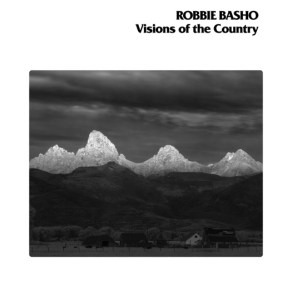
visions_PINAlthough I have had a healthy interest in music since I first discovered the records of the Beatles when I was about ten years of age, my obsessiveness developed into encyclopedic around the time I started university; a time which happened to coincide with my purchasing of the weekly music mags (partly as a way of avoiding my studies?) coupled with listening avidly to John Peel’s nightly radio show.

Of course, despite my voracious thirst for musical knowledge, there were many genres of music for which my research came up short, but when it comes to white American men strumming or plucking or plonking acoustic instruments, until recently I have felt as though, even though I may not have heard the music itself, I would know of the key players, the movers and the shakers…that new names would not crop up or, if they did, it would be because they weren’t particularly good! Robbie Basho’s Visions Of The Country has been a revelation and makes me wonder how many other gems are out there, flying under the radar.

Until about two months ago I hadn’t heard of Robbie Basho. Flicking through the ILX forum one day, lost for inspiration, I noticed his name as a thread title and had the thought, ‘why not actually click on the thread’ rather than do what I would normally do and dismiss it as someone not worth bothering with…simply because I had never heard of him!

There was the usual level of internet devotion on the thread, but as respondents are a self-selecting group, that’s hardly surprising…I could click on a Whitney Houston thread and find a similar level of enthusiastic devotion but she would still sound like a bunch of cats being tortured no matter how many times someone tells you she is the greatest female singer of all time! However, there was also a link to a youtube clip of Blue Crystal Fire and this had me spellbound from the off. A simple strummed acoustic guitar which wouldn’t have sounded out of place on The Palace Brother’s wonderful debut ‘There is No-One what Will Take Care Of You’, or Smog’s masterpiece ‘A River Ain’t Too Much To Love’ and that voice, kind of like Bill Callahan doing his best Anohni impression. The song was ponderous/funereal in terms of pace, repetitive, overtly earnest…and, for me, absolutely captivating. Usually a youtube clip, even of a song I like, will keep me interested for a minute, maybe two, before I see a suggested link and click on that. Well Blue Crystal Fire got about four full plays…and then I bought the album, avoiding playing anything else from it lest it diminished the impact of the first run through when the record arrived.

It turns out that Blue Crystal Fire is a bit of an anomaly, at least as far as Visions Of The Country is concerned – most of the other songs on the album involve lengthy passages of semi-improvised(?) finger picking interspersed with relatively brief blasts of Basho’s deep baritone. On many of the tracks there is no discernible repetition, no conventional song structure, it should be a formless mess, almost impossible to access and intimidating to listen to. But…it’s not. At least as far as I’m concerned!

As Nick suggested on the night, possibly that’s down to the images and atmospheres the songs evoke (the image on the album sleeve is almost exactly the image Basho’s music conjures up). The record transports the listener – perhaps to another (better?) place, almost certainly to a simpler time, perhaps a time we all yearn for where we are closer to our natural environment; where we would be more likely to take notice of the beauty of a flower or a waterfall or a deer; where there is time and space and, ironically, silence. Whilst this may sound like hippy dippy shit, Visions Of The Country avoids all those trappings by mining the source and in the process it sounds like it has always been there, just like the mountains, lakes and streams it so exquisitely evokes.

Rob listened: Blimey.

One of the beautiful things about record club, some of the most memorable, tangible moments, come when some record or other, and it’s almost impossible to predict which ones, just end up captivating us. We’re extremely capable of talking over almost anything, quiet or loud, long or short, insistent or passive, but every so often an album just captivates us. So it was with ‘Visions of the Country’. It could have passed us by. We could have been non-plussed and untouched, as we seemed to be by Tim Hecker in the previous round, as Robbie Basho also tinkled out a load of abstract, unstructured sound. But we were completely drawn in.

And yes, I was reminded of some of Will Oldham’s instrumental outings, and also some of the Derek Bailey improvised guitar stuff I’ve heard. It also reminded me of some of the abstract twinklings I like to listen to, and I also got Tom’s suggestion that it captured the same desert spirit as some of the good Captain Beefheart’s music.

But it was also wonderfully idiosyncratic and helplessly absorbing.  I’ve got a feeling I had heard of Robbie Basho before, only in that I can faintly imagine someone American saying his name in an interview. Now you can mark me down as someone actively seeking out his records. Thanks Tom, an absolute winner.

Steve listened: Blimey indeed

This was the album I talked, effused and waxed lyrical about when I got to talk about the night’s proceedings with my wife. I was most struck by the level of musicianship, and how he managed to take a 12 string guitar and play it like a sitar. This approach completely contrasts other western musicians who have embedded eastern music into a western style, almost as an add on. Here the subject and sounds seemed to blend seemlessly. Yes, thanks Tom, I will seek too.

Meilyr Jones – 2013: Round 93 – Tom’s Selection

a1595449745_10As we drove over to record club, Nick and I were chatting about one of the current Netflix offerings, Stranger Things. Initially just checking in that we both liked it and sharing our general thoughts, the conversation soon focused in on the programme’s undeniable and overt use of cliche. I had seen this as a weakness at first and, during the first couple of episodes, they had been sufficiently obtrusive as to make me question whether or not to bother continuing with the show. However, my wife did a little bit of digging around on the interweb and before long found plentiful evidence that the use of cliche was a deliberate move on the part of the programme’s directors. For me, this changed everything – what I had perceived as weakness, laziness or, at best, an extreme lack of awareness transformed instantaneously into a mixture of homage, innovation and nostalgia. Before long, I was loving all the references to 80s kidcentric schlock horror, and not long after that I realised that I wasn’t noticing them at all as the characters and story drew me in!

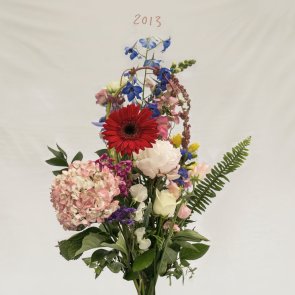
Which brings me to 2013 by Meilyr Jones. He performs a very similar trick here but in a musical rather than cinematographic setting. Operating within the wistful chamber pop side of things, listening to 2013 it’s as if Jones is holding up his hands and admitting that the best tunes have already been taken, so let’s nick bits from here and there, create some new melodies along the way, have some fun and, ultimately, just do it all really, really well. Throughout the album, you will hear snippets of stuff you recognise, either lyrically (Carly Simon’s You’re So Vain makes an appearance on second track Don Juan, Wild World by Cat Stevens on Rome) or musically (Smoke on the Water’s pivotal riff forms the hook in Strange/Emotional’s propulsive and surprising chorus, Jarvis Cocker’s off stage asides are echoed on the baroque masterpiece that is Olivia). Elsewhere, similarities with your other favourite artists are evident, if less direct – Morrissey’s phrasing and singing style is recalled on a number of tracks (albeit with a discernible Welsh lilt on most tracks), Jens Lekman is evoked on closer Be Soft and, unsurprisingly, fellow Welsh wizards Gorky’s Zygotic Mynci can be heard reverberating throughout. At no point, however, does Jones sound anything at all like Paul Heaton!

Whether these reference points devalue or enhance your listening experience (or have no effect at all!) is up to you, but by the time the record ends, Jones leaves you in no doubt that he knows exactly what he is doing and, for me, that makes all the difference. In fact, to my ears, 2013 is one of the freshest, wittiest and well executed pop records I have heard in ages and, in another era, songs like the poppy How To Recognise A Work Of Art and Featured Artist or the devastating Refugees (which urges you to ‘turn off your TV’) would be topping the charts rather than only occasionally finding their way onto the late night shows on 6 Music!

Nick listened: Unlike Stranger Things, which I loved, I found it difficult to get a handle on this – I think because, while the former eventually pulled me into the world of the new characters it presented, I never really got a handle on who this Meilyr guy is. Obviously talented, I get the idea he’s hiding behind all these references (oh look, the Rebel Rebel riff!) as a kind of intellectual exercise. There’s nothing wrong with that, of course, but a single 40 minute exposure often isn’t enough to get beneath the signifiers and discover what’s driving them.

Johnny Dangerously – ‘You, Me and the Alarm Clock’: Round 93 – Steve’s choice

You,_Me_and_the_Alarm_Clock

Johnny Dangerously, not to be confused with the Michael Keaton film of the same name, was the once alter-ego of Johnny Bramwell of I Am Kloot fame. This record was released in 1989 at the peak of the ‘Madchester’ baggy era but bears no resemblance to the sounds of that time (Stone Roses for one). It’s straight singer-songwriter, troubadour guitarist eking out a living on the dirty streets of Manchester – which is where Mr Bramwell was probably at during this period. He still plays impromptu gigs in Oldham Street, one of the former epicentres of the Manchester music scene. It bares the skeleton structure of I Am Kloot’s later work, but stripped back it still sounds crisp and fresh today. Its a remarkably accomplished debut, signalling much promise to come.

This mini album (defined as such in various sources although it’s just 6 songs, plays at 45 rpm and only lasts a little over 16 minutes – our shortest album yet Rob?) featured in an article in the Guardian titled “The Greatest Albums You’ve Never Heard“. Although some of the entries in this article (Neutral Milk Hotel for goodness sakes…) should not be there, this absolutely deserves its place. It is a musical gem, a lost one for me as well, falling between the cracks in my life. I used to “own” this album. My ex-wife had it in her collection so I can thank her for introducing me to it. When we split the album went with her. Poignant enough then that the last track on here (‘Tearing it Down’) sings about the loss of possessions and someone.

“She left me a reminder, of a world she left behind her. An overcoat, a coffee cup, an old…(something indecipherable) book binder. I could catch her right away but I would never find her”

So I sadly lost the album. Years later I read the Guardian article and tried to find it again, to no avail. I went to see Johnny Bramwell at a gig in Bristol a few years ago, and he started taking requests. I shouted out ‘Pierfront Arcade’ (track two on the album) to which he replied that he’d forgotten how to play it. So, there we go, lost to the artist himself……

‘Junk Culture’, the opening track, starts haplessly amongst the trash and rubbish of life, evoking images of the back streets of England, the US, trying to make sense of it all

“Stumbling through small life Nowhere, England. Shaking hands with the big time life idiots. I was trying to pick up some ordinariness. From the shopping bag inspirational choir”

UK artists have often tried to make sense of the US on their albums. Prefab Sprout do it on Steve McQueen. As an artist just coming into the world, Johnny Dangerously seems more vulnerable than most to the enormity of gaining success over the pond

“Sweeping through middle town America. Stepping into fact-or-fiction trash TV world. I caught a glimpse of myself scraping and laughing. Shuffling about amongst the newspaper”

Lyrically this album has recurring themes of love, loss, regret, fear, hope and valediction to memories. The imagery of the opening track is simple yet efffective, getting you to view things in a way you know to be true, and yet perhaps you missed them. ‘Junk Culture’ evokes images of the old cathode ray tube TVs and how they used to shut down to a small spot on the screen…”And a million TV screens close their weary eyes”.

The theme of nostalgia is very strong here too. ‘Pierfront Arcade’ highlights the true fragility of memories, and our inability to leave places without never returning, perhaps only in our minds

“Love is built in pieces, made right here in Fragile Town. You said once you were weaving, oh, but who is fragile now?….I said once I was leaving but I came back before too long”

‘Black and Blue’ is a tragic love song, recognising what ultimately you will lose in order to gain the heart of one you desire (“Lights are shining all round this world. You want them all but what you want is this girl….So give up the chance to be true. And all wind up like we knew we’d do. Bruised black and blue”). ‘This Town and Mary’ remembers a girl who came into his life, and to a ‘town’ unknown. Perhaps this town and Mary do not exist at all but I have sneaking suspicion that this references the same ‘Mary’ that featured in a short film I once saw. The subject matter of the film was a bright eccentric girl that was ‘on the scene’ in Manchester in the early 80s, but left suddenly for no reason, right before the ‘Madchester-Hacienda’ music explosion. The film featured one Vinni Reilly (of Durrutti Column, who we haven’t covered yet) remembering her as being quite fragile and full of contradictions. People said she wouldn’t have coped with the scene as it evolved, so perhaps she was best to go. I couldn’t find a link to the film, but would love to make the connection. The song however suggests ‘Mary’ is all of us (“Mary came from our town and was kicking at the ground. She was lost, she was found, she was me, she was you. And all the lies you tell sound true. You say you don’t til you do”). Mythologising people in your life, placing your own personna over them….

There’s not much to say about the musical ability on the record, because it is just him and the guitar. Anyone who has been to see him live will know that he can fill a room with that simple formula. The vocal is very rich, regional and distinctive. The guitar itself accomplished and not readily accessible in terms of chord sequences and tunings. In some ways he bears resemblance to John Martyn (again we haven’t covered him…), some would say Go-Betweens are in there (I think that was you Tom?). Nobody bought the album when it came out, and Johnny Bramwell never released another under this name. So, there it is, gone but not forgotten. It deserves a higher place in the past, and perhaps even in the present, but then again it seems all that more beautiful as a hidden lost gem amongst the newspapers and dirty alleyways of Oldham Street in Manchester….find it if you can.

Rob listened: I listened indeed, but ‘You, Me and the Alarm Clock’ was gone before I’d managed to get a grip of it, like the old newspapers it invokes, it was swept away by the buffeting breezy conversation and, at the point where we might start to settle down and listen properly, it finished. Thanks the Steve for an impassioned write-up that leads us back into the record and reminds us that sometimes when we talk about the things we’re hearing, we do so at the expense of listening.

Fortunately ‘You, Me and the Alarm Clock’ is not quite as unfindable as Steve might have implied. Youtube seems to have most of it, revealing grounded, heartfelt, melancholy melodies and swirling words. Bramwell’s distinctive voice binds the two together.

I never really got fully on board with I Am Kloot. I bought their first album when it came out, I think just because I’d seen their name knocking about. I liked it a lot and can still get carried away on the beautifully woozy opening track ‘To You’ despite not having heard it for more than 10 years. Although the gap from this Johnny Dangerously record and ‘Natural History’ is even longer, the connection is direct and immediate, and sufficiently energising to send me back there properly.

Tom listened: Blocking out the Exeter University chit chat is something I have become increasingly adept at over the years (surprisingly, much of it is not all that relevant to me!) and, as a result, I was rewarded with a little gem of a listen. The fact that I was reminded, time and again, of The Go-Betweens at their most acoustic certainly helped to entice me as they are one of my all time faves but, to be honest, this album would easily have held up on its own merits without the help of its Antipodean counterparts. Just a shame it didn’t stick around a bit longer!

Nick listened: Sounded like he owned a bobble hat.