Hookworms – ‘Pearl Mystic’: Round 56 – Rob’s choice

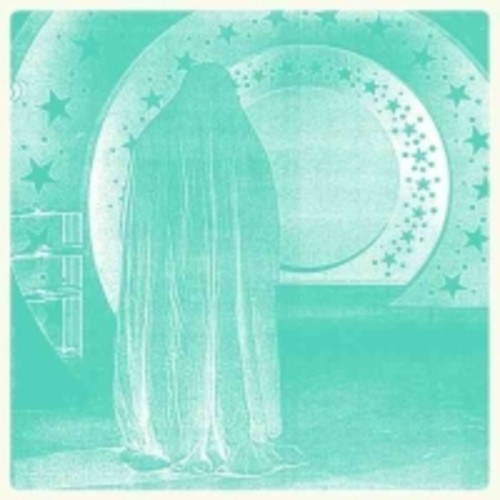
Hookworms - Pearl MysticThat psychedelia, as a tag for music, has stuck around for so very long without ever becoming a cheap signifier for something old-hat, hackneyed, done, is perhaps largely due to the differing definitions it has worn down the years. For some it’s flower-brained Californian hippy-pop, for others it’s fractured, demented New York hip-hop. For some it’s desert-fried, mono-chord guitar chugathons, for others it’s endlessly-fired circuits of twisting electronics.

For me psychedelia has always been either music made in the throws of an altered state, or music made in an attempt to recreate, or indeed induce, an altered state. From ‘Hey Mr. Tamourine Man’ and ‘Tomorrow Never Knows’ through Roky Erickson to My Bloody Valentine, Slowdive, the Flaming Lips and Sleep, psychedelia is music which aims at transportation, not documentation.

Hookworms, a 5-piece band from Leeds, may or may not consider the noise they make to be psychedelia. They may or may not be irritated by the shorthand others employ in grasping for the tag when trying to describe the heady rush of their exploratory guitar music. So be it. I use the term happily to describe them because their songs seem so clearly to be setting their sights on both outer and inner space and then firing massive fucking rockets in their attempts to get there.

‘Pearl Mystic’, their debut album, came out earlier this year. It sounds like the work of a band who have been furiously figuring this stuff out for a decade. Corrosive riff-driven fugue states follow exquisite meditations which ratchet up into yet more intense, acidic exercise. Above, below and around all this is MJ’s vocal sound, fractured and bubbling through frazzled guitar amps, a device apparently designed to mask his embarrassment at taking singing duties and one which ends up turning him into an electrifying, gabbling surge of liquid sound.

It’s quite something. Potent and wild yet delivered with incredible control and assurance. Hookworms remind me of no-one so much as Loop and Spacemen 3, which is high praise. At a time when we’re expected to get behind the idea of Jake Bugg and warbling old David Bowie as the best that Britain has to offer, I say we need a Hookworms infestation and we need it now.

Tom Listened: Back at the bum end of the 80s, Spacemen 3 were my band. I went through a brief but intense period of infatuation that lasted about a year and stemmed from the release of Playing With Fire and then strengthened when I subsequently acquired The Perfect Prescription. Strangely, given my dislike of the whole drug taking culture that was prevalent whilst I was at university, I found a real connection with the psychedelic nature of the music and the quasi-religious content of the lyrics. It was as if the connection to drugs through the music was enough for me (and far safer as far I was concerned)…to paraphrase a Spacemen 3 album title, ‘Not Taking Drugs to Listen to Music to Take Drugs to Because Someone Else Has Taken The Drugs For Me’.

But going back to the records 25 years on is a strange and somehow hollow experience. In my mid 40s I no longer need to feel connected to some sort of counter culture that existed in the ever more distant past and, in isolation, I’m not sure the music Spacemen 3 produced is as ground breaking or interesting as I once thought. Playing With Fire still has its moments, sure, but much of it just seems cliched and adolescent now. Perfect Prescription seems even more tame, many songs just bimbling along carried by an acoustic guitar riff with some dreamy sound effects and wispy vocals laid over the top. It’s not bad per se, just not as relevant to me anymore.

Which gets me, in a round about way, to Hookworms. I enjoyed Pearl Mystic in much the same way as I have recently enjoyed Spacemen 3. Pretty undemanding, very accessible but ultimately it didn’t really speak to me in the way my favourite records do, I didn’t feel a connection to it. That said, the songs were generally lengthy and quite complex in structure – they may well take a bit of uncovering, but on an initial listen I’d file this next to my Spaceman 3 and Loop albums as a record that the 20 year old me would have thought was amazing.

Nick listened: Tried Spacemen 3 when I was at university but didn’t get along with them, even though I already knew and loved Spiritualized. Never knowingly listened to Loop. But that’s by the by; I’ve actually been talking to MJ from Hookworms on Twitter for ages, and didn’t really know he was in a band for several months – he was just a nice guy whose path I crossed and we got talking about music. So I’d been wanting to hear Hookworms for a while, but hadn’t seen a physical copy in Exeter, and didn’t want to try too hard in case I didn’t like it. Which meant I was delighted when Rob pulled it out and stuck it on the turntable, and even more delighted when I enjoyed it. I was in Bristol at the weekend, so I bought myself a copy, and have listened to it a couple of times since. Thinking back to what Rob said under the Darkside post, I find it amusing that he’s so enamoured of this but so so-so about the Darkside, because for me they both have a similar purpose, they both feel psychedelic, where psychedelic is about creating or exploring altered states. I guess they just go about it in different ways.

The Dismemberment Plan – Emergency & I: Round 56, Nick’s choice

The-DismembermentPlan-EmergencyAndIThe Dismemberment Plan have just released a new album; their first in a dozen years, after they split up, almost due to lack of interest, in 2003. Their previous album, Change, was their fourth, and this, from 1999, was their third. I love it.

Formed in Washington DC in the early 90s, The Plan, as their fans called them, were in that heritage of DC post-hardcore bands like Fugazi and Jawbox (J. Robbins, the latter’s singer and guitarist, is co-producer here). Unlike some of their forebears, though, The Plan didn’t have any kind of manifesto or ideology; they were just a good time party band, for gawky kids who didn’t quite fit in. They took the jerking, stop-start guitar thrash of post-hardcore and mixed in a bit of everything else they liked; hip hop, 80s synthpop and New Wave, funk, indie pop.

The result is a technicolour riot, far more flamboyant than their local progenitors were, and far more dorky, too: where Fugazi sang about mortgage foreclosures and house repossessions and the perils of capitalism, The Plan sang about following girls across the country and not knowing how to talk to them, about no one dancing at their gigs no matter how hard they tried, about imaginary fights where you get beaten-up by giants.

Emergency & I pushed The Dismemberment Plan over the parapet of indie rock circles in a way that, had it happened a decade later, might have seen them become one of the biggest bands on the planet. But in 1999 a 9.6 or whatever from Pitchfork didn’t mean quite what it did for Arcade Fire, even if it did make them a big deal in small circles. Maybe they were too dorky, but it was that dorkiness, as manifested in the socially-inept fantasy of “You Are Invited” – literally about receiving a magical invite that gets you into all the coolest parties you could only usually dream of attending – that marks them out as something special; if they’d been cool or didactic they’d not have captured the awkwardness of being in your early 20s quite so well.

And they do capture it with amazing insight and prescience, Travis Morrison’s lyrics a tumbling stream-of-conscience that seem to predict the likes of Facebook (“Memory Machine”), capture the frustrations of lust (“Girl O’Clock”), perfectly render the pain of dying, urban, post-adolescent romance (“The City”), and, occasionally, reach some kind of zenith of almost Joycean American tone-poetry (“Back and Forth”).

Which is all good and all, but which would be dull if the music backing it wasn’t twitchy and hooky as hell, a maniacal rhythm section and a hyperactive guitarist competing to show off the most but not in a bad way, keyboards and crazy production touches making musical colour match lyrical colour daub for garish daub.

I was thinking aloud on Twitter earlier about what makes a band “important”, and I think I was using the term pejoratively to refer to self-important proclamations about self-important music; Emergency & I feels important to me, but in a very personal, insular, microscopic way.

Tom Listened: I have spent a long time agonising over The Dismemberment Plan since Nick played it at record club. Nick lent me Emergency & I a while ago – I had been keen to hear it ever since it appeared in very high positions in some round up lists on the internet around the turn of the millennium. I guess the cover art caught my eye and the name stood out and, on reading about the band, the music sounded like it should be right up my street…

However, it never quite worked out for me and The Plan (or is it The Dismemberments?) and I returned Nick’s CD a little bemused as to:

a) Why I hadn’t clicked with the album.

and

b) Why it is so lauded.

So I was really pleased to have the chance to hear it again in a different context and thought that maybe a proper listen with a bit of heft and concentration would do the trick. But there is something about Emergency & I that I just don’t like…and I have found it nigh on impossible to pin down just what that is. Whilst I was deep in thought on this matter, I considered that it ticks pretty much all the right boxes for me and maybe this is the problem…it feels to me as though The Dismemberment Plan are trying to cast their net as wide as possible (as Nick has stated, it’s a much more varied and colourful beast than Jawbox’s album) and in so doing feel to me as though their music comes from the head not the heart – too clinical and calculated for my taste. But I could be wrong on this one as I am still really confuzzled and this is just a hunch.

Rob listened: I too have sort-of-worried about the Dismemberment Plan. We’ve talked about them before, quite a bit, and as Nick advocates so strongly I checked this album out and just couldn’t find anything attractive. I tried it a few times. Nothing. And then, of all things, after a long lay-off, I thought it sounded great this evening. I started to wonder what the hell i’d been hearing instead of this brimming collection of perky, spiky dork rock. I started to think I may have been… wrong.

Then I listened to it again the week following, and nah, nothing. As you were.

My conclusion as to why ‘Emergency’ and I don’t click? It’s an age thing. It sounds exactly like I imagined the descendants of the post-hardcore I loved would sound after they had, in my imagination, sucked out the rage, the life force, the will to be, the uncontainable verve from the music and replaced it with technical proficiency. I think this is my problem, not theirs. I’m sure Dismemberment Plan are committed and passionate musicians. I’ve seen nothing to gainsay that assumption. It just doesn’t sound like the bands I love. If I was ten years younger, i’m sure i’d be getting the same charge from this as I actually did from Fugazi, Circus Lupus, Shudder to Think. If I were ten years older, i’m sure I would have found those bands weak and watered down compared to Bad Religion, Descendants and Black Flag.

Darkside – Psychic: Round 55, Nick’s choice

DARKSIDE-PSYCHICOnce again without a theme I was free to choose whatever the hell I liked. Two factors made me pick this super-current release, which had only come out two days before: the fact that Rob, when confronted with Pink Floyd’s The Dark Side Of The Moon for the first time ever the other week, claimed it sounded like “half the stuff in Nick’s record collection” despite my prolonged dislike of all things Floyd; and the fact that I’d arranged to review this record for The Quietus, and was planning on writing it up the next night so needed to get some serious listens and cogitation in!

If you’re unaware, Darkside is Nicolas Jaar, who’s debut solo album I played here a couple of years ago, plus Dave Harrington, a jazz guitarist college friend from their only-just-finished student days at Brown University. This is not, though, just a Nicolas Jaar album with some guitar over the top; Harrington plays as wide an array of instruments as Jaar, and shares writing and production credits with him equally too.

Psychic is every bit as, ahem, phenomenologically beautiful as Space Is Only Noise (and probably less, um, non-diegetic, on the whole), but there’s something a bit more linear, consumable, and compelling about it, perhaps. Maybe it’s the guitars, but I’m not sure they’re quite as important as some people are suggesting; Harrington’s playing on Psychic is a long, long way from John Squire’s on Second Coming, for example. It’s a krautrock linearity rather than a jam band linearity, and thus much more palatable to people who find the idea of Phish offensive, but who can fully accept 20-minute freak-outs if the singer is Japanese and the musicians are German. There’s nothing like festishisation of the ‘other’ to bring out the music fan’s inner hypocrite?

This has arguably been a stonking year for records that sit somewhere in that weird genre-less area that one might call post-dance the same way we called Bark Psychosis post-rock; Holden, The Knife, Boards Of Canada, The Field, Four Tet, Brandt Brauer Frick, Pantha Du Prince, Jon Hopkins, Fuck Buttons, Atoms For Peace if I’m feeling generous. Maybe even stuff like These New Puritans, Melt Yourself Down, and Sons Of Kemet kind of counts on there, too; they certainly all share headspace in my esteem. Darkside have made an album every bit as good as anyone else in that list.

Rob listened: I’d heard this before the meeting, having read a review on Pi***f**k. I liked it. It sounded nice. I’m intrigued by Nicholas Jaar and found his solo album pleasantly enveloping. I wish I felt more drawn to this stuff, as I always seem to enjoy it, but the fact is I don’t. Of Nick’s list above I’m familiar with three or four and  those which draw me back are always the ones which at some level deliver a punch to the solar plexus, i.e. Fuck Buttons or The Knife. There’s something academic about Jaar, Pantha du Prince, Jon Hopkins, or at least I impress that upon them, which puts distance between us. I guess there’s also something around close-listening. These are all lean-in records and I think I prefer to sway back as if dodging a knock-out punch. Perhaps ultimately this is my problem. I sometimes feel slightly inadequate for preferring the music which goes for the throat rather than the brain. I should get over that. It’s completely stupid.

Tom Listened: Last meeting was a strange one. William Basinski’s 5 seconds of music (that lasted an hour – that’s about 720 loops by my calculations…and it felt like it) overwhelmed proceedings to such an extent that the other records played on the night quickly became lost in the ether. The other meeting that felt similar to me was when we played Zaireeka – everything else seemed far too conventional and consequently a bit flat after that record too. However, the two other records from Zaireeka-gate went on to be my albums of the year (Apocalypse and Smoke Ring for My Halo) and if my recollection of the way I felt about the Darkside record (I can’t actually remember what it sounds like, just how I felt when it was being played) was that it sounded phenomenologically beautiful – God it feels great to write that! – and not really all that similar to Pink Floyd. I also remember thinking at the time ‘I might go out and buy this’ but then I thought about all those Smog albums I need to have and recalled that I don’t have any money and then also considered that it sounded possibly just a teensy bit too nice on first listen to really have sticking power and so, for now, I might have to ask that nice Mr Southall for a lend instead.

John Martyn – Grace and Danger: Round 55 – Tom’s Selection

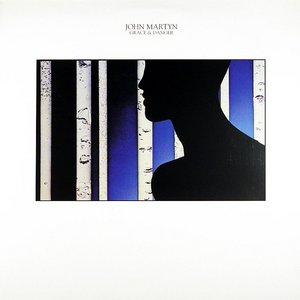
376b9_0011bfb6_mediumDespite being critically lauded throughout his first decade and a half in the music industry, John Martyn never REALLY caught on. Admittedly he had a sniff of more widespread popularity when his 1973 offering, Solid Air, was released but its success was fleeting and subsequent albums failed to make the same (less then minimal) commercial impact. And, unlike his good friend Nick Drake (for whom the song Solid Air was written), it appears that, at least for the time being, a posthumous resurgence of interest – Martyn died in 2009 at the tender age of 60 – is yet to gather much momentum. Which is a shame, as Martyn’s music has so much to offer.

Martyn started out writing fairly standard folk tinged acoustic guitar fodder but upon being signed to Chris Blackwell’s predominently reggae based Island Records, he quickly developed his sound into a much meatier beast, experimenting with other styles of music and introducing the Echoplex guitar device (which can be heard to great effect on Solid Air’s noisier offerings). The icing on the cake was Martyn’s voice, strong and smoky, soulful and yet somehow capable of doing enraged and vulnerable simulataneously. By the time Martyn was releasing Solid Air the assurance he had in his own song-writing allowed him to play with style and sound to produce records that, in their own way, provide a kind of folky mirror to the mid 70s experimentation of Cale, Eno or Bowie. Martyn was brimful of confidence and was ready to take (on) the World.

But, of course, it couldn’t last. And somewhat predictably it’s the point at which it all begins to fall apart that I am particularly drawn to. Grace and Danger is as raw a record as any I possess. It documents a time of great upheavel in Martyn’s life; alcoholic since the mid 70s, Martyn and wife Beverley were in the process of getting divorced at the time Grace and Danger was recorded. The pain is palpable, especially on the second side of the record – song titles ‘Hurt in Your Heart’, ‘Baby Please Come Home’, ‘Our Love’ and ‘Lookin’ On’ leave little to the imagination as to the song’s lyrical content and their melancholy arrangements, plaintive melodies and Martyn’s devastatingly beautiful (to my ears anyway) vocals leave the listener in no doubt that he was well and truly going through the mill at this time. Martyn’s attempts at lightening the mood on Grace and Danger are unconvincing – although slightly more uptempo, songs like Save Some, Grace and Danger and the reggae inflected Johnny Too Bad are still much closer in atmosphere to Joy Division’s Atmosphere than Russ Abbot’s more upbeat version of the same song.

But whilst Grace and Danger is by no means an easy listen, it’s the sheer beauty of the songs that carry the listener through – for me, Grace and Danger is always a treat, possibly the best record that Phil Collins (I kid you not) ever played on and testament to a talent has never really had the recognition I think he deserves. The time to start the posthumous redressing of the balance is now, people!

Rob listened: I guess I have to disagree with Tom on this being not an easy listen. Far from it, it’s a smooth, mellifluous affair, the slippery 80s stylings squirming away beneath Martyn’s dark voice, the whole thing coming off like a rich yet refined confection. I’ve listened to it six or seven times since our get together, usually in back to back plays, and have yet to get a glimpse of its nasty side. I’m sure the payload is there somewhere but perhaps I have a tin ear when it comes to John Martyn’s lyrics. A painful memory returns to me of my mum, reduced almost to tears by my repeated playing of ‘Solid Air’, wherein ‘May You Never’, a song I had only considered beautiful and sweet, struck her like a knife to the heart, years after my dad had passed away. I thought ‘Grace and Danger’ was magnificent, but for now I’m happy skating on its surface.

Nick listened: It’s a while ago now, and, as Tom said under the Darkside post, William Basinski overshadowed everything else we played by sheer force of ideology and aesthetic and discussion thereof. I own Solid Air, because of the Nick Drake connection, but have only listened to it a couple of times. I remember almost nothing about this, except that it was very pleasant. Bloody Basinski.

William Basinski – ‘The Disintegration Loops’: Round 55 – Rob’s choice

William Basinski - The Disintegration LoopsAll songs and all records have stories. Some arrive preceded by them, either by artificial hype, by personal testimony or by the weight of historical significance. Some music comes to us completely fresh but within seconds we begin to weave a tapestry of our own tales and experiences into their fabric, helping us to make our own sense of them.

William Basinski’s ‘Disintegration Loops’, a set of works which span 5 albums, has a story. As we listened to it this evening, the subject of whether the music and the story could or should be separated worried us like no other I can remember in our preceding 50+ meetings.

If you’ve never heard the pieces before, you may choose to seek them out and hear them free from their associations, their assumed and imposed meanings. I’ll add a link to a YouTube clip of ‘d|p 1.1 below, but you’ll want to avert your eyes and use only your ears if you want a completely association-free experience. Certainly this was one of the possibilities we struggled with when we listened. Tom hadn’t heard the origin story before and we couldn’t help feeling that we’d somehow blighted his experience by allowing the myth to precede the music. But then, who but Basinski and a few of his friends has ever heard this music without the story?

To be accurate, ‘Disintegration Loops’ has two stories. One concerns the way it was made. The other concerns the way it was used. Both stories are told here in a long interview with Basinski by John Doran of The Quietus.

It seems inappropriate, somehow disrespectful, to describe this monumental work as a product of luck. Would that be good luck? Even worse perhaps. And yet without happenstance, fortune, unplanned calamity, it would not exist and without yet more serendipity, coincidence, unplanned connection, it would not have gained such resonance and meaning. 

In large part, it is the beauty in unplanned occurrence, and specifically the uncontrollable, unpredictable march of decay, which this work captures intrinsically and has come to symbolise extrinsically. That the work – a series of repeating, slowly changing loops – when shorn of its accompanying backstory and the palimpsest of meaning which it has since has accrued, remains as powerful, moving and beautiful as it is, is perhaps the real miracle. It does seems to me that even freed from what we come to know about the pieces, this is heart-stopping music. But then, I can never truly know.

And yet, and yet, even from this simple flow and ebb of sound, amidst all these noble and humane reactions, new meanings emerge each time I listen. Tonight I find myself contemplating trust, of all things, because, and whisper this, there’s 0.1% of me as listener that can’t quite accept that this ever actually happened, that this work was ever produced as the story would have us believe. Some of the detail doesn’t quite seem to add up and, ultimately, I find myself wanting to know more and more about the minutiae of its production, more in fact than I have wanted to know about any other record I can remember. Ironic, knowing that conscious thought and ‘production’ in the sense of the deliberate act of making, was apparently not so big a factor.

Perhaps the reason this music ties in so perfectly with what it has been asked to symbolise is that in their own unimaginable ways they each tell us that sometimes the fantastical, the impossible, really does happen. In fact, they say, look around you. It’s happening all the time.

And on we go. We debate the story and we debate the context and we debate the manufacture and we debate the impact and we find so many ways to question and praise and doubt and affirm the work but ultimately that seems so much piffle. The work transcends.

[youtube:http://www.youtube.com/watch?v=qYOr8TlnqsY%5D

Nick listened: Rob’s done a very good job of not actually revealing any of the backstory to this record, so (despite my reputation for spoilers) I’ll endeavor to do the same.

I’ve been wanting to hear this for literally years; Stylus was one of the first and most vocal places to praise it way back when (don’t click that if you don’t want the backstory) but it seemed almost impossible to get hold of and inordinately expensive, so for some reason I never got round to hearing it. I pretty much squealed with delight when Rob pulled it out, and enthusiastically joined in imparting the whole context and narrative that goes alongside it.

It’s hard if not impossible to disentangle the music from its context, and any description of the music sans context sounds prosaic to say the least, if not downright dull; it is, essentially, just slowly, minutely changing ambient loops that go on for a long time and, somehow, seem loaded with sadness and profundity. Sonically, aesthetically, it’s not a million miles away from Stars Of The Lid, or Aether by The Necks, or Discreet Music by Eno, or a Buddha Machine, or a dozen and then some other minimal drone loops that exist. Is it better? Is it more mystical, more profound? The context is, to be blasphemously cynical for a moment, an amazing marketing gimmick.

I borrowed this from Rob and played it at Emma a couple of days later, sans context. She said she found it comforting and familiar, and that it felt more part of an art installation than a piece of music-qua-music, even more so than some other ambient stuff we own. When I explained the context, though, she felt immediately that it was somehow perfectly connected to it, that she somehow knew this already, and wondered whether we’d already seen the above video somewhere, somehow. Maybe we have, or maybe it really is a piece of serendipity.

Tom Listened: Emperor’s new clothes or a brilliant innovation…or a bit of both? I have no idea and have given up trying to work it out!

Poliça – ‘Give You The Ghost’: Round 54 – Rob’s choice

Poliça - 'Give You The Ghost'Poliça are a band from Minneapolis. I pronouce their name “pol-ee-sur” but my fellow DRC members seemed to default to “pol-i-saah” which sounds more sophisticated. According to the band the word is Polish for “policy” so anyone out there who speaks the lingo, please do fill us in.
I buy records and nowadays I buy records which I don’t really have to. ‘Give You The Ghost’ is a case in point. I first heard one of the tracks ‘I See My Mother’ on a playlist of Pitchfork’s Best New Tracks of 2012. I was drawn in by the burbling insistence of the bass and drums and then enchanted by the cascading wonder of Channy Leaneagh’s processed vocals. By the time I came across a vinyl copy of the album (on Record Store Day 2013) I’d been streaming it fairly incessantly for almost a full year, knew it inside out, loved it and had no hesitation in paying for it. Some of us use Spotify to find records to buy, not as a way to avoid buying them.

In all that time I’ve probably reached for this record more than any other. I still haven’t quite worked out why it has such a delicate hold on me. Perhaps the secret lies in those beguiling vocals which are deliberately auto-tuned to a place just beyond human capability. It’s a trick which seems to have achieved much more than mere novelty and its effect has yet to wear off.

There’s the pure pleasure of the sound, a voice transformed into a tumbling, twitching thread of energy. And then there’s the impact this has on the wider music. By so purposefully de-humanising the very element which would ordinarily draw the listener towards a song, Poliça create a distance and then entice us to lean in across it to hear more closely. One of the results is to open up more space for the other components of their sound, one which pulses away at the intersection between R’nB, synth pop, soul and rock. And once you start to get closer, there are monsters lurking, not least a frequently incendiary double-drummer rhythm section which goes off like an explosion in a fireworks factory given half a chance.

Best of all though, this mannered and deliberate approach simply enhances the songs, rather than dissolving into just another bag of tricks. What we’re left with as the album fades away once more is a pixelated wisp of smoky melody, the metallic tang of 21st century regret and remorse and the urge to reach in and spin the record one more time.T

Tom Listened: Interesting comment from Chris Barett. I know what he’s getting at but I am not sure whether he is saying this is a good or bad thing. That said, the term ‘Pitchfork hype’ is almost always pejorative these days and I find myself more cautious than perhaps I should be about the latest Pitchfork approved release. Stupid really because whilst Pitchfork definitely have championed some questionable fare over the years (and I have never understood the appeal of Funeral by Arcade Fire..surely the zenith (or nadir, depending on your point of view) of Pitchfork hype), they have also led me to some of my most cherished purchases of recent times. And, sure enough, despite scoring a respectable, but maybe not quite hype-worthy 7.6 at Pitchfork, on an initial listen Polica sounded pretty good. In fact my reservation was that maybe they sounded too good; as in too good to sustain interest over the years, to keep drawing me back –   I was reminded throughout of the slightly detached, de-humanised sound and atmosphere of Broken Social Scene’s You Forgot It In People, a record I fawned over at first but never listen to any more, its fires burning brightly for a brilliant, but only brief, time. But when I made this point to Rob on the night his response was empathetic to my point of view and emphatic enough to convince me that this wouldn’t be a problem.

Nick listened: When I was a young teenager I spent a not inconsiderable amount of time fantasizing about discovering the perfect album, the One Record To Rule Them All, that would be so awesome it would depose of the rest of your record collection, and you’d never need to listen to anything else. The mythical Best Album In The World Ever. My 14-year-old self imagined it would be exactly 47 minutes long, and would be played by four guys with scruffy fringes and guitars, and would be just weird enough and just straight enough at the same time.

Poliça are a name I’ve seen floating around a lot over the last year or two, always with positive associations, but I think I ignored them because a; I didn’t like the cover, and b; I didn’t know how to pronounce their name. It’s the little things.

I can kind of see where Chris is coming from in the comments below, but also where Rob is coming from, too. This was a pleasure to listen to, that’s for sure, but it didn’t feel in any way earth-shattering (I can’t fathom that Bon Fiver guy claiming that Poliça are the best band ever ever ever, for instance). I can comprehend the r&b references, but it didn’t actually sound like any r&b I actually know. It also didn’t sound like ‘indie’ music, where the etymology of that word encompasses something to do with Pavement and guitars and the late 80s and early 90s and so on and so forth. But it DID sound like post-internet, post-Ableton, post-genre, and yes, post-Pitchfork music, whatever that is. Layered, processed, a little strange but not bizarre, taking ingredients from anywhere it likes, like a magpie picking up shiny things regardless of their origin, yet somehow maintaining some degree of unity, of cohesion, of gestalt, despite this, using software as a binding agent to bring these things together. (Caveat: I have no idea if this was recorded on an iPad or on a 4-track or onto a wax cylinder at Abbey Road, but I have suspicions.)

There are a lot of records, a lot of artists, who have a similar approach, and they all sound different, and we like (and love) an awful lot of them, from Dirty Projectors to Animal Collective to Caribou to Efterklang to Liars to The National to The XX to Radiohead to Arcade Fire to Chvrches to Flying Lotus to MGMT to Braids to a dozen others and some more and then some. None of these artists quite sound the same, in fact many of them sound completely and radically unalike, but my brain often lumps them together. Poliça are in that same lump. I can’t quite identify why.

As I progressed through my teens I further reasoned that the One Album To Rule Them All would have to somehow combine all the music in the world, picking the best bits like a magpie picking up shiny things, in order to be truly seriously amazingly all-time awesome and world-conquering. As I got older still, and moved through my 20s and beyond, I reasoned that the teenage me was an idiot.

Colin Stetson – New History Warfare, Volume 2 (Judges): Round 54 – Tom’s Selection

colinstetson_newhistoryofwarfarevol2.mcIn the first rush of musical discovery, epiphanies come thick and fast. For me, the late 80s introduced so much music unlike any I had already known (or even dreamt about existing) that it seemed barely a week went by without some new band or other literally taking my breath away. Hearing Liz Fraser’s voice soaring away in Gobbledegook, being pounded and pummelled by Mudhoney’s sludgefest, Isn’t Anything’s amazing squall of noise, Tom Waits’ gravel gargling tales of parched weirdness – looking back it is hard to know whether it was my age and relative ignorance that made this time so revelatory or maybe there was just loads more inspiration around then.

Whatever, such moments have become increasingly rare for me in recent years. Sure, music still has the ability to astonish and surprise me but, these days, it’s rare that I listen to something that doesn’t elicit the response, ‘this really reminds me of…[insert: Talk Talk, Talking Heads,  Television, Truman’s Water…]’ or, more likely, ‘someone but I can’t think who’. After all, much of what I like to listen to has been made by artists who have been inspired/influenced by artists that I like to listen to. That’s (partly) why I listen to them!

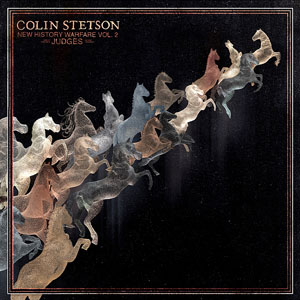
But DRC has helped me broaden my musical vistas, look beyond the norm and taken me out of my comfort zone…often I am listening to artists that have been selected by someone else, and that frequently circumvents the problem outlined in the previous paragraph. It has also led me to a few albums that I would probably have missed in times gone by…New History Warfare Vol. 2 Judges by Colin Stetson is one of those. And while, even after half a year of having the album in my possession, I am still trying to ascertain whether this is an album I love, it is certainly one I admire and respect, not least because Stetson produces a sound so unlike anything I’ve ever come across before (I didn’t really get the SunO))) comparison that Rob suggested on the evening…there we go again, more comparisons…but then I have deliberately tried my hardest to wipe all memories of Sun O))) from my mind). The fact that this revelatory sound is produced by a saxophone, an instrument that has been around for a long time now and has been wrenched through all sorts of paces by Coltrane, Coleman, Adderley, Parker, Marsalis to name but a few, makes this achievement all the more remarkable. From the very first note of Judges – an ominous yet distant held note that sounds something like a fog horn that fades then reappears four or five times until it reaches a deafening volume – it is clear that Stetson is doing something quite unlike anyone else around (at least, to my knowledge). The fact that he manages this whilst still producing a record that is perfectly listenable, even accessible at times, only adds to the achievement. For those of you who find the demands of free jazz too much, fret not. Judges is nothing like, for example, Coltrane’s Meditations or Sun Ra’s Heliocentric Worlds Vol 2 (‘more’s the pity’ I hear the dissenting voices cry). I’ve always found these two albums amongst the most challenging, discordant and unsettling albums I own. Stetson’s effort, however, offers light with the shade; patterns are prevalent and easy to locate, hooks appear every now and then and there is even a torch song (of sorts) in his version of the traditional ‘Lord I Just Can’t Keep From Crying Sometimes’, which features bewitching vocals from My Brightest Diamond’s Shara Worden.

So, whilst I have yet to reach the stage with this album where I can’t help but pull it off the shelf, every time I do, it digs a little deeper into my affections and makes that little bit more sense to me – the hooks sink that little bit deeper and I feel a little bit more admiration for a record that has introduced me to new sounds and forms whilst teetering on (but never falling over) the line that separates music from noise.

Nick listened: Stetson made an appearance at my other record a club a few weeks ago, in the form of his latest record (New History Warfare Volume 3: To See More Light), which I’d been eager to hear. I was so impressed that I picked up a copy at the earliest opportunity, and it took barely five minutes to decide that I was going to do the same with …Judges. The copy I ordered direct from his Canadian record label arrived yesterday, and I’m listening to it again now.

Stetson’s sound is monumental, elemental, and ethereal at the same time. It is spooky and moving and percussive and, somehow, still melodic. He manages to make a saxophone sound like a synthesiser. The resultant music is fascinating and brilliant, and far more enjoyable and accessible than our fumbling descriptions might suggest.

Rob listened: Couldn’t help noticing Stetson in recent end of year lists. I still had no idea what to expect. Tom’s introduction didn’t make things much clearer, except to say that as soon as the sound started, it all made sense. Incredible, in the true sense of the word. Who said there was nothing new under the sun? (Ecclesiastes 1:9 did actually – Ed)

Primal Scream – Screamadelica: Round 54, Nick’s choice

screamadelicaSans a member for the evening I thought I’d take advantage, flagrantly disregard the rules concerned how long albums can be, and play this 63-minute mess/magnum opus/masterpiece [delete as appropriate] by Sabres Of Paradise Primal Scream, which I thought would be good for causing an argument stimulating discussion.

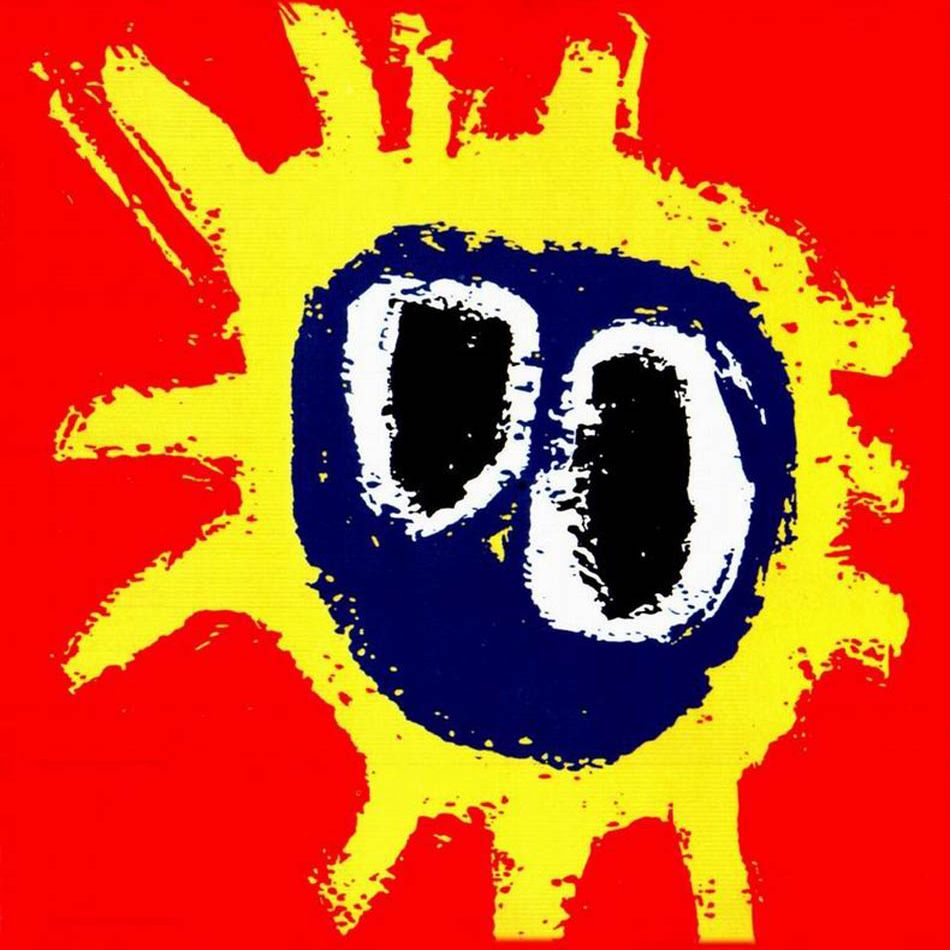
Primal Scream aren’t a band. They’re a shocking shambles. Quite literally for the last 23 years they seem to be whoever is in the studio with Bobby Gillespie and Andrew Innes on any given day. Their best records (this, Vanishing Point, XTRMNTR) are, by and large, surrounded by absolute tripe. I’ve been a fan for the best part of 20 years but for most of the last decade of that I’ve had zero faith in their ability to make a decent record. I still think that Primal Scream, as a phrase, in terms of how it sounds and what it means and the imagery it inspires, is pretty much the best band name ever. And Screamadelica is a great title for an album. And it has a great cover, too.

But it’s a mess; at times an absolutely brilliant mess, granted, but it’s still a mess. The Rolling Stones homages, even if they’re as platonic-essence-great as “Movin’ On Up” (which nicks from CAN as much as Jagger, to be fair) or as bruised and lonesome as “Damaged”, are still, of course, just reductive homages, and seem deranged next to the we-have-lift-off genius that is “Higher Than The Sun” or the amazing, swamp-house-voodoo-dub cover version of “Slip Inside This House”, that awesome sax solo at the end of “I’m Comin’ Down”, the bassline that sinews through “…A Dub Symphony In Two Parts”, the full-on joyous Italo-house of “Don’t Fight It, Feel It”…

But that’s Primal Scream. You have to take the good with the bad, the coke’d cockrock with the heroin blues with the inspired psychedelic-techno-pop-kraut-jazz-disco with the awful bloody country hoedowns. Do they mean it, man? Are they authentic? Trend-chasing? Easily-distracted? Is Bobby Gillespie a fan more than he is a musician? Does it matter? The key question is are they brilliant?, isn’t it? If you describe what they are, what they do, write it down on paper – a whirlwind trip through the entirety of counter-cultural music from The MC5 to Miles Davis to Giorgio Moroder and everywhere inbetween and beyond, on drugs – it sounds like the greatest idea for a rock’n’roll band ever. And, occasionally, just occasionally, they made music that matched that description. Screamadelica, for the most part, is one of those occasions. But even so, rock’n’roll bands are bloody silly creatures, and Primal Scream are the silliest of them all.

Tom Listened: I still remember quite clearly the moment I went off Screamadelica. I already owned the record and liked it well enough but was still getting to know it at the time. It wasn’t long after Primal Scream had released it and, back then, it was a BIG THING, about as big an event as the Indie Dance crossover genre thing managed to pull off. I recall the band performing Moving On Up on Top of The Pops and found myself…hating it. It suddenly occurred to me that, shorn of the music that surrounds it on the album, this was nothing more than a pale facsimile of prime era Rolling Stones. If I wanted Sticky Fingers I may as well listen to the real thing!

Listening at Nick’s the other night, it’s a pity I had such an epiphany as there is much to admire on Screamadelica and the album has laid dormant in my collection, neglected and unloved, pretty much since that day back in the early 90s. But the trouble with Screamadelica, as far as I am concerned, is two-fold. Problem 1: there is about equal amounts chaff and wheat. So for every Higher Than The Sun (astonishing) there is a Damaged, for every Don’t Fight It…there is a Shine Like Stars. Problem 2: the songs I like the most are almost exclusively the ones that sound like they have the least to do with Bobby Gillespie and the most to do with Andrew Weatherall. And that’s where the whole ‘authenticity and does it matter’ argument kicks off. So, to sum up, it was great to hear 5/11 of the album…the other 55% of the record I could live without!

Rob listened: Credit where credit’s due, this was a great talking point album. I don’t particularly object to ‘Screamadelica’ for any of the reasons around authenticity or authorship. There are potentially fascinating questions and can make for fascinating art, but ultimately the result is either good or bad. And I still find this one boring. Sure there are lovely sounds in there and some of them we hadn’t heard before, but I didn’t like it when my friends were telling me it was the future back in 1991 and it leaves me unmoved to this day. Perhaps underpinning my antipathy are some feelings to be associated with intent although as I’ve said, I hope not. I certainly love loads of bands and records which were sucked into the same orbit as this one, and I can’t explain why it seems to matter to me that the Happy Mondays were the real deal, or whether that genuinely affects how I hear this music. Okay, i’ll have one more go at communicating this… It’s a boring record. It doesn’t matter what new ground it may have broken. If Primal Scream were the Rolling Stones and the Stone Roses were the Beatles, well, you can take all four of them and piss off.

Deerhoof – ‘Deerhoof vs Evil’: Round 53 – Rob’s choice

Deerhoof vs EvilDeerhoof sidled their way into my life. I can’t be sure when, but let’s say 2004, some website or other, let’s say Pitchfork, which I can’t be sure when I started reading but let’s say 2004, linked to a Deerhoof EP that was available for free download. Back then, way back then, this seemed an incredible, bounteous novelty so I clicked, saved and, as seems to be the average with free content, forgot.

When ‘The Runners Four’ did well in the End Of 2005 lists, I bought it. I was carefree back then. In fact, I bought almost everything from the Pitchfork top 10 of that year and listened to some more often and intently than others. It was months, maybe more than a year, before I really tried with the Deerhoof record. I found it intriguing, if perhaps a little too sprawling and obtuse for immediate gratification. It did provide one breakthrough however: the realisation that the odd music which had infrequently popped up on my shuffling iPod over the preceding couple of years, with no track, album or artist names, must have been that ignored free EP, now of 2 years vintage. Even heard at arms length, whilst washing up or driving, the ingredients were so distinctive – slanted constructions, meticulous instrumentations and a beguilingly detached Japanese vocalist – and were, once placed, impossible to mistake.

If you’ve only read about this San Franciscan ‘noise pop’ outfit without hearing them – and even now written words are still easier to come by than recorded sounds – then you could be forgiven for expecting a smart-assed barrage of slanting dissonance, jazz inflected jiggery-pokery and obscurantist capering. In fact Deerhoof are one of the most delightful, endearing and rewarding bands around, writing tightly focussed but jubilant songs which absolutely bubble over with ideas, fun and weirdly saccharine hooks. Atop this lie Satomi Matsuzaki’s famously deadpan vocals which perform the neat trick of severing Deerhoof from any immediate associations. It’s a useful, perhaps vital, effect, buying time for the listener to focus on the music and become enchanted, rather than scrabbling to reach the right comparison.

‘Deerhoof Vs Evil’ is their 10th studio album, released in 2011. It’s brief, barely over 30 minutes, and punchy, its 12 songs averaging slightly less than 3 minutes in length. Despite, or perhaps because of, this each track is focussed, polished both in sound and performance, and each packs at least one, sometimes two, maybe three, great ideas be they daring rhythms, nagging or infectious guitar lines, insistent bass-lines or gigglingly gleeful lyrics. Where the band can drag at times, on this record they don’t. Every song is a winner with at least one moment almost guaranteed to raise a smile even on a face as worn-out and hard to move as mine.

Some critics saw this album as a regrettable consolidation from a band they had grown used to hearing break new ground. It’s actually the sound of a band distilling what they do best into a delightful confection.

Tom Listened: I was pleasantly surprised by Deerhoof vs Evil finding it far less discordant and difficult than I feared it would be. That said, Deerhoof are still some way from sidling into my life…I remember finding the experience of listening to this record interesting and enjoyable, but I have yet to feel compelled to pull the copy of Apple ‘O I own off my shelf and give it a spin (it’s one of the few records I posess that I have yet to listen to all the way through), yet I think it’s the idea of Deerhoof and the perceived awkwardness of the music that puts me off rather than the actual songs they sing. I know this makes me weird and I am sure that at some point I will give Apple ‘O a proper chance but, judging by Rob’s own relationship with the band, perhaps this is the way it is meant to happen!

Archers of Loaf – Icky Mettle: Round 53 – Tom’s Selection

icky mettleThe Archers of Loaf first album, Icky Mettle, was one of a seemingly endless supply of skewed US indie-rock records that were predominant in the mid 90s (a genre that was so prevalent that it was even made into the theme of one of Sebadoh’s more ironic songs). And it suffered for it…at least, as far as I was concerned. Angrier and less arch than Pavement, lacking Guided by Voices’ obtuseness, poppier than Thinking Fellers and Truman’s Water; Archers of Loaf were a kaleidoscope of colour in comparison to Girls vs Boys or Fugazi. Yet it was easy at the time to think that they were just another American band nestling amid the ‘Lo-Fi’ section of your local vinyl outlet. But in contrast to some of their more willful contemporaries, time has been kind to The Archers and the band’s (relatively) straightforward approach to song-writing has, to my mind, worn better than many of those more tricksy recording artists operating at that time.

Listening back all these years on, it is obvious that what at first seems like a set of noisy but basically catchy little pop songs actually masks something much more slippery and complex – like so many of the very best records, there is more to Icky Mettle than meets the eye. So it draws you in, ensnares you and then that heady combination of great hooks, shoutalong choruses and dark, furious subject matter guarantees a prolonged and fulfilling relationship. Icky Mettle gives up its secrets piece by piece, and has somehow morphed with the times to remain as relevant and vital today as it ever was, perhaps even more so as so many of its mid 90s rivals have fallen by the wayside; the lack of true inspiration in the chaff from this era becoming ever more obvious with the passing of time and the re-aligning of perception. Icky Mettle’s currency is relationships gone bad, but the playful, catchy songs mean these anthems to lost love are cathartic, not mopey, and there’s never any doubting who’s coming out on top – after all, if you can work it out of your system by screaming at a room full of sweaty youths whilst pummeling your instruments and hammering home your points, it’s got to help, hasn’t it?

Icky Mettle sets it stall out in its very first line – a killer first line in a killer first song that has gone on to become The Archers of Loaf’s anthem. Simply put, Web in Front is awesome. And that line, ‘Stuck a pin in your backbone’ is surely etched in the minds of anyone who ever went to an indie disco in 1994. What a bizarre, beguiling and original combination of words. From the off it’s obvious that this is not a pale facsimile, a cynical bunch of bandwagon jumpers (not that, in monetary terms at least, this was a bandwagon worth jumping on!). No, Icky Mettle is an album made by the inspired, articulate and intelligent minds of Chapel Hill residents Eric Bachmann, Eric Johnson, Matt Gentling and Mark Price. And it’s played with raucous conviction – messy and unconcerned with dotting ‘i’s and crossing ‘t’s but thrillingly real and human throughout its brisk 38 minutes. 38 minutes that can so easily turn into 76, 114, 152… minutes as the addictive qualities of Icky Mettle begin to weave their magic on your heart, bones and synapses!

Rob listened: For reasons Tom has eloquently detailed, I was immersed, or perhaps flailing around, in the depths of this stuff in the first half of the 90s. For some time I would buy records, often seven inches, on the basis of a half-remembered Peel namecheck or even some half-sensed association with some other artist, perhaps based on the cover art or even the name. I certainly never remember hearing Web In Front at an indie disco, so I suspect it was one of these random routes which led me to it (and possible a poorly divined name-connection which then took me on to Wingtip Sloat (anyone?) and, in that case, no further). I’ve been hooked since day one. It’s a great record with all the qualities Tom outlines. I had the pleasure of reviewing their follow-up ‘Vee Vee’ and it’s more polished and straightforwardly rock but even so the strength of the songwriting is undeniable. Clearly the Archers had something forceful going for them even if they never garnered the recognition they deserved.