Scott Walker – The Drift – Round 17 – Nick’s choice

Scott Walker is one of those artists who gets mentioned a lot at DRC – so much so that talking about him is almost forbidden now. Scott is also one of only a handful of artists who has created music which has scared me, so when Rob concocted his “frightening music” theme for All Hallow’s Eve, my choice was very simple. I considered Portishead’s ominous, 21st-century-paranoia-riddled 3, Nick Cave’s blood-drenched Murder Ballads, Godspeed’s doom-laden debut, Young God’s intense Only Heaven, and Suicide’s excruciating Frankie Teardrop, but none of them creep me out quite as much as the man who once sang Make It Easy On Yourself.

I bought Scott’s legendary, infamous Tilt years ago, and listened to it first time out on headphones, alone, in a darkened room. The Cockfighter’s scratching, microcosmic opening lulled me into inter-cranial paranoia before unleashing industrial-percussion terror, the dynamic leap an act of extreme terrorism upon the listener that petrified and fascinated me in equal measure. I saw Tilt as the evil flipside of Talk Talk’s Spirit Of Eden… So eleven years later when The Drift was released, and initial reports described it as more inscrutable, more extreme, more intense, and more unsettling than even Tilt, I knew it was going to be a challenge. Five years on from its release, I’ve listened to The Drift only about three times; at 70 minutes, its intensity demands you find a big chunk of time as well as concentration and emotional fortitude. It is not an easy listen.

Beyond the extremity of the performances and arrangements, The Drift is recorded entirely without compression, pop music’s secret weapon, which makes it sound even more surreal, avant-garde, and bizarre than it already is. Swarms of unidentified insects materialize from the speakers and envelop you; cacophonous avalanches of drums pummel you into submission; unidentifiable drones worm their way into our psyche; ominous guitar chords float in your peripheral vision; and moments of complete calm and quiet draw your attention close, bisecting the terror, and making the eruptions all the more terrifying. Scott himself sings impenetrably of psoriasis, stillborn twins, ancient cultures, and who knows what else, his barren, reaching voice instilled with drama and sorrow and hopelessness. He punches a side of pork, lets loose a blood-curdling Daffy Duck impersonation, and sits at the centre of this entire theatre of bleakness. The Drift is fascinating and harrowing in equal measure.

Tom Listened: Well, what can you say! A remarkable, literally extraordinary listen.

I always find it odd when critics laud the likes of Dylan, Young, Springsteen for remaining ‘vital’ after all these years. They’re not ‘vital’! They’re hanging in there. Scott Walker is ‘vital’. Scott Walker is making records (admittedly at a snail’s pace) that not only sound unlike anything he’s made before, they’re unlike anything that has ever been released in recorded music. You know as you listen that he couldn’t care less if anyone is paying attention to his output. Maybe he’s happy that they are, but it wouldn’t bother him if they weren’t. The Drift is the sound of emancipation from the pressures of expectation, the sound of a driven individual supremely confident that he can replicate his vision in recorded form, the sound of genius.

Having said that, I probably won’t be buying The Drift. I have (and love) Tilt, I have (and am getting to know, after owning it for 10 years) Climate of Hunter and I am not sure I need another of Scott Walker’s ‘recent’ releases, especially one that will probably (although not in the same way as Sunn O)))) give me nightmares! Great to hear it though…next time can we leave the lights on?

Rob listened: I own the Drift and admire it hugely. It’s an incredible achievement which, as Tom and Nick have outlined, but most other artists’ piddling efforts into some considerable shade. I don’t have much to add other than that I first listened to it alone in a car hurtling up the M5 in the dark and at ear-pummelling volume. I was lucky to stay on the road and to this day during my quiet moments, somewhere in the distance I can still hear Scott Walker intoning, “bam… bam…bam…bam…”.
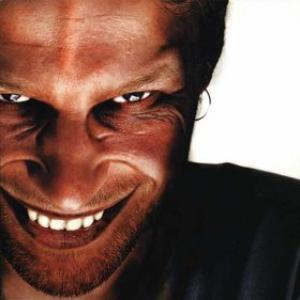
Aphex Twin – Richard D James Album – Round 16: Nick’s choice


Much as I enjoy Devon Record Club (and I do, I love it), I have a vague paranoia that this whole record club thing is just a load of middle-aged, middle-class white men sitting around drinking tea, eating takeaway food, and reinforcing their own canon of (slightly) alternative rock. There have been several weeks where we’ve all brought broadly similar sounding records – crunchy guitar stuff, basically – and there’s a danger that we’ll sit around genuflecting the exact same things as everyone else, i.e. the records we loved when we were 16.

Which is to say that I’ve been busting to break out something really “other” for a while now, and it struck me that there’d be no better choice than a record I loved when I was 17. I’ve often considered 17-year-old boys to be the most belligerent, know-it-all sods on the planet and not worth bothering with, but looking back at my own 17-year-old incarnation I’m proud that I was so determined to squeegee clean my musical palette and discover new territory, radical sounds, stuff not made by gangs of men with guitars.

15 years ago, Richard D James Album was, despite epiphanies over the previous months with Orbital, Björk, and Screamadelica, the most radical thing and “other” thing I had ever heard. The beats were crazed, frightening, the textures alien and unidentifiable or else out of context – drum machines and cellos, electronic squarks and delicately plucked violin strings – the melodies catchy, childlike, beguiling, and at complete odds with those aforementioned beats and textures. I didn’t know what it was for, how to consume it, when or where to listen to it. It seemed like it might be dance music, but you surely couldn’t dance to it without electroshock therapy. It surely wasn’t to be listened to while sitting and pondering, though, because it was insane, distracting. If you put it on your Walkman and wandered around outside with it on you’d be constantly ducking, weaving, and veering away from the strange stereoscopic assault. It baffled me and intrigued me.

I think that’s what it wanted to do – hence fulfilling the “triumphant” caveat of this week’s theme. Plus, simply, it’s a musical triumph, a joy, an endlessly fascinating creation that is both beautiful and savage, both composed and programmed magnificently. I remember a quote from Elvis Costello, of all people, who said it was unlike most other electronic music he had heard because, although there is (almost) no singing, the tracks presented are songs, compositions, with melodies which move and breath and develop. And beats like a jackhammer having a seizure.

Tom Listened: Nick’s opening paragraph has me puzzled. Not because I don’t agree with it…it’s completely true that we do drink tea, all of us bar Nick ‘babyface’ Southall are middle-aged and we certainly do eat takeaways!?! No, what puzzles me is Nick’s suggestion that The Richard D James Album offered some sort of radical musical departure for us. I’d suggest that in comparison to Rita Lee, The Necks, Gravediggaz, The Associates, Skip Spence, Zaireeka, These New Puritans etc etc, this was a pretty tame listen. Sure, it’s a genre we haven’t heard much from as yet and I heard some skittery beats but also some lovely melody lines. I liked it lots. Lots more than I expected I would. But then I expected it to be much more challenging than it turned out to be, like Coltrane at his most atonal or Beefheart at his most tangential, Cale at his most harrowing or Faust at their most bizarre, or Dirty Projectors on Rise Above. The sorts of records where it takes twenty listens to even start to recognise it as ‘music’. I was surprised and relieved by how accessible this was and whilst I don’t think I’ll ever fully embrace keyboard driven instrumental music, it was great to listen to someone else’s copy!

Rob listened: I own and love this but rarely listen to it now. It’s definitely one of the records that shocked me out of some sort of comfort zone when I heard it and it took a long time, perhaps until tonight, for me to find it easy to listen to. I was intrigued at how unweird it sounded as I recall it being one of the hardest records to grasp that i’d ever heard, one of those I mentally filed under ‘don’t play to family members unless you want to be sectioned’. So, in conclusion, great album, technical triumph but not as weird as Trout Mask Replica.

Graham Listened: Now the concept of age-ranking has been introduced to the group, as the “Daddy” (or should that be “Grandaddy”) of the group, Nick continues to challenge my previous minor flirtations with more commercial “big beat” type music. Perhaps I enjoyed Long Finn Killie more because of the use of more traditional instrumentation, but I struggled a little to get more from this. I could happily listen to this, but it would always be in the background, as the intricacy and the complex composition (all undoubtably there), seem to just wash over me. But I’m not giving up yet on trying to get on board!

Long Fin Killie – Amelia – Round 15: Nick’s choice


I picked the theme “under renowned albums of the 1990s” specifically so I could finally play this record, which, once again, was one of the first I thought of when Rob suggested we do this thing.

Long Fin Killie emerged in 1994 from Scotland, precocious and practically fully formed, with a tune called “The Lamberton Lamplighter”, an extraordinarily weird, homoerotic pop song. An album followed, its aesthetic composed of ancient woodcuts, poetry, guest appearances by Mark E. Smith, elongated and indulgent musicianship, dulcimers, violins, thumb pianos, mandolins, bouzoukis; pastoral postrock meets shoegazing prog.

Amelia, like their previous two albums, is named after a tragic hero – Ms. Earhart followed Harry Houdini and Rudolph Valentino. Still intricate, intelligent, intuitive, indulgent and intense, but different from what the band had done before, more concise, more industrial, more muscular, less pastoral. There are none of the extended, minimalist grooves that had LFK defined as postrock; barely anything stretches past four minutes. Guitars chug and grind in aggressively repetitive patterns, bass is deep, informed more by techno’s slickened textures than rock’s organic pastures , and new drummer Kenny McEwan plays relentlessly skittish, drum ‘n’ bass-esque rolls and tumbles, the sonic positioning of tom-tom strikes and rattling snare rolls a precursor to the rhythms that would make Bloc Party’s debut seem so out of the ordinary eight years later.

But the bones of Long Fin Killie’s songwriting – intelligence, irreverence, an unpredictability that manifests as surprising catchiness – remain intact, and are maybe even made more sophisticated by brevity. Beneath the inspirational scree and metronomic tumble there are hooks and choruses, and Luke Sutherland’s amazing lyrics. Black, gay, adopted, and moved by English parents to somewhere ludicrously remote in Scotland, he’s the beautiful, passionate centre of it all, spitting inspiration and bile one minute and swooning sensually the next.

Perhaps the key thing about Long Fin Killie, and in particular their extraordinary musicianship, is the fact that nowhere in their entire career is their consummate skill manifested in the kind of “look at me, ma” soloing that tips so much music beyond acceptability; sure, Sutherland, Colin Greig (bass), Phillip Cameron (guitar) and Kenny McEwan (like David Turner before him) play like virtuosos, but it’s all about teamwork, about balance and subtlety, about being a group. Sutherland may have ostensibly been the bandleader and frontman, but his vocals are often blurred and hidden behind chiming and roaring guitars and rumbling bass.

Amelia was LFK’s last album; Sutherland went on to make more excellent music as Bows and Music:AM, as well as publish three novels (and play violin and guitar with Mogwai, and do plenty else besides!), but theirs is an under-dropped name. I’d mark them down, without hesitation, as my favourite Scottish band ever.

Tom Listened:  I was struck when I listened to this at the meeting the other night at how alike it sounded to Wild Beasts’ more recent efforts, although the LFK are obviously coming from a different direction musically and the excellent percussion throughout Amelia gave it a momentum and lightness of touch that Wild Beasts sometime lack. I really enjoyed listening to this, it was innovative, interesting all the way through and felt like it was one of those albums that is packed with stuff to discover with repeated listens. My only reservation is a similar one I had when Nick played Caribou in that I found myself wondering whether I would feel an emotional attachment to Luke Sutherland’s singing which, on an initial listen, seemed to lack the rawness and vulnerability of so much of my favourite music. I imagine, however, that this would reveal itself with familiarity and I  am keen to listen again.

Rob listened: I have the first LFK album, and i’ve barely listened to it. I think I bought it for the Mark E Smith guest spot, back when I was a Fall completist. I thought it sounded great, churning with fascinating details but, as Nick rightly points out, none of them showily displayed. It reminded me of A.R. Kane when they were turning less dreamy and more poppy and, more than most records we’ve listened to over the last 6 months, I found myself several times zoning out of the incessant nattering of my fellow club members and tuning into some absorbing progression in one of the songs. For me, ‘Amelia’ refused to be background music, which must speak to its power.

Graham listened: Now I have to admit this is way past anything I would normally lend listening time to, as the slightest hint of drum ‘n’ bass would have me turning off. But that what’s great about DRC because I sat and listened and allowed myself to hear the greater depth this had to offer, both lyrically and musically. My previous boundaries continue to be breached.

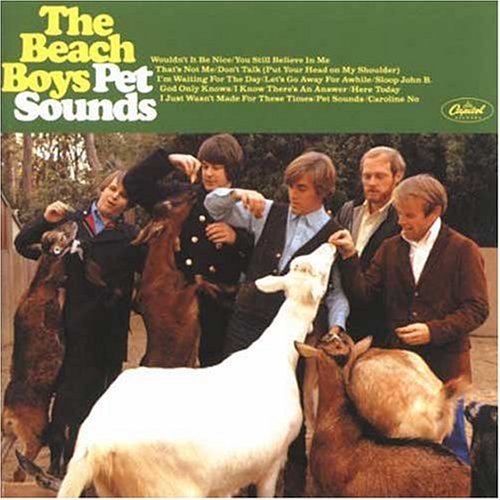
The Beach Boys – Pet Sounds – Round 14 – Nick’s selection


So here it is, possibly the holiest of holy cows. It’s not that I don’t like Pet Sounds – I do – it’s that I don’t love it, though I feel I’m supposed to. God only knows I’ve tried; I’ve owned it for half my life, and must have listened to it hundreds of times, on top of the number of times one must be passively exposed to songs like God Only Knows and Wouldn’t It Be Nice, which permeate the culture like very little else can. My wife loves it. Many of my musically inclined friends love it. Many of the musicians that I do love, love it. Much of the music that I would call my favourite ever music is massively, enormously indebted to it. But it just never clicked for me.

So while I find the rollicking drums of I’m Waiting For The Day exciting and pleasurable, I find Don’t Talk (Put Your Head On My Shoulder) and You Still Believe In Me to be just a little… dull. And I hate using words like dull, tedious, and boring to describe music, because they’re so undescriptive, so subjective, so lacking in specificity. And those instrumentals, they’re just… twee, and bland, and pointless. I can listen to the likes of Stars Of The Lid or The Necks for hours on end, but I just don’t get these.

Maybe it’s that it’s in mono, maybe it’s the slightly crunchy, wall-of-sound-ish edge to the production. Maybe it’s that The Beatles got me first, and The Beach Boys never had a Rain or a Tomorrow Never Knows, never had that dark, psychedelic edge. Maybe it’s the fact that Brian Wilson, for all his alleged infidelities and obsessive tendencies, here just produced a batch of nice, quite pretty, but ultimately emotionally immature love songs. They just don’t really move me; I don’t find the melodies pretty like I do those of songs like Something Like You by Michael Head & The Strands of Switching Off by Elbow, songs that also seem, to me, possessed of an emotional depth that I just can’t find here.

I’m intrigued by the relationship between familiarity and enjoyment, the idea that if you listen to anything often enough then recognition and association will supersede any kind of aesthetic response. I’m not sure what my relationship with Pet Sounds says about this idea; do I only like I’m Waiting For The Day through familiarity? Why don’t I, in that case, like Caroline, No, then? Why don’t I really love any of it?

Tom Listened: It’s inevitable that Pet Sounds is going to be compared to Revolver (or mid-period Beatles in general) such was the transatlantic competition between the bands’ major songwriters at the time, but the albums themselves bear no comparison…they are the aural equivalent of chalk and cheese. Brian Wilson had a completely different agenda to Lennon & McCartney at the time and sought to innovate in a different way. It seems to me that, on the whole, The Beatles were all about looking forward, pushing the musical envelope and forever searching for sounds/songs the like of which had never been heard before. The Beach Boys innovated by looking back. Sure they didn’t write a Tomorrow Never Knows, but then Lennon & McCartney didn’t write God Only Knows! Which is better? Probably only one way to find out…FIGHT.

Even at its most effervescent (which it certainly is not on Pet Sounds), the Beach Boys’ sound is a wistful, nostalgic take on adolescence. On Pet Sounds their music is superbly crafted melancholic pop; each gem a polished diamond, practically every note evocative of the sun setting over golden sands as you suddenly realise that it’s the end of August, soon the nights will be drawing in, the carefree life will be gone and the drudgery of the Autumn months will be upon you. It’s the sound of Brian Wilson falling apart, but still sane enough to realise his predicament. It’s a different way of letting the world know you’re finding things hard than shouting for Help; certainly more subtle, possibly more affecting. I love Revolver for the place it had in my own musical development, I love its wacky sounds and its bright and breezy pop, but it certainly has its share of clunkers. But I love Pet Sounds for its depth, its courage and for the fact that it doesn’t reveal its majesty too easily. I love Pet Sounds in a way that Nick doesn’t (and probably never will)  but then I always was a sentimental old fool!

Graham listened: Always good to look to the present and most recent prime minister for an apt quote on the the Beach Boys. I’m afraid “I agree with Nick”, is pretty much where I’m at on this one. I’ve tried to find the depth in this that others can find, but just not there for me.

Rob listened: I’m closer to Nick’s position on this. I’ve tried several times and never really managed to stick with ‘Pet Sounds’. I’m happy to take the lion’s share of the blame for that but come on guys, give me something to work with apart from the songs I can hear three times a day just by accidentally tuning in to Radio 2. I haven’t listened deeply enough to make my mind up once and for all, but i’m not sure how many more times i’ll feel drawn to go back.

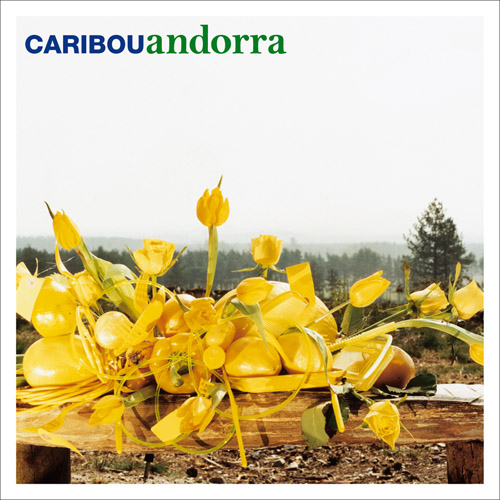
Caribou – Andorra – Round 13: Nick’s selection


I don’t know how one is meant to go about quantifying how much one likes a record. I have always, often vehemently and profanely, objected to giving them marks out of ten, for instance (especially if decimal points are involved), and words are often inadequate, as anyone who’s tried their arm at writing about music knows. Maybe we should fall back to the list, another familiar tool that I dislike; but even if we do that, how do we determine what goes in first place, and what goes in second? It’s very rarely, in my experience, a clear-cut thing, and the dissonance between the arbitrariness of the choice and the potential authority of the reading of the choice is troublesome.

Perhaps the best way, although it seems a little utilitarian as I type, is simply to judge it by how often you’ve listened to a record through choice? Not the “I want to get to know / get to grips with this” kind of choice, but the “I want to listen to something I really enjoy” kind of choice. If we do use that as a metric, then Caribou’s fourth album, 2007’s Andorra, is maybe my favourite album of the last five years, because I honestly can’t think of another record I’ve played this much simply because of the pure pleasure of listening to it.

I still think of and describe Caribou as a “laptop guy”, after the gentle glitches, burrs, and electronic jazz tones of his debut album, but Andorra, for the first seven tracks at least, sounds for all the world, at first impression, like it was recorded in 1967 rather than 2007. Influenced by The Beatles, The Beach Boys, and especially The Zombies (well, sounding like, if not necessarily influenced by – although I suspect so strongly!), and touched with the familiar jazzy drum rolls and occasional brass touches that have characterised everything Caribou has released, it seems as if Dan Snaith has made an album of propulsive, groovy, gently psychedelic love songs rather than experimental laptronica. And he has, pretty much. But Andorra is an album of experimental laptronica, too.

Because the final two tracks, and subsequent listens to the previous seven, reveal this to be very definitely a modern record, clearly indebted to electronic music and made almost certainly by one man (with the occasional guest vocalist) on his own, with a roomful of instruments and a computer full of software. There are various clues to the album’s electronic heritage and gestation; something in the impossible drum fills, the intricate layering of sound, the subtle noises that simply couldn’t emanate from a traditional “rock” instrument, and the complexity of the arrangements betrays that this isn’t mere 60s pastiche or homage. And then there’s the clattering, disintegrating, exhilarating, beatific electronica of the final track, Niobe, quite unlike anything else on the album, or anything that Snaith had released previously. It points towards where Caribou would go with Swim – deeper into electronic dance music, taking it right to the edge of chaos.

I love Andorra, and listen to it, and Caribou in general, with an addict’s frequency. I love the songs; the opening lyric and riff of Sandy, the euphoric surges of Melody Day, the gentle soul of She’s The One. But I suppose, if I’m honest, I love the sound just as much, if not more; the way Eli descends into trippy, psychedelic bass and brass at the halfway mark, the tumbling discord and prettiness of Niobe, the delicious drum patterns of Sundialing. For me it’s both a warming emotional thrill and a delicious, aesthetic, sensual kick to listen to.

Tom Listened: Caribou have always fallen into the ‘I should really check this out’ category of my music wishlist. I have seen their albums for sale on many occasions but have always opted to get something else instead, nearly making that purchase but never quite committing. I think the main reason for this is that I have owned Manitoba’s ‘Up in Flames’ for many years now and, whilst I liked it a whole lot to begin with, rarely go back to it these days. For me UIF is easy to admire but hard to love. the songs are spectacular, but I don’t really feel an emotional connection to the music.

Obviously Dan Snaith has moved things on in terms of his sound since then and Andorra sounded amazing. Lush, rich and beautifully put together this is busy but uncluttered music that sounded wonderful on first acquaintance but will clearly reward repeat listens. I am keen to purchase it…time will tell whether it endures or goes the way of Up In Flames but I have a suspicion that the former outcome is the more likely in this case.

Rob listened: I let Caribou’s ‘Swim’ burble by in the background a couple of times last year but found it hard to give full attention to. I know how highly Nick prizes these records and now I can hear why. Complex but without being oblique, there’s a whole world packed in here. It struck me as a minor wonder that Dan Snaith has used his laptop to create the sound of a real band so fiendishly layered and constructed that no real band could reproduce it, until Nick told us that on stage that’s exactly what him and his buddies do. Shows how much I knew about Caribou.

MAKE-UP – Save Yourself – Round 12: Nick’s selection

I picked 1999 as a theme because it feels, to me, like it’s perceived as a fallow year. 1997 felt like a marquee year for big modernist rock releases, Radiohead, The Verve, Spiritualized, Blur’s step towards American experimentalism, Oasis’ grand folly, plus the big-beat monopoly of The Chemical Brothers, Fatboy Slim, Prodigy’s US breakout. 1998 was a transition year, the moment Britney landed, the last year when something definably 90s happened. 2000, with XTRMNTR, The Marshall Mathers LP, At The Drive-In, Kid A, Queens Of The Stone Age, PJ Harvey, Supreme Clientele, Coldplay’s debut, and Stankonia, feels like the beginning of a new decade. But 1999 feels like The Flaming Lips and piss-all else.

I first heard MAKE-UP in 1999, and while I really love it, and have subsequently bought a handful more albums by them (although I’ve never investigated Nation of Ulysses, the group they evolved out of), I’d never claim it as a classic nor expect all that many other people to love it. I do think it’s great fun, though, for pretty much every second of its 35-minute length.

I understand Nation of Ulysses as a shouting, testifying, politically-charged, DC post-hardcore band who ran their course and then, in the mid 90s, under the leadership of singer Ian Svenonious, adjusted line-up slightly and transformed into a late 1960s underground gospel-garage dirty psychedelic band. Whether they’re pastiche merchants, parodists, or loving adherents of a certain aesthetic is not clear – there’s such care in the way this album, and all their others, is recorded, in the way the band present themselves from record sleeves to matching yellow jumpsuits, such passion in the onstage testimonials to the power of rock and roll, of soul, of jazz, of gospel, that if this is pastiche or performativity then it’s of the type that is so committed as to overwhelm any initial motivations. MAKE-UP blow notions of authenticity out of the window; there is no inclination of where the line between the real people end and the “band” (as gang, as performance, as philosophy, as presentation) begins – at least one other album by them claims to have been recorded live in front of an audience despite (apparently) not having been.

Save Yourself itself is murky, funky, sexually-charged (comically so – despite Svenonious claiming in an interview around the time that advertisers only used sex as a selling tool in order to encourage people to procreate and thus ensure the existence of future markets to buy products, and not because sex itself is an intrinsically pleasurable activity – again, where does performance end?), driven by blacker-than-black, echoing, reverberant, subterranean basslines and decorated with lashes and storms of properly dirty electric guitar plus squalls and swoons of excitable brass. There’s a two-minute song built around an irresistible organ riff and entitled “White Belts”; a lascivious paean to the angles and edges of shapes with multiple sides (“I’ll be your tetrahedron” indeed); a song called “C’Mon Let’s Spawn” with brass which can only be described as erotic and which, joy of joys, fades out and then back in again. The album climaxes with an eight-minute cover of “Hey Joe” which turns the song into a duet between Joe and his maltreated lady, which devolves into accelerating guitars and a bizarre telephone conversation. It’s brilliant, but it’s the sound of 1969, not 1999.

Boredoms – “◯” (circle) from Vision Creation Newsun

As Save Yourself is only 35 minutes long, I picked a big track to go with it – the storming, psychedelic, tribal rave-up that is the opening track from Boredoms’ masterpiece. I think of VCN as being an album from 2000, which is about when I first heard of it, but it was actually released in autumn 1999 in the group’s native Japan. Boredoms are another group who evolved out of a punk band, only this time the punk band wasn’t another unit with a different name; it was Boredoms themselves. Over 15 years they moved from shouty, near-incoherent, cyberpunk beginnings into a relentlessly experimental, rhythm-worshipping collective who bridge the gaps between dance music, The Wire-friendly avant-garde noise, experimental indierock, prog, and blissful ambient. Over it’s near 14-minute length, “◯” sums up the entirety of its parent album – repeated guitar riffs and raucous multiple-drummer rhythms disintegrating and rebuilding into and out of calmer, disorienting lulls of sound. I find it exhilarating and irresistible.

Tom Listened: I really liked the first track on this album. It felt not unlike Kill The Moonlight era Spoon and set the album up beautifully; tight, taught and spare it really whetted my appetite for more. Unfortunately, for me, the rest of the album failed to come close to those initial heights and I found the rest of the songs to be a bit of a cliched mess to be honest. It seemed as though the album’s production was deliberately muddied to give it that late 60s Nuggets garage rock sound so that, whereas Jim O’Rourke is updating the sounds of the 60s within a modern context and, to my mind, creating an homage in the process, Make-Up on Save Yourself came across as pastiche. It wasn’t awful, but after the excellent first track (Save Yourself) I was expecting the unexpected.

Graham Listened:

A band I had never heard of, but that’s why I enjoy DRC. This was great stuff. Once I was updated on the band’s philosphy and mission, I could really appreciate their sound was for themselves and their followers only. Commercialism was not going to cause them to stray from their path. In fact it sounded to me like a couple of tracks could have easily been transformed in to bright/catchy/poppy hits, but that is clearly not where Make-Up wanted to go. Still their militant funkamentalism (I hereby copyright that expression!) was really enjoyable.

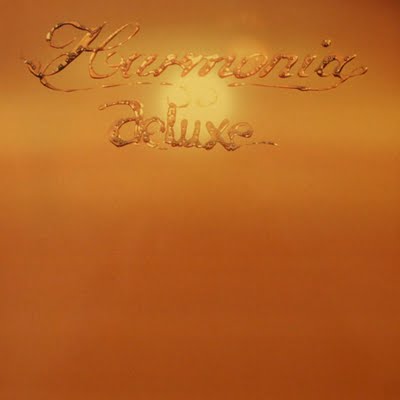
Harmonia – Deluxe – Round 11: Nick’s choice

Once again Tom set a fiendish theme; we weren’t allowed to pick a record originating from any country that had already been represented at Devon Record Club. Given that we’ve covered Canada, Sweden, Brazil, Australia, Scotland, Ireland, England, and the USA in previous sessions, this meant that a big chunk of the stuff we’d normally bring along was outlawed to us. And Australia. (I’m just joking, Australians. We know you produce loads of great music. Like Men At Work. And You Am I.)

Two countries that I have plenty of music from have been conspicuous by their absence though; Germany and Japan. Once again, I’d been pondering bringing some krautrock along ever since we began (Rob was pretty convinced I’d bring some Cluster to our first meeting, as I’d been tweeting about them a lot at the time), CAN get mentioned every week (yet seem to escape our list of proscribed artists that we are not to speak of ever again), and so it seemed obvious to pick Germany. Also, I knew Rob would pretty much be stuck with Japan, and didn’t want to be mean…

Harmonia are a krautrock supergroup of sorts, featuring the two members of Cluster plus Michael Rother of Neu!. You can read all about how they came together on their wiki page; I’ll just say that Deluxe is their second album, that Brian Eno described them as “the world’s most important rock band” (and then worked with them in 1976), and that, in many ways, Deluxe is the Holy Grail of the krautrock sound…

That’s a big claim: what makes it so good? Sonically, Deluxe manages to combine the kosmische musik electronic textures and synth experiments that make up one side of krautrock with the motorik rhythm and long-hair guitar abuse that makes up the other. No one else that I’ve heard quite managed to fuse these two approaches, but here it’s seamless. The debut album had been much closer to Cluster’s warm electronic ambience, but Deluxe saw Rother, and Guru Guru drummer Mani Neumeier, cut loose and rip it up a little over the textures produced by Hans-Joachim Roedelius and Dieter Möbius (Cluster), not least on Monza, which David Bowie didn’t so much rip-off as just use as a backing track for the song Red Sails from Lodger.

The first three tracks are long – between seven and eleven minutes each – while the last three are shorter – four to six minutes – but Deluxe isn’t a record with an experimental side and a pop side; the whole thing is more immediate and song-based than a lot of other kosmische krautrock, and there are even vocals on some tracks, albeit mysterious, non-musical group chants rather than sing-a-long lyrics, but it’s even, though undulating, in tone and pace. There’s a real sense of warmth and playfulness to the record too, qualities often overlooked when talking about and listening to German music, but which actually shoot through a lot it.

Rob listened: I confess I was wandering around a little while the first couple of track from ‘Deluxe’ played. I’m very sorry. I’m no krautrock  aficionado. It goes as far as Neu! and ‘Ege Bamyasi’ for me, even though so much of the music I love was so heavily influenced by the scene (The Fall, PiL, Animal Collective). So it was good to hear this, although I was surprised by how unstructured it sounded. That’s me thinking ‘I’m So Green’ and ‘Hallogallo’. Sorry. Tom and Nick have enjoyed jousting with their CAN views over recent months, a conversation i’m blissfully excluded from. Tonight I was happy just to sit back and listen to some synths so old and great sounding, you could almost feel the valves squeaking. Nice stuff, would have preferred more grooves, but I know nothing.

Tom Listened: Rob has this theory about the colour of album covers. I know what he means. Spiderland and Closer could never be anything other than black and white, whilst the music on Sgt Pepper’s, Bummed and Forever Changes could never warrant a monochrome cover. But what comes first, the colour of the music, or the artwork? Does the album cover make you see that colour in the music or merely reflect it? The power of suggestion. I can’t help thinking it’s the former…after all, why is it that I see the sounds of Blue Bell Knoll by the Cocteau Twins as grey blue, whilst Heaven and Las Vegas is most definitely vibrant pinks, reds and oranges? Surely the music (and Liz Fraser’s warblings) are not THAT different between the two consecutive releases!

Which brings me to Deluxe by Harmonia. I couldn’t disassociate the music from that mid 70s Some Mother’s Do ‘Ave ‘Em orangey brown no matter how hard I tried. The odd thing was that I found myself really enjoying the music one second and then placing it, in all its beigeness, within its historical context smack bang in the middle of an Open University programme on particle physics, the next. I’m not really sure if the album cover influenced this thought process but there’s no denying its browny orangey colour. I love Can (not unequivocally but on the whole), admire Faust, like Amon Duul, but have always found Neu’s rather inhuman motorik hard to get into and I guess Michael Rother’s contribution to this album, along with the colour of the music made it another album that I would need to spend time with to fully appreciate.

Graham Listened: I admitted early on that this was a style way out of my comfort zone. However I really enjoyed this. I was expecting mucho minimalist, but found this really engaging, to the point that I can imagine getting too carried away while listening on the motorway or on a long train journey. I would have to be in the mood and in the right enviroment to give this a full listen, but I’m sure it would be rewarding.

The Necks – Drive By – Round 10: Nick’s choice


Wow, round 10 already; it seems like we only started doing this the other week, whilst paradoxically also feeling like Devon Record Club has been around forever. Intriguingly, my choice this week evokes a similar musical sense of eternal repetition and perpetual change and newness.

Drive By by The Necks, like the Rita Lee album I chose last time around, was a record that struck me as being perfect for DRC back when Rob first mooted the idea, even if it does contravene etiquette by being 17 seconds longer than the allotted 60-minute running time in our rule book. I first came across it, and them, in January 2004, when an article in The Guardian intrigued me.

The Necks are a 3-piece “improvisational trance jazz” group from Australia, who occupy a bizarre and, as far as I can discern, unique landscape somewhere between ambient music, jazz, minimalism, modern classical, and a whole host of other things. They’ve been together for more than 20 years, releasing over a dozen records. Almost all of those albums consist of a single, hour-long improvisation, some recorded entirely live, others with overdubs added later.

As with many artists, my first exposure to The Necks remains my favourite; I own another 5 albums by them in addition to Drive By, all slightly different, all very similar, all very, very good indeed, but Drive By is the one I go back to most often; and I go back to it a lot. If I could scrobble my CD players, I’m pretty confident that I’d have played this record more than any other single album in the last 7 years. When I worked in the film & music department in the library, and we played music for our patrons, this was the record that garnered the most comments – from students to shelvers, it seemed to intrigue and beguile everyone who heard it.

Which is fascinating, because the very nature of what The Necks do makes their music incredibly hard to discover; you won’t hear them on the radio, or find them on YouTube, and any 30-second snippet of their music you might preview on iTunes would make no sense, because what they do needs to be consumed whole, whether you’re paying full attention to it or just embracing its utility as background noise. The Necks perfectly fit Eno’s description of ambient music as being like a painting; it can be in the room with you and you can ignore it, face away from it, but it still shapes the colour and mood of the room around you; or else you can stand before it and become absorbed. At the same time as being ambient, Drive By, and much of their other work, is also intensely physical, groove-based, rhythmic.

A quote from Lloyd Swanton, the bass player, describes some of the band’s own aims: “We’re not at all offended if someone falls asleep [at one of our gigs]. We are trying to conjure that trance-like state just before you do nod off. I believe it’s known as the ‘alpha state’, where the normal barricades between the different parts of your brain start getting broken down, and so you make all sorts of connections that wouldn’t be made if you were alert. That’s actually a very rewarding and rich state to be in, so if people can hover there, that’s fantastic.”

Rob listened: Despite the flagrant rule-break, I loved this. It’s also the only time my wife has walked into one of our meetings to tell us how much she likes something she’s hearing through the door. It generated an interesting but ultimately possibly futile discussion about how we ‘use’ music, which Nick has outlined above. Futile, I reckon, as the fact is that we all just enjoyed the piece, both in its entirely and in the detail of the playing and the pleasure of its minute-by-minute unfolding.

Tom Listened: I too thought this was a great listen, even exclaiming at one point (around the seven hour mark, or something) ‘this is brilliant!’. It must be to sustain interest with such subtle shifts between phases; very little changes from one minute to the next and then, all of a sudden, you realise that what you are listening to is completely different to what you were listening to five minutes beforehand. It’s a kind of uberwatchingthepaintdry alchemy that should be as boring as…my maths lessons…but somehow is a riveting, yet relaxing, listen.

There is a problem though. I enthusiastically borrowed Nick’s CD after the meeting fully intending to listen to it lots. I have yet to find the right circumstances to put it on. With a hectic family life, lots of cycling/climbing/gardening, work, half hour long journey to work, ferrying the kids around etc etc, I literally haven’t yet found an hour (and 7 seconds) when I can sit down down and give this album a full spin. I don’t want to listen to half of it, so I do wonder whether it would get played much given my current life circumstances. In ten years time, when the kids are full time loiterers up the park and my body has fallen apart, I’ll probably own every album The Necks have ever made and listen to them regularly.

Rita Lee & Os Mutantes – Hoje É o Primeiro Dia do Resto da Sua Vida / Disco Inferno – The Last Dance EP – Round 9: Nick’s selection

Ever since Rob sent the first email about forming Devon Record Club, it has been my instinct to play this (almost) lost 1972 psychedelic rock… masterpiece? Classic? Slice of lunacy?

Five years ago the superlative Soul Jazz Records put out the wonderful Tropicalia compilation. Tropicalia was a late 60s Brazilian movement which Os Mutantes (The Mutants) were forerunners of alongside the likes of Gilberto Gil, Caetano Veloso, and Gal Costa. The artists fused British Invasion style pop a la The Beatles, Byrds, Monkees, etcetera, with more traditional Brazilian sounds like Bossa Nova and Samba. The results were fantastic, and after playing the compilation endlessly I bought reams of albums by the leading artists.

Rita Lee was a member of Os Mutantes, and released a debut solo album in 1970. Hoje É o Primeiro Dia do Resto da Sua Vida (The First Day Of The Rest Of Your Life) was actually written and recorded as an Os Mutantes album, but record company disputes meant it was released as Rita Lee’s second solo LP (the original lineup of Os Mutantes would splinter soon after).

I wrote about the album here for Stylus back in the day at quite some length, so I wont go into too much more contextual detail or musical exegesis here. But suffice to say that Os Mutantes had an early reputation for blowing speakers with their overdriven guitars and throwing everything and anything they fancied into their extravagant mixes (bassist Arnaldo Baptista was the group’s producer, and like McCartney not shy in emphasizing his own contributions!). Hoje É o Primeiro Dia do Resto da Sua Vida, far from being a swansong, is arguably the band’s most exultantly bonkers record, swinging from straightforward songs in the Música Popular Brasileira style, like opening number Vamos Tratar Da Saúde, and the wondrous penultimate track, De Novo Aqui Meu Bom José, to crazy excursions like Tiroleite and Tapupukitipa, which are almost brain-meltingly strange, even in the experimental border regions of late the 60s and early 70s.

I love this record pretty unreservedly, but it’s nuts. Completely barmy. I have a feeling that neither Tom nor Rob will have heard anything quite like it before…

Disco Inferno – The Last Dance EP
I tasked everyone with bringing an EP alongside their album this week instead of an individual track. The EP, as a three or four (or five, or maybe more) song unit, is something I have great affection for, and that I vaguely hope these disconcerting digital times may bring back into fashion.

Anyway, possibly the most quietly renowned EP band is Disco Inferno, late 80s postpunk revivers turned early 90s postrock visionaries. Buying a sequencer and hooking it up to their guitars revolutionized their sound and opened up reams of possibilities, which the band enthusiastically explored across the course of five EPs and two albums from 1991 to 1996. The Last Dance EP features the title track twice in slightly remixed forms; an understated indie pop tune, it’s adorned with delicately creative production (making subtle, clever use of their sampler-love) and a joyous, sky-kissed guitar solo. More importantly, it contains the explosive and misleadingly titled DI Go Pop, which essentially recreates the apocalyptic squall of My Bloody Valentine’s You Made Me Realise entirely using sampled sounds and digital noise. Finally, Scattered Showers ties up this four-song, 23-minute collection in a beatific, yet morose, shimmering haze of sound. It’s possibly my favourite of their five legendary EPs, which Rough Trade are promising to compile onto one handy CD at some stage this year.

Tom Listened: We’ve listened to a considerable amount of weird stuff already at DRC and I have regularly been hurled out of my musical comfort zone by my fellow members. But of all the records we’ve listened to, Hoje É o Primeiro Dia do Resto da Sua Vida by Rita Lee takes the biscuit. Bonkers…completely and utterly bonkers. And really difficult to get a handle on. And yet, apparently, huge in Brazil (and pretty popular across the globe) at the time. Which says a lot about the times we live in now!

This makes me think about the Beatles. I have often wondered how they would have fared if they had started thirty years later and had followed the same musical trajectory. I would have thought that Rubber Soul, the point where they really started to get interesting/challenging, would have been the point where their popularity began to wane. But, of course, that’s not how it happened in the 60s. People went with them, bought into each new twist or turn on their journey and maybe this opened their minds to such bizarre music as that on offer on this record. There is no way Rita Lee’s album would be massive nowadays; it’s far too difficult for current times and demands far too much from a modern consumer of music…hell, even a minor player (in terms of global popularity)  such as tUnE-yArDs sounds predictable and linear when judged against the chaos of Hoje É o Primeiro Dia do Resto da Sua Vida. There has obviously been a marked shift in society between then and now – and perhaps we owe the previous generation (and their mind altering substances) a debt of gratitude for enabling albums such as this, The White Album, Piper at the Gates of Dawn, VU and Nico, Trout Mask Replica, Ziggy Stardust etc etc etc to burn so brightly and light the way for the innovators of future, less enlightened times to plunder.

Rob listened: So, yeah, this was pretty mental. I don’t really know anything about Tropicalia beyond what i’ve heard on Radio 4 documentaries about the scene, and particularly it’s politics, so it was good to finally listen to one of it’s artefacts properly. We had fun trying top prise apart the various influences and sounds that comprised this melange of musics from around the world and we did aural double-takes as weird and wonderful noises and instruments popped and parped in just when we thought things couldn’t get more unusual. It’s interesting to hear this and marvel at how freely Os Mutantes apparently blended influences and then reflect on how relatively closed western pop and rock then became during the following decades.

I hadn’t heard the DI EPs before. I love ‘It’s a Kids World’ from ‘Technicolour’ but I haven’t given that album enough time yet and I believe that it’s relatively frowned upon by aficionados of the band, which seems a shame to me.  ‘The Last Dance’ struggled to reveal its subtleties amidst the distortion and feedback of a Devon Record Club evening, but if I could afford to buy it, i’d give it some more attention. All I can remember is that one of the songs really did sound like My Bloody Valentine, which seemed distinctive enough until Tom revealed his choices.

Spoon – Waiting For The Kid To Come Out / Transference – Round 8: Nick’s selection


I took two selections along to Tom’s house for his fiendishly themed week – the pair listed above, and also The Colour Of Spring by Talk Talk and the Mark Hollis solo album – and, because I couldn’t decide, I let the other DRCers pick. As Tom and Rob both know the Talk Talk album and the Hollis album well, but neither had heard Transference by Spoon, they plumped for Texas’ finest. (Had they not, for reference, I would have played The Colour Of Spring in full alongside the opening track of the Hollis album, which is also entitled The Colour Of Spring; it seemed to make sense.)

While Talk Talk would have been an excellent example of a songwriter developing into something unrecognisable, I liked the idea of Spoon as a band who, to some ears, have barely changed what they do at all in over 15 years together, and who have found serious mileage and respect, an actually quite a lot of diversity, through minute examination of the politics of small differences.

Sasha Frere-Jones in the New Yorker described Waiting For The Kid To Come Out, the second track on the Soft Effects EP, which was released in 1997 (a year after their debut album, Telephono), as Spoon’s first “great” song. I’m not sure whether I agree with it being great or not, but it’s certainly both much better than anything from Telephono and also the first song where Spoon started demonstrating two facets that would go on to define them as a band. Firstly, they started to consciously remove elements from their music, and secondly, they started to seriously play around with rhythm and texture.

Even so, Waiting For The Kid To Come Out is complex and overstuffed compared to later Spoon; there are far more compositional sections than latter day fans might expect (it feels like there are about four differently structured versus, two distinct bridges, a chorus that gets two runs through, plus a stripped-back, processed percussive interlude), and more words too. Not to mention more hooks than a Velcro prom dress. Clocking in at just under 2:45, it manages to be both stuffed to the gills and strangely economical.

Transference comes 13 years after the Soft Effects EP, and is the hangover after the party that was Ga Ga Ga Ga Ga; after the relative maximalism of that album and Gimme Fiction, Transference strips back and takes away again, often reducing sections of songs to single instruments. Even when Spoon do play all their instruments together here, they follow Jacki Leibzeit’s “repeat repeat repeat” maxim; The Mystery Zone, I Saw The Light and Nobody Gets Me But You all elongating with precious little variation.

Transference is odd in other ways, though. The poppier, more accessible songs that might have been lavished with trumpets and handclaps on Ga Ga Ga Ga Ga are here corrupted, truncated, left sounding like weird demos where the sound moves around in ways that seem unfinished. The sweetest melody is left with no company but a piano, other songs end abruptly as if the tape ran out mid-song, or else fade-out far quicker than seems comfortable.

I’ve seen people claim that this combination of repetition and obfuscation is difficult or obnoxious or lazy, but I love it; I bought into Spoon’s aesthetic heavily with Ga Ga Ga Ga Ga, explored their back catalogue quickly and deeply, and now consider them the best “band” (where a band is a “gang” playing together in a room) of the last decade. Transference suggests to me that they might keep it up for the next decade too. It sounds exactly like Spoon always sound, but just different enough to give it its own character in their catalogue.

Tom Listened: My relationship with Spoon began in about 2005 when I picked up a copy of Kill The Moonlight and I immediately clicked with its punchy production and tight playing. Britt Daniel’s earthy and confident singing and the album’s ability to land a killer punch when you were least expecting it has sustained my interest and has led to this being one of my favourite albums of the past ten years.

For me Gimme Fiction was a disappointing follow up, too hit or miss (I know there are those who suggest this is Spoon’s finest moment) and, although we had a troubled first week, Ga Ga Ga Ga Ga and me now get on just fine…I find it to be a consistently good record, at times very good, but it rarely entices me to pull it off the shelf – the edginess of Kill the Moonlight being replaced with pop laden hooks, effervescent horns and a slightly glossy sheen doesn’t quite give it the same appeal as far as I’m concerned.

So I felt that with Transference’s somewhat patchy reviews and forum chatter, it was probably time Spoon and I parted company. Silly me. Transference sounded great and if, like me, you miss the Spoon of Kill the Moonlight, you’ll welcome the dynamics and edge of Transference’s grooves. I can see why some would find this a backwards step for Spoon but that’s where I wanted them to go and I will now be adding Transference to my shopping list.

I thought Waiting For The Kid To Come Out was a fantastic song, very easily identifiable as Spoon, rough around the edges (as I like it) and it has piqued my interest in the subsequent albums – Series Of Sneaks and Girls Can Tell….this could get expensive!

Rob listened: I like Spoon, and like Nick I started with ‘Ga Ga Ga Ga Ga’. It took a while for me to get past the big showstopping numbers like ‘Underdog’ and ‘Finer Feelings’ to develop a feel for what the band were trying to and now I like the weird, flat, snaky songs that fit between the bold pop tunes just as much. Next I was given their entire back catalogue all in one go, which hangs together like a big amorphous lump for me. I have no idea if ‘The Beast and Dragon Adored’ and ‘I Turn My Camera On’ are on the same record as ‘Monsieur Valentine’ and/or ‘Jonathon Fisk’. And so that’s where we sort of ground to a halt. like Tom, the reviews for ‘Transference’ were pretty much enough to stop me going out and buying it, and like Tom, I thought it sounded pretty great hearing it for the first time. I’ll go back for more and perhaps this will be the first new Spoon record i’m able to digest properly.