Donato Dozzy – ‘Plays Bee Mask’: Round 65 – Rob’s choice

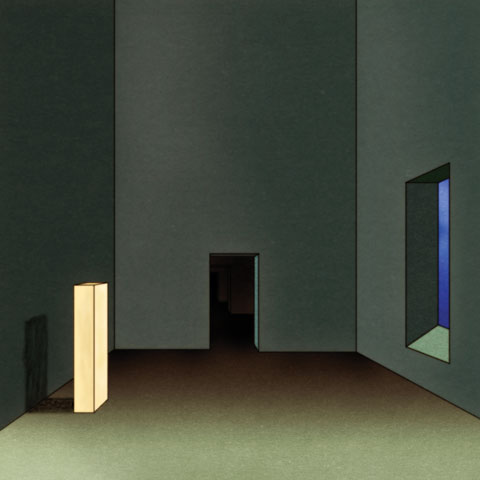
Donato Dozzy Plays Bee MaskInterpretation is one of the cornerstones of modern pop. In the 50s and 60s singers who would never have dreamed of writing their own songs would take songs from writers who would never have dreamed of singing them, and interpret them. Sinatra was renowned for decades as the finest ‘interpreter’ of modern songs, taking material and turning it into his own, finding the core of a piece and revealing it to us all.

Then in the 1960s, the role of interpretation in the development of pop music took a few different and often more problematic turns. Countless of the big hits of the decade which we still know 50 years on are second or third generation copies. Songs passed from group to group until one version achieved some sort of memetic superiority. This was not always a chummy passing of the baton (“I say, this ditty didn’t work out for me. Why don’t you have a go at it old fruit?”). Genres, sometimes whole cultures, were plundered for songs which could be parlayed into rock’n’roll success.

Since then, the role of interpretation in rock and pop seems to have dwindled to the dread cover version in which some band either pays tribute to or attempts to ride the coat tails of some other band, usually to the benefit of no-one except the original publishers. Performers are sampled, mimicked, sometimes pastiched, but rarely will an artist embark upon a serious reinterpretation of another artist’s work. Even when they do (Flaming Lips cover ‘Dark Side of the Moon’, Steven Malkmus covers ‘Ege Bamyasi’) there’s a sense that these are fun excursions, tributes, a laugh.

Meanwhile in other forms, notably literature and theatre, reinterpretations of stories, works, themes and pieces are a critical part of the discourse.

Where rock and roll moved away, dance music has taken on the full power of reinterpretation. Here the remix is so all-pervasive that radical re-imaginings of tracks routinely eclipse the originals, often becoming the core reference point for a piece of work. Undeniably it’s a fertilising, energising process, producing a seemingly endless sea of imaginative music.

Somewhere between the world of the radical remix and the Warhol wing of the modern art gallery sits Italian producer Donato Dozzy’s 2013 album ‘Plays Bee Mask’. The seven tracks, numbered ‘Vaporware 01’ through to ‘Vaporware 07’, take as their source the 2012 track ‘Vaporware’ by the Philadelphia-based electronic ambient artist Bee Mask aka Chris Madak. The original is a 13-minute soundscape which does its title proud, steadily forming ideas which disperse before they can resolve. It’s a beautiful piece, constantly changing, buzzing with life yet always shifting and uncertain. It’s a pure pleasure to listen to.

Dozzy took on the task of remixing the track and, presumably, realised quickly that to attempt alternative versions of the whole piece would be folly. the original ‘Vaporware’ shifts through many abstract phases with little through-line other than it’s drifting mood. Hammering these down to a rhythm or adding yet more sounds as ballast would have crushed them. Instead he took individual elements from the original work and isolated them, creating space in which to allow them to stretch and breathe and to allow him to examine them fully.

Each track seems to take a single motif from the original, mount it among other sounds, and set it slowly twisting and rotating so we can hear it from all angles. The care and attention is impressive. The sounds are enveloping, beguiling and beautiful. The record starts with rainfall and warmly chiming bells, progresses through steady, fizzing drones, pulsating voice shards, arpeggiated squelches which fall like tropical rain on bouncy leaves and head-nodding chord progressions with just a hint of rhythm before coming back down to where it started, with dripping bell chimes.

It’s perfectly possible to fall in love with ‘Plays Bee Mask’ without ever having heard the original ‘Vaporware’. I did. However, once you’ve grown accustomed to both, they begin to resonate, each highlighting and amplifying individual details of the other. The two works begin a fascinating dialogue. It’s quite some trick. It’s clear that Dozzy found the constraint of working with the raw material of someone else’s work immensely inspiring, and the results are a jewelled wonder. ‘Plays Bee Mask’  works as a puzzle, as a tribute, as individual tracks, as an album-length suite and as a pure experience in sound.

Tom listened: We chatted on the evening about Rob’s use of Spotify. If it has meant that he is more likely to find such wonderful music as this, then maybe we should all be doing it. I thought Plays Bee Mask was stunning, much prefered the album to the original and although it peaked in the middle, I enjoyed it all the way through. Dare I say it, I would be more tempted to pick this up on CD as the LP seems to have annoyingly short sides but as far as electronic music goes, this chimed with me as much as anything else I have heard.

Nick listened: I much preferred the ‘remixes’ to the original (which seemed to struggle to find direction), and enjoyed the remixes very much, but I can’t be as effusive as Tom; bits were blissful and beautiful, but others seemed a little too perfunctory – I thought about saying ‘formulaic’ but a lot of the point of electronic music is exploring formulae, so that didn’t quite make sense. I think I mean that some of it, for me, lacked a little emotion. But a fascinating, Borges-esque concept, really intriguingly executed.

Deafheaven – ‘Sunbather’: Round 64 – Rob’s choice

Deafheaven - SunbatherWe’ve talked about black metal before, haven’t we? Let’s recap. I’m attracted to the sound like a moth to a cold flame. I’m repelled by the cod-Lovecraft imagery and look-at-me-being-icky-and-dicky lyrics and artwork. Not, let us be clear, because they strike a chilling blow to the very heart of what it is to be human in an inhospitable universe, but because they are very silly.

But there’s another way. There are a number of bands out there making interesting, creative black metal as open and exploratory as the best post-rock, as bracing as a hydrofluoric acid power shower and, crucially, laying off the schoolboy horror flick schtick. We say ‘hello’ to An Autumn For Crippled Children, Alcest, Botanist, Locrian and Have A Nice Life. Most prominently over the last 12 months, we have San Francisco’s Deafheaven.

This is a band who sound exactly like what they say they are: a black metal outfit who grew up loving Slowdive. Half their songs could be mistaken for a severely beefed up Cocteau Twins, albeit one where Liz Fraser has a really, really bad case of tonsillitis. In a hurricane.

‘Sunbather’ is their second album, and easily the most prominent cross-over metal record of last year. I’ll be honest, I don’t know a great deal about the ins and outs of the BM scene, but it does seem to have a totally schizophrenic relationship with its artists, one which touches on subcultural xenophobia whenever any of them threaten to escape from the crypt and out into the sunlight or, even worse, to bring outsiders back into the darkness with them. Deafheaven did both last year and, like Liturgy before them, have had to put up with constant examination of their ‘metal’ status as a result. Black Metal: the scene which loves to scream about total physical and spiritual annihilation, but won’t countenance you if you have a pink album cover.

’Sunbather’ is a great rock record. Essentially four long tracks with three, often beautiful, counterpoint  interludes, it has searing guitars, pummelling double-kick drums and yes, a guy screaming his lungs sore, although in this mix the vocals are essentially just another caustic sound to throw into the mix. But within the noise there is light and shade, colour and contrast, motion and intense emotion. Deafheaven aren’t afraid to pause, to gaze at their shoes and take their effects pedals for a couple of laps around the stratosphere. It’s a thrilling and, after a while, an apparently entirely natural combination of influences and they pull it off to epic effect. The album is mesmerising and convulsive whilst remaining reverential and even warm in tone for long stretches. The longer you live with it, the more it starts to become a soaring chamber-noise record, a la Godspeed You! Black Emperor. It’s dynamics are pure Slowdive, its details full of warmth and touch rather than dread.

If Deafheaven are sneered at by the corpsepaint gloom brigade as being ‘hipster metal’ then fine. If that means people will find them and their ilk via Pitchfork and The Quietus then great, because I read those websites and I want to find new, bold music which takes accepted forms and twists them into new shapes. And which rocks. So, I guess I’d nail my flag to the hipster metal mast. That’s because I like a lot of the music that idiots choose to nail that label to and also largely because a fair proportion of the DNA of the rest of black metal is completely stupid.

Nick listened: I strongly suspect that I am absolutely the kind of bearded, glasses-wearing, cycling, real-ale-drinking, boardgame-playing hipster douchebag that fans of ‘real’ ‘metal’ get upset about for liking this record. But I’ve kind of avoided it, partly for that reason, and partly because, despite the embrace of it by said hipster douchebags, there are still a couple of key sonic ingredients to this record (from the tiny snippets I’d heard before last night) that I absolutely cannot stand – firstly, the screaming vocals, and secondly, the ridiculous, relentless, contourless drumming, both of which seem to be absolutely essential to whatever-it-is that defines ‘metal’ (of the modern variety?) from ‘rock’, or whatever. So I’d picked up Sunbather and thought about buying it on numerous occasions, but never gone the whole way to the counter with it, despite the fact that I adore the graphic design (that font; that colouring – it’s meant to be the colour you see when you face the sun with your eyes closed, Rob tells us) and love the look of the physical object that is this album (obviously the CD is better looking than the LP). But I know it’s going to be full of screaming and ridiculous drumming. The question is ‘how much’?

By the end I was quite enjoying Sunbather, despite, rather than regardless or because of, my misgivings. The screaming and drumming still faintly nauseates me, but the vocals are mixed so that they’re not all that prominent, and the drumming isn’t quite constant. The lighter, airier passages that follow the cacophonies felt like beautiful contrasts – somewhere between shoegaze, postrock, and miserable acousticana – because that’s what they were, and the juxtaposition made them shine. I also suspect it made them seem far more phenomenologically beautiful than they actually are; so ugly are some of the other parts that by comparison almost anything else would feel warm and beatific, even if they’re actually just bog-standard postrock reveries and shoegaze plateaus. But that’s the politics of intimate genre familiarity.

I’d definitely like to listen to this a couple more times and ascertain further what I think and feel about it, because I’m totally not sure thus far. But I’m delighted that Rob blasted it at us.

Tom listened: Hmmm…once again Rob has opened the floodgates of debate, both in the real, and virtual, world…simply by bringing an album that straddles some of those genre boundaries we are so keen to erect. I suppose the boundary surrounding metal is a pretty robust one and it has, to my (admittedly scant) knowledge, rarely been breached. So Sunbather got us all talking and, I for one, find the conversation fascinating.

And it got me thinking more about my relationship to the genre than about the music itself. Why can’t I stand metal? And what binds ‘metal’ as a genre. What does this have in common with Def Leppard and what does that have in common with Anthrax and what does that have in common with Sunn o)))? Because they all have something that produces the same response from me and that’s to run away. In his lengthy response to Rob’s post, Chris states that metal has a strict sonic template…well, can you describe it because, whilst I am sure it exists, I can’t put my finger on what it is? That’s why Deafheaven is so interesting – remove the vocals and (to a lesser extent) the drumming and what’s left would be something that I would enjoy hugely. Listening again since Record Club, even the noisier bits remind me of Red House Painters and I could listen to them until the cows come home. So is it really just a screaming vocal that is putting me off or is there something more subtle at work that I haven’t managed to identify? For now I’ll ponder the answer and wait for that nice Mr Kozalek to do his Deafheaven covers album.

Graham listened: Doubt a numpty like me can add anything to the debate that this has inspired. I’m tempted to explore some more ‘metal’ crossover points, just to see where Tom’s fear and loathing begins and ends though. Back to this for a moment. I began enjoying it, then the drumming got on my nerve endings. I didn’t mind the vocals and started enjoying until yet again until the bloody drumming got my back up. I’ve streamed it a few times since DRC and still feel much the same way. I probably want them to explore the guitar sound further and leave the percussion and vocals behind. They surely won’t, so it will remain troubling. ps I’m no ‘hipster’!

The Jesus Lizard – ‘Goat’: Round 63 – Rob’s choice

The Jesus Lizard - GoatBen’s girlfriend Michelle gave me a tape of ‘Goat’ in 1991. I was scared of it. Scared of the name really. A prim and proper child by instinct, I was working my way out of my shell with help from William Burroughs, Public Enemy, Pussy Galore and Hunter S Thompson but still, The Jesus Lizard, raving out of Austin, Texas, sounded like a scary proposition. As it happens, they didn’t actually sound quite as trangressionally extreme as I might have anticipated, but to be fair neither did they come across as the sort of chaps you would want to hang around with much past sundown.

The music hit a sweet spot from the moment the opening track ‘Then Comes Dudley’ lurched into life. Grumbling gut-punch bass, ominous and insistent drumming, sharp and nagging guitars.

You’ll know within 15 seconds whether this band is for you, and they certainly were for me. There just something about the combination of heavy bass and unhinged guitars that acts like a dog whistle to these ears. Only much lower. I think I might happily trade about 15 years-worth of my record collection for another 8 or 9 records that did to me what ‘Goat’ still does, ideally in exactly the same way but, you know, new.

Now, bear in mind that if you really have formed your opinion within the first 15 seconds, you haven’t yet been introduced to David Yow.

The Jesus Lizard’s vocalist and frontman is, in some sense, both your worst nightmare and the coolest kid in class you’re secretly hoping will think you’re cool too. In another way, I guess a more meaningful way, he’s the guy who works at the slaughterhouse who all the other guys that work at the slaughterhouse are a bit scared of.

His vocals are as deranged as his live performances used to be. They swing around the concept of melody like a rabid orang-utan on a climbing frame. Half the time he sounds violently drunk, which it’s possible he was. He certainly built a reputation for being loaded and explosive on stage. I saw The Jesus Lizard play a tiny venue in Manchester in the early Nineties and Yow came over as nothing less than a new Iggy Pop, only psycho, flinging himself at the crowd (as opposed to ‘into the crowd’), his performance was some sort of bare-knuckle self-flagellation, like nothing I’d seen before or since.

If all of this makes him sound like an unlistenable lunatic, think again. In fact his vocals, swooping, hollering, yelping, are just a quarter of the band’s noise, a noise made up of elements which don’t so much compete against each other as fight and kick and scratch like cats in a sack. All four elements sound totally crazed but are performed with incredible self-control and, essentially, virtuosity. That they hang together so well is a miracle, producing all the slack-jawed wonder that word should invoke.

Take ‘Mouthbreather’, a hurly burly buzz saw of a track. Ravenous guitar meets tub thumping drums, they wrestle each either to the ground and proceed to roll down a bumpy hillside together, throwing punches all the way whilst Yow intones “don’t get me wrong, he’s a nice guy, I like him just fine… but he’s a mouthbreather”.

‘Goat’ is more focussed than their first album proper, the wild-eyed ‘Head’, and therefore somehow more menacing. Still, it retains the heavy madness that would be lost in subsequent years as the sound became more focussed. It’s the band’s high-point and, for me, a high point of the inspirationally unhinged post-punk noise that was being made in the last 80s and early 90s. These bands seemed to be rending open access to hitherto unexplored worlds of primal, blissful rock and roll, and for the relatively brief period where their imaginative reach exceeded their technical grasp, before musical competence caught up with them, they were making some of the most thrilling sounds of the last 50 years.

Graham listened: Rob has an uncanny knack of digging out albums that remind me of how exciting music can be to ears that have not been subject to years of acquired cynicism. Direct as can be with touches that sound like they are not going to work together, but pull it off in a stripped back sort of maelstrom. However, I would certainly cross the street if I heard Mr Yow coming towards me.

Tom listened: Having seen Jesus Lizard back in the day – at a Reading festival in the late 80s or early 90s – I was very pleasantly surprised by Rob’s offering. The contrast between the impact of carefully listening to Goat on a good stereo in a limited space with watching David Yow flail around on a stage hundreds of meters away in broad daylight as the sound gets lost to the elements and the crowd get increasingly apathetic is massive. At Reading, all I was left with was a memory of unstructured noise and a diminutive, bare chested man wailing away like some sort of demented despot stuck in one of those bad dreams where the louder you scream the less people listen. The recorded version of the Jesus Lizard experience revealed a wonderful album full of twists and turns and soulful rawness. I thought it was really good.

Nick listened: I own this! I’ve only listened to it about three times, but it’s pretty awesome, in a faintly brutal way. Very happy to hear it again, especially enlivened by Rob’s deep affection and context for it (I bought it many years after it came out, with no context other than ‘this is a good record’, which often isn’t quite enough to understand the whys).

Oneohtrix Point Never – ‘R Plus Seven’: Round 62 – Rob’s choice

Oneohtrix Point Never - R Plus SevenI like to make my DRC decisions early. Usually within 24 hours of one meeting I’ll know what I’m going to present at the next and will have it on hard rotation for the fortnight running up. This time around I was stumped for a couple of weeks. I felt I wanted something clean and sharp to offer contrast to last month’s Biafrademic and to make the most of Nick’s bright and sparkly set-up, but after 10 days’ scrolling and browsing, flicking and pondering, nothing was pushing its way to the front of the queue.

Step in then ‘R Plus Seven’, a record I’ve been intending to bring since I first heard it and now can since Santa’s elves were prescient enough to bash a copy together for me.

Daniel Lopatin, aka Oneohtrix Point Never, came to prominence self-recording his work on vintage samplers and synths, which he used to create collapsing drones in decaying electronic spaces. His discography is hard to pin down, with a couple of cassette releases and split albums floating about, but ‘R Plus Seven’ is his latest, released last year.

It’s a disorienting house of mirrors. Most tracks come over like six tracks randomly spliced together. Very few have genuine through lines. Most switch into and out of exquisitely composed sections wilfully and with no rhyme or reason. Whilst there are no tracks with any real form of beat (‘Cryo’ and ‘Still Life’ have dubby pulses partly running through them), it’s a record which manages to feel mobile through it’s sheer energy. There are exquisite things going on here with cut up human voices and strings. It’s also full of light and disconcertingly static, as if the listener is walking past a series of unconnected exhibits in a cathedral, each encased in highly polished glass.

It’s an incredible record, in the truest sense of the word. It made very little sense to me on first hearing and it’s almost as surprising and ungraspable on the 100th listen. We speak often – Tom in particular – of difficult records slowly giving up their hidden patterns and structures. I tend to experience, or at least identify, that process less often than the others. ‘R Plus Seven’ gets more and more beautiful with each spin but, somehow, meaning and sense seem to recede ever further into the distance. And that’s one of the reasons I love it. It seems that one of the dominant themes here is dissipation. Track after track hints at some coming coalescence only to drift apart bewilderingly. Nothing goes where you are expecting it.

Take ‘Zebra’ for example. It kicks off with bright, stabbing synths which 20 years of dance music tell us are going to coalesce to be joined by a rhythm track and then generally groove about for a few minutes, possibly building to a climax. But there are other counter sounds nagging away at it, pulling it down. Instead of hitting the dancefloor, after 60 seconds, the whole thing is wiped away to be replaced by choral voices. Then it’s all back 30 seconds later to be joined by a second, underpinning bass synth line signalling ‘hey folks, here we go!’ and then less than a minute later they are gone again. The remainder of the track is a slow, drifting fog within which seems to grate and grind some unknowable machine. Although the perky opening has gone, the possibility of its return creates a seeping tension for the remaining four minutes. Spoiler alert: There is no resolution. The track, you realise, has destroyed itself from the inside whilst maintaining its beauty throughout.

What’s going on here? A rave pastiche? A death allegory?

Even more remarkable than Lopatin’s ability to pull off track after dissolving track, is that he somehow manages to collecting and shepherd these separating points into a meaningful whole. I think that’s profound.

I’ve read several people discussing the record as a paean to the sounds of 1980s home computer sounds. I don’t get that. To me it’s a digital firework display being held in a church, the Internet Age version of someone swinging wildy around the FM dial, splicing together found noises into a jump-cut collage. All of which makes it sound like a piece of art, rather than a piece of music. The miracle of ‘R Plus Seven’ is that it is as intoxicating and compelling as any record I’ve heard recently. I can’t think of a single reason why it should hold together, and that it does just bolsters my admiration for it.

Ultimately of course the binding force is Lopatin’s artistic vision. I can’t conceive of the foundations which underpin this creation. I can’t even glimpse them as I listen and listen again, but they are there. I don’t expect to find my way to them any time soon. In fact, I hope I never do. Whirling my way through this fun-house is way too exciting for me to want to know its secrets.

As a final aside, when I first lined this up as a DRC choice, I would have said it was like nothing we’ve heard before. Then Tom played the John Wizards album for us a few weeks ago. To me the similarities were marked, albeit with completely different aesthetics and means of production. I loved that one too.

Nick listened: Daniel Lopatin is one of those artists who’s been in my orbit of awareness for what seems like aeons, but I’ve never felt compelled to take the leap into investigating his catalogue, or even consciously listened to him as far as I’m aware (beyond one long, pleasant drone track played at the other record club by Jon). Why this is, I don’t know; his records are acclaimed and seem to fall, from what I read, into part of the Venn diagram of my tastes. So I was glad Rob played this. As he suggests, like the Jon Wizards album it did move around all over the shop, which has left me, after one listen, without a sense of how good it is – because I suspect one would need to get to know the contours and juxtapositions and what-happens-next-ness in order to, y’know, pass judgement. The track Rob made us shut up for (“Zebra”) is a case in point; I think it was wonderful, but it was so confounding that I can’t actually recall any of it, despite paying really quite close attention at the time.

Tom listened: It’s funny how differently we hear things. From the many conversations we’ve had over the years on such matters, it appears as though Rob hears records for the first time in a very different way to me. He is an impressively efficient assimilator of information and is therefore much more definite in his reactions to records having heard them once than I am. John Wizards took a fair few listens to really click with me – Rob seemed to get it from the get go. Having heard it some more…I wonder whether he hears it differently now (care to shed some light on this Rob?).

So I feel very aligned to Nick’s point of view on this. My gut reaction was that this would be one of those records I would grow to love but…it’s so abstract and unstructured and (in direct opposition to John Wizzards) its musical palate is quite minimal and cold, that I couldn’t say for sure. To sum up: intriguing? Yes. Beautifully producedand constructed? Certainly. An amazing piece of work? Possibly…

Graham listened: Certainly an “out there” type of album. So much so it inspired me to start rambling some nonsense about shapes of audio construction and structures as it made its way out of Nick’s speakers. On occasion it felt like there were physical structures starting to fill the room. The fact it mad me think that way certainly shows it has impact! The way it teases you into thinking that some recognisable beat/melody is just around the corner, hits the border between intriguing and frustrating. Would have to get to know it much, much better to sit back and relish its potential.

Round 61 – Rob’s Jello Biafra mixtape

Jello BiafraJello Biafra is, or was, one of the guiding stars of my universe. I feel guilty that he’s fallen from my firmament. Although I love his records as dearly as I ever did, I’ve lost touch with what he’s done in the last ten years as i’ve become more and more of the chickenshit conformist he always warned me about. Perhaps I knew I wasn’t living up to his expectations. It’s not you Jello, it’s me. I’m sorry. I genuinely feel bad about it.

Biafra is most famous for his time as lead singer of San Francisco punks Dead Kennedys, but the musical collaborations and long string of solo spoken word albums were arguably even more powerful and, as it happens, more prescient about where we were all headed.

Biafra had his naysayers who considered him anywhere from a strident hectorer to a hysterical doom-monger. Neither were fair criticisms and now, the records he released around the turn of the 90s are very, very funny – they always were – very penetrating and, pretty much, very right.

Musically they are a varied bunch, although most share a desire to crack your skull open, but throughout runs Biafra’s amazing voice, an insistent cross between Daffy Duck and a Dalek. I suspect that music is primarily a means of delivery for Biafra. Each song carries a wild payload of hotwired facts and delirious conjecture. But when the musicians he’s with match the intensity of his singing, the results are spectacular.

1. Dead Kennedys – ‘Pull My Strings’ (Recorded live in 1980, Released 1987)

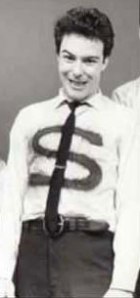
Pull My Strings is a song the Dead Kennedys only played once, on 25 March 1980. The organisers of the Bay Area Music Awards thought it would be great idea to invite some local punk rockers along to their bash to give a little credibility to the proceedings. Enter Jello Biafra, East Bay Ray, Klaus Fluoride and drummer Ted. The band rehearsed the song they were asked to perform, ‘California Uber Alles’ and when they took the stage that evening they cranked out the first few bars, then, having walked on stage wearing white shirts with black ’S’s painted on the front, they stopped playing and pulled around black ties to form dollar signs before telling the audience precisely what they thought of them. ‘Pull My Strings’ swerves into an evisceration of the New Wave scene which was getting into bed with the music industry, selling out the aggression and political bite that the Kennedys cherished in return for radio play.

Biafra believes in pranksterism as a political and social tactic and ‘Pull My Strings’ is the sound of someone taking his opportunity. When it would have been easier to do what was asked and scrabble a few inches up the greasy pole, Dead Kennedys rip into a pastiche of ‘My Sharona’ by crossover one-hit wonders The Knack before leading the audience in a singalong “Is my cock big enough? Is my brain small enough? For you to make me a star?”

Lard – ‘The Power of Lard’ (1989)

After Dead Kennedys split in 1986, amidst their prosecution (failed) for alleged obscenity, Biafra and members of Ministry formed Lard. ‘The Power of Lard’ is the lead-off track from their first EP. It blew my mind when it first came out and it still delivers a hell of a jolt. The band shifts from tribal pounding to a nervy skitter and finally into a piledriving industrial thrash whilst Biafra slices through with an electrifying sermon lurching from cultish entreaties “Lard is the Om! Lard is revolution!” to yuppie pastiche to twisted headlines from a degenerate culture. It’s a terrifying, overwhelming psychedelic whirlpool that never fails to suck me in.

Jello Biafra and D.O.A. – ‘Full Metal Jackoff’ (1990)

Whilst working on a film soundtrack Biafra collaborated with both DOA and NoMeansNo, in the process finding partners for his next two albums.

‘Last Scream of the Missing Neighbors’ is four direct chunks of steely speed punk plus a great cover of ‘We Gotta Get Out Of This Place’ and then, across the whole of side 2, ‘Full Metal Jackoff’. It’s Biafra’s widescreen epic (“Mein Kampf! The mini-series!”), spinning out from a black-windowed mobile crack lab circling the Washington DC Beltway to take in the whole of an America under an undeclared ‘Narco-Military’ dictatorship, slowly being crushed by the bootheel whilst drugs are pumped into the ghettos to pacify the poor, deliberately stoking poisonous sectarianism. It’s an astonishing achievement, a song genuinely worthy of a movie adaptation. DOA riff away, slowly ramping up the pressure over 14 minutes whilst Biafra paints the bleakest possible diorama, his voice no longer comic but chilling. The intensity builds and builds and builds and the end result is as thrilling as it is horrifying. By the closing chants of ‘Ollie for President – He’ll get things done!’ you’ll want to run and hide.

Jello Biafra and NoMeansNo – ‘Bruce’s Diary’ (1991)

The second spin-out collaboration was ‘The Sky Is Falling and I Want My Mommy’ recorded with existentialist provocateurs and Alternative Tentacles stalwarts NoMeansNo. The record is frenzied and hilarious by turns, from the Space Shuttle panic of the title track to the Wild West escapism of ‘Ride The Flume’ and on into the urban nightmare of ‘Chew’. ‘Bruce’s Diary’ is an out-of-step jazz-punk number told from the perspective of a spook spying on an entire population. It starts with surveillance

No one ever sees me/Yet I know all of you/ It’s sort of like a small town/When your whole lives are on my computer

then swerves into political and social control

A lethargic population/Is the key to our control/Who’d rather watch someone’s life on TV/Than participate in their own

Mentally they feel helpless/Physically they just give up/We priced the healthy food so high/They can only buy soda pop

A housebroken bee colony/That goes home after 5/Too burnt and glazed to threaten us/With purpose in their lives

And on it goes…

We melt you with acid rain/Keep you poor for economic gain/Convince you your biggest threat/Is drugs and terrorists

They don’t even have to be real/Just find a face, make up a crime/Run sensational headlines/Works every time!

The people must not realize/They are being manipulated/For them to be manipulated effectively

We give ’em things to worry about/Buying clothes and losing weight/Your lack of curiosity/Is the key to our success!

And of that sound familiar?

When this record came out, it sounded like hyperbolic and often hilarious exaggeration, so wild it was relatively easy to laugh off whilst fuelling the dismissive view that Biafra was a tin-hat-wearing conspiracy nut. Now, in an age where we accept that we are being spied upon by our own governments, we’re terrified of other people in case they want to kill us, we’re assailed by images of bodies and things we are supposed to want and told that consumer spending can be the key to economic progress, then let’s reflect that the of the words above only the reference to ‘acid rain’ sounds dated. This song was written in 1991 before we’d even heard of the internet.

Tumor Circus – ‘Take Me Back Or I’ll Drown Our Dog (Headlines)’ (1991)

Biafra’s collaboration with scuzzy sample wranglers Steel Pole Bath Tub was perhaps his most darkly persuasive in its sound. This rattling number stitches together genuine newspaper headlines into crazed non-sequiturs, constructing a cracked mirror to reflect the media’s complicit role in distracting the masses:

Designer beef/Surfing for Christ/Horse molester must be stopped/Police kill man to stop suicide/City burns, Party goes on!

Headlines! I wanna hear some/Good News! Even if it’s a lie/Scandal! For me to graze on/Entertain me tonight! 

Jello Biafra and Mojo Nixon – ‘Love Me I’m A Liberal’ (1994)

‘Prairie Home Invasion’ was, of all things, a country and western meets psychobilly album. It’s pretty great. Biafra is perhaps less direct, at least as concerned with creating an authentically bonkers american folk vibe as hitting his targets full on, but when he hits he scores. See the point blank pro-choice anthem ‘May The Fetus Be Aborted’.

My favourite track was always ‘Love Me I’m A Liberal’. Lyrically it’s a straight update of the Phil Ochs classic and credit for most of the best lines goes to Ochs, but it’s performed with such brio by Jello, Mojo and his band the Toadliquors that it raises a smile even as you realise it’s probably you he’s knifing in the front.

So there you have it. A terrible choice for Devon Record Club, where scabrous noise tends to fare badly and lyrics are the last thing we want to concentrate on. Nonetheless, Biafra is an important figure for me and whilst I wouldn’t have wanted to choose a specific album, Tom’s compilation theme gave me the perfect opportunity to share the Virus.

And hey, Biafra! We should get reacquainted.

Tom listened: Although we had carte blanche to choose whichever songs we liked, Rob’s chronological tour through Jello Biafra’s recordings was a stroke of genius. Not only did it allow me to become acquainted with the surprisingly eclectic discography of the Alternative Tentacles main man but also it allowed him to cherry pick from a vast array of music and, I suspect, in this case Rob used the opportunity to paint Jello in the best possible light. Songs were bright, exciting and refreshingly accessible, lyrics obviously irreverent and witty and it certainly helped to have Rob set the scene for each song so expertly. I thought Full Metal Jackoff in particular was exceptional and its 14 minutes fairly flew by in a rush of intense energy and ever more unhinged vocals.

As someone who had the required lone Dead Kennedys’ obsessive whilst in the sixth form (who seemed to hog the stereo and ‘treat’ us to Fresh Fruit and Rotting Vegetables as often as he could), I was particularly surprised at how unlike that most of the music Rob played us sounded.

A great idea for a future theme Rob, I can think of a few recording artists in my collection that could well benefit from similar treatment.

Graham Listened: As we went round the table with our choices, I have to say I was feeling initially nervy when we stopped at Rob’s turn each time. As time went past the sense of foreboding diminished and each track was more intriguing than the last.

I have avoided Mr Biafra since 1984 when the obligatory fellow 6th former in my year tried to convince me that the Dead Kennedys were the most important band in the world and forced me and many others to listen to their music. Sadly he became ostracized from the entire 6th form as his determination to convert us got stronger and stronger. Wonder what ever happened to him? Expect he formed a band.

Clearly someone who has important things to say and possibly good foresight into  the way the world is going/has turned out. ‘Full Metal Jackoff’ was brilliant and everything to do with the live performance and imagery of ‘Pull my strings’ was inspired.

Nick listened: Did one of those stupid Buzzfeed quizzes the other day about ‘which 80s hardcore shouty American underground rock dude are you’ and, because I ticked all the anti-capitalist answers rather than the drug hoover answers, I got Jello Biafra. I was way too young to know anything about The Dead Kennedys at the time, and they’ve not been an act I’ve sought out since for numerous reasons (being British, not being into much hardcore, etcetera), but I pretty much thoroughly enjoyed everything played on Rob’s list, and, moreover, agreed with it all ideologically pretty strongly. We could really do with more of his ilk now. Really.

emptyset – ‘Recur’: Round 60 – Rob’s Album of 2013

emptyset - recurI’m breaking the rules here. I don’t own ‘Recur’. Not yet. Normally, that would preclude me from choosing it for a meeting, although I have a get out of jail card (a physical copy) winging its way to me in the mail. But this is Album of the Year night, and 2013 has been very different for me, album-wise.

We’re battening down the financial hatches at the moment and as a result I haven’t bought any records for 6 months. In total, and adding the five which I (very, very) gratefully received over the Christmas period to the 11 I got before the spending freeze, I’ve gained just 16 records released in 2013.

But I’ve listened to many, many more through Spotify and so my 2013 has been rich in new music. I’ve given time to around 60 more albums, the vast majority of which I would not have taken a chance on had my only choice been to buy or forget. It seems appropriate therefore that one of these turned out to be my favourite of the year.

There’s a dominant strain among them of largely abstract works, probably ‘electronic’ even if only technically, which have come to me from different angles, hit me in different places, and coalesced into something that feels like a significant shift in my tastes, or possibly my wants. Genre tags aren’t much use for these records, not to me at least. Alongside more graspable fayre such as Daniel Avery’s thrumming ‘Drone Logic’, Vatican Shadow’s portentous ’Remember Your Black Day’ and Forest Swords shambling ‘Engravings’, the most fascinating and moving of this clutch are closer to something I might lazily, naively call ‘contemporary classical’, but again, that’s hopelessly wide of the mark. But ‘electronica’ doesn’t really suggest anything that they sound like. They sure as hell aren’t ‘dance music’.  Labels aside, albums by Tim Hecker, Oneohtrix Point Never and The Haxan Cloak have been the ones which have caught my attention and my imagination and have come to fill a gap, a need, I barely knew I had.

One of these, the one which made most impact on me, was ‘Recur’ by Bristol duo emptyset (it seems that the lower case ‘e’ is their preferred usage). I heard a single track, the pummelling ‘Fragment’, on a Bleep podcast. Following up I found a few reviews, but without the opportunity to grab the album and listen to it properly offline it would have slipped into the growing, ever shifting morass of new references. But I did grab it, played it at work then played it in the car and soon it was almost all I was playing.

emptyset describe themselves as a ‘production project’ and that seems as good a bracket as any. Interviews with them seem to support the suggestion that they are as much sound artists as music makers. Their previous works have been a little more ‘ambient’ than ‘Recur’ although I use the term advisedly. If those works were ambient in the literal sense, you wouldn’t want to be confined in the space they represented. They have previously recorded works live in mines, power stations and mansions, using sound as a pressurising force to interact with and even to resonate the buildings. Their works which don’t actually utilise physical spaces still sound like indoor firing ranges suffused with toxic fog.

‘Recur’ is tighter, more focussed than the works that preceded it. Where these were claustrophobic and overwhelming yet often blurred at the edges, ‘Recur’ is laceratingly sharp and viciously direct. To call the music ’stripped down’ would be to do it another labelling disservice. This is what’s left after removing music. No melody (the closest it gets is the repeated register shift that runs through ‘Fragment’), no harmony (there is no opportunity for it to arise), no beats (there’s nothing you would recognise as such) and, essentially, anything resembling an human-played instrument. Once stripped away, it seems all that remains is a throbbing, pulsing, spasming machine which is about to eat you alive. If any image comes to mind whilst listening to ‘Recur’ it is of vast, unknowable alien insects stirring, their body parts grating and whirring, about to either strike or take flight.

I’ve never heard anything like it, and no record has had such a deep and repeated effect on me this year. ‘Recur’s 9 relatively short tracks, which span 35 minutes in total, are harsh, liberating, intoxicating, mind-altering. Its concussive percussion leads to a blissful percussive concussion.

Through all this, the sound, the tracks, the accumulation, is always challenging but never, to my ears at least, punishing, despite its pure, channeled force. I’ve used records in lots of ways and in lots of situations this year, but ‘Recur’ is the one I’ve reached for most and been most unable to ignore whenever I’ve put it on. It feels like a breakthrough, I’m just not sure I want to know into where.

Nick listened: To say this was abstracted would be an understatement; huge swathes of it were almost unrecognisable as music, and I faintly suspect that sitting in Graham’s chair near the subwoofer caused me an upset stomach the next day…

Whether it was growing familiarity with their aesthetic, or deliberate sequencing on emptyset’s part, I found the second half or so of the album more structured and easier to follow; some parts weren’t a million miles away from the more abstract parts of Holden’s The Inheritors from last year, albeit shorn of any dancefloor lineage and melodicism. These parts, which perhaps veered close to drone or dark ambient, felt more enjoyable to me, if ‘enjoyable’ is the right word to use.

I’m intrigued, given the very abstract, sound-art nature of the music contained within, as to why emptyset deigned to parcel Recur up into “pop song” sized capsules of 3-4 minutes; it seems faintly arbitrary and oxymoronic, albeit intriguing.

I’ve not really got any idea of whether or how much I enjoyed this, or would enjoy it if I went back to it. I’m very interested in Rob’s strong reaction to it; I’ve been exploring a lot of similar, post-electronic, quasi-classical, experimental music over the last year, much of it very minimal, but none of it has been this far out, and the things that have moved or fascinated me the most have usually been very… phenomenologically beautiful… which Recur almost deliberately isn’t. Not that it’s horrible; just strange. But what does strange mean, these days?

Tom Listened: Of the four of us, Rob is by far the most likely to bring something really challenging. As in challenging your notion of what music actually is, what it’s for and what makes it good or bad. Personally, I am drawn to acts that manage to bend the light rather than obscure it completely and some of Rob’s more demanding offerings have elicited conversations/ruminations recalling The Emperor’s New Clothes. But there was none of that when we listened to emptyset. Maybe the reason for this is that what emptyset do is barely music at all. Maybe it’s because it sounds so alien that we had no idea at all how these sounds/noises are made. Maybe it was because we were all so fixated on Graham wobbling his way across the living room in his armchair as his subwoofer unleashed merry hell (please note, Graham was being wobbled by the chair – I am in no way insinuating that he is inherently wobbly). On the night, I sort of enjoyed the experience and can see why Rob likes it so much but, for now, I’ll happily retreat back to the light benders in my collection.

Afterword: A few days later I was in the shed looking for something or other when I suddenly caught myself listening intently to the sound of the freezer. Sounded pretty good Rob, maybe you should save your pennies in future and come and listen to our household appliances instead.

Graham hid in the corner: Bloody hell. Not since the comparative “Sunny Delight” of Sunn o’ my word have I have been so intimidated by a piece of music (was it?) Weirdly engaging while it was on, but wanted it to be over. Will shortly be checking structural integrity of arm chair by subwoofer and as reviews go that’s best I can offer, but fitting. By the way for all those looking for cheap thrill or crash diet, my chair by the sub woofer is available for hen parties and constipation and Rob’s choice recommended listening. But actually I’d like to try it again from behind the sofa, this time!

Frank Sinatra – ‘Songs for Swingin’ Lovers!’: Round 59 – Rob’s choice

Songs for Swingin' Lovers!

Scanning the list of 1000 UK Number One albums was surprising. Some extraordinary records made it to the top of the charts and some dyed in the wool classics never troubled the number one spot. Counting down the list I reckon I have around 100 of the chart-toppers. That’s way more than I was expecting but when this theme suggested itself there was only one record I was going to bring.

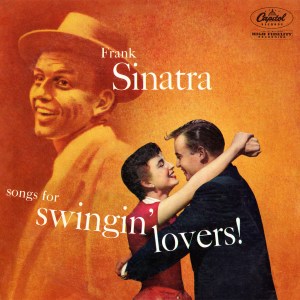
‘Songs for Swingin’ Lovers!’ was Frank Sinatra’s tenth studio album, released in March 1956. When Record Mirror published the first ever Top 5 album sales charts on 28 July that year it was at number one. It’s a collection of classic songs by the likes of Cole Porter, George and Ira Gershwin) given a expansive, swinging orchestration by band-leader Nelson Riddle. It’s pure pleasure.

I don’t know a huge amount about Sinatra, as a performer, as an innovator, as an singer of other people’s songs. This is the only album of his that I own. According to musicologists, Sinatra practically invented the phrasing of pop vocals. I can’t put that into perspective and it’s almost impossible, 50 plus years down the line, to hear the breakthrough directly, but it’s still easy to pick up on the delicious way he sways and curves his vocal delivery around the rhythm of the music, apparently allowing the beat to lead and follow as if he himself were the fixed point, the heart beating away at the centre of each song.

The accepted wisdom is that Sinatra was the master interpreter of other people’s songs. Again i’m not quite sure how to fit that into a useful context, but what comes through on ‘Songs for Swingin’ Lovers!’ is the ease and pure self-assurance with which he takes possession of the material. It’s as if the songs are names on his dance card and, one at a time, he picks them up and whirls them around the floor like no-one ever has before. He’s the coolest guy in the room and he knows it.

Post-Whitney we are asked to accept that the best vocalists are those with the biggest fireworks, the most serrated melisma, the most pneumatically powerful lungs. Sinatra stands directly against this anabolic orthodoxy. His voice is relaxed and unshowy with an underlying hint of hard confidence. Sure he was the biggest star of his time, at least until Elvis muscled in, but when he sings he vibes real life.

Listening to this record it’s easy to be lulled by its smooth embrace and begin to take Sinatra’s unembellished delivery for granted. At this point we must say a rare thank you to Robbie Williams (who, in a nice little coincidence, delivered the 1000th number one with an album of swing songs) for providing the perfect reminder of Sinatra’s skill.

Back in 2001 I reviewed Williams’ first swing revival album ’Swing When You’re Winning’ and it was listening to his version of ‘It Was A Very Good Year’, on which he dares to split the vocals with Sinatra, that brought home to me just how very good a singer Sinatra was. Williams takes the first two verses and spreads his vocals around like margarine, smearing his way across and around his lines, adding little curlicues and flourishes. Then Sinatra takes the microphone and it’s impossible not to feel the gaping difference in control, in depth, in richness. His first words are spine-tingling and his verses, about ageing, are absolutely masterful.

Listen for yourself, and then listen to ‘Songs for Swingin’ Lovers!’

Tom Listened: It’s time for a rant! Using the most tenuous of links (Sinatra to Williams to X Factor), I aim to go some way towards purging myself of the deeply unpleasant aftertaste of sitting through Saturday’s final. On the face of it, this has very little to do with Songs for Swinging Lovers…but bear with me!

My kids are at that age where watching X Factor seems like a good thing to do. Unfortunately, their Dad is at that age (and has been for..his whole life probably!) where it is a deeply disturbing and discombobulating experience. It’s not solely the inanity of the judges, the dreadfulness of the acts, the shallowness of the experience, those hollow platitudes (you know, the fact that everyone ‘loves’ everyone else), that the 10000 strong audience boos Gary Barlow (the only judge intelligent and/or brave enough to offer genuinely constructive criticism and, not only that, to do so in a polite and erudite way (and he gets booed for it!)). No, this is all deeply depressing admittedly, but the thing that gets me more than anything else is the acceptance that this is all just fine. My wife thinks it’s all just harmless fun. But I’m not so sure. X factor sets the agenda for a not insignificant proportion of the population and if those levels of insincerity and artifice are to become the norm….heaven help us!

Robbie, bless him, provides the bridge from the real to the X factor. One listen to It Was A Very Good Year and the origins of our current perilous state can be identified immediately. Not only does the man have the arrogance to think that he can sing alongside Sinatra and come out with at least a score draw, but his singing is so forced, so egotistical that it is a wonder that his followers didn’t decide there and then to spend the rest of their record money on the real deal instead of this reedy voiced egomaniac from Stoke. How could anyone prefer Williams to Sinatra? Alright, they sound a little different but who would want to trade the authenticity, the talent and THAT voice for it’s pale modern appropriation. But maybe that’s what is wanted these days. A modern take on those old classics that aims to sound like it really really means it, but ends up a soulless, hollow pile of crap. And then goes on to win X Factor!

Rant over. That’s better.

Graham Listened: Simply masterful. Something about listening to the vinyl added to the experience. I can safely say that as Nick was absent!

Pinkunoizu – ‘The Drop’: Round 58 – Rob’s choice

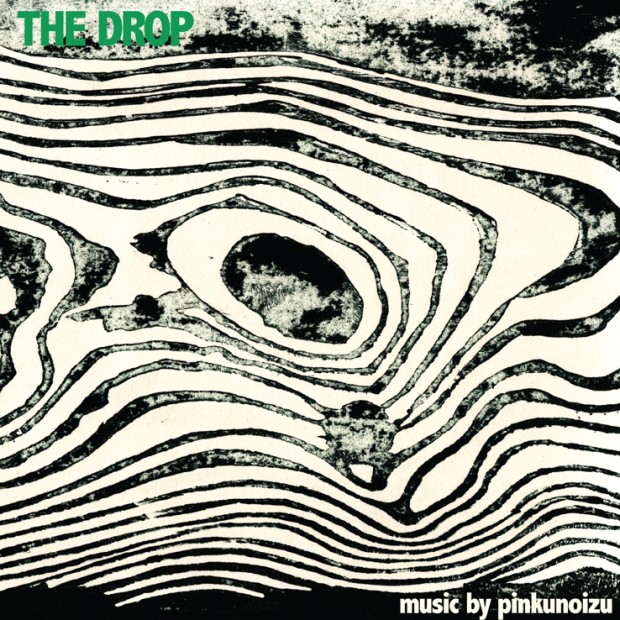
Pinkunoizu - The DropI don’t feel I have a huge amount to say about this record, as I know next to nothing about the band. Nowadays, I find I favour this arrangement (‘so do we’ I hear you sigh). Like most of you I used to pore over the pages of the music press for scraps of information about my favourite bands. Months could pass between mentions of The Fall or Big Black or whoever, but when they came these titbits felt like jewels to be turned in the hand, committed to memory and then squirrelled away for safe-keeping. Now, when everything is instantly accessible, I find i’m happy not to know.

The instant accessibility of music is relevant to my strong feelings for ‘The Drop’, released earlier this year. I still don’t have a firm grip on my views about how the ‘everything now’ approach which Spotify, Deezer, YouTube and online sharing will affect the way new music is made. If even an old geezer like me finds that Spotify has noticeably shortened his attention-span (“that’s no good: NEXT! that sounds better: 30 seconds BORED! NEXT!”) then will new music tend towards instant gratification and novelty? Will having all music at our fingertips reveal that there are no new tunes under the sun? Or will, as I hope, this open smorgasbord of sounds produce musicians with wildly careening influences and the ability to mash these together into yet more inventive shapes? (Sidenote: even this could ultimately be a cannibalistic cul-de-sac).

Okay, so I know just three things about Pinkunoizu. 1. They are a four-piece from Denmark. 2. Their name means ‘pink noise’ in Japanese. 3. ‘The Drop’, their second album, is a delirious blend of sounds and styles, from the 60s through to the 80s, and from the first time I heard it, it overwhelmingly fulfilled expectations I never even knew I had.

Part of the early fun to be had with this record is spotting the lifts and styles. It opens with zoned-out krautrock, then takes ‘New Life’ by Depeche Mode on a psych-trip to the sun and back before kicking into a Motor City ’68 freak-out jam. We’re three tracks in by this point, but seemingly have had 20 years of rock history crammed into our ears already. From here we’re led through fried acid folk, pastoral psychedelia, surf rock and blissed out British invasion whimsy. All of it’s compelling, joyful, liberating.

The most satisfying and surprising aspect of ‘The Drop’ is how, once the reference-spotting has run its course, the songs, followed by the whole record, slowly coalesce into a coherent whole. It should be possible to skip through so many genres with such apparent abandon and somehow make it sound like your own thing, but here Pinkunoizu nail that trick.

This is an album which could have been a collection of tired retreads or pale pastiches, but in fact feels like a musical air punch. It’s the record i’ve enjoyed the most this year. If the future is going to sound like the past but still be this good, then bring it on.

Tom Listened: Seeing as I am a bit of a connoisseur of  modern Danish kitchen-sink indie I was somewhat taken aback when Rob produced Pinkunoizu’s  latest from his bag. Hell, I didn’t even know they had a new record out!

Anyway, in much the same way as their other big albums (the ones that always turn up in those best of the decade lists, not their more obscure early records), The Drop is a wonderful mix of styles that should never work, but strangely does…in much the same way as Deus’ In A Bar Under The Sea without the Tom Waits growlalongs. I really liked this and can even see myself owning a copy before too long. A nice surprise!

Nick listened: The first three or so tracks on this didn’t strike me as being all that eclectic really, and I wondered a bit what Rob was going o about. Maybe it’s the mixing and mastering, or the happy euphonic accidents of vinyl that made it sound cohesive (I do struggle with hearing modern albums on vinyl first). That said, the second half was properly all over the place, in an enjoyable way. It reminded me a bit of Franco-Finnish duo The Do, but way more guitary.

Graham Listened: Really great first listen and wasn’t really struck by the Magpie approach that Rob thought the band were up to. Just seemed pretty damned inventive to me.

Bruce Springsteen – ‘Born In The U.S.A.’: Round 57 – Rob’s choice

Bruce Springsteen - Born In The USAI drew 1973 and 1984 from the hat. I’d made my choice within 15 minutes.

In 1973 Bruce Springsteen released ‘Greeting from Asbury Park N.J.’, his first album. The second track, ‘Growing Up’, like most of the album, overflows with florid language, clever structural gestures and Dylanesque curlicues. It’s a decent song, about growing up.

‘Born in the USA’, Springsteen’s seventh album, was released in 1984. It bears none of the lyrical pyrotechnics, none of the unashamed cleverness of ‘Asbury Park’. In its approach it is straightforward, stripped down, direct. It’s a mature record from an artist who has figured out who and what he wants to be, and is executing it. It’s most striking quality, and one which is deceptively easy to overlook, is its remarkable, poetic concision. Songs are whittled down to their essences and the characters who have always lived and breathed in Springsteen’s songs, are much more alive for it. In literature, the likes of Raymond Carver and Ernest Hemingway are held as master stylists for saying more with less. In rock and roll, by the time he reached this point, Springsteen was their equal.

‘Born In The USA’ is a lyrical, storytelling masterclass. Moving, enervating, insightful, all backed by a band giving greatly and having a heck of a time. But the best of the best is the title track, an absolutely remarkable piece of work.

I’m a late convert to Springsteen, and sometimes I feel the convert’s zeal. It’s most strong for ‘Born In The .U.S.A.’, the song which first pushed me away, like many others who just heard it on the radio and dug no further than the surface, now burns brightest. Possibly the most wilfully misunderstood rock song of all time, both by those who loved it mistakenly, thinking it was a piece of rabble-rousing patriotism, and by those who rejected it as boorish nationalism without stopping to really listen. It’s a masterpiece, pure and simple.

The song was boiled down from a long standing work in progress initially called ‘Vietnam’. Like many of the songs which would eventually appear on the album, it was written during the acoustic sessions Springsteen worked through at Colts Neck in January 1982. Many of these were released unvarnished as the ‘Nebraska’ album. The demo version, a stripped acoustic lament, can be heard on the ‘Tracks’ album. At one point this is the version Springsteen favoured releasing. In fact at one stage he pushed for the release of the whole ‘Born in the U.S.A.’ set in their acoustic demo, the same stroke he had pulled with ‘Nebraska’.

Inspired by his work with Vietnam veterans groups, Springsteen captured the alienation and, ultimately, internal rebellion, in a few perfect brushstrokes.

“Come back home to the refinery,
Hiring man said, “Son, if it was up to me”,
Went down to see my V.A. man, 
He said “son, don’t you understand?”

But the final proof that Springsteen had learned to say more with less comes in the lines he leaves out completely. When the subject matter becomes too emotionally charged, his lyrics fade into the silence of a sob. The two verses which deal with the death of the protagonists brother in Vietnam both leave gaps where there should be lines. The song is a structural masterpiece.

Still it may have joined the ranks of his other low-key pen portraits were it not for the ultimate decision to let the E Street Band go wild with it. They go off like Fourth of July fireworks, and this contrast is what makes the song, ending as it does with a cry of self-determination and defiance in the face of grinding adversity. Forgotten and abandoned by his country and without the means to escape on the huge mythic motorcycle which previous Springsteen characters could always do, our man kicks back in the only way he can, insisting on his own vitality, insisting ‘I’m a cool-rockin’ daddy in the USA now!’.

The version of the song we know was created on the fly by Springsteen and his band. It was the second and last take of the song that the band recorded. It’s extraordinary. Even just the crashing, exploding drums are enough to make it an incredible listen.

By the time we reached ‘Born in the U.S.A’. The fantastical dreamers and fighters of the early records had been dealt a dose of reality by world they met on subsequent albums. Those we met on ‘Nebraska’ crossed the line in their attempts to escape the chains. Now, on his seventh despatch from blue collar America, Springsteen’s characters were struggling but ultimately finding ways to carry on through a harsh decade, with their determination and humanity intact.

Tom Listened: In my response to Graham’s album of last year – Mark Lanagan’s Blues Funeral – I wrote that it reminded me of latter day Springsteen in that it was a collection of really good songs…and that was about all it was. No grand artistic statement. No boundary pushing sonic cathedrals. No great surprises. I should have added, ‘and what’s wrong with that?’.

But I was wrong about Springsteen anyway.

At the time I had just acquired my first Bruce album (Tunnel of Love), more by default than anything else as it always seems to be the ubiquitous Bruce album in those bargain bins in second hand record stores. At the time I hadn’t realised just how good it is. In fact, these days I find it hard to think of a side of vinyl that is more realised than side two of Tunnel of Love.

But the point that I am labouring to get to is that Springsteen, for me at least, takes a bit of work. What at first may seem like just a collection of pleasant songs, in time reveals themes, characters, and musical depth that can be easily overlooked on a first listen. Blimey – it’s only taken me nigh on 30 years to ‘get’ the song Born in the USA!

Hearing it the other night, listening to it properly…well it just sounded like a completely different song to the one I must have heard a squillion times before. Rob’s introduction helped, but that was mainly to do with the song’s lyrics and story. And it wasn’t only that – the music sounded completely different to what I was expecting too. Where as in the 80s all I could make out was the bombastic, overwhelming drumming and Bruce’s unrefined holler of voice, what I heard this time were chord changes to die for and real emotion in every word…and bloody loud drums! An epiphany!

After that, I’d be lying if I were to make out that there wasn’t a drop in intensity and awesomeness. But that’s understandable, given just how good Born in the USA is…and that I hadn’t had 30 years to acclimatise to the rest of the album. But I’m looking forwards to adding another Springsteen to my collection and hopefully I can get there with the rest of the album within the next 30 years!

Graham listened: Bruce and I have kept a respectful distance between us most of the time. I had a copy of this on release and was gushing over it at the time. Then I started feeling it was all a bit ‘redneck’ right wing and too mainstream popular. Obviously politically naive myself at the time, I rather missed some of the point! But then the big brash live shows and the video for “D in the D” pushed me further away. But years later when I listened to ‘Nebraska’, Bruce outfoxed me again. This sounded great, big, brash, energetic sound, which I can accept now is an ‘ok’ thing. But there is something still about “D in the D” that makes me wince, it’s almost the equivalent of Portishead’s Machine Gun.

Nick listened: I know I ought to give Bruce some time – so many people I respect, musicians or just fans, adore him – and I know he’s great and I know he’s on the side of the angels etcetera, but something just isn’t clicking. Or… not even that. I just don’t feel like there’s space in my head for Springsteen. Everything Rob said about this record was right, and it was clearly not the Republican chest-thumper some wanted it to be way back when, and he clearly does what he does really well… I just can’t bring myself to be interested in it particularly. But I didn’t dislike it in any way.

Hookworms – ‘Pearl Mystic’: Round 56 – Rob’s choice

Hookworms - Pearl MysticThat psychedelia, as a tag for music, has stuck around for so very long without ever becoming a cheap signifier for something old-hat, hackneyed, done, is perhaps largely due to the differing definitions it has worn down the years. For some it’s flower-brained Californian hippy-pop, for others it’s fractured, demented New York hip-hop. For some it’s desert-fried, mono-chord guitar chugathons, for others it’s endlessly-fired circuits of twisting electronics.

For me psychedelia has always been either music made in the throws of an altered state, or music made in an attempt to recreate, or indeed induce, an altered state. From ‘Hey Mr. Tamourine Man’ and ‘Tomorrow Never Knows’ through Roky Erickson to My Bloody Valentine, Slowdive, the Flaming Lips and Sleep, psychedelia is music which aims at transportation, not documentation.

Hookworms, a 5-piece band from Leeds, may or may not consider the noise they make to be psychedelia. They may or may not be irritated by the shorthand others employ in grasping for the tag when trying to describe the heady rush of their exploratory guitar music. So be it. I use the term happily to describe them because their songs seem so clearly to be setting their sights on both outer and inner space and then firing massive fucking rockets in their attempts to get there.

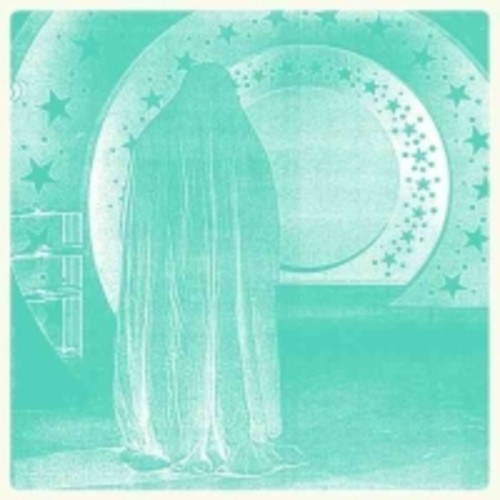
‘Pearl Mystic’, their debut album, came out earlier this year. It sounds like the work of a band who have been furiously figuring this stuff out for a decade. Corrosive riff-driven fugue states follow exquisite meditations which ratchet up into yet more intense, acidic exercise. Above, below and around all this is MJ’s vocal sound, fractured and bubbling through frazzled guitar amps, a device apparently designed to mask his embarrassment at taking singing duties and one which ends up turning him into an electrifying, gabbling surge of liquid sound.

It’s quite something. Potent and wild yet delivered with incredible control and assurance. Hookworms remind me of no-one so much as Loop and Spacemen 3, which is high praise. At a time when we’re expected to get behind the idea of Jake Bugg and warbling old David Bowie as the best that Britain has to offer, I say we need a Hookworms infestation and we need it now.

Tom Listened: Back at the bum end of the 80s, Spacemen 3 were my band. I went through a brief but intense period of infatuation that lasted about a year and stemmed from the release of Playing With Fire and then strengthened when I subsequently acquired The Perfect Prescription. Strangely, given my dislike of the whole drug taking culture that was prevalent whilst I was at university, I found a real connection with the psychedelic nature of the music and the quasi-religious content of the lyrics. It was as if the connection to drugs through the music was enough for me (and far safer as far I was concerned)…to paraphrase a Spacemen 3 album title, ‘Not Taking Drugs to Listen to Music to Take Drugs to Because Someone Else Has Taken The Drugs For Me’.

But going back to the records 25 years on is a strange and somehow hollow experience. In my mid 40s I no longer need to feel connected to some sort of counter culture that existed in the ever more distant past and, in isolation, I’m not sure the music Spacemen 3 produced is as ground breaking or interesting as I once thought. Playing With Fire still has its moments, sure, but much of it just seems cliched and adolescent now. Perfect Prescription seems even more tame, many songs just bimbling along carried by an acoustic guitar riff with some dreamy sound effects and wispy vocals laid over the top. It’s not bad per se, just not as relevant to me anymore.

Which gets me, in a round about way, to Hookworms. I enjoyed Pearl Mystic in much the same way as I have recently enjoyed Spacemen 3. Pretty undemanding, very accessible but ultimately it didn’t really speak to me in the way my favourite records do, I didn’t feel a connection to it. That said, the songs were generally lengthy and quite complex in structure – they may well take a bit of uncovering, but on an initial listen I’d file this next to my Spaceman 3 and Loop albums as a record that the 20 year old me would have thought was amazing.

Nick listened: Tried Spacemen 3 when I was at university but didn’t get along with them, even though I already knew and loved Spiritualized. Never knowingly listened to Loop. But that’s by the by; I’ve actually been talking to MJ from Hookworms on Twitter for ages, and didn’t really know he was in a band for several months – he was just a nice guy whose path I crossed and we got talking about music. So I’d been wanting to hear Hookworms for a while, but hadn’t seen a physical copy in Exeter, and didn’t want to try too hard in case I didn’t like it. Which meant I was delighted when Rob pulled it out and stuck it on the turntable, and even more delighted when I enjoyed it. I was in Bristol at the weekend, so I bought myself a copy, and have listened to it a couple of times since. Thinking back to what Rob said under the Darkside post, I find it amusing that he’s so enamoured of this but so so-so about the Darkside, because for me they both have a similar purpose, they both feel psychedelic, where psychedelic is about creating or exploring altered states. I guess they just go about it in different ways.