 “Phenomenologically beautiful” is a phrase I use with alarming frequency (probably more than anyone else who has ever lived, I imagine), particularly at record club, where I deservedly receive a ribbing for it every time. (In fact, if you google the phrase, most of the results are me being an idiot. I’ve probably upset some philosophers by mangling what they think it means.) Sometimes it’s really appropriate, though.
It’s really appropriate for this Kaitlyn Aurelia Smith record, her sixth in six years, because A Kid is beautiful: the direct moment of experiencing it, shorn of context or analysis or discussion or wider epistemological considerations, is physically beautiful, on a sensory level of consciousness.
It achieves a similar goal to the James Holden record I played last time we met, but from a different direction and by different means. They both head for sublimation, that experience of forgetting who you are, feeling your own insignificance in the face of the universe. They both kind of get there through sensory overload, but instead of the energy and edge-of-chaos, dancing-uncontrollably-in-a-forest hysteria of The Animal Spirits, A Kid gets there by being… nebulous, difficult to touch, extraordinarily pretty, calm.
Excuse my guff at the start, though, because Kaitlyn Aurelia Smith makes the kind of music that inspires people to delve into breathless hyperbole; in fact there’s an entire, mealy-mouthed, patriarchal, joy-shaming thread on I Love Music dedicated to the things people wrote on the forum about her previous record.
And some of the phrases polled are pretty ridiculous, taken out of context, but they’re also brilliant, and my favourites are also the ones with the most votes:
“superoxygenated synth fantasias”
“we looked at each other and wondered aloud how we were going to put on another album after this one.”
“a cornucopia of wondrous sound, and i’m excited to have it accompany my life in these next few spring and summer months.”
“I’m going to have to download this and go and sit quietly in a forest with it for a while.”
Far from being shamed, the authors of these lines should be pleased that they’ve
inspired other people to go out and listen to this music, because they have.
Some bio in case you can’t be bothered to google for her wiki page: Kaitlyn Aurelia Smith is from Orcas Island, an isolated part of the Pacific North West, and studied composition and sound engineering at Berklee College of Music in Boston (not Berkley in California, as I’ve seen referenced in a couple of locations), before moving back to Orcas Island and discovering synthesizers, especially the Buchla, which she does most of her work on. From pictures on the internet, Orcas Island looks like the kind of place where a creative kid would grow up with an appreciation of the vastness of nature and the insignificance of the self.
Her last album, 2016’s Ears (the one that people were so unreasonably shamed for enjoying on that thread), was on my list last year of things to buy if I ever saw it anywhere, but I never saw it anywhere. So I’ve ordered it (and the preceding Euclid) from Norman now, and hopefully will soon be able to bask in its pleasures.
She recently did a Baker’s Dozen for The Quietus, and there were a couple of key quotes about other people’s records that I thought could be used to describe her own rather well:
“music that… confuses the listener in a way that they can just relax and listen…”
“I love music that I can just play like that, where it can continue going and my brain won’t hold onto it too much…”
So what does it sound actually like? Who or what might be the frames of reference or comparison points or “like that? Try these” pointers that will make you go “ahhhh” and want to listen to this wonderful record?
Well, imagine if Julia Holter’s Ekstasis had evaporated, or Panda Bear’s Person Pitch had dissolved. Make Anna Meredith’s Varmints really vague.
But really she sounds like someone with a phalanx of synths, a universe of ideas, and a belief that music can and (sometimes) ought to be exceptionally beautiful. Her music is.
Steve listened:
I found this quite beguiling and would like to listen a little more closely. It felt it could be good mood music. I would agree that it’s music that my brain didn’t hold on to much and so I would probably listen again and again having forgotten what it was that intrigued me. There was a rich texture to it and many layers that would allow you to explore more and more. I’ve not yet hit the “buy” button but I may keep it in reserve.
Rob listened: Nick, in his attempt at evocative dissembly, has mostly nailed this one. I came across Kaityln Aurelia Smith the previous year, and ‘Ears’ was one of my favourite records of 2016. Luckily I didn’t bring it to DRC or I would undoubtedly have been caught in Nick’s Hall of Hyperbolic Shame. I did just love the way it sounded though and, as chronicled tediously across many of my posts to this archive, I am increasingly attached to apparently formless musics like this. I also loved, when I first heard her introduced by Lars Gotrich on ‘All Songs Considered’, the description of Smith as someone who had found and become virtuosic on one old synthesiser, the aforementioned Buchla 100. It gives me great pleasure to think of her as the Colin Stetson of this box of knobs, able to twist and regenerate it into endlessly fascinating forms, each of which, so far, it also gives me great pleasure to listen to.
 I’d only bought this record on the Friday before our Tuesday meeting, but the half-dozen (occasionally broken / distracted) listens I’d managed to accumulate in that short time revealed this to be about the most ‘Nick’ record I could bring to record club. Indeed, perhaps the most ‘Nick’ record I could even imagine at this point in time; it feels like the square route (or the sum, or something – ask one of the mathematicians in the group what I mean) of much of my favourite music for the last few years.
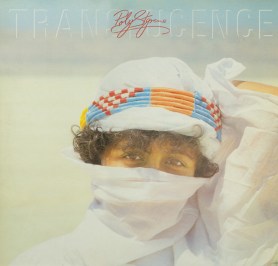 Sometimes albums surprise you in a way that you wouldn’t necessarily describe as good or bad, but make you want to know more about the artist. So it was with this selection of mine. I was drawn to it through a short interview in the Guardian by Neneh Cherry. She of course has some links to the post-punk scene of her own through her former group Rip, Rig and Panic. This band also featured one Andrea Oliver – the mother of Miquita Oliver, the former host of Pop World…ok, too far down that branch of the family tree now. But, somehow Poly Styrene was intertwined with her life enough to make her also want to know more about her. A crowd-funded film is being produced about Poly, which is due out next year. But just how this strangely iconic woman burst onto the punk scene, and beyond into critically acclaimed obscurity via a Buddhist community is enough to intrigue. Neneh mentioned this album in her interview, which at the time confounded and confused the post-punk scene, preferring instead to draw more heavily on jazz- infused folk. It really is not what you would expect had you only listened to the shouty in your face X-ray Spex (whom I also love). What you have to understand though is before Poly Styrene emerged onto the punk scene, she spent some time floating around the mid-1970s hippy festival scene (from about the age of 15 till her 17th birthday I believe). This album takes her back there and it is as delightful and beguiling as the front cover – with only the eyes present behind the headdress.
 In a moment of gay abandon I thought I would actually write up my choice from our last meeting. It appears that life has got ahead of us and, whilst we still meet up (occasionally), our blog has seemed to have stagnated to the point of ossification. But, seeing as I am gearing up to going back to work next week and, as a result, I am going to be spending an inordinate amount of time tapping away on a keyboard – when I started out, I thought teaching would be about…teaching (how naive I was!) – I thought it would be a good idea to get a bit of keyboard tapping practise in. So, here goes…
 Blood Orange – ‘Freetown Sound’: “Augustine”
  orses – ‘Pop or Not’: “Promise I Do” Probably only known within a small(ish) radius around Manchester, Whyte Horses are described as a psychedelic band. On this number they manage to blend 60s psyche, with French super-pop. Notwithstanding the excellent production, you could mistake this track for somehing from another time. It’s a racy tune. The album takes you on a journey around the world, taking in different sounds from many different countries. It came in as the number one album for Piccadilly Records (my Mecca on Oldham Street). They can be a bit biaised but this year they have got it right.
 Replacements – ‘Let it Be’: “Unsatisfied”
 Regina Spektor – ‘Remember Us to Life’: “Obselete”
 Jane Weaver – ‘The Amber Light’: “Argent” This is all Stereolab, and reminds me of another album I brought along to DRC some weeks ago
  Anhoni – ‘Hoplessness’: “Obama” Given the unwelcome alternative and successor to Obama in the US one might be forgiven to take out the paintbrush and whitewash the past, forgiving the incumbent for terrible atrocities (drone-bombing, the continued use of state-sponsored proxy torture etc etc). This album pulls no punches on Obama’s legacy, particularly on this track. The sound is almost Native American Indian in style. A chant, summoning up the spirits of the dead themselves? Haunting.
 Nick Cave & The Bad Seeds – ‘Skeleton Tree’: “Magneto”
 Bob Mould – ‘Patch the Sky’: “Losing Sleep”
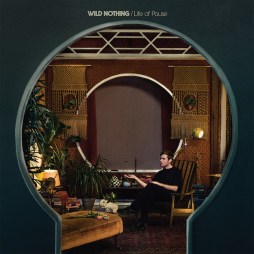 Wild Nothing – ‘Life of Pause’: “Love Underneath My Thumb”
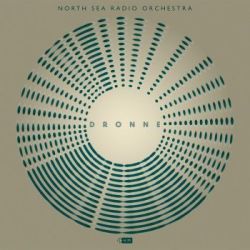 North Sea Radio Orchestra – ‘Dronne’: “Guitar Miniature No.4”
 Kool Keith – ‘Feature Magnetic’: “Tired”
 David Bowie – ‘Blackstar’: “Dollar Days” and “I Can’t Give Everything Away”
 Devon Record Club