Babes in Toyland – ‘Spanking Machine’: Round 34 – Rob’s choice

babes in toyland - spanking machineMany of my very favourite albums sounded , and still feel, like debuts, even if they weren’t. ‘Songs About Fucking’, ‘Goat’, ‘Feels’, ‘Clear Spot’, ‘White Light, White Heat’, ‘There Is No-one What Will Take Care Of You’, all arrived like breaches with the orthodoxy, simultaneously shocking, baffling, offensive and intriguing. It just so happened that their creators were a few records into their careers.

So, when Tom asked us to being a debut album, I immediately thought of first releases which had a similar transgressive impact rather than those which simply foreshadowed greatness to come. In truth I chose ‘Spanking Machine’ almost immediately, wavering a little in the run up, drawn by ‘Yo! Bum Rush The Show’ and ‘Exile in Guyville’.

But ‘Spanking Machine’ is a true debut. The first time I heard Babes in Toyland, via John Peel’s late night Radio One show, they sounded impossible, like nothing I’d ever imagined I’d hear. Traumatised and compelled in equal measures, I bought the album and it delivered a heavy payload. Today, having spent the intervening 23 years digging around mostly american alternative rock music, I still can’t piece together a credible explanation for where Babes in Toyland’s sound emerged from. Few if any of their predecessors had anything like their savage intensity, their black-hearted wit, their body-blow combination of neanderthal bluntness and explosive female emotion.

From the rollicking delta punk of ‘He’s My Thing’ and ‘Swamp Pussy’ to the teetering scream therapy of ‘Vomit Heart’ and ‘Fork Down Throat’, the record veers from clattering mosh starters to lurching musical breakdowns. It’s one of the most honest records I’ve ever heard. So many artists write and record with some thought, big or small, for whether people might listen and what they might think. ‘Spanking Machine’ is pure self expression from three women who came together with no idea of the unholy, primal racket they were about to make.

The result has integrity, rage, blood and body fluids. It has Lori Barbero learning to play the drums by beating the living shit out of them, Michelle Leon hitting her bass like a field gun and Kat Bjelland simultaneously shredding a guitar and her vocal chords, screaming like a grown woman channeling Regan MacNeil. Most of all, it carries a dangerous rock and roll charge which remains volatile and incendiary even to this day.

Footnote: If you happen to find yourself blogging about Babes In Toyland’s debut album, make sure you include the name of the band in your Google Image search if you value your sexual innocence and your browser cache.

Nick listened: It’s hard to imagine a greater contrast between Tom’s choice, which we played directly before Babes In Toyland, and Rob’s; from minimal, shy, winsome electronic boys to snarling, growling, thrillingly luddite girls. I was aware of the name Babes In Toyland but not really of their sound or ethos, beyond them being a rock band. Spanking Machine isn’t the kind of thing I’d normally listen to for pleasure, being at the brutalist end of the rock spectrum, but as a one-off DRC choice it was a great choice, particularly compared to what came beforehand. Not sure quite what Rob means about records that sound like debuts but aren’t though…

Rob attempted to clarify: I guess that was a vaguely made point even by my standards. I meant to say that a good proportion of my very favourite records and artists sounded shockingly new the first time I heard them, even if the records themselves weren’t debuts. They were debut musical experiences for me. So when Tom set the theme, I began looking for debut albums which also carried the full shock of the new, hence ‘Spanking Machine’, rather than those which might be lesser known works of artists who went on to create canonical works, say ‘Bleach’ or ‘From Her To Eternity’.

Tom Listened: Despite not knowing the debut album of one of his favourite recording artists (you will have to go and confess to high priest of American Indie-Folk…Cardinal William of Oldham), I agree with pretty much all else Rob says in his write up for Spanking Machine (he’s better when not dealing in facts, you see). I also agree with Nick.

Spanking Machine has been gathering dust in my collection for the last twenty years or so and it was thrilling to hear the first two thirds of the album again. I was surprised at the variety of sounds on offer both within and between songs and realised that there is much more (well, alright…more) subtlety to the Babes debut than I assumed. However by the half hour mark I was beginning to feel exhausted – aurally pummeled – and the last few songs passed by in a blur of vague recognition and a remembrance that Spanking Machine was one of those records that I often used the vinyl equivalent of the ‘Get Out of Jail Free’ card. One side was usually enough; thrilling, visceral and brutal.  Both, for me, in one sitting and it bordered on masochism!

Rob recanted once more: Oh for goodness sakes. This point about debut albums clearly got so munged up in my pointless tiny head that I conflated my list of debuts and not debuts. If you lot hadn’t made such a big deal I could have just removed the whole stupid paragraph.

Graham listened: The remaining debuts I looked at for this round just didn’t inspire me to pitch up with anything this round. If I had chosen anything and had to follow this, well, game over. Never heard it, so hung on by fingernails all the way through. Possibly the artistic/aural equivalent of flower pressing with a brick, awesome.

Junior Boys – Last Exit: Round 34 – Tom’s Selection

Over the past decade I have become increasingly predisposed to the possibility of enjoying synthesised pop music. Throughout my twenties I hung on to Neil Young’s somewhat derisive line from his 1992 song Natural Beauty, ‘an anonymous wall of digital sound’ and made most of my music purchases accordingly – guitars, bass and drums will do thank you very much. I would occasionally dabble in an Underworld or Sabres or DJ Food release but nothing really grabbed me. I guess I have The Postal Service’s Give Up album to thank for my change of heart; an album that at first set my teeth on edge but gradually became a firm favourite despite Ben Gibbard’s undeniably insipid singing voice and the decidedly adolescent nature of the lyrics. If I have any guilty pleasures in my record collection (according to Rob there is no such thing but then I  reckon there is not much Catholic blood chugging through his veins), Give Up would surely be towards the top of the list. Whatever, it opened up a genre of music that I would probably have otherwise dismissed and I now look forwards to the latest offerings from, say, Hot Chip or Metronomy as much as any other band. So whilst my original choice of debut album was discarded on account of the recent glut of post-punk at the club, I was just as excited by the prospect of playing Junior Boy’s first record: Last Exit.

Last Exit is a curious album. If it qualifies as pop it’s only just. Atmospheric definitely and not necessarily easy to comes to terms with. On face value it can seem at times to be ridiculously simplistic but this is a red herring. The complexity is there but as it is shrouded in minimal bleeps and blips, skittering drum patterns and barely there vocals it may take the casual listener a while to recognise. This is a record to play loud and listen to carefully. It works as background music too, but the payoff is greatly reduced.

So what sets it apart from the myriad other ‘blip pop’ albums around? Well, for me it’s the space, the emptiness, the way that notes and beats seem to coexist on this album without much sense of what each other are doing  so that, suddenly (and invariably immediately prior to full alignment) they drop out of the song altogether a bit like with the planets where the constituent parts chance upon an instantaneous moment of cohesion every so often. It’s all just maths after all! But that’s not to say that Last Exit feels in any way random or willfully difficult. This is a meticulously constructed album with subtle melodies (especially on album highpoints Teach Me How to Fight and Birthday), gentle grooves (see Bellona and Under the Sun) and consistently effective song-writing.

Maybe Neil Young was (partly) right at the time he wrote the lyrics for Natural Beauty. But had he been able to to transport himself twelve years into the future he might have discovered an album of digital music that blew his theory out of the water – an anonymous wall Last Exit most certainly is not.

Nick listened: A lot of (seemingly intelligent) people said a lot of very, very crazy, hyperbolic, rabidly excitational things about Last Exit around its release in 2004. “Junior Boys have done no less than singlehandedly re-imagined a future for white pop,” started one review from an online music magazine (a very good online music magazine at that!). At the time I was a little bemused; I’d seen their name talked about in whispered reverence online for a few months as early EPs and singles crept out, remixes by the likes of Fennesz and Manitoba (now known as Caribou), and I’d listened to Junior Boys expecting great… nay, ASTONISHING things. Nothing less than a future for white pop, perhaps. And what I got was… minimal to the point of vapidity, shy to the point of solipsism, so empty and desiccated and cold and uncommunicative that it seemed like the opposite of pop, rather than a reinvention thereof. Which isn’t to say that it was bad – just not at all what I thought I was being sold by the discourse.

Eight years on, I still find Junior Boys, and Last Exit in particular, much easier to theorise than to love, much easier to talk about than singalong with. There are some great, subdued melodies here, doubtless (Birthday, High Come Down), and some delicious grooves (Under The Sun), plus moments of vatic beauty, but were there really tunes, hooks, choruses, actual pop thrills? I wasn’t sure.

I was delighted that Tom faced his electronic trepidations and chose this record, and was able to play the vinyl, after I was so used to MP3s and then a CD; the warmth and hum of vinyl, which normally feels like a veil over details and excitement to me, helped Last Exit make more sense to me, made it more human. If my CDs weren’t packed up ready for moving, I’d have dug it out as soon as I got home so I could listen to it again. An intriguing record, but still, for me, hard to truly love.

Rob listened: First things first, that’s a truly Catholic attitude to guilt Tom! Confess your most minor discretions and hope the biggies go unnoticed. If your idea of a guilty pleasure is the Postal Service, then you need to get out and start sinning much more heavily.

I really enjoyed ‘Last Exit’ and have listened to it a couple of times since. It’s unwinding a little more each time. Having neither a time machine or a crystal ball, I can’t comment on the extent to which it may or may not have opened up the future of electronic pop music, but its corners and curves seem to me to have been passed down through the bloodline, perhaps smoothed by evolution, and can be seen beneath the skin of The XX, about whom similar claims continue to be made.

Graham listened: Having been ‘largin it’ (well in the kitchen anyway) to some of the Olympic opening ceremony dance tracks the night before, tonight would surely be an epiphany in my journey towards appreciation of modern electronica/dance? Nope. In parliamentary terms I refer the other honorable members to the answer I gave in Round 32 about Four Tet.

Fever Ray – Fever Ray: Round 34, Nick’s choice

Despite the massive acclaim, I didn’t like Silent Shout by The Knife initially; something about the production put me off, the density of it. I know it’s meant to be oppressive and strange, but it’s also meant to be pop, or catchy at the least, and the weight of the sound, the saturation of it, made me take against Silent Shout at first. I’ve grown to like it more over the years, and feel like I’m probably just half a dozen plays away from really, really liking it now.

But the debut solo album by one half of The Knife, Karin Dreijer Andersson, clicked with me straight away, even though some people consider it to be even weirder, more oppressive, more unnerving and obtuse. The beats are less directly dance-oriented, the synthesisers and electronics more about atmosphere than about hooks, and, crucially for my ears, the production opens up, explores space and textural richness, and in doing so creates an almost tangibly beautiful landscape for Dreijer’s strange songs.

Because the songs on Fever Ray’s eponymous debut are nothing if not strange, concerned with the oddness of domesticity, observations and tales about both childhood and motherhood, lyrics about watering neighbours’ plants, about dishwasher tablets, about riding bicycles. Dreijer sings of living “between concrete walls / in my arms she felt so warm”, presumably a reference to her new status as a parent when she recorded the album.

In some ways, Fever Ray’s album is like a weird cousin of Kate Bush’s Aerial, an album concerned with washing machines and children and maintaining sensuality despite (or because of?) these intrusions on adult life. But, as ever, I’m not focussing on the lyrics, as strange and beguiling as Dreijer’s vignettes may be: I’m taking in the pure sound of it. The slow-burning, thrumming introduction of If I Had A Heart; the beautiful final third of When I Grow Up, synths and guitars intertwining like lovers; the sparse, crepuscular vistas of Keep The Streets Empty For Me; and Karin’s vocals throughout, digitised, filtered, altered, made massive, cavernous, android and unreal even as she sings about the most mundanely human topics possible.

Fever Ray is an incredible debut, an incredible record, the kind of thing that rewards attention and only gets better over time. I like it more than any single thing by the renowned group it’s an offshoot of, to the extent that thinking of it as a side-project, or solo excursion, seems ridiculous.

Tom Listened: Rob lent me this album a while ago. I turned a cursory ear to some of it and was happy to return it to him knowing that I could cross it off my intended purchases list. While listening to it at record club I worked out what the problem is with it (as far as I am concerned anyway). It’s sequenced in such a way that the most accessible songs appear later on in the album. In this day and age, it is so rare for this to be the case that I reckon I unfairly dismissed this as being too bleak (Silent Shout was darker than my sensitive soul can cope with anyway) to bother with without ever having reached the latter half of the record.

Well, giving this a proper listen last Wednesday, I can now see what all the fuss is about. I think I’ll always find Karin Andersson’s vocals to be a bit too ominous/alien for my taste (that acceptance speech thing doesn’t help) and I struggled to see the beauty in the tracks when it was pointed out but I did enjoy this much more than I thought I would and could see it really clicking in with a few more listens.

Nick responded: See this is one of those odd things about music and ears and brains and stuff; I’ve always thought that Fever Ray started with its catchiest songs (at tracks 2 and 4) and then got darker and more impenetrable from there!

Rob listened: Whoever said ‘Silent Shout’ was supposed to be catchy pop? It’s a nightmarish glimpse into a forest world of dark desires and degenerative disease, and quite brilliant for it.

However, I can’t say much about ‘Fever Ray’ that Nick hasn’t already covered. For me it’s an almost perfect record in conception and execution. Eerily familiar yet tantalisingly alien, Karin Dreijer never puts a foot wrong. The sounds are melt-in-the-mind perfect, her vocals a woozy, half-remembered dream and the whole package one of my favourite records of the last ten years.

Graham listened: Another new one on me and connected with it pretty much straight away. The use of synth and electronic sounds to create the atmosphere and feel of this album intrigue me opposed to the way their use on a lot of electronica/dance alienates me. Evoked some familiar atmospherics to that of early Cocteaus but also more weirdly I was reminded of the type of feel Depeche Mode were after with Songs of Faith and Devotion, strange?

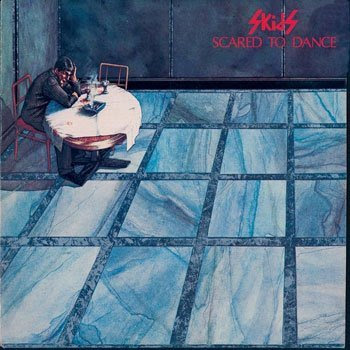
Skids – Scared to Dance – Round 33 – Graham’s Choice

“Britain’s answer to Jimi Hendrix”. That quote drew nervous looks from fellow members when I began my introduction to this round. Luckily that was John Peel’s opinion when he first heard Stuart Adamson’s guitar work and we were all spared a possible ‘fret-work – noodle-fest’.

In 1983 I just loved Big Country. I was bored with U2 and Big Country came along with some great tunes and weren’t too weird.

After ‘The Crossing’ I quickly lost interest as the albums never seemed to capture the power and intensity of their live shows, which were simply phenomenal.

Around the same time I started rooting out Adamson’s earlier work with Skids. Although I was familiar with the well known singles like ‘Into the ….’ and ‘Working for the ….’, the band had pretty much passed me by in 1979 (I was convinced that ELO’s Discovery was the best album ever during most of 1979). Of the 3 albums featuring Adamson before his departure, this is my favourite and probably neatly captures all the good things Skids had to offer. It is probably only me, but while I have never really thought of Skids being influential, I keep hearing things at DRC that still remind me of them.

‘Into the Valley’ and ‘The Saints are Coming’ are brutal and not the most sophisticated offerings, but still have great energy today. Proof that when Adamson kept his guitar work focussed and Jobson kept a lid on pomposity, they could really deliver.

Much of what they deliver on the rest of the album is a mix of post-punk experimentation, over excited ego trips and naivety, depending on the mood of the listener. There is a fair selection of quirky on this album. The crashing guitars on ‘Of One Skin’, that start and stop as if the band were being cranked by hand and  the fantastic ‘Big Countryish’ riffs on ‘Charles’, while Jobson rants about the modernisation of industrial manufacturing.

The same heady mix of pomposity and naivety led to the repackaging of the band’s second album as a result of overtones of right wing/fascist imagery.  Any fears of such leanings could be quickly dispelled by listening to my track choice of the night, Skids ‘TV Stars’. Any band that have a song with “Albert Tatlock” (Coronation Street 1960-84 ) as a chorus, can’t be taken too seriously. http://www.youtube.com/watch?v=qZY54ryj0eQ&feature=related

The tensions between Adamson and Jobson led to the band’s demise, but equally helped brew some little gems on their first 3 albums.

Rob listened: I too was a teenage Big Country fan, albeit one album later than Graham. Hearing tracks from ‘Steeltown’ on Piccadilly Radio led me to the album, probably one of the first 3 or 4 I owned. That in turn led me to U2, the opposite of Graham’s short journey and, ultimately, turned off by Bono and chum’s empty bombast I bounced back towards the Smiths, the Fall and the deal was done.

Great to finally listen to the Skids properly. When Adamson’s guitar starts to yowl like possessed electric bagpipes it’s a wonderful thing, one of the best sounds in rock. ‘Scared To Dance’ seemed to hold all the power and posturing that made the band so electrifying as well as much of the tension and pretention that may have ultimately brought them down.

Nick listened: I was not a teenage Big Country fan, because I was a toddler, so I had no journey to or from U2, no memories of Big Country on the radio. I was sent a Skids compilation by a friend many years ago, though, and quite enjoyed it. I quite enjoyed this, too, but Richard Jobson, in my world, is a TV presenter, and Stuart Adamson is just another guitarist, rather than Britain’s answer to Hendrix (Hendrix wasn’t a question, was he?).

Dumb – ‘Thirsty’/Dub Sex – ‘Swerve’: Round 33 – Rob’s choice

Mark Hoyle and Cathy Brooks came out of Hulme, one of Manchester’s most blighted and slighted quarters, and channeled that parish’s cold concrete and desolate fire into not one but two great bands. Despite having the better part of a decade between them, both Dub Sex and Dumb were somehow not of their time and both were destined to disappear between the cracks, seeping back into the overflow.

At the centre of both undertakings was Mark Hoyle’s voice. Physically Hoyle, skinny and wire-spectacled, was every inch the disgruntled librarian, but when he opened his mouth he produced a sound like two drunks beating each other to death in a sewer. A glorious Mancunian roar from vocal chords which begged to be preserved and exhibited for future generations, even as they seemed to be tearing themselves to shreds with their every blasted syllable. If you think the voice cannot be a terrifying instrument of industrial post punk noise, hear Hoyle and think again. He was, whenever he opened his trap, magnificent.

That Dub Sex made such compelling music is all the more remarkable since Hoyle’s voice carries the weight of melody, bearing it with Titanic strength. ‘Swerve’ is pretty much perfect in my view. Three minutes of jagged, eviscerating force. ‘Waiting Room’ without the decorative tune. To my ears it compares favourably with Fugazi’s debut, a record which preceded it my just a few weeks. Why it wasn’t seized upon with the same voracity baffles me.

Dub Sex recorded EPs and singles and compiled these into a blistering but disjointed album, ‘Splintered Faith’, and then disappeared. Five years later, 1994, when Dumb’s debut single ‘Always Liverpool’ emerged as if from nowhere I couldn’t have been more excited. On ‘Thirsty’, the first of Dumb’s two albums, Hoyle’s voice and Brooks’ pounding bass guitar once again simultaneously lashed across and pinned down a raging noise, this time channeling in more melody, letting the sun shine in just a little. There are raging pop songs on ‘Thirsty’, alongside bludgeoning mosh-pit killers, alongside savant ballads, as incongruous as they are touching. It’s one of my favourite albums. I would take it to my desert island ahead of ‘Surfer Rosa’, ‘Nevermind’, ‘Candy Apple Grey’ or ‘Bug’.

But it sank without trace. I can’t even find an image of the cover art online to add to this piece. A few years later, now with two drummers, a more obtuse but only marginally less stunning second album, ‘King Tubby Meets Max Wall Uptown’, appeared, and that was the last of Dumb. I wish they’d gone on forever. I wish they were playing packed reunion shows, Hoyle’s voice holding up improbably through the years of gargling broken glass. I wish their music, so simple and irresistible, was played at weddings and school discos. Instead they are forever dumb.

Nick listened: It’s quite some time since we met for this session, so memory of Dumb and Dub Sex is fading. I do remember thinking that I understood what Rob meant when he compared Swerve to Waiting Room by Fugazi, but I think his “decorative tune” aside sums up pretty succinctly why Fugazi went on to sell a couple of million records around the world, and why you can’t even find Dub Sex’s record covers online. Plenty of music engages in the push-me-pull-you dynamics of attraction vs repulsion, where the abrasive and the pretty (or the funky) rub up against each other, from Public Enemy to My Bloody Valentine and far beyond. With Dub Sex / Dumb, there was plenty of the abrasive, but not quite enough of the pretty, whether that was hooks, melodies, texture, or something else. What they did was compelling enough, and I can see why Rob feels so strongly about it, but it was pretty unrelentingly grinding and dark.

Graham listened: Though I don’t recall ever hearing anything by Dumb, I’m sure I once read an article which praised their work. Having had a listen now, I can see why. Stark throughout but when the melodies/vocals are allowed through the darkness, they were stunningly engaging. Just came across as brutally, beautiful.

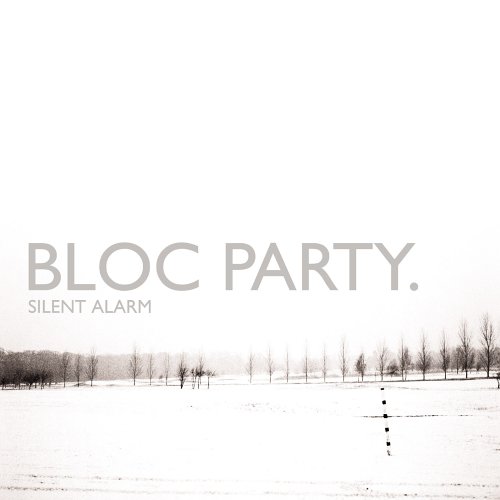
Bloc Party – Silent Alarm: Round 33, Nick’s choice

Bloc Party are an odd one; this, their debut album, was a brilliant electric shock to me at the time, but subsequent records have really sullied the memory. Looking back from seven years on, Silent Alarm now feels flawed; over-stuffed, over-long, a victim of its own self-importance, as manifested in Kele Okereke’s lyrics, which somehow became even more pompous and ridiculous on the band’s second record, A Weekend in the City. (Their website at the time described them not as a band, but as an “autonomous unit of un-extraordinary kids reared on pop culture between the years of 1976 and the present day.” Of course.)

Saying that, despite the fact that it’s about three songs too long and ludicrously self-serious in tone, Silent Alarm also thrilling; as well as the obvious postpunk and mid 00s indie signposts, there’s a big bite of Airbag by Radiohead running through Bloc Party’s sonic aesthetic of cacophonous, tumbling drums, tactile basslines and lightning guitars, pushing them further into genuine modernism than many of their unashamedly retro peers. So Russell Lissack’s guitars swerve from the spiky signature of post punk to a keenly emotional, effects-laden futurism, while Gordon Moakes and Matt Tong together make a furiously propulsive and hysterical rhythm section which prevents Silent Alarm from ever seeming anything less than utterly contemporary.

The problem is that it’s very easy to take Bloc Party as all aesthetic, all bluster, and little heart. Blue Light, This Modern Love, and So Here We Are offer tantalising glimpses of genuine emotion (still driven by too-fast rhythms which prevent that emotion ever seeming mawkish), but the likes of Price of Gas, Plans, and She’s Hearing Voices, whilst exciting to me seven years ago, now seem gauche and clumsy. Such is the folly of youth, I suppose.

Rob listened: It was good to hear ‘Silent Alarm’ again, although telling I suppose that I haven’t gone back to it since its release. This slight return reminded me why. I recognise Nick’s description, and there are moments when Bloc Party seem about to perform a magical musical alchemy, taking the approach of spiky post punk and forcing it through modern sounds into a new, twisted shapes. Guitars careen and the voice swerves but, ultimately, the breakthrough is not achieved. Like the listener, you sense that Bloc Party could sense what they were close to creating, but they just couldn’t reach it.

Nonetheless, ‘Silent Alarm’ couldn’t have been a better opener for what turned out to be an evening of Post Punk Through The Ages.

Graham listened: This was the first time I have ever given Bloc Party any considered listening. My traditional response has been to turn them off/over whenever they appeared on radio/tv. Just never really understood the mix of sounds/rhythms, with the end result it all sounded too awkward to bother with. For the first time I have now moved on in my appreciation of them. Listening properly without too much distraction finally lowered my defences to the point that I could begin to understand they were trying something quite clever.  By no means converted, but will aim to give them a fairer listen in future.

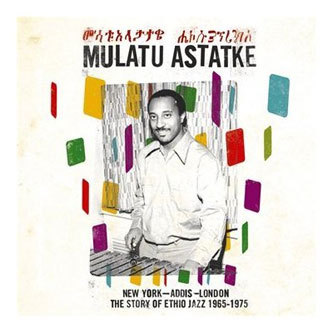
Mulatu Astatke – The Story of Ethio Jazz 1965-1975: Round 32 – Tom’s Selection

Having been an avid follower of music for all my adult (and most of my teenage) life, new discoveries of old music are rare. Old but unexplored bands crop up every now and again but I’ve almost always been aware of them before I’ve heard them and in most cases I’ve listened to a song or two beforehand. Surprises are rare, good surprises rarer. But every so often something comes along that is utterly thrilling in its unexpectedness. A couple of months ago I was on a relatively long (by UK standards) and tedious drive, with nothing but myself and my far too familiar car CD collection for company, so I reached for that African CD languishing in my glove compartment that I had been given by my record sleeve designer mate, Matt. Somehow I managed to unwrap the cellophane from the CD case without crashing the car and, lo and behold, on inserting the disc into my CD player a rather wonderful mix of vaguely Arabian sounding horns overlying a more conventional Western sounding jazz background emanated from my C1’s tinny speakers. Then, about three minutes into the track an electrifying electric guitar cuts in. From that point on I knew this was going to be no normal listen. And so it proved…since that time, Mulatu Astatke has been my constant travelling companion and, unlike a lot of music that sounds great the first time through, my enthusiasm for this music seems to grow with each new listen.

For me, jazz has always been a slippery fish, too often veering from willfully difficult to cheesily easy with seemingly little room in between. If I’m totally honest, more often than not I admire jazz rather than love it (Miles Davis’ late 60s/early 70s output being a significant exception). But Mulatu Astatke’s music occupies that middle ground – accessible yet occasionally jarring, unpredictable yet never tangential; rather like Nick’s Four Tet offering on the same evening this is music that’s hard to imagine anyone actively disliking…but at the same time it’s anything but bland.

Those listening to this lengthy compilation (76 minutes in all) expecting to be invigorated by African poly-rhythms and tribal chanting will be sorely disappointed. Unlike, say, The Bhundu Boys (our only other African record to date) this is a subtly African sound and the casual ear would probably find it hard to determine its continent of origin (in fact I tried this out on a couple of friends at the weekend and got back Cuba, Bolivia and Argentina!). The reason for this is hinted at by the compilation’s subheading – ‘New York, Addis, London’. Astatke actually learned his musical craft in the Welsh border town of Wrexham of all places but his subsequent time in the major cities of England and USA has obviously informed his music, to such an extent that many of the tracks on The Story of Ethio Jazz would not sound out of place on the Beastie Boys’ funkiest album – Check Your Head (Mark – if you’re reading this, was he an influence?). Perhaps even more remarkable is the timelessness of the recordings, only the occasionally muffled production hinting that this music is not a contemporary release.

On my initial run through the album I remember thinking that the quality of the songs had to tail off – the compilation started off so well that it must be front-loaded or surely I would have heard of Mulatu Astatke before. But no! All twenty tracks are special, offering a great variety of music, sometimes funky, sometimes dissonant, occasionally mellow but always captivating. Not all tracks are instrumentals but they work equally well with or without vocals.

If you have never heard any Ethio Jazz before (props to Nick who, somewhat inevitably, had) I urge you to give this music a try. It won’t be the same unexpected surprise for you as it was for me, but it could open up a whole world of unexplored music. For me, this has been a supremely rewarding and enjoyable musical journey into the heart of Africa via New York, London, Boston and…Wrexham!

Nick listened: Tom asked us to try and guess what this was and when and where it was from before he revealed who it was by; just asking the question set synapses firing in my brain and correctly sussed that it was late 60s / early 70s and African. I may even have said Ethiopian specifically, as I own a ‘Best of Ethiopiques’ compilation and am aware of the cache the scene / genre / movement / whatever has had in certain circles over the last decade. The compilation I have has a couple of tracks by Mulatu Astatke, and I’ve also seen Broken Flowers, the Jim Jarmusch film which features some of his music, so even though I couldn’t remember his name, I’d heard him before. The music itself is great; funky, hypnotic, with apparently traditional Ethiopian melodic patterns overlaid on much more Western rhythmic and instrumental templates. As Tom suggested, there’s almost literally nothing to dislike; it’s just beguiling and cool and enjoyable. A great choice.

Rob listened: I had no idea.

Graham listened: Nothing to dislike, very cool but doesn’t really inspire me to want to explore any further. Ideal to have on in background but not one I’m likely to say “ssshh, listen to this bit”. Purely down to my ignorance, but found some of the latin influences had a slightly comedic quality to them.

Fugazi – ‘7 Songs’ and ‘Margin Walker’: Round 32 – Rob’s choice

We had a theme this evening, or more accurately we were granted freedom from a specific constraint, having been told that if we wished we could bring a compilation and play ‘free and easy’ with the selection of tracks to bring it down under the permitted time limit. As it transpired this was a ruse to allow Tom to play us some really great Ethiopian jazz. I decided to twist the rules in another direction by playing the constituent parts of a compilation album, ’13 Songs’, which I don’t own.

‘7 Songs’ and ‘Margin Walker’ were combined and released as the ’13 Songs’ album in 1989, just a few months after their initial release and prior to the DC band’s first album proper, ‘Repeater’. Much of what is remarkable about what Canty, Lally, MacKaye and Picciotto achieved as Fugazi happened after these first two EPs. Their 6 studio albums are consistently inventive, thrilling, artful and passionate, proving that you didn’t have to hang out in free jazz NYC basements with John Zorn to turn your punk into art.

But, and it’s one of the best buts of the last 25 years of underground rock music, if they had disbanded after recording just these two EPs we’d still be talking about them today. They form a succinctly brilliant collection of songs. After Minor Threat and Embrace, Ian MacKaye’s stated intention was for his new band to sound “like the Stooges playing reggae”. It’s a nice quote and, whilst there’s no direct correlation with Fugazi’s sound, they certainly managed to capture the burning intensity of Iggy and the Stooges and also to put a big, beefy if not exactly dubby bass guitar front and centre.

‘Waiting Room’, which kicks ‘7 Songs’ off, is about as good as it gets for me. Unimpeachably brilliant, driven and driving it’s also, for the floppy-haired student of the late 80s, a dance floor slayer. Guy Picciotto joined the band late and, as second vocalist, his role was conceived as the equivalent of the foil to a lead rapper and you can hear how carefully his vocals slot around Ian MacKaye’s artful lunkhead hollering, chalk and cheese but perfectly complementary.  That the rest of the EP can sustain itself after this most iconic opener is testament to its strength. Post hardcore, or whatever we want to call it, never sounded as tight and economical and Fugazi were never as locked in to their intense groove.

The 6 songs of ‘Margin Walker’ are, if anything, even better. The palette opens up, with Picciotto now playing second guitar, lashing expressive noise on top of the rhythm section’s deadly efficiency. It’s here that the variety and exploratory space begins to breathe through Fugazi’s sound. They never looked back.

Having said previously that I would try to stop talking and writing incoherently about the disparity between the reality and some spuriously imagined public perception of a band, I can’t let that angle go without comment as we’re dealing with Fugazi. The gap is as wide as they come in this case.

They carried a reputation as the foremost political punk act of the nineties, but this was gained not by shooting their mouths off to the press, nor by filling their songs with slogans and agitprop. With a number of notable exceptions (‘Burning Too’, ‘Smallpox Champion’, ‘Cashout’ etc) their songs were rarely directly political. Instead they sang passionately about personal commitment and it was this, rather than some simple revolution, that they were seeking to achieve. In striving to be true to what they believed they took control of the production of their own records, ran their own label, insisted on $5 all-ages shows and $10 albums. Good on them. Why the hell wouldn’t you, unless to make more money for yourselves.

They became, unintentionally I imagine, a beacon band for army-jacketed straight-edgers, a movement MacKaye had unwittingly become a figurehead for thanks to a single Minor Threat song, and to this day they carry a sometimes toxic reputation for over-earnestness, hostility, sanctimony and exceptionalism which is almost entirely a judgement on their more zealous fans rather than the members of the band. I interviewed Ian MacKaye in 1995, as it happens. He was generous, non-judgemental and funny and one of the warmest musicians I ever spent a couple of hours with. And his band were one of the best I ever heard.

Nick listened: I’ve been binging on Fugazi since Rob played them at DRC, ploughing again and again through 13 Songs, Repeater, Red Medicine and The Argument, my favourite records by them – the only ones I don’t own are Steady Diet of Nothing and Instrument (Soundtrack) – and not really listening to much else. They’re a fabulous band, an all-time great guitar quartet, arguably the platonic essence of the band-as-gang, out to change the world together spirit of rock ‘n’ roll. I only got into them with The Argument, working backwards from there, but managed to catch them live before their current, decade-long hiatus. They were, thankfully, scintillating.

It’s a crying shame that Fugazi’s attitude and ethos gets talked about far more, as a rule, than their exceptional, exciting, tight, taut, telepathic music. A lot of this talk is po-faced to the point of appearing misanthropic, and it can feel incredibly gate-keeperish; for years, to me, they were a weird, cultish, vaguely scary name that I didn’t understand or feel that I had mandate to investigate. It also, albeit unwittingly, seems to breed a particularly devoted, sour-faced type of music fan, anti-corporate, anti-capitalism, anti-fun, and imbued with a fervent belief in the piety of their fandom and accompanying lifestyle. I like playing devil’s advocate with Fugazi fans, pitching Ian MacKaye as an entrepreneur par excellence, who nailed devotional brand loyalty from a target-market which actively sought not to be a target market at all. Thatcher would have approved of his innate small-business acumen…

But much, much more than that, I like listening to Fugazi’s music; the anthemic choruses, the breakneck tempos, the excitational riffs, the powerful emphasis on rhythmic subtlety and flexibility, the endless sense of discovery that they managed to achieve despite, ostensibly, mining a relatively narrow sound template and aesthetic (guitars, drums, shouting); they’re incredibly fun and thrilling to listen to.

Waiting Room is an amazing song, an astonishingly fully-formed start to a career, and though the rest of 13 Songs (as I know it) isn’t quite as fabulous as that opening salvo, it holds up pretty damn well, as does the rest of their career. Ignore the pugnacious politics and pontificating; it’s all garnish, and allows people who’ve never really listened to Fugazi’s music to have some kind of pseudo-authoritative take on them as an entity. The most important thing about any band, any musician, any artist, is the music / art that they create. I couldn’t really give a damn about their ethos. Their records are brilliant.

Tom Listened: I always meant to catch up with Fugazi. Now that I have I realise what I fool I have been all these years, missing out on what seems (on a first listen to 13 songs) to be some of the best guitar driven music of the last two, three, four…..hell, maybe all the decades since Mr Hailey suggested we first rocked around the clock. Tight, dynamic, inspirational with just enough colour to entice you back, I can see just why Fugazi are so lauded and only last night I was trawling through Amazon’s current vinyl stock, considering which album to get. This might be expensive….

As an afterthought, I played some youtube footage to Kit, my 7 year old son. His words were, ‘it’s rubbish and the singer’s rubbish…literally’. The youth of today!

Graham listened: A real treat for the uninitiated (i.e. me). Tight, tense, driven songs which inspire and demand attention.

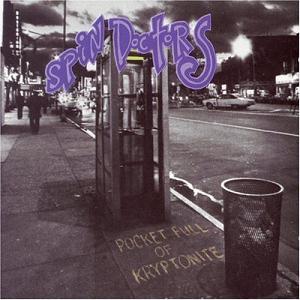
Spin Doctors – Pocket Full Of Kryptonite – Round 32 – Graham’s Choice

There is so much more to enjoy at DRC than just the music. The regular wrist-slap I receive for tardy blog posting, counting the minutes until Danny Baker gets name checked and how many times ‘Spirit of Eden’ can be mentioned in one meeting. My favourite feature recently has been the increasingly haunted looking expression on my more cultured colleague’s faces, as I prepare to reveal my selection.

Such foreboding can only really be generated by a combination of confidence and ignorance on my part and I would like to think I didn’t disappoint this week!

I have always really liked this album for the energy, enthusiasm and live ‘vibe’ that comes through on it. Yes, the band get carried away when they could have kept things a little more open and not so busy. Yes, there are moments when they decide to show off a bit too much, but I’ve always found a little bit of irresistible charm and exuberance here.

Like the millions who bought this, I heard “Two Princes” first, before buying the album. Strangely the album had been out for over a year before anything happened for the band. While genning up on this week’s selection, I am reliably informed that there was a  pseudo-hippie, jam-oriented blues rock scene in New York in the early 90’s. Can’t say I was aware, and certainly hadn’t noticed  this scene crossing the Atlantic over to Exeter. This album certainly doesn’t have any urban sophistication I might expect from a New York sound, though there are some jazzy touches here and there. As I said on the night, maybe I like this so much as it fills so many gaps in my collection.

Leaving  the better known singles, “Two Princes” and “Little Miss….” aside, the rest of the album is a mash-up of blues/funk/boogie/jam etc., etc…., with bits of hillbilly/redneck thrown in for luck. Too much for some I’ll agree, but with energy of a band who had honed their live show before commercial success, I think they get away with it (with the notable exception of the last track on the original release, ‘Shin Bone Alley..”, which verges on Tappish “freefall jazz odyssey” territory).

My personal favourite is ‘Refrigerator Car’, which sounds like it could have been a demo from ‘Second Coming’, or a lift straight off “Physical Graffiti’.

If the single, ‘Cleopatra’s Cat’, didn’t put anyone off their follow up album, the reviews would have done. In the space of 3 albums the band went from selling millions to 75,000 and being dropped by Epic. Their last album in 2005 has had some good things said about it and I may give it a try one day. After a few break-ups and line up changes, the original line up were still touring last year.

Still sounds great to me and I’m sure my colleagues have a view (retires safe in the knowledge he has 2 rounds of comments to catch up on….)

Nick listened: I never know whether Graham’s going to play something I know and love (Dust by Screaming Trees, Scott 4, The The, Hendrix), or something I’ve subconsciously avoided (Roger Waters!). To be fair, his hit-rate is considerably better than he suggests above!

Spin Doctors, I’m afraid, probably fall into the latter camp, though. Whilst Two Princess is an all-time great pop single, a whole album of ostentatious funky guitar upstrokes, super-sharp 1991-vintage snare sounds, borderline slap-bass-playing, and wannabe-soulful vocals was a bit much to take. Especially when they went 12-minute funk odyssey at the end. There’s something over-eager, and thus “not quite tasteful”, about the whole thing. The strange thing is that, superficially at least, what Spin Doctors were doing wasn’t a billion miles from Jane’s Addiction, who are equally over-eager and “not quite tasteful” (not tasteful at lal, in fact), but somehow there’s an edge to JA which makes it acceptable to the music snob. I imagine Spin Doctors would have been a thoroughly rollicking live party band, but I’m not loving the record.

Interestingly, after The Modern Lovers last time out, Spin Doctors felt like the least “New York” band to come from New York ever. I have no idea why, but something about them screamed California at me.

Tom Listened: Sometimes music appreciation (or lack of appreciation) defies logical consideration. As I listened to Pocket Full of Kryptonite, I couldn’t really work out what it was about it that I found so unappealing. The guy’s voice is fine, the bass lines are funky and fun, the playing in general is accomplished, certainly in terms of what the band is setting out to do, but mashed together I found the whole to be much less than the sum of its parts (kind of the opposite of Spirit of Eden, which happens to be one of Graham’s favourite albums in case you didn’t know). Maybe the context didn’t do The Spin Doctors any favours – if it came on at a party I would probably have an enjoyable (and acutely embarrassing) boogie to it, but then I rarely get invited to those sorts of parties (or any parties come to think of it).

Rob listened: First things first. If any of the comments above, and obviously I can’t be bothered to read them, imply that the group found ‘Pocket Full of Kryptonite’ anything less than toe-tapping, then those what wrote them are damned liars. I was there and toes were tapped. Other than that, I agree with everything Tom and Nick said. I guess The Spin Doctors were, ultimately, victims of their own constraints, or limitations if you prefer. Nowhere to go from here except tighter or weirder and neither of those sound like interesting moves. Still, it sure sounds like they had a heap of fun making this record, and that’s something.

Four Tet – There Is Love In You: Round 32, Nick’s choice

I love Four Tet pretty unconditionally and have done for over a decade; in 2001, when I returned from university and discovered Audiogalaxy, Everything Is Alright, from his second album, Pause, was the first song I ever downloaded via the internet; I wish I could remember what prompted me to do so, as I’d never heard anything by him before. Not long afterwards, I bought a CD copy of Pause, and I’ve bought every album since, gone back and acquired Dialogue, his debut, and seen him live a couple of times too. He seems to have released records in parallel with Caribou, and they seem to have trodden similar paths (they remix each other regularly).

In 2003 his live show consisted of him sitting at a laptop and destroying his music. Given that I love his music, I didn’t enjoy myself; it seemed bloody-minded, wilful, and solipsistic. Eight years later we saw him at the Caribou-curated ATP festival, where he played a rapturously received set. It was a remarkable transformation, helped no doubt by his long-term residence as DJ at the Plastic People club, where, it seems, he must’ve learnt how to communicate with and move an audience.

There Is Love In You, which was my nominal album of the year in 2010 moves from Four Tet’s “folktronica” (I use the term reservedly) past, where electronic methods and acoustic instrumentation combined joyously, into much more pure electronic textures. The Ringer EP from 2008 had signposted this move fabulously, but still had a hint of experimental insularity about it, whereas There Is Love In You is fully warm, open, communicative, and, most importantly of all, beautiful. When I first heard it, I described it on a forum as “blissful end-of-the-night house, or end-of-the-breakwater ambient, or middle-of-the-city techno”. I stand by that.

Kieran Hebden (as his mum knows him) essentially builds up layer upon layer of intricate melodic loops and sequences, generally underpinning them with late-night four-on-the-floor rhythms, and very occasionally elaborating them with vocal snippets. It works both as music for dancing to and music for listening to; I can attest to it making a beautiful soundtrack to summer walks or bike rides (only ever on dedicated cyclepaths, kids – never use headphones on the roads!), but it also makes for wonderful gazing-out-of-the-window music on misty autumn days. Tracks like This Unfolds and Circling are just intensely pretty, and strangely emotive too; he finds that space between joy and melancholy with what seems like great ease.

Tom Listened: As far as I am concerned, Kieran Hebden shot himself in the foot when I went to see him play at the Exeter Pheonix a few years ago. I have never felt angry at a gig before – disappointed… yes, bored…plenty of times…never angry though. But Four Tet were trying it on. At the time I owned two Four Tet albums – Rounds and Pause – and I liked both, not unequivocably but enough to be looking forward to the gig. Just before the gig Hebden had teamed up with veteran jazz drummer Steve Reid and in concert the two of them produced seemingly random noise for the best part (or worst part) of an hour and a half. It felt like the audience were the butt of their own in joke and I lost a lot of respect for the man that night.

I honestly don’t think I had listened to Four Tet since then…so imagine my disappointment when Nick played There Is Love In You and it turned out to be so fantastic – better to my mind than either Pause or Rounds, loads to explore, lengthy songs to get lost in, a (gentle) funkiness that runs throughout the album, even some vocals every now and again. I’d love to see Four Tet performing proper songs like these in concert, but whether I would be prepared to risk another hour and a half of cacophony is debatable…at least if you buy the album, you know what you’re getting!

Rob listened: I’m shocked to learn than Nick illegally downloaded Four Tet’s music and I hope the police track him down and give him his just desserts.

I love ‘There Is Love In You’, from the beautiful, glowing opening vocal loop to, erm, the end, by which point I’m usually too far gone to worry about what the songs are called or what’s going on at all. It’s a weird record in that respect. I’ve listened to it much more than ‘Pause’, the other Four Tet record I own but in some ways I feel I know it less. Without listening back I can’t recall many of the musical moments, other than that opening vocal, name any of the songs or really bring much of it to mind at all. I confess I use it as a warm and thoroughly pleasant background soundtrack whenever I need to reach for one and it works perfectly. I love the fact that it still evades me. It makes me feel like I won’t wear it out any time soon.

Graham listened: It must be an age thing. I can get the “groove thang” with records like this and it will draw me in when I’m listening, but just don’t feel the need to listen again. I’ve even experimented with some purchases myself with the same results. The hooks and melodies that are devoured by others are wasted on me. I can understand the complexity and ingenuity that go into composition, but maybe I still perceive such music as a threat to establishment rock?