Madvillain – ‘Madvillainy’: Round 39 – Rob’s choice

Mavilliany by MadvillainGenuinely successful comebacks are pretty rare in music. Whilst Daniel Dumile may not have topped the charts first time around with his pals KMD, their debut on 3rd Bass’s legendary ‘The Gas Face’ counts as significant success in my book. The way the London-born rapper later vanished and reappeared next counts as remarkable.

In 1993 KMD’s second album ‘Black Bastards’ was rejected by Elektra and the outfit were dropped. All this mere days after Dumile’s brother Dingilizwe, aka fellow KMD member DJ Subroc, was hit and killed by a car in New York. Dumile spent the next few years in the wilderness living “damn near homeless” before making tentative steps back via open mic nights, hiding his identity behind rudimentary masks.

By the time he made it to 2004 he was the metal-masked MF DOOM, partnering producer MadLib on ‘Madvillainy’ and gatecrashing the top ten of Pitchfork’s end of year list, the same website later naming the album the 25th best of the decade. The record is as intriguing as the backstory.

Hailed by some as ‘indie rap’, and dismissed by others as ‘indie rap’, ‘Madvillainy’ is poorly served by the label no matter from which direction it’s being applied. It’s a complex, layered swirl of beats, samples, sweeping supervillain soundeffects and deadpan wordplay. It contains as much straight head-nodding hip-hop as it does smoke-filled flights of fancy. DOOM’s rhymes and Madlib’s beats seem to have been born for each other. The rhythm track and scratchy instrumental curlicues stagger and step slipping into and out of sync with DOOM’s flat and woozy flow creating between them a sound which manages simultaneously to be comforting and disorienting.

And the ideas keep on coming. With 22 tracks crammed into 46 minutes for me ‘Madvillainy’ is the hip-hop equivalent of ‘Bee Thousand’. The songs go on as long as they  merit and then they move on to something else. If that means laying down just a beat and a single verse, then so be it. The result is bewildering, impossible to pin down, sprinkled with transcendent moments and never ever dull.

And like the GBV masterpiece, the more you listen, the more you get back. I don’t listen to a huge amount of hip-hop. ‘Madvillainy’ makes me realise what I might be missing out on, but it’s also one of the reasons I don’t feel compelled to look much further.

Tom Listened: When Rob likened Madvillainy to Bee Thousand I mentally strapped myself in expecting a much bumpier ride than actually transpired. I can see where he’s coming from in drawing this likeness but where as Bee Thousand sounds spontaneous, tangential and extremely discombobulating at first, I found Madvillainy quite accessible, considered and straightforward in comparison. I don’t think I’ll ever feel compelled to buy it (but I remember saying the same thing about Captain Beefheart when I first heard him) but I enjoyed the listen and have come to the conclusion that ‘Indie Rap’ is where I’m currently at in my appreciation of Hip-Hop.

Graham Listened: After warming so to Death Grips, from Rob’s introduction I wondered if this might be a little “tame” for a “bad-ass” like myself. But no, there were plenty of accessible/commercial sounding hooks and beats to cling on to, broken up by clever “off piste” moments that stimulate, rather than irritate. Other than what I have learned at DRC, I know nothing about this type of genre, but I’m willing to find out more.

Nick listened: I’ve owned Madvillainy for years, pretty much since it came out, but never fully got to grips or fallen in love with it: it came out as my interest in hip hop was waning after a couple of years of being fascinated by the more commercial end of the genre (Missy Elliot, Jay-Z, Neptunes) with occasional divergences into more modernist, sci-fi, techno-influenced stuff (Cannibal Ox and other Def Jux stuff, essentially). I’ve been intending to delve into it again properly for some time, as it was a big favourite with a lot of people whose taste I respect. Listening now, it was strikingly turntable and sampler based, and the short songs, abstract lyrics, and absence of dancefloor-aimed beats mark it out as something very different to Timbaland and Missy: it’s a real head-nodder. I’m going to need to spend a lot more time with it before I can form a proper opinion.

Peter Gabriel – Peter Gabriel 4 (Security) – Round 39 – Graham’s Choice

Having recently re-discovered I owned a  copy this album, it would have been a much better choice for my 1982 album of the previous round. No theme this week meant I was free to bring it along anyway. Rhythmically I thought this might mark a departure from my normal fare and allow us to ponder on an artist who has covered such a wide range of bases in his career.

From proggy/eccentric/worldy/political/pop it is pretty hard to find a file to put Mr Gabriel under.

From distant memory, I acquired this album in 1982 after a series of swaps, which to the best of my recollection, included Men at Work and Genesis. I think I came out the winner. I have never sought out any Gabriel era Genesis, but I’m pretty confident it sounds nothing like this!

I took to it pretty quickly as basically it sounded weirder than much of what else I was listening to, and had a spooky cover. Certainly the video for ‘Shock the Monkey’ was disturbing enough to get my interest at the time. It was pretty easy to please a 16 year old in those days!

I pretty much left the album alone for many years until I finally saw Alan Parker’s film, Birdy. The soundtrack recycles some of the tracks on this album and immediately triggered renewed interest in the album.

While, like many, I enjoyed the videos like Sledgehammer from 1986’s ‘So’, it has always been the darker atmospherics of this album that have held my interests. Heavily indulging African and Latin rhythms, sounds and atmospherics throughout, it is not an easy listen and sometimes a little too melodramatic in places. Overall I guess that is why some of the tracks work so well on the movie soundtrack.

‘Rhythm of the Heat’ is a brutal opener with African percussion and along with ‘Lay your Hands on Me’, and my personal favourite ‘Wallflower’, they are my stand out tracks from the album. Some very ‘heavy’ subject matter lies behind many of these tracks but seeing as I have misunderstood most of it for 20+ years, it is not essential to enjoying the album as a whole.

Tom Listened: Although I have never been a huge fan of Peter Gabriel, I had a ‘phase’ around the time of Sledgehammer and my copy of So languishes somewhere in my record collection, unlistened to and unloved for many years now…I am sure it sounds as good today as it did back in the 80s though. Must give it a go. Whilst So is the only Gabriel album I still own, my brother and I definitely had some of his self-titled albums back in the day but their whereabouts are a mystery to me now. I don’t think we had 4 but perhaps we did and I just never got round to getting to know it properly. I certainly enjoyed those albums back then and listening to Graham’s offering the other evening brought back why – Gabriel’s music is an interesting mix of influences, thoughtful and thought provoking, perhaps a little too earnest at times but, to my mind, well worth a listen. As Graham has pointed out above, Peter Gabriel is a bit of an enigma – hard to pigeonhole, one senses he is elusive and private and operates way outside the mainstream whilst still being widely admired and respected. Must be doing something right!

Nick listened: Peter Gabriel is one of those artists who I’ve had on my mental checklist of people to investigate for what seems like forever – my first exposure was Sledgehammer, which I loved as a kid (didn’t everyone?), and whilst I know he as in Genesis, the Genesis he was in are, as far as I can ascertain, a very different beast to the one that did tha awful song about being crap at dancing. I really enjoyed Security, and nosed for it at the weekend when I was in a record shop – alas they didn’t have it, and I was left ruing all the times I thought about buying remasters of his albums for a fiver each and out it off because I thought they’d always be there.

Rob listened: You know how when you get older things that were dreadfully despised when you were young seem to become fashionable, only for you to reaIise that you just got old and started to like old-people things? No? I’m thinking primarily here of golf and Peter Gabriel. Anyway, I was really pleased to see this pop out of Graham’s special Record Club bag just a couple of days after I’d read this rather convincing case for ‘So’ on The Quietus, a record that seemed so unashamedly grown-up to me when it was first released and about which still somehow hung sufficient wafting wisps of perceived former prog-rock atrocities that I’d mentally filed it somewhere far, far away, equidistant between Marillion and Luther Vandross, if such a thing were possible. So, as I was saying, I was pleased to see and hear this, although it seemed to suffer the Curse of the Curry and its details now elude me. I like Peter Gabriel. He seems like a decent chap, clearly very committed to what he’s doing, unashamed to be creative, political and intellectual and, oh what’s the use? I still can’t remember what it sounded like.

Captain Beefheart – Clear Spot: Round 39 – Tom’s Selection

I’m going to go out on a limb here…Clear Spot is Captain Beefheart’s best album. There, I said it! Sure, it’s not as ‘out there’ as many of his other discs but, let’s be honest, we have all listened to it a helluva lot more times than Trout Mask Replica, Lick My Decals Off Baby or Doc at the Radar Station. Haven’t we?

I got lucky with Beefheart. I chanced upon Clear Spot whilst I was at university without realising that it is THE gateway drug as far as the good captain’s discography goes. Weird enough to be compelling, tight enough to be thrilling, concise enough to leave you wanting more…yet, crucially, not too difficult. It does sound like music after all! I imagine that if I had bought one of Beefheart’s more avant-garde offerings as my first Beefheart purchase I may have stopped there. If I had bought one of his mid-70s ‘pop’ albums I almost certainly would have given up on him there and then. No, if you fancy checking yourself out some Beefheart and are not too scared about the addictive qualities of his music, Clear Spot is definitely the place to start.

Now, I am a huge fan of Trout Mask Replica and (especially) its follow up, Lick My Decals Off Baby, but I can’t help feeling that in some ways they are less of an accomplishment than Clear Spot. Groundbreaking they most definitely are and both are easy to admire, but they are so hard to love and I don’t think I have ever experienced that chill down the spine listening to them that I did when playing Clear Spot at record club last night – that thing you get every so often with a record when you REALLY listen intently and you are just blown away by how good it sounds, how it twists and turns so unexpectedly yet maintains its groove, its structure, its accessibility. I guess it helped knowing there were two Clear Spot virgins present so maybe I was imagining what they were hearing, as the opener Low Yo-Yo Stuff writhed its way to its conclusion. To use a sadly devalued (in current times) term…just awesome!

As Rob pointed out on the night, Clear Spot somehow manages to fuse so many genres of music that it should be a complete mess. How can a great soul ballad such as Too Much Time, follow the boogie stomp of Nowadays a Woman Gotta Hit A Man and lead into the garagey delta-blues of Circumstances and pull off the trick of sounding so right? I guess there are three things that tie all the disparities together on Clear Spot – the lyrics, the voice and the grooves. The songs on Clear Spot (the only exception being the 90 second afterthought of Golden Birdies) hang together so brilliantly, always on the verge of cacophony and discordance, but pulling back in the nick of time, returning to the groove that so wonderfully underpins the entire album. There was an inordinate amount of head bobbing and foot tapping (about as animated as we get) whilst Clear Spot played and I imagine that is the last thing anyone who only knows Beefheart through TMR would have thought.

Unlike Neil Young (see Round 38), I went on to acquire many more Beefheart albums that I really like..in fact I own eight Beefheart albums and I like every one! His is a fascinating catalogue; a singular artist deserving, to my mind, of every word of praise that has ever came his way but I have always felt it was a great shame that the alchemy he chanced upon on Clear Spot (the album he allegedly wrote partly as an apology to his band for putting them through the two previous albums) was never really repeated, his later albums veering much closer to TMR and LMDOB in style.

Nixk listened: I bought Trout Mask Replica whilst at university and, frankly, hated it. Listened about three times and thought it was unbearable discombobulation rather than music. So I decided that Captain Beefheart wasn’t for me. On the strength of Clear Spot, I may have been hasty and wrong – because it was awesome. I will be seeking it out at some point in the future.

Rob listened: My favourite Beefheart album and has been since I bought it almost 20 years ago. Like Nick and unlike Tom, I started with ‘Trout Mask Replica’ when it was reissued in 1990. Unlike Nick I found it baffling, laughable, fascinating, challenging and, for all those reasons, rather thrilling. I still can’t say it’s ever come fully into focus for me as some of the devout claim it will, but its existence and the fact it holds such cultural cache, is something we should all rejoice in.

‘Clear Spot’ is radically different in so many ways, but as Tom points out, it is illuminated yet further by the radioactive afterglow of TMR. I can’t add much to Tom’s assessment of the album other than to throw in a couple of extra adjectives: tight, gripping, moving, mesmerisingly sung and to mention that the only reason Jo and I didn’t get married to one of the songs from ‘Clear Spot’ is that we couldn’t choose between ‘Too Much Time’, ‘My Head Is My Only House…’ and ‘Her Eyes Are A Blue Million Miles’.

“I look at her, she looks at me, in her eyes I see the sea…”

Graham Listened: I have tried to appreciate/understand Beefheart in the past and failed miserably. I have sought out footage and recordings to help in the process but never really understood why he is regarded as a genius in many quarters. Maybe tonight I came close to getting it at last. I bobbed my head and tapped my foot appropriately to an overall sound I felt comfortable with. There were moments where I wondered “why has he done that” and “what is going on here”, but not enough to alienate me in the way exposure to Beefheart has in the past. My defenses have been weakened!

The Notwist – Neon Golden: Round 39, Nick’s choice

After three months of having my CD collection packed ready for moving, we’re now in the new house, and, though CDs are still in boxes right now, they are at least open boxes. Faced with a couple of thousand albums to pick from and no theme, I pretty much abdicated responsibility for my choice this week, and brought three records to Rob’s house. I revealed the years they were from (2002, 2007, and 2008) and asked my co-conspirators to pick. 2002, and The Notwist (pronounced not-wist rather than no-twist), won. (I shan’t reveal the other two, as I’ll probably play them soon enough.)

The Notwist started out as a grunge/metal influenced group near Munich in 1989, and have moved through various sonic identities since then. By their fifth album Shrink in 1998, Neon Golden’s predecessor, they were exploring strange territory between jazz and electronic music, far removed from their early beginnings. Neon Golden itself is a synthesis of low-key, understated indie-pop songwriting and carefully detailed and layered electronic production.

This Room, Pilot and, especially, One With The Freaks offer genuinely catchy pop thrills, whilst the title track, closer Consequence, and opener One Step Inside Doesn’t Mean You Understand are much more minimal and metronomically languid, understated to the point of almost feeling abstract. Singer Markus Acher’s voice is something of an acquired taste – he sings in a presumably deliberately flat manner, the remove of singing in a non-native language, which I often find fascinating, adding to an emotional distance which becomes strangely affecting, words as signifiers of emotion rather than delivery as signified.

It would be easy to see Neon Golden as a post-Kid A record, if it wasn’t for the fact that Shrink had mined electronic influences and textures even more fully two years before Radiohead’s giant curate’s egg. It would also be easy to see it as part of some kind of almost-scene of music that looked to bridge the gap between traditional indie rock and what one might call, in a moment of weakness, laptronica or IDM or electronica or whatever. I feel like Neon Golden, which I didn’t like initially back in 2002 but which has grown on me massively over the years, has more of a kinship with the electronic side of things than the indie side.

Because The Notwist weren’t just sprinkling electronic fairy dust over indie pop songs here, they seemed to be actively integrating different compositional techniques – looping, layering, repetition – that are common in electronic and other ‘experimental’ musics, rather than more traditional songwriting. Tellingly, predecessor Shrink is even less based around songs, with several long, predominantly instrumental tracks that owe a debt to jazz and krautrock. Neon Golden is also, to my untrained ears, mixed much more like an electronic record than a rock record; Kid A, for instance, feels much more like a rock record in terms of physical sonics and dynamics to me, whereas Neon Golden’s sound design feels much more genuinely akin to purebred electronic music.

In the wrong context I fear Neon Golden could sound very much of its time, the glitches and bleeps that make up much of the sound palette seeming like trendy affectations, but to me it’s the genuine article, a rich and rewarding record that grows in stature with every passing year.

Tom Listened: I’ve owned Neon Golden for about a year now and have listened to it a handful of times but can not claim to have got to know it well enough to make a definitive judgement on its quality. In a similar way to The Wrens, this is a noughties indie album that is mightily revered but which I came to late and have never really clicked with – maybe it’s the flat vocals that remove any sense of emotion from the songs, maybe it’s the seemingly adolescent sound of the album…That said, I enjoyed the listen at record club much more than on any previous occasion and I can well imagine that this could be one of those albums that years from now I’ll listen to and think ‘how could I have ever missed its genius at first?’.

Rob listened: Nick played a track from ‘Neon Golden’ at a previous meeting and I recall thinking it sounded great, with the sweet sparkle of indie pop lashed to the propulsive drive of Stereolab. Some months later, whilst digitizing my CDs I came across a 10 year old CDR with ‘Tony’s album’ scrawled across its back. I was delighted when my laptop IDed it as ‘Neon Golden’ then slightly disappointed when I played it. Flat electronoodles.

Happily this evening’s playback came over much better. I have no problem with deadpan vocals and in many other ways this is an album precision tooled to get under my skin. The tunes and the momentum started to assert themselves this time around, certainly enough for ‘Neon Golden’ to begin to glide back towards the top of my listen again list.

Graham Listened: Knowing nothing of their “journey” as it were, I could only go on what I heard on the night. Have to say it was great. Had that sound of a band not trying too hard and concentrating on just just getting it “right” on the record. Magnificent and understated at the same time, I may just buy it!

Simple Minds – New Gold Dream (81-82-83-84) – Round 38 – Graham’s Choice

My choices were more functional than inspired.  Drawing 1982 and 2007 was not helpful as in 1982 I was sixteen and had little ‘taste’, whereas in 2007 I only bought 2 records released that year (and didn’t think the team would put up with 24 tracks from Led Zep’s ‘Mothership’).

Had it been 83-84 (geddit?), the field would have opened up much more widely, but 82 was always going to be a different offering from an artist/s I had brought along before. However, in recent developments, a half-term clearout of our loft has led to the discovery of another box of LP’s which contained potential choices. In amongst others that can only be described as “corkers” I know Rob can’t wait to hear Marillion’s 1983 ‘Real to Reel’ live album!

After playing ‘Sons and Fascination’ in Round 29, I thought I would bring this along as it fills the slot between that album and where it all went wrong (at least in my opinion) in 1984 with ‘Sparkle in the Rain’. There are a few hints on this album as to where they are going, but mainly they seemed to be applying a more ‘poppy’ polish to the sound on their previous album. In fact some of the synth and baselines on this album had me thinking more ‘New Romantic’ than ‘New Wave’ and I’m sure Kajagoogoo must have had a listen.

If you turned the drums on the title track up to “11”, you are not that far away from the “de-dum, de-dum, de-crash bang wallop of ‘Waterfront’. My favourites remain ‘The King is White and in the Crowd’ along with the only instrumental, ‘Someone up there likes you’. Both tracks typical of a haunting and sophisticated sound, shortly to be totally dispensed with.

With the nights’ strongest linkage between artists and years, I threw in ‘Nothin’ http://www.youtube.com/watch?v=lSMcK_HJXuE from 2007’s Robert Plant and Alison Krauss collaboration on ‘Raising Sand’. The track is a cover of a Townes Van Zandtsong and apart from some of the “pickin’ and fiddlin’” sounds pretty alien to the rest of the album.

Tom Listened: Having set the ‘Year of Release Lucky Dip’ theme, I have to admit to a pang of guilt when Graham (having, by his own admission, struggled to find something to bring from 1982) suddenly exclaimed that he could have brought The Nightfly by Donald Fagan…an album that is currently languishing in the side door of my car! It would have certainly have given the evening a different feel – slick ‘yacht rock’, as opposed to the new wave transitioning into stadium rock of New Gold Dream.

I was really impressed with Sons and Fascination, less so with NGD, probably because it was easier to hear echoes of the Simple Minds we all know and hate. Still much more palatable to me than what was to come afterwards, Simple Minds on New Gold Dream sounded like a band that were in the process of cashing in their chips – they had decided on their game plan and had begun making music that was (probably) less innovative and creative and (definitely) more commercially attractive than what had come before. It was interesting to hear the progression but, for me, I suspect Sons and Fascination will be the last album in their chronology I would be interested in picking up.

Rob listened: Graham drew the short straw in more ways than one. Not only was he allocated what seemed to be one of his most heavily mined years, but he also got to play his eventual choice during takeaway hour. I’m not sure how much we all listened. I liked some of what I heard, recognised some of it, and the transitional phase represented by NGD is easy to discern.

I have a certain sympathy with Simple Minds. It’s easy to look back after decades of hearing their most famous songs pumped out of the radio like so much aural styrofoam and conclude that they cynically moved into making hollow stadium rock. I can’t imagine they did. Back in the early 80s, along with U2 and others I’ve blanked from my memory, the shift towards making a bigger sound, writing bigger songs to attempt to fill bigger spaces, physically and emotionally (and yes, financially) must have been at least as much an artistic endeavour as a business one. I’m not convinced they could have known where they were going, how it would be received or, years later, how hollow it would sound.

Nick listened: Rob’s right that this suffered by timing – whatever’s on when the food arrives tends to get short shrift, whether it deserves it or not. After exposure to Sons and Fascination, Real to Real Cacophany, and Empires and Dance this year – my first foray into Simple Minds beyond big radio hits – New Gold Dream (wtf are the numbers about?) definitely sounded like a transitional record. I didn’t recognise much, if anything, from it, and doubt I’ll investigate it, or them, any further beyond this point.

‘Saturday Night Fever: The Original Movie Soundtrack’: Round 38 – Rob’s choice

Saturday Night Fever1978 produced the attitudinal brio of Elvis Costello’s ‘This Year’s Model’, the sleek futurism of Kraftwerk’s ‘Man Machine’ and the bubblegum swagger of Blondie’s ‘Parallel Lines’. I listened to all three a lot in the run up to this week’s meeting but ultimately, and if I’m honest rapidly, I passed them all over in favour of the best-selling record of my given year, a record which co-opted, some say plundered and eviscerated, the sound of the mid-seventies underground and in doing so changed the face of pop music.

You can say what you will about ‘Saturday Night Fever’, and there are arguments a plenty here for those who wish to have them. It took an emerging musical subculture which was significantly black, Latino, gay, blue collar and made it white, straight, elitist, aspirational. It grabbed the niche sounds of New York and Philadelphia dance clubs and turned them into mainstream millions. It’s ridiculous and silly – woolly-headed music made in a time of social and economic strife which, despite, or perhaps because of, its focus on pleasure rather than politics, struck a hefty blow against activist punk and intellectual new wave. In doing so it created a schism between pop and these more engaged forms which had briefly, fleetingly threatened to unify. It opened the door for a generation of preening poseurs, more concerned with the state of their hair than the state of the nations.

All these are arguable points. You may wish to add the view that the Bee Gees, who contribute around half the tracks on the album, have possibly the most ludicrous vocal stylings in history. Again that’s arguable, but I would disagree. By 1978 Barry Gibb was esseqtially the lead singer, with his brothers supporting with harmonies and trills. Their falsettos are perhaps the most distinctive voices in pop. They are a marvel, as impossible to explain as they are to imitate.

But once the arguing is done, this remains: ‘Saturday Night Fever’ contains eight or nine unimpeachably perfect pop songs. ‘Staying Alive’, ‘How Deep Is Your Love?’, ‘Night Fever’, ‘More Than A Woman’, ‘If I Can’t Have You’… Pitchfork pretty much nailed it when they said “The first five songs on this double LP could be considered the greatest album side of all time”. Scattered across the remaining three are ‘Jive Talkin’, ‘You Should Be Dancing’ and the ten minute version of ‘Disco Inferno’.

Between the ages of 14 and 30, I would have scorned this record. How very stupid of me. Half of it is brilliant, the rest is forgiven.

Graham Listened: Certainly didn’t expect this one, but brilliant choice. Much as Rob says, there are so many reasons that this should be all wrong and not work, but it just has a quality to it that makes many of these tracks unforgettable and unrivaled classics. Because this record helped (or more or less single-handedly) took Disco mainstream, I would have avoided it like the plague  But there’s that moment in life when year’s later you discover what you have been missing. Who knows what other previously despised genre could be next for me to embrace?

Tom Listened: I have just returned from a five day jaunt to the tiny Pyrenneen mountain town/village of Bielsa – a funny little place nestling (as if against the cold) at an altitude of 1600m amongst the mighty peaks that form the French/Spanish border. The last time I was in Bielsa was as a 7 year old when my brother and I joined my father on a school trip he was running. My one lasting memory of Bielsa itself were our evenings in the local bar; an Orangina, some table football and the jukebox for company. All I can recall of the jukebox was, somewhat appositely, that it had plenty of songs from the Saturday Night Fever soundtrack. We weren’t interested in any of the other songs – SNF was where it was at – pop songs that were a cut above anything else…at least that was what it seemed like at the time. So, for me, Bielsa will always be connected to the Bee Gees and being there the other day seemed even odder given that Rob had just brought this to record club.

35 years on, the songs still sound as fresh and vital today as they did then – old friends that you’re always happy to reacquaint yourself with. The songs themselves are near-ubiquitous and I hear them often enough to not feel the need to own the record but you can’t help but marvel at just how many corkers there are on SNF – most bands would give their eyeteeth to have written just one of these songs!

Nick listened: As iterated by everyone above, this is great – these songs are as woven into the public psyche of the UK and US as anything by The Beatles or Elvis or Madonna or anyone else you could care to mention. Pretty much faultless.

Talk Talk – Spirit of Eden: Round 38, Nick’s choice


Tom’s “draw a pair of random years” theme has become a favourite; there’s no squeezing something to fit a theme, no talking your way around it – something was either released in the year you picked, or it wasn’t. I drew 1988 and 1996 this time, and had to choose an album from one and a track from another, and see if I could somehow connect them.

My first instincts for albums from 1996 all proved to be too long – Orbital, DJ Shadow, Underworld, Maxwell – due to the mid-90s fetish for squeezing as much music onto a compact disc as possible, or else had already been played at Devon Record Club – Aphex Twin, Screaming Trees. My first instincts from 1988 suffered the same two fates – Public Enemy too long, My Bloody Valentine played by Tom some months ago. What’s a guy to do?

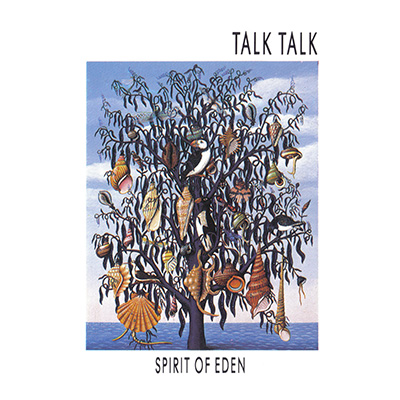
Choose the dismayingly obvious pick that he’d forgotten about, clearly, that follows on from something played at our last meeting. But it took me asking for recommendations via Twitter for me to be reminded that Spirit of Eden came out in 1988, which seems like an incredible oversight given that, at a push, I’d probably pick it as my favourite record (though I kind of dislike the idea of ‘favourite’ records, in an unequivocal, all-time-number-one way). I have, after all, written reams and reams of fawning, hyperbolic guff about this record, this strange dive headlong into the avant-garde that got Talk Talk dropped and sued by their record label for delivering a willfully uncommercial album (the lawsuit was thrown out, but inspired a clause that became common in major label record deals binding artists to the promise of producing sellable music).

Nearly ten years on from writing the above hagiography, I’m much more pragmatic about Spirit of Eden – yes, I love it, and I like to play it sans distraction, loud, in a dimly lit room, so as to get the full experience, but I’m pragmatic enough to admit that I rarely ever get around to actually engineering that kind of listening experience (once or twice a year if that). I’d also probably hold up Laughing Stock as a stranger, more rewarding, more cathartic record these days, and, conversely, The Colour of Spring as a more frequently-turned-to, easily-consumed album that gets part way at least towards delivering some of the same emotional and aesthetic payoff.

A lot of people talk about how beautiful and sparse Spirit of Eden is, but for me its about the grooves and the noise – the crazy, over-driven harmonica, the heavy blues-y guitar riffs, the thick, liquid pulse of bass and drums. Certainly, some passages are extremely beautiful (the hushed choirs that close I Believe In You), but others – the crazed, thunder and lightning drums of Desire – are incredibly powerful and visceral. I find the whole thing incredibly moving: when Hollis sings “I just can’t bring myself to see it starting” in I Believe In You, I feel like my heart’s going to explode.

Spirit of Eden, as well as being the first “holy grail” of Devon Record Club that we’ve played thus far (that is, a record that we all own), is a fantastic (almost) singular experience, and I love it to bits. But I’m not sure I’m quite as passionate about it as I was a decade ago.

(Oh yeah, for reference, I chose A Survey by Tortoise as my track from 1996. The connection? Both albums have 6 tracks, take liberally from jazz, ambient, and experimental music as well as rock, and, well, Tortoise follow on pretty linearly from Talk Talk’s influence in many ways.)

Rob listened: Well I never. Just a fortnight after hearing the Mark Hollis album for the first time, and finding in it an agreeable contrast with earlier Talk Talk, and mere days after describing ‘Spirit of Eden’ as “the most consistently disappointing record I own” lucky me to get yet another chance to approach its sweeping foothills once again. Lucky, lucky me.

As amusing as I would find it to really stick the boot into ‘Spirit of Eden’ (much as its adherents fawn and weep over it, I bet they use it more to test their hi-fi set-ups), if I’m honest, I can’t. I don’t dislike it. Bits of it are nice. Some bits of it sound lovely. On the whole though, it bores me every time I hear it. And every time I hear it, cold, hollow, I get more irritated by it, moving farther away from its supposed majesty when I’m expected to grow closer. One more listen down, one more step in the opposite direction.

Graham Listened: Like buses, you wait until rounds 37 and 38, then 2 come at once. Nick has already described much of how I feel about this record and done it much better than I ever could. One thing that I’ll never get back though, was the first (virginal?) listen to this record. I came to Talk Talk late in the day, so there was never that rush to get the new album and listen to it until you convinced yourself it was good.  In my little flat in Exeter with my newly purchased “high-end” Goodmans CD player, I played this for the first time and was truly astonished. I went through a period when I would play it only when I could dedicate 100% attention, but following counselling, I am now able to play it as background music on the rare occasion.

Tom Listened: I have always been disappointed by the way I am so easily influenced by the opinions of others. Until Nick brought Spirit of Eden to record club, I have always considered it a near perfect album. However, having heard Rob’s enthusiastic dismissal of Talk Talk’s finest moment at record club made me begin to doubt myself…and I began to hear the record in a different way. Rather than submit to its glorious soundscapes and meticulously constructed songs I caught glimpses of what Rob was hearing. And, for a moment or two, it bothered me. Until the breathtaking Desire confirmed what I had always suspected – in this case he’s just plain wrong!

Spirit – how could I have ever doubted you?

Neil Young – Tonight’s The Night: Round 38 – Tom’s Selection

The mid 70s were an interesting time for popular music, not that I can remember much of it first hand, due to being five at the time…as opposed to off my head on drugs! Of those records that have stood the test of time, it seems as though a disproportionate number of them are bleak, harrowing, doom laden evocations of the human condition. Maybe these records document the point in time when the hippy dream turned sour, the idealism of the late 60s and early 70s giving way to self-doubt, cynicism and suspicion. Maybe the hippies had nowhere left to go but here. Ironically, seeing as he was the arch anti-hippy, this trend may have been kick started by Lou Reed’s 1973 rock opera, Berlin, which is just about as dark as an album can get and surely hugely influential (although you never can tell about influence, can you Nick!). Whatever, in the next couple of years there followed a slew of similarly unsettling offerings such as Gram Parson’s Grievous Angel, Big Star’s 3rd and Joni Mitchell’s Hissing of Summer Lawns. Artists were experimenting musically and thematically and were really challenging their fan-base in the process. It seems as though many of these records were poorly received in their day but they make for captivating listening all these years on and, to me, often sound far more interesting than their bigger selling precursors. Possibly the epitome of this phenomenon is Tonight’s the Night, Neil Young’s most ragged, tortured and, arguably, finest LP.

First a confession. I have never really ‘got’ Neil Young. This is strange considering I have a ridiculous number of Neil Young albums (after all, there are a ridiculous number of Neil Young albums to have). I have always suspected a case of ‘Emperor’s New Clothes’ about his records; to my mind they often don’t go anywhere particularly interesting – a guitar workout lasting 10 minutes is pleasant enough but when the riff is so simplistic and linear (see Cowgirl in the Sand, Down By the River, Southern Man, Like a Hurricane), it can all get a bit monotonous. In comparison to, say, Halleluwah by Can which twists and turns and goes to all sorts of surprising places in its 20 odd minutes, I never found all that much to discover in Neil Young albums. But I kept buying them because I kept reading about how they were so good. The next one was going to be THE ONE. But it never was. Then I bought Tonight’s the Night…and then I stopped buying Neil Young albums!

It was obvious from the off that this one was the real deal. The history of the album, the circumstances that led to it being the work it is, is well documented. Suffice to say, Young was in a pretty bad place going into making Tonight’s the Night…and it shows. And that is what makes it such a compelling listen. The songs teeter on the brink of falling apart throughout the album; they are raw, wounded and as vulnerable as the man who wrote them. Listening to Tonight’s the Night recently, I once again find myself wondering whether an album this messy would even get released in this age of studio perfection and computer technology. Having recently made two mega-sellers in Harvest and After the Goldrush, Neil Young must have had pretty much carte blanche at Reprise at the time and, whilst artists who have overwhelming power have often made appalling records, in this case such clout was surely necessary in getting it released – after all, the album only saw the light of day two years after it was recorded! Listening to it today makes me wonder about those decision makers in the big record companies. Alright, Tonight’s the Night was never going to sell as many copies as Harvest, but its tarnished brilliance is so hard to deny that it would have to be an inordinately cynical ear to turn it down.

There is little point singling out individual tracks as they really need to be heard as part of the whole. Young’s triple LP best of, Decade, includes the title track and Tired Eyes but neither of these songs make half as much sense as they do when heard on the album itself. As Rolling Stone’s Dave Marsh put it, ‘This is Young’s only conceptually cohesive record, and it’s a great one.’ Me, I’m glad I persevered with Young and, who knows, maybe one day I’ll go back to and fully appreciate all those other albums of his I’ve purchased over the years. But even if I never listen to one of his other records again, I know Tonight’s the Night is one album I’ll never grow tired of.

Nick listened: Tom introduced this by saying, twice, “Nick will hate this”, and describing it as (paraphrasing rather than verbatim) “the most rubbishly performed, sung, played, and recorded record ever”. He also said (verbatim) “This is the only Neil Young album that I own that I like. I own eight Neil Young albums.”

Well, I didn’t hate it. I own about four Neil Young albums (Harvest, Gold Rush, Everybody Knows This Is Nowhere, and Rust Never Sleeps) and I quite like all of them. I quite like Neil Young, in a completely non-committal way, in that I think he’s a good songwriter, decent guitar player, and interesting, charismatic singer. I didn’t think Tonight’s The Night was badly played, sung, or recorded – certainly Neil’s vocals go a little further off-piste a little more frequently than on other records I know by him, but it was never monstrous or offensive – if anything, it was kind of touching for him to be clearly reaching beyond himself, writing songs and melodies outside his range. Neil’s tremulous, cracking vocals, if anything, accentuated the emotional heft of these songs about the deaths of his friends.

Rob listened: I liked this a lot. I rarely delve back beyond 1977 but many of the records I’ve bought in the last 15 years or so have a clear and direct lineage with the music that came from America in the midst of her post-Sixties comedown. Tom preceded ‘Tonight’s The Night’ by playing ‘Brute Choir’ by Palace Music. The two records could have been recorded in the same year. Neil Young’s songs here, perhaps simply as a result of their simplicity and honesty, sound as fresh and raw as the day he wrote them. Quiet, meaningful albums tend to get crushed like so many wheel-broken butterflies at DRC meetings where, truth be told, we like to talk more than we like to listen. ‘Tonight’s The Night’ had our rapt attention and rightly so.

Graham listened: Not sure what happened to the incredibly well-crafted review I left last week but here is a repeat summary. I also quite like Neil Young but have never sought out any of his records. I’ve considered it but then I’ll see him singing live on tv and pause for thought. After Tom’s introduction (which may have been a clever ploy for future use) I was expecting a bit of a ramshackle mess. What we got was something sincere, sensitive and captivating.

Mark Hollis – Mark Hollis – Round 37 – Graham’s Choice

Keen to stick to the theme (ahem…), I surprised myself by purchasing a copy of this album just a week before this week’s meeting. I’ve had copies in various forms for over 10 years, but never had a physical copy of the icing on the cake of my Talk Talk, post ‘Colour of Spring’ collection.  I also felt somewhat obliged to offer something by the way of an antidote to the distress I had caused in Round 36.

I pretty much ignored Mark Hollis and his Talk Talk colleagues until the early/mid 90’s. I had them typecast as New Romantic wannabees, though I had heard a couple of singles off their second album which sounded a bit more interesting. Still, not enough to persuade me into investigating further. I then started reading various articles which were heralding the band in a far different light.

I began by buying their third album, ‘The Colour of Spring’ (1986), which immediately ripped up all my preconceptions about them. Probably a bit too mature a sound for me to have fully appreciated in 1986, but it I loved it and found it immediately accessible. The direction they had begun with ‘The Colour of Spring’ continued on their last 2 albums which are amongst my favourite records of all time. When I consider why I don’t feel the need to buy much music anymore, maybe it’s because after hearing ‘Spirit of Eden’ and ‘Laughing Stock’, I simply didn’t need to. However, as my wife hates these 2 albums and is sent in to a rage by Mark Hollis’ one and only solo album, I don’t get to listen to them that often!

Until the very recent emergence of some new work, this album seemed to be the conclusion of Mark Hollis’ journey from ‘The Colour of Spring’, and his final offering as a solo artist. After ‘Laughing Stock’ it seemed unlikely that Mark could produce an even more stripped back and sparse sounding album, yet still make it sound beautiful and immersive. It took 7 years, but in 1998 he more than achieved that with this album. There is not quite the ‘drive’ and short-lived drama to some tracks which we heard on the last two Talk Talk albums, but that allows a more restful vibe to run throughout the album. There are some real raw jazzy moments, but nothing too “noodley”. As for the rest, just as you think it’s folksy, it’s classical, it’s ambient etc., etc. It’s probably easier to say what it’s not in some circumstances. If I did yoga, I’m sure this would be a great soundtrack.

I’ll admit that ‘A Life (1895-1915)’ is a track that I’m not in love with. It strays too much in to conceptual territory for me, and we all know where that can lead. But the stark beauty of the opener ‘The Colour of Spring’ (a very loose reprise of April 5th, from, confusingly, the album ‘The Colour of Spring’), is so disarming, I’ll put up with anything after that.

Nick listened: It’s fair to say that I know late-period Talk Talk pretty well: I’ve written about Spirit of Eden extensively, and I even pitched a 33 & 1/3 book about it a few years ago (and got through the first couple of rounds of applications). I’ve described Laughing Stock, Talk Talk’s final record, as the only truly “profound” music I’ve ever experienced, but that was in a heady moment. (Nothing, ever, anywhere, is truly “profound”. Possibly.) So, predictably, I know Mark Hollis’ solo album very well, too.

Like Graham, I don’t actually listen to Spirit of Eden or Laughing Stock all that often, and I listen to this album even less. They’re all powerful, austere creations that I feel demand a certain amount of reverence and attention and ritual. I feel vaguely silly saying that, but it’s true. Plus my wife doesn’t like his voice!

Hollis’ eponymous solo album does indeed go further into considered minimalism than even Laughing Stock. Hollis apparently took himself off for several years and taught himself formal composition (and presumably went to the cinema and walked his dog and went to parents’ evenings etc etc etc too), so his solo album, unlike SoE and LS, which were edited together digitally from dozens or hundreds of hours of improvised explorations as far as I understand it, is actually a very different beast, despite similar timbres and ambiences. It never truly roils and thunders and screams like its older siblings, never surrenders to drama and noise and chaos, and it doesn’t wallow in the darkest recesses of human emotion. It also, consequently, doesn’t ever quite reach the absolute peaks of transcendent beauty either (beauty being, as with so many things, so often, largely a relative thing – exposed only to beauty and never to ugliness, how would you know what was beautiful?). Instead, its content to just exist to float, to be beautiful sans context. The minimal, heart-stroking piano of the opening track, the tap-tapping jazz percussion waves later on, the spaces, the ages, the woodwinds that sound like The Clangers, the lyrics about (obliquely, possibly) moving back to London so your kids can go to the cinema more often, or about dying just before the Great War, or about… what are they even about?

Apparently this album was recorded entirely live, in one room, with two microphones for stereo imaging, the instruments and their players positioned just so in order to avoid needing overdubs. It’s quite remarkable, and crystalline, and delicate, and strange, and precious. But I probably only play it once ever few years.

Tom Listened: In some ways I admire Graham’s chutzpah! To suggest his theme and then bring this was either a move of complete genius or utter contempt for the rules. If nothing else, he is certainly unpredictable.

Mark Hollis is an album I have owned since it was released and I am a huge fan of late period Talk Talk. But I have hardly ever listened to this particular album, and after hearing it again the other night, I remember why. It’s a beautiful, stunningly composed record by a wonderful song-writer. It is also, for me, the most claustrophobic record I have ever heard…it seems to suck all the air out of the room and, in much the same way as These New Puritans or Sunn O))) (I kid you not) the atmosphere it inhabits is just too unsettling for me to truly enjoy the experience. I think I’ll stick to Spirit of Eden, Laughing Stock and my Clangers box set for the time being and maybe go back to this when I am over-the-moon happy or suicidally depressed!

Rob listened: I don’t get Talk Talk. I want to, or at least i’m prepared to, but despite trying reasonably hard, it’s never happened.  I’d go so far as to say ‘Spirit of Eden’ is the most consistently disappointing record I own. Time after time i’ve gone back to it hoping to find the profundity, the worlds within worlds that others find therein, but I get less and less each time. I’d never heard ‘Mark Hollis’ before and, i’m pleased to say, I liked it more than any of the Talk Talk records I’ve spent time with. I found its baroque beauty and almost stifling intimacy quite entrancing. SInce hearing it i’ve been back to ‘Laughing Stock’, which seems to me much closer to this than to the Talk Talk records that preceded it, and I think perhaps somewhere between this and that lies the Talk Talk I may be able to get along with.

Ben Folds Five – ‘Ben Folds Five: Round 37 – Rob’s choice

Ben Folds Five - Ben Folds FiveWe were set a theme for this evening’s assembly. “Guilty pleasures or something surprising” we were ordered. I shall pass little comment on how closely my fellow members cleaved to this instruction, other than to say that two of them completely ignored it and the third brought an album of mental calypso covers which were, by any definition, surprising.

I went for the guilty pleasures angle. To be perfectly honest, I don’t believe in guilty pleasures, at least when it comes to art. You either get pleasure from it, or you don’t. But I understand the cultural concept and, if I’m really being perfectly honest, there are some songs and albums I love which give me pause to steel myself before I volunteer them in company.

I kicked off with ‘Ariel’ by Dean Friedman, the smart/stupid East Coast singer songwriter who, with this and his more notorious ‘Lucky Stars’, filled whole arteries of the radio network with cloying sugar syrup in the late 1970s. These singers and these songs (add to the list Neil Diamond, David Soul, Barry Manilow, Glen Campbell, Kenny Rogers, David Essex, Gilbert O’Sullivan, The Carpenters, Abba…) entered my young head by osmosis as I grew up. They were the first songs I learned to reject when I began to form a musical sensibility of my own and, for the last 15 years or so, they have been the songs which most immediately transport me back to my childhood. They carry such a sweet, beautiful charge that I find them irresistible.

I chose ‘Ariel’ as it’s the closest of these oldies to Ben Folds Five, a band who I loved unironically and unequivocally when they emerged but who many found unacceptably dorky, old-fashioned, retrogressive and just plain annoying. For me the band and this first album in particular wedded the energy and melodic dynamism of some of my favourite punk and indie (Buzzcocks, XTC, Madness) with the unfettered optimism and gawky sunshine of late 70s piano pop. ‘Ben Folds Five’ is an unashamed and infectious pop album, delivered by three smart-ass North Carolinians who managed, for a short period – probably two albums – to maintain a dreamy, unimpeachable alchemy of past and present.

I guess this albums slots into many ‘guilty pleasures’ lists, partly because it so plainly references old records and artists we’re supposed to feel guilty about liking (see my previous list), but also because Ben Folds himself, by many accounts, having established himself as the cheeky ivory-hammering nerd du jour, took a right hand turn and became a bit of a dick. I don’t read interviews too much any more, so I don’t know what the guy has had to say for himself. I do think he suffered unfairly through over-simplified interpretations of some of his most bracing songs (‘One Angry Dwarf and 200 Solemn Faces’, ‘Song for the Dumped’). It seems we spent the early 90s getting used to the fact West Coast rappers could speak in character and not expect to be censured for it and then withdrew the same privilege from specky college piano doofuses.

Whatever. ‘Ben Folds Five’, i’m not ashamed to admit, is possibly the record I’ve listened to most over the past 15 years. It’s a heady, funny, dynamic, moving whirlpool of wonder, to these 70s-grown ears at least. Pure innocent pleasure.

All of which leaves us to wonder, as all must at some stage, why on earth the piano never really caught on as a lead instrument? Too tough to play? Too expensive to buy? Too heavy to smash a drum-kit with? Who knows. I’m just glad Ben Folds managed it.

Nick listened: Sorry Rob, but I’m not buying this as a guilty pleasure, and it’s certainly not a surprising choice: you’ve mentioned before how much you love this record, and the whole idea of guilty pleasures is that you keep them hidden from public view!

That aside, it was great to listen to this: I’m not sure I’ve ever heard the whole thing front-to-back before, but I certainly know Ben Folds Five as a group, recognised the singles, and felt comfortable and familiar with the whole aesthetic and approach.

It does raise a couple of interesting questions, though. Firstly, does the instrument you compose on affect your compositions? As a non-musician it strikes me that it must do with at least some songwriters – the chords that fingers naturally fall to on a piano are presumably different to those for a guitar, the ways you move from chord to chord and note to note must be different, and then, presumably, the tunes that come out at the end must be somehow quantifiably different as a result. Could you compose a tune like Underground, with its drama and dynamism and melodicism, on a guitar? I kind of suspect you couldn’t, or, at the least, that it wouldn’t be an obvious thing to do.

And I wonder if this (My-First-Marxist-Cultural-Theory) tools-of-production-affecting-resultant-cultural-product micro-thesis is part of the answer to the second question, about why BFF were received the way they were, the “dorky, old-fashioned, retrogressive and just plain annoying” accusations, the perception of them being somehow faux and unworthy that came from the (often ravenously passive-aggressive pastures) of post-grunge alt.rock, where miserable authenticity and guitars are good and major-key pianos bad.

I dunno, but it’s an interesting thing to think about.

Tom Listened: Since writing my blog on Swell, Rob and I have been debating ( not continuously admittedly but it has cropped up on a few occasions) as to whether my brother really was enamoured with Ben Folds Five or not. Well, on the night Rob brought this to record club I had that rarest of things…a slight admission that perhaps I was right all along. I’m glad about that because I needed something to explain my somewhat unreasonable dismissal of this album at its time of release. It’s great fun – a set of rollicking, barn storming pop songs that race by (in a bit of a blur if I’m honest) in an early Todd Rungren power pop kind of a way. My only criticism is the uniformity of the songs – I would have preferred a little more light and shade in the compositions although I guess this often reveals itself with familiarity but it was hard not to compare Ben Folds Five with Something Anything and when the vast scope of that album is considered, Ben Folds Five seems like a much more focussed/unambitious offering….and occasionally the piano playing reminded me of Jools Holland, a man who will continue to set my teeth on edge long after they have all fallen out!

But, those slight reservations aside, this was definitely not something to feel guilty about and therefore failed supremely in fulfilling tonight’s theme…leaving a clear winner….ME!

Graham Listened: After the last round I had the music and lyrics of ‘Kaleigh’ stuck firmly in my head for a week afterwards. Rob certainly exacted his revenge, as for the last week I have been plagued by http://www.youtube.com/watch?v=x_tW3vU3RyQ. I singularly made this leap to Carole Bayer Sager after hearing Dean Friedman for the first time in a while. I may now be stuck in a 70’s Radio 2 playlist, so its probably the Beach Boys up next.

This album was great fun, though some tracks went on a little too long with a bit too much Jools’ish “noodling” for my tastes. The humour and irony of some of the Broadway/Showtune flourishes  were probably lost on me a  little. As the parent of an 11 year old daughter I find that anything related to Glee/HSM/Kids from Fame etc.etc., is no laughing matter!