Field Music – Plumb: Round 27, Nick’s choice

I’ve been thinking about bringing Plumb for ages, as I know Tom is keen to hear it, and it’s probably my favourite new record so far this year (Orbital, Grimes, and potentially Richard Hawley being close behind). It’s also, at only 35 minutes, a good length for DRC, both in terms of not making for too long an evening and also in terms of holding attention.

I wrote about it (surprise surprise) at some length on my blog a few weeks ago so I’m wary of repeating myself too much here. I will say that it’s holding its appeal for me very well even after many, many plays. I think, in part, this is down to the winding, twisting nature of the songwriting – 15 songs in 35 minutes suggests that there area lot of ideas here, but several songs change directions unexpectedly even within their own internal architecture, meaning they always sound fresh.

I was asked if I’d liked Plumb straight away; I did, but there are caveats. A big part of the initial liking was the fact that I knew (and adored) the two singles, which are the 4th track and the 15th, meaning I had big beacons to look forward to, orient me, and recognise. Plumb’s also amazingly well recorded and mixed (especially the drums), meaning it was a distinct physical / sensual pleasure to listen to right from the off, even before I had any idea of how the songs themselves were going to twist and turn. It definitely took me several listens before I had any kind of mental roadmap of where the songs were going, although a handful of individual tunes (Just Like Everyone Else, Guillotine, Choosing Sides, Is This The Picture?) embedded themselves in my head as handy landmarks from pretty much the first listen.

There’s a real idealism and heart to Plumb that I find compelling, but its tempered by a sense of down-to-earth realism. The music may be proggy at times (albeit compressed and taut, and never indulgent like some may assume) but the lyrics are more Mike Leigh – “can I afford another day on my own / sat in the kitchen with the radio on?”, and “I want a different idea of what better can be / that doesn’t involve treating somebody else like shit.” On so many levels, the Brewis brothers seem to have their heads screwed on right, seem like decent human beings. And their music is splendid.

Tom Listened: Well, I was keen to hear Plumb and it didn’t disappoint as far as I am concerned. Reminiscent of a more polite and much less unhinged A Wizard a True Star, Plumb is pretty much all over the place both between and within songs but I found it entrancing and intriguing and, as Nick has hinted, spontaneous and un-calculated (I’m sure this isn’t actually the case, but it sounds like it is). I can see much to explore on this album and I can see myself getting this, and other Field Music albums, in the near future…as I haven’t just bought a new house and have money to burn!

Rob listened: This wasn’t the first time i’ve heard ‘Plumb’ but it was the first time i’ve given it due care and attention. I like what i’ve heard of Field Music, their music and what they say when they’re asked about it. ‘Plumb’ sounded like the sort of record that would steadily develop into a compelling musical narrative the more one listened to it. On first proper listen, a couple of the tracks had real grip, probably enough to bring me back to the album sufficiently for it to ensnare me. I must, however, take issue with the suggestion of spontaneity. ‘Plumb’s prog stylings sound explicitly calculated to me. In fact, I can’t imagine how a record like this could come together at all without being choreographed to within an inch of its life.

Graham listened: Another one where references and inspirations overtook simply listening to it on its merits. Having owned a good deal of ‘prog’ in my time (which is a little longer than other members) I found this a strange listen as just as I was getting in to it I would find myself thinking I was listening to bits of early 70’s Genesis. For those who have not exposed themselves to such listening (lucky buggars)  then Plumb might tick all the boxes, but not something that grabbed me.

The KLF – The White Room: Round 26, Nick’s choice

There are a lot of albums that scream out at you as being significant when you think about 1991, one of the two years I pulled out of Tom’s magic hat at our previous meeting (the other was 1980, which is where I chose my track from – Talking Heads’ still magnificent Once In A Lifetime) – Nirvana’s Nevermind, My Bloody Valentine’s Loveless, Primal Scream’s Screamadelica, Talk Talk’s Laughing Stock, U2’s Achtung Baby, Massive Attack’s Blue Lines, Saint Etienne’s Foxbase Alpha, A Tribe Called Quest’s The Low End Theory, Teenage Fanclub’s Bandwagonesque, Metallica’s black album, Orbital’s green album, Slint’s Spiderland, and several others besides would all have made excellent choices. But I wanted something a little less predictable…

Perhaps our most recurring discussion at record club is about intention and seriousness; how much do artists actually believe in the aesthetic and philosophy (and music) that they’re presenting, and how much are they just doing a job? If one band explodes that discussion completely, it’s The KLF, the unholy duo of Jimmy Cauty (an actual musician) and Bill Drummond (an A&R man, band manager, and artist), The Timelords, The JAMs, The Justified Ancients Of Mu MU; the most committed, irreverent, impassioned, unpredictable band there’s ever been. It’s impossible to ascertain how much they cared about what they were doing and how much they were just taking the piss. It’s also almost impossible to ascertain exactly what they really did do and what they merely pretended to do, or said they did, or lied about, or told someone else to do, or inspired. Their career is such a maze of left-turns, distractions, stunts, and outright lies that it’s easy to forget that they actually made some really awesome music.

The White Room was conceived as a film soundtrack, for an ambitious road movie of the same name that never managed to materialise. That soundtrack was supposed to come out in 1989, and the album that ended up as The White Room two years later is essentially a potted, corrupted ‘best of The KLF’, jamming their four biggest singles together with a handful of other tracks, recorded with a handful of name session musicians, singers, and rappers, who Cauty and Drummond could afford to hire because of the astonishing success of the Doctorin’ The Tardis single (released as The Timelords).

Allmusic list it as the duo’s fourth album, whilst Wikipedia suggests it might be their seventh. Given that The KLF deleted their entire back catalogue when they retired from music in 1992, it’s hard to tell. The only other one I’ve ever heard is Chill Out, an ambient trip through train noises, minimal piano, cows mooing, and more. Scarce details about their other records suggest they were, by and large, opportunistic cash-ins and ragtag compilations of singles, remixes, and corrupted cover versions. I’m sure there must be a way of finding out for sure, but to be honest I like the chaos of not quite knowing.

Any which way, The White Room is a lot more than just four “stadium house” hits and some filler; tracks like Make It Rain, Build A Fire, and No More Tears are great (almost minimal techno) tunes in their own right, and those singles, appearing in LP-specific versions that differ from the various other mixes that saw release and airplay, are as enormous and irresistible as you remember them being. Deleted for 20 years (but actually pretty easily available on import), The White Room is a mad classic, and, amazingly, as much fun to listen to as talk about.

Tom Listened: Back in the day EVERYONE loved the KLF. Their singles were indeed works of genius and it was impossible not to be won over by Justified and Ancient, 3am Eternal or Last Train to Trancentral. These were great pop tunes, great to dance to, great to watch on Top of the Pops, great to hear on the radio. Even my Mum liked Justified and Ancient (or did I dream that?). But, a bit like De La Soul, I never felt the urge to explore beyond the singles.

Unlike Three Feet High and Rising (which Graham’s wife Karen chose for our wife’s night), I thought The White Room was consistently excellent throughout and I enjoyed listening to the tracks I had never heard before as much as the big four singles. I like the fact that The KLF are hard to work out, intriguingly irreverent and, a bit like Todd Rungren on my choice for last meeting, playful and inspired. Their intentions may have been mercenary, their skill as musicians may have been negligible, they may have been taking the piss but when the end result sounds this good, what does it matter? A great record.

Rob listened: I file the KLF under ‘Outfits i’m glad exist’. It’s years since I listened to them, possibly not since they were strafing the dancefloors of my student clubbing days. Prior to this evening I would have professed to be more interested in them as a rolling Situationist spectacle than as musicians but listening to the album reminded us what great music they were capable of making. ‘Light a Fire’ in particular stood out, removing the bombast and focussing on the beauty. We spend a great amount of time at DRC discussion whether artists are serious about what they’re doing or not. No point debating this in KLF land, where it’s always 3am. Just dive in.

Graham listened: At the time I probably spent a lot of time telling people how much I hated dance bands like KLF and then would promptly finish up ‘largin-it’ on the dancefloor to their tunes every time we went to a nightlclub in my student haunts of Birmingham and Portsmouth. They probably opened up my mind to dance music as a genre I might investigate further. I was never interested in their posturing and publicity stunts, the tunes were good enough by themselves.

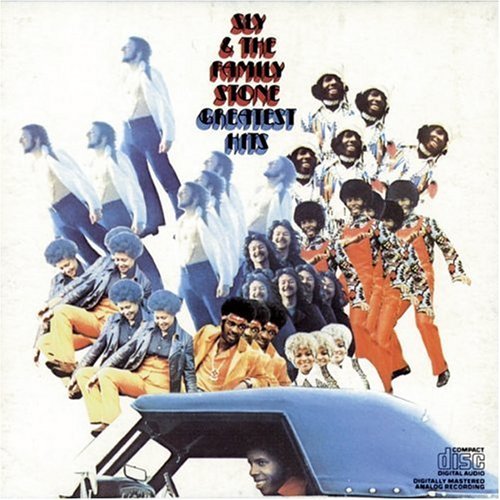
Sly and the Family Stone – Greatest Hits: Round 25, Nick’s choice

Sly and the Family Stone’s 1970 Greatest Hits collection was my introduction to the band, after hearing I Want To Take You Higher played on the radio by the singer in a current band I liked. I made a beeline for the record shop, and Greatest Hits was the only thing on offer; my inner teenage rockist almost certainly wanted a proper album, but beggars can’t be choosers. It wouldn’t be until much later that I’d realise the esteem this ‘mere’ compilation is held in – Christgau describes it as “amongst the greatest rock and roll LPs of all time”, and in 2003 Rolling Stone ranked it number 60 in their 500 greatest albums of all time.

This esteem is because Greatest Hits quite simply houses some of the best music ever made, even though it was devised as a stop-gap to fill time while Sly himself was going mad (more on that later). Sly and the Family Stone, a revolutionary multi-racial group at the time, surfed their way through so many different styles, grooves, melodies, and emotions from 1967 to 1969 that it boggles your brain – they’re ostensibly a rock / soul band, but they were keystones in developing funk and psychedelic music, and they traversed boundaries at will.

Greatest Hits combines all the band’s singles from the albums Dance To The Music, Life, and Stand!, plus a couple of charting b-sides that accompanied those singles, another album track from Stand!, plus three stand-alone singles that followed Stand! in 1969. (Sadly it misses the splendid Underdog from their debut album, 67’s A Whole New Thing). Rather than arranging songs chronologically, the sequencing starts with the epic, heavy funk of I Want To Take You Higher (from Stand!) and finishes with Thank You (Falettineme Be Mice Elf Agin) (one of the stand-alone singles), which function amazingly as bookends. The ten songs between range from the plaintive, heartening Everybody Is A Star to the deranged jerking groove of M’Lady, and the beatific sunshine piano-pop of Hot Fun In The Summertime. I own the albums most of these songs come from, and this order is still the way I prefer to hear them.

Even if you don’t recognize the songs themselves, Sly and the Family Stone have been sampled left, right, and centre, and not just by prime-sampling-era hip hop acts like Tribe Called Quest, Public Enemy, Beastie Boys, NWA, Queen Latifa, Arrested Development, Stetsasonic, Snoop Dogg, Redman, Common, Pharcyde, KRS-One, Mobb Deep, Jurassic Five, De La Soul, Missy Elliott… they’ve also been sampled by Primal Scream, Fatboy Slim, Janet Jackson, Beck, Alanis Morrissette, Four Tet, Skinnyman, DJ Shadow, Kid Rock, Pizzicato Five… The list, quite literally, goes on, and on, and on.

After Greatest Hits, Sly and the Family Stone were a transformed band, never the same again. Things started to hint at negativity a little on Stand! (for instance the racial unease of Don’t Call Me Nigger, Whitey – not included here), but 1971’s infamous, paranoid, cocaine-psychosis-blur There’s A Riot Goin’ On sounded like a different band because it was; Sly himself played almost every instrument, his band disintegrated by his erratic behavior and cavernous drug consumption, as he recorded on the same tapes over and over again until he’d obliterated song after song, hence the infamous muddy tape-hiss sound. There would still be good music after Riot, but nothing as free, as hopeful, as vibrant, as life-affirming, as the material the Family Stone recorded in those first three years together.

Edit: In quick response to Rob, below, Sly and The Family Stone simply don’t seem to have crossed the Atlantic very well – I get the idea from American contacts and friends that they’re held in massive esteem and regard, and hold a huge place in popular culture, that just isn’t reflected or understood over here.

Rob listened: This was a lot of fun while it was on and playing spot the sample is always enjoyable, even if it more often than not leaves me worrying about how quickly my memory is degenerating these days. Clearly hugely influential, Sly and co. have perhaps been denied their place in the pantheon of pop, presumably thanks to Mr Stone’s disintegration. There’s no obvious reason that we should know all the hits by Stevie Wonder or the Bee Gees or The Beach Boys or whoever and not by this bunch. But we don’t. For now they’ll go back on the ‘artists i’m ashamed to say I don’t really know but don’t really feel like i’ll have time to snuggle up to any time soon’ list. Enjoyed hearing them though.

Tom Listened: Worryingly for me, I pretty much agree with everything Rob has written! I enjoyed this, but imagine I would like the paranoid, darker tones of There’s a Riot (a record I have always kept an eye out for but never seen for sale on vinyl) more as I enjoy darkness and paranoia (see recent offerings: Babybird, Big Star, Anais Mitchell, Kate Bush). Sometimes a little cheesy, but always fun and energetic, this was a great collection of tunes and I think it fitted the wonderful bright evenings of April perfectly. Thanks Nick.

By the way: To extend our discussion on the night,other compilations that are possibly more well known than any individual album in an artist’s discography: Legend and Standing on the beach.

Graham listened: Clear and present danger of consensus breaking out over this choice. There were some stonking (not a word I use lightly) tunes on this album. Like Rob says, it almost criminal that some of these don’t have the status of ‘classics’ by the other artists we hear so frequently. If the sun was shining and I had a convertible car, I would be reaching for the 8 track of this and go cruising with the window down and elbow out. Its great that a quick hit of such music can evoke feelings like this. Not sure if the Afro wig would suit me though?

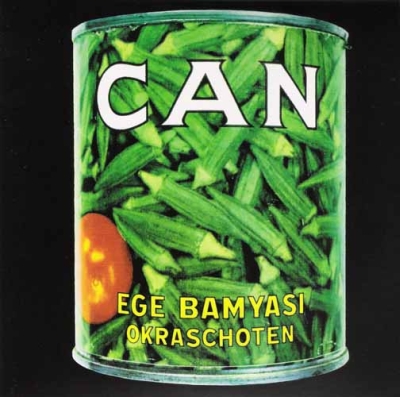
CAN – Ege Bamyasi: Round 24, Nick’s choice

So, at long last, the motherlode of Devon Record Club; the artist we’ve spoken about more than any other.

Before recording Ege Bamyasi in 1972, Can scored an unlikely pop hit in the German charts with Spoon, which sold some 300,000 copies due to being the theme tune to a television program. They used the earnings from Spoon to buy an old cinema, which they both lived and recorded in for the next few years; prior to that they’d recorded in a castle, because the owner of the castle thought they were great, or something. Recording Ege Bamyasi was fractious – two of the band obsessively played chess during the sessions (if you can call them sessions), driving the rest of the band to distraction, and a shortfall of finished material meant they superglued Spoon to the end of the album in order to flesh it out to 40 minutes and seven tracks in length.

Ege Bamyasi is my favourite Can album, I think, possibly because it’s the first one I got, some 15 years ago as a wide-eyed 18-year old, and possibly because it’s also the most fun. I played it at a party once, years ago, and everyone else complained that it was weird. It’s Can’s poppiest album, even though it sounds like aliens hearing the entirety of 20th century music at once and mashing it all together to make their own music, which contains everything (German youth post WWII desperate to split from their country’s past and create something absolutely new). So you end up with something that borrows from jazz, from rock, from the beginnings of electronic music, from Vietnamese music and various other musics from across the globe, long before World Music became a section in HMV. There’s guitar as wild as anything Hendrix committed to tape, synths and electronics as innovative as anything you’ve ever heard, Damo Suzuki’s unrivalled, inscrutable vocals in any number of made-up tongues, and always, always, Jaki Leibzeit’s incredible, pulsating drumming, repeat repeat repeating into delirium, making you twitch and jerk and spasm with little, replicating jolts of percussive joy.

Pinch, the alum’s ten-minute opener, is a shuttling roll of drums and electronic squeaks, the first thing I’d ever heard by Can, and the summation of everything I’d imagined they would sound like after reading about them. I’m So Green is a liquid funk thing that got nicked by The Stone Roses. Sing Swan Song is a bona fide, blissful pop song, delicate and beautiful and oh so very strange. After 15 years I still find new things every time I listen.

Tom Listened: You have to hand it to Can, they certainly knew how to open an album! All the Can albums I own (the four biggies of the early seventies) kick off with an amazing song – Tago Mago has Paperhouse, Soon…the wonderful and, possibly, underrated Dizzy Dizzy, Future Days begins with Future Days and then there’s Ege and its opener, the remarkable, mind blowing swirl of squonk that is Pinch (squonk is a technical term for the sound that Can make on Pinch). It was my first encounter with the band and I can still remember being incredulous that the sound coming out of the speakers could be being made by (a) humans and (b) humans of the 1973 variety.

Although Pinch is undeniably incredible, there are many other outstanding moments on Ege Bamyasi and it feels disloyal to single one or two out and tedious to run through the lot. I suppose it’s easier to say that the last 5 minutes of Soup – it’s a free-form freak out (to use a phrase coined by the Red Crayola) – is the only part of this amazing album that is less than outstanding and ironically (given that I’m sure the band thought this would be, like, totally cutting edge at the time), it sounds far more dated today than any of the more conventional soundscapes that the band conjured up on the rest of the album! So to sum up: a must have album from a band that gets talked about a lot at DRC (but not as much as Talk Talk).

Rob listened: It’s not the motherlode, it’s just another record. I was both relieved and I guess disappointed that Nick, who seems intent on bring as much of the canon as he can haul to our meetings, dragged along the only Can album I know. I rarely ever go back and listen to it, but when I do it’s always a pleasure and tonight was no exception. Amazing to think they were putting this stuff together when they were, and delightful to try to trace the lines of influence down through the years. I was disappointed not to have ‘This Nation’s Saving Grace’ in my glove box so I could play Tom and Nick ‘I Am Damo Suzuki’. It’s just the two of them who have spoken about Can more than any other artist, but I’m sure they would have enjoyed MES’s gag-filled yet genuine tribute. Maybe next time.

Graham listened: First listen for me left me very confused. Nick has in one fell swoop managed to wipe out a significant portion of my musical reference points. No one told me bands were alowed to sound like this in 1972! Some parallels to the first time I heard Spirit of Eden (which is in no way a a crude attempt to get Talk Talk back to the top of the most talked about band charts, oh no…).

Isaac Hayes – Hot Buttered Soul; Round 23, Nick’s choice

There was an article, some kind of ‘lost classic’ thing, on the final page of a 90s music monthly, about this album, which was the first time I’d ever heard of it. I knew of Isaac Hayes as the guy who’d done Theme From Shaft, and he might have already been the voice of Chef from South Park (which started in 1997), but I knew pretty much nothing else. The title of the album, and its obtuse cover (the top of Isaac’s bald head, his face hidden), were immediately intriguing, and the description, of an avant-garde album, made by a backroom producer and writer (Sam & Dave have him to thank for Soul Man) given complete creative control by a record label (Stax) recently split from its home (Atlantic) and floundering to find its own identity, sealed the deal. I had to have this album.

Hayes debut album, Presenting Isaac Hayes, had been a bit of a flop and he was going to step behind the scenes again, when the split from Atlantic meant Stax lost their entire back catalogue. Stax executive Al Bell decided to release 27 albums and 30 singles on the same day in a crazy attempt to construct an instant back catalogue, and Hayes used this opportunity to make an album where he had the final say on everything. It’s pretty fair to say that the resulting LP is a singular vision.

At 45 minutes long, there are only four songs, two of those spectacularly elongated covers of recent (now deemed classic) hits by other people. It opens with Bacharach and David’s wonderful Walk On By, stretched to breaking point at 12 minutes in length, lavished with an ornate, psychedelic soul orchestra, sparkling guitars and the most insistent, physically demanding rhythm section imaginable. The final three minutes or so lock into an unbelievable groove, the volume waxing and waning in intensity as the band play harder, softer, harder, but keep the pace constant. An edited version was a hit, and has been sampled countless times, but you need the full experience, really. It’s one of my favourite musical experiences ever.

Next up is a 9-minute funk / soul workout, one of two original songs, with a ludicrous title – Hyperbolicsyllabicsesquedalymistic – and another outstanding groove, this time the rhythm adorned with piano (remarkably house-like at points). Again, it’s been sampled plenty (including on Black Steel In The Hour Of Chaos, apparently). The other original is a (prototypical, but very good) soul ballad called One Woman, which plays things pretty straight and comes in at about 5 minutes long. The album closes with an extraordinary 18-minute long cover of By The Time I Get To Phoenix, the first 8 minutes of which are a spoken-word introduction, where Isaac talks about how great the song is, how he’s going to do his own take on it, and about the power of love and moral weakness. Obviously.

Our first foray into soul music at DRC…

Tom Listened: Whilst I am still a little confuzzled as to how this comes to be labelled ‘avant-garde’ (sounded pretty straightforward to my ears) I really enjoyed about 3/4 of it. The best track was Walk on By and, once I managed to put Nick’s ever more exaggerated gyrating to the back of my mind, I came to see what he was on about in his introduction to this record. An amazing slab of sound and, somehow the guy twiddling the volume knob in the studio didn’t even get in the way of my enjoyment of this track (which was almost as good as the Stranglers version). I liked tracks two and three a lot too, but found my attention wavering on the first 10 minutes of By The Time I Get To Pheonix which I felt was unnecessary and bewildering – it’s one of the best songs ever written, why would you do that to it? But, all in all, a great listen and an album I intend to pick up at some point.

Rob listened: I’m familiar with some of this record from soundtracks, and have a couple of Isaac Hayes’ later records. I love the sound and of course the sheer shameful indulgence of a guy being able to stretch his songs out over as long as he likes is somehow thrilling. I’m glad we didn’t get into a discussion about the definition of soul music. It would have done none of us much credit. However, i’m not sure something as outre as this can quite be it. But then we did get into a discussion about the definition of ‘Avant Garde’ during which I demonstrated comprehensive cluelessness, so what would I know?

Graham listened: I also struggled a bit with why this album may be regarded as ‘avant-garde’ and  “By the time ……”, was interesting, bordering on murdering a great song. But the main thing was I loved the rest of it. The extended instrumentals sounded like great  live jams that had been put down on tape, and in moderation, there is nothing wrong with that. A whole area of music I have never really consciously avoided, but just seem to have ignored. Not for much longer!

Beastie Boys – Paul’s Boutique: Round 22 – Nick’s choice


I’ve been amassing a pile of albums that I want to bring to Devon Record Club – old favourites, new crushes, canonical bugbears, sound-qua-sound obscurities – over recent weeks, and there’s now a stack of 20+ CDs on my shelves, enough to power through a whole year of meetings, unless we get theme-happy. Even then, I reckon I can probably gerrymander something from the pile in somehow.

Paul’s Boutique was pretty much at the top of the pile. My favourite Beasties album (just eclipsing Check Your Head and then Ill Communication), I bought it when I was about 16 or 17, after a rash of bands I liked at the time (95/96) seemed to namecheck it an inordinate amount – Noel Gallagher, The Charlatans, The Chemical Brothers, reams of other pseudo-funky quasi-Britpop also-rans. I knew Fight For Your Right To Party, obviously, and was aware that Beastie Boys had a certain cache amongst very, very cool people, but by and large I didn’t really get why.

After the obscene success of Licence To Ill, the Beasties ran away from NYC, scared of what they’d achieved and become at such a young age (lest we forget the go-go dancers in cages on stage), and holed up in LA with The Dust Brothers, DJs who’d been making sample-based, instrumental hip hop tracks which the trio had become fans of. The Dust Brothers thought the tracks they’d been making were too dense, too busy, too layered with crazy samples and juxtapositions to be rapped over, but the Beasties insisted that they didn’t want anything more minimal; they loved the sound collages, and wanted to weave themselves into them.

The result is an album which is essentially a love song to the Beasties’ estranged home city of NYC, from the sleeve to the samples to the innumerable lyrical references to the places and people and pop culture they’d grown up with. The rich, heavy, sample-woven music, which the Beasties’ voices are intricately intertwined with, is a pretty psychedelic experience, like a beat-heavy, hip hop, spot-the-reference recreation of the second side of Abbey Road, mixing hugely familiar moments of music (from Johnny Cash to Curtis Mayfield to The Isley Brothers to The Beatles to Sly And The family Stone to so much else) with the sounds of every day city life, ping pong matches, drive-by robberies, skits about eggs, stories about New Yorkers. It’s the opposite of Tom’s choice; so dense that half a lifetime later on I’m still catching new lyrical references, googling names I don’t know, recognising samples from old music I’m newly familiar with since the last time I played it.

There isn’t much out there like Paul’s Boutique – Endtroducing and Since I Left You use samples in a similar way, but do something different in spirit; for the Beastie Boys, the samples and lyrics perform the same bewildering function. Changes to copyright law regarding sampling mean that no one can ever make an album like this again; but the sheer quality of the record makes it unlikely that anyone would be abloe to, anyway.

In short, Paul’s Boutique is a trip, it’s got a funky beat, and I can bug out to it. Perfect.

Tom Listened: For me, at some point during the 90s The Beastie Boys went from being an annoyance to a possibility to a treasure. I can’t quite remember the chain of events but, as usual, I think the catalyst in my change of mindset must have been the overwhelming acclaim that Check Your Head and (belatedly) Paul’s Boutique were getting from the press and from fellow artists. So I decided to buy my brother Check Your Head for his birthday. Curious to hear an album but not enough to get it for yourself…buy it for someone else’s birthday and then ‘borrow’ it, for a long, long time.

Well, I loved Check Your Head and it is still my favourite Beastie Boys album. Listening to Paul’s Boutique at record club made me realise just how much more accessible it is. The songs on Check Your Head are more straightforward – there are fewer unexpected twists and turns and it’s less packed in with everything and the kitchen sink. I’m not saying CYH is the better album but I know it much better (although I have had PB in my collection for probably a dozen years I have never felt I really know it) and that certainly helps. With this in mind, it was great to hear Paul’s Boutique the other night and I will certainly be pulling it out aplenty in the forthcoming months and attempting to unpick its bizarre tapestry of sound.

Rob listened: My brother handled hip-hop in our house. ‘Licensed to Ill’ was pretty important for him and I have fond memories of rotating it with ‘Yo! Bum Rush The Show’ and ‘Album’ by Public Image Limited whilst we played darts in his room. By the time ‘Paul’s Boutique’ came out we’d both moved on. It’s worth recalling that it arrived to no real fanfare, to general bafflement in fact. My sense is that it was only with ‘Check Your Head’ that commentators began to recognise the trajectory the Beastie Boys were on and the give them the credit they deserved as innovators and creative spirits. Still, I didn’t come back to them until ‘Ill Communication’.

I’d never heard ‘Paul’s Boutique’ until this evening because, if i’m honest, whilst I admire what they do, I never find myself reaching for them. I don’t know why. I do find that the constant yapping voices create a wall of interference between me and the often compelling music. I guess I also find them a little too hipster. I dunno. Feel srtangely guilty even writing this. I’m extremely glad that the Beastie Boys exist. I enjoyed hearing the album and totally understand why it belongs in the canon. But once again, I can’t imagine i’ll invest much time in it. I might go back and listen to ‘She’s On It’ again though.

Graham listened: I’m old enough to vaguely recall jumping about in nightclubs to the singles from the first Beastie’s album. But to badly quote Public Enemy, “I didn’t believe the hype”, which put me off the band for many years. I’ve heard this before and it didn’t fit with what I expected then, but listening again this is so deep and multi-layered that it simply demands I spend more time with it. If I finally get this one, who knows where it might lead?

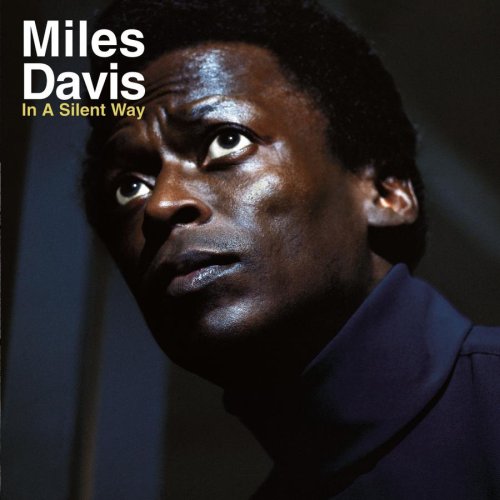
Miles Davis – In A Silent Way; Round 21, Nick’s choice

Graham deigned not to set a theme for this week, so I turned to the literal pile of CDs that I’ve amassed on a shelf and mentally labelled as future contenders for Devon Record Club. And, as usual, I’ve picked out a record that I’ve written about before, way back when Stylus still existed. (To my amusement, my ruminations on this record, researched from a couple of books I had on Miles from the library, are now used as a source on producer Teo Macero’s Wikipedia page. Which just goes to prove the pointlessness of citations.)

Anyway. The Christmas holiday in my first year at university, and I decided to get into red wine and jazz. As you do. My dad shared a bottle of rioja that he’d received as a gift from a client with me, and my brother bought me Kind Of Blue by Miles Davis. Not a bad introduction to either. I delved further into Miles’ catalogue more quickly than I explored pinot noir and cabernet sauvignon, though, eating up Bitches Brew and In A Silent Way first, as those seemed like the most exciting and essential jazz albums from Miles’ oeuvre for a young man to get to grips with.

But, whilst Bitches Brew can take some getting to grips with as you go about unravelling its immense tapestry of sound, rhythm, melody, and texture, In A Silent Way clicked with me straight away. Maybe it was the fact that I’d already digested a handful of CAN albums as a 17 year old? Or perhaps it’s just that this mesmerising, mellifluous amalgamation of electric pianos (two of them, and an organ on top), slinky bass grooves, insistent high-hats and insouciant, beatific, late night melancholy-and-cool-at-the-same-time trumpet and saxophone riffs is, purely and simply, an absolute pleasure?

I’ve never met anyone who knows In A Silent Way and didn’t love it. It occupies a similar territory to CAN’s Future Days and The Necks, and paved a trail that would be followed by a host of ambient musicians and other minimalists and experimentalists for years to come, as well as pioneering production techniques that only The Beatles had ventured towards previously, and which would soon become commonplace throughout pretty much all pop music.

I say it a lot in reference to the records I bring along to DRC, but In A Silent Way is one of my favourite records ever (I bring them because I love them dearly!). But what will Graham, Rob, and Tom make of it?

Tom listened: Well, Nick is being a little disingenuous there as he already knows what I think of it. For me, In A Silent Way is the best jazz record I have ever heard… by a long shot. But then, I’m not sure just how ‘jazz’ it is. This is something else, it exists in its own little group of one, a unique record that is a blissful meeting place of be-bop, fusion and african rhythms, loops, crazy organ sounds and a hypnotic groove that keeps you guessing right up until the last few minutes when Miles eventually lets rip in the (frankly orgasmic) kaleidoscope of sound that had been promised for the previous 35 minutes. This is not one of the best jazz records ever, it is one of the best records ever…and if you think you don’t like jazz and haven’t heard this, reserve judgment until you have!

Rob listened: Beautiful and timeless. I hadn’t heard it before, my Miles go from ‘Birth of the Cool’ to ‘Kind of Blue’ and then run out. I get Tom’s opint about this seeming to sit in a class of one. ‘In a Silent Way’ sounds like it’s always existed. To an extent it was unsurprising in that its moods, if not its moves, have been copped so many times since then that they have become part of the culture. It’s slightly disorienting then to face the facts that this sound, this approach, this type of record had to start somewhere, that this it where it DID start, and that, based on my scant experience, none of its celebrants, or imitators have come close to its accomplishment. It’s impossible to imagine anyone not loving it. But then, I have a limited imagination.

Graham Listened: Well I’m one of the people Tom points to in  last sentence. Lets be clear here. I’m not about to grow a goatee, buy a beret and start attracting people’s attention by saying “hey Cat”, but I may just have been converted. Wonderful feeling of motion and groove. Need to tread carefully along this path to avoid falling back in to previous prejudiced view.

The MC5 – Kick Out The Jams; round 20, Nick’s choice

When Tom said “bring something loud” I thought about some kind of clever definition of loud, and bringing a record of over-compressed ballads or mushed-up AOR or something, but only for a second. My second thought was to bring XTRMNTR by Primal Scream, but upon revisiting it revealed itself to be 24 seconds longer than our allowed album length of 60 minutes – given that I’ve broken the rules so often I thought I’d adhere to them for once, and look elsewhere. The raucous guitars and screaming, noise-descending chaos of XTRMNTR made me think of an older record, though, so I bypassed Fugazi and the recently-reformed At The Drive-In and went to the source – The MC5, and their legendary debut album, recorded live over two nights of Halloween weekend 1968 and Detroit’s Grande Ballroom, notorious for its guitars, energy, sermonising, and the profane introduction to the title track that got them dropped by Elektra.

I first bought Kick Out The Jams when I was about 17 or 18, and we played it for the first time at my friend Ben’s house. His dad had a big stereo, and we were astonished by the guitar sound, which was nothing like we’d heard from other 60s music before; it felt like the motherlode of alternative rock, grunge, punk, metal, anyone and everyone who’d tried to squeeze an amplified, distorted, excited squall of riffs out of a guitar. It was great.

Factor in the crazed sermonising (I’d not listened to Kick Out The Jams in years, but could still quote along with every word – “I wanna see a sea of hands!”; “Are you ready to testify? I give you a testimonial; The MC5!”; the infamous use of the word “m*th*r*ck*r”, etc etc), the crowd noise, the energy of the rhythm section, Rob Tyner’s squealing vocals to “Ramblin’ Rose” – at astonishing odds with his voice (assuming it’s him) giving introductory testimonial – and you’ve got a hell of a record. It’s mad to think that most of the band were only a couple of years older when they recorded it than I was when I first heard it (guitarist Wayne Kramer was only 20).

If I’m honest, it wanes a little bit after the first four songs, the tempos slow, the energy dips, and by the time Starship’s 8 minutes of Sun Ra-inspired explorations roll around I’m losing interest; Lester Bangs’ review of it for Rolling Stone was apparently unfavourable, describing it as “ridiculous, overbearing [and] pretentious”, and you can certainly see where he’s coming from during the dirgy “Borderline” and “Motor City is Burning”.

But those first four songs are still immense; the twin-guitar chaos of “Rocket Reducer No. 62 (Rama Lama Fa Fa Fa)”, the irresistible momentum and chaos of “Come Together”, the shock of “Ramblin’ Rose” and the fact that the title track somehow seems to embody the platonic essence of every piece of energised, loud guitar music ever made before or since…

Rob listened: The sound of religious fervour fired through with pure adrenalin. The first half of ‘Kick Out The Jams’ could serve as a one-shot tester for anyone who’s never heard rock and roll before. If you don’t get it after those first four tracks, you never will. Back to chamber music with you. If, however, the wave catches you, dive in. The waters are choppy, the currents dangerous, but there’s a hell of a time to be had. [File under both ‘mixed’ and ‘painfully over-extended’ metaphors].

Tom Listened: In contrast to Big Black, I fully expected to fall for Kick Out The Jams (and have almost bought it on many occasions in the past), but I just couldn’t get into it. Obviously close relatives to Iggy and The Stooges both geographically and sonically, on closer inspection I found little in common between our two offerings other than the fact they are both, indeed, LOUD. But whereas I love The Stooges pounding bass lines and grooviness I found KotJ to be too screechy for my taste and, whilst I’m sure that once you dig a bit there is treasure to be unearthed, I think the fact that Graham’s  reaction was positive upon also hearing this for the first time on the night suggests that, for me, this may be one of those records best left on the shelf.

Graham Listened: Whatever the secret recipe of rock might be, energy and madness must surely feature in the ingredients. Perhaps unfairly compared to Funhouse, I found far more of both in KotJ and it kept my attention longer. Maybe I could access this easier as buried in the madness there is some  guitar work and grooves  I could relate to Jimmy Page on early Led Zep stuff. All in all, wonderfully, “out-there man”!


Nicolas Jaar – Space Is Only Noise – Round 19 – Nick’s selection

Another meeting arranged at short notice, and potentially our last of the year as busy familial festive schedules start to kick in. So it made sense to theme it around our albums of the year, even if we didn’t quite know how the logistics of that might work; would we vote and play our three consensus records? Pick our very favourite record each? Would we pronounce a Devon Record Club Album of the Year?

Typically, we were more pragmatic and prosaic than that, and each chose a record from 2011 that we liked a lot and which at least one of the other two hadn’t heard. I went last, debating between Patrick Wolf, Destroyer, and Nicolas Jaar; I picked Jaar’s debut after a comment by Rob that there had been a lot of really good “sounding” albums this year (i.e. albums with good sound, not albums that we’re hearsay suggests are qualifiedly “good”). Jaar’s is the album that I’ve perhaps enjoyed the most on a purely phenomenological level, and when I played an isolated track from it at an earlier meeting everyone seemed impressed and intrigued.

The album itself is a sensuous, aesthetic pleasure; not quite the minimal house odyssey some fans of his early singles had expected, but nevertheless immaculately constructed, captivating and unusual. It occupies a strange nowhere land between techno and jazz and minimal and Germany and South American and east and west; the cover picture depicts Jaar himself, as an infant, in the no-man’s land between east and west Berlin. Despite being a very obviously digital construct, it’s a warm, human record, full of pianos, strings, brass, and voices as well as thrumming basslines and thumping beats.

It starts incredibly abstractly, the opening trio of tracks weaving spoken words in numerous languages and found sound recordings of breaking waves through strange rhythmic patterns and irregularly intersecting waves of sound. The mid section of the record adds more focus and direct intention (while never quite becoming obvious), vocals used as hooks rather than ambience, and beats coalescing into patterns that could almost affect dancefloors, before the final three tracks disintegrate the patterns again, and bring the album neatly back to where it began.

Jaar’s dad apocryphally bought a Villalobos album as inspiration for his young son’s musical development on the recommendation of a record store clerk, after asking for the most cutting edge and accomplished music out there. I’m glad he did, and I can’t wait to hear where Jaar’s strange confluence of muses takes him next.

Tom Listened: This album started off really well for me but faded towards the end. I have been aware of Nicholas Jaar’s name cropping up in the occasional best of 2011 internet list and my interest was fueled when Nick played a song from the album at one of the earlier meetings. I enjoyed the album all the way through, but I did feel it lost impact as it went on and by the end it had become (very lovely) background music for me. I suspect that this would become less of an issue with repeated listens but I’m not sure we’ll ever become that well acquainted.

Rob listened: It’s always a pleasure to hear Nick roll out one of his stock phrases, mainly because they tend to be much more interesting than mine. In fact, my most repeated words at Record Club meetings are, “the interesting thing is…” usually followed by something quite plain. Nick, meanwhile, tends towards interesting compounds like  “phenomenologically beautiful” or, if cornered, “non-diagetic”. The interesting thing is that ‘Space Is Only Noise’ did indeed seem beautiful in cold, precisely defined terms. I could have listened to the tinkling piano accompanied by a gurgling child and what sounded like a German man attempting to master English vowel sounds for about 45 minutes, it all sounded so pretty. Like Tom, I found it palled slightly in the middle, the closer it approximated dance music, but all in all a lovely thing.

Acoustic Ladyland – Skinny Grin – Round 18; Nick’s choice

There was a little organisational chaos around this week’s DRC – we were meant to meet last week, at Tom’s with a complicated theme involving some serious (for us) logistical planning, but things fell through, so we rescheduled a regular, unthemed meeting for my house at short notice. So it seemed logical to go back to my mental checklist of albums I first thought of when DRC was conceived, and this excitable slice of “punk jazz” has now wormed its way to the top of that pile.

Released just before Christmas in 2006, I reviewed Skinny Grin at the time, and made bold claims for its genius and potential as a marketable crossover from the vibrant London jazz scene that’s produced seemingly scores of tokenistic-jazz-choice Mercury nominations – Polar Bear, Basquiat Strings, Portico Quartet, even avant-rock choices like The Invisible. I was convinced that Skinny Grin would garner universal acclaim and massive success.

Sadly, although it definitely got the acclaim, its bizarre choice of release date saw it fall into the cracks between Sufjan Stevens Yuletide boxsets and Celine Dion best-ofs, and nobody outside the crowd of usual suspects seemed to become enthused by it; it was too late to make any 2006 end-of-year lists, and by the time the 2007 ones rolled around, it had been forgotten in favour of Battles, who did a similar thing but seemingly from a different direction.

Acoustic Ladyland started their career with an album of, unsurprisingly, acoustic jazz reinterpretations of Hendrix tunes, and then spectacularly found their own sound at the edge of jazz, punk, the avant-garde, and metal with their second album, Last Chance Saloon, which came out around the same time as Polar Bear’s acclaimed, Mercury-nominated quasi-crossover, Held On The Tips Of Fingers; the two

Skinny Grin itself is frenetic, groovy, teetering-on-the-edge-of-chaos stuff. One track is mixed by none other than DRC-fave Scott Walker, who adds what sounds like a muzzle of angry electronic bees to the jerking, multi-directional instrumentation. Guest vocalists, and bandleader Pete Wareham, trading saxophone for microphone, add a punky, poppy dimension to some tracks, but it’s the (predominantly) instrumental tracks that hit the hardest, packing a progressive punch that transgresses genre boundaries like little else I’ve heard before or since. It’s not just jazz fusion; it’s far more exciting than that.

Tom Listened: I am amazed at how consistently Nick manages to choose records that I don’t know, most of which it’s turns out, I really like! This was another one, captivating from start to end, hard to pin down (was it jazz? rock?, fusion? – horrible word that), yet so effective in doing what it was setting out to achieve. I liked the vocal tracks just as much as the instrumental ones and would look forward to exploring Skinny Grin further, despite the fact the band have such an awful, and totally misleading, name. Well done Nick – another goodie!

Rob listened: I loved the first track which seemed cast as a face-off between a cocktail jazz quartet and a herd of straining mid-90s metal apologists. Which is all good in my book. As the record progressed, it started to lose focus, a sense of purpose, for me at least. I liked the compressed thrash jazz workouts wherein Acoustic Ladyland genuinely seemed to be onto something, combining the free associative joy of both genres without, apparently, doing either a disservice, but the more the record went on, the more I found my attention drifting.